
How to Conduct a Company Culture Assessment

What does it actually mean to assess your company culture — and why do so many attempts to change it quietly fail?
A company culture assessment isn't an annual engagement survey or a CEO video about company values; it's a structured examination of the collective behaviors, norms, and lived experiences that define how your organization actually operates day to day — which is often quite different from what's written on the walls or stated in the employee handbook.
Why does that gap between stated and lived culture matter so much?
Because you can't transform what you don't understand — as the blog's author puts it, asking an HR team to "build and maintain culture" without first assessing its current state is, frankly, like asking someone to pin Jell-O to a tree, and that kind of culture initiative wastes time without ever touching root causes.
So where does a meaningful cultural assessment actually start?
It starts with choosing the right methodology — whether that's the OCAI's Competing Values Framework, focus groups, observational assessments, or continuous pulse surveys — and this guide walks through each approach, when to use it, and how to convert what you find into a prioritized action plan that sticks.
Those of us in human resources talk about company culture constantly. A heck of a lot. But let's be honest—for all the discussion, company culture remains tricky to define and even harder to measure.
Despite this ambiguity, many HR leaders are tasked with "changing" or "improving" culture. In fact, countless HR leadership job postings list "build and maintain company culture" as an essential function. That's like asking someone to pin Jell-O to a tree.
Here's why: Culture is not defined, owned, or controlled by one person or one department. The HR Department does not create or own culture. Rather, company culture is the collective behavior of all people who are part of the organization—what people actually do and how they actually behave in the workplace.
Why Company Culture Assessments Matter
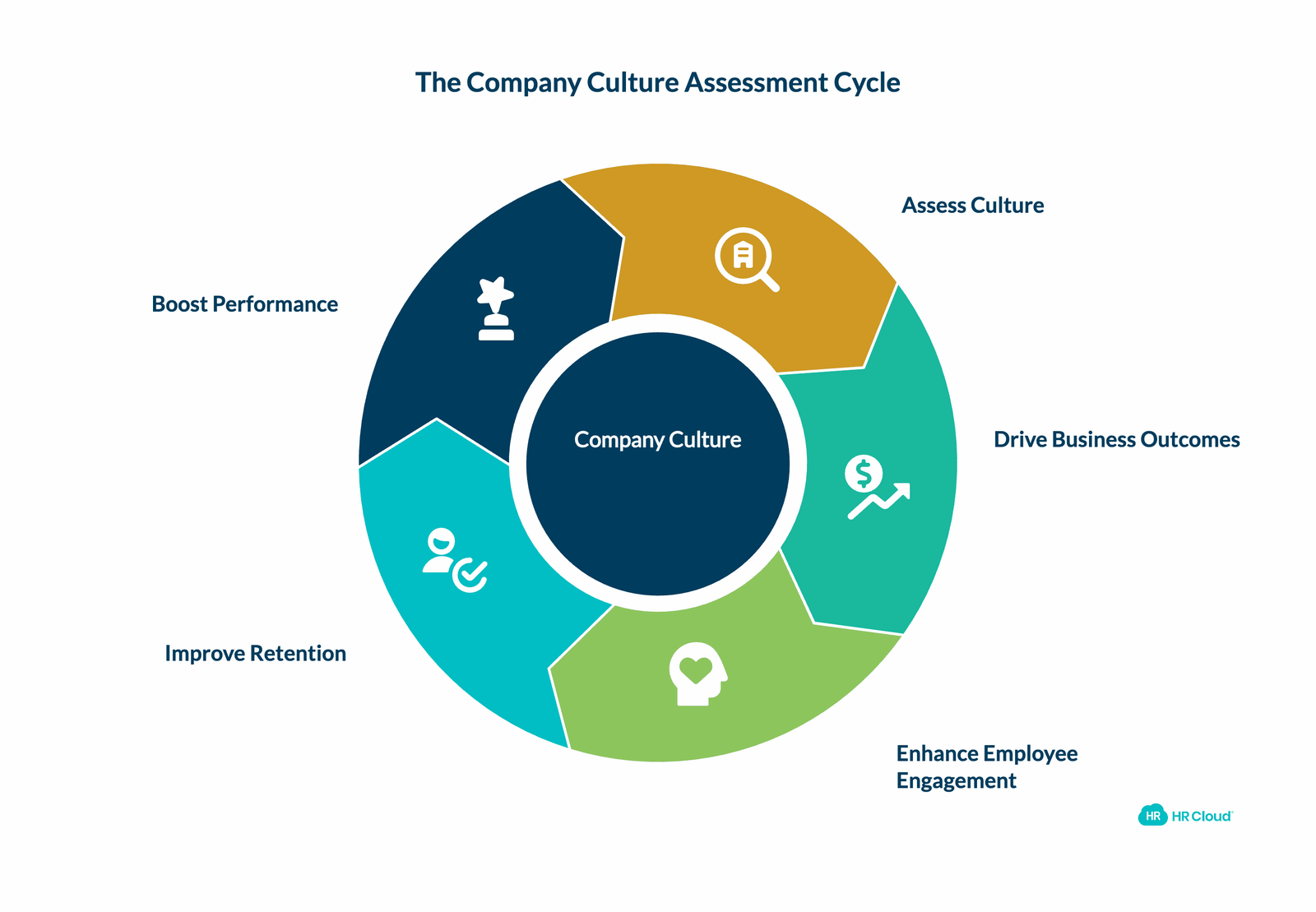
Company culture is formed by vision, norms, beliefs, environment, symbols, and traditions. It includes mission, articulated company values, and—perhaps most importantly—the practices. Culture is impacted by organizational structure, processes, and controls.
The Business Case for Cultural Assessment
Research consistently shows that culture drives measurable business outcomes. According to SHRM research, companies with positive cultures see employees who are almost 4x more likely to stay. Studies from the University of Oxford indicate that happier employees are approximately 12% more productive, directly contributing to workplace success.
Additional data from leading organizations demonstrates culture's impact:
- Revenue Growth: Companies with strong cultures experience 4x higher revenue growth (Deloitte)
- Productivity:Engaged employees are 21% more productive (Gallup)
- Retention: Organizations with healthy cultures see 40% lower turnover (SHRM)
- Performance:Top-quartile companies for engagement outperform competitors by 10% (Gallup)
Culture's Impact on Employee Retention and Performance
Employee engagement platforms like HR Cloud's Workmates enable organizations to continuously measure and strengthen culture through surveys, recognition programs, and analytics—giving HR leaders the data they need to make informed decisions about cultural initiatives.
Workplace cultural assessments provide ROI through reduced turnover costs (replacement averages 50-200% of salary), increased innovation, enhanced employer brand, and improved customer satisfaction through engaged employees.
Is Cultural Change Possible?
I once sat in a leadership team meeting where the CEO declared, "Communication is one of our corporate values. We need to make sure our culture supports that." The group spent time brainstorming ideas to demonstrate the company had a "culture of communication." Tasks were assigned, the CEO committed to recording a video message, and they considered it done. Voila.
It was a waste of 20 minutes—neither effective nor sustainable.
Common Mistakes in Culture Change Initiatives
Often in organizations, we realize we want or need to make wholesale changes. We may desire to shape new behaviors, promote innovative thinking, or define a culture of learning to engage and develop employees. As anyone who has attempted a change management initiative of this magnitude will attest, it's easier said than done.
Common mistakes include:
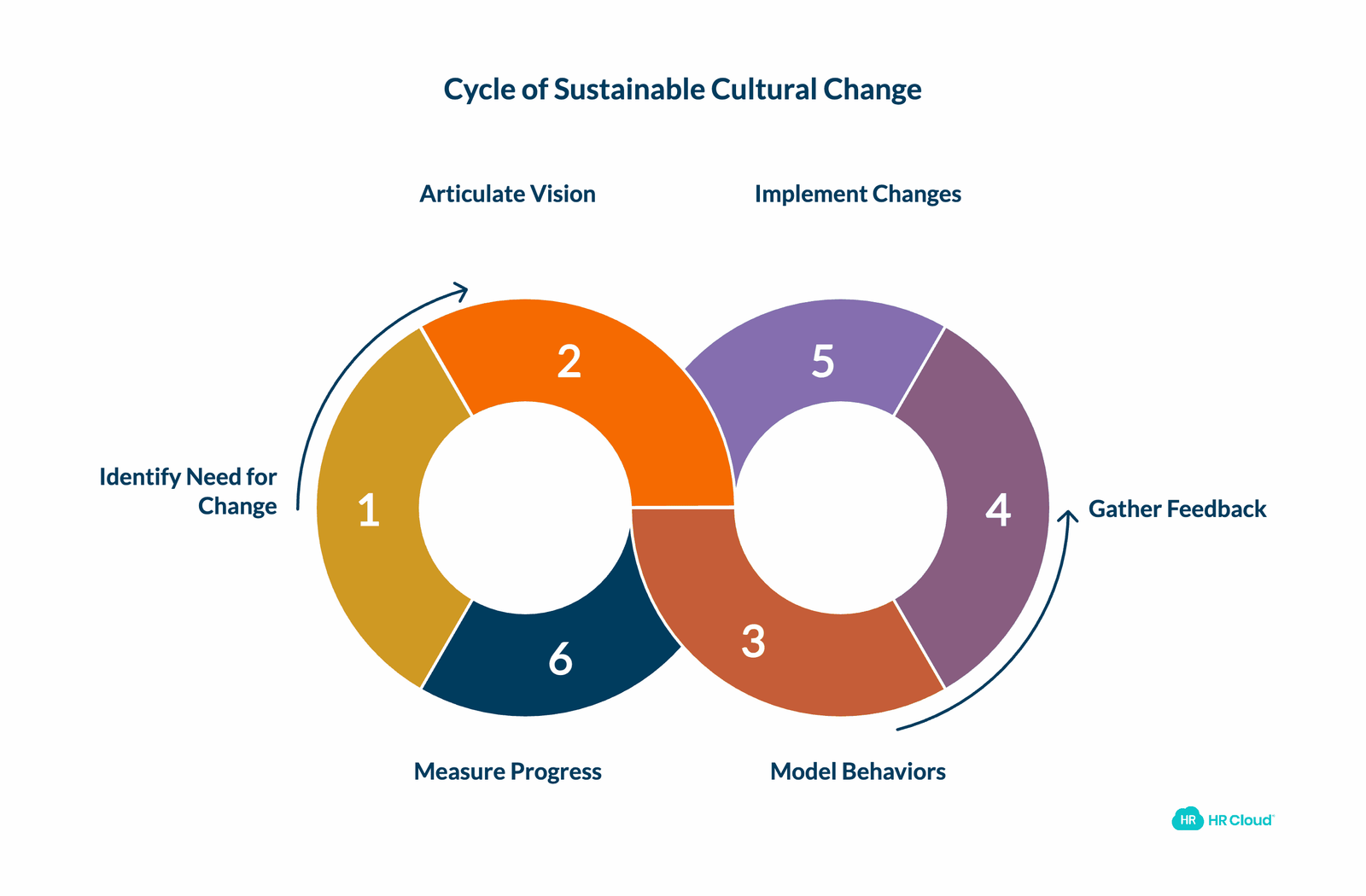
- Treating culture change as a one-time initiative rather than ongoing practice
- Failing to model desired behaviors at leadership levels
- Implementing superficial changes without addressing root causes
- Neglecting to measure progress through systematic assessment

The Role of Leadership in Cultural Transformation
Changing workplace culture requires commitment from the leadership team. Leaders must clearly articulate why change is necessary and their vision for making those changes. Most importantly, leaders must be fully committed to changing their own actions and behaviors.
They also need to understand the current state through employee feedback through systematic assessment. You can't transform what you don't understand.
Conducting a Cultural Assessment: Methods and Tools
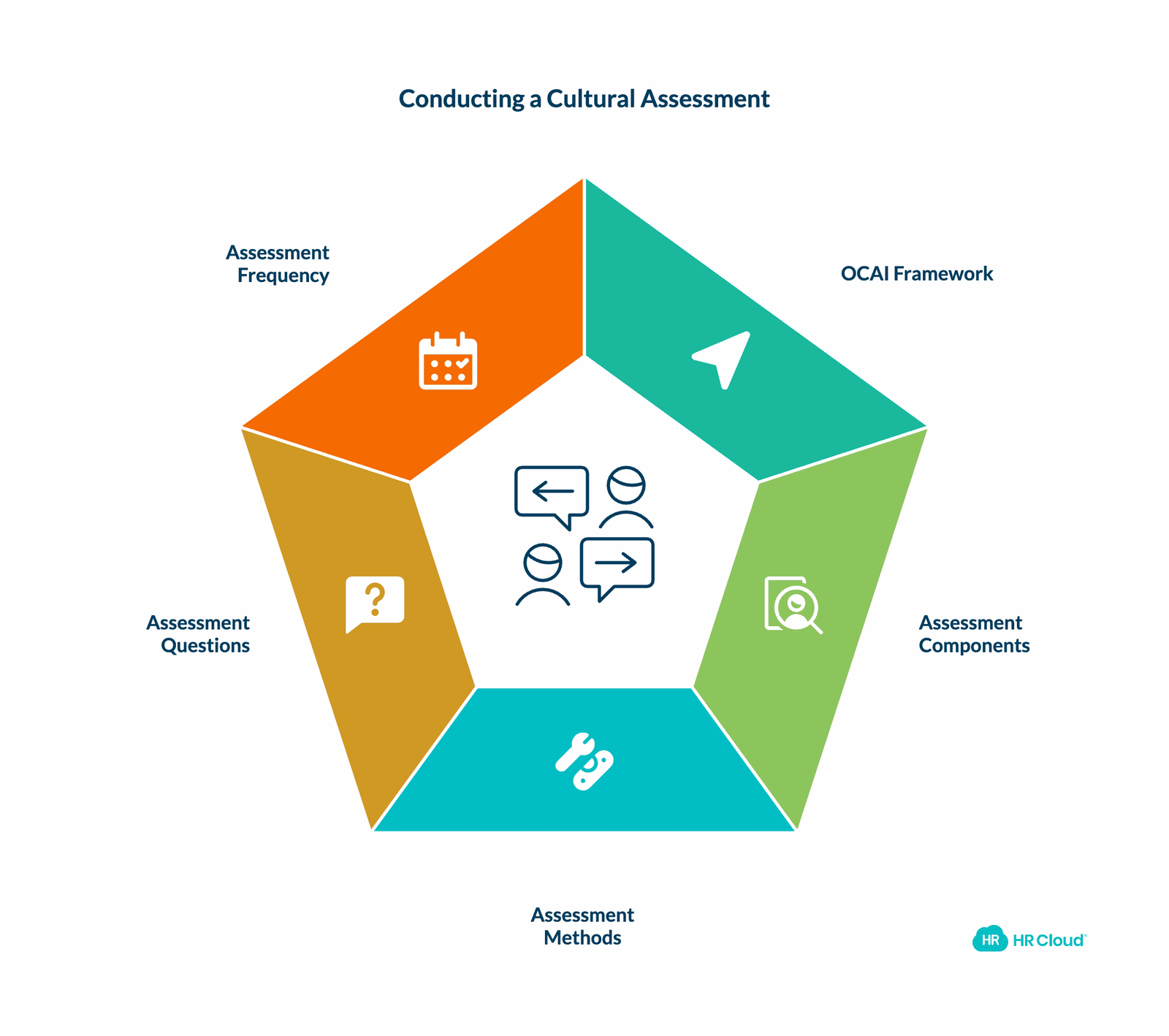
There are proven methodologies that companies can use to identify both their current and desired culture. Rather than relying on assumptions, a structured organizational culture assessment provides understanding based on actual beliefs and behaviors exhibited throughout the organization.
A workplace cultural assessment is different from an engagement study or opinion survey. While engagement surveys measure how employees feel about their work, a cultural assessment examines deeply rooted norms, values, and drivers of behavior that define organizational character.
The OCAI Framework
One of the most well-known assessment tools is the Organizational Culture Assessment Instrument (OCAI), developed by Kim Cameron and Robert Quinn at the University of Michigan.
Cameron and Quinn analyzed 39 organizational effectiveness indicators and identified two key dimensions:
1. Internal Focus and Integration vs. External Focus and Differentiation
2. Stability and Control vs. Flexibility and Discretion
Understanding the Four Culture Types
The OCAI uses the Competing Values Framework to categorize organizational cultures into four distinct types:
Clan Culture (Collaborate)
Collaborative, family-like environments where teamwork, employee participation, and development take priority. These organizations emphasize cohesion, morale, and human resource development. Leadership acts as mentors and facilitators.
- Best for: Startups, family businesses, healthcare, education, service organizations
- Strengths: High employee satisfaction, strong teamwork, flexibility
- Challenges: May struggle with tough decisions, slower to adapt to external changes
Adhocracy Culture (Create)
Dynamic, entrepreneurial settings that value innovation, risk-taking, and adaptability. These organizations thrive on experimentation and encourage creative solutions. Leadership is visionary and innovative.
- Best for: Technology companies, creative agencies, R&D organizations, startups
- Strengths: Innovation, agility, competitive edge through new products/services
- Challenges: Can lack structure, may have inconsistent processes
Market Culture (Compete)
Results-oriented organizations focused on external competition, achievement, and goal attainment. These cultures emphasize winning, reputation, and market share. Leadership is demanding and competitive.
- Best for: Sales organizations, consulting firms, manufacturing, competitive markets
- Strengths: Clear goals, high productivity, external positioning
- Challenges: May sacrifice employee well-being, limited collaboration
Hierarchy Culture (Control)
Structured environments emphasizing processes, stability, efficiency, and predictability. These organizations value clear procedures, standardization, and coordination. Leadership focuses on smooth operations.
- Best for: Government agencies, financial institutions, regulated industries, utilities
- Strengths: Efficiency, reliability, consistency, risk mitigation
- Challenges: May resist change, limited innovation, bureaucracy
Most organizations have elements of all four types, with one or two dominating their cultural profile.
Assessment Components
A comprehensive cultural assessment examines multiple components of workplace culture beyond what traditional surveys capture:
Environment: Are employees satisfied with their physical and digital workspace? Do remote and on-site workers have equal access to resources? How does the workplace design support or hinder collaboration?
Traditions and Rituals: What holidays, milestones, and occasions does the company celebrate? How are accomplishments recognized? What stories do employees share about the organization?
Social Relations: Are workers communicative and collaborative, both in-person and through digital engagement platforms? Do teams work across silos effectively? How do conflicts get resolved?
Recognition Systems: Are rewards offered consistently? Does the organization have an employee recognition program that reinforces values? Are contributions acknowledged at all levels?
Values Alignment: Do the stated company values manifest in employee behaviors and leadership decisions? Is there consistency between what's said and what's rewarded?
Modern platforms like Workmates enable continuous culture monitoring through pulse surveys, eNPS measurements, and real-time analytics. These tools transform cultural assessment from an annual event into an ongoing practice that informs HR strategy.
Assessment Methods
Organizations can leverage multiple methods to gather comprehensive cultural data:
Surveys and Questionnaires:Employee engagement surveys provide quantitative data about satisfaction, alignment, and cultural perceptions across the workforce. Online survey tools enable anonymous feedback at scale.
Focus Groups: Small group discussions (6-10 employees) reveal nuanced insights about cultural strengths and challenges that might not emerge in surveys. These sessions explore specific themes in depth.
One-on-One Interviews: Individual conversations with employees at all levels provide deep qualitative understanding of cultural dynamics, especially for sensitive topics where people may not speak openly in groups.
Observational Assessments: Watching how teams interact, make decisions, and handle challenges reveals cultural norms in action. This method captures unspoken rules and actual behaviors rather than stated beliefs.
Document Review: Analyzing internal communications, policies, HR practices, and recognition patterns helps identify gaps between stated and lived culture. What gets measured, rewarded, and celebrated tells the true cultural story.
10 Essential Cultural Assessment Questions
When conducting surveys or interviews, these questions provide valuable insights:
1. Values Alignment: "Do you see our company values reflected in daily decisions and behaviors?"
2. Leadership Trust: "Do you trust leadership to make decisions in employees' best interest?"
3. Communication Effectiveness: "How effectively does your team share information across departments?"
4. Recognition Frequency: "Do you feel recognized for your contributions?"
5. Growth Opportunities: "Does your organization provide clear paths for professional development?"
6. Inclusion: "Do you feel your voice is heard and valued regardless of your role?"
7. Work-Life Balance: "Does your organization respect boundaries between work and personal time?"
8. Innovation Culture: "Are you encouraged to share new ideas and take calculated risks?"
9. Cross-Functional Collaboration: "How well do different departments work together toward common goals?"
10. Cultural Consistency: "Is the culture consistent across different locations, departments, and teams?"
Assessment Frequency
For effective cultural monitoring, implement this assessment cadence:
- Initial Baseline Assessment: Comprehensive evaluation using OCAI or similar frameworks
- Annual Deep Dives: Full assessment every 12 months minimum to track progress
- Quarterly Pulse Checks: Short surveys (5-10 questions) to monitor trends
- Monthly eNPS: Track employee Net Promoter Score for early warning signals
- Real-Time Feedback: Use engagement platforms for continuous cultural insights
Regular assessment helps organizations spot issues early and measure the impact of cultural initiatives over time.
How to Use Assessment Results to Transform Culture
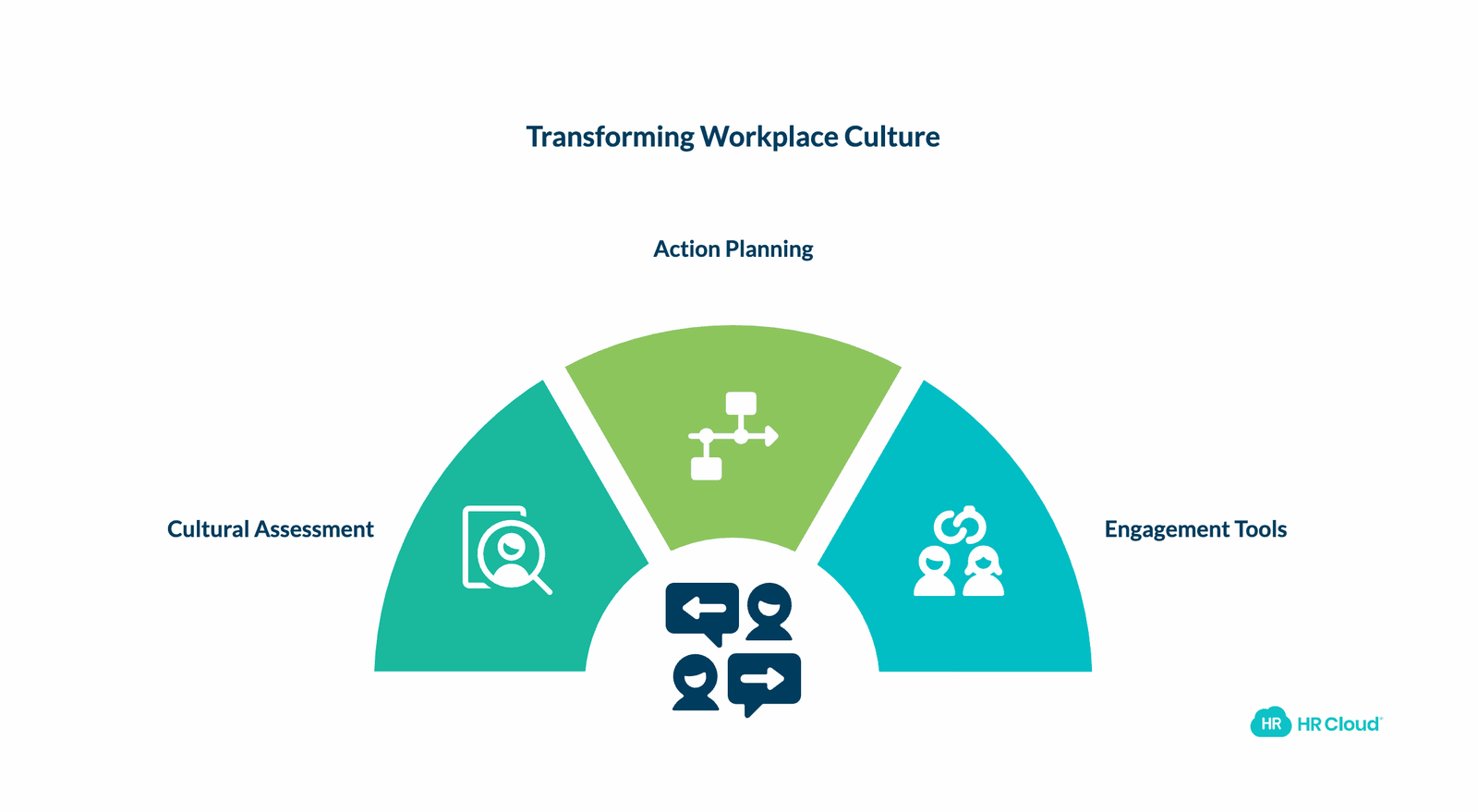
By gaining thorough understanding through cultural assessment, you can determine where gaps exist between the current state and the desired culture. This assessment answers the crucial question: "Is what we say we are truly what we are?"
Only then can a purposeful shift begin toward a workplace culture that aligns with business strategy while remaining meaningful to individual employees.
Identifying Cultural Gaps
Analysis of assessment data reveals patterns between stated values and actual behaviors. Common gaps include:
- Leadership says "innovation matters" but punishes failures
- Values emphasize "work-life balance" but reward excessive hours
- Communication is stated priority but decisions happen behind closed doors
- Collaboration is valued but individual competition is rewarded
Identifying these disconnects provides the roadmap for focused cultural interventions.
Creating an Action Plan
Effective action plans prioritize the highest-impact cultural gaps and include:
1. Share Results Transparently: Communicate findings with employees, acknowledging both strengths and challenges
2. Prioritize Top 3 Issues: Focus resources on highest-impact cultural gaps first
3. Assign Cultural Champions: Designate leaders responsible for specific initiatives
4. Build Quick Wins: Implement visible changes within 30-60 days to build momentum
5. Establish Recognition Programs: Use platforms like Workmates to reinforce desired behaviors
6. Track Progress: Monitor cultural metrics monthly through engagement tools
7. Celebrate Improvements: Publicly recognize teams and individuals driving cultural change
Measuring Progress with Engagement Tools
Modern engagement platforms enable continuous culture monitoring that was previously impossible:
- Pulse Surveys: Quick 5-question check-ins delivered monthly or quarterly through Workmates
- eNPS Tracking: Monitor employee Net Promoter Score in real-time
- Recognition Analytics: Track recognition patterns to understand values in action
- Communication Metrics: Analyze engagement with announcements and channels
- Sentiment Analysis: Use AI-powered insights to detect emerging cultural trends
- Benchmarking: Compare your cultural metrics against industry standards
These tools transform cultural assessment from a point-in-time snapshot into an ongoing feedback loop that informs decision-making.
Your culture can be a unique differentiator that influences talent attraction, retention, motivation, and employee engagement. A cultural assessment is the first step in answering critical questions and laying the foundation for meaningful, sustainable cultural transformation.
Interested in more tools to assess and cultivate culture at your company? Explore HR Cloud's complete platform for employee engagement, recognition, and organizational development.

Experience how Workmates can transform communication and strengthen culture—all in one powerful platform
Book Your Free DemoFrequently Asked Questions About Cultural Assessment
What is a cultural assessment?
A cultural assessment is a systematic evaluation of an organization's workplace culture that examines values, beliefs, behaviors, and practices through surveys, interviews, and observational methods. It provides objective data about current culture and identifies gaps between stated values and actual employee experiences.
When should a company conduct a cultural assessment?
Companies should conduct cultural assessments during significant change periods (mergers, rapid growth, leadership transitions), when experiencing retention challenges, low engagement scores, or misalignment between stated values and employee behaviors. Regular assessments every 12-18 months help track cultural health and measure the impact of initiatives.
What tools are used for cultural assessment?
Common tools include the Organizational Culture Assessment Instrument (OCAI), Denison Organizational Culture Survey, employee engagement surveys, focus groups, one-on-one interviews, and modern engagement platforms like Workmates that enable continuous monitoring through pulse surveys and analytics.
How long does a cultural assessment take?
A comprehensive cultural assessment typically takes 4-8 weeks, including planning (1 week), data collection (2-3 weeks), analysis (1-2 weeks), and reporting (1-2 weeks). Continuous assessments using engagement platforms provide ongoing insights with monthly or quarterly pulse checks that can be completed in days.
Can company culture actually change?
Yes, company culture can change, but it requires committed leadership, clear vision, systematic assessment, and sustained effort. Leaders must model desired behaviors, communicate why change matters, and provide tools like recognition programs and engagement platforms to reinforce new cultural norms consistently over 12-18 months minimum.
What is the OCAI assessment?
The Organizational Culture Assessment Instrument (OCAI) was developed by Kim Cameron and Robert Quinn at the University of Michigan. It measures organizational culture across six dimensions using the Competing Values Framework to categorize culture into four types: Clan (collaborative), Adhocracy (innovative), Market (competitive), and Hierarchy (structured).
About the author
Keep Reading


Like What You Hear?
We’d love to chat with you more about how HR Cloud® can support your business’s HR needs.
Book Your Free Demo