Goals vs Objectives: Understanding the Difference

Understanding Goals vs Objectives: The Foundation of Workplace Success
What's the difference between goals and objectives in the workplace? Goals are broad, long-term outcomes your organization wants to achieve, while objectives are specific, measurable steps that help you reach those goals. Think of goals as your destination and objectives as your roadmap.
According to a 2024 study by PwC, 37% of projects fail due to poorly defined objectives and unclear goals. Yet when organizations implement structured goal-setting frameworks, they see up to 25% improvement in employee productivity and 39% higher profitability in companies with well-aligned strategic objectives (McKinsey, 2024).
In this comprehensive guide, you'll learn how to set effective workplace goals, create measurable objectives, and leverage performance management tools to drive organizational success.
1. What are Goals and Objectives?
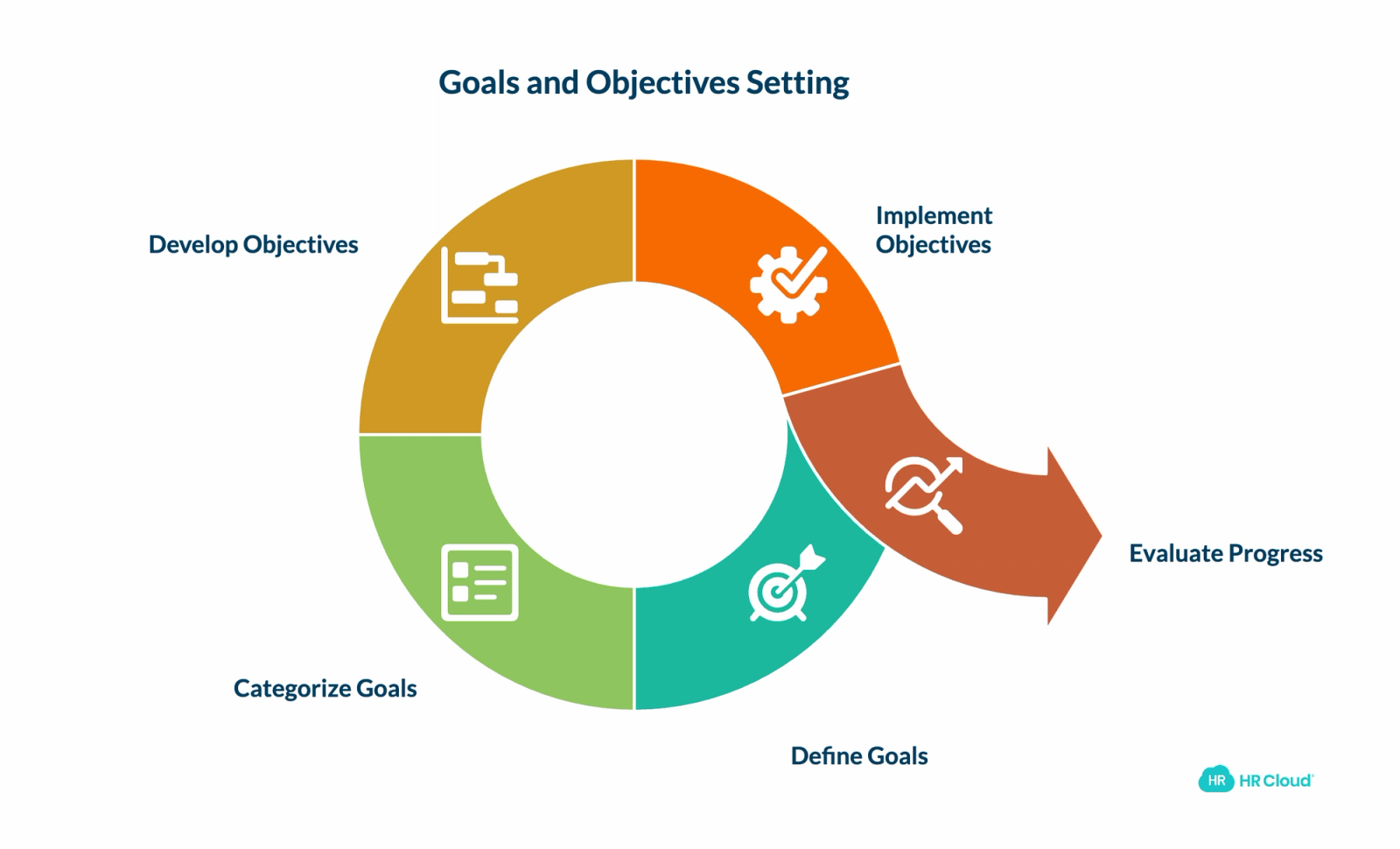
Goals and objectives provide focus and structure that empower your team with a sense of purpose. Research from the American Psychological Association shows that written goals increase achievement rates by 42%.
What Are Goals?
A goal is the expected outcome, which should be ambitious but achievable. It can be long-term or short-term and primarily focuses on the business's operational, financial, and productivity health. For instance, a goal can be reducing employee turnover, increasing revenue, or adopting new operating procedures.
The best approach to use when creating strategic and clear plans is the SMART method. This means crafting Specific, Measurable, Attainable, Realistic, and Time-bound goals. Dr. Edwin Locke's pioneering research on goal-setting theory demonstrated that complex, challenging goals lead to higher performance than vague "do your best" approaches.
The most popular types of goals are:
- Process-oriented goals: These goals focus on changing workflows, systems, and processes. Instead of focusing on particular results, process goals involve the methods your team utilizes to finish tasks. Organizations using HR automation see 60% reduction in administrative time according to SHRM's 2024 HR Technology Report.
- Outcome-oriented goals: These goals promote significant changes in the business plan or performance. They involve measurable, smaller steps toward the desired results—think revenue targets, customer satisfaction scores, or market share growth.
- Time-based goals: These goals involve particular objectives and have a time limit. They are similar to time-bound goals but emphasize the temporal aspect of goal-setting, creating urgency and focus.
What Are Objectives?
Objectives, on the other hand, provide a road map or action plan for your overall goals. They are measurable efforts with specific targets and are typically time-bound. You can easily determine objectives by breaking down primary goals into small, achievable steps.
Effective objectives allow your team to focus more on manageable steps instead of the broader outcomes. Performance management platforms like HR Cloud's Perform make it easy for your team to understand which actions to take to achieve success while motivating them to embrace the final goals.
Common types of objectives are:
- Operational objectives: These objectives encourage team collaboration and ensure everyone remains on track. They become short-term benchmarks for the business strategy—daily, weekly, or monthly targets that keep momentum.
- Tactical objectives: These objectives ensure alignment between the long-term milestones and the short-term deliverables. A tactical objective often serves as a bridge between strategic goals and day-to-day operations, typically spanning quarters or fiscal years.
- Strategic objectives: Such objectives help you visualize long-term goals by providing direction, vision, and structure to your team. They connect directly to your organization's mission and are usually set for 3-5 year timeframes.
Goals vs Objectives: Understanding the Key Differences
| Aspect | Goals | Objectives |
|---|---|---|
| Scope | Broad, big-picture outcomes | Specific, detailed actions |
| Timeframe | Long-term (1-5 years) | Short-term (days to quarters) |
| Measurement | Directional progress | Concrete metrics (KPIs) |
| Example | "Become industry leader in employee retention" | "Reduce turnover by 15% in Q2 through improved onboarding" |
| Nature | Aspirational and visionary | Actionable and measurable |
| Flexibility | Generally stable | Adaptable based on results |
The Importance of Setting Clear Goals and Objectives
It's vital to align goals and objectives as it's an excellent and effective way to ensure success. Creating goals without related objectives increases the risk of failing to achieve your goals by up to 40%, according to Gartner research.
Goals don't outline how to attain them but they determine the direction of your efforts. They should be in line with your business's mission statement and company values.
Some outstanding benefits of clear goals and objectives include:
- Provides Direction: Goals provide direction for your team's efforts, enabling everyone to move in the same direction. Objectives help you determine your progress toward the broader goals through measurable performance metrics.
- Enhances Prioritization: Goals assist in prioritizing, allowing you to focus on achievements that have the most impact on your business. Objectives give your team a sense of achievement, motivating employees to pursue the ultimate goals.
- Builds Confidence: Achievable goals instill confidence in your team, as they understand the targets and how long they need to achieve the desired results. Clear objectives help to simplify and inform decision-making when unsure of the best way forward.
- Drives Accountability: Goals motivate your team into action regardless of challenges while objectives determine the targets you expect of your team. HR Cloud's goal tracking software enables real-time progress monitoring and accountability.
How Goals and Objectives Drive Organizational Success
Having measurable goals complimented by the right objectives helps your team enhance performance, monitor progress, and prioritize efforts. They become a common language that you can use to ensure collective collaboration that drives success.
Adopting an effective goal-setting strategy keeps your business's operational execution and strategic leadership aligned, allowing you to set, pursue, and evaluate key goals. Research from SHRM indicates that companies with aligned goals and objectives see 31% lower voluntary turnover rates.
Goals provide a target, focus, and direction while objectives simplify the mission and vision into smaller and easier steps. Additionally, both offer evidence of tangible progress and transparency, helping your team handle challenges and enhance collaboration and performance management.
2. The Purpose of Goals in the Workplace
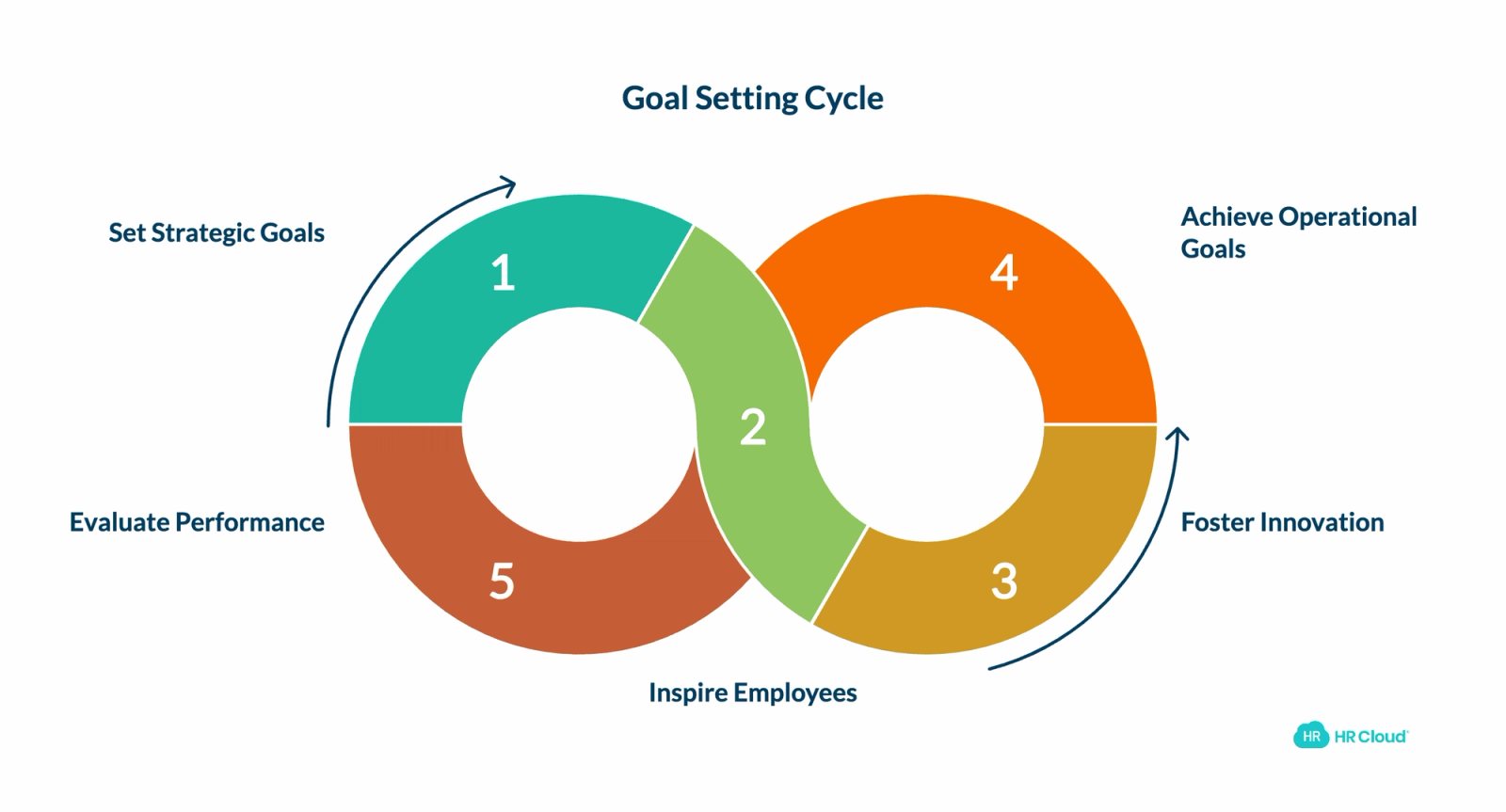
Setting goals in the workplace is an excellent way to positively impact your team's productivity and business success. Goals determine where and how everyone utilizes resources, time, and energy.
Concrete goals and objectives provide actionable ways to keep team members motivated and focused. According to McKinsey's 2024 organizational performance research, companies with well-defined strategic goals are 2.5 times more likely to outperform competitors.
Setting Strategic Goals
Strategic goals propel your business toward a well-outlined direction that will ultimately lead to long-term success. Having such a direction helps your team achieve the overall goals by focusing on smaller steps. Understanding the difference between goal vs strategy is crucial for effective business planning. This understanding forms the foundation of strategic planning goals and objectives.
1) Establishing Long-term Direction
Strategic goals are big-picture and long-term objectives, not short-term plans that address a new challenge or issue. They outline where your business needs to be, and provide particular targets or desired end results. A strategic goal definition would encompass the overarching aims that guide an organization's direction and decision-making processes.
Strategic goals help you translate your mission statement into more meaningful and time-sensitive OKRs through qualitative and quantifiable results. Using HR Cloud's Perform module, organizations can create automated performance cycles, define group and individual goals, and track progress with real-time dashboards.
2) Inspiring and Motivating Employees
Most leaders find it challenging to maintain high team morale. Setting goals and objectives is a simple yet effective way to keep everyone energized and motivated. Team members can direct their energy and time towards activities that boost productivity. This in turn results in higher job satisfaction and a confidence boost.
Workmates employee engagement platform helps celebrate goal achievements through peer recognition, company-wide announcements, and rewards programs—creating a culture of continuous motivation.
“The platform connects associates to each other in a way that doesn’t happen through email.”
— Gail Gust, Director of Marketing and Business Development

3) Fostering Innovation and Growth
Pacesetters in any industry understand that clear objectives and goals have a positive impact on team alignment, productivity, and motivation. Your business's success largely depends on the collective skills and knowledge of your team. It's therefore vital to nurture a culture of continuous growth and innovation.
Such a proactive approach ensures everyone continuously refines existing skills while acquiring new ones. It empowers you and your business to thrive and adapt to dynamic market conditions. It becomes easier to attract and retain top talent, which encourages creativity and innovation.
Furthermore, setting goals can help team members think creatively, navigate new challenges, and create new ideas. It's the best way to remain relevant in your industry and maintain a competitive edge.
Achieving Operational Goals
Every business or company requires clear strategic objectives and vision to ensure sustainable growth. Operational goals turn strategic planning into achievable OKRs. They provide time-sensitive KPIs (Key Performance Indicators) or targets. You can easily monitor long-term and short-term objectives. Understanding what are operational goals is crucial for effective management and execution of business strategies.
1) Improving Efficiency and Productivity
Businesses have to adapt as necessary if they wish to foster an environment that encourages growth and performance. Having clear expectations and goals is a vital factor that impacts efficiency and productivity. It provides a sense of purpose and direction, making everyone understand how their efforts affect the business.
HR Cloud's HRIS centralizes employee data, automates workflows, and provides visibility into goal progress—enabling managers to identify bottlenecks and optimize team performance.
2) Enhancing Team Collaboration
Teams require common factors to work effectively and goals bring together employees, regardless of their roles. Synergy and effort co-ordination help teams work toward a shared direction which ensures positive outcomes.
Workmates collaboration tools enable teams to communicate goal progress, share updates, and coordinate efforts through customizable channels and company-wide announcements.
3) Evaluating Performance and Progress
Outlining objectives and goals correctly and accurately can help you assess your business's success and team performance. Employees become more accountable for their work when they have defined targets to focus on.
Team members understand your expectations and are more likely to deliver outstanding quality. Operational goal examples in management play a crucial role in this evaluation process, providing concrete benchmarks for performance assessment.
HR Cloud's performance analytics provide real-time reporting, goal completion rates, and 9-box talent matrices—giving leadership data-driven insights into organizational performance.
3. The Importance of Objectives in the Workplace
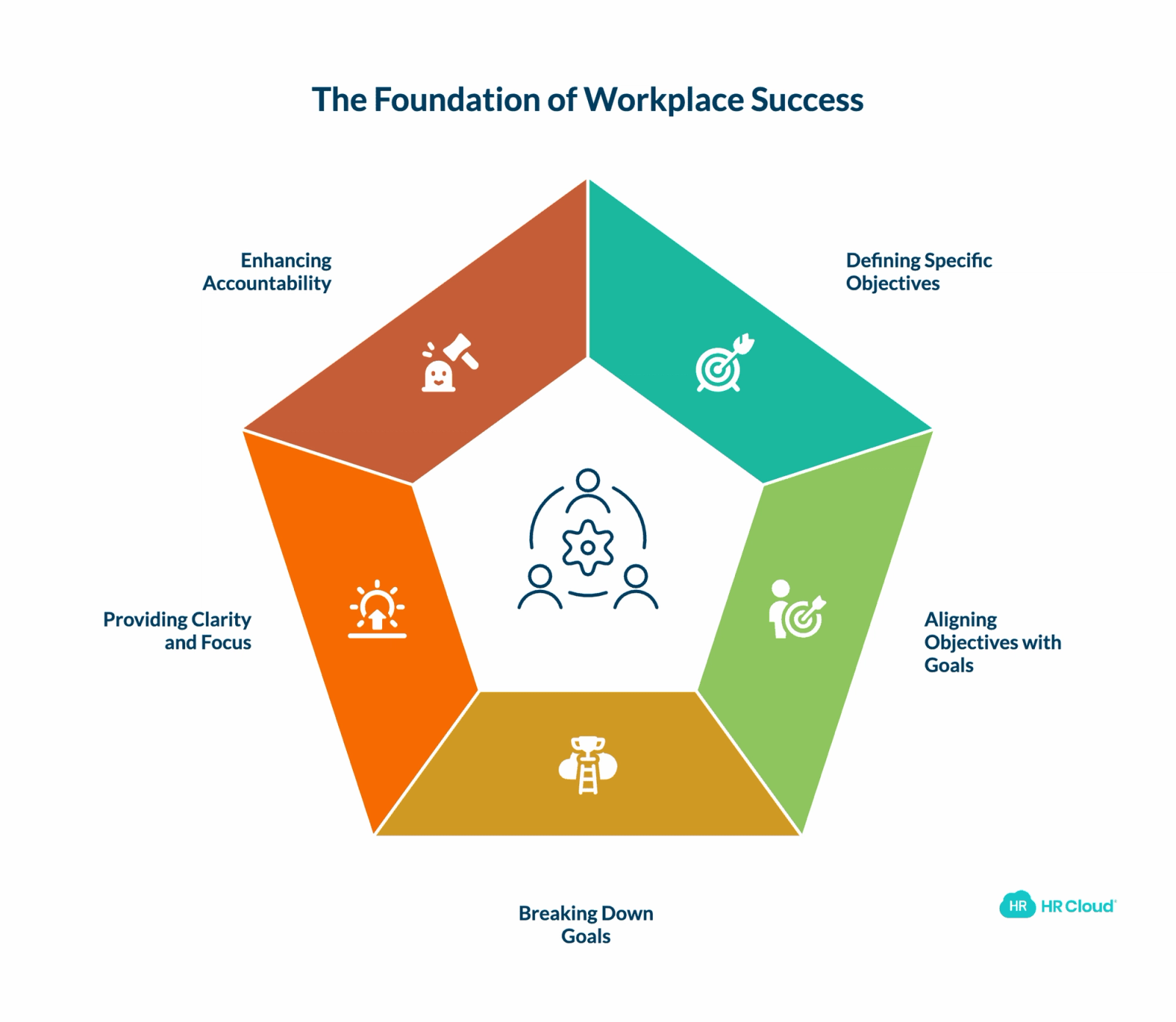
When your team knows what you expect from them, they have higher chances of attaining and exceeding those expectations. Instead of wasting valuable time on fruitless tasks, they can confidently deliver outstanding quality while optimizing time. Objectives serve as a way to keep employees on course and working toward an over-arching company goal.
They provide focus, and direction, set expectations, and also provide motivation for your workforce.
Defining Specific Objectives
Defining particular objectives brings out their real value. When every team member understands what you expect from them, it's easier for them to relate how they contribute to the broader goals. This aligns individual objectives with your vision, business strategy, and goals.
1) Breaking Down Goals into Actionable Steps
Objectives break down goals into smaller steps, clarifying the direction your team needs to take, which ensures sustainable progress. This process is similar to creating a work breakdown structure, which helps in resource allocation and goal achievement. By transforming goals into actionable tasks, objectives make the path to success more tangible and manageable.
For example, if your goal is "Improve employee retention by 20% this year," your objectives might include:
- Implement quarterly stay interviews with all team members by Q2
- Launch mentorship program pairing 50 junior employees with senior leaders by June
- Reduce time-to-hire by 30% through streamlined onboarding automation by Q3
2) Providing Clarity and Focus
Objectives provide clarity and focus by providing a well-defined and precise understanding of the desired outcome. They enable you to outline details such as when, how, why, and what your goals are. With a clear vision and OKRs, it's easy to evaluate progress, remain focused, and outline priorities.
HR Cloud's goal tracking features allow both managers and employees to monitor individual and group goals, update progress bars, leave comments, and ensure alignment throughout the organization.
3) Enhancing Accountability and Measurement
Objectives require team members to take responsibility for their decisions, performance, behavior, and actions. Such accountability is a robust catalyst for higher performance, commitment, and success. According to Gallup research, teams with clear accountability structures are 2.5 times more likely to be high-performing.
Aligning Objectives with Goals
Aligning objectives with goals brings more clarity to everyone's responsibilities and expectations, especially in a remote work culture where face-to-face interactions are limited so it's easy to misinterpret some actions. In addition to enhancing employee engagement, it instills motivation to perform better as team members know how their daily activities tie to the business objectives.
Such a goal-centric environment keeps your team moving towards the right goals and fosters a positive work culture.
1) Ensuring Consistency and Alignment
Creating alignment between individual goals and business objectives is a great way to ensure consistency. It forms the basis for improving productivity as your team understands the business's strategic objectives, mission, and vision.
HR Cloud's performance management system enables goal cascading—where organizational goals flow down to departmental goals, team goals, and individual employee goals—ensuring everyone's efforts contribute to the broader mission.
2) Building a Framework for Success
Objectives give daily activities purpose and direction, making it easier to handle emerging challenges. Focusing on particular outcomes and the tasks that truly matter enhances time management and efficiency while keeping your team motivated.
3) Adapting Objectives to Changing Priorities
Any change in priorities calls for a review of your objectives. After all, objectives are your priority so these two aspects should shift and grow together. It's essential to keep objectives revisable and amendable. They should reflect the change and growth you wish to see in your business.
Modern performance platforms like HR Cloud's Perform allow real-time goal updates, progress tracking, and flexible objective modifications—ensuring your team can pivot quickly when business priorities shift.
4. Balancing Goals and Objectives for Success
Most successful businesses outline ambitious yet achievable goals and objectives. Break down the overall goals into clear objectives and communicate the same to everyone. Getting this right within your business establishes a strong foundation for future success.
Understanding the relationship between goals, objectives, strategies, and tactics is crucial for effective business planning. This comprehensive approach, often referred to as goals strategies tactics, ensures that every aspect of your business plan is aligned and working towards the same end.
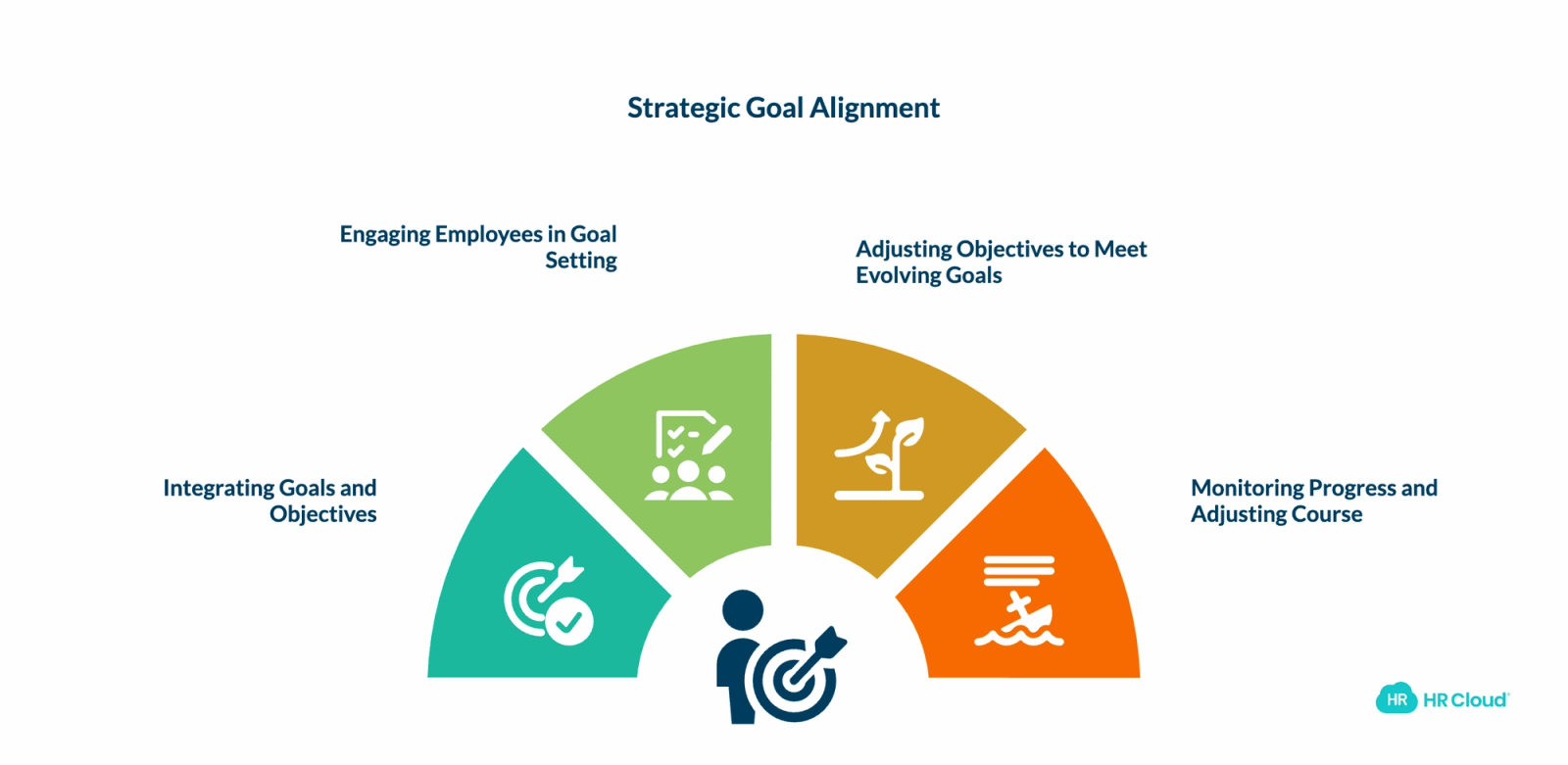
Integrating Goals and Objectives
Setting business objectives and goals may seem easy, but it's essential to note that these goals shouldn't be related to only what you want to achieve. There needs to be a direct relationship between your business strategy and KPIs (key performance indicators) or OKR (objectives and key results). These quantifiable success measures help your team justify why they need and should achieve the goals.
1) Creating a Cohesive Strategy
It's crucial to have a cascading relationship between KPIs, objectives, and goals. KPIs link to objectives, which then link to goals. Creating such a cohesive strategy helps everyone understand precisely how initiatives and tasks contribute to top-level objectives and goals. This approach aligns with corporate-level strategies and functional-level strategies, ensuring that goals, strategies, and tactics are all working in harmony.
Example Goal Cascade:
- Company Goal: Become the employer of choice in the healthcare industry
- Department Objective: Reduce employee turnover by 25% in nursing staff by Q4
- Team KPI: Achieve 90% completion rate of quarterly check-ins
- Individual Task: Complete monthly one-on-ones with all direct reports
HR Cloud's unified platform connects onboarding, performance management, employee engagement, and HRIS—creating a seamless goal-tracking ecosystem across the entire employee lifecycle.
2) Engaging Employees in Goal Setting
There's a deep connection between goal setting and motivation. Empowering your team to define individual and team goals keeps everyone engaged. They know the direction to move and have the motivation brought by a sense of ownership over the business goals.
Research from SHRM shows that employee-driven goal setting increases goal achievement rates by 33% and improves retention by 18%.
3) Adjusting Objectives to Meet Evolving Goals
Adaptability and flexibility are key pillars of effective goal-setting. Learning how to adjust objectives based on how the goals evolve helps your business adapt to dynamic market conditions. It involves identifying how to maintain the goal's essence and core while keeping an open mind to explore different methodologies and plans.
Monitoring Progress and Adjusting Course
Regular progress monitoring is an effective way to keep your business goals and objectives achievable and relevant. It makes it easier to modify goals to adapt to changing market conditions. Additionally, it enables your team to identify potential challenges and leverage new opportunities.
1) Implementing Regular Check-ins and Reviews
Maintaining a continuous feedback loop ensures adaptability and sustainability. Implement a system that promotes regular check-ins and reviews to evaluate employee progress toward the OKRs and overall goals.
Schedule team check-ins and individual meetings to discuss challenges, celebrate accomplishments, and plan how to pivot accordingly. HR Cloud's automated performance cycles send reminders, track completion rates, and enable manager-employee dialogue throughout the review process.
2) Identifying Challenges and Roadblocks
When breaking down goals into achievable objectives, it's essential to consider potential hurdles your team may face. Discussing and anticipating these roadblocks in advance enables your team to devise creative contingency plans and solutions.
3) Making Data-Driven Decisions for Improvement
Data is an invaluable and robust asset for any business. Grounding your goals and objectives in data simplifies progress monitoring and tracking while ensuring transparency. Access to real-time results and updates helps your team achieve targets and adjust as necessary to maintain productivity and performance.
Key performance indicators (KPIs) play a crucial role in this data-driven approach, providing measurable values that demonstrate how effectively a company is achieving key business objectives.
HR Cloud's analytics dashboards provide real-time insights into goal completion rates, performance trends, employee engagement scores, and turnover risk—enabling leaders to make informed decisions backed by concrete data.
SMART Goals Framework: The Blueprint for Success
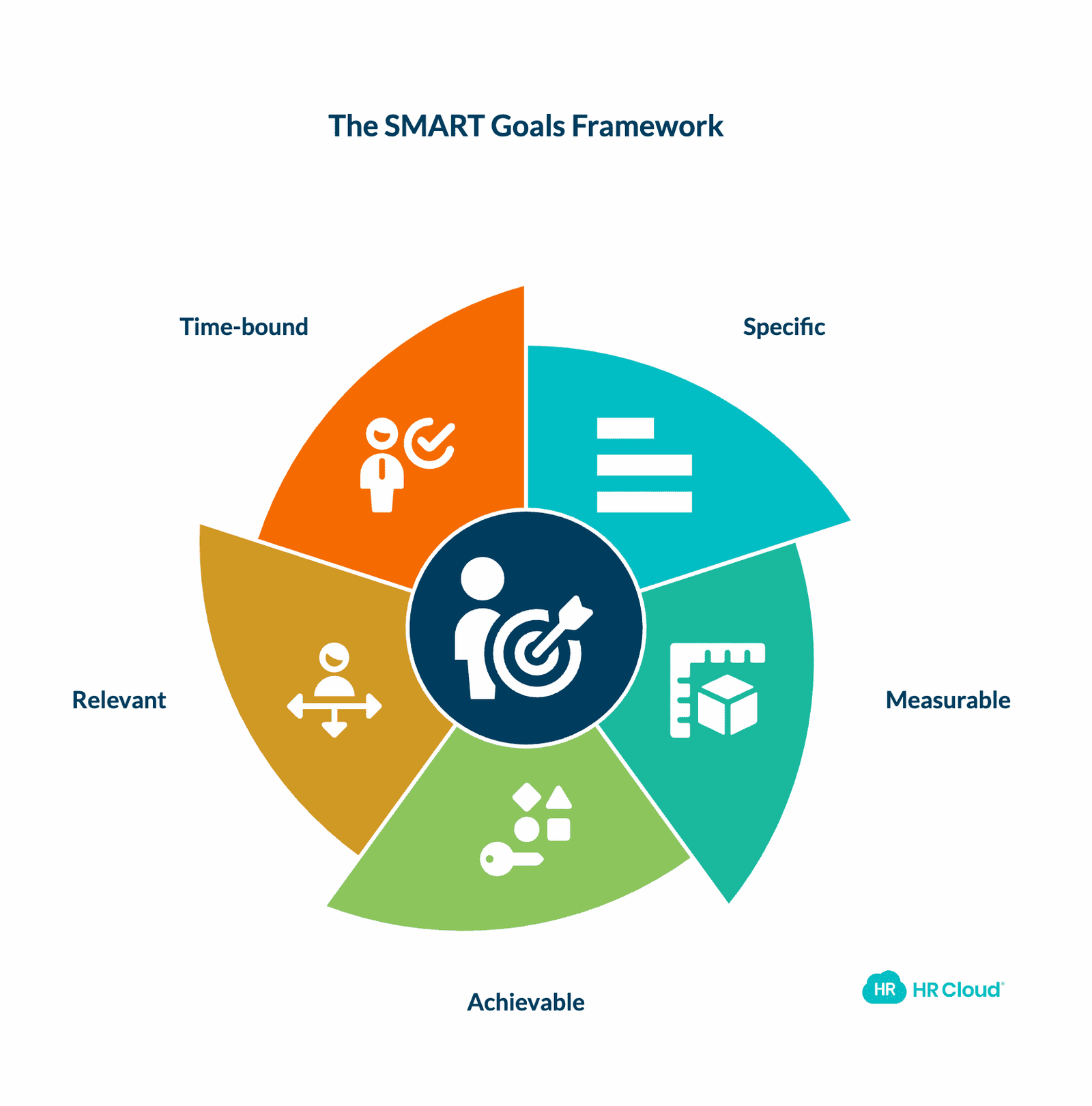
The SMART framework remains the gold standard for effective goal-setting in 2025. Originally developed by George T. Doran in 1981, this methodology ensures every goal is:
- Specific: Clearly defined with no ambiguity
- Measurable: Quantifiable with trackable metrics
- Achievable: Realistic given available resources
- Relevant: Aligned with broader business objectives
- Time-bound: Has a clear deadline
SMART Goal Example:
Weak: "Improve employee engagement"
SMART: "Increase employee engagement scores from 65% to 80% by December 31, 2025, through quarterly pulse surveys, monthly recognition programs, and manager training on feedback delivery"
According to research by Atlassian, teams using SMART goals are 3x more likely to achieve their targets compared to those using vague objectives.
HR Cloud's performance management tools include built-in SMART goal templates, automated progress tracking, and customizable rating scales—making it easy for managers and employees to set, monitor, and achieve structured goals.
Conclusion
Goals and objectives have an impressive potential to inspire a mindset of purpose, growth, and progress. They help to foster a work environment that encourages continuous improvement.
Creating objectives and setting goals is an iterative process that requires continuous realignment, refinement, and evaluation. It's a learning process that aims to keep your business agile and resilient to changing conditions.
Learning how to balance goals vs. objectives can empower you to design initiatives that optimize your team's potential and drive company growth.
Understanding the difference between goals and objectives, as well as their relationship to strategies and tactics, is crucial for effective business planning. By setting clear strategic goals and objectives, operational goals, and tactical objectives, businesses can create a framework for success that aligns with their mission statement and company values.
This approach not only enhances goal achievement and goal progression but also contributes to increased brand awareness and customer loyalty.
Remember, the key to success lies in:
- Setting SMART goals with clear success metrics
- Developing measurable outcomes tied to business objectives
- Consistently monitoring performance metrics and adjusting course
- Leveraging technology to automate tracking and maintain accountability
Whether you're focusing on strategic planning goals and objectives or operational goal examples, the principles remain the same: clarity, alignment, and continuous evaluation are essential for business success.
HR Cloud's unified platform brings together goal tracking, performance management, employee engagement, and HRIS into one seamless system—empowering organizations to set, monitor, and achieve goals at every level of the business.
Ready to transform your goal-setting process? Book a demo of HR Cloud's Perform to see how automated performance cycles, goal tracking, and real-time analytics can drive measurable results across your organization.

Discover how our HR solutions streamline onboarding, boost employee engagement, and simplify HR management
Book Your Free DemoFrequently Asked Questions
How do you set SMART goals in the workplace?
SMART goal-setting involves crafting Specific, Measurable, Achievable, Relevant, and Time-bound goals to promote effectiveness and clarity. Start by defining the exact outcome you want, identify metrics to track progress, ensure it's realistic with available resources, align it with business priorities, and set a concrete deadline. HR Cloud's goal tracking software provides templates and automated tracking to simplify this process.
What is the difference between short-term objectives and long-term goals?
Long-term goals require in-depth evaluation and planning as they determine the business purpose and direction for an extended period (typically 3-5 years). Short-term objectives are immediate, actionable, and simpler steps that push your team toward attaining long-term goals within weeks, months, or quarters. For example, a long-term goal might be "Establish market leadership in employee retention," while a short-term objective could be "Reduce Q2 turnover by 10% through enhanced onboarding."
How can organizations ensure alignment between goals and objectives?
The key to ensuring alignment between goals and objectives is effective, consistent, clear, and strategic communication. Ensure goals are a common aspect in performance reviews, and one-on-one, team, and executive meetings. Keep your decisions and initiatives connected to business goals and communicate objectives regularly to align, remind, and reinforce the message across your team. HR Cloud's Perform module enables goal cascading from organizational to individual levels, ensuring every employee understands how their work contributes to company success.
What's the difference between OKRs and goals?
OKRs (Objectives and Key Results) are a specific goal-setting framework where Objectives are ambitious, qualitative goals, and Key Results are measurable outcomes that track progress toward those objectives. Goals are broader desired outcomes, while OKRs provide a structured methodology for defining and measuring those goals. Learn more about how OKRs support performance management.
How often should goals and objectives be reviewed?
Best practices recommend quarterly reviews for strategic goals and monthly check-ins for tactical objectives. High-performing organizations conduct weekly or bi-weekly reviews of operational objectives. The key is creating a consistent cadence that allows for timely adjustments without creating review fatigue. HR Cloud's automated performance cycles can be configured for any review frequency, with automatic reminders and progress tracking.
What are KPIs and how do they relate to goals and objectives?
KPIs (Key Performance Indicators) are specific, measurable metrics that track progress toward objectives and goals. While goals define what you want to achieve and objectives outline how to get there, KPIs measure whether you're succeeding. For example, if your objective is "Improve employee retention," relevant KPIs might include turnover rate, retention rate by department, and average tenure. HR Cloud's analytics automatically track and visualize these KPIs in real-time dashboards.
Author Bio:
Nisha Joseph is a Content Manager of Profit.co. In her current role, she leads the content marketing team with experience in various fields, such as science, education, law, and management. She is a well-rounded individual with diverse interests and skills.
Keep Reading


Like What You Hear?
We’d love to chat with you more about how HR Cloud® can support your business’s HR needs.
Book Your Free Demo