
7 Tips on Managing Your Employees Effectively

What separates managers whose teams consistently perform and stay from those who constantly deal with disengagement and turnover?
Managing employees effectively comes down to a set of repeatable behaviors — not personality traits — that create clarity, trust, and connection regardless of team size or industry.
Why is the cost of getting this wrong higher than most organizations realize?
Beyond the recruiting fees and training time, the institutional knowledge and team morale that leave with every preventable departure compound into a retention crisis most leaders only recognize too late.
How can managers and HR leaders build these habits at scale without adding more administrative work to already full plates?
The right combination of consistent weekly habits and HR technology removes the friction that turns good management intentions into administrative bottlenecks.
You've got a team member who was crushing it six months ago and now barely shows up mentally. Another one just left for a competitor you know isn't even that great. And there's a meeting in twenty minutes where you're supposed to motivate people through yet another round of changes nobody asked for.
Managing employees is the hardest part of running a business. Not because the principles are complicated, but because people are complicated. What works for one person backfires with another. The advice that sounded brilliant in a leadership book falls apart when you're dealing with a burned-out nurse at 3 PM on a Friday or a construction crew that's already heard three "new initiatives" this year.
This guide skips the theory and gives you seven strategies for managing employees effectively in the real world, across industries, team sizes, and work arrangements. Each one comes from what we've seen work with the thousands of organizations that use HR Cloud, from 50-person healthcare practices to multi-site manufacturing operations.
Why Managing Employees Well Is the Highest-ROI Investment You Can Make
Let's be direct: managing employees well has always mattered. But the margin for error is thinner now than it's ever been.
Your best people have options. Remote and hybrid work opened up the job market to anyone with a laptop and a decent internet connection. Your average employee decides within six months whether they're staying or leaving. And the cost of getting it wrong, the recruiting fees, the training time, the institutional knowledge that walks out the door, adds up fast. SHRM estimates it costs six to nine months of an employee's salary just to replace them. (For a deeper look at this problem, read our guide on reducing employee turnover.)
Meanwhile, Gallup's research consistently shows that 70% of the difference between a great team and a mediocre one comes down to one factor: the manager. Not the company perks. Not the salary band. The manager.
That's both intimidating and encouraging. It means you have more influence over your team's performance, satisfaction, and retention than almost any other variable in the equation. These seven strategies show you where to focus that influence for the biggest return.
1. Stop Hiring for Skills Alone and Start Hiring for How People Work
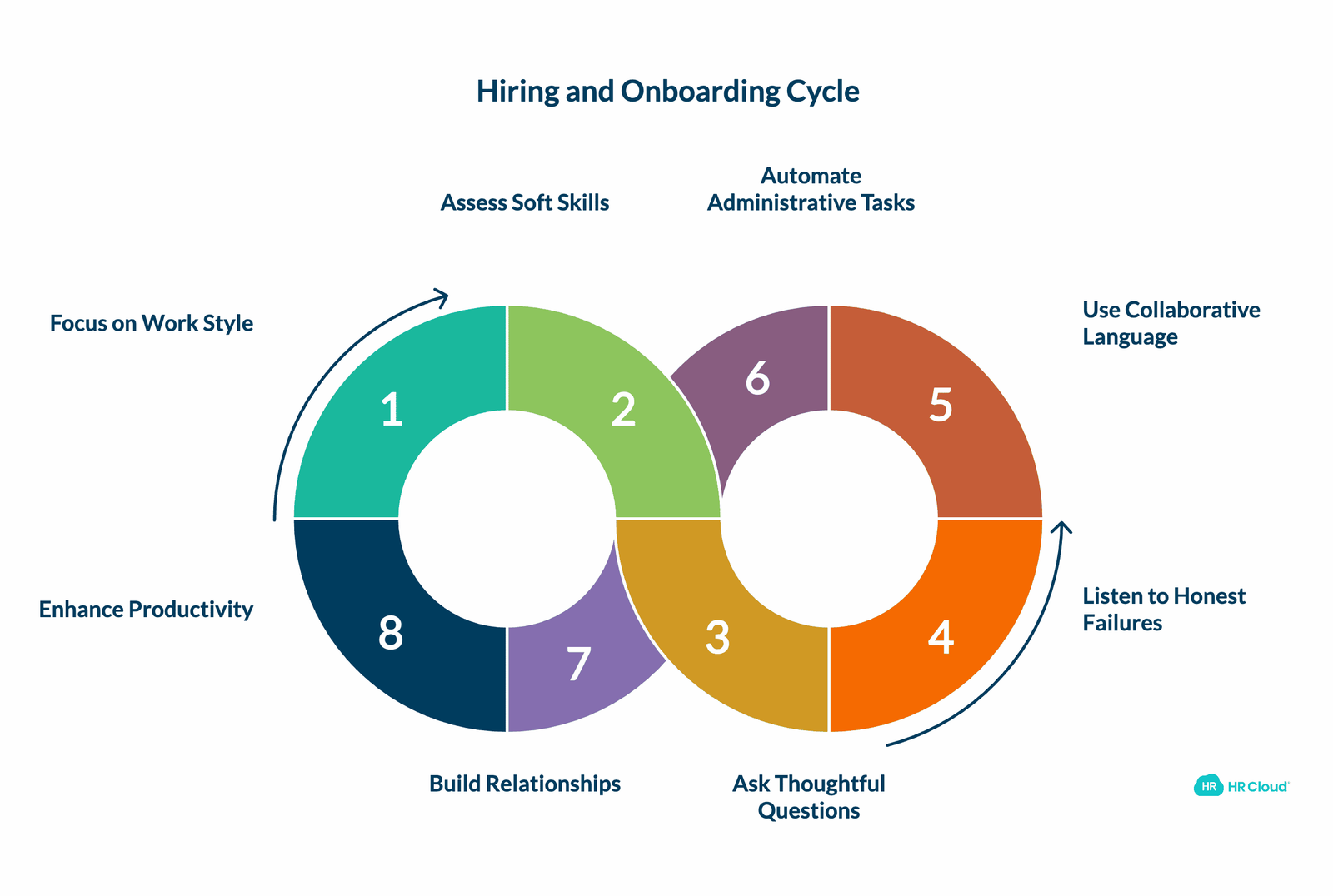
Most bad management situations start with a bad hire. And most bad hires happen because the interview focused entirely on whether someone could do the job, rather than how they'd do it alongside your existing team.
Skills matter, obviously. But you can teach someone a new software platform. You can't easily teach someone to be adaptable when plans change, to manage conflict without escalating it, or to take ownership when something goes wrong.
When you're interviewing, pay attention to the candidates who ask thoughtful questions about the team, not just the role. Listen for people who describe past failures honestly and what they learned, rather than people who've conveniently never failed at anything. Look for collaborative instinct: the "we" language rather than the "I did this" language.
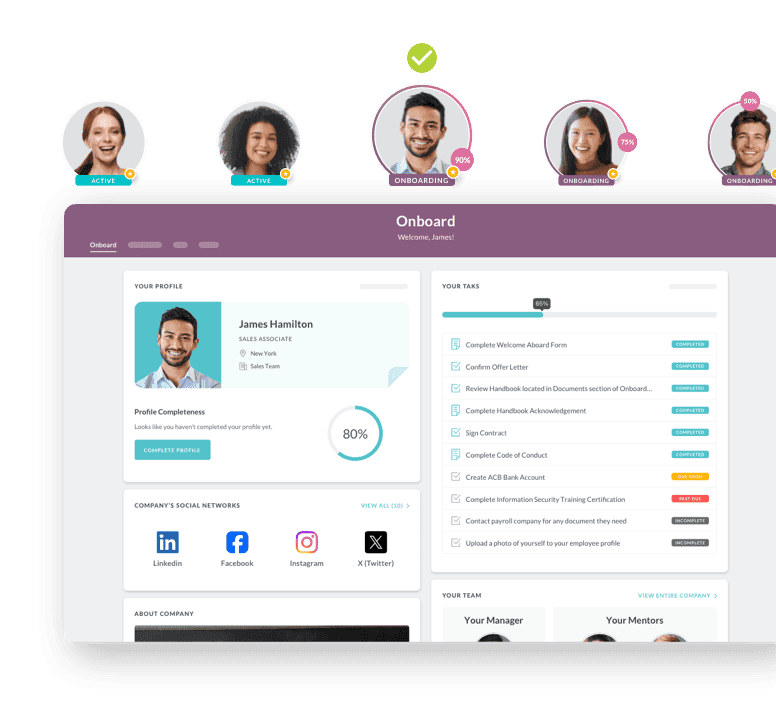
Then protect your hiring investment with onboarding that actually works. The traditional approach (here's a stack of forms, here's your desk, good luck) fails everyone. New hires spend their first week drowning in paperwork instead of building relationships and learning how they fit into the team.
Automate the administrative pieces so they're done before day one. I-9 verification, benefits enrollment, tax forms, and policy acknowledgments can all happen digitally before someone walks through the door. HR Cloud's Onboard platform handles that entire workflow, which means a manager's first conversation with a new employee is about the work, the team, and the culture, not about tracking down a missing signature.
Healthcare organizations like Orlando Health and Sutter Health use this approach because in clinical environments, every day a new hire isn't productive has a direct impact on patient care. But the principle applies everywhere: the faster someone feels like they belong and understands what's expected, the more likely they are to stay and perform.
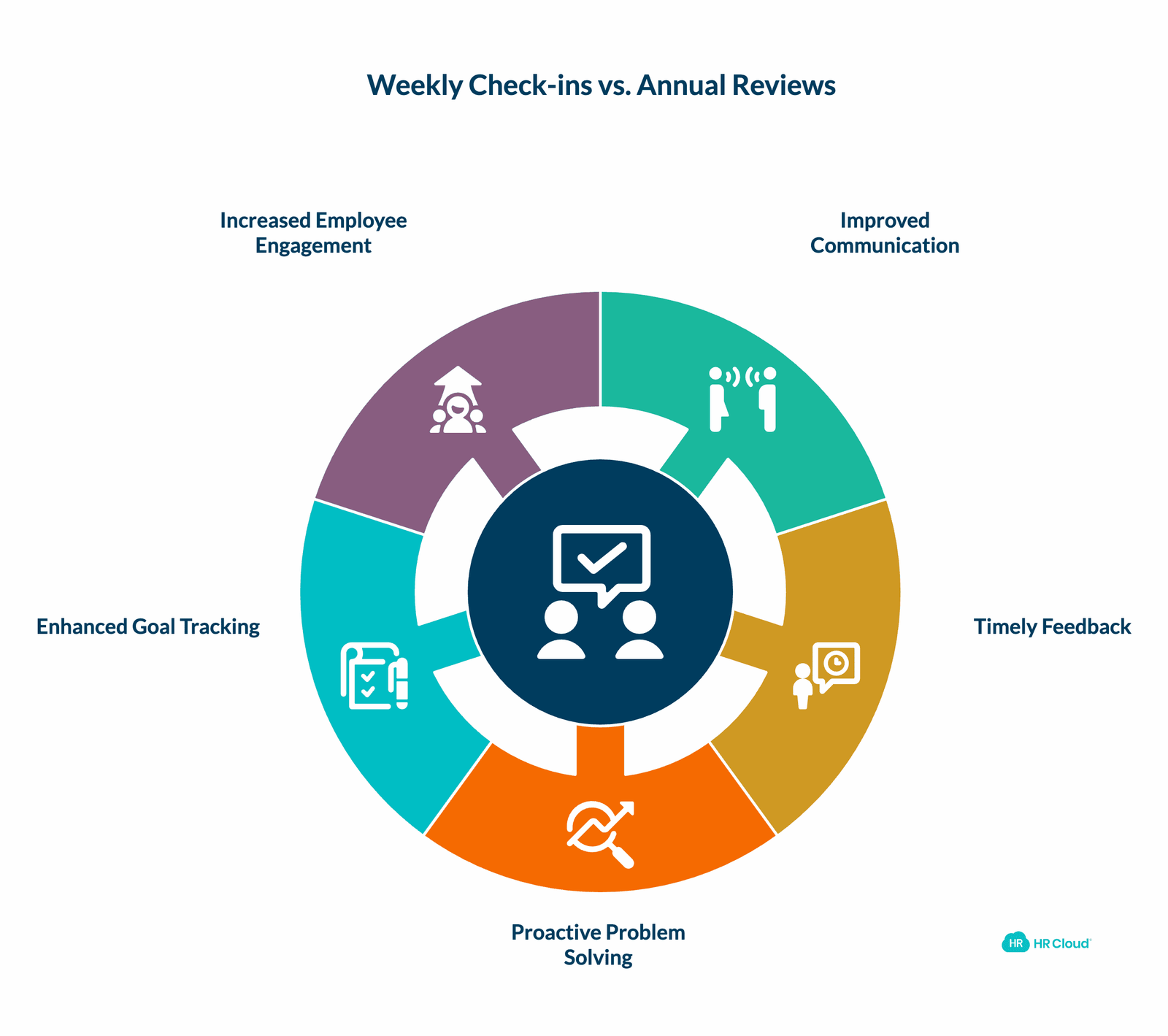
2. Ditch the Annual Review and Talk to Your People Every Week
Here's something nobody wants to admit about managing employees: most managers think they're giving feedback way more often than their employees think they're receiving it.
Gallup's 2025 workplace research quantified this gap and the finding should make every manager uncomfortable. Half of managers say they give feedback to their direct reports every week. Only one in five of those direct reports agrees. That disconnect means managers are walking away from hallway conversations thinking "I just coached someone" while the employee walks away thinking "that was small talk."
Annual performance reviews compound the problem. By the time you sit down for a formal review, you're trying to remember what happened nine months ago, the employee feels blindsided by feedback they never heard in real time, and the whole exercise feels performative rather than productive.
The fix is simple but requires discipline: a short, structured weekly check-in. Fifteen minutes. Three questions: What did you accomplish this week? What's in your way? What do you need from me?
That's it. No elaborate framework. No multi-page forms. Just a consistent, documented habit of paying attention to each person on your team and removing obstacles before they become crises. The key word is documented. If the conversation isn't written down somewhere, it didn't happen, because neither of you will remember it accurately three months from now.
For goal-setting, get specific. "Improve customer satisfaction" is a wish, not a goal. "Reduce average customer response time from 24 hours to 4 hours by end of Q2, measured through our support platform" is something both of you can track and discuss during those weekly check-ins. For a deeper look at structuring this process, see our guide on the performance management process.
HR Cloud's performance management tools give you a place to document these conversations, track goals, and run 360-degree reviews when you need them. When everything lives in a manager's head, nothing survives a vacation, a role change, or an unexpected departure.
3. Meet Your People Where They Actually Are
If your primary communication channel is email, you're talking to yourself. Field employees don't check email. Frontline healthcare workers don't sit at desks. Manufacturing floor staff aren't refreshing their inbox between shifts. And even for office-based teams, your important update is buried under meeting invites and reply-all threads before most people see it.
Effective communication when managing employees requires two things: channels that reach everyone and confirmation that critical messages were actually received.
Company-wide announcements should have read-receipt tracking so you know whether 100% of your workforce saw the new safety protocol or just the 40% who happened to check email that day. Department-specific channels prevent the noise problem while keeping relevant teams informed. And mobile access is non-negotiable if you have any employees who don't sit at computers.
HR Cloud's communication platform centralizes all of this, including a mobile app that puts company updates, peer recognition, and team conversations in one place for deskless workers. For organizations with crews in the field, nurses on the floor, or hourly staff across multiple locations, this is what closes the information gap that causes most frontline disengagement.
But tools only solve half the problem. The other half is the human work: learning each person's communication style, understanding their career aspirations, and paying enough attention to notice when something's off before it becomes a resignation letter.
When conflicts happen (they will), handle them privately and constructively. When wins happen, celebrate them publicly. That pattern, private correction and public recognition, builds trust faster than any platform or policy.
4. Make It Safe for People to Tell You What's Actually Going On
Your employees are editing what they say to you. They're softening bad news, staying quiet when they disagree, and not flagging problems they think you'll blame them for.
This is rational behavior. And it's one of the most dangerous dynamics in managing employees, because it means you're making decisions based on incomplete information. The project that's behind schedule, the process that's frustrating customers, the team dynamic that's pushing someone toward the exit: you'll be the last to know.
Google spent years studying what separates their highest-performing teams from average ones. The answer wasn't smarter people or better tools. It was psychological safety: the belief that you can raise a concern, admit a mistake, or challenge a bad idea without getting punished for it.
Building this takes specific behaviors, not just good intentions.
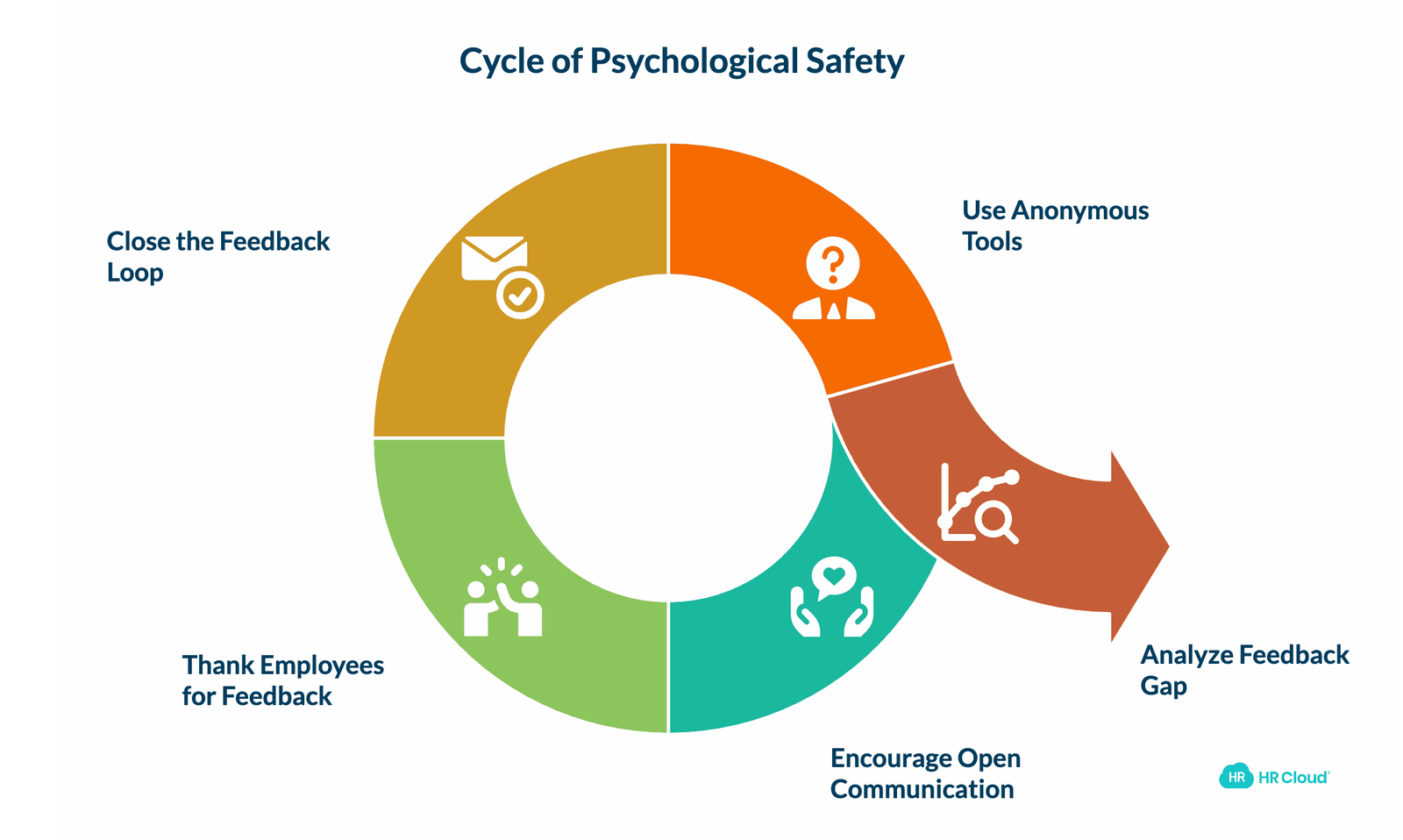
Stop asking "Does everyone agree?" in meetings. Ask "What's wrong with this plan?" or "What am I not seeing?" The phrasing signals that pushback is expected, not just tolerated.
When someone brings you a problem, thank them before doing anything else. Your first reaction to bad news determines whether you'll hear about the next problem early or late.
Close the loop on feedback. If your team fills out a survey or makes suggestions in a meeting, report back on what happened. "We heard X, we're doing Y, and we decided not to pursue Z because of this reason." Nothing kills psychological safety faster than a suggestion box that goes into a void.
HR Cloud's survey and polling tools give you anonymous pulse-check capability for the things people won't say face-to-face. Use them regularly. The gap between what employees say anonymously and what they say in person will tell you more about your management culture than any engagement score.
5. Connect Every Person's Work to Why It Matters
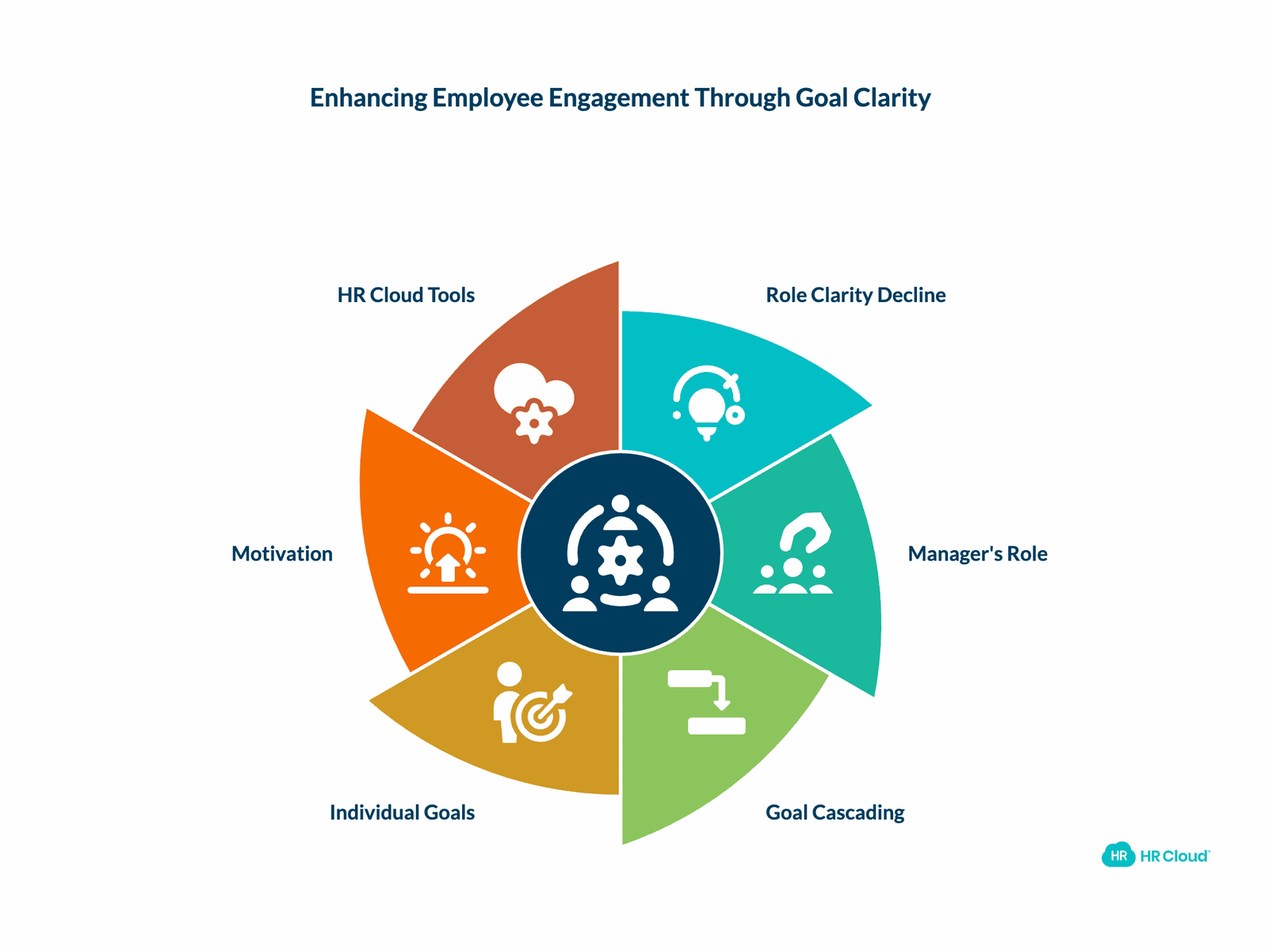
One of the largest engagement declines over the past five years has been in role clarity. Gallup's 2025 data shows that fewer than half of U.S. employees strongly agree they know what's expected of them at work, a nine-point drop since 2020. That's not because job descriptions got vaguer. It's because the world got noisier, priorities shift faster, and the connection between "what I do every day" and "why it matters to the company" has gotten harder to see.
Your job as a manager is to make that connection visible. Every person on your team should be able to answer: "What are my three most important priorities this quarter, and how does my work contribute to the larger goal?"
Use goal cascading to make this concrete. Start with the company's top 3 to 5 objectives. Break those into department-level outcomes. Then translate those into individual goals with clear metrics and deadlines.
Example: If the company objective is "grow revenue by 25%," the sales team's goal might be "close 300 new accounts with average contract value of $20K." An individual rep's goal becomes "conduct 150 qualified demos by Q3." Each person can trace a direct line from their daily calendar to the company's strategic priorities.
When employees can see that line, motivation becomes structural rather than something managers have to manufacture with pep talks. When they can't see it, even good employees start feeling like they're spinning their wheels.
HR Cloud's goal-tracking tools make this alignment visible across the organization. When goals are documented and tracked in a shared system rather than buried in spreadsheets, accountability becomes a feature of the system, not a feature of any one manager's memory.
6. Recognize People Before They Start Looking Elsewhere
Recognition is the most underused tool in employee management. It costs almost nothing, takes seconds, and has a disproportionate impact on whether people feel valued enough to stay.
Gallup found that employees who don't feel adequately recognized are three times more likely to say they'll quit in the next year. Three times. And only 22% of employees say they receive the right amount of recognition for their work, a number that hasn't budged since 2022. That's a retention problem hiding in plain sight.
But most recognition programs fail for the same reasons.
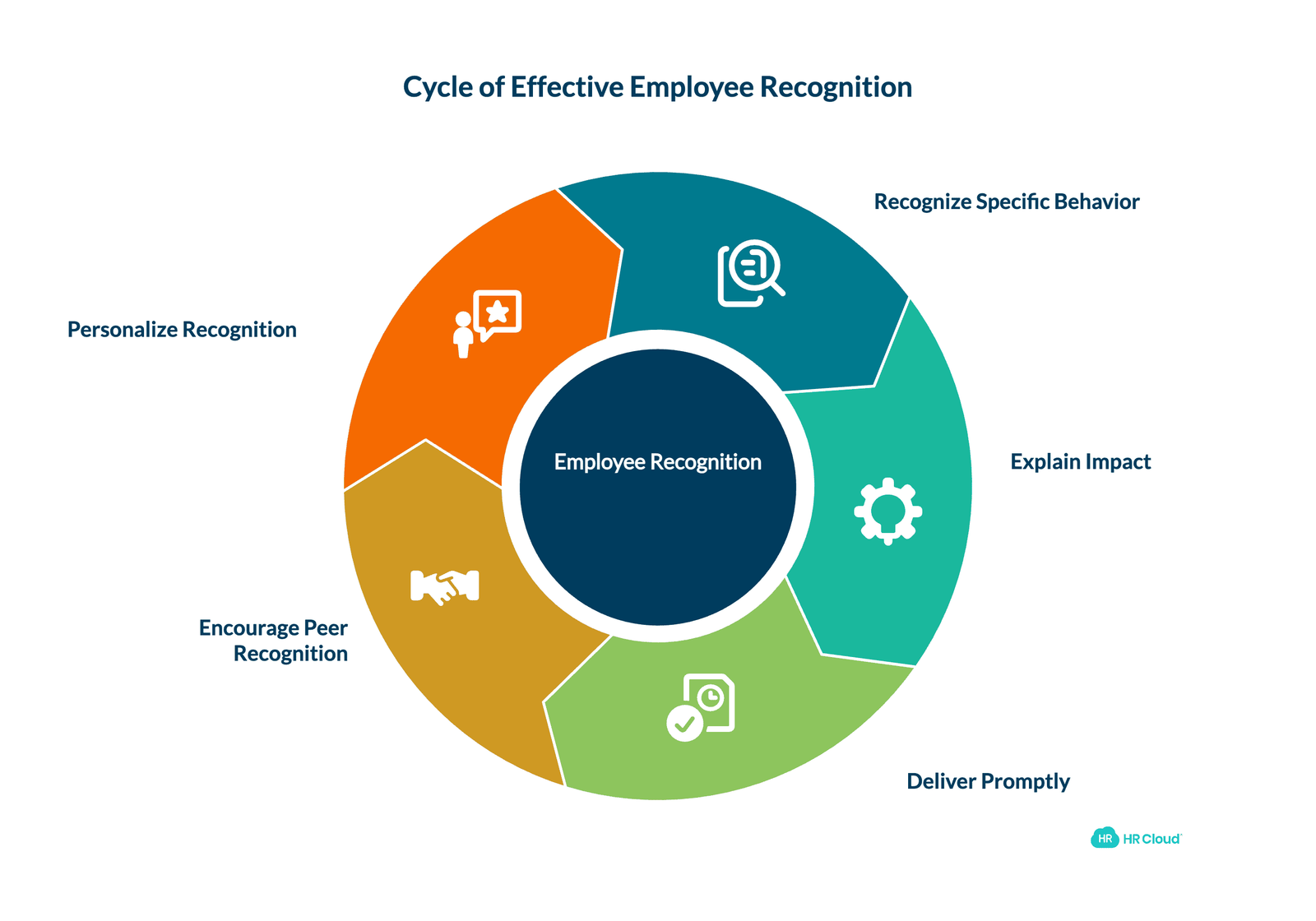
They're generic. "Good job" tells someone nothing. Effective recognition describes the specific behavior, explains why it mattered, and connects it to a team or business outcome. "Your analysis caught that billing error before it reached the client, which saved us a $40K account" is recognition that reinforces exactly the behavior you want repeated.
They're delayed. A thank-you that arrives weeks after the accomplishment has a fraction of the impact of one delivered the same day. Acknowledge contributions within 24 hours while the work is still fresh.
They only flow downhill. Peer recognition is actually more impactful than manager recognition for many employees. A SHRM/Globoforce study found that companies promoting peer-to-peer recognition are 35.7% more likely to see positive financial results. When the person working next to you notices your effort, it hits differently than when a boss checks a box.
They're one-size-fits-all. Some employees love public acknowledgment. Others cringe at it and would rather receive a quiet note or extra time off. Know your people well enough to match the recognition to the person.
HR Cloud's recognition and rewards platform puts peer-to-peer recognition, points-based rewards, and milestone celebrations into daily workflow so appreciation becomes a habit rather than an event. (Need help budgeting for it? See our guide to recognition program budgeting.) Organizations like Dutch Bros Coffee, Raising Cane's, and Osmose Utilities use it to keep recognition flowing across shifts, locations, and time zones.
7. Build a Culture People Don't Want to Leave
Culture isn't about perks. It's about patterns. How decisions get made. How conflict gets handled. Whether people trust that the organization cares about them as humans, not just as producers.
You can't fake culture. But you can build it through consistent, deliberate action in a few high-impact areas:
Respect people's time. Don't send "urgent" emails at 10 PM. Honor approved time off without guilt trips. Build flexibility into schedules when life happens. These sound small. They're not. They're signals your team reads every day to decide whether this is a place worth staying.
Invest in where people are going. Most employees would stay longer at a company that invested in their career development. That doesn't require a massive training budget. Mentorship, stretch assignments, conference attendance, and visible career paths all signal that you see your people as more than their current job description. (For more on this, see our 15 employee engagement strategies that complement these management practices.)
Make inclusion a practice, not a poster. Diverse teams consistently outperform homogeneous ones. McKinsey's research shows companies in the top quartile for gender diversity are 25% more likely to achieve above-average profitability. But diversity without inclusion is just demographics. Inclusion means people feel their perspective is valued, their voice is heard, and their differences are treated as strengths rather than complications.
Support mental health without making it weird. Employee assistance programs, mental health days, and a culture where it's acceptable to say "I'm struggling" without career consequences. Workplace stress costs U.S. employers roughly $300 billion annually, according to the American Psychological Association. Addressing it is both compassionate and financially rational.
HR Cloud's engagement platform brings these culture-building tools together: social feeds, employee directories, interest-based groups, digital signage for deskless workers, and analytics that show you where engagement is strong and where it's slipping before the exit interviews tell you what you should have already known.
“One of the biggest benefits from using Workmates platform is that our associates are more connected to both the company and each other. Associates can comment, react, and provide feedback directly through the platform from their smartphone or desktop devices.”

— Daniella Nickerson, Human resources, Toyota

Managing Employees Across Hybrid and Distributed Teams
Hybrid work has settled into a new normal. Most employees with remote-capable jobs prefer a hybrid arrangement, and removing that flexibility triggers active job searching. Gallup's data shows hybrid workers now spend about 46% of their workweek in the office, roughly 2.3 days, a figure that's held steady since 2023.
Managing distributed employees requires structure that doesn't happen organically:
Predictable communication rhythms. Daily standups, weekly team syncs, monthly all-hands. The specific cadence matters less than the consistency. Remote employees who know when and how information flows feel connected. Those who have to chase updates feel forgotten.
Document decisions, not just discussions. In a co-located office, information spreads informally. In distributed teams, if it's not written down, it didn't happen for anyone who wasn't in the room. Meeting notes, decision logs, and shared knowledge bases eliminate the "you had to be there" problem that disadvantages remote workers.
Measure results, not activity. If you're tracking when people log on and off, you're managing attendance, not performance. Focus on whether goals are met and work products are strong. Outcome-based evaluation signals trust. Activity monitoring signals suspicion. Your best people know the difference.
Be intentional about relationships. The casual conversations that build trust in an office don't happen by accident in distributed teams. Virtual coffee chats, team activities, and periodic in-person gatherings aren't optional extras. They're infrastructure. Gallup found that employees with close friendships at work are dramatically more engaged than those without them.
How HR Technology Amplifies Managing Employees at Scale
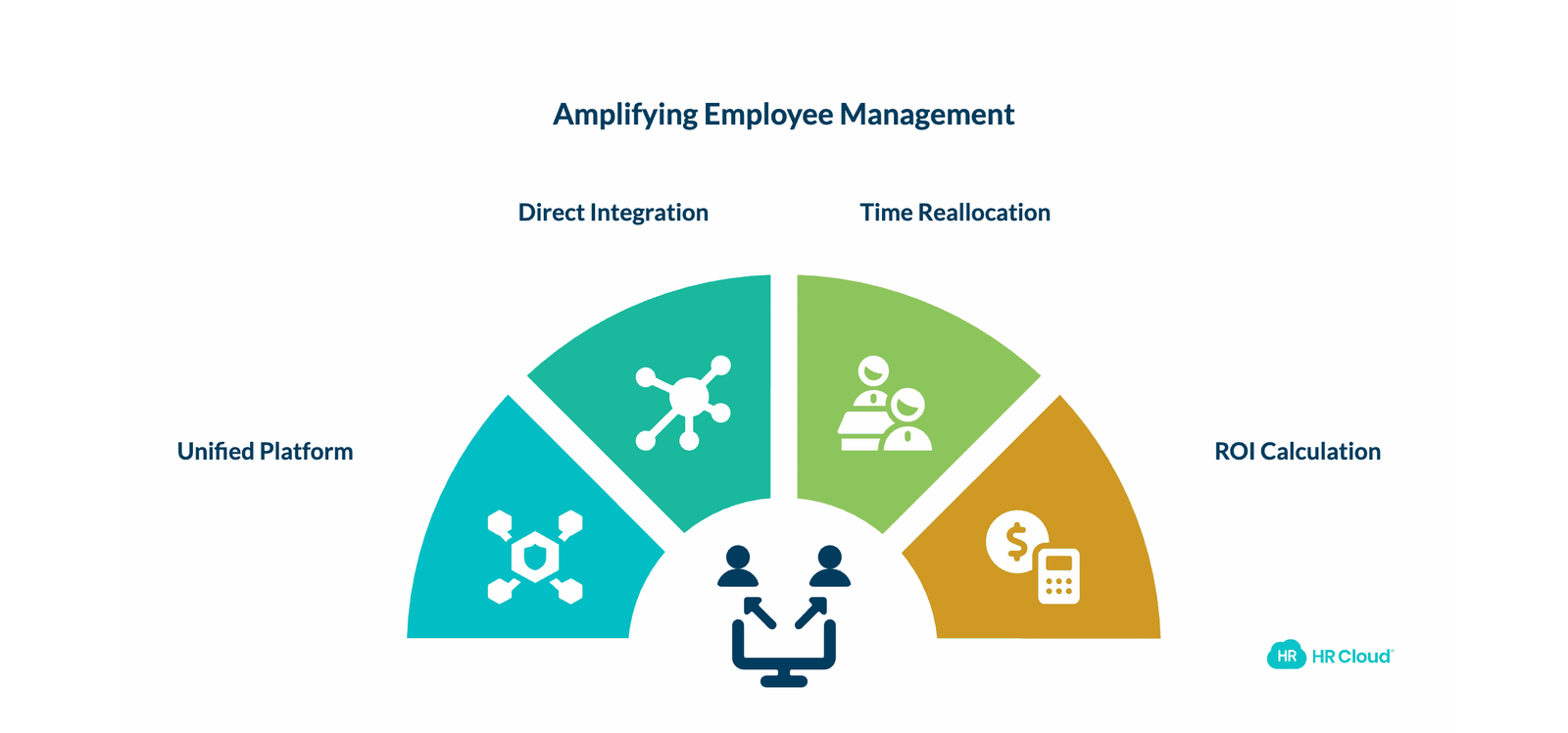
Every strategy above becomes harder at scale without the right systems. When onboarding lives in email chains, performance feedback lives in a manager's memory, and recognition happens only during annual reviews, consistency breaks down, and the employee experience varies wildly depending on which manager someone reports to.
HR Cloud's unified platform brings onboarding, performance management, communication, recognition, and employee data into one system. For organizations running payroll through ADP, UKG, Workday, or Paylocity, HR Cloud integrates directly so data stays in sync without manual entry.
The practical result: managers spend less time on administrative work and more time on the coaching, feedback, and relationship-building that these seven strategies require. That time shift is where the ROI lives. Every hour a manager reclaims from chasing forms and updating spreadsheets is an hour they can spend on managing employees in the ways that actually move engagement, retention, and performance.
Curious what turnover is costing your organization right now? HR Cloud's employee turnover calculator puts a number on it.
Managing employees at scale takes more than good intentions. It takes the right habits and the right systems working together. See how HR Cloud helps organizations reduce turnover, boost engagement, and build teams that perform. Book a Free Demo

Experience how Workmates can transform communication and strengthen culture—all in one powerful platform
Book Your Free DemoFrequently Asked Questions
How do you manage staff effectively?
Start with hiring people who fit your team's working style, not just the role's skill requirements. Set clear expectations from day one. Talk to your people weekly, not annually. Remove obstacles, recognize contributions, and build a culture where people feel safe telling you the truth. Gallup's research shows 70% of the variance in team engagement comes down to the manager, which means your development as a leader directly determines your team's results.
What are the 5 C's of people management?
Clarity (define expectations precisely so people aren't guessing), Communication (build two-way channels, not one-way broadcasts), Consistency (apply policies and recognition fairly across the entire team), Coaching (develop people through ongoing feedback rather than annual review events), and Culture (create an environment where people feel valued, connected, and motivated to do their best work).
How much does it cost to replace an employee?
SHRM estimates six to nine months of that person's salary. For a $60,000 role, that's $30,000 to $45,000 in direct costs. For senior or specialized positions, it can reach 200% of annual salary. The real cost also includes institutional knowledge loss, the productivity dip on the remaining team, and the morale hit from watching colleagues leave. Use HR Cloud's turnover calculator to see the specific number for your organization.
How do you manage employee performance without micromanaging?
Set clear, measurable goals so employees know what success looks like. Then check in weekly with three simple questions: What did you accomplish? What's blocking you? What support do you need? Track outcomes, not hours or processes. The manager perception gap from Gallup's research is instructive here: half of managers believe they give weekly feedback while only 20% of their reports agree. Make check-ins a documented habit, not an assumption.
What is the best way to manage remote employees?
Establish predictable communication rhythms so remote employees always know when and how information flows. Document decisions so nobody is disadvantaged by not being in the room. Measure results rather than activity or online status. And invest deliberately in relationships through virtual social time and occasional in-person gatherings. Managing remote employees well comes down to trust, structure, and intentional connection, the same principles that work in any setting, applied with more discipline.
How does employee management software help?
It takes the administrative friction out of every strategy in this guide. Automated onboarding workflows mean new hires are productive faster. Performance tracking means feedback conversations happen consistently. Communication platforms reach your entire workforce, including deskless employees. Recognition tools make appreciation visible and habitual. And analytics surface engagement trends before they become retention problems. HR Cloud integrates these functions so managers can focus on people instead of paperwork.
About the author

Keep Reading


Like What You Hear?
We’d love to chat with you more about how HR Cloud®can support your business’s HR needs.
Book Your Free Demo