
The Difference Between Job Satisfaction and Employee Engagement

Understanding the distinction between employee engagement and job satisfaction is fundamental to building a thriving workplace. While these terms are often used interchangeably, they represent fundamentally different aspects of the employee experience—and that difference directly impacts your bottom line.
According to Gallup's 2025 State of the Workforce Report, only 32% of U.S. employees are currently engaged in their work, an 11-year low. More concerning: this disengagement costs the U.S. economy approximately $2 trillion annually in lost productivity. The financial stakes make understanding—and acting on—these concepts critical for every HR leader.
Here's the essential difference: Job satisfaction measures how content employees are with their current working conditions. Employee engagement measures how emotionally committed they are to your organization's success. A satisfied employee might be happy with their paycheck and benefits but contribute only the bare minimum. An engaged employee goes beyond their job description because they're invested in your mission.
Quick Answer: Employee engagement and job satisfaction are distinct but related concepts. Job satisfaction measures how happy employees are with their working conditions (compensation, benefits, hours, work environment). Employee engagement measures emotional commitment to organizational success and willingness to contribute discretionary effort. Satisfaction is passive contentment; engagement drives performance. While satisfied employees are less likely to quit, engaged employees deliver exceptional results, innovation, and customer service. Organizations need both: satisfaction creates the foundation, engagement drives competitive advantage.
Why this matters for your business: Organizations that effectively address both satisfaction and engagement see measurable results. Companies with strong employee recognition programs experience 31% lower voluntary turnover (SHRM, 2024). High-engagement companies report 23% higher profitability compared to low-engagement competitors (Gallup, 2024).
This guide breaks down both concepts, explains what drives each one, and shows you how to leverage HR Cloud's Workmates platform to build a workforce that's both satisfied and deeply engaged.
What Is Employee Satisfaction?
Employee Satisfaction Definition: Employee satisfaction is the degree to which employees feel content with their job conditions, including compensation, benefits, work-life balance, job security, and work environment. It measures happiness with what the organization provides.
Employee satisfaction reflects how content your workforce feels about their employment conditions. Think of it as the baseline level of happiness people experience in their roles. When employees are satisfied, they appreciate their compensation, enjoy reasonable working hours, and feel their work environment meets basic needs.
Satisfaction typically stems from extrinsic factors—the tangible benefits your organization provides. A competitive salary, comprehensive health insurance, flexible scheduling, and respectful treatment from management all contribute to job satisfaction. It's essentially the answer to: "Do I like coming to work, and do I feel fairly treated?"
The satisfaction baseline: Research from Pew Research Center (2024) found that 60% of self-employed workers report high job satisfaction, compared to just 49% of traditionally employed workers, suggesting that autonomy and control significantly impact contentment levels.
While satisfaction is important for retention, it doesn't necessarily drive extraordinary performance. Satisfied employees will complete their assigned tasks and meet expectations, but they may not innovate, mentor colleagues, or go the extra mile during crunch time. That's where engagement becomes essential.
Tools like HR Cloud's People HRIS help you track satisfaction indicators by centralizing employee data, managing benefits administration, and ensuring consistent policy application—the operational foundation that supports baseline satisfaction.
What Is Employee Engagement?
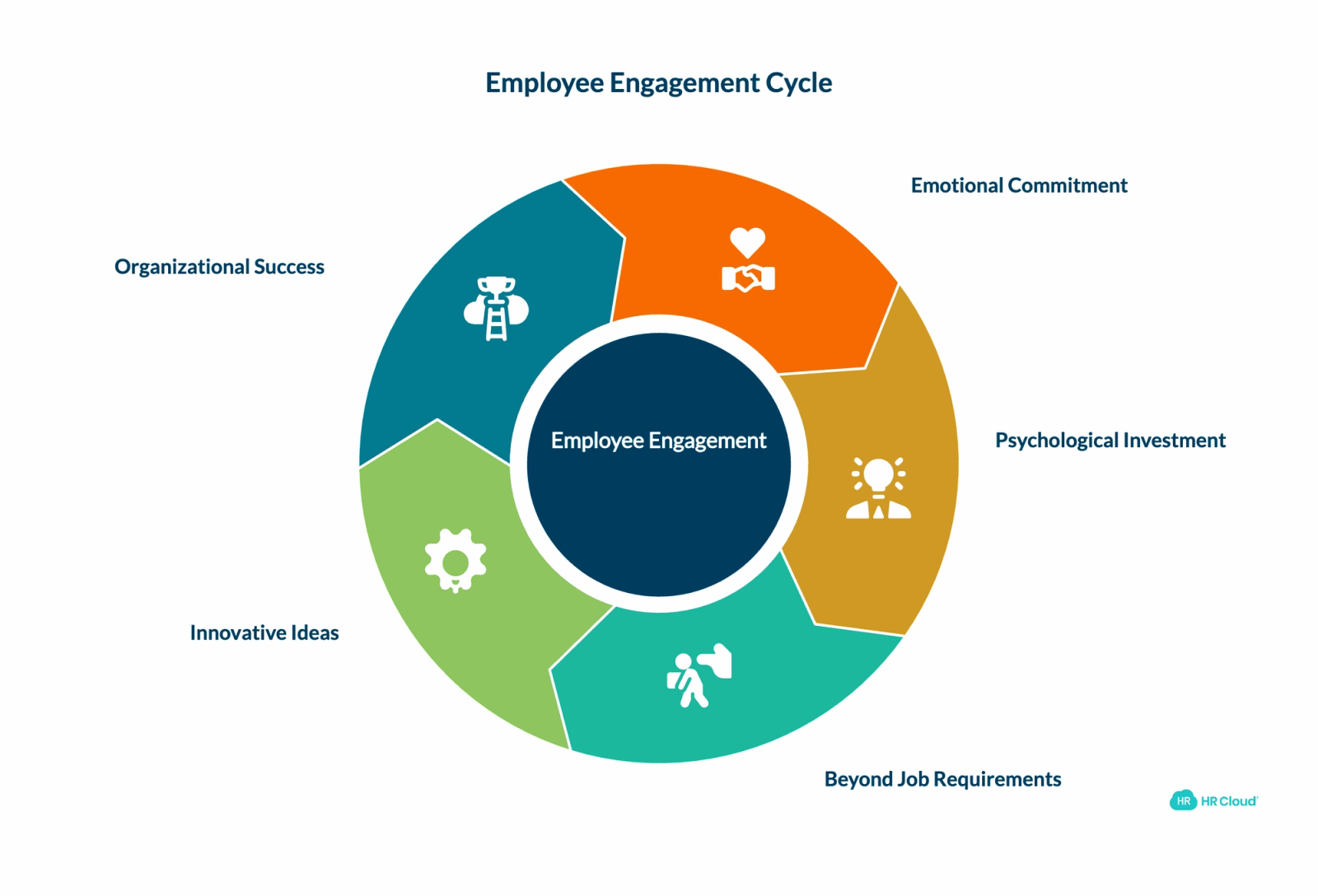
Employee Engagement Definition: Employee engagement is the emotional commitment and psychological investment employees have toward their work and organization. Engaged employees go beyond job requirements, contribute innovative ideas, and are deeply invested in organizational success.
Employee engagement goes deeper than satisfaction. It's the emotional connection and psychological commitment employees feel toward their work and organization. Engaged employees don't just show up—they care passionately about outcomes, take ownership of challenges, and actively contribute to your company's success.
Engagement is about intrinsic motivation. When employees are engaged, they find meaning in their work, feel aligned with your mission, and see how their contributions matter. They're the team members who volunteer for difficult projects, mentor newer colleagues, and think creatively about solving problems.
The engagement imperative: According to Gallup's Q2 2025 data, only 47% of U.S. employees strongly agree they know what's expected of them at work, and just 31% strongly agree someone encourages their development. These engagement fundamentals directly impact whether employees simply complete tasks or fully invest themselves in organizational success.
The impact of engagement on business outcomes is measurable and significant:
- Productivity: Engaged teams show 14% higher productivity compared to disengaged counterparts
- Quality: Organizations with engaged employees experience 70% fewer safety incidents
- Innovation: Engaged workers are 3x more likely to contribute innovative ideas
- Customer experience: Engaged employees deliver measurably better customer service outcomes
HR Cloud's Workmates platform specifically addresses engagement by enabling real-time recognition, peer-to-peer appreciation, and transparent communication—the daily interactions that build emotional commitment.
What Are the Principal Drivers of Employee Engagement?
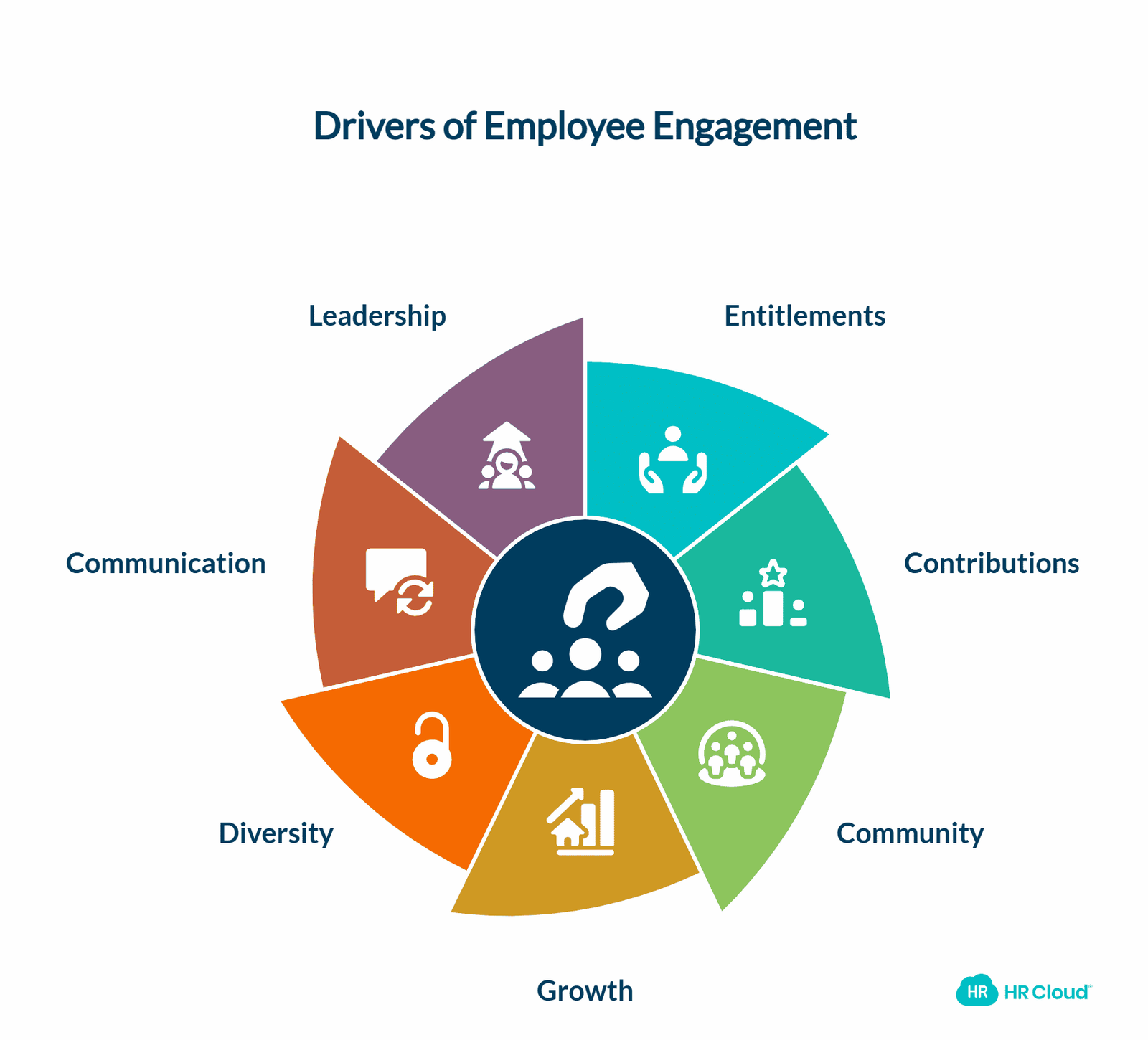
Understanding engagement drivers helps you create systems and cultures that foster deep commitment. Research consistently points to several categories of factors that collectively determine whether employees feel engaged or detached.
1. Entitlements: The Foundation
Before employees can engage, they need clarity and resources. Gallup's engagement research identifies these baseline requirements:
Role clarity: Employees must understand exactly what's expected of them. Ambiguity creates stress and disengagement. When expectations are crystal clear—through well-defined job descriptions, measurable objectives, and regular check-ins—employees can focus their energy on performance rather than uncertainty.
Resource adequacy: Workers need the right tools, technology, and information to do their jobs well. Outdated systems, insufficient training, or inadequate staffing create frustration that undermines engagement. For distributed teams and frontline workers, mobile-accessible tools become especially critical.
Autonomy and decision-making authority: Employees want appropriate control over how they accomplish their work. Micromanagement destroys engagement, while trusted autonomy builds ownership and accountability.
HR Cloud's workflow automation ensures employees have immediate access to the resources, approvals, and information they need without bureaucratic delays that signal organizational dysfunction.
2. Contributions: Meaningful Impact
Engaged employees need to see that their work matters. This sense of contribution comes from several sources:
Recognition and appreciation: Regular, specific feedback about contributions drives engagement. SHRM research shows that 44% of employees cite recognition as "very important" for satisfaction and engagement. However, generic "good job" comments fall flat. Effective recognition is timely, specific, and tied to organizational values.
Purpose and mission alignment: Employees want to understand how their daily tasks connect to broader organizational goals. When people see the meaningful impact of their work—whether serving customers, advancing innovation, or supporting teammates—engagement deepens.
Growth and development: Stagnation kills engagement. Employees need visible paths for skill development, career advancement, and increasing responsibility. Organizations that invest in learning opportunities see measurably higher engagement scores.
HR Cloud's Perform platform helps managers conduct regular check-ins, set clear goals, and document contributions—creating the feedback loops that make employees feel their work matters.
3. Community: Belonging and Connection
Humans are social creatures. Workplace relationships significantly impact engagement levels:
Peer relationships: Quality friendships at work increase both satisfaction and engagement. Employees with strong workplace relationships are more resilient during stress, more likely to stay with their organization, and more willing to help colleagues succeed.
Manager relationships: The quality of the manager-employee relationship is perhaps the single most important engagement driver. Gallup's 2025 research shows that 70% of team engagement depends on the manager. When managers provide clear expectations, regular feedback, and genuine support, engagement flourishes.
Voice and influence: Engaged employees feel heard. They believe their opinions matter, their ideas receive consideration, and they have real influence over decisions affecting their work. Organizations that cultivate psychological safety—where people can speak up without fear of retaliation—see higher engagement.
Organizational values alignment: When employees' personal values align with company values, engagement increases. This goes beyond mission statements to include how the organization treats people, makes decisions, and responds to challenges.
HR Cloud's communication channels and team collaboration features create spaces where employees can connect authentically, share ideas, and build the relationships that drive engagement.
4. Growth: Development and Future Opportunities
Forward-looking employees need to see a future at your organization:
Career development: Clear pathways for advancement, transparent promotion criteria, and accessible growth opportunities all contribute to engagement. When employees see no future, they disengage mentally long before they resign physically.
Learning opportunities: Access to training, conferences, certifications, and new challenges keeps employees intellectually stimulated and growing. Organizations that invest in development see higher retention and stronger internal promotion rates.
Challenging work: Engagement suffers when work becomes monotonous. Employees want projects that stretch their capabilities, allow them to learn new skills, and provide a sense of accomplishment.
HR Cloud's learning management capabilities within the Onboard platform help organizations create structured development programs that support continuous growth.
5. Diversity, Equity, and Inclusion
Modern employees expect workplaces that respect all backgrounds and perspectives:
Inclusive culture: Organizations that actively prevent bias, welcome diverse viewpoints, and ensure equal opportunities create environments where all employees can engage fully.
Representation: When employees see people like themselves in leadership positions, it signals that advancement is possible regardless of background.
Belonging: Feeling psychologically safe and valued for your unique contributions—not despite differences but because of them—is fundamental to engagement.
6. Internal Communication Excellence
Information flow directly impacts engagement, especially for distributed or frontline workforces:
Transparency: Employees want honest communication about organizational performance, challenges, and strategic direction. When leaders share openly, employees feel trusted and included.
Two-way dialogue: Engagement requires bidirectional communication. Employees need mechanisms to ask questions, share concerns, and receive timely responses.
Consistent messaging: Mixed signals from leadership create confusion and cynicism. Clear, consistent communication builds trust and alignment.
HR Cloud's announcement and communication features enable leaders to share critical updates instantly across all locations while tracking acknowledgment and understanding.
7. Inspirational Leadership
Leaders set the engagement tone for entire organizations:
Modeling engagement: Leaders who demonstrate genuine commitment, passion, and care for employees inspire similar attitudes throughout teams.
Approachability: Employees engage more when leaders are accessible, open to feedback, and willing to have authentic conversations.
Vision and strategy: Leaders who articulate a compelling vision and help employees understand their role in achieving it create purposeful engagement.
Accountability: When leaders hold themselves to the same standards they expect from others, they build credibility that fosters trust and engagement.
Factors Affecting Job Satisfaction
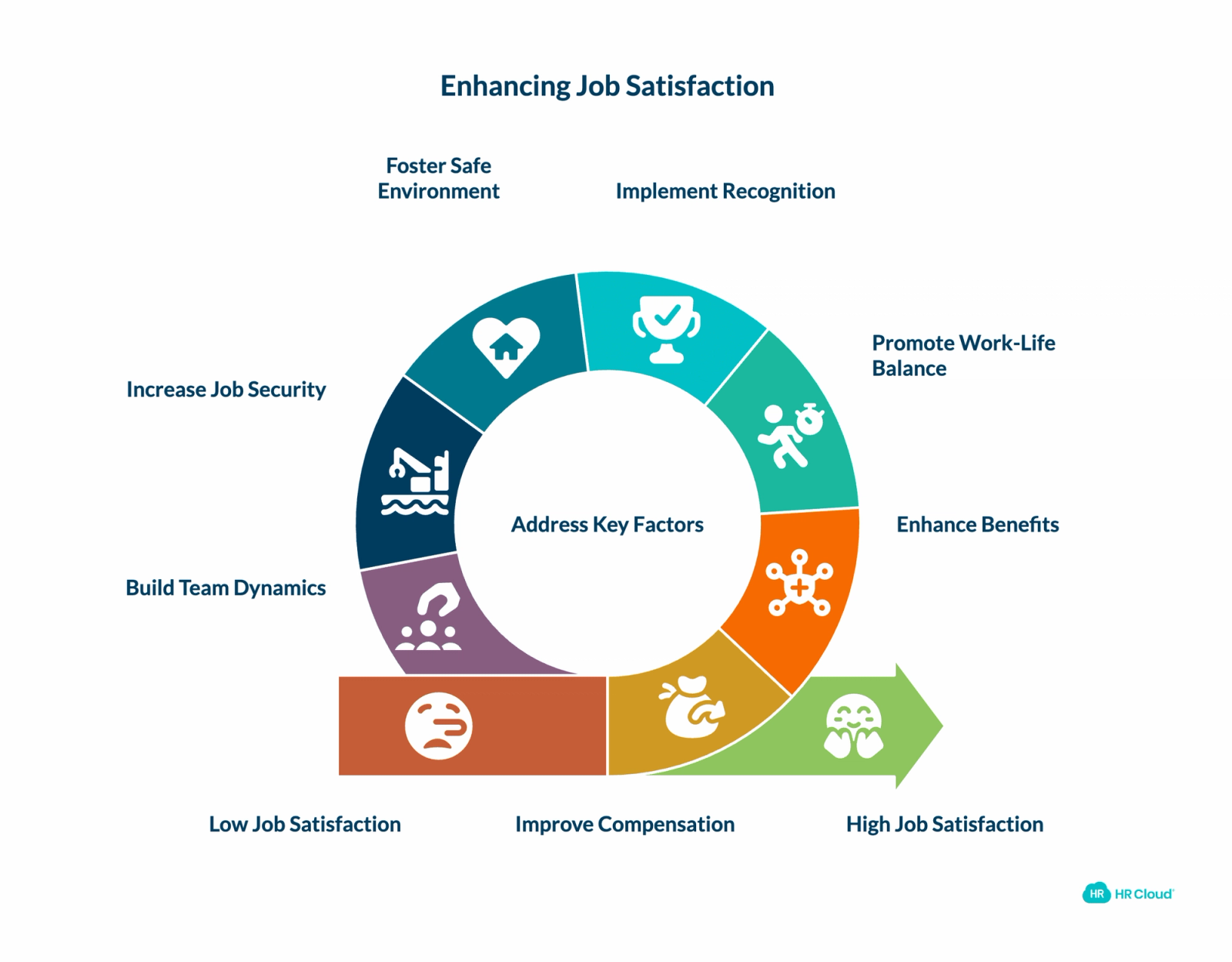
While engagement focuses on emotional commitment, job satisfaction addresses more tangible, transactional elements of the employment relationship. Understanding these factors helps you build the foundation that makes engagement possible.
1. Compensation: The Financial Foundation
Money alone doesn't create engagement, but inadequate compensation definitely undermines satisfaction:
Competitive pay: Your compensation must align with market rates for similar roles, industries, and geographic locations. Employees who feel underpaid relative to their contributions or market alternatives experience chronic dissatisfaction.
Internal equity: Perceived fairness matters as much as absolute amounts. When employees discover colleagues in similar roles earn significantly more without clear justification, satisfaction plummets.
Living wage standards: Compensation should support a reasonable quality of life. Financial stress from inadequate pay creates constant distraction and resentment that prevents satisfaction and engagement.
According to SHRM's 2025 compensation research, 30% of employees who voluntarily left their jobs could have been retained with improved compensation and benefits—the top retention factor cited.
2. Benefits: Comprehensive Support
Beyond base salary, comprehensive benefits demonstrate organizational commitment to employee wellbeing:
Healthcare coverage: Quality medical, dental, and vision insurance ranks among the most valued benefits. Research shows 72% of employees consider health insurance among the most important benefits for financial wellbeing.
Retirement plans: 73% of employees view retirement benefits as critical for financial security. Organizations offering robust 401(k) matching or pension plans see higher satisfaction scores.
Family support: Childcare assistance, parental leave, and family healthcare coverage address major life stressors that impact workplace satisfaction.
Mental health resources: Increasingly, employees expect access to counseling services, stress management programs, and mental health support.
Financial wellness: Education on budgeting, debt management, and financial planning helps employees feel more secure and satisfied.
HR Cloud's benefits administration capabilities within the People HRIS system streamline enrollment, track eligibility, and ensure employees maximize the value of their benefits packages.
3. Work-Life Balance: Time and Flexibility
The pandemic permanently shifted expectations around work flexibility:
Flexible scheduling: The ability to adjust start/end times, work compressed schedules, or adapt hours to personal needs significantly increases satisfaction.
Remote work options: For roles that permit it, hybrid or fully remote arrangements have become table stakes. Research identifies stronger career growth opportunities (44%) and better work-life balance (43%) as top reasons employees search for new roles.
Reasonable workloads: Chronic overwork destroys satisfaction. When workloads are sustainable, employees can maintain energy and enthusiasm.
Mandatory time off: Encouraging (or requiring) employees to use vacation time prevents burnout and demonstrates organizational commitment to wellbeing.
Commute considerations: Long commutes drain time, energy, and financial resources. Reducing commute burden through flexible locations or schedules dramatically improves life satisfaction.
4. Recognition: Appreciation and Acknowledgment
While recognition drives engagement, the absence of recognition undermines basic satisfaction:
Regular feedback: Employees want to know how they're performing. Annual reviews alone don't cut it—people need ongoing feedback about their contributions.
Public acknowledgment: Appropriate celebration of achievements—through team meetings, company announcements, or Workmates recognition feeds—reinforces that contributions matter.
Career conversations: Regular discussions about growth, aspirations, and development signal that the organization values employees' futures.
HR Cloud's Workmates platform enables peer-to-peer recognition, manager kudos, milestone celebrations, and rewards redemption—creating a culture where appreciation is consistent and visible.

5. Work Environment: Physical and Psychological Safety
The conditions in which people work directly affect their satisfaction:
Physical workspace: Clean, comfortable, well-lit environments with appropriate temperature, noise levels, and ergonomic setups support productivity and satisfaction.
Psychological safety: Employees need to feel safe expressing ideas, asking questions, and admitting mistakes without fear of humiliation or retaliation.
Respect and dignity: Basic courtesy, professional treatment, and respect for personal boundaries create the foundation for satisfaction.
6. Job Security: Stability and Predictability
Uncertainty about employment creates chronic stress:
Organizational stability: Employees want to work for financially secure organizations with clear futures.
Transparent communication: When leadership openly discusses business challenges and strategic decisions, employees feel more secure even during uncertainty.
Fair policies: Consistent, equitable treatment in matters of discipline, promotion, and termination builds trust that employment depends on performance rather than favoritism or politics.
7. Team Dynamics: Collaborative Relationships
While deep friendships drive engagement, basic professional relationships affect satisfaction:
Collaborative atmosphere: When teams work together effectively, share information freely, and support each other's success, satisfaction increases.
Conflict resolution: Organizations that address interpersonal conflicts promptly and fairly prevent the festering resentments that destroy satisfaction.
Team competence: Employees want to work with colleagues who are capable and committed. Carrying incompetent team members creates resentment and dissatisfaction.
8. Values Alignment: Organizational Integrity
Satisfaction suffers when employees perceive a gap between stated values and organizational behavior:
Mission alignment: When an organization's stated purpose resonates with employees' personal values, satisfaction increases.
Ethical conduct: Employees want to work for organizations that operate with integrity, treat stakeholders fairly, and make ethical decisions even when difficult.
Social responsibility: Increasingly, employees—especially younger generations—expect their employers to contribute positively to society and environment.
How Employee Engagement Differs From Job Satisfaction
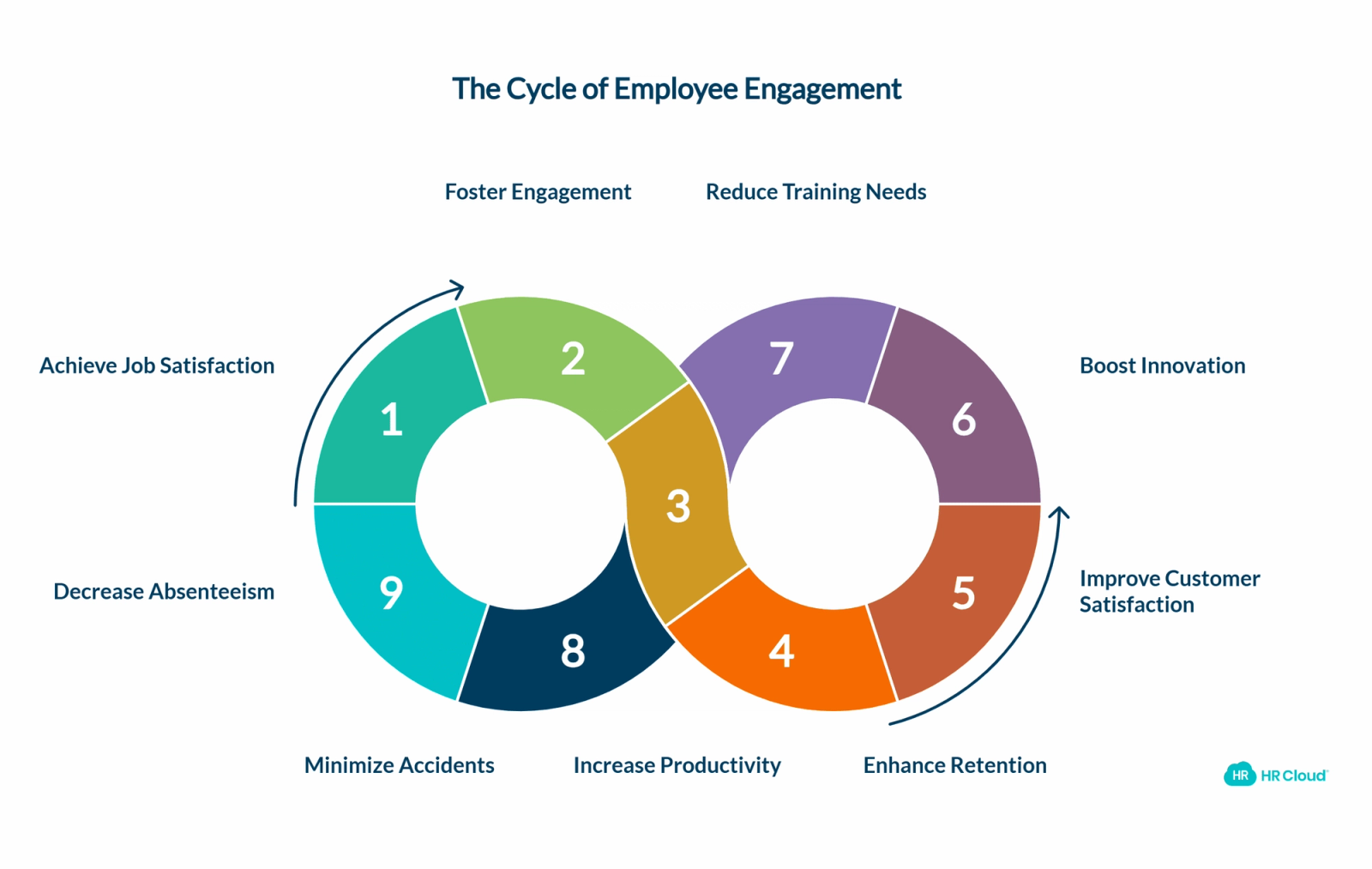
Now that we've explored both concepts individually, let's examine the critical distinctions that make understanding this difference strategically important.
Can you be satisfied but not engaged? Yes. Many employees are satisfied with their compensation and working conditions but contribute only minimum required effort. They're happy to collect a paycheck but lack emotional investment in organizational success. This is why satisfaction alone doesn't drive exceptional performance—you need engagement to unlock discretionary effort.
The Action vs. Feeling Distinction
Satisfaction is passive; engagement is active. A satisfied employee experiences contentment—a positive feeling about their circumstances. An engaged employee takes action—they contribute ideas, volunteer for challenges, and invest discretionary effort.
Think of it this way: satisfaction answers "Do I like my job?" while engagement answers "Am I committed to this organization's success?"
You can have an employee who's perfectly satisfied with their salary, benefits, and working conditions but who contributes exactly what's required and nothing more. They're happy to collect a paycheck but won't go the extra mile. That's satisfaction without engagement.
Conversely, you might have a deeply engaged employee who's temporarily dissatisfied with a specific condition (perhaps a delayed promotion or a challenging manager relationship) but remains committed to the organization's mission and continues performing at high levels. Though less common, engagement can temporarily exist without complete satisfaction.
The Retention vs. Performance Impact
Satisfaction primarily affects retention; engagement primarily affects performance.
Job satisfaction tends to keep people from leaving. When employees are satisfied, they're not actively seeking new opportunities. Retention remains stable. However, satisfied employees don't necessarily perform exceptionally—they do enough to maintain their positions but may lack the motivation to excel.
Employee engagement, on the other hand, directly drives performance outcomes. Engaged employees:
- Take initiative without being asked
- Think creatively about solving problems
- Mentor and support colleagues
- Represent the organization positively to customers and candidates
- Persist through obstacles and setbacks
- Contribute innovative ideas for improvement
According to Gallup research, organizations with high employee engagement levels experience 23% higher profitability, 10% higher customer ratings, and 18% higher productivity compared to companies with low engagement.
“One of the biggest benefits from using Workmates platform is that our associates are more connected to both the company and each other. Associates can comment, react, and provide feedback directly through the platform from their smartphone or desktop devices.”

— Daniella Nickerson, Human resources

The What vs. Why Distinction
Satisfaction focuses on WHAT you receive; engagement focuses on WHY you contribute.
Job satisfaction is largely about the employee value proposition—what the organization provides in exchange for work. Competitive compensation, good benefits, reasonable hours, job security, and respectful treatment all contribute to satisfaction. These are important, but they're essentially transactional.
Employee engagement is about purpose, meaning, and identity. It addresses questions like:
- Does my work matter?
- Do I feel part of something larger than myself?
- Am I growing and developing?
- Do I share this organization's values?
- Am I making a meaningful contribution?
This distinction has practical implications for HR strategy. You can't buy engagement the way you can buy satisfaction. Raising salaries improves satisfaction but won't necessarily create engagement. Building engagement requires attention to relationships, recognition, development, autonomy, and purpose.
The Foundation vs. Acceleration Relationship
Which matters more: satisfaction or engagement? Both are essential and work together. Think of satisfaction as the foundation and engagement as what you build on it. Without satisfaction (fair pay, reasonable workload, respectful treatment), employees can't engage—they're focused on survival. With only satisfaction, employees stay but don't excel. Organizations need both to attract talent, retain employees, and drive high performance.
Satisfaction is the foundation; engagement is the accelerator.
You can't skip the satisfaction foundation and jump straight to engagement. Employees who are deeply dissatisfied with pay, overworked to the point of burnout, or working in toxic environments simply can't engage—their energy goes toward survival rather than contribution.
Satisfaction creates the baseline conditions that make engagement possible:
- Fair compensation removes financial stress
- Reasonable workloads prevent exhaustion
- Respectful treatment builds basic trust
- Safe environments allow people to focus on work rather than threats
Once this foundation exists, organizations can build engagement through recognition, development, autonomy, purpose, and community. Think of satisfaction as necessary but insufficient—you need it, but it alone won't drive exceptional performance.
HR Cloud's unified platform addresses both dimensions: the HRIS manages the transactional elements that drive satisfaction (benefits, time off, data management), while Workmates builds the relationships, recognition, and communication that drive engagement.
The Measurement Challenge
Satisfaction is easier to measure; engagement requires deeper assessment.
Job satisfaction can be gauged through relatively straightforward surveys:
- Are you satisfied with your compensation?
- Do you feel work-life balance is reasonable?
- Are you satisfied with your benefits package?
- Do you feel job security is adequate?
These questions yield clear, actionable data that helps organizations identify and address satisfaction gaps.
Engagement measurement is more nuanced. You're trying to assess emotional commitment and discretionary effort—internal states that don't show up in simple yes/no questions. Effective engagement measurement considers factors like:
- Likelihood to recommend the organization as an employer (eNPS)
- Frequency of going beyond job requirements
- Emotional connection to organizational mission
- Pride in telling others about your work
- Intention to remain with the organization long-term
HR Cloud's survey and analytics tools enable both satisfaction and engagement measurement, helping organizations diagnose issues and track improvement over time.
The Managerial Impact Differential
Satisfaction is influenced by organizational policies; engagement is largely determined by direct managers.
Many satisfaction factors—compensation, benefits, work hours, facilities—are set through organizational policy and affect employees similarly across the company. HR can systematically address satisfaction through policy improvements.
Engagement, however, is highly manager-dependent. Gallup's research reveals that 70% of team engagement variance is explained by manager quality. Two employees in identical roles, with identical compensation and benefits, can experience dramatically different engagement levels based purely on their manager relationships.
Great managers create engagement by:
- Setting clear expectations and providing resources
- Recognizing contributions regularly and specifically
- Coaching for development rather than just evaluating performance
- Building trust through consistency and transparency
- Connecting individual work to organizational mission
- Demonstrating genuine care for employee success and wellbeing
This means improving engagement requires investing in manager development, not just policy changes. HR Cloud's Performance Management tools help managers conduct effective one-on-ones, set clear goals, provide regular feedback, and track development—the behaviors that build engagement.
Key Differences: Comparison Table
| Aspect | Job Satisfaction | Employee Engagement |
|---|---|---|
| Focus | Working conditions and benefits | Emotional commitment and purpose |
| Nature | Passive contentment | Active contribution |
| Primary Driver | Extrinsic rewards (pay, benefits) | Intrinsic motivation (meaning, growth) |
| Impact | Primarily affects retention | Primarily affects performance |
| Measurement | Satisfaction with specific conditions | Emotional investment and discretionary effort |
| Management Level | Organizational policies | Manager relationships (70% variance) |
| Example | "I like my job" | "I'm committed to this organization's success" |
| Business Outcome | Reduces turnover | Drives profitability, productivity, innovation |
Why Both Matter: The Strategic Imperative
Here's the bottom line: you need both satisfaction AND engagement to build a high-performing, sustainable workforce.
Organizations that focus only on satisfaction create workplaces where people are happy to stay but don't contribute at high levels. Retention may be decent, but innovation, productivity, and customer experience suffer. You've essentially created comfortable mediocrity.
Organizations that try to drive engagement without addressing satisfaction burn out employees. No amount of inspiring mission talk compensates for inadequate pay, unreasonable workloads, or toxic management. Employees may briefly engage but ultimately leave for organizations that respect their needs.
Organizations that address both satisfaction and engagement create sustainable competitive advantage:
- Talent attraction: Word spreads that your organization offers both fair treatment AND meaningful work
- Retention: Employees stay both because conditions are good AND because they're emotionally committed
- Performance: Satisfied, engaged employees deliver exceptional results consistently
- Innovation: When basic needs are met and engagement is high, creativity flourishes
- Customer experience: Engaged employees provide superior service that drives customer loyalty
- Culture: Both satisfaction and engagement reinforce each other, creating positive momentum
McKinsey research consistently shows that organizations in the top quartile for employee experience (combining satisfaction and engagement) outperform bottom-quartile organizations across virtually every business metric.
What percentage of employees are engaged? According to Gallup's 2025 research, only 32% of U.S. employees are currently engaged—an 11-year low. Globally, just 21% are engaged. However, organizations that follow best practices achieve 70% engagement rates, demonstrating that high engagement is achievable with the right strategies.
Building Both Satisfaction and Engagement: A Practical Framework
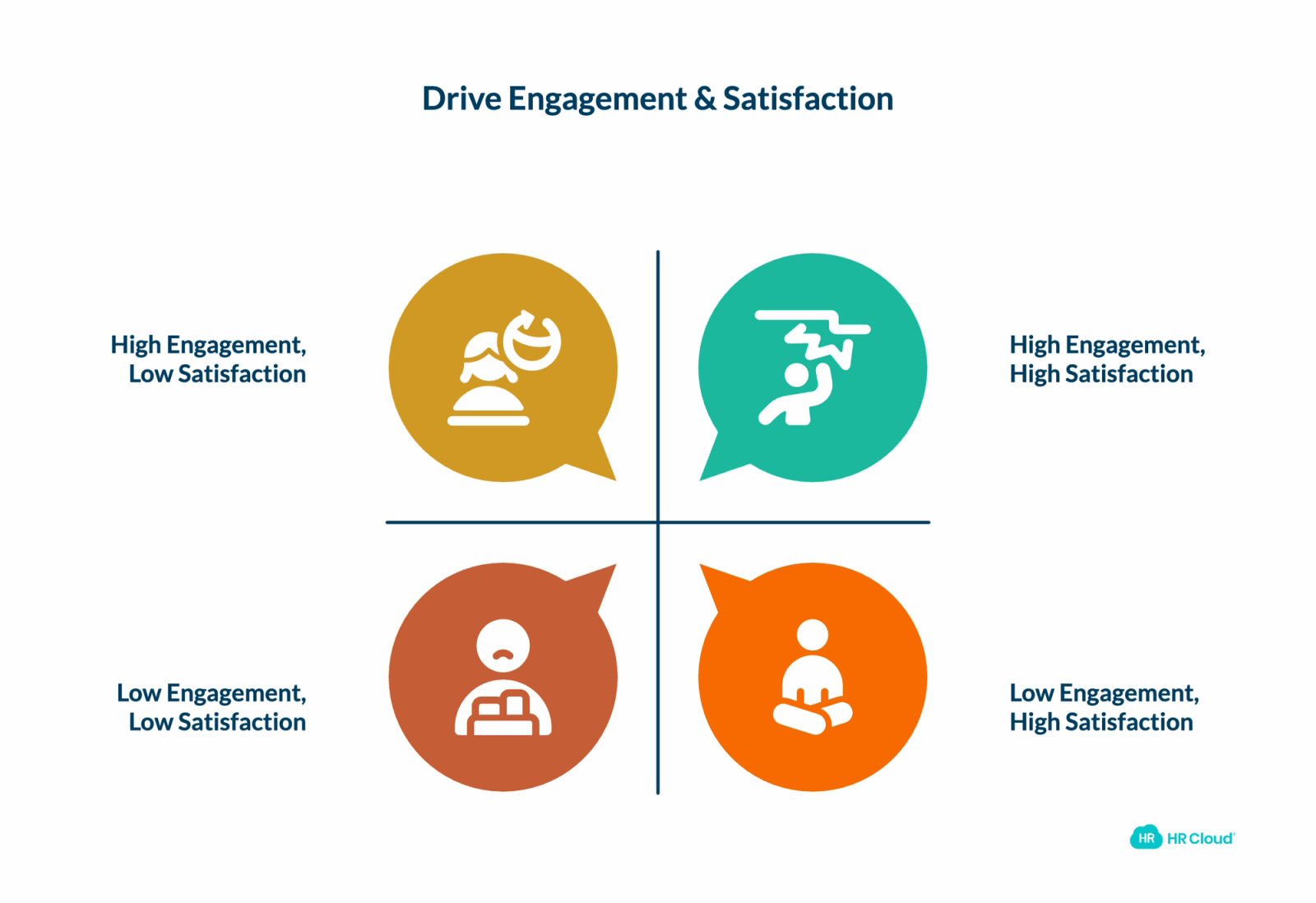
So how do you systematically address both dimensions? Here's a structured approach:
Start with the Satisfaction Foundation
Before investing heavily in engagement initiatives, ensure basic satisfaction factors are competitive:
1. Conduct compensation benchmarking against your industry and market
2. Review and strengthen benefits to meet employee needs
3. Assess and adjust workloads to ensure sustainability
4. Create flexible work policies that respect work-life balance
5. Ensure physical and psychological safety in all work environments
HR Cloud's People HRIS provides the data management and analytics capabilities to track, benchmark, and optimize these satisfaction factors systematically.
Build Engagement on That Foundation
Once satisfaction is solid, systematically build engagement:
1. Develop managers: Invest in training focused on coaching, feedback, recognition, and development conversations
2. Create recognition systems: Implement platforms like Workmates that enable frequent, specific, peer-to-peer recognition
3. Clarify purpose: Help every employee understand how their work contributes to organizational mission
4. Provide growth paths: Create visible development and career progression opportunities
5. Foster community: Build spaces and norms for authentic connection and collaboration
6. Communicate transparently: Share information openly and create forums for dialogue
Measure Both Continuously
How long does it take to improve engagement? Improving employee engagement is a 6-12 month journey, not a quick fix. Initial changes (implementing recognition programs, improving communication) can show measurable impact within 3-4 months. Deep cultural shifts that dramatically improve engagement typically require 12-18 months of consistent leadership commitment, manager development, and systematic improvement.
Don't rely on annual engagement surveys alone. Create ongoing feedback mechanisms:
- Pulse surveys: Brief, frequent check-ins on satisfaction and engagement drivers
- Stay interviews: Regular conversations asking what keeps employees engaged and what might cause them to leave
- Exit interviews: When people do leave, understand whether satisfaction or engagement was the primary factor
- Analytics: Track leading indicators like recognition frequency, development activities, and communication reach
HR Cloud's analytics capabilities provide real-time insights into satisfaction and engagement trends, enabling proactive intervention before small issues become major problems.
Act on Data Quickly
The fastest way to destroy trust is to ask for feedback and then ignore it. When surveys or conversations reveal satisfaction or engagement issues:
1. Acknowledge what you've heard publicly and specifically
2. Explain what you'll address and what constraints might prevent immediate action on some items
3. Act visibly on the issues you can influence
4. Communicate progress regularly so employees see their feedback mattering
Conclusion: From Understanding to Action
The distinction between job satisfaction and employee engagement isn't merely academic—it's fundamentally strategic. Satisfaction keeps employees from leaving; engagement makes them perform exceptionally. Satisfaction addresses employees' needs; engagement unlocks their potential.
Forward-thinking HR leaders build comprehensive strategies that address both dimensions:
- Satisfaction through competitive total rewards, humane policies, and safe environments
- Engagement through great managers, recognition, development, purpose, and community
The organizations that master both dimensions don't just survive—they thrive. They attract top talent, retain critical expertise, innovate continuously, deliver superior customer experiences, and outperform competitors on every meaningful business metric.
The data is clear: According to Gallup's 2025 research, low engagement costs the U.S. economy $2 trillion annually. Organizations that achieve 70% engagement rates—more than double the national average—experience measurably higher profitability, productivity, and customer satisfaction.
Ready to transform both satisfaction and engagement in your organization? HR Cloud's unified platform combines the HRIS capabilities that drive satisfaction with the Workmates tools that build engagement—everything you need in one integrated system designed specifically for distributed workforces including healthcare, manufacturing, and retail industries.
Start building your high-performance culture today. Schedule a free demo to see how HR Cloud can help you create a workforce that's both satisfied and deeply engaged.

Experience how Workmates can transform communication and strengthen culture—all in one powerful platform
Book Your Free DemoFrequently Asked Questions
What is the difference between job satisfaction and employee engagement?
Job satisfaction refers to how happy or content employees feel about their job conditions, such as salary, work environment, or benefits. Employee engagement goes deeper and reflects an employee’s emotional commitment to the organization and willingness to go the extra mile. Satisfaction focuses on comfort, while engagement drives motivation, performance, and proactive contribution.
What is job satisfaction in the workplace?
Job satisfaction describes how content employees are with their roles, responsibilities, and working conditions. It typically relates to factors such as compensation, job security, workplace environment, and work-life balance. Employees who are satisfied with their jobs feel comfortable in their roles, but satisfaction alone does not necessarily mean they are highly motivated or engaged.
What is employee engagement and why does it matter?
Employee engagement refers to the emotional connection employees have with their organization and its goals. Engaged employees are enthusiastic about their work and are more likely to contribute beyond their basic responsibilities. High engagement levels often lead to better productivity, stronger collaboration, and improved business outcomes for organizations.
Can employees be satisfied but not engaged at work?
Yes, employees can be satisfied but not engaged. A satisfied employee may enjoy their salary, work hours, or benefits but may only perform the minimum required tasks. Engaged employees, however, feel emotionally invested in their work and actively contribute to the organization’s success and growth.
Why is employee engagement more important for performance than job satisfaction?
Employee engagement has a stronger impact on performance because it reflects motivation and commitment to the organization’s goals. While job satisfaction helps maintain stability and reduce turnover, engagement drives innovation, productivity, and extra effort. Organizations with engaged employees often experience higher efficiency and better business results.
What factors influence job satisfaction in the workplace?
Several factors influence job satisfaction, including salary, work environment, management style, career growth opportunities, and work-life balance. When employees feel fairly compensated, supported by leadership, and comfortable in their workplace, their satisfaction levels increase. These factors create a foundation for a positive employee experience.
What drives employee engagement in an organization?
Employee engagement is driven by factors such as strong leadership, recognition, professional development opportunities, meaningful work, and open communication. When employees feel valued, supported, and connected to the company’s mission, they are more likely to stay motivated and contribute actively to organizational success.
Why do companies need both job satisfaction and employee engagement?
Organizations need both job satisfaction and employee engagement to build a strong and productive workforce. Satisfaction helps retain employees by ensuring their needs are met, while engagement motivates them to perform at a higher level. Companies that balance both factors often see better retention, innovation, and overall performance.
How can HR teams improve both job satisfaction and employee engagement?
HR teams can improve satisfaction and engagement by offering competitive benefits, encouraging open communication, recognizing employee achievements, and providing career development opportunities. Regular feedback systems such as surveys and stay interviews also help organizations understand employee needs and take action to improve the workplace experience.
How can companies measure employee engagement and job satisfaction?
Organizations commonly measure engagement and satisfaction using employee surveys, pulse feedback tools, and performance analytics. Engagement surveys assess emotional commitment and motivation, while satisfaction surveys focus on workplace conditions and employee happiness. Combining both measurements helps HR leaders identify issues and improve overall employee experience.
About the author

Keep Reading


Like What You Hear?
We’d love to chat with you more about how HR Cloud® can support your business’s HR needs.
Book Your Free Demo