
How Employee Mobile Apps Improve Crisis Communication

How do organizations keep every employee informed, calm, and connected when a crisis hits?
Employee mobile apps improve crisis communication by putting real-time alerts, updates, and two-way messaging directly in every worker's hands — regardless of where or how they work. Unlike traditional intranets or email chains, mobile-first tools are built for speed and reach.
Why do so many organizations still struggle with crisis communication despite having tools in place?
Because fragmented systems create information gaps, and when employees don't hear from leadership quickly, confusion and anxiety fill the void — quietly damaging trust and engagement.
What specific features actually make the difference?
From mobile push notifications and centralized news feeds to instant messaging and knowledge bases, the right combination of features determines whether your workforce stays aligned or falls apart. Read on to find out exactly how each one works.
Your employees are looking for clarity and reassurance during times of uncertainty. Whether it’s an economic slowdown, a cybersecurity threat, or organizational restructuring, employees need timely, transparent communication to understand how these changes might affect them. With hybrid and remote work now standard across many industries, maintaining alignment and engagement among distributed teams has become both more complex and more essential.
Employee communication software, including group communication apps, can help you reach every employee—no matter where or how they work—enhancing collaboration, connection, and the overall employee experience.
In an environment where disruptions are frequent and information travels fast, many organizations are still struggling to maintain a consistent communication strategy. Employees expect real-time updates and clear direction, yet fragmented communication tools can lead to confusion and anxiety rather than confidence and trust.
A modern team communication app can bridge this gap. As part of a broader employee engagement and communication platform, these apps let you instantly reach employees through mobile notifications, chat, and digital workspaces. They offer features such as file sharing, task management, and offline access—keeping both office-based and field workers connected and informed wherever they are.
Related resource: We recently published an eBook to show how mobile apps are much more effective than traditional intranets. Download “Employee Mobile Apps: An Advantage over Intranets” now.
Key Takeaways
- Employee mobile apps improve crisis communication by enabling organizations to instantly reach every worker — office-based, remote, or frontline — through mobile notifications, chat, and digital workspaces, regardless of where they are.
- The psychological contract becomes especially vulnerable during crises; when organizations fail to communicate clearly and promptly, employees experience psychological contract breach that damages trust, morale, and organizational commitment.
- Fragmented communication tools create confusion and workplace stress — a modern team communication app consolidates alerts, news feeds, messaging, video conferencing, and knowledge base access into one unified platform.
- The five core ways employee mobile apps strengthen crisis communication are: mobile alerts and push notifications, centralized news feeds, instant messaging and team chat, video conferencing, and a centralized knowledge base for critical information.
- Two-way communication features — including employee surveys, live polls, and read receipts — are essential for honoring the psychological contract by demonstrating that employee voices matter even during periods of organizational disruption.
- When organizations fulfill their communication obligations during crises, they strengthen the psychological contract and build lasting organizational trust that extends well beyond the crisis itself.
Here are three ways team communication apps can help you strengthen your crisis management and employee communications strategy while honoring the psychological contract and supporting mutual obligations between organization and employees.
| App Feature | How It Supports Crisis Communication | Key Benefit |
|---|---|---|
| Mobile Alerts & Push Notifications | Instantly pushes emergency updates, policy changes, and announcements to the entire workforce via multi-channel communication | Ensures no employee is left uninformed, regardless of location |
| Centralized News Feed | Aggregates real-time updates in one location, customized per employee, with integrated surveys and live polls | Reduces information overload and supports two-way communication |
| Instant Messaging & Team Chat | Enables real-time conversations, problem-solving, and collaboration organized by channels or groups | Accelerates response times and maintains team cohesion during disruption |
| Video Conferencing | Facilitates face-to-face virtual meetings, one-on-one check-ins, and training sessions for dispersed teams | Preserves human connection and psychological contract fulfillment when in-person isn't possible |
| Knowledge Base | Provides a centralized repository of critical documents, policies, and procedures accessible to all employees at any time | Reduces confusion, ensures consistency, and supports transparency during crises |
1. Create Mobile Alerts and Push Notifications
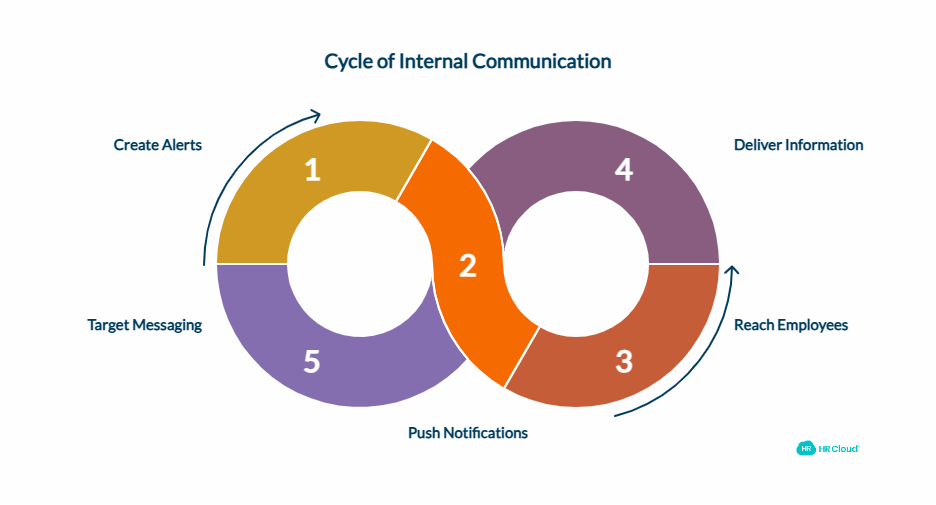
Internal communications teams can easily create and push emergency alerts to the entire workforce through multi-channel communication. This is a great way to reach any employee in order to send company-wide updates, announcements, policy changes, or other information that addresses workplace expectations and reinforces organizational commitment. You can even include SMS messages tied to your communication platforms for urgent matters. With targeted messaging capabilities, you can ensure that company announcements reach the right employees at the right time, shaping positive employee attitudes and demonstrating respect for the relational psychological contract that values personalized, relevant communication.
2. Provide a Centralized News Feed for Real-Time Updates
Employee communication software often includes a news feed feature, allowing organizations to share real-time updates and important information in one centralized location. This ensures that all connected employees, whether they're remote workers or in the office, have access to the latest news and announcements, supporting employee satisfaction and work engagement. The news feed can be customized to show the most relevant information to each employee, improving engagement and information retention while contributing to a positive organizational climate. Additionally, features like employee surveys and live polls can be integrated into the news feed, allowing for quick feedback and employee involvement that strengthens the psychological contract through two-way communication.

3. Enable Instant Messaging and Team Chat for Quick Communication
During a crisis, quick and efficient communication is crucial for maintaining the psychological contract and organizational effectiveness. Team communication apps typically include instant messaging and team chat features, allowing employees to communicate in real-time. This facilitates rapid information sharing, problem-solving, and collaboration among remote workers while building workplace relationships and employee motivation. Team chat can be organized into different channels or groups, making it easy to manage conversations and ensure that the right people are involved in the right discussions. Features like read receipts and voice calls enhance the functionality of these group messaging platforms, making them even more effective for crisis communication and supporting the transactional psychological contract elements of clear, efficient information exchange.
4. Facilitate Video Conferencing for Face-to-Face Communication
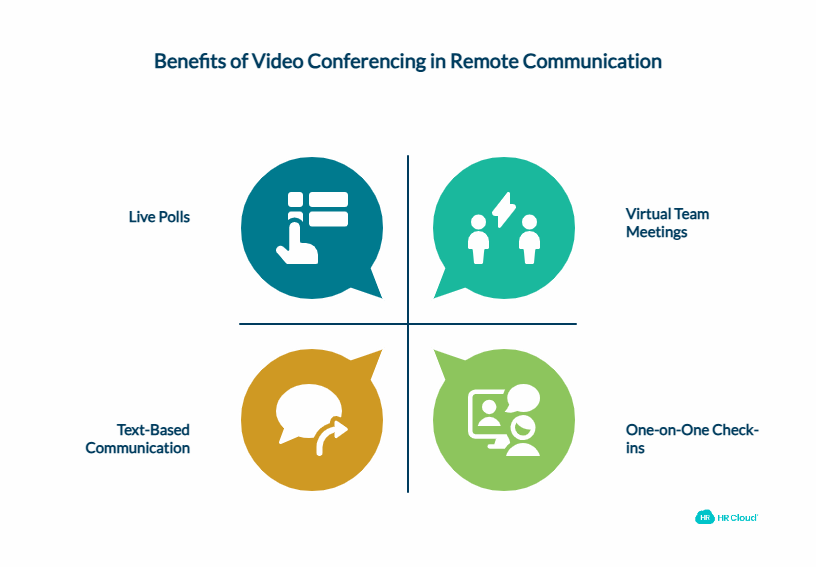
While text-based communication is important, sometimes face-to-face interaction is necessary, especially during a crisis when the psychological contract requires personal connection and empathy. Many employee communication software solutions include video conferencing capabilities, allowing teams to hold virtual meetings, conduct training sessions, or have one-on-one check-ins that support employee development and job satisfaction. This helps maintain a sense of connection and personal interaction, even when teams are physically dispersed, reinforcing organizational behavior that values human connection. Video conferencing tools can also be used to gather employee feedback and conduct live polls, further enhancing remote collaboration and demonstrating organizational justice through inclusive decision-making processes.
Download this free PDF and share it with your team to align your internal and external communication strategies.
Download Now
5. Provide a Knowledge Base for Important Information
In times of crisis, it's crucial to have a centralized repository of important information that employees can access at any time to support performance management and reduce employee turnover. Employee communication apps often include a knowledge base feature where organizations can store and organize critical documents, policies, and procedures. This ensures that all employees have access to the most up-to-date information, reducing confusion and ensuring consistency in crisis response while supporting the psychological contract through transparency and accessibility. An employee directory can be integrated into this knowledge base, making it easy for team members to find and contact the right person when needed. Additionally, communication analytics can be used to track engagement with these resources, helping to improve their effectiveness over time and contributing to overall organizational performance.
By leveraging these features of employee communication software, organizations can significantly improve their crisis management capabilities while maintaining a positive psychological contract. These tools not only facilitate better communication but also help maintain team productivity, boost employee engagement, and ensure that all members of the organization remain informed and connected during challenging times. According to psychological contract theory and extensive psychological contract research, when organizations fulfill their communication obligations during crises, they strengthen the psychological contract and build lasting organizational trust.
Remember, effective crisis management relies on clear, consistent, and timely communication that honors the psychological contract and demonstrates organizational support. By utilizing the right communication platforms and internal communication apps, you can keep your workforce informed, engaged, and prepared to face whatever challenges may arise. Whether you're dealing with office-based employees, field workers, or deskless workers, enterprise communication solutions like YourCo's employee app can help you maintain strong connections and effective communication across your entire organization. These tools support the psychological contract inventory of expectations—from basic information sharing to complex relational needs—while providing employee benefits that extend beyond traditional compensation to include meaningful connection, development opportunities, and a supportive workplace environment that enhances employee motivation and reduces workplace stress.

Experience how Workmates can transform communication and strengthen culture—all in one powerful platform
Book Your Free DemoFAQ's
1. How do employee mobile apps improve crisis communication?
Employee mobile apps improve crisis communication by helping organizations reach employees quickly through mobile alerts, push notifications, company news feeds, messaging, and digital workspaces. During a crisis, speed matters. Email alone often fails because frontline, remote, and deskless employees may not check it in real time. A mobile employee communication app puts urgent updates directly in employees’ hands, helping HR and leadership reduce confusion, answer questions faster, and keep everyone aligned. This also supports trust because employees can see that the organization is communicating clearly instead of leaving them to guess what is happening.
2. What features should an employee communication app include for crisis management?
A strong employee communication app should include mobile push notifications, centralized announcements, segmented news feeds, instant messaging, employee surveys, live polls, read confirmations, and easy access to policies or crisis resources. These features help organizations share urgent updates, track who has received important information, and collect employee feedback during fast-changing situations. For HR teams, the most valuable crisis communication software is not just a broadcast tool. It creates two-way communication so employees can ask questions, confirm understanding, and feel heard when uncertainty is high.
3. Why are mobile apps better than email for emergency employee communication?
Mobile apps are better than email for emergency employee communication because they reach employees faster and work better for teams that do not sit at a desk all day. Email can get buried, ignored, or missed completely, especially by frontline workers, hourly employees, field teams, and remote employees. A mobile-first internal communication app sends alerts directly to the employee’s device and gives them one place to find official updates. This reduces rumor-spreading, improves response times, and helps leadership maintain control of the message during a crisis.
4. How do employee mobile apps support frontline and deskless workers during a crisis?
Employee mobile apps support frontline and deskless workers by giving them direct access to critical updates, schedules, policies, announcements, and HR resources from their phones. These employees often lack regular access to company email or desktop intranets, which makes them harder to reach during emergencies. A frontline employee communication app closes that gap. With tools like mobile alerts, targeted announcements, employee directories, and knowledge base access, organizations can keep every worker informed regardless of location, shift, or job type.
5. How does crisis communication affect employee trust and engagement?
Crisis communication directly affects employee trust and engagement because employees judge organizations by how clearly, quickly, and honestly they communicate during uncertainty. When leaders stay silent or share updates through scattered channels, employees feel ignored. That can damage morale and weaken the psychological contract between employer and employee. When organizations use a reliable employee communication platform to share timely updates, answer questions, and gather feedback, they show employees that their safety, clarity, and experience matter. That trust often lasts beyond the crisis.
6. Can HR Cloud help with crisis communication and employee communication?
Yes. HR Cloud’s Workmates platform helps organizations improve employee communication through mobile-first announcements, targeted updates, employee engagement tools, recognition, surveys, and centralized access to company information. For crisis communication, HR teams can use Workmates to reach employees across locations, departments, and work types without relying only on email. This is especially useful for frontline, remote, and distributed teams. HR Cloud helps organizations create a more connected workplace where employees receive important updates, understand what to do next, and stay engaged even during disruption.
7. What is the best employee mobile app for internal crisis communication?
The best employee mobile app for internal crisis communication is one that combines speed, reach, targeting, and two-way communication. Look for features such as mobile push notifications, segmented announcements, real-time messaging, employee surveys, read tracking, and a centralized knowledge base. The platform should also work for office-based, remote, and frontline employees. HR Cloud Workmates is a strong option for organizations that want to combine crisis communication, employee engagement, recognition, and internal communication in one mobile-friendly employee experience platform.
8. How can organizations choose the right crisis communication software?
Organizations should choose crisis communication software based on how quickly it reaches employees, how easily HR can target messages, and whether employees can respond or ask questions. Avoid tools that only send one-way announcements. During a crisis, employees need clarity, but HR also needs visibility into what people understand, where confusion exists, and who has not received key updates. The right platform should support mobile alerts, news feeds, surveys, read receipts, document access, and employee engagement features. For companies with distributed or frontline teams, mobile access is non-negotiable.
About the author

Keep Reading


Like What You Hear?
We’d love to chat with you more about how HR Cloud® can support your business’s HR needs.
Book Your Free Demo