
Time Off Management Guide for HR Teams

Time off management got you down? Without a proper system in place, employee time off requests can quickly become a burden. Mismanagement of PTO requests may even be detrimental to your business continuity and operational needs.
In this blog post we'll cover why employee time off management is important and three tips you can use to become a time off management superstar. Let's get started!
Why Time Off Management Is Essential
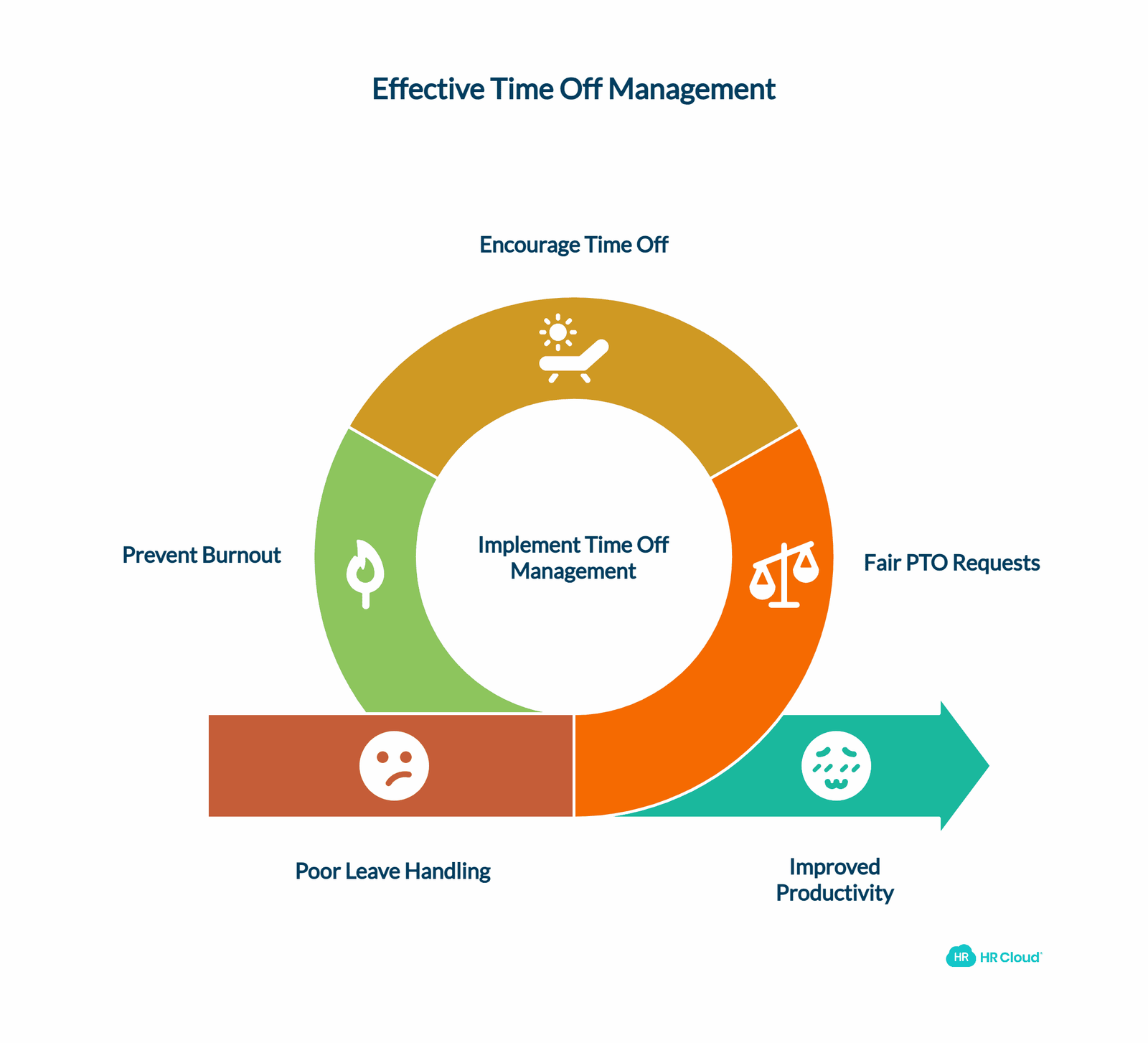
First things first: why does time off management deserve your attention? Shouldn't your HR department discover ways to keep employees in the office more? In a word: no. This is true for multiple reasons.
One, the modern employee appreciates job perks (like paid vacation and personal time) just as much as the wage they earn. A sure fire way to scare off the best talent is to handle leave requests poorly. Constantly denying days off and favoring certain employee PTO requests over others is a disaster waiting to happen for your company culture and employee satisfaction.
Plus, the research shows that time off actually improves employee productivity and morale. When your team is well-rested and happy at work — two things a vacation or annual leave is known to produce — they'll be much more likely to work harder, be more creative, and get more done. Effective time off management can also help prevent employee burnout, which is crucial for maintaining a healthy and productive workforce.
3 Tips to Become a Time Off Management Superstar
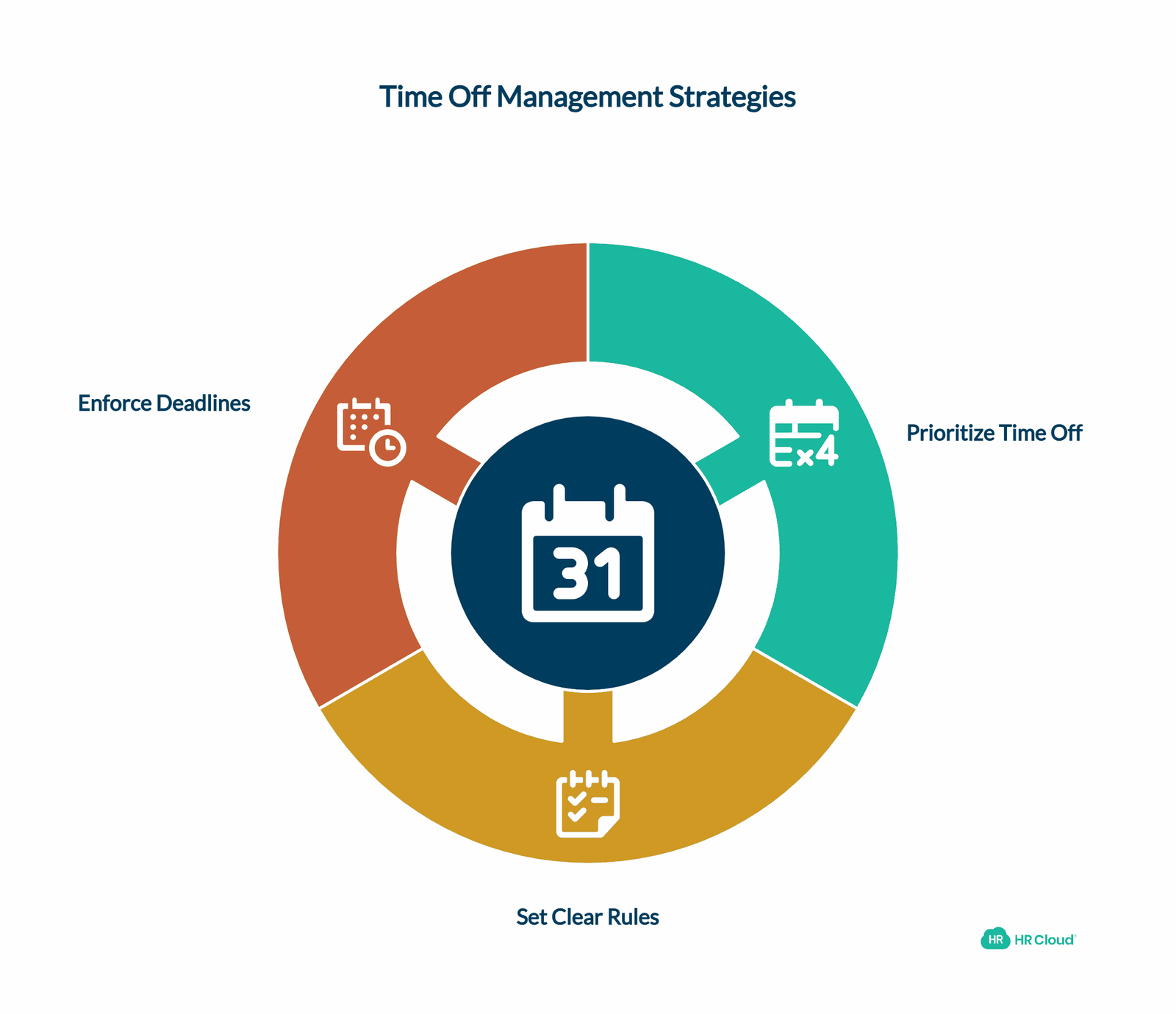
Quality time off policies will help you attract and retain talent, and improve the performance of each of your company's employees. But managing time off isn't always easy. These three tips will help you manage employee time-off requests like a rockstar.
1. Prioritize Employee Time Off
In order to properly manage employee time off requests, you have to first make time off management a priority. Track employees' working hours by using an employee hour calculator and make sure they're getting enough time off. This may seem obvious — and it is — but, unfortunately, many companies still neglect to do it. Don't be one of those companies.
Be more like Moz, who not only gives its employees three weeks of paid vacation every year, but also $3,000 to spend on airfare, hotels, and other vacation related expenses. We're guessing their employee retention and satisfaction rates are through the roof with a policy like that!
Or take Spotify, the music streaming behemoth from Sweden. They allow their employees to switch out traditional vacation days for others of their own choosing. For example, an employee who decides to work on Christmas could trade that traditional day off for a day off in July instead.
Now your company doesn't need to implement these same policies. If your business is unable to pay employees to vacation, don't worry. The point is that both Moz and Spotify understand the value of letting their employees take time off and have developed policies and systems to manage PTO requests effectively.
Your company should prioritize employee time off, too, as part of your overall workforce management strategy. This includes considering various types of leave such as parental leave, military leave, jury duty, and bereavement leave.
2. Set Clear Rules and Boundaries
Each of your employees should know and understand, preferably from the first day they start working for your business, what your company policies are regarding vacation time and requesting time off. Here are a few guidelines to follow when creating time off policies:
Time Off Allowance
First, it needs to be abundantly clear how much time off each employee is allowed to take, whether that time is paid or unpaid, and how often your team can submit requests. Giving your workers two weeks off every year isn't a clear policy.
Giving them two weeks of paid time off that they can use any time of the year except for March (because that's when your business is busiest) is very clear. This should be part of your leave management system and clearly stated in the employee handbook. Make sure to include information about the accrual process, overtime pay, and how to handle unplanned time off.
The Request Process
Employees also need to know how to submit time off requests. We recommend having one standard procedure that each member of your team must use for requesting off. Then stick to it! Don't waver or make exceptions. Make it known that if an employee wants time off, they need to submit their PTO requests in a specific way.
The procedure you choose — paper slips, digital forms, time off app, etc. — is completely up to you. Just choose a system that compliments your workflow and roll with it. This will help streamline your time off approval process. Consider using a request form template to standardize the process.
Your Policy on Deadlines
Finally, you need to implement some kind of deadline for time off requests to be submitted. You can't have employees informing you the day before they leave for Aruba that they'll be gone for the next week and can you please approve the requested time off because they already bought the cheap plane tickets and packed their suitcase?"
Make it a policy that employees must give you at least two weeks notice — barring any emergency leave — for time off to be approved. This will help you maintain proper staffing levels and implement coverage strategies when necessary. Be sure to consider peak periods, such as the holiday season, and establish blackout periods if needed.
3. Use the Right Time Off Management Tool
As we mentioned before, proper time off management, while essential, isn't always easy. That's why we recommend you use a software tool to help you streamline the process and keep every request, approval and accrual in line.
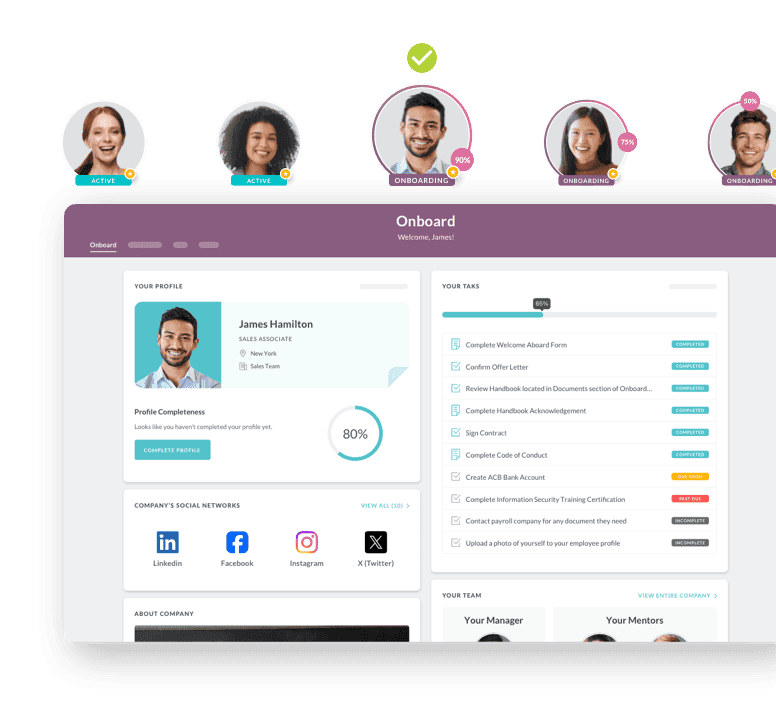
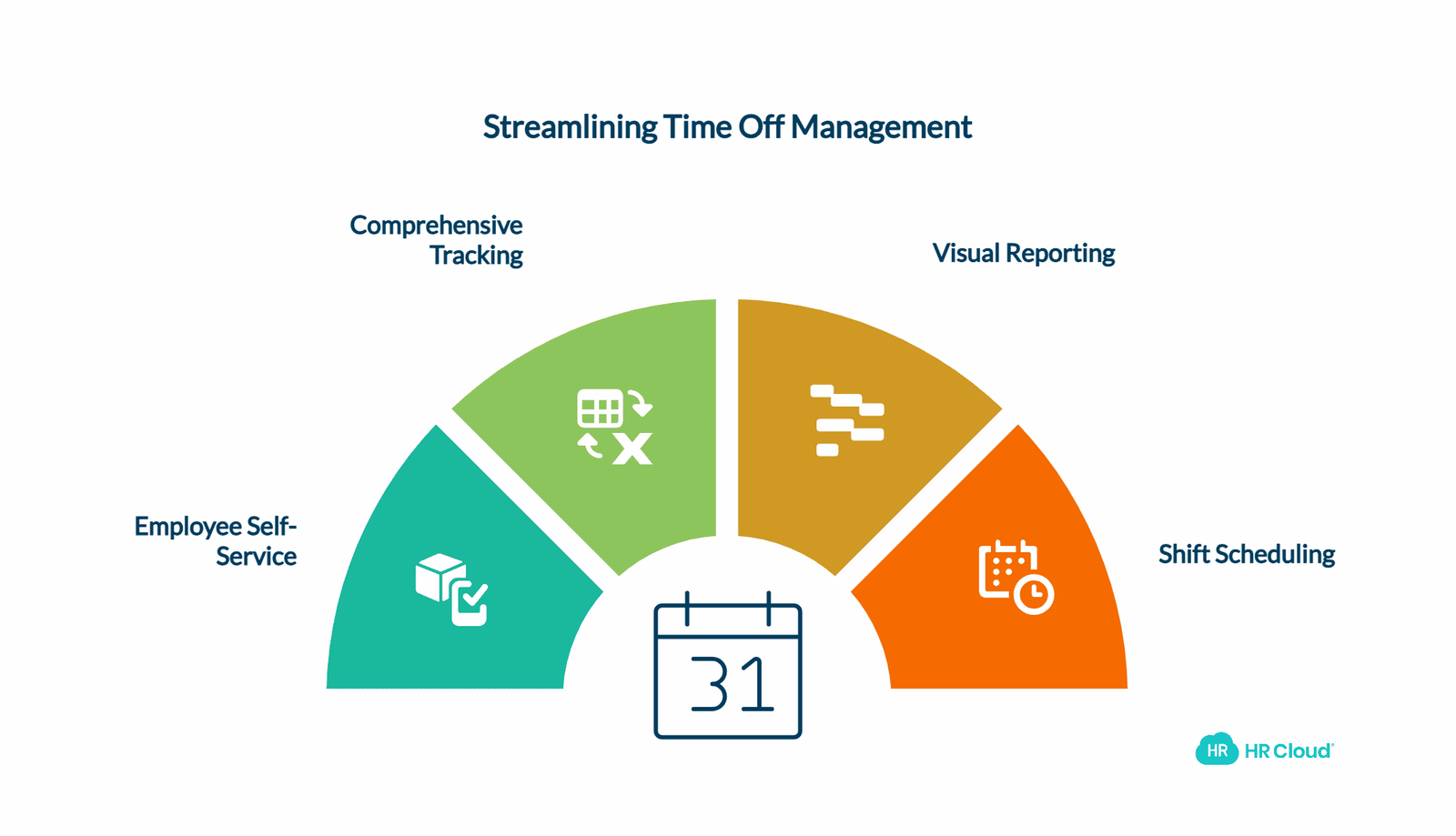
There are many options on the market including Time-Off Tracking by HR Cloud. This HR software allows employees to self-service their own vacation requests and report sick leave from the comfort of their smartphones.
It makes life easier for you too and tracks everything — who's in and who's out, which employees still have leave balance left, when Bob from accounting is finally taking that trip to Hawaii he's been talking about for months — and displays it in easy to consume, visual reports.
Time-Off Tracking by HR Cloud makes PTO tracking a breeze and helps you maintain an efficient time off schedule! It can also help with shift scheduling and attendance tracking, making it a comprehensive time-off management system.
Wrapping Up
Proper time off management is important for workforce planning and maintaining employee morale. By not prioritizing it, you'll find that it's much harder to attract and retain top talent, and you'll drive yourself crazy wondering who's in the office and who's not.
So do yourself a favor and set a clear time off policy that defines how much vacation time each employee gets, when they can take that time, and how time off requests should be submitted. Then stick to that policy. Remember to consider legal requirements and labor laws when creating your policies.
And remember, a time off tracking app like Time-Off Tracking by HR Cloud will streamline this whole process and allow you to focus on more important aspects of workforce management than approving vacation requests for each team member. It's an essential tool for managing PTO effectively and ensuring smooth business operations.
Consider implementing a shared calendar system to help visualize time off schedules and avoid overlapping requests. This can be particularly helpful during busy periods like the holiday season or when managing public holidays.
By following these tips and using the right tools, you'll be well on your way to mastering time off management. This will not only improve employee satisfaction but also help prevent staffing gaps and ensure your business runs smoothly year-round.
Frequently Asked Questions
What is time off management in HR?
Time off management is the process of tracking, managing, and approving employee leave such as vacation, sick days, and personal time. It helps organizations maintain accurate records of employee absences while ensuring business operations run smoothly. A structured system improves transparency, compliance, and employee satisfaction.
Why is time off management important for organizations?
Effective time off management ensures proper workforce planning and prevents disruptions caused by unplanned absences. It also helps organizations stay compliant with labor laws and company policies. When employees can easily request and track leave, it improves their experience and builds trust in HR processes.
What types of employee leave are included in time off management?
Time off management typically includes vacation leave, sick leave, paid time off (PTO), parental leave, and unpaid leave. Some organizations also include holidays, bereavement leave, and flexible time off policies. Managing these categories effectively ensures fairness and consistency across the workforce.
How does a time off management system work?
A time off management system allows employees to submit leave requests digitally, which managers can review and approve. The system tracks balances, updates schedules, and integrates with payroll or HR systems. Automation reduces manual errors and makes it easier to manage employee availability.
What are the benefits of using time off management software?
Time off management software simplifies leave tracking, improves accuracy, and reduces administrative workload for HR teams. It provides real-time visibility into employee availability, helping managers plan resources effectively. It also enhances employee experience by making leave requests quick and transparent.
How can companies create an effective time off policy?
Organizations can create an effective time off policy by clearly defining leave types, eligibility, accrual rules, and approval processes. Policies should be easy to understand and accessible to employees. Regular updates based on employee feedback and compliance requirements ensure the policy remains relevant and effective.
How does time off management impact employee engagement?
Proper time off management supports work-life balance, which is essential for employee wellbeing and engagement. When employees can take leave without complications, they return more refreshed and productive. This improves morale and helps reduce burnout in the workplace.
What challenges do companies face in managing employee time off?
Common challenges include tracking leave manually, managing overlapping requests, ensuring policy compliance, and maintaining accurate records. Without proper systems, errors and miscommunication can occur. Implementing automated tools helps address these issues and improves efficiency.
How can HR teams ensure compliance in time off management?
HR teams can ensure compliance by aligning policies with local labor laws and regularly updating them as regulations change. Using automated systems helps maintain accurate records and ensures leave entitlements are applied consistently across employees.
What features should you look for in a time off management system?
Key features include automated leave tracking, self-service portals, mobile access, approval workflows, reporting tools, and integration with payroll systems. These features help streamline processes, improve visibility, and ensure efficient management of employee time off.
About the author

Keep Reading


Like What You Hear?
We’d love to chat with you more about how HR Cloud® can support your business’s HR needs.
Book Your Free Demo