
6 Employee Retention Tactics Used by HR Services

Attracting top talent is challenging—but keeping them is where many organizations struggle. With 93% of companies worried about employee retention according to LinkedIn's 2023 survey, and the average cost to replace an employee ranging from one-half to two times their annual salary, strategic retention initiatives have become business-critical.
This comprehensive guide explores evidence-based employee retention strategies used by successful HR teams to reduce voluntary turnover, improve engagement, and build lasting employee commitment. Whether you're managing frontline workers or office-based teams, these retention tactics will help you create a workplace culture where employees choose to stay and thrive.
What is Employee Retention and Why Does it Matter
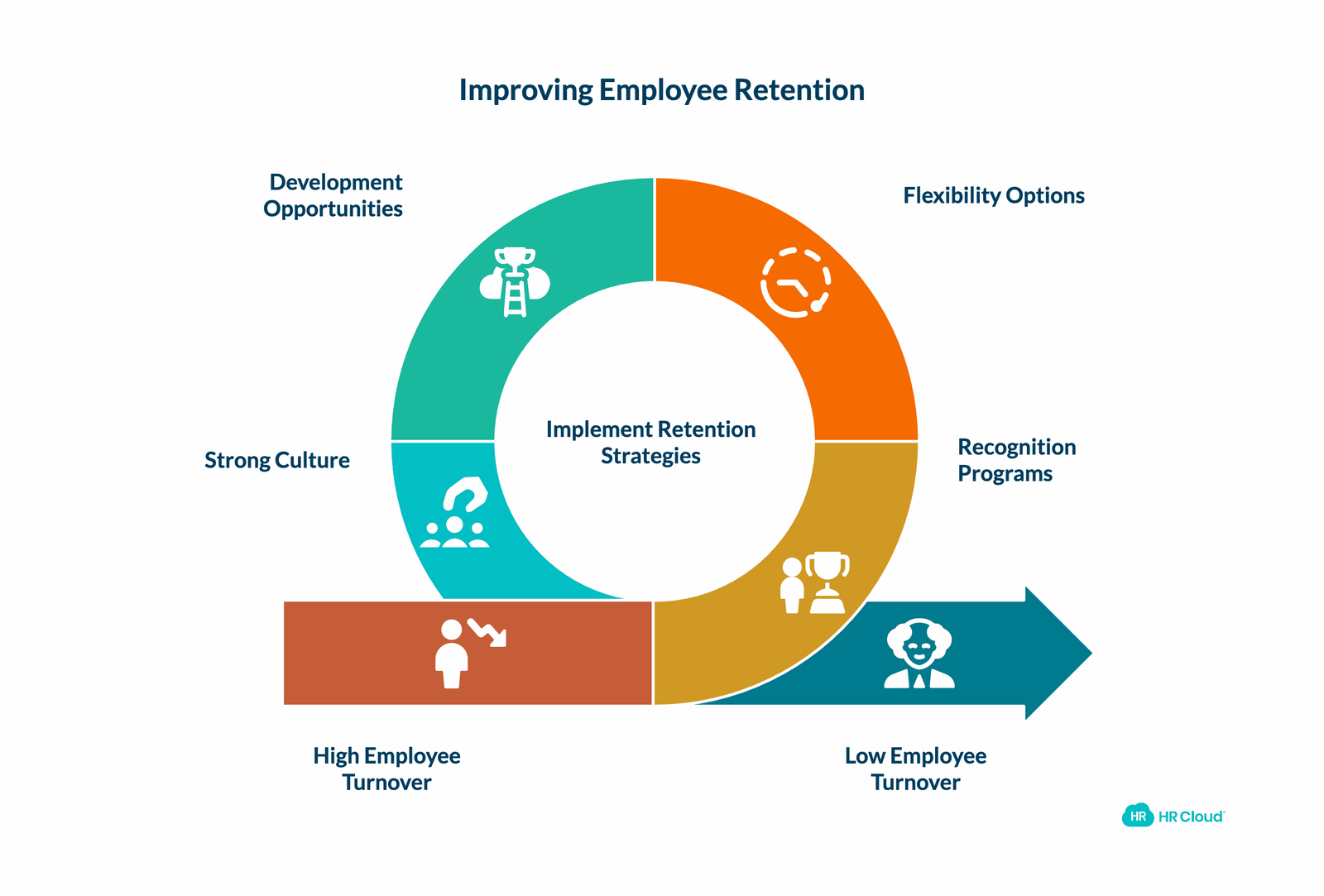
Employee retention refers to an organization's ability to keep employees engaged, productive, and committed for extended periods. Strong retention strategies focus on reducing voluntary turnover—when valued employees choose to leave for opportunities elsewhere.
The business case for retention is compelling:organizations with strong recognition programs experience 31% lower voluntary turnover rates according to SHRM research. For a 500-employee organization with an average salary of $60,000, reducing turnover by 31% can save approximately $558,000 annually in recruitment, training, and productivity loss.
Modern employee engagement platforms help HR teams implement scalable retention strategies across distributed workforces, from frontline workers to remote teams. The most successful retention programs combine multiple approaches—recognition, flexibility, development opportunities, and strong culture—rather than relying on a single tactic.
1. Recognition and Rewards Programs
Employee recognition is one of the most powerful yet underutilized retention strategies. Research fromSHRM and Workhuman shows that 77% of employees value peer recognition opportunities, while employees recognized weekly are 9x more likely to recommend their company and 6x more likely to see a long-term future there according to Achievers Workforce Institute.
Why Recognition Drives Retention:
Recognition fulfills fundamental psychological needs for validation and belonging. When employees feel their contributions matter, they develop stronger organizational commitment. Organizations with recognition programs report 14% higher productivity and performance compared to those without.
Implementing Effective Recognition:
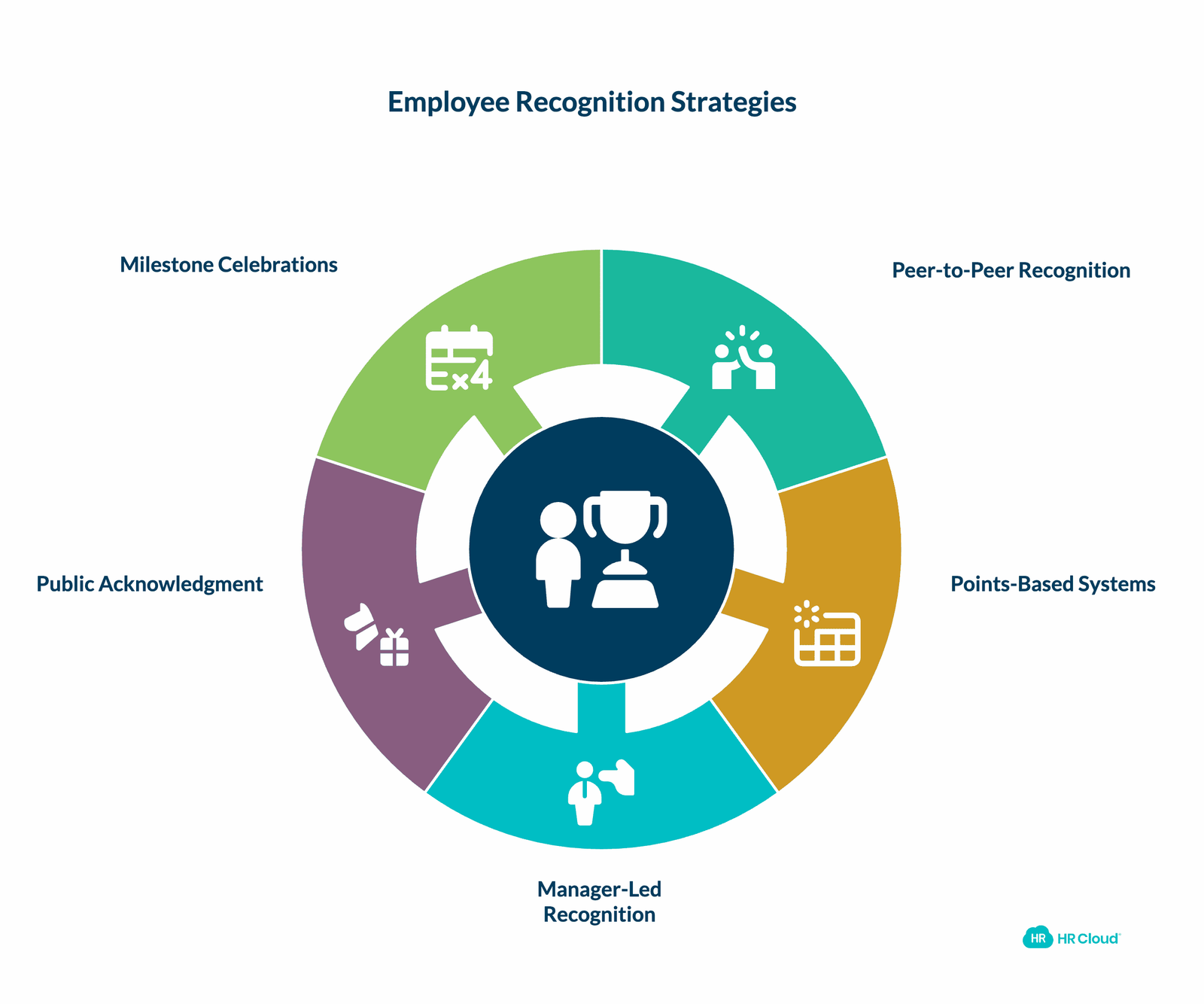
- Peer-to-Peer Recognition: Enable employees to recognize colleagues instantly through platforms like Workmates, creating a culture where appreciation flows in all directions—not just top-down.
- Points-Based Systems: Allow employees to accumulate points through recognitions and redeem them for gift cards, company swag, or experiences they value. Modern reward catalogs offer 100+ options to match diverse employee preferences.
- Manager-Led Recognition: Train managers to provide specific, timely recognition that reinforces desired behaviors and cultural values. Recognition should be immediate, specific, and tied to observable actions or results.
- Public Acknowledgment: Celebrate achievements visibly through social recognition feeds, team meetings, and company-wide announcements.
- Milestone Celebrations: Automate recognition for work anniversaries, birthdays, and project completions to ensure no achievement goes unnoticed.
Modern employee recognition software makes appreciation systematic rather than sporadic, ensuring consistent recognition that drives measurable retention improvements. The key is making recognition frequent, meaningful, and accessible to all employees—not reserved for annual awards ceremonies.

2. Flexible Work Arrangements
Workplace flexibility has evolved from a nice-to-have perk to a fundamental retention requirement. Post-pandemic research consistently shows flexible work arrangements rank among employees' most valued benefits, often outweighing salary considerations for many workers.
The Retention Impact of Flexibility:
Flexibility demonstrates trust in employees to manage their time and responsibilities effectively. This autonomy increases job satisfaction, reduces burnout, and improves work-life balance—all critical factors in retention decisions. Employees with flexible arrangements report higher engagement and loyalty to their employers.
Flexible Work Options That Improve Retention:
- Remote Work Policies: Enable employees to work from home full-time or in hybrid arrangements that balance in-office collaboration with remote productivity. Remote onboarding tools ensure distributed teams feel connected from day one.
- Flexible Schedules: Allow employees to adjust start/end times around personal obligations, school schedules, or productivity preferences. This is particularly valuable for working parents and caregivers.
- Compressed Workweeks: Offer options like four 10-hour days for employees who value extended weekends or reduced commuting frequency.
- Mobile-First Tools: Provide mobile apps that enable frontline workers in healthcare, manufacturing, construction, and retail to access HR resources, receive recognition, and stay connected from anywhere.
- Location Independence: For roles that don't require physical presence, consider allowing employees to work from different cities or states, expanding your talent pool while increasing retention.
For distributed teams, internal communication software ensures flexible arrangements don't create disconnection or information silos that drive turnover. The goal is flexibility that maintains team cohesion while respecting individual work preferences.
3. Career Development and Growth Opportunities
Employees who don't see a future at your organization will find one elsewhere. Professional development ranks consistently among top retention factors, especially for millennial and Gen Z workers who prioritize learning and career progression over job stability alone.
Why Growth Opportunities Matter for Retention:
Career stagnation is a primary driver of voluntary turnover. When employees can't envision advancement or skill development, they start searching for companies that offer clearer growth paths. Organizations that invest in employee development show they value long-term employee success—which employees reciprocate with loyalty and commitment.
Creating Growth Pathways:
- Clear Career Progression: Map advancement opportunities within the organization, including lateral moves that broaden skills without requiring management responsibilities. Not everyone wants to be a manager—create technical or specialist advancement tracks.
- Learning & Development Programs: Provide access to training, conferences, online courses, and tuition reimbursement that help employees build marketable skills. Partner with platforms that offer relevant, engaging content employees actually want to complete.
- Mentorship Programs: Pair employees with experienced colleagues who can provide guidance, share institutional knowledge, and advocate for their advancement. Structured mentorship programs show employees you're invested in their long-term success.
- Stretch Assignments: Offer challenging projects that expand capabilities and demonstrate trust in employee potential. Cross-functional projects expose employees to different parts of the business while building valuable relationships.
- Performance management software: Use structured systems to set goals, track progress, and identify high-potential employees ready for advancement. Regular check-ins prevent surprises and keep development conversations ongoing.
- Internal Job Postings: Advertise openings internally before external recruitment, giving current employees first opportunity to advance or pivot to new roles.
Regular performance reviews with honest career conversations signal that you're invested in employees' futures—not just their current productivity. Managers should be trained to have development discussions that go beyond current role performance.
4. Team Collaboration and Connection
Human connection at work significantly impacts retention decisions. Employees who have friends at work are substantially more likely to stay, according to Gallup research. Strong team relationships create social bonds that make leaving more difficult, even when external opportunities arise with higher compensation.
Building Collaborative Team Environments:
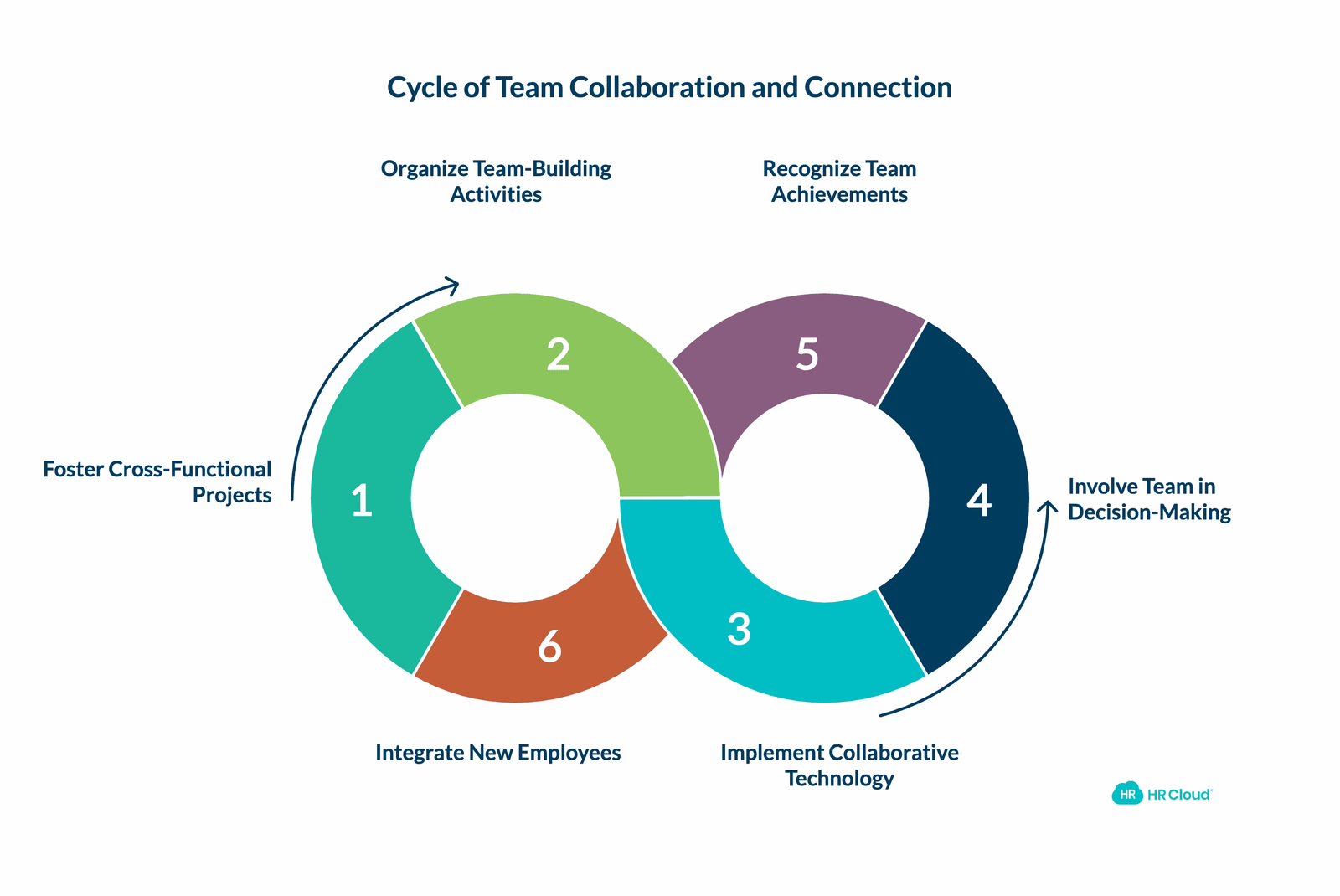
- Cross-Functional Projects: Create opportunities for employees to work with colleagues outside their immediate team, broadening relationships and perspective. This prevents the siloed feeling that often leads to disengagement.
- Team-Building Activities: Organize regular social interactions, whether virtual coffee chats, team lunches, or off-site activities that strengthen interpersonal bonds. These don't need to be expensive—simple regular touchpoints build connection.
- Collaborative Technology: Implement team communication channels that facilitate real-time collaboration, project coordination, and casual conversation. Make it easy for employees to connect informally, not just for work tasks.
- Inclusive Decision-Making: Involve team members in decisions that affect their work, demonstrating respect for their expertise and perspective. Employees who feel heard are more likely to stay engaged.
- Recognition of Team Achievements: Celebrate collective wins alongside individual accomplishments. Team-based recognition reinforces collaboration and shared success.
- New Employee Integration: Assign onboarding buddies, facilitate team introductions, and create structured opportunities for new hires to build relationships during their critical first 90 days.
For distributed teams, employee engagement software can recreate the spontaneous interactions that naturally occur in office environments, preventing remote work from becoming isolated work. Virtual water cooler channels, birthday celebrations, and casual spaces for non-work conversation help maintain social bonds.
5. Strong Company Culture
Company culture—the shared values, behaviors, and atmosphere that define what it's like to work at your organization—serves as either a retention magnet or a turnover accelerator. Organizations with strong, positive cultures retain employees longer and attract talent more easily, even when they can't match competitors' compensation.
Elements of Retention-Focused Culture:
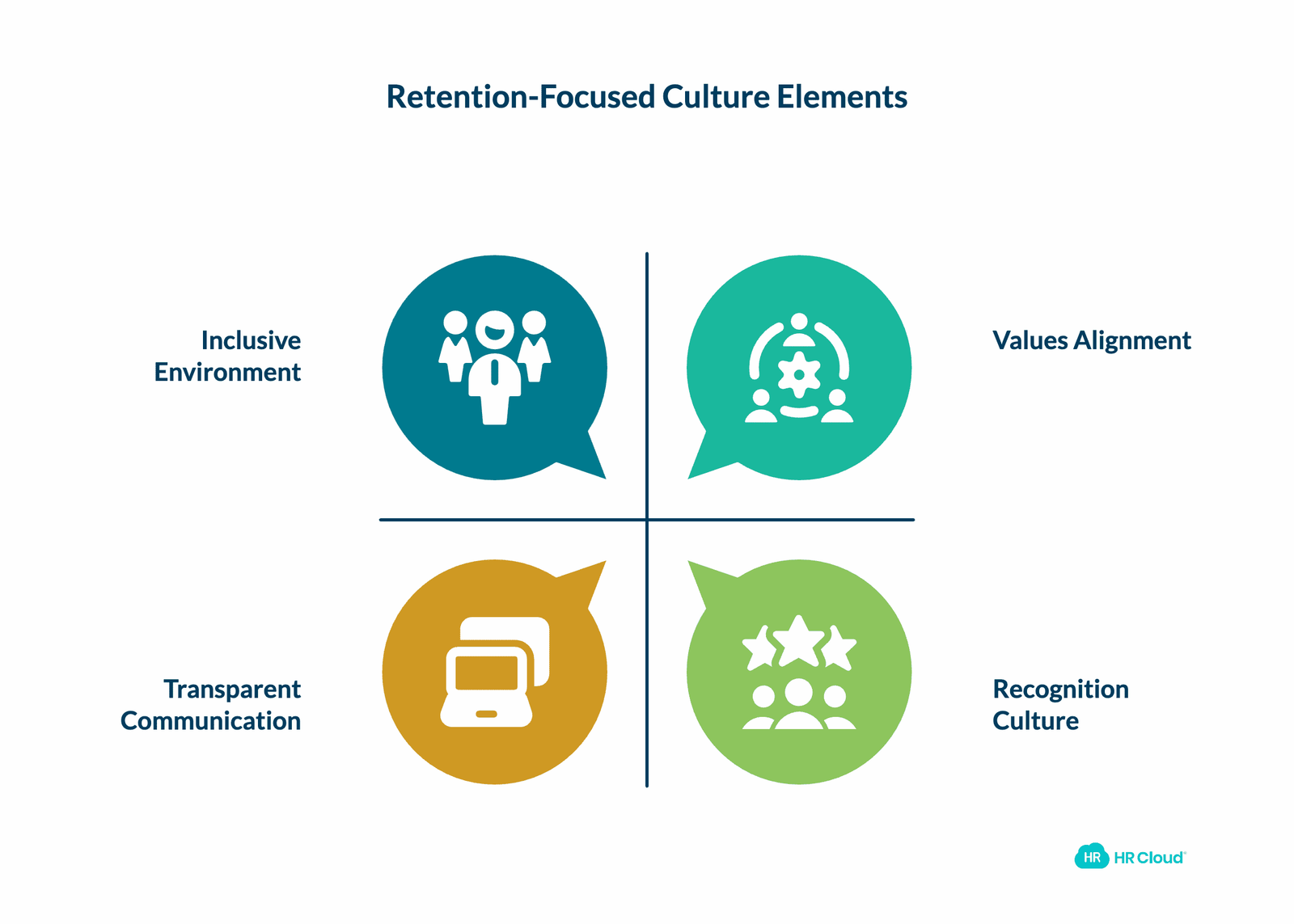
- Values Alignment: Ensure company values are clearly articulated and genuinely practiced, not just displayed on office walls. Employees want to work for organizations whose values match their own—but only if those values are authentic and consistently demonstrated through leadership behavior.
- Inclusive Environment: Create psychological safety where employees feel comfortable bringing their authentic selves to work without fear of discrimination or exclusion. Inclusive cultures leverage diverse perspectives and make everyone feel they belong.
- Work-Life Balance: Build a culture that respects boundaries, discourages after-hours email, and supports employees' lives outside work. Burnout is a retention killer—cultures that prioritize sustainable workloads retain talent longer.
- Transparent Communication: Share company performance, challenges, and strategic direction openly, making employees feel like trusted partners rather than hired hands. Transparency builds trust and reduces the rumor mill that breeds disengagement.
- Recognition Culture: Make appreciation a daily habit, not an annual event. Company culture initiatives that systematize recognition ensure appreciation happens consistently across all teams and locations.
- Leadership Accessibility: Ensure leaders are visible, approachable, and engaged with employees at all levels. Skip-level meetings, town halls, and open-door policies make leadership feel connected rather than distant.
- Continuous Improvement: Create mechanisms for employee feedback and demonstrate responsiveness to concerns. Employee surveys that lead to visible action show employees their input matters.
Culture isn't built through mission statements—it's built through consistent leadership behaviors, reinforced norms, and systematic employee engagement strategies that make culture tangible daily. The most retention-friendly cultures balance high performance expectations with genuine care for employee wellbeing.
6. Strategic Onboarding Experience
Onboarding has an outsized impact on retention. Nearly half of employees have second thoughts within their first week according to Bureau of Labor Statistics data, while 69% of employees are more likely to stay with a company for three years if they experience great onboarding according to SHRM.
Why Onboarding Determines Retention:
The onboarding period establishes new hires' entire relationship with your organization. Poor onboarding creates confusion, frustration, and disengagement—often irreversibly. Exceptional onboarding creates confidence, connection, and commitment that carries through employees' entire tenure. It's your only chance to make a first impression that shapes years of employment.
Building Retention-Focused Onboarding:
- Preboarding Activities: Engage new hires before day one with welcome communications, paperwork completion, and culture introduction that builds excitement. Send company swag, create personalized welcome videos, and make new hires feel part of the team before they officially start.
- Structured 90-Day Plans: Provide clear expectations, milestones, and check-ins throughout the critical first quarter when retention risk is highest. New hires should know exactly what success looks like and how they'll be supported in achieving it.
- Relationship Building: Facilitate introductions to key colleagues, assign mentors, and create opportunities for new hires to build social connections. One-on-one coffee chats with team members help new employees feel welcomed and integrated.
- Role Clarity: Ensure new employees understand their responsibilities, success metrics, and how their work contributes to organizational goals. Ambiguity breeds anxiety—clarity builds confidence.
- Cultural Immersion: Share company history, values, and stories that help new hires understand "how we do things here." Culture training shouldn't be a checkbox—it should be an engaging introduction to what makes your organization unique.
- Manager Training: Equip managers with tools and expectations for effective new hire support. Managers have the greatest impact on retention—ensure they're prepared to lead successful onboarding.
- Onboarding software: Automate workflows, track completion, and ensure consistent experiences across all new hires—especially important for distributed or high-volume hiring. Digital onboarding eliminates the paper shuffle that makes day one overwhelming.
Organizations using structured onboarding platforms see 82% improvement in new hire retention and 70% faster time-to-productivity according to Brandon Hall Group research. The investment in quality onboarding pays dividends in reduced turnover and accelerated contribution.
Measuring Retention Success
Effective retention strategies require measurement to understand what's working and where improvement is needed. You can't improve what you don't measure—and retention metrics provide the insights needed for strategic intervention.
Key Retention Metrics to Track:
- Voluntary Turnover Rate: Calculate employees who choose to leave divided by total workforce, analyzed monthly and annually. Separate voluntary from involuntary turnover to understand true retention challenges.
- Retention Rate by Tenure: Measure what percentage of new hires remain after 90 days, one year, and three years. High early turnover signals onboarding problems, while later turnover may indicate development or culture issues.
- Cost of Turnover: Calculate total replacement costs including recruitment, training, and productivity loss. SHRM estimates average cost per hire at nearly $4,700, but total replacement costs can reach 50-200% of salary.
- Retention by Manager: Analyze turnover rates by supervisor to identify managers who excel at retention and those who need support. People leave managers, not companies—manager-level data reveals critical patterns.
- Exit Interview Insights: Systematically collect departure reasons to identify fixable retention issues. Look for patterns in why people leave—compensation, growth, culture, management, work-life balance—to prioritize interventions.
- Employee engagement scores: Monitor engagement surveys to predict retention risk before employees resign. Declining engagement is an early warning system for turnover.
- Time-to-Fill Positions: Track how long vacancies remain open. Prolonged vacancies indicate retention problems are creating recruitment challenges.
- Quality of Hire: Measure new employee performance and cultural fit to ensure you're not just filling positions but building lasting teams.
Modern HR analytics platforms provide real-time dashboards showing retention trends, high-risk employees, and program effectiveness. Use data to move from reactive firefighting to proactive retention management.

Experience how Workmates can transform communication and strengthen culture—all in one powerful platform
Book Your Free DemoFrequently Asked Questions
What are the most effective employee retention strategies?
The most effective retention strategies address multiple employee needs simultaneously: competitive compensation, meaningful recognition, career development opportunities, workplace flexibility, strong company culture, and strategic onboarding. Organizations with comprehensive programs combining these elements see substantially higher retention than those addressing only one or two factors. Research shows holistic approaches deliver better results than siloed initiatives.
How much does employee turnover cost?
Employee turnover costs typically range from one-half to two times an employee's annual salary, accounting for recruitment expenses, training costs, and productivity loss during vacancy periods. For specialized roles, costs can exceed 200% of salary. SHRM estimates the average cost per hire at nearly $4,700, but total replacement costs include onboarding time, reduced team productivity, lost institutional knowledge, and the opportunity cost of unfilled positions.
How can small businesses improve retention without large budgets?
Small businesses can improve retention through no-cost or low-cost strategies: frequent recognition and appreciation, flexible work arrangements, clear career conversations, inclusive decision-making, and strong peer relationships. Modern employee engagement platforms offer affordable solutions that deliver enterprise-level retention capabilities at scale. Focus on creating a culture where employees feel valued and heard—which costs little but drives significant retention improvement.
What's the role of technology in employee retention?
Technology enables scalable, consistent retention strategies across distributed workforces. Employee engagement software, onboarding platforms, and performance management systems make appreciation, development, and connection systematic rather than sporadic—crucial for measurable retention improvement. Technology doesn't replace human connection, but it enables consistent delivery of retention best practices at scale.
How long should onboarding last to improve retention?
Effective onboarding extends 90 days to one year, though the initial preboarding and first-week experience are most critical for retention. Organizations should maintain structured check-ins, continued learning, and relationship building throughout new hires' first year. The onboarding period should gradually transition from intensive support to independent contribution, with clear milestones that signal progress and integration.
What retention strategies work best for remote teams?
Remote retention requires intentional connection strategies: frequent video meetings, virtual social events, clear communication norms, recognition visible across the organization, and mobile-enabled engagement tools that keep remote workers feeling included. Remote employees need more explicit inclusion efforts—what happens naturally in offices must be deliberately created for distributed teams.
How do you retain top performers specifically?
Top performers need challenging work, clear advancement paths, recognition that matches their contribution level, and autonomy to work independently. Provide stretch assignments, involve them in strategic decisions, offer accelerated development opportunities, and ensure compensation reflects their impact. High performers leave when they're bored, underchallenged, or feel their contributions aren't valued appropriately.
What role do managers play in employee retention?
Managers have the greatest single impact on retention. Employees rarely leave companies—they leave managers. Invest in manager training focused on coaching, development conversations, recognition, and relationship building. Performance management tools help managers maintain consistent engagement with their teams and identify retention risks early.
About the author

Keep Reading


Like What You Hear?
We’d love to chat with you more about how HR Cloud® can support your business’s HR needs.
Book Your Free Demo