
Employee Recognition Awards: 25 Impactful Ideas to Build a Culture of Appreciation

This blog provides 25 impactful employee recognition award ideas to help HR leaders foster a culture of appreciation that boosts morale and performance. It includes a mix of formal and informal awards tailored to different achievements, behaviors, and team dynamics. The post also suggests best practices for fair selection, meaningful presentation, and integrating recognition into everyday workflow. The key value: actionable, creative recognition ideas that strengthen engagement, reinforce values, and improve retention across your organization.
Employee recognition awards are formal acknowledgments that celebrate team members for outstanding performance, behaviors, or milestones that align with company values. While traditional approaches often stop at tenure-based plaques and annual ceremonies, modern recognition strategies integrate real-time feedback, peer-to-peer appreciation, and data-driven insights to create genuine connections and measurable business impact.
Recognition isn't just a feel-good initiative. Research from the 2025 State of Recognition Report reveals that only 19% of employees receive recognition weekly, while more than half are recognized just a few times annually—or less. This gap has real consequences: 75% of employees say not being appreciated with rewards would impact their decision to stay at the company. When you move from sporadic acknowledgment to strategic, consistent recognition, loyalty grows, culture strengthens, and turnover decreases.
The business case is compelling. Organizations with strong recognition cultures see 31% lower voluntary turnover rates and experience 23% higher profitability compared to those without engaged employees. Recognition drives this impact by making employees feel genuinely valued—not just for tenure, but for daily contributions, behaviors that reinforce company values, and results that move the business forward.
This guide provides 25 employee recognition award ideas designed to create meaningful connection, reinforce organizational values, and support retention. Whether you're building a recognition program from scratch or enhancing an existing strategy, these awards serve as strategic tools for shaping culture and celebrating what matters most.
Understanding Strategic Employee Recognition
Effective recognition programs operate on three core principles:
1. Alignment with Company Values
Every award should reinforce behaviors and outcomes that support your mission. Recognition becomes a values amplifier, showing employees exactly what excellence looks like in your organization.
2. Frequency and Timeliness
Research from Gallup shows employees who receive recognition at least once per week are 5x more likely to be highly engaged. Real-time recognition creates immediate reinforcement, while milestone awards honor sustained contribution.
3. Multi-Channel Delivery
Modern recognition programs combine peer-to-peer appreciation, manager-led awards, and formal ceremonies. Platforms like HR Cloud's Workmates enable this omnichannel approach through mobile apps, desktop interfaces, and integration with tools teams already use like Slack and Microsoft Teams.
25 Employee Recognition Award Ideas
Performance-Based Recognition
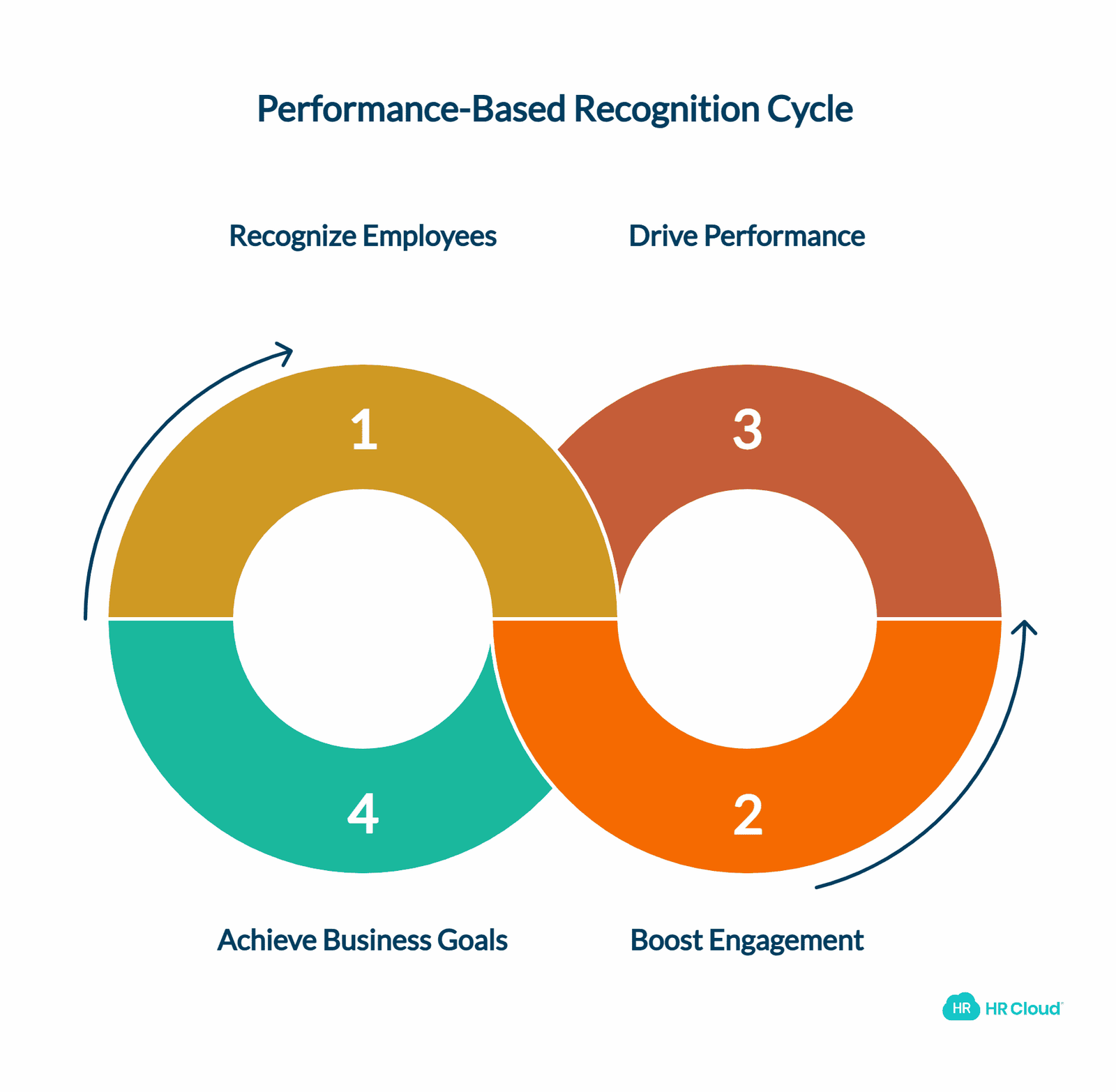
1. Recognition Master Award
This monthly or quarterly award celebrates employees who consistently recognize their peers, creating a culture of appreciation from the ground up. Recognition masters don't wait for formal programs—they spot great work and call it out immediately.
Why It Works: Peer recognition drives 26% higher employee engagement than top-down recognition alone. By celebrating those who lift others up, you reinforce that recognition is everyone's responsibility, not just management's role.
Implementation: Track recognition activity through your employee recognition platform and highlight top contributors in company communications. Award additional reward points or custom badges that signify cultural leadership.
2. Most Recognized Employee Award
When someone consistently receives praise from colleagues across departments, it signals they're making broad impact. This award honors employees who exemplify your values so naturally that others can't help but notice.
Impact: Public recognition of frequently-praised employees sets performance benchmarks and gives others clear examples of valued behaviors. It answers the question: "What does success look like here?"
Best Practice: Combine quantitative data (recognition frequency) with qualitative review (ensuring recognition reflects genuine impact, not just visibility). Pair the award with meaningful rewards like gift cards from your rewards marketplace or additional development opportunities.
3. Going Above and Beyond Award
Every organization has team members who consistently deliver 110%—the early arrivers, the problem-solvers who jump in without being asked, the ones who take ownership when challenges arise.
Recognition Strategy: This award works best when tied to specific instances rather than general effort. Cite the project, the impact, and how the extra effort moved the needle for customers, the team, or the business.
Frequency: Offer monthly to maintain awareness that exceptional effort gets noticed. According to Gallup research, 79% of employees who quit cite "lack of appreciation" as a primary reason—recognizing sustained effort directly addresses this retention risk.
4. Driving Success Award
This award recognizes the heavy hitters: sales leaders who exceed quotas, operations managers who streamline processes, project leads who deliver ahead of schedule, or any team member whose work directly contributes to measurable business outcomes.
Measurement Focus: Tie recognition to clear metrics—revenue impact, efficiency gains, customer satisfaction scores, or cost savings. This creates transparent criteria and shows how individual contributions connect to organizational success.
Business Impact: Companies with recognition programs that celebrate performance see 22% higher goal achievement rates. This award reinforces the behaviors that drive results.

Values-Based Recognition
5. Company Values Award
Every organization has stated values, but some employees embody them so consistently that they make culture feel real rather than aspirational. This award honors those who turn words on the wall into daily action.
Strategic Value: Values-based recognition creates behavioral models. When you spotlight someone for demonstrating integrity, innovation, or customer obsession, you're showing the entire organization what those values look like in practice.
Implementation: Create separate awards for each core value (if you have 3-5), or rotate focus quarterly. Use your internal communication platform to share specific stories showing how the award recipient demonstrated the value.
6. Keeping Us Safe Award
Psychological safety isn't just about physical safety protocols—it's about creating environments where people feel secure being honest, taking calculated risks, and admitting mistakes without fear of punishment.
Why This Matters: Teams with high psychological safety are 67% more likely to innovate and 76% more engaged. This award celebrates individuals who actively create this environment through empathy, inclusive leadership, and trust-building.
Recognition Focus: Highlight specific actions: "Marcus facilitates team retrospectives where everyone feels comfortable sharing concerns" or "Aisha creates 1:1 space for team members to discuss challenges privately."
7. Customer Service Award
Exceptional customer service requires patience, problem-solving, and the ability to turn frustration into loyalty. This award recognizes team members who consistently deliver outstanding customer experiences.
Impact Metrics: Companies with engaged customer service teams see 41% higher customer satisfaction scores. Recognition programs that celebrate service excellence reinforce behaviors that directly impact revenue and reputation.
Best Practice: Include customer feedback or specific examples when presenting the award. "Sarah resolved a complex billing issue that saved a six-figure account" is more impactful than generic praise.
Leadership & Mentorship Recognition
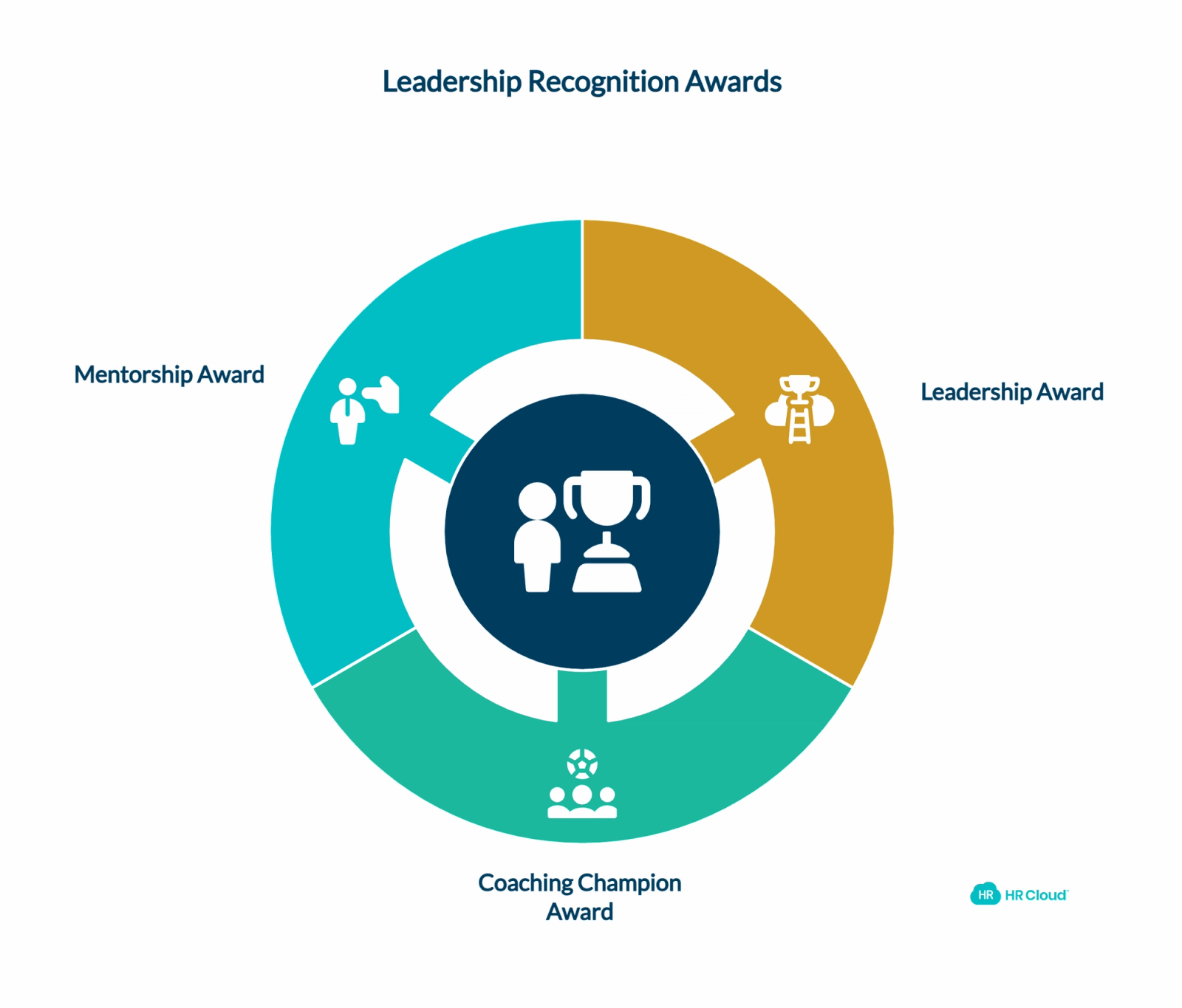
8. Leadership Award
True leadership transcends titles. This award recognizes individuals who guide teams through uncertainty, communicate with clarity, and consistently bring out the best in others—whether they're formal managers or informal influencers.
Leadership Indicators:
- Drives results while developing people
- Communicates vision clearly
- Makes difficult decisions with confidence
- Builds trust through consistency
- Enables others to succeed
Strategic Impact: Organizations with strong leadership recognition see 80% of employees citing managers as critical to employee engagement. By celebrating effective leadership, you set standards for how leaders should operate.
9. Coaching Champion Award
Great coaches invest in others' growth without seeking credit for themselves. They offer guidance, share knowledge freely, and help colleagues navigate challenges—building capability across the organization.
Recognition Criteria:
- Consistently mentors others
- Shares expertise without gatekeeping
- Provides constructive, developmental feedback
- Celebrates team members' growth
- Creates learning opportunities
Business Value: Companies with strong coaching cultures show 39% higher employee engagement and significantly better succession planning outcomes.
10. Mentorship Award
While coaching focuses on skill development, mentorship provides broader career guidance and support. This award honors those who take time to help colleagues navigate their professional journey.
What Sets Mentors Apart:
- Long-term relationship focus
- Career navigation guidance
- Political landscape navigation
- Personal development support
- Network expansion
Implementation: Track formal mentorship program participation and gather feedback from mentees. Consider creating tiers (e.g., Emerging Mentor, Senior Mentor, Master Mentor) to recognize growth in mentorship capability.
Collaboration & Team Excellence
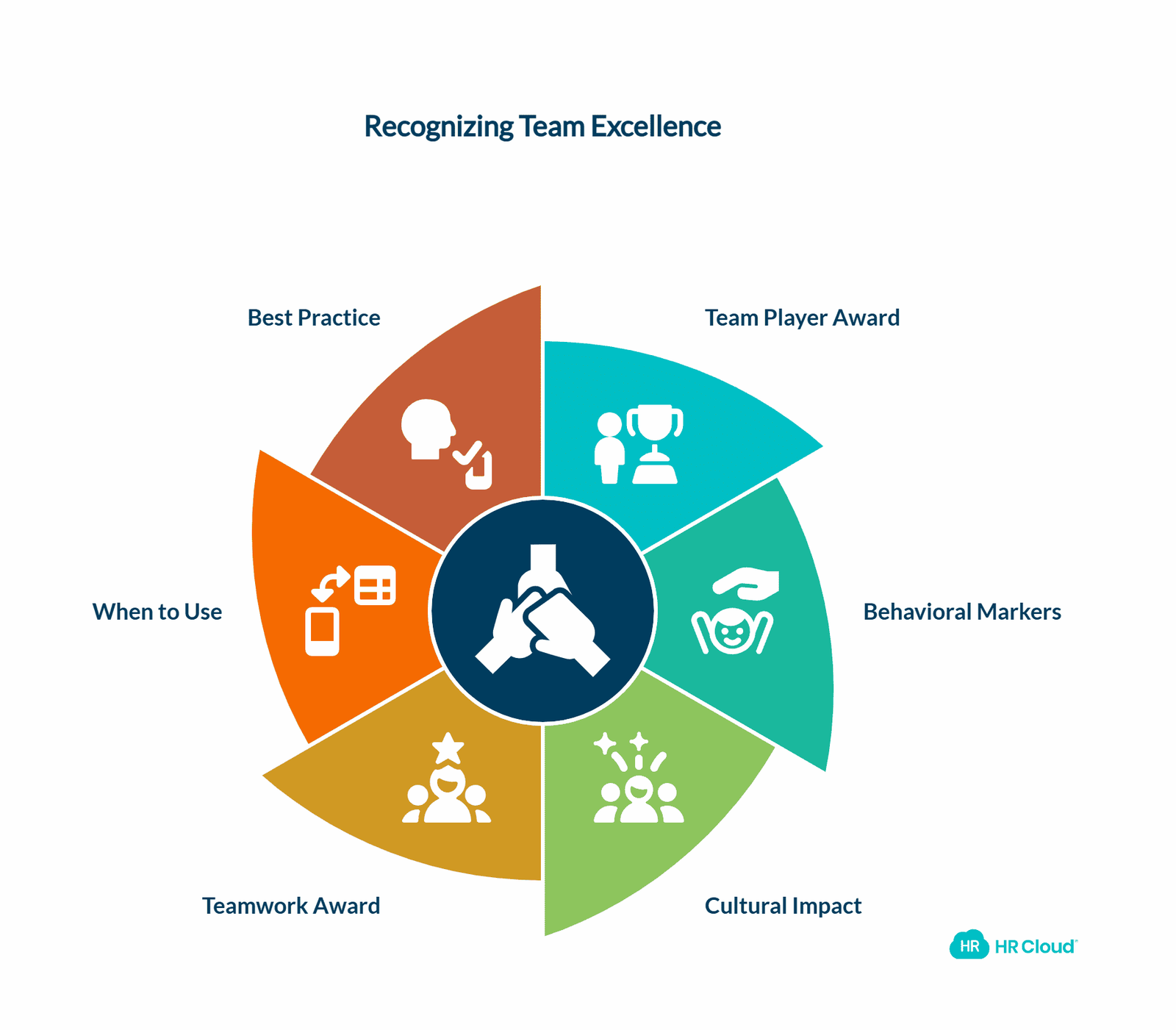
11. Team Player Award
Some employees make everything easier—not by taking over, but by bringing people together. They collaborate naturally, communicate proactively, and celebrate colleagues' wins as enthusiastically as their own.
Behavioral Markers:
- Actively supports colleagues
- Shares credit generously
- Communicates proactively
- Helps without being asked
- Bridges silos effectively
Cultural Impact: Peer recognition of team players reinforces collaborative behaviors and shows that success isn't zero-sum. This is particularly important in organizations moving away from individual contributor focus toward team-based outcomes.
12. Teamwork Award (Team-Based)
Sometimes the magic happens not through individual brilliance but collective effort. This award celebrates groups that collaborate effectively to achieve what no individual could accomplish alone.
When to Use:
- Cross-functional projects
- Crisis response teams
- Innovation initiatives
- Complex problem-solving efforts
- Departmental transformations
Best Practice: Recognize teams immediately after project completion while impact is fresh. Have team members nominate one another for individual contributions, then celebrate collective achievement.
Innovation & Growth
13. Innovation Award
This award celebrates employees who ask "What if we tried this differently?"—and then actually experiment with new approaches. Innovation isn't limited to R&D; it includes process improvements, creative problem-solving, and fresh thinking across any function.
Innovation Categories:
- Process innovation (efficiency improvements)
- Product innovation (new offerings or features)
- Service innovation (customer experience improvements)
- Business model innovation (new revenue streams)
Recognition Focus: Highlight both the idea and the courage to implement it. "Jordan's automated reporting process saves the team 10 hours weekly" is more impactful than generic "innovative thinking" praise.
14. Creativity Award
While innovation focuses on implementation, creativity celebrates fresh thinking, clever solutions, and imaginative approaches—even if they're not yet fully realized.
What Makes Work Creative:
- Novel approaches to persistent problems
- Unique perspectives that shift thinking
- Resourceful solutions with limited resources
- Artistic or design excellence
- Communication breakthroughs
Strategic Value: Organizations that celebrate creativity signal they value fresh thinking, which encourages risk-taking and experimentation essential for long-term competitiveness.
15. Always Growing Award
Some employees treat every challenge as a learning opportunity. They seek feedback, pursue development, and continuously expand their capabilities—modeling the growth mindset every organization needs.
Growth Indicators:
- Actively seeks learning opportunities
- Welcomes developmental feedback
- Takes on stretch assignments
- Shares new knowledge with others
- Demonstrates measurable skill progression
Business Case: Research shows employees who feel they're growing are 59% less likely to explore other opportunities. Recognition that honors growth reinforces your commitment to development.
Get started on your own employee recognition program using this Recognition Program Starter Kit.
Download Now
Milestone & Service Recognition
16. Years of Service Award
Tenure recognition remains relevant, but modern approaches go beyond generic plaques. Personalize these awards with peer tributes, career highlights, and meaningful rewards that reflect the employee's preferences and contributions.
Evolution of Service Awards:
- Traditional: Standard gifts at 5, 10, 15, 20 years
- Modern: Personalized rewards, peer recognition, career storytelling, custom benefits
Implementation through HR Cloud:
Automated anniversary tracking ensures no milestone is missed. Mobile apps enable peer recognition to flow naturally, while rewards programs offer hundreds of gift card options so employees choose what matters to them.
Statistics: Organizations with strong service award programs see 28% better employee retention, according to SHRM research.
17. Rising Star Award
Every organization has emerging talent—early-career professionals who hit the ground running and demonstrate leadership potential well ahead of their tenure.
Rising Star Characteristics:
- Rapid skill acquisition
- Proactive problem-solving
- Natural leadership emergence
- Strong stakeholder relationships
- Consistent performance excellence
Strategic Importance: Recognizing rising stars publicly signals your commitment to internal advancement and helps identify high-potential employees for development programs.
18. Loyalty Award
While related to years of service, loyalty recognition honors not just tenure but sustained commitment, engagement, and impact over time. These are employees who've contributed consistently and remained engaged even during challenging periods.
When Loyalty Recognition Matters Most:
- During organizational change
- After difficult years
- When competitors are recruiting
- As retention strategy
Best Practice: Pair loyalty recognition with meaningful benefits like additional PTO, professional development budgets, or sabbatical opportunities that show appreciation beyond token gifts.
Specialized & Custom Recognition
19. Exceptional Listener Award (Manager Recognition)
Listening is a leadership superpower, especially when it drives action. This award recognizes managers who don't just collect feedback through surveys—they act on insights to build stronger, more responsive teams.
Listening Excellence Indicators:
- Regular feedback solicitation
- Demonstrated follow-through on employee input
- Open-door accessibility
- Adaptation based on team needs
- Psychological safety creation
Measurement: Track manager pulse survey scores, employee sentiment trends, and retention rates to identify exceptional listeners objectively.
20. Excellent Feedback Award (Employee Recognition)
Great ideas come from everywhere. This award celebrates employees who consistently share thoughtful, actionable feedback that helps shape better workplaces, products, or processes.
Important Principle: Never recognize anonymous feedback. This award honors employees who speak up constructively with their name attached, demonstrating courage alongside insight.
Impact: Organizations that encourage upward feedback see 3x higher innovation rates and 27% better problem identification, according to Harvard Business Review research.
21. People's Choice Award
Voted on by employees across the organization, this award celebrates the colleague everyone wants on their team—the person who brings energy, excellence, and positive impact wherever they work.
Why Peer-Voted Awards Matter:
- Reflects grassroots appreciation
- Identifies cultural ambassadors
- Builds cross-departmental visibility
- Creates friendly competition
- Reinforces peer recognition culture
Implementation: Conduct quarterly or annual voting through your employee engagement platform, ensuring transparent criteria and fair nomination processes.
22. Most Improved Award
Progress deserves recognition as much as peak performance. This award celebrates employees who've made significant strides—whether mastering new skills, dramatically improving performance, or successfully navigating major role transitions.
When Improvement Recognition Matters:
- After skill development programs
- Following performance plans
- During role transitions
- After coaching interventions
Cultural Impact: Recognition of improvement reinforces that growth is valued and that organizations support development journeys, not just finished products.
23. Spotlight Award
This flexible award shines light on employees who may not always be center stage but whose contributions are undeniable. Use it to recognize behind-the-scenes excellence that might otherwise go unnoticed.
Spotlight Scenarios:
- Support team excellence
- Crisis response
- Quiet leadership
- Infrastructure improvements
- Process optimization
Frequency: Monthly spotlights keep recognition fresh and give you flexibility to honor diverse contributions without rigidly defined categories.
Industry-Specific & Results-Driven Recognition
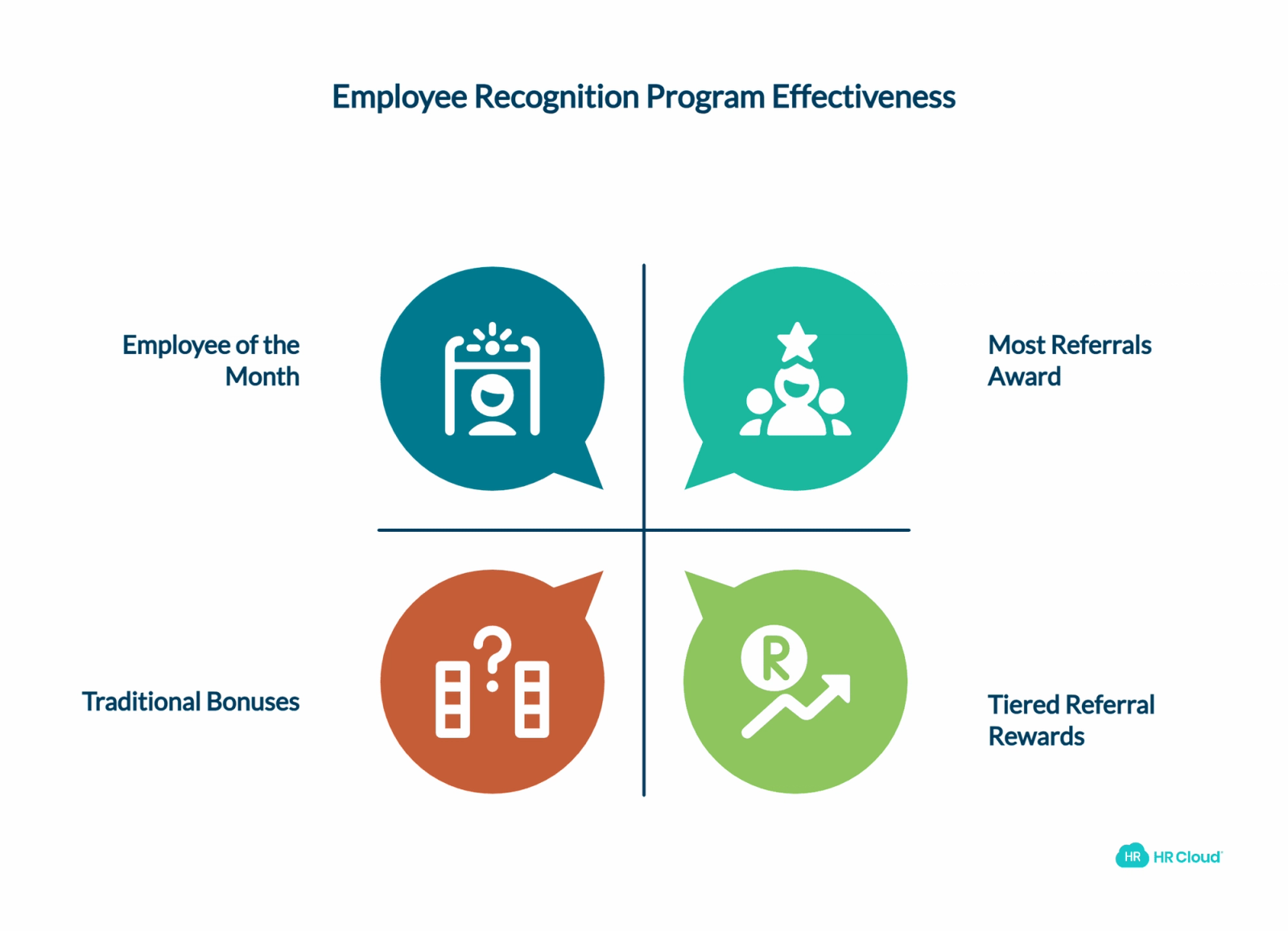
24. Most Referrals Award (Recruitment Recognition)
Employee referrals remain the highest-quality hiring source. This award recognizes team members who help build your talent pipeline by recommending exceptional candidates—sometimes before roles are even open.
Why Referrals Matter:
- Hired 55% faster than other sources
- Better cultural fit
- Higher retention rates (45% at 4 years vs. 25% for job boards)
- Lower cost per hire
Recognition Strategy: Beyond traditional bonuses, consider tiered rewards: recognition for referral, additional recognition for hire, and premium recognition if the referred employee succeeds long-term.
25. Employee of the Month
Yes, it's a classic. When done right—with specific criteria, rotating recognition, and genuine celebration—Employee of the Month still drives engagement and creates aspiration.
Making EOM Meaningful:
- Clear, rotating criteria (values, performance, collaboration)
- Peer and manager nominations
- Specific achievement citations
- Visible recognition across channels
- Meaningful rewards beyond parking spots
Best Practice: Use your communications platform to share detailed stories about why the recipient was chosen, making the honor inspirational rather than perfunctory.
Building Your Recognition Program: Implementation Framework
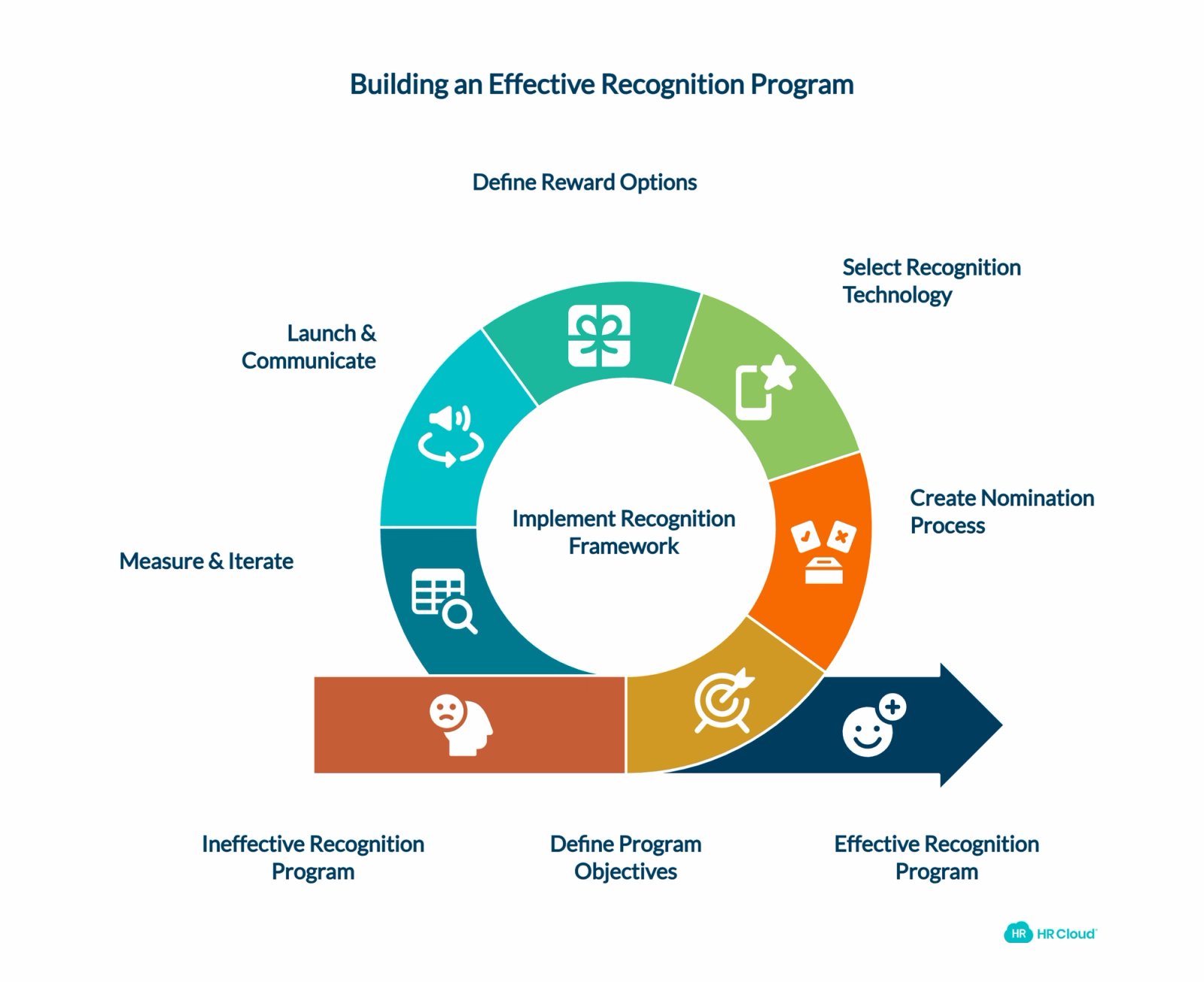
1. Establish Clear Program Objectives
Define what you want recognition to achieve:
- Reduced turnover (measure quarterly voluntary separation rates)
- Improved engagement (track survey scores)
- Values reinforcement (assess cultural alignment)
- Performance improvement (monitor productivity metrics)
2. Create Nomination & Selection Processes
Nomination Sources:
- Peer nominations
- Manager recommendations
- Self-nomination for certain awards
- Automatic triggers (service anniversaries, goal achievement)
Selection Criteria:
- Transparent requirements
- Consistent evaluation standards
- Diverse selection committees
- Regular cadence (monthly, quarterly, annual)
3. Select Recognition Technology
Modern recognition programs require platforms that enable:
- Real-time peer-to-peer recognition
- Mobile accessibility for distributed teams
- Points-based reward systems
- Analytics and reporting
- Integration with HRIS and communication tools
HR Cloud's Workmatesprovides:
- Peer recognition with custom badges
- Gift card marketplace with 100s of options
- Mobile apps for remote/frontline workers
- Analytics dashboards for program measurement
- Deep HRIS integrations with ADP, Workday, UKG
- Microsoft Teams and Slack integration
“One of the biggest benefits from using Workmates platform is that our associates are more connected to both the company and each other. Associates can comment, react, and provide feedback directly through the platform from their smartphone or desktop devices.”

— Daniella Nickerson, Human resources, Toyota

4. Define Reward Options
Monetary Rewards:
- Gift cards (most flexible)
- Bonuses (tied to performance awards)
- Points systems (redeemable for various rewards)
Non-Monetary Rewards:
- Additional PTO
- Flexible work arrangements
- Professional development opportunities
- Exclusive experiences
- Premium parking or office perks
Best Practice: Offer choice. Research shows 73% of employees prefer recognition programs that let them select rewards matching personal preferences.
5. Launch & Communicate
Effective Launch Strategy:
- Executive sponsorship announcement
- Manager training on recognition best practices
- Employee education on nomination processes
- Regular reminders and updates
- Success story sharing
6. Measure & Iterate
Key Program Metrics:
- Recognition frequency (by department, role, tenure)
- Participation rates (who's giving and receiving recognition)
- Award distribution equity
- Employee engagement scores
- Retention rates
- Program ROI
Optimization: Use analytics dashboards to identify gaps (departments with low recognition, managers not participating) and intervene proactively.
Overcoming Common Recognition Challenges
Challenge 1: Manager Participation Inconsistency
Solution: Include recognition metrics in manager performance reviews. Provide training on effective recognition. Make the process easy through mobile apps and calendar reminders.
Challenge 2: Recognition Fatigue
Solution: Vary award types and formats. Balance formal ceremonies with informal shoutouts. Ensure recognition feels earned, not entitled.
Challenge 3: Remote/Hybrid Worker Inclusion
Solution: Leverage digital platforms that work across locations. SHRM research shows 42% of managers forget remote workers when distributing praise—mobile-first platforms eliminate this bias.
Challenge 4: Budget Constraints
Solution: Recognition doesn't require massive budgets. Research from Workhuman shows non-monetary recognition delivers similar engagement benefits when done well. Start with peer recognition and digital badges, then add monetary components as budget allows.
Challenge 5: Measurement Difficulty
Solution: Modern recognition platforms provide built-in analytics. Track leading indicators (recognition frequency, participation rates) and lag indicators (engagement scores, retention rates) to demonstrate ROI.
The Business Case for Recognition: ROI You Can Measure
Retention Impact:
A 10,000-person company can save up to $16.1 million annually in turnover costs through strong recognition programs. (Workhuman)
Engagement Multiplier:
Employees who receive recognition weekly are 5x more likely to be highly engaged. (Gallup)
Productivity Gains:
Recognition programs boost productivity and performance by 14% on average. (SHRM)
Financial Performance:
Companies with recognition programs show 23% higher profitability than competitors without engaged employees. (Gallup)
Customer Impact:
Organizations with peer-to-peer recognition see 41% higher customer satisfaction scores. (SHRM/Globoforce)
Next Steps: Moving from Awards to Culture
Employee recognition awards are powerful tools, but lasting impact comes from embedding appreciation into organizational DNA. Here's how to evolve from occasional awards to recognition culture:
Train Everyone: Recognition isn't just HR's job. Train managers and employees on giving meaningful, specific, timely recognition.
Enable Technology: Provide platforms that make recognition easy, mobile-accessible, and integrated with daily workflows.
Model from the Top: Executive participation in recognition programs increases effectiveness by 3x.
Make It Daily: While formal awards matter, the most powerful recognition happens informally, in real-time, tied to specific actions.
Measure Everything: Use data to identify gaps, celebrate wins, and continuously improve your approach.
Transform Recognition from Program to Culture with HR Cloud
While the 25 employee recognition awards outlined in this guide provide strong tactical starting points, transforming them into lasting cultural impact requires the right technology foundation.
HR Cloud's Workmates platform enables organizations to:
✓ Enable Peer-to-Peer Recognition through mobile apps that work for remote, hybrid, and frontline teams
✓ Automate Service Anniversaries with milestone tracking and customized recognition workflows
✓ Offer Flexible Rewards through a gift card marketplace with 100s of options employees actually want
✓ Integrate Recognition into existing workflows via Slack, Microsoft Teams, and HRIS connections
✓ Measure Impact through analytics dashboards tracking recognition frequency, participation, and engagement correlation
✓ Scale Easily with admin controls for custom badges, approval workflows, and budget management
Recognition becomes seamless, scalable, and genuinely meaningful when technology removes friction and makes appreciation part of daily work—not additional overhead.
Ready to build a recognition culture that drives retention?
Explore HR Cloud's employee recognition platform or schedule a demo to see how recognition and rewards work together.

Experience how Workmates can transform communication and strengthen culture—all in one powerful platform
Book Your Free DemoFrequently Asked Questions
What are employee recognition awards?
Employee recognition awards are formal acknowledgments given to team members for outstanding performance, behaviors, or milestones that align with company values. They range from peer-nominated awards to formal service recognition, and can include monetary rewards, public recognition, or development opportunities.
What are the benefits of employee recognition programs?
Recognition programs deliver measurable benefits including:
- 31% lower voluntary turnover rates (SHRM)
- 23% higher profitability (Gallup)
- 5x higher engagement for employees recognized weekly (Gallup)
- 14% productivity improvement on average (SHRM)
- 41% higher customer satisfaction (SHRM/Globoforce)
What are best practices for employee recognition?
Effective recognition programs are:
- Timely: Delivered close to the recognized behavior or achievement
- Specific: Cite exact actions and impact rather than generic praise
- Frequent: Weekly recognition drives 5x higher engagement
- Values-Aligned: Tie awards to behaviors that reinforce company culture
- Equitable: Ensure recognition reaches all employee groups fairly
- Technology-Enabled: Use platforms that make giving recognition easy
What is the best reward for employee recognition?
The best reward is personal and relevant to the individual employee. Research shows 73% of employees prefer recognition programs offering choice. Options include:
- Gift cards to their preferred retailers
- Additional paid time off
- Professional development opportunities
- Flexible work arrangements
- Experience-based rewards
Modern platforms like HR Cloud's rewards marketplace solve this by offering hundreds of gift card options, allowing employees to select what matters most to them.
How do you implement an effective recognition program?
Start by:
1. Defining clear objectives (engagement, retention, values reinforcement) Establishing nomination and selection criteria
2. Choosing recognition technology that enables peer-to-peer recognition
3. Training managers and employees on giving effective recognition
4. Launching with executive sponsorship
5. Measuring program impact through analytics
6. Iterating based on data and feedback
7. How often should employees be recognized?
Gallup research shows employees who receive recognition at least once per week are 5x more likely to be highly engaged. Combine frequent informal recognition (weekly) with formal awards (monthly, quarterly, annually) for maximum impact.
What's the difference between rewards and recognition?
Recognition is acknowledgment of achievement or behavior (often intangible), while rewards are tangible incentives given in response to performance. Both are important: recognition creates emotional connection, while rewards provide concrete value. Most effective programs combine both elements.
About the author

Keep Reading


Like What You Hear?
We’d love to chat with you more about how HR Cloud® can support your business’s HR needs.
Book Your Free Demo