
How the Workplace Can Improve Employee Health and Wellbeing

According to McKinsey Health Institute, most people will spend roughly 90,000 hours — nearly 45 years — of their lives at work. That staggering figure makes one thing clear: the workplace isn't just where work gets done. It's one of the most powerful determinants of how healthy, engaged, and fulfilled your employees actually are.
And yet most organizations still treat employee wellbeing as a benefit rather than a business strategy.
The cost of getting this wrong is enormous. Gallup's 2025 State of the Global Workplace report found that poor employee wellbeing cost the global economy $438 billion in lost productivity in 2025 alone. The WHO estimates mental health issues cost employers $1 trillion annually due to absenteeism and presenteeism. Meanwhile, Deloitte's research shows that every dollar invested in mental health interventions returns $4 in reduced turnover, absenteeism, and presenteeism.
This isn't a perks conversation. It's a performance conversation.
Here are seven practical, evidence-backed ways your organization can improve employee health and wellbeing — and what to watch for along the way.
Encouraging Healthy Eating and Physical Activity at Work
Nutrition directly affects cognitive performance. Research published in the American Journal of Health Promotion links workplace wellness programs that include physical activity and nutrition support to measurable improvements in employee concentration and work quality.
Practically, this means reviewing what's available in your office environment. Replacing vending machine soft drinks with fruit, nuts, and water stations is a low-cost, high-visibility signal that your organization takes health seriously. Budget-friendly meal planning resources or partnerships with local healthy food providers can extend that commitment to employees who need it most.
Physical activity matters just as much. On-site fitness facilities, discounted gym memberships, or company-organized walking challenges all reduce stress hormones and improve focus. Nearly 85% of large U.S. employers now offer some form of wellness program (Business Group on Health, 2024) — physical activity support is table stakes for competitive employers today.
For HR teams managing distributed or frontline workers, HR Cloud's employee engagement platform makes it easy to launch wellness challenges and track participation across your entire workforce, whether they're in the office, on the floor, or in the field.
Bring Nature Into the Workspace (Biophilic Design)
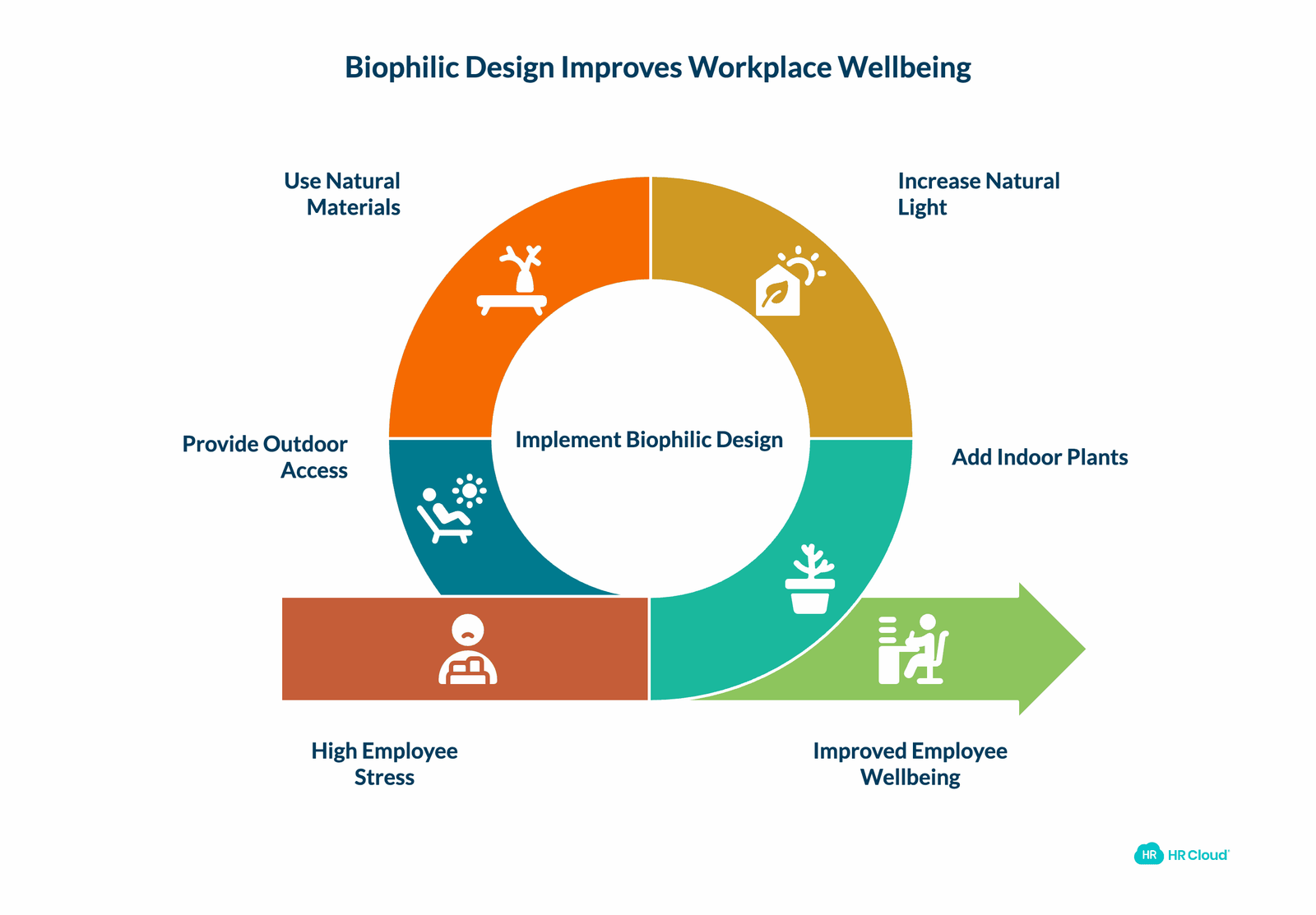
There is solid research behind the instinct to add plants to an office. Indoor plants reduce employee anxiety and stress, contribute to air purification by absorbing carbon dioxide, and have been shown to reduce sick days. The concept is now part of a broader workplace design movement called biophilic design — incorporating natural elements to improve psychological wellbeing and cognitive performance.
Low-maintenance plants that thrive in typical office conditions include:
- Snake plant
- ZZ plant
- Spider Plant
- Dracaena
- Monstera Deliciosa
Beyond plants, organizations are introducing natural light, wood materials, and access to outdoor views into workspaces to produce similar calming effects. For frontline workers in healthcare, manufacturing, or construction settings, even small improvements — a well-lit break room, access to outdoor space during breaks — can make a measurable difference in daily stress levels.
How Indoor Air Quality Affects Employee Health
Poor indoor air quality is a genuine occupational health risk. "Sick building syndrome" — fatigue, dizziness, eye irritation, and reduced concentration — is directly linked to inadequate ventilation, synthetic building materials, and chemical cleaning agents. The U.S. Environmental Protection Agency identifies indoor air quality as one of the top five environmental risks to public health, and most people spend more time indoors at work than anywhere else.
Your checklist for healthier air:
- Keep windows open where possible to improve natural air circulation
- Maintain indoor humidity levels below 60% to prevent mold growth
- Reduce or replace harsh chemical cleaning products with low-VOC alternatives
- Service HVAC systems on a regular, documented schedule
- Use air purifiers, especially in high-density workspaces
- Ensure thorough, consistent cleaning practices throughout the facility
Organizations using HR Cloud's Time Off tracking can monitor absenteeism patterns over time — a spike in sick days following facilities changes is often your first early signal that environmental factors need immediate attention.
Build Stretching and Recovery Breaks Into the Day
Cognitive fatigue accumulates faster than most people realize. Research consistently shows that short, structured breaks improve sustained attention, reduce error rates, and prevent the musculoskeletal problems that come from prolonged sitting or repetitive motion.
The barrier isn't knowledge — most employees know breaks help. The barrier is culture. Workers who fear being perceived as unproductive will skip breaks until they're burned out. Your job as an HR leader is to make breaks structurally expected, not individually negotiated.
Team stretching sessions, mandatory away-from-screen windows, and walking meeting policies all signal that recovery is part of how your organization works — not a reward for finishing early. This is especially critical for manufacturing, construction, and healthcare workers whose physical demands create real injury risk without adequate recovery time. OSHA's ergonomics and workplace health guidelines provide a useful framework for formalizing recovery into daily work routines across industries.
Operationalize Work-Life Balance — Don't Just Talk About It
Work-life balance is perhaps the most overused phrase in HR. It's also one of the most underimplemented commitments.
Gallup's research found that 44% of employees reported feeling burned out at work at least some of the time. Burnout isn't just an individual wellness issue — it's a business continuity issue. Burned-out employees are 63% more likely to take a sick day and more than twice as likely to be actively job searching, according to Workhuman and Gallup's joint research on recognition and wellbeing.
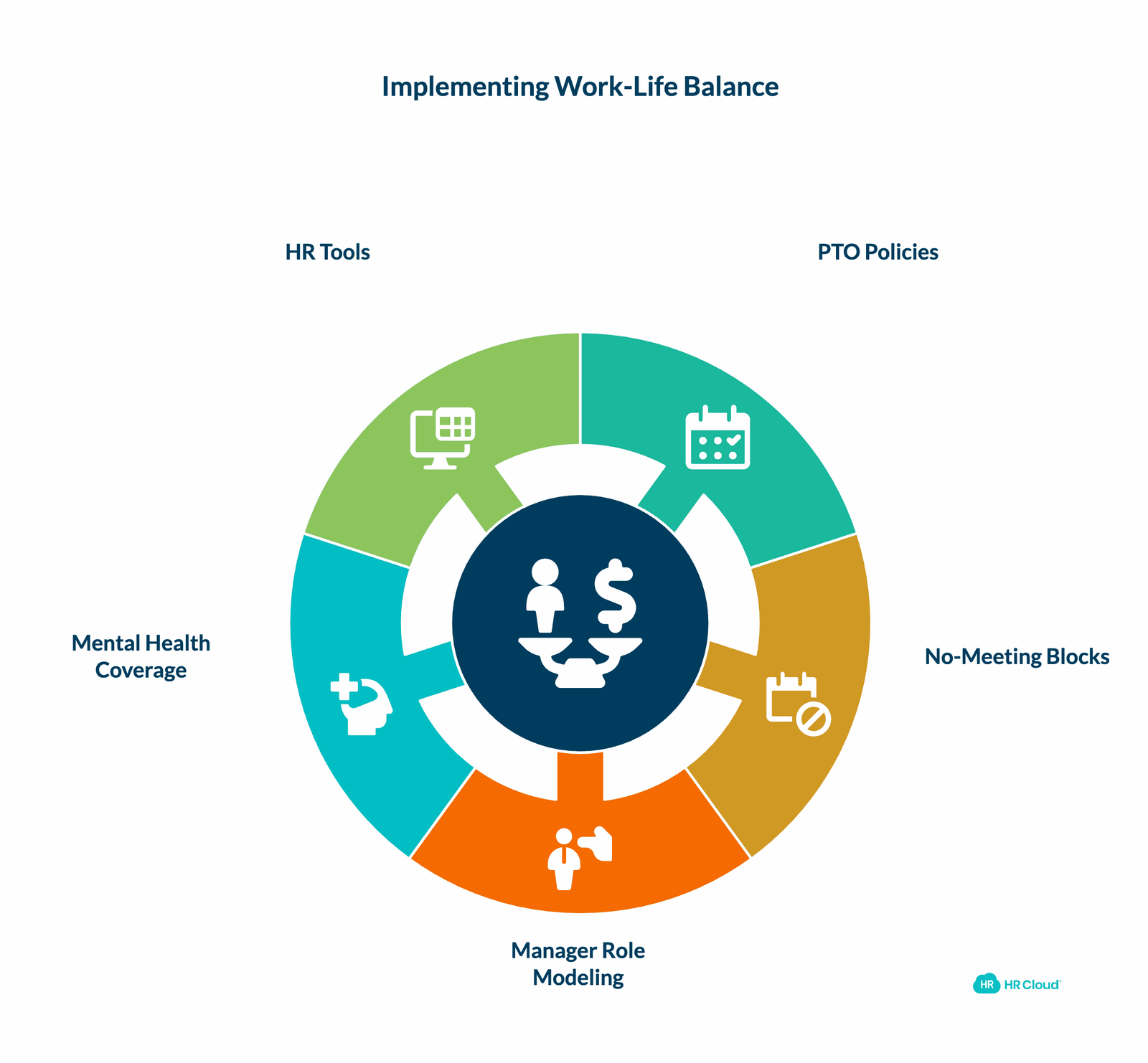
Real work-life balance looks like this: clearly communicated PTO policies that employees actually feel safe using, no-meeting blocks that protect deep work time, and managers who model healthy boundaries themselves. Health insurance coverage that includes mental health services removes one of the biggest practical barriers to employees seeking help before problems escalate.
Tools like HR Cloud's Time Off management give employees full visibility into their own PTO balances and make approval workflows frictionless — removing the administrative friction that quietly discourages people from taking leave they've legitimately earned.
Mental Health Training: Move from Awareness to Action
The mental health conversation in the workplace has shifted significantly. Awareness months and informational posters are no longer sufficient. Mental Health America's 2024 Work Health Survey found that 43% of employees worry that disclosing a mental health condition will negatively impact them at work — which means your mental health support is only as good as the psychological safety culture underneath it.
Effective mental health support at the organizational level includes:
- Training managers to recognize behavioral signals of distress — not to diagnose, but to respond appropriately
- Normalizing mental health conversations through consistent leadership modeling
- Providing access to an Employee Assistance Program (EAP) with real counseling resources, not just a hotline number
- Creating an environment where asking for help doesn't feel like a career risk
HR professionals and people managers are typically the first point of contact for employees in distress. That makes their training non-negotiable. Organizations that treat mental health training as a checkbox exercise — one session, once a year — will see results that match that level of effort.
HR Cloud's Workmates helps HR teams run pulse surveys and engagement polls that surface early signals of workforce stress before those signals become turnover. Regular feedback loops give your team data to act on, not guesswork to manage.
Ergonomic Equipment and Workspace Design
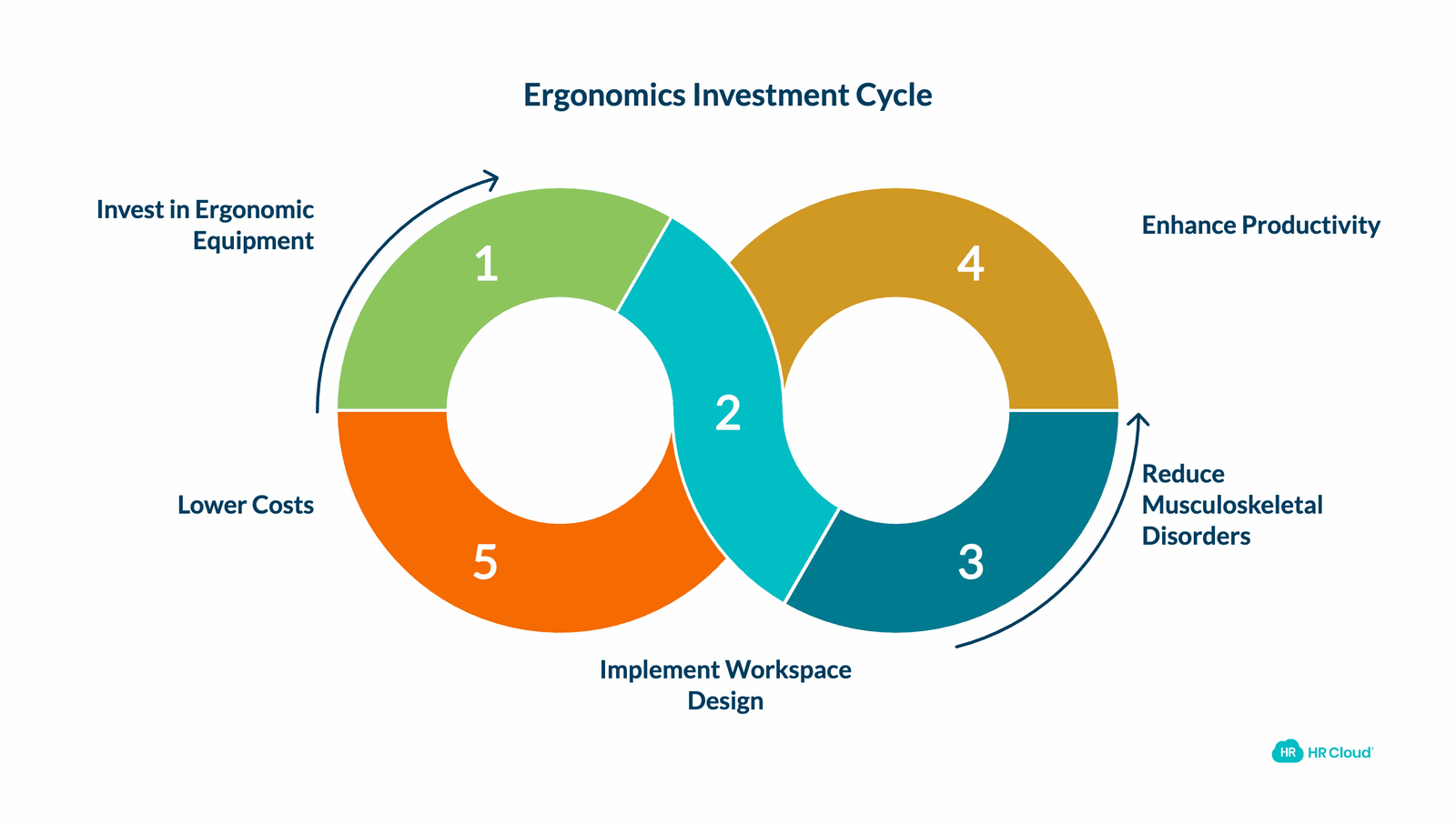
Ergonomics is one of those investments that pays back immediately and visibly. Musculoskeletal disorders are among the most common and costly workplace injuries. Shortlister's 2025 Workplace Wellness Report notes that manufacturing companies show consistently elevated demand for ergonomic and MSK programs specifically because of the physical demands their workforces face daily.
For office-based employees, the fundamentals are non-negotiable: adjustable desks, monitor stands positioned at eye level, ergonomic chairs with lumbar support, and external keyboards and mice for laptop users. Standing desks reduce the cardiovascular and metabolic risks of prolonged sitting. Ergonomic screens reduce eye strain from extended screen exposure throughout the workday.
The upfront cost is real. The downstream cost of repetitive strain injuries, workers' compensation claims, and lost productivity is substantially higher. Frame ergonomics as a risk reduction investment, not a comfort upgrade — that framing lands better in budget conversations with leadership.
Measuring Wellbeing: The Step Most Organizations Skip
Most articles on employee wellbeing stop at the list of initiatives. The harder question — and the one that separates strategic HR teams from reactive ones — is: how do you know if any of this is actually working?
According to S&P Global's Corporate Sustainability Assessment, only 2.2% of assessed companies conduct employee surveys with a core focus on health and wellbeing. That's a startling gap, and a genuine opportunity for organizations willing to close it.
Start by tracking absenteeism rates, employee engagement scores, participation in wellness programs, and voluntary turnover. Then connect those numbers to your investments over time. This is where HR platforms that combine engagement analytics with recognition and communication data give HR leaders a real advantage — you can see which teams are thriving, which are struggling, and act on that information proactively rather than reactively.
Conclusion
The workplace shapes employee health far more than most organizations acknowledge. Physical environment, psychological safety, recognition, work-life balance — these aren't separate HR programs running in parallel. They're interconnected levers that together drive engagement, retention, and organizational performance.
Gallup estimates that if the global workforce were fully engaged, $9.6 trillion in productivity would be added to the global economy. Your wellbeing strategy is a direct path toward unlocking that potential — starting with the people already on your team.
Ready to see how HR Cloud supports employee wellbeing at scale? Book a free demo and explore how Workmates helps HR teams build healthier, more engaged workplaces.

Experience how Workmates can transform communication and strengthen culture—all in one powerful platform
Book Your Free DemoFAQ's
What is employee health and wellbeing in the workplace?
Employee health and wellbeing refer to the overall physical, mental, emotional, and social health of employees while at work. It includes factors like work-life balance, stress management, workplace safety, healthy habits, and supportive leadership. Organizations that prioritize employee wellbeing often see improved productivity, reduced absenteeism, and stronger employee morale.
Why is employee wellbeing important for organizations?
Employee wellbeing is essential because healthier employees are more engaged, productive, and satisfied at work. Companies that invest in workplace wellness programs often experience reduced healthcare costs, lower absenteeism, and improved employee retention. A positive work environment also strengthens collaboration and morale across teams.
How can workplaces improve employee health and wellbeing?
Workplaces can improve employee wellbeing by promoting healthy habits, encouraging physical activity, offering flexible work arrangements, and providing mental health resources. Companies can also introduce wellness programs, ergonomic workspaces, and regular breaks to reduce stress and sedentary behavior. These initiatives help create a healthier and more productive work environment.
What are the benefits of workplace wellness programs?
Workplace wellness programs help employees adopt healthier lifestyles while improving engagement and productivity. These programs can reduce stress, prevent burnout, and encourage physical activity and better nutrition. For organizations, wellness programs can lower healthcare costs, improve job satisfaction, and strengthen employee retention.
How does a healthy workplace affect employee productivity?
A healthy workplace improves productivity by reducing stress, improving physical health, and increasing motivation among employees. When employees feel supported and valued, they are more focused, engaged, and efficient in their work. Healthy work environments also reduce sick days and improve overall job performance.
What are the key components of employee wellbeing programs?
Effective employee wellbeing programs typically include mental health support, physical activity initiatives, healthy nutrition options, flexible work policies, and access to healthcare benefits. These programs also encourage open communication, stress management, and work-life balance to support employees’ overall health and job satisfaction.
How can employers encourage healthy habits at work?
Employers can encourage healthy habits by providing nutritious food options, promoting regular movement during the workday, offering wellness education, and supporting fitness initiatives like yoga or exercise sessions. Small steps such as standing desks, walking breaks, and wellness challenges can significantly improve employee health and energy levels.
What role does HR play in improving employee wellbeing?
HR teams play a critical role in promoting employee wellbeing by developing wellness programs, providing healthcare benefits, and creating supportive workplace policies. HR professionals also help foster open communication, build a positive culture, and implement initiatives that address physical, mental, and emotional health at work.
What challenges do companies face when improving employee well-being?
Companies often face challenges such as limited resources, low employee participation, and difficulty measuring the impact of wellness programs. Some organizations also struggle with workplace culture changes needed to support well-being initiatives. Overcoming these barriers requires leadership support, clear communication, and consistent engagement strategies.
What tools or strategies can support workplace wellbeing initiatives?
Organizations can use HR technology, communication platforms, and employee engagement tools to support well-being initiatives. These tools help share wellness resources, collect employee feedback, and encourage participation in health programs. Digital platforms also help normalize conversations around mental health and workplace wellbeing.
About the author

Keep Reading


Like What You Hear?
We’d love to chat with you more about how HR Cloud® can support your business’s HR needs.
Book Your Free Demo