
How to Motivate and Manage a Remote Team Well

What does it actually take to manage a remote team successfully?
Managing remote teams goes beyond scheduling Zoom calls — it requires intentional systems for communication, accountability, and engagement that keep people connected regardless of location. Most managers struggle not because they lack effort, but because traditional office-based leadership habits don't translate to remote environments.
Why do so many remote teams underperform despite good intentions?
The biggest culprits are loneliness, unclear expectations, and employees who feel invisible to leadership. When people don't feel seen or heard, motivation drops — and so does productivity.
How can managers actually fix this?
This guide breaks down 10 actionable strategies — from hiring the right people to creating a culture of trust — giving managers a clear playbook to build remote teams that perform, stay engaged, and stick around.
Key Takeaways
- Remote work is here to stay — 98% of people want to telecommute at least part-time, making remote team management a core business competency, not a temporary fix.
- Loneliness is the #1 challenge of remote work. Proactively combating isolation through regular communication and team activities directly improves engagement and productivity.
- Hiring for remote fit matters. Look for candidates with prior remote experience, strong communication skills, self-discipline, and the ability to work independently.
- Clear expectations beat micromanagement every time. Specific instructions, project management tools, and defined daily targets keep remote teams focused without hovering.
- Feedback loops are non-negotiable. Regular one-on-ones, pulse surveys, and constructive performance reviews ensure remote employees feel seen, heard, and supported.
- Trust is the foundation of every high-performing remote team. Encourage autonomy, avoid micromanagement, and build a defined culture that employees want to be part of.
- Personal development boosts retention. Investing in employee growth through training and recognition programs pays back in morale, loyalty, and long-term performance.
- Fun is not a luxury — it's a strategy. Virtual team-building activities combat loneliness, strengthen relationships, and make remote employees feel genuinely connected to the team.
- Workmates by HR Cloud can help you centralize communication, recognition, and engagement tools in one platform — making every strategy in this guide easier to execute at scale.
The Coronavirus pandemic has been an accelerator for remote work. Many people were forced to find new ways of getting their work done in the wake of a global pandemic. For many, this shift is permanent, and chances are your remote employees might never see a cubicle again! As businesses adapt to this new reality and explore hybrid work models, learning how to drive remote employee engagement and manage a remote workforce effectively has become crucial for success. Implementing proven employee engagement strategies is now more important than ever.
There have been mixed reactions from people to the changing remote work environment. For example, based on a recent study:
- 98% of people would like to telecommute for part of their time or the rest of their careers
- 70% are happy about the amount of time they are working remotely
- 19% would like to work remotely more often
- Only 11% would like to work remotely less often
It is evident from the statistics that remote employees can benefit from telecommuting. Like any other change in business, remote work has resulted in some challenges for business owners, owing to its novelty and sudden implementation. As a business owner, the chances are that you have the experience of working with a remote team at some point, even before COVID-19. If your team is still working remotely and plans to do so for a while, you need to implement some strategies to help you make the most out of a remote work environment and ensure effective remote team management.
The Challenges of Remote Work
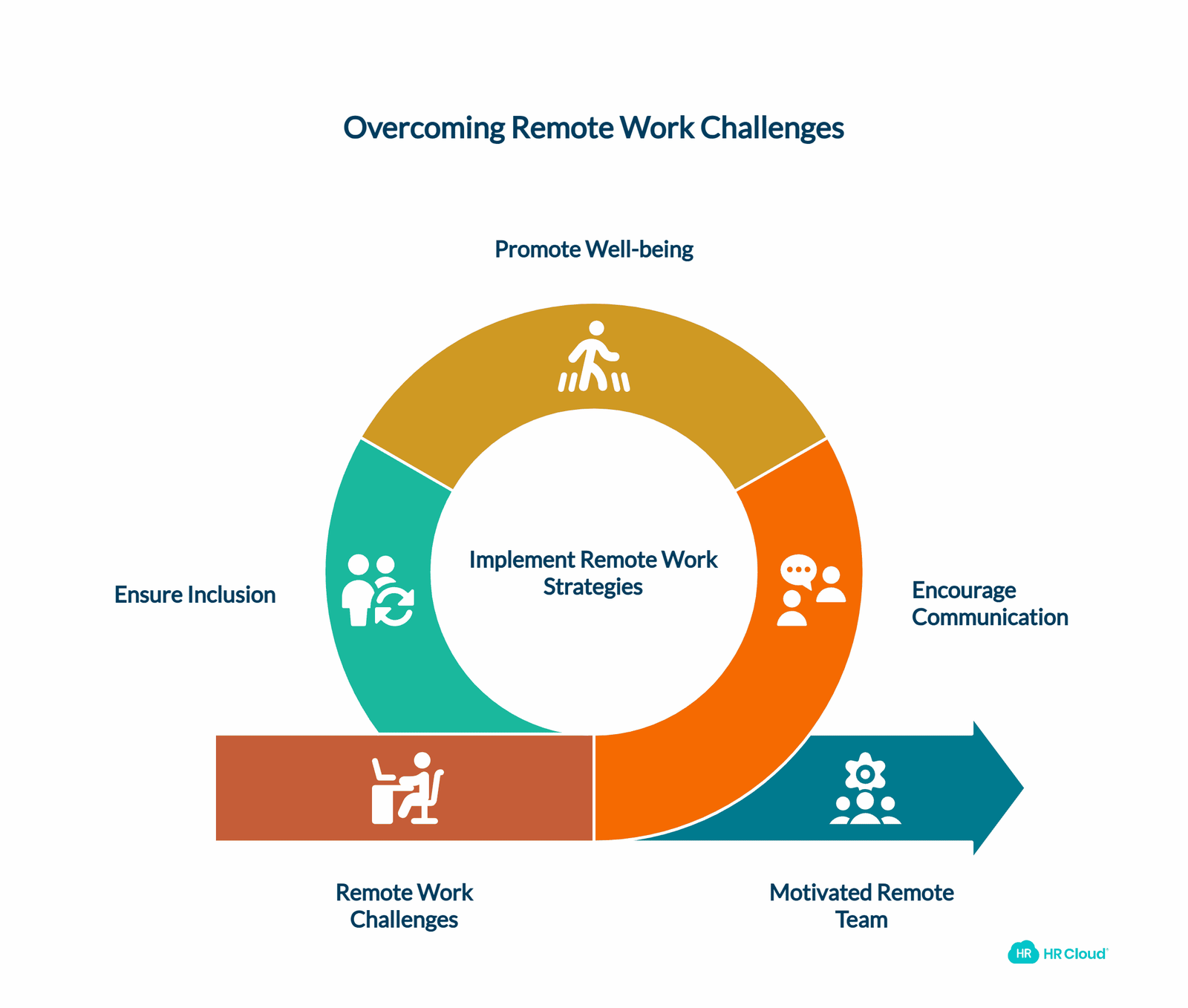
While remote working is exceptionally beneficial for employees and businesses worldwide, most managers and company leaders are not familiar with the challenges of managing a dispersed workforce. Remote working differs from typical work in many ways, even though one could argue that the tasks are the same.
According to research by Buffer, there are significant challenges to remote working. One of the biggest challenges of remote working is loneliness. The human factor is the most relevant point. Indeed, employees can be annoyed by an office full of people, full of activity, and the boss checking on them every hour until it is over. Human interactions, socializing, and being around others are part of life and most people's everyday habits and use. Loneliness can create depression and other health problems if not dealt with properly. Needless to say, work efficiency and remote employee engagement will also be affected. We need to encourage communication with the other team members, taking regular walks outside, talking with family, and exercising outdoors amongst the workforce to maintain good mental health and high productivity.
Other significant challenges to take into account when dealing with remote employees are:
- Communication problems: It is not only the lack of small talk and coffee chats. The lack of human contact for long periods can lead an employee to misunderstand the intent behind work instructions. Effective remote work communication is essential to overcome this challenge.
- Feeling left out: Remote employees feel left out because they miss an opportunity to connect with managers and other employees. Based on an Indeed survey, 37% of remote employees think they are less visible and will not get promoted.
Ready to get your business back up on its feet? You'll need a workforce that can function in any environment, and your employees will also be more likely to stick around in the long run. This article uncovers some actionable advice on managing your remote team so you can generate better results for your business while ensuring that your team stays motivated and experiences the required work-life balance. Let's get started!
1. Hire the Right People
The best way to ensure that your remote employees are happy and productive is to hire people who will be a good fit for working remotely. It can be hard at first to find just the right person, but after you do, it'll all feel like it was worth it. Hiring people for remote work offers the flexibility to hire from anywhere in the world, which was not encouraged previously, as business owners preferred to choose only people near the office premises. Even though there is higher flexibility in hiring remote workers, there are specific traits to look for in a potential candidate.
Ideal candidates are people who:
| Trait | Why It Matters for Remote Work |
|---|---|
| Have already worked remotely before | Proven ability to self-manage, stay focused, and separate work from personal life without guidance. |
| Have demonstrated responsibility | Remote managers can't monitor every task — responsible employees deliver without constant check-ins. |
| Are great team members | Remote collaboration requires proactive communication and willingness to support peers across distances. |
| Have high communication skills | Clear written and verbal communication reduces misunderstandings that are harder to fix when working async. |
| Can work independently | Without a physical office environment, self-starters thrive while those who need hand-holding struggle. |
| Have a strong work ethic | Remote work removes many external accountability structures — internal drive becomes the primary motivator. |
People with remote working experience are a plus because they have already done it, know how it is measured, and what is required to perform efficiently. People who are just starting may not know what they are getting into and may experience problems. Typically, someone who has already worked from home has a system that allows them to separate work life from personal life.
The following steps will help you find your perfect match:
- Research remote work opportunities in different industries and companies
- Create a list of desired skills, qualifications, and experience
- Search for appropriate positions online or through referrals
- Prepare an interview plan with questions that address skill level and personality fit
2. Communicate Often and Openly
While working remotely has its fair share of benefits, the constant communication gaps can sometimes get overwhelming and challenging. Communication is critical with remote employees. Make sure to communicate often and openly to ensure everyone is on the same page. It includes setting up the business with essential team communication tools to connect with remote teams in the digital workplace. You can leverage various strategies to ensure you stay in touch with your team.
Virtual meetings and the more traditional yet effective VoIP phone systems for small businesses are never a bad idea.
Don't underestimate how much time it takes to establish a remote working relationship. Staying in touch and chatting once or twice daily is crucial for building rapport and having an open dialogue about any problems. Implementing asynchronous communication methods can also help bridge time zone differences and improve overall team communication.

3. Set Clear Expectations and Deadlines
It can be hard to set clear expectations and deadlines while you're assigning projects to your team in a remote setting. This is because you cannot see your employees face-to-face or get their feedback in person.
Try giving specific instructions instead of general ones to solve this problem. For example, if you want an employee to finish a project within the next two days, you can tell them that they need to work for four hours on the project today and three hours the next day.
Employing efficient project management software can help your team stay informed of tasks, changes in plans, timelines, and overall strategies, making them feel part of a greater plan.
4. Establish a Process for Feedback
Establish actionable feedback (positive and constructive) processes and employee feedback loops to ensure that your remote team is always on the same page and that you don't just hear what they want to tell you. Implementing employee pulse surveys can provide real-time insights into team morale and employee satisfaction.
The benefits of constructive criticism are many: it helps employees improve their skills, fosters better working relationships, drives growth through healthy competition, and ensures accountability.
Constructive criticism can often be shared in a way that doesn't make employees feel attacked or demoralized. At the same time, it's essential to have formality because people won't take it as seriously without it. Regular performance reviews and ongoing employee feedback are crucial for remote team engagement and performance management.
5. Be Flexible
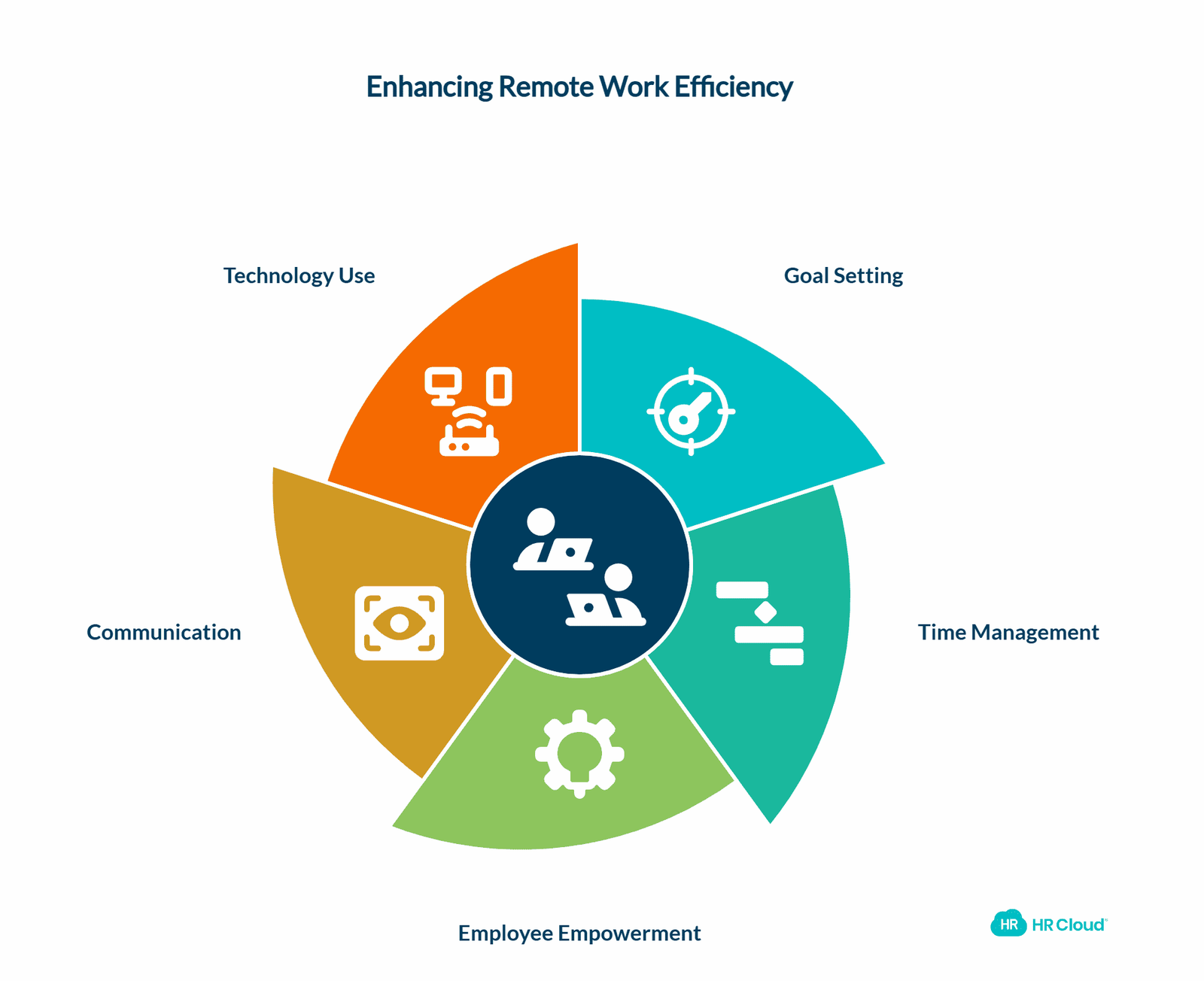
Working remotely can be difficult at first, but teams need to focus on their goals. Offering flexible work arrangements with work hours and locations is essential, but do not let your team slack off. Instead, keep them focused on their daily targets. For example, your sales manager might not be fully committed to the monthly target while working remotely. You can divide the monthly goals into smaller, daily goals to ensure you're on the right track. Your project management software will come in handy here to set targets and deadlines for each team member. A manager can update the system with tasks and instructions while at the same time allowing flexibility. It is essential to clearly define the goals and results, and then allow the employees to develop a plan. In short, you should focus on outcomes, not on activities. This practice will help increase engagement and empower employees. Following this, creativity and ownership are enhanced. It is challenging to micromanage people, and no one likes it either. Therefore, it is better to develop other practices. Some form of remote working could be bound to a schedule, like call centers or customer support. In this case, you have to figure out a work schedule for each team member to cover business hours. Besides those instances, remote working can be flexible with deadlines that have to be met.
6. Keep Company Goals Clear
Be proactive in keeping your remote employees engaged with company goals and initiatives outside their day-to-day work tasks through effective employee engagement programs. People working remotely can feel left out and not part of the team. Setting common goals and keeping them informed on the results can assure them that they are participating in something bigger than their daily work schedule.
This will keep your employees invested in company goals and initiatives and can be used as an alternative way of rewarding their hard work.
7. Hold One-on-One Meetings Regularly
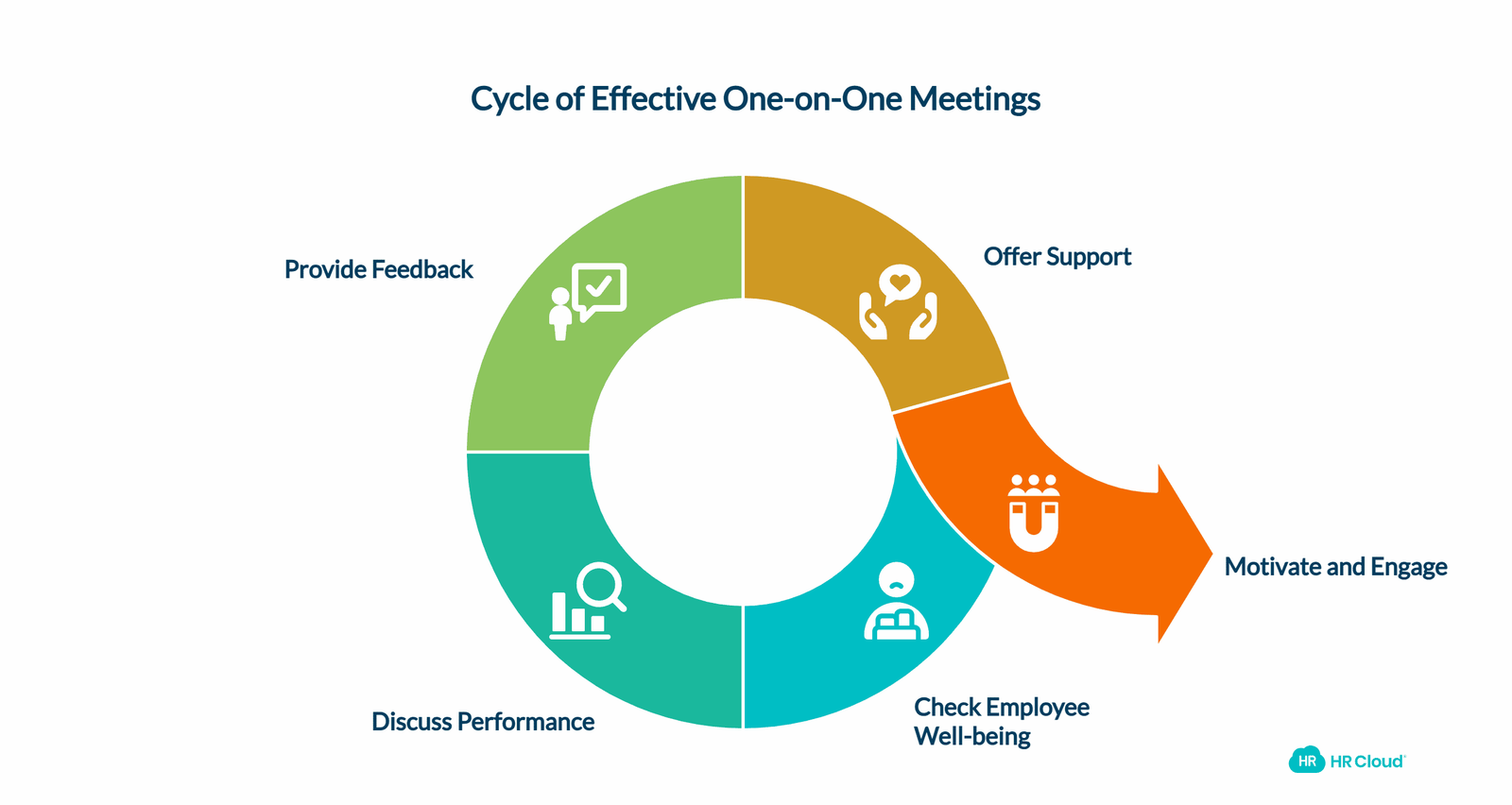
Holding one-on-one meetings can serve to check in with each employee about how they're feeling about the work, what's going well, and what could be improved. Such meetings can also provide an opportunity to give them feedback on their performance and ask questions about how you can help them succeed at their job. These sessions are also ideal for conducting employee engagement surveys to gather valuable insights.
With the right tools, it is easier than ever to communicate with remote locations. You can choose a free platform like Google Meet or go with a paid plan from Zoom. The good thing is, the options go beyond these two, and you can choose from hundreds of the best video conferencing software.
Meetings and communications are the fuel for remote work. Part of this is to make the employee feel motivated and engaged. Not all employees need to be called as often as others. Some may require less interaction due to the nature of their job or the ability to work independently.
8. Create a Culture of Trust
In a remote work environment, employee-employer relationship trust is of the essence. Employees need to feel comfortable taking risks without fear of being judged by others in the company (i.e., don't micromanage). Building team cohesion and employee loyalty requires a foundation of trust and transparency.
If you want a team of people that stick around for a while and want to keep them motivated and excited, you have to create a very distinct and defined workplace culture. A good vibe can have an overall significant impact on the overall success.
Encourage autonomy without micromanagement; trust that your employees know best when it comes to getting things done efficiently within the scope of their responsibilities. Don't forget that you hired them because they are experts at what they do!
Download your free remote team culture reset checklist
Get actionable tips to realign, re-engage, and re-energize your remote team—starting today.
Download Now
9. Encourage Personal Development
It is essential to encourage personal development through education or professional employee training for those who want to grow in their career path or learn new skills to be more effective at their job. Implementing employee recognition programs alongside development opportunities can significantly boost employee retention rates.
Encouraging remote workers on your team will help build their skill set and the company's assets simultaneously. When you do this, they know that you care for everyone and about their future.
It builds confidence in the company, boosts employee morale, and adds value for everyone. You don't have to spend tons of money on training programs. There are economical online course platforms that you can use for training employees.
There are many benefits to encouraging professional development for your remote team. It will help them keep up with the latest trends and technological changes that can improve their productivity or performance. When you expand, you can consider creating online courses for your employees, covering each aspect of their work.
By providing them with education courses, you'll be investing in their growth as individuals who will undoubtedly result in a higher morale and retention rate.
10. Have Fun Activities with the Team
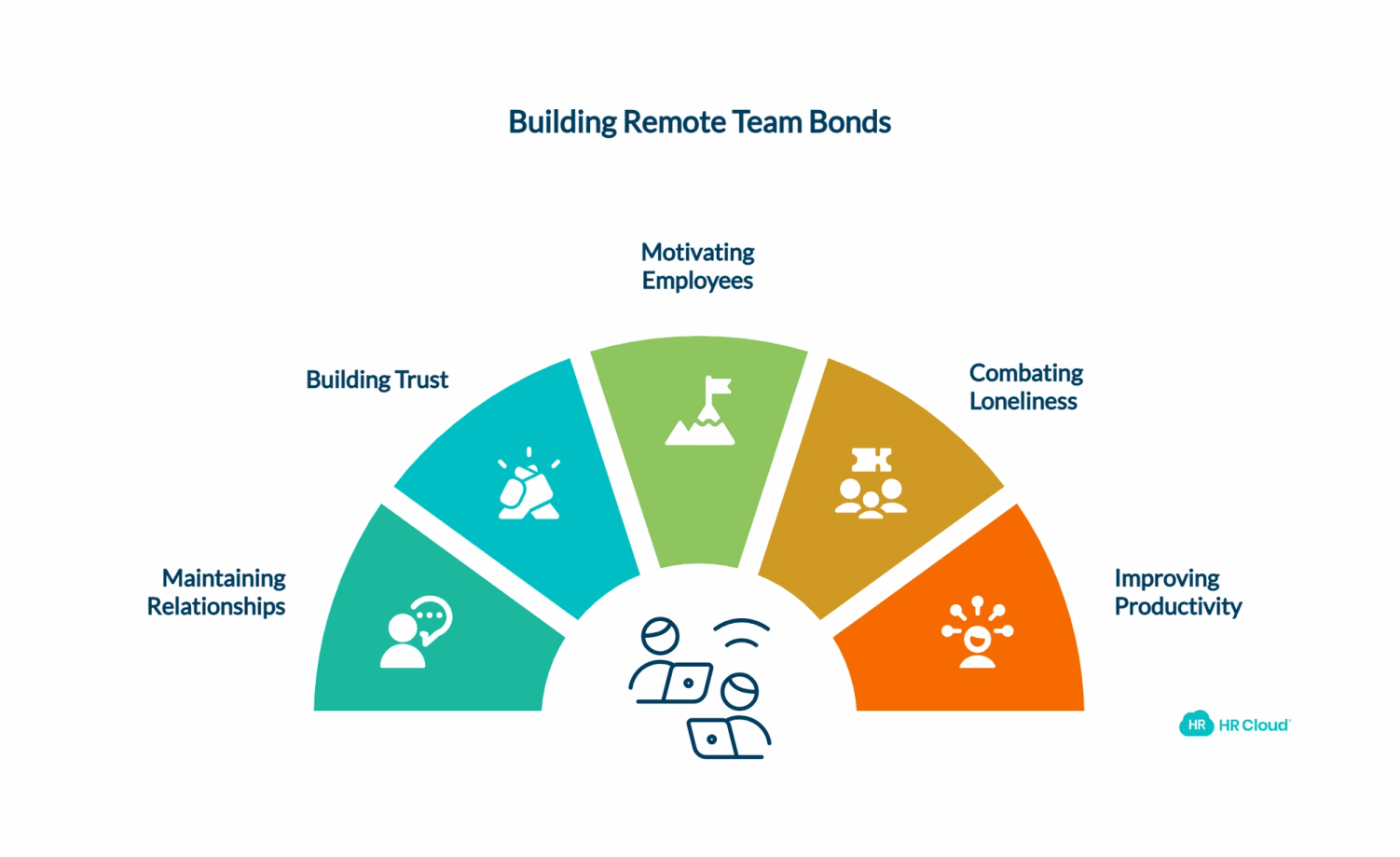
Make sure to take time for informal conversations and employee engagement activities with your remote team. These virtual team-building initiatives are important ways to maintain relationships, build trust, and motivate employees. It's easy to get wrapped up in work, but it's essential to take time away from your desk to engage with your employees on a personal level. Allowing yourself and your remote team members this time will make everyone happier and more productive. For your inspiration, here are some fun activities companies can conduct to encourage interaction among remote workers:
- Weekly Trivia contest
- A peek into each other's homes
- Online murder mystery to solve as a team
- Solve an escape room as a team
- Online office games
- Team Building Bingo
Companies are getting creative in selective team-building activities and fun games for their employees.
Unfortunately, focusing on team building is not a priority for many team managers. They assume that their employees don't care about connecting with other co-workers. But in reality, fun activities combat loneliness, improve productivity, and build relationships.
Takeaway
Managing a remote team presents unique challenges. It is quite different from supervising a typical office scenario. The most common challenges include communication, motivation, making a remote team feel included in the overall business objectives, and keeping them improving personally and professionally.
Since remote work is expected to rise in the coming years, managers and business owners must become familiar with these problems and learn how to solve them. It starts with hiring the right individuals who are fit for remote working to establish new routines and habits during the daily production.
The above points should give you a good idea of how to manage a remote team successfully. Good luck!

Experience how Workmates can transform communication and strengthen culture—all in one powerful platform
Book Your Free DemoFAQ's
1. What is the best way to manage remote teams effectively?
The best way to manage remote teams is to combine clear communication, defined goals, regular feedback, and strong employee engagement practices. Remote employees need more than video meetings. They need clear expectations, visibility into company goals, recognition for their work, and easy ways to stay connected with managers and peers.
A platform like Workmates by HR Cloud helps remote teams stay aligned by centralizing communication, recognition, feedback, and employee engagement in one place.
2. Why do remote employees feel disconnected from their company?
Remote employees often feel disconnected because they miss informal conversations, in-person recognition, and visibility with leadership. When communication happens across scattered tools, employees can feel left out, less valued, and less informed about company goals.
To fix this, companies should create regular communication habits, run pulse surveys, recognize employee contributions, and make company updates easy to access. Workmates by HR Cloud helps reduce this disconnect by giving employees a shared digital workplace where they can communicate, celebrate wins, and stay connected to the company culture.
3. How can managers keep remote employees motivated?
Managers can keep remote employees motivated by setting clear goals, checking in regularly, giving timely feedback, recognizing good work, and supporting career growth. Motivation drops when employees feel invisible or unsure about expectations.
Recognition plays a major role here. A simple “thank you” is useful, but structured recognition makes it consistent across teams. With Workmates by HR Cloud, managers can recognize employees publicly, encourage peer-to-peer appreciation, and build stronger engagement across remote and hybrid teams.
4. What tools help improve communication in remote teams?
Remote teams need tools that support company announcements, team conversations, employee feedback, recognition, and manager check-ins. Basic chat tools help with quick messages, but they do not always solve the deeper problem of employee engagement.
For stronger remote communication, companies should use an employee communication platform that keeps updates, recognition, feedback, and engagement activities in one place. Workmates by HR Cloud helps organizations improve communication by giving employees a central space to connect, share updates, and stay aligned with company goals.
5. How often should managers check in with remote employees?
Managers should check in with remote employees regularly, but the right frequency depends on the role, workload, and employee’s need for support. Weekly one-on-one meetings work well for many teams, while some employees need shorter check-ins more often.
The goal is not to micromanage. The goal is to understand blockers, give feedback, support wellbeing, and keep employees connected. Companies can also use pulse surveys through platforms like Workmates by HR Cloud to understand how remote employees feel between manager check-ins.
6. How do you build trust in a remote team?
You build trust in a remote team by focusing on outcomes, communicating clearly, giving employees autonomy, and avoiding micromanagement. Remote employees perform better when they know what success looks like and have the freedom to manage their work.
Trust also grows when employees feel heard and recognized. That means managers need feedback loops, transparent communication, and consistent recognition. Workmates by HR Cloud supports this by helping teams share updates, gather feedback, and celebrate employee contributions across locations.
7. What are the biggest challenges of managing remote teams?
The biggest challenges of managing remote teams include communication gaps, loneliness, unclear expectations, low visibility, weak feedback loops, and poor employee engagement. These issues become worse when companies rely on disconnected tools or only communicate through email and meetings.
To manage remote teams effectively, companies need structured systems for communication, recognition, feedback, and performance support. Workmates by HR Cloud helps solve these challenges by giving remote employees a stronger connection to their team, managers, and company culture.
8. How can Workmates by HR Cloud help remote and hybrid teams?
Workmates by HR Cloud helps remote and hybrid teams improve communication, employee recognition, feedback, and engagement from one central platform. It gives employees a place to connect, share updates, celebrate wins, and stay informed even when they are not in the same office.
For managers, Workmates helps make remote culture more visible and measurable. Instead of guessing whether employees feel connected, companies can use communication tools, recognition features, and feedback loops to build a stronger remote employee experience.
About the author

Keep Reading


Like What You Hear?
We’d love to chat with you more about how HR Cloud® can support your business’s HR needs.
Book Your Free Demo