
How to Use Social Media to Improve Employee Engagement

Social media doesn't stop at the company firewall. With 5.07 billion social media users worldwide as of April 2024 — roughly 62.6% of the global population — and an average daily usage of over 143 minutes per day, the platforms your employees use to connect with friends outside work are now powerful tools for building culture, recognition, and connection inside it.
The challenge most HR leaders face isn't whether to use social media for engagement — it's how to do it intentionally. U.S. employee engagement hit an 11-year low of 30% in 2024, with disengagement costing the U.S. economy approximately $2 trillion in lost productivity. That number demands more than a quarterly pizza party. Social media — used thoughtfully — gives HR a direct line to employees wherever they are, including the frontline and deskless workers who are hardest to reach through traditional intranets.
Here are proven ways to use social media to strengthen employee engagement, with practical steps you can implement now.
Share Content That Actually Helps Your People
One of the most effective things you can do is post content your employees genuinely benefit from. This means career development resources, industry news, wellness tips, company milestones, and policy updates — content that treats employees as professionals, not just a captive internal audience.
For distributed teams and frontline workers, this content is especially valuable because it builds a sense of inclusion and keeps everyone aligned even when they rarely share the same physical space. Platforms like HR Cloud's Workmates allow you to organize content into dedicated channels — by location, department, or team — so the right information reaches the right people without the noise.
Recognize Employees Publicly and Frequently
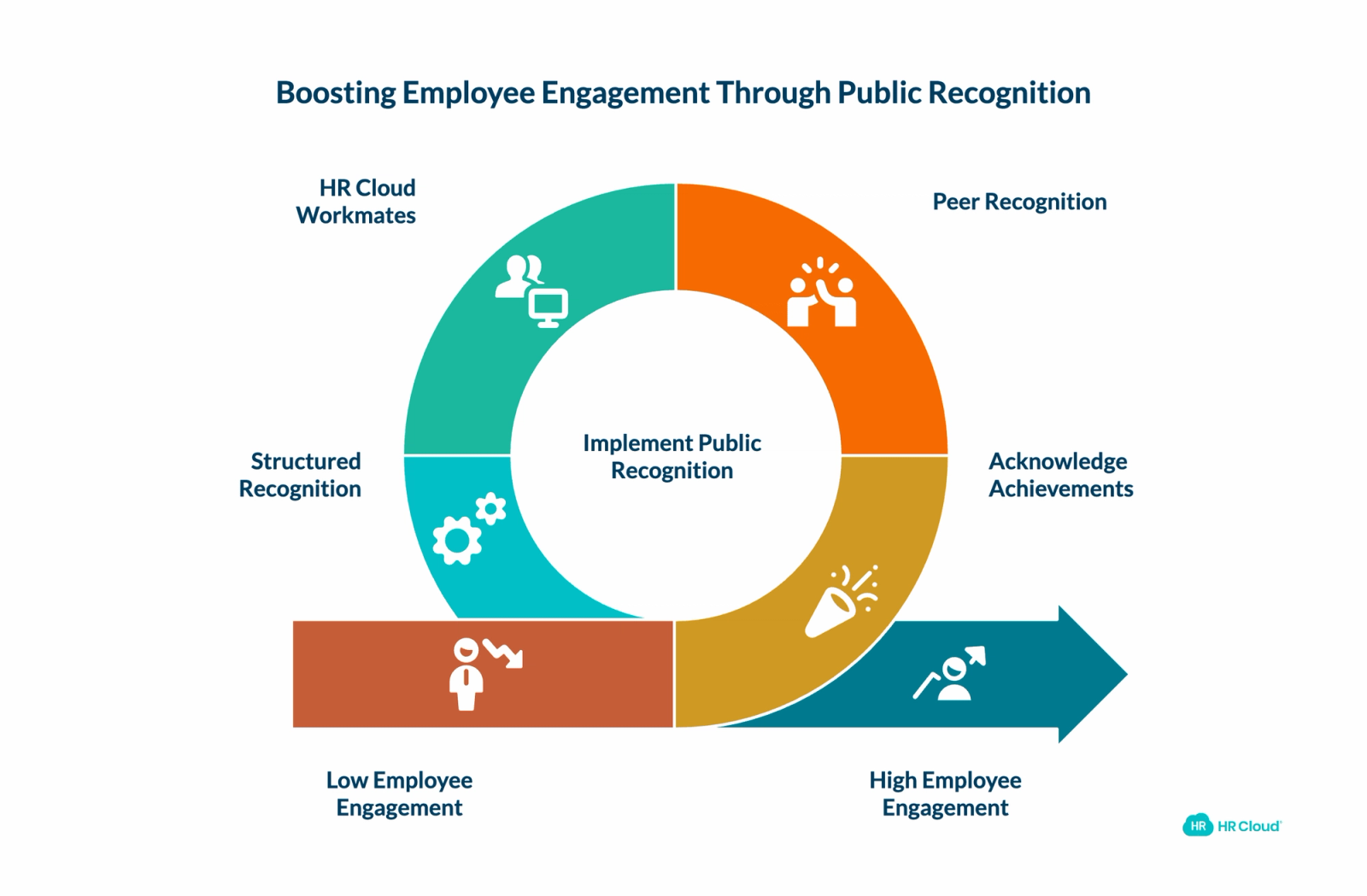
Public recognition is one of the highest-return moves in employee engagement. When you celebrate a promotion, acknowledge a client win, or call out someone for going above and beyond, you signal to the entire organization that contribution is seen and valued.
According to the Edelman 2025 Trust Barometer, employees are seen as more credible spokespeople than CEOs or company pages. On LinkedIn, employee posts consistently outperform brand account content. That same credibility principle applies internally: when peers recognize peers publicly, it carries more weight than a top-down memo.
HR Cloud's Workmates mirrors this dynamic through its social-media-style recognition feed. Managers and peers can give shout-outs, build custom badges tied to company values, and connect recognitions to a points system that employees can redeem for gift cards and rewards. A leaderboard keeps engagement visible and motivating — without requiring anyone to leave the HR system.
For HR teams managing 100+ employees across multiple locations, structured recognition at scale is hard to replicate with external social platforms alone. Workmates gives you the infrastructure to do it consistently.
Run Contests and Challenges That Get People Participating
An online contest can do more than build morale — it can surface talent, strengthen peer relationships, and generate authentic employee-generated content that reinforces your employer brand externally.
Whether it's a photo challenge, a creative skills competition, or a team trivia event, the key is making participation easy and judging criteria transparent. Splitting evaluation 50/50 between community votes (likes, comments) and a panel keeps the bar high while driving organic reach across your organization.
When you run these on an internal platform rather than a public social channel, you control the experience, protect employee privacy, and build community within the organization rather than outside it. Workmates channels make this operationally simple — you can run location-specific or company-wide contests with structured participation rules built in.
Give Employees a Window Behind the Scenes
Transparency builds trust. Sharing behind-the-scenes content — team moments, new hire welcomes, project milestones, office traditions — makes employees feel like insiders rather than bystanders to company decisions.
This works particularly well for organizations with distributed teams or multiple locations, where employees may never meet colleagues in other offices. A behind-the-scenes post from your Chicago team lands differently to your Dallas team than a corporate announcement does. It makes the organization feel human and connected.
HR Cloud's Workmates supports exactly this through its announcement and post features, allowing HR and managers to share company updates in a Facebook-style feed that employees can like, comment on, and react to — not just read passively.

Use Polls to Let Employees Weigh In
A simple poll accomplishes two things: it gives employees a voice, and it gives HR actionable insight into team sentiment, preferences, and morale. It's a low-effort, high-signal activity.
Polls don't have to be heavy. Asking "Which benefit matters most to you this quarter?" or "What type of training content would be most useful to you?" generates real data while making employees feel heard. When you act on the results — even with something small — you close the feedback loop and demonstrate that their input shapes their environment.
The SHRM research on social media's role in HR consistently points to two-way dialogue as the core function social tools play for HR teams. Polls are the simplest version of that dialogue.
Workmates Essential and Premium both support polls natively inside the platform. The Premium tier also includes eNPS surveys with heat mapping, giving HR leaders quantitative insight into engagement levels across teams and locations. For deeper performance and goal alignment across your workforce, HR Cloud's Perform ties individual feedback into broader organizational development cycles.
Build an Internal Employee Advocacy Program
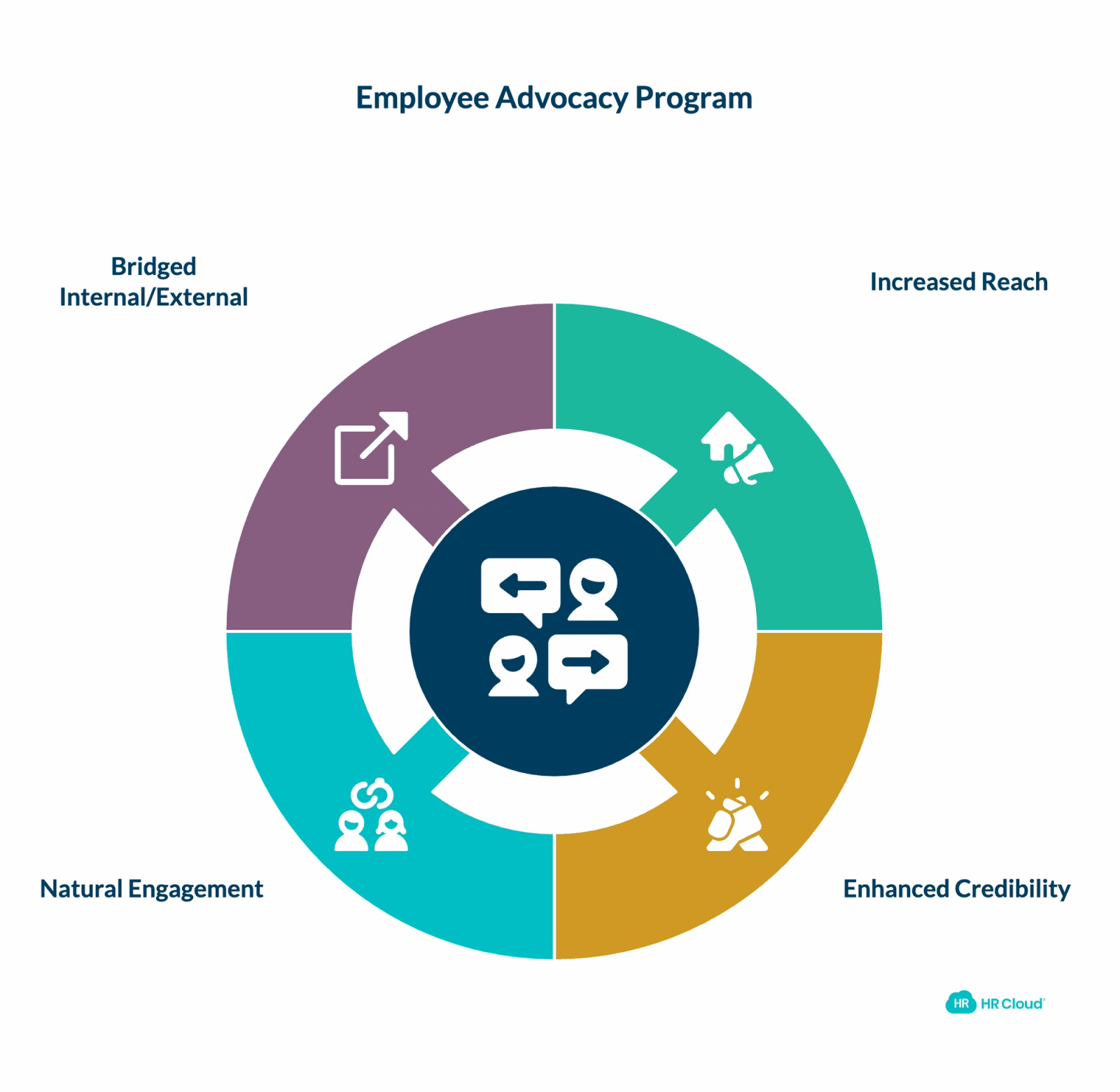
This is the step most HR teams skip — and it's one of the most powerful. Employee advocacy turns your people into authentic ambassadors for your employer brand on external platforms like LinkedIn, Instagram, and Glassdoor.
Employee posts on LinkedIn significantly outperform corporate brand accounts in reach and credibility — which means that when your employees share why they love working at your company, it reaches talent networks that your corporate page never could. An advocacy program gives them the content, the context, and the encouragement to do that naturally.
Workmates Premium includes an Advocacies feature that enables HR teams to facilitate this process — encouraging employees to share curated content with external networks while tracking participation. This bridges internal engagement with external employer branding in a way that most standalone social tools cannot.
Measure What You Post — Then Improve It
Engagement without measurement is guesswork. Track which posts get the most reactions, which recognition moments drive follow-on participation, and which channels have the highest active user rates. Then use that data to refine your content calendar.
Research published in Humanities and Social Sciences Communications (2025) confirms a direct correlation between organizational culture, perceived support through social media, and employee engagement outcomes. Measurement isn't optional if you want to understand that connection in your own organization.
For teams serious about connecting engagement data to business outcomes — retention, performance, absenteeism — integrating your engagement platform with your HRIS creates a full-picture view of workforce health. HR Cloud's People HRIS connects employee data across modules, so what happens in your engagement platform doesn't stay siloed from the rest of your people strategy.
Which Platform Is Right for Internal Engagement?
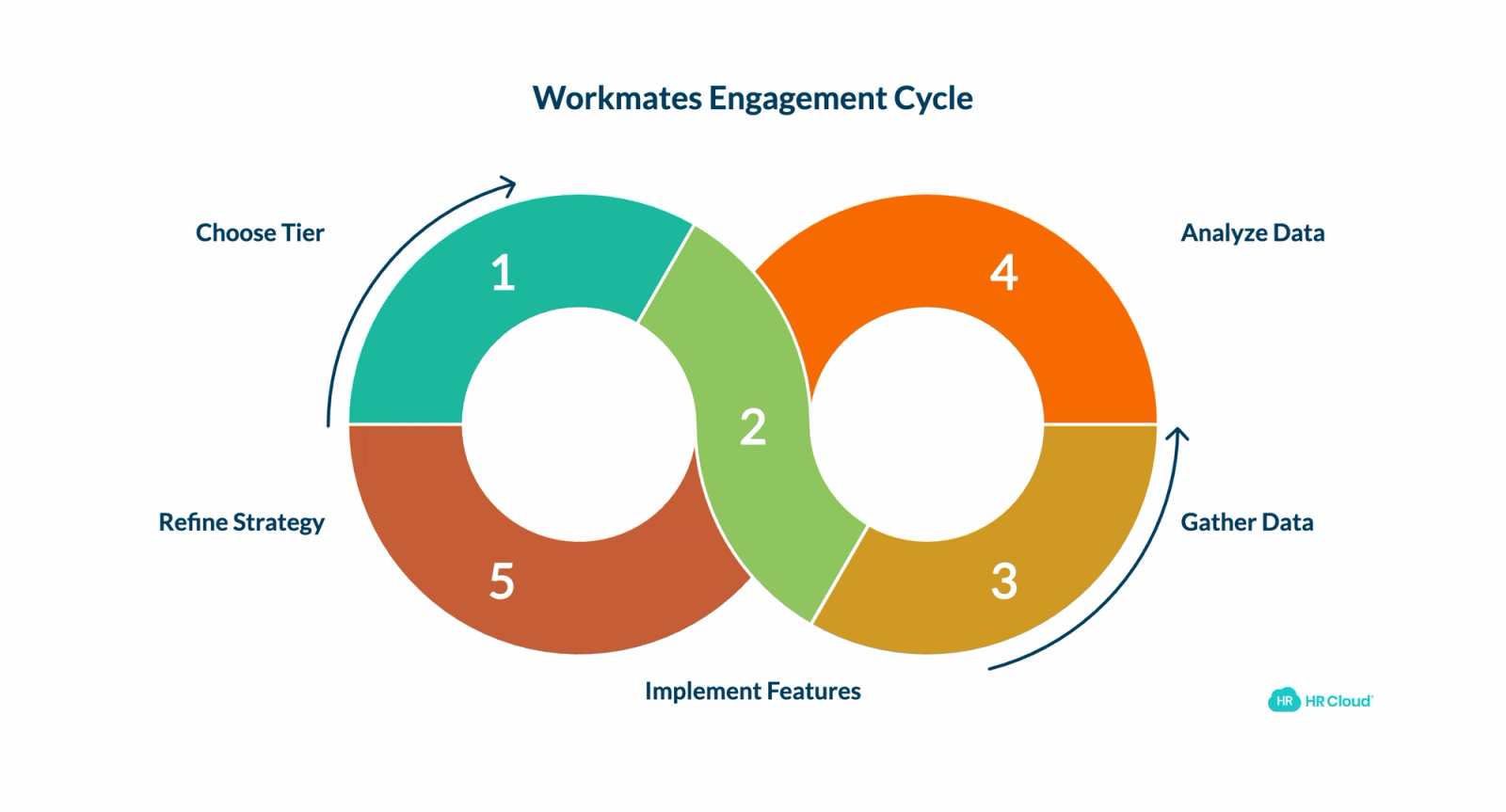
External social media (LinkedIn, Instagram, Facebook) can play a role in engagement, but it has real limitations for internal HR use: it's public, unstructured, and difficult to measure. For organizations that want consistent, private, and data-backed engagement, an internal social platform purpose-built for HR delivers more control with less risk.
Social media's best qualities — real-time interaction, peer recognition, community feel, multimedia communication — are exactly what Workmates is designed to replicate inside your organization, without the noise of public platforms.
The three Workmates tiers give you flexibility based on where your organization is:
- Workmates Recognition — A single recognition feed with peer-to-peer shout-outs, custom badges, points, and rewards. Best for organizations that want to start with structured recognition.
- Workmates Essential — Adds a full communications layer: posts, company announcements, channels by location or department, polls, events, and new hire welcomes. The most popular starting point for mid-size organizations.
- Workmates Premium — Full-suite engagement with eNPS surveys, heat mapping, a content calendar for automated communications, Pages (a company wiki), and the Advocacies feature for employee-led employer branding.
Bringing It Together
Using social media to improve employee engagement is one of the few strategies that simultaneously benefits your culture, your employer brand, and your retention rates. The key is moving beyond ad hoc posts and building a structured approach: consistent recognition, two-way communication, employee voice through polls, and advocacy that extends your brand organically.
Gallup's 2025 data is clear — organizations that invest in the conditions for engagement see real returns. Social-style platforms give HR the channel to build those conditions at scale.
Ready to see what a social-style engagement platform looks like inside your HR system? Explore Workmates by HR Cloud or request a demo to see how teams with 100 to 5,000 employees are using it today.

Experience how Workmates can transform communication and strengthen culture—all in one powerful platform
Book Your Free DemoFrequently Asked Questions
How can social media improve employee engagement in the workplace?
Social media helps improve employee engagement by creating opportunities for communication, recognition, and collaboration among employees. Organizations can use social platforms to share updates, celebrate achievements, and encourage participation in discussions or activities. These interactions help employees feel valued and connected to the company culture, which increases motivation and workplace satisfaction.
Why should companies use social media to engage employees?
Companies use social media to strengthen communication, increase transparency, and build stronger relationships among employees. When organizations share company news, milestones, and updates through social platforms, employees feel more connected to the organization’s mission and goals. This improved communication helps create a more engaged and collaborative workforce.
What type of content should companies post to engage employees on social media?
Organizations should post useful and relevant content that employees can relate to, such as company achievements, workplace tips, industry updates, or team accomplishments. Informative and engaging content encourages employees to interact with posts, share ideas, and stay informed about company developments. Consistent content also helps maintain employee interest and participation.
How does employee recognition on social media increase engagement?
Recognizing employees publicly on social media boosts morale and encourages a culture of appreciation. When companies highlight promotions, achievements, or successful projects, employees feel valued and motivated to perform better. Public recognition also encourages peer support and strengthens workplace relationships across teams.
What are some creative ways to use social media for employee engagement?
Companies can run contests, share behind-the-scenes workplace content, conduct polls, or involve employees in product promotions on social media. These activities create fun interactions beyond daily tasks and encourage employees to participate actively. Interactive campaigns help employees feel included and strengthen their connection with the organization.
How can polls on social media increase employee participation?
Social media polls allow employees to quickly share their opinions on various topics, from workplace preferences to fun non-work questions. Polls encourage participation because they are quick and interactive. They also help organizations understand employee preferences while making employees feel their opinions are valued.
What role does employee advocacy play in social media engagement?
Employee advocacy occurs when employees share company updates, content, or achievements on their personal social media profiles. This strategy helps expand the company’s reach while strengthening employee engagement. Employees become brand ambassadors who promote the company culture and values to a broader audience.
How can social media help engage remote or hybrid employees?
Social media platforms help remote and hybrid employees stay connected through online conversations, recognition posts, and virtual events. These platforms reduce feelings of isolation by encouraging collaboration and communication across locations. They also help remote teams celebrate milestones and maintain a sense of community.
What are the benefits of using social media for internal communication?
Using social media internally improves collaboration, knowledge sharing, and transparency within organizations. Employees can quickly share information, discuss ideas, and interact with colleagues across departments. Studies suggest that organizations that fully utilize social technologies can improve productivity and communication significantly.
What challenges should companies consider when using social media for employee engagement?
Companies must ensure that social media engagement remains authentic and balanced with employees’ personal online presence. Organizations should also establish clear guidelines for professional communication and encourage voluntary participation. Proper planning and communication policies help prevent misuse while maintaining a positive workplace culture.
About the author

Keep Reading


Like What You Hear?
We’d love to chat with you more about how HR Cloud® can support your business’s HR needs.
Book Your Free Demo