Interview Thank You Email Templates With Examples

Quick Answer: What Is an Interview Thank You Email?
An interview thank you email is a short professional message sent to your interviewer within 24 hours of your job interview. It thanks them for their time, references a specific moment from the conversation, reinforces your fit for the role, and keeps your name in front of the hiring team at the moment they are evaluating candidates.
A TopResume survey on post-interview thank you notes found that 68% of hiring managers say whether a candidate sends a thank you note impacts their decision. Nearly one in five have eliminated candidates who skipped it entirely. Fewer than one-third of candidates follow through. That gap is your advantage.
Sending a thoughtful interview thank-you email is one of the most effective yet underutilized strategies in the job search process. According to a TopResume survey on post-interview thank you notes, 68% of hiring managers say thank you notes impact their hiring decisions, yet many candidates skip this step entirely. Whether you have just completed a phone screen, video interview, or in-person meeting, a well-crafted thank-you email can distinguish you from other qualified candidates and reinforce your fit for the role.
This guide provides actionable templates, expert insights, and best practices to help you write interview thank you emails that hiring managers actually read and remember.
Why Should You Send a Thank You Email?
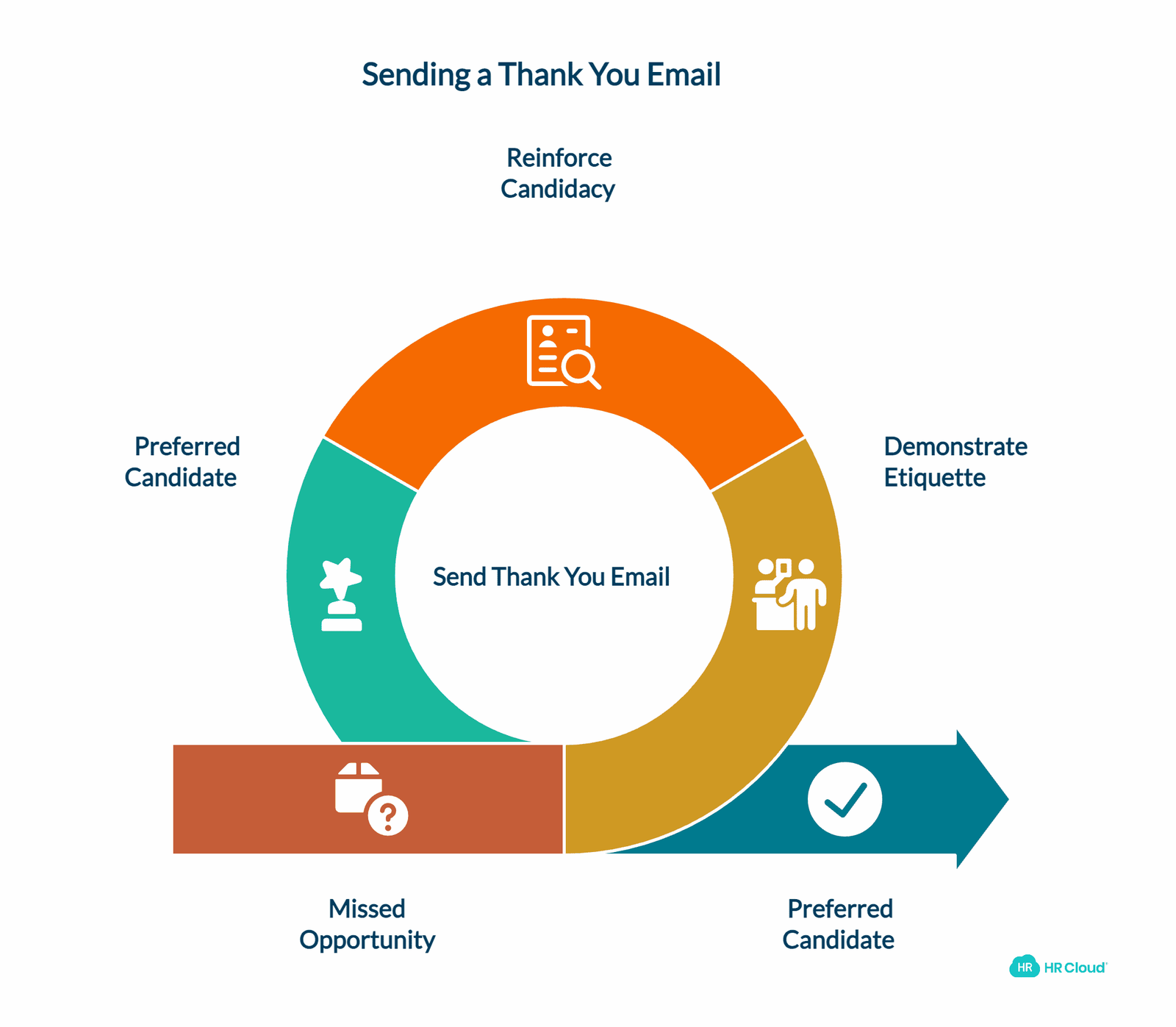
Beyond basic courtesy, an interview thank you email serves as a strategic communication tool in the hiring process. Nearly one in five interviewers have dismissed candidates who didn't send a thank-you note, making this simple gesture a potential deciding factor between you and equally qualified applicants.
Demonstrates Professional Business Etiquette
Sending a thank you note reflects standard business etiquette and shows respect for the interviewer's time. In industries where professional communication skills are essential, this gesture signals your understanding of workplace norms and your ability to build professional relationships from the start.
An Accountemps survey found that 80% of HR managers say thank you notes are helpful when reviewing candidates — yet only 24% of applicants send them.
Creates a Fresh Opportunity to Reinforce Your Candidacy
Your thank you email reminds the hiring manager of your unique qualifications at a critical decision-making moment. When recruiters interview dozens of candidates for a single position, your follow-up message helps you stay top-of-mind. You can also address any questions you did not fully answer during the interview or add relevant information you forgot to mention.
Modern applicant tracking systems and HR platforms like HR Cloud's Recruit ATS help hiring teams manage candidate communications efficiently, so your well-timed thank you email integrates directly into their review workflow.
Positions You as the Preferred Candidate
When hiring decisions come down to multiple qualified candidates, your thank you note can tip the scales. A Robert Half survey found that 27% of hiring managers in the US say thank you messages make a positive impression that could tip the scales when candidates have equal skills and experience.
Organizations using modern onboarding platforms prioritize candidates who understand the importance of clear, timely communication throughout the entire employee lifecycle.
Key Considerations When Writing a Thank You Email
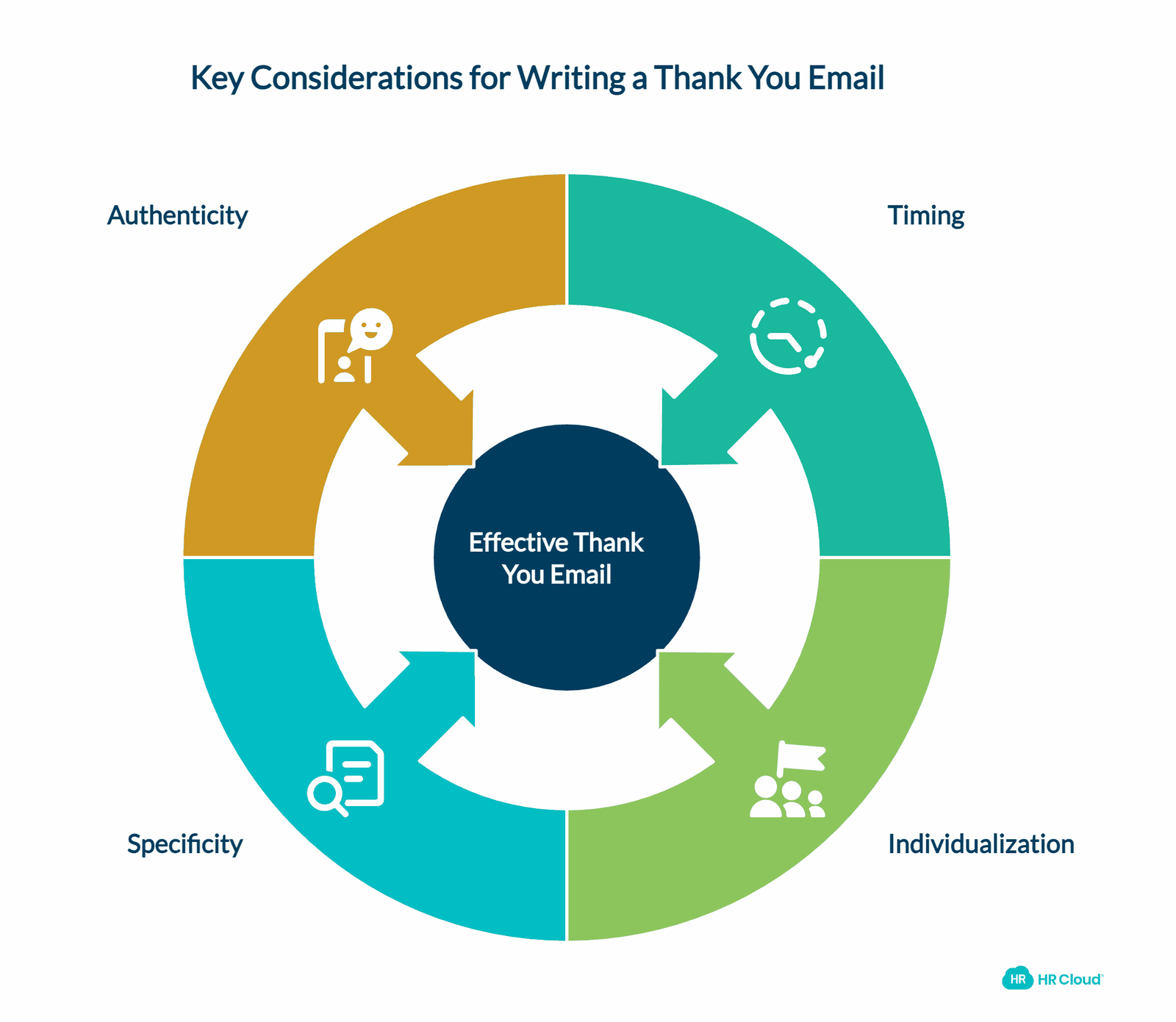
Following proven best practices significantly increases the impact of your interview thank you email. Here are the essential factors that separate effective messages from generic ones:
Timing Is Critical: The 24-Hour Rule
Send your thank you email within 24 hours of your interview, ideally the same business day. The optimal window is between 5-6 PM on interview day or 7-8 AM the following morning. This demonstrates promptness without appearing overeager and ensures your message arrives while the interview is still fresh in the hiring manager's mind.
Address Each Interviewer Individually
If you met with multiple people, send personalized emails to each person rather than one generic group message. Always collect business cards or confirm email addresses before leaving. When personalizing messages:
- Reference specific topics you discussed with each person
- Mention unique insights they shared about the role or company
- Adjust your tone to match each interviewer's communication style
- Thank any administrative staff who coordinated your visit
Companies using employee engagement platforms value candidates who understand the importance of building relationships across all organizational levels.
Content Should Be Specific and Authentic
Generic thank you emails are easily spotted and quickly forgotten. Your message should include:
- Specific interview moments: Reference particular discussions, challenges mentioned, or insights shared
- Relevant qualifications: Connect your skills to specific role requirements discussed
- Authentic enthusiasm: Express genuine interest in the company's mission and team culture
- Value proposition: Briefly reinforce how you can contribute to the team's goals
- Professional tone: Match the company's communication style while maintaining formality
Avoid common pitfalls like excessive length, grammatical errors, or appearing desperate. Proofread carefully—errors in follow-up communications can eliminate candidates from consideration.
Modern HR information systems often attach candidate communications to application files, so your thank you email becomes part of your permanent candidate record.
How to Write a Thank You Email: Step-by-Step Process
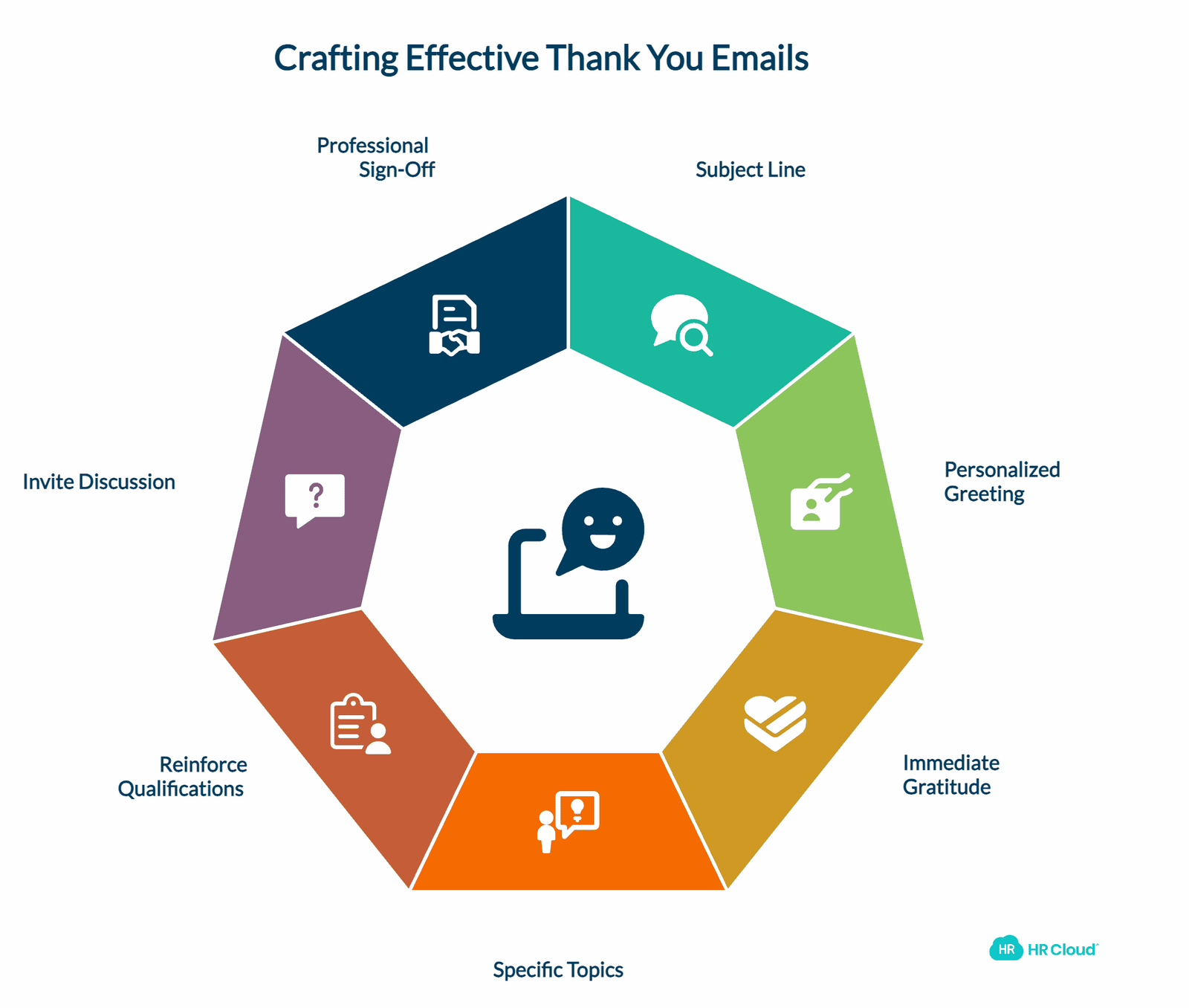
Crafting an effective interview thank you email requires a structured approach. Follow these seven steps to create a message that resonates with hiring managers.
1. Craft a Clear, Professional Subject Line
Your subject line should immediately convey the purpose and include specific details. Effective examples include:
- "Thank You – [Your Name] – [Position Title] Interview."
- "Thank You for the [Position] Interview Opportunity."
- "Following Up: [Position Title] Interview. – [Your Name]."
One important nuance: If your interview had a warm, conversational tone, career advisors at The Muse recommend avoiding the word "interview" in the subject line. "Thank You for Our Conversation – [Position]" can feel more human and less procedural, especially at startups or creative organizations.
2. Use a Personalized Greeting
Address the interviewer by their full name with appropriate title. "Dear Ms. Johnson," works for formal settings. "Hi Sarah," is appropriate if the interview was conversational. Never use "To Whom It May Concern" when you know the interviewer's name.
3. Express Immediate Gratitude
Open with sincere thanks within the first two sentences. Thank them for the discussion — not "the interview." As The Muse advises, framing it as an interview can make the exchange feel like a checkbox process rather than the beginning of a professional relationship.
4. Reference Specific Interview Topics
Demonstrate active listening by mentioning particular moments from your conversation. This shows you were engaged and helps the interviewer remember your discussion specifically.
Organizations using performance management systems appreciate candidates who can articulate how their skills connect to specific business objectives.
5. Reinforce Your Qualifications Briefly
Without repeating your resume, highlight one or two key skills that directly address the role's requirements. Connect them explicitly to challenges the interviewer described during the conversation.
6. Invite Further Discussion
Close with a forward-looking statement and provide your contact information. Keep it simple: "I welcome any additional questions and look forward to hearing about next steps."
7. Use a Professional Sign-Off
"Best regards," is the professional standard. "Sincerely," works for formal industries. Include your full name and contact information below the signature.
Thank You Email Templates and Examples
Customize these templates to match your interview experience and the company's culture.
Template 1: Standard Thank You Email After In-Person Interview
Subject Line: Thank You – [Your Name] – [Position Title] Interview
Email Body:
Dear [Interviewer's Name],
Thank you for taking the time to meet with me [today/yesterday] to discuss the [Position Title] at [Company Name]. I genuinely enjoyed our conversation about [specific topic discussed] and learning more about how your team approaches [specific challenge or project].
Our discussion reinforced my strong interest in this opportunity. I am particularly drawn to [specific aspect of the role or company culture], which aligns with my background in [relevant experience]. My experience with [specific skill or achievement] would enable me to contribute meaningfully to [specific team goal or project mentioned].
I am excited about the possibility of joining [Company Name] and contributing to [specific initiative discussed]. Please do not hesitate to contact me if you need any additional information about my qualifications.
Thank you again for your time and consideration.
Sincerely, [Your Full Name] [Phone Number] [Email Address] [LinkedIn Profile URL]
Template 2: Thank You Email After Phone Interview
Subject Line: Thank You for the [Position] Phone Interview – [Your Name]
Email Body:
Hi [Interviewer's Name],
Thank you for speaking with me today about the [Position Title] role at [Company Name]. I appreciated the opportunity to learn more about the position and your team's objectives for [specific project or goal].
I was particularly interested in your description of [specific challenge or responsibility]. Given my experience with [relevant skill or project], I am confident I could help your team [specific contribution]. The focus you mentioned on [company value or initiative] resonates strongly with my professional approach to [relevant area].
I am very enthusiastic about the possibility of moving forward in your hiring process. Please let me know if there is any additional information I can provide as you evaluate candidates.
I look forward to our next conversation.
Best regards, [Your Full Name] [Contact Information]
Template 3: Thank You Email After Panel Interview
Subject Line: Thank You – [Position Title] Interview with [Team Name]
Email Body:
Dear [Primary Interviewer's Name],
Thank you for the opportunity to meet with you and your team today to discuss the [Position Title] at [Company Name]. I appreciated hearing diverse perspectives from [list interviewer names if appropriate] on the role and your department's strategic priorities.
Each conversation provided valuable insights. I was especially intrigued by [Interviewer 1's] comments about [specific topic] and [Interviewer 2's] explanation of [another specific topic]. The collaborative environment you have built is impressive and aligns with my preference for teamwork-oriented cultures.
My background in [specific experience] directly addresses the challenges you described, particularly [specific challenge]. I am confident I could integrate quickly with your team and contribute to [specific goal].
Please extend my appreciation to everyone who participated in today's interview. I am excited about the possibility of joining such a talented team.
Thank you for your consideration.
Sincerely, [Your Full Name] [Contact Information]
Template 4: Thank You Email After Video Interview
Subject Line: Thank You for the Virtual Interview – [Position Title]
Email Body:
Dear [Interviewer's Name],
Thank you for meeting with me virtually today to discuss the [Position Title] at [Company Name]. Despite the distance, I felt we had a productive conversation about [specific topic] and the exciting direction your team is taking.
I was particularly impressed by [specific aspect of company or role]. Your description of [specific project or challenge] aligns with my experience in [relevant skill or background]. I am enthusiastic about the opportunity to bring my expertise in [specific area] to help achieve [specific goal mentioned].
Thank you again for accommodating a remote interview. I appreciate the flexibility and look forward to the possibility of contributing to [Company Name]'s success, whether remotely or in-office.
Please let me know if you need any additional information from me.
Best regards, [Your Full Name] [Contact Information]
Template 5: Thank You Email When You Forgot to Mention Something
Subject Line: Thank You + Additional Information – [Position Title] Interview
Email Body:
Dear [Interviewer's Name],
Thank you for our conversation [today/yesterday] about the [Position Title] at [Company Name]. I truly enjoyed discussing [specific topic] and learning about your team's approach to [specific challenge].
After our interview, I realized I did not mention my experience with [relevant skill or project that was missed]. I recently [specific achievement or project] that resulted in [measurable outcome]. I believe this experience would be particularly relevant to the [specific challenge or requirement] you described.
I remain very excited about this opportunity and the potential to contribute to [Company Name]'s [specific goal]. Thank you again for your time, and please feel free to reach out with any questions.
Sincerely, [Your Full Name] [Contact Information]
Template 6: Thank You Email After Informational Interview
Subject Line: Thank You for Your Time and Insights – [Your Name]
Email Body:
Dear [Contact's Name],
Thank you so much for taking time from your schedule today to speak with me about your career path and insights into [Industry/Company/Role]. Your perspective on [specific topic discussed] was incredibly valuable, and I appreciate your candid advice about [specific recommendation].
I found our discussion about [specific aspect] particularly helpful as I consider [your career goal or next steps]. Your suggestion to [specific action item] is something I plan to pursue immediately.
Thank you again for your generosity with your time and knowledge. I hope we can stay in touch, and I would be happy to return the favor in any way I can.
Best regards, [Your Full Name] [Contact Information]
Template 7: Thank You Email After a Second or Final-Round Interview
Subject Line: Thank You – Second Interview – [Position Title]
Email Body:
Dear [Interviewer's Name],
Thank you for bringing me back for a second conversation about the [Position Title] at [Company Name]. I appreciated the opportunity to go deeper on [specific topic from second interview] and meet [any additional team members].
Our discussion reinforced why I am genuinely excited about this role. Hearing [specific detail the interviewer shared] made clear how aligned this position is with my next professional chapter. I am confident I can contribute to [specific goal discussed] from day one.
Thank you again for investing this time in the process. I look forward to next steps.
Best regards, [Your Full Name] [Contact Information]
Advanced Tips for Interview Thank You Emails
When to Send a Handwritten Note Instead
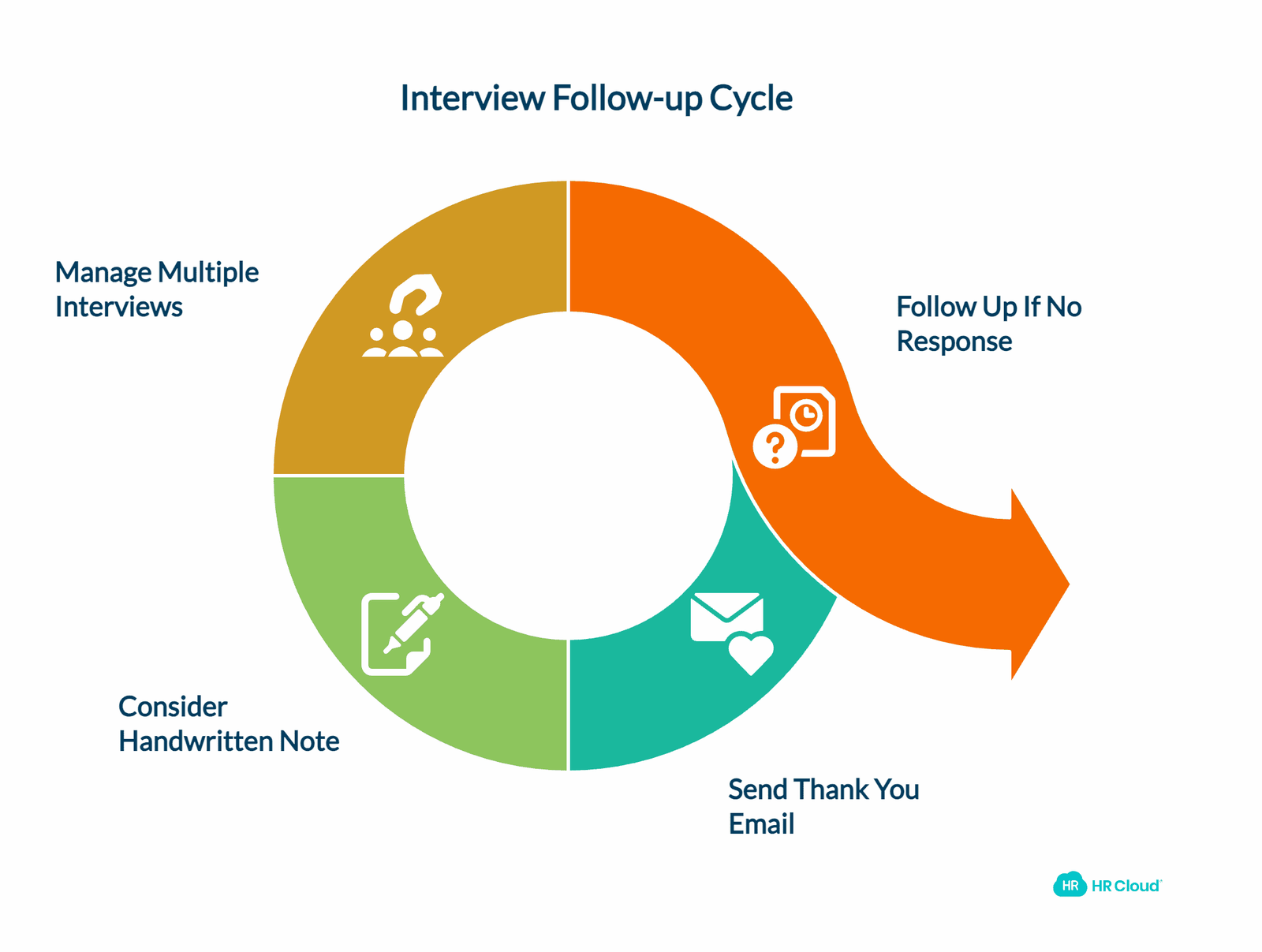
While email is standard, handwritten thank you cards can make a strong impression in highly traditional industries such as law, financial services, and academia, or during senior executive interviews where formality is expected. If sending a handwritten note, also send an email to ensure timely delivery, as mail can take several days and hiring decisions often happen quickly.
What to Know If You Use AI to Draft Your Thank You Email
AI writing tools can help you structure a first draft faster — but hiring managers increasingly recognize generic AI output. The Muse advises treating AI as a first-draft tool only, then rewriting in your own voice with at least three specific details from the actual interview. Copy-paste AI output signals you did not put in the effort — which directly contradicts the purpose of the email.
What to Do If You Interview with Multiple People
Create individual emails for each interviewer rather than sending identical messages. Reference unique topics you discussed with each person and adjust your emphasis based on each person's role. Tools like HR Cloud's Workmates platform help companies maintain organized communication records, so personalized outreach demonstrates your attention to detail.
How to Follow Up If You Do Not Hear Back
If you have not received a response within the timeframe mentioned in your interview:
1. Wait appropriately: Allow 5-7 business days after sending your thank you email
2. Send a brief check-in: Keep it professional and non-demanding
3. Express continued interest: Reaffirm your enthusiasm for the role
4. Provide updates: Mention any relevant new achievement or certification gained since the interview
5. Use a template: A structured follow up email to recruiter keeps the tone professional and makes sure you hit every point without sounding pushy.
Check-In Email Template:
Subject Line: Following Up – [Position Title] Application
Dear [Interviewer's Name],
I wanted to follow up on our conversation from [date] regarding the [Position Title]. I remain very interested in the opportunity to join [Company Name] and contribute to [specific team goal].
Since our interview, I [mention any relevant new achievement or certification if applicable]. I am happy to provide any additional information that would be helpful as you make your decision.
Thank you again for considering my application. I look forward to hearing from you.
Best regards, [Your Name]
Common Mistakes to Avoid
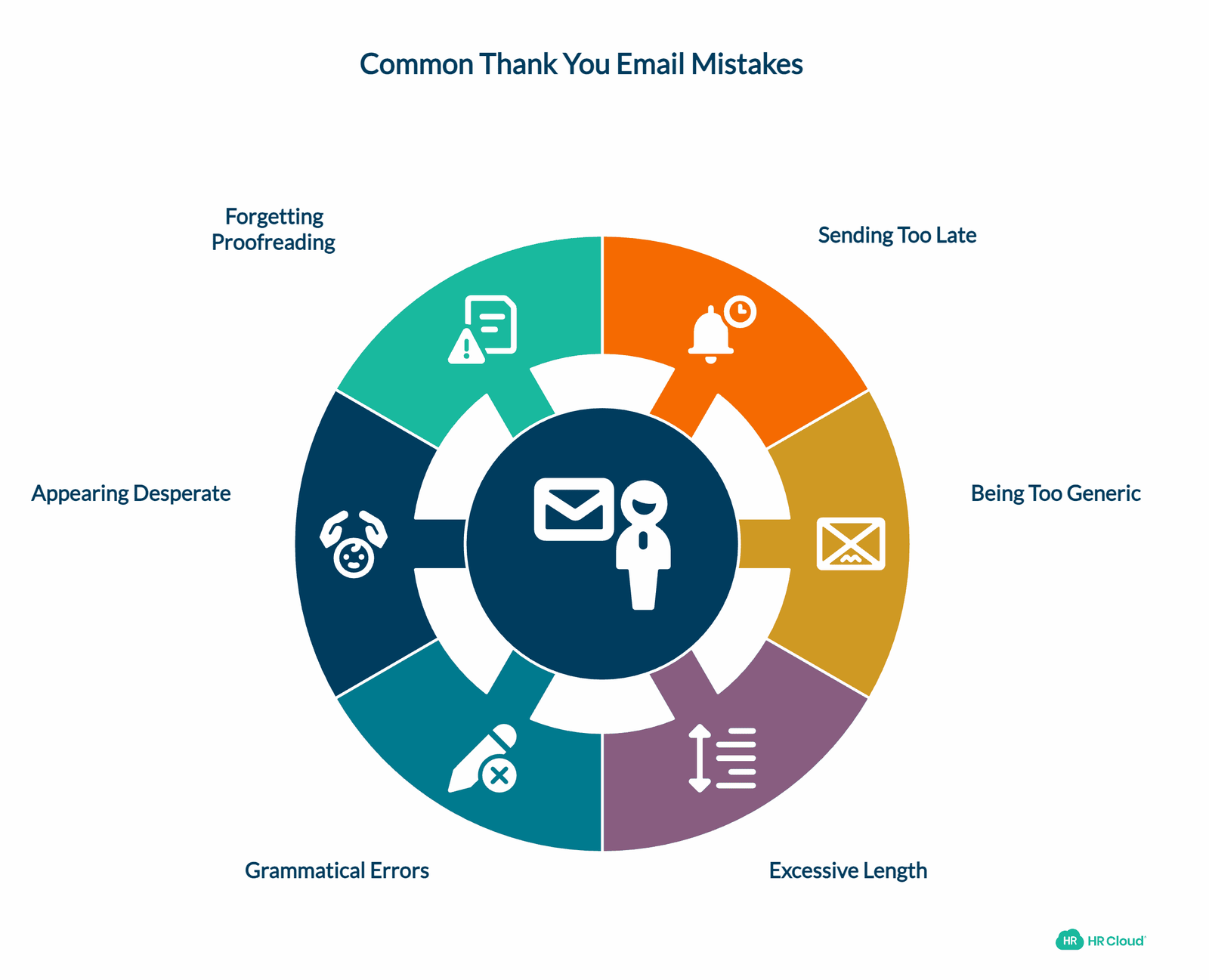
Even well-intentioned thank you emails can backfire if they contain these common errors:
1. Sending Too Late
Waiting more than 48 hours significantly reduces the impact of your message. Hiring managers may have already formed opinions or moved candidates forward in the process.
2. Being Too Generic
Copy-pasted templates that don't reference specific interview discussions fail to distinguish you from other candidates. Hiring managers can immediately spot generic messages.
3. Excessive Length
Thank you emails should be concise—typically 3-4 short paragraphs. Busy professionals already have too much email to read, so keep your message short and focused.
4. Grammatical Errors or Typos
Mistakes in your follow-up communication can eliminate you from consideration. Always proofread multiple times and, use spell-check, and consider having someone review your email before sending.
5. Appearing Desperate or Overly Casual
Strike a balance between enthusiasm and professionalism. Avoid excessive exclamation points, overly familiar language, begging for the position, or negative comments about current or previous employers.
6. Forgetting to Proofread Names and Company Details
Double-check the spelling of the interviewer's name, position title, and company name. Errors here are particularly damaging as they suggest carelessness.
Organizations using comprehensive HR management systems track all candidate communications, so errors become part of your permanent record.
How HR Cloud Supports the Entire Candidate Journey
While candidates focus on interview follow-up, forward-thinking organizations use integrated HR platforms to create exceptional experiences throughout the hiring and onboarding process.
HR Cloud's Recruit ATS manages applicant communications and tracks candidate interactions, ensuring hiring managers can review thank you notes and follow-up messages alongside interview evaluations in one place.
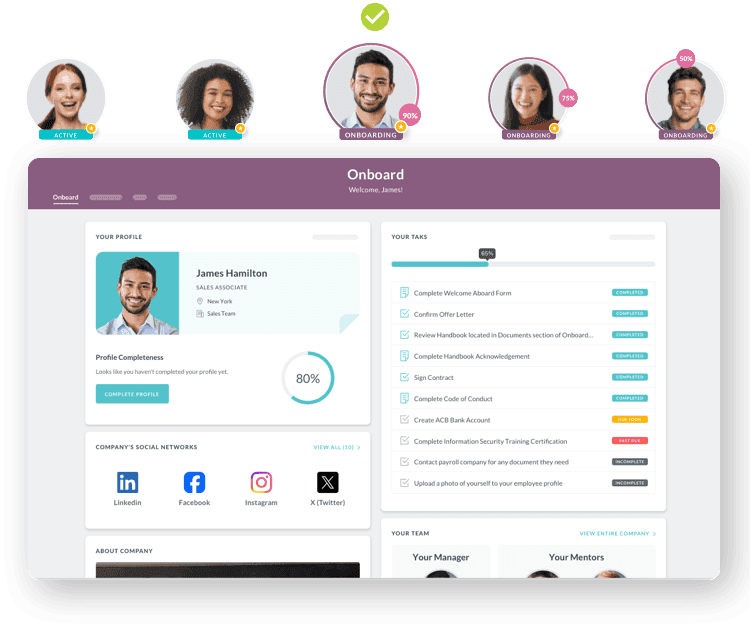
Onboard delivers structured, automated onboarding experiences designed to help new hires feel prepared and welcomed from their first day — turning the strong candidate impression into a strong employee start.
Workmates extends professional communication culture into the employee experience through recognition, engagement, and internal communication tools that reinforce the positive impression created during the interview process.
By connecting recruitment, onboarding, and employee engagement in one platform, HR Cloud helps organizations build cohesive experiences that attract top talent and retain high performers.
Ready to see how it works? Book a free demo and see the full platform in 20 minutes.

Discover how our HR solutions streamline onboarding, boost employee engagement, and simplify HR management
Book Your Free DemoFrequently Asked Questions About Interview Thank You Emails
Q: Is it really necessary to send a thank you email after every interview?
Yes. A TopResume survey found that 68% of hiring managers say thank you notes impact their decision-making, and nearly 20% have eliminated candidates who did not send one. While not every employer requires it, the risk of skipping this step is too high in competitive job markets.
Q: Should I send my thank-you email to HR or directly to the interviewer?
Send your thank-you email to everyone who interviewed you, including both department managers and HR representatives. Each person plays a role in the hiring decision, and personalized messages to each demonstrate thoroughness and genuine interest.
Q: What if I feel the interview did not go well?
A thank you email provides an opportunity to clarify answers, address concerns, and add information you forgot to mention during the interview. A well-crafted follow-up can help recover from a less-than-perfect performance.
Q: Should I mention salary expectations in my thank-you email?
No. Keep your thank-you email focused on appreciation and qualifications. Salary discussions should happen separately when the employer brings up the topic or extends an offer.
Q: How long should I wait before following up again?
Wait 5-7 business days after your initial thank you email before sending a polite check-in. After 2-3 follow-ups with no response, redirect your energy to other opportunities.
Q: What if I'm interviewing at multiple companies — should I mention this?
Generally, no. Your thank you email should focus on your enthusiasm for the specific opportunity at hand. If you receive another offer and need a decision timeline, raise that topic professionally during a follow-up call or meeting.
Q: Should I use AI to write my thank you email?
You can use AI to draft a starting structure, but do not send the output directly. Rewrite it in your own voice and add at least three specific references from your actual interview before sending. Generic AI output is increasingly recognizable to hiring managers and undermines the personal nature of the message.
People Also Ask
What should I say in a thank you email after an interview?
Thank the interviewer for their time, reference a specific topic from your conversation, briefly reinforce how your skills match the role, and express continued interest. Keep it to 3-4 paragraphs and send within 24 hours of the interview.
When is the best time to send a thank you email after an interview?
Send it the same day as the interview, ideally between 5-6 PM if the interview was in the morning or afternoon. The next morning by 8 AM is acceptable. Waiting more than 48 hours significantly reduces the impact of your message.
What is the best subject line for a thank you email after an interview?
Use "Thank You – [Your Name] – [Position Title]" for formal settings. For conversational interviews, "Thank You for Our Conversation – [Position]" can feel more natural and avoids making the email feel like a procedural checkbox rather than a genuine follow-up.
Should I send a thank you email after a phone or video interview?
Yes. The format is the same regardless of the interview type. Acknowledge the remote format briefly, reference specific topics discussed, and reinforce your fit for the role. The same 24-hour rule applies.
What happens if I do not send a thank you email after an interview?
You risk being eliminated by the nearly 20% of hiring managers who dismiss candidates who skip this step, according to a TopResume survey. In competitive hiring processes with equally qualified candidates, the absence of a follow-up can tip the decision in another candidate's favor.
How long should a thank you email be?
Keep it to 3-4 short paragraphs. Busy hiring managers scan emails quickly. A focused, specific message that references your actual conversation has more impact than a lengthy one that covers everything again.
Can I send a thank you email if I decide I no longer want the job?
Yes, and you should. It maintains your professional reputation and keeps the relationship positive. Be honest but gracious: thank them for their time and let them know you have decided to pursue a different direction.
Key Takeaways
- Send within 24 hours of your interview, ideally the same day
- Personalize each message with specific references from your conversation — never send the same email to multiple interviewers
- Keep it to 3-4 short paragraphs — concise beats comprehensive
- Proofread carefully before sending — errors become part of your candidate record
- Follow up after 5-7 business days if you do not hear back
- Use thank you emails to add missed information or clarify responses from the interview
- If you use AI to draft it, rewrite with at least three specific interview references before you send
The interview process does not end when you walk out of the meeting room or log off the video call. Your follow-up communication demonstrates the professional qualities — attention to detail, clear communication, and relationship-building skills — that employers value most.
By implementing the templates and strategies in this guide, you will create thank you emails that hiring managers actually read, remember, and appreciate.
About Author: Patricia Lockers is an essay writer helping students with their academic assignments. She has a Ph.D. in History from Stanford. At the moment, she also offers assistance to companies on content creation and professional thank-you emails for career advancement.
Keep Reading


Like What You Hear?
We’d love to chat with you more about how HR Cloud® can support your business’s HR needs.
Book Your Free Demo