Recruiter Tools HR Cloud Hiring Guide

What tools do recruiters actually need to stay competitive in today's hiring market?
Recruiter tools are the software platforms and applications that help HR and talent acquisition professionals manage every stage of the hiring process — from sourcing and screening to interviewing and onboarding. Without the right stack, even experienced recruiters lose top candidates to faster, better-equipped competitors.
Why is choosing the right tools so difficult?
With hundreds of platforms available, it's easy to invest in tools that don't integrate well or solve the wrong problems — wasting time and budget while hiring quality suffers.
How can recruiting teams build a smarter, more efficient process?
This guide breaks down seven essential categories of recruiter tools, what each one does, and which platforms are worth considering — so you can make faster, more informed hiring decisions.
Recruiting has always been challenging, and in today's job market, the process has become even more complex. With the increasing competition for top talent and the need to find the right fit for a company's culture and goals while ensuring strong employee engagement and talent development, recruiters must have the right tools to succeed.
Fortunately, numerous tools are available to help such professionals streamline their processes, improve efficiency, and find the best candidates. In this article, we'll look at seven essential tools recruiters should use to stay ahead in today's job market.
From applicant tracking systems to candidate sourcing tools, video interviewing software, and more, we'll explore each tool's benefits and how they can help such professionals attract and hire the right talent for their organization. So let's dive in and explore the seven essential tools for today's recruiters!
Key Takeaways
- Recruiting in today's job market requires more than intuition — recruiters need a carefully chosen set of tools to manage complexity, compete for top talent, and make faster, more informed hiring decisions.
- Applicant Tracking Systems (ATS) are the foundation of any modern recruiting stack, automating resume screening, interview scheduling, and candidate management so recruiters can focus on higher-value tasks like relationship building and culture fit assessment.
- Candidate sourcing tools like LinkedIn Recruiter, Entelo, and Hiretual give recruiters access to passive talent pools that wouldn't be reachable through job postings alone.
- Email finding tools and video interviewing platforms are no longer optional — they are essential for reaching candidates efficiently and evaluating them accurately in a remote-first hiring environment.
- Job posting and distribution tools like Indeed, Glassdoor, and ZipRecruiter maximize reach, while assessment and testing platforms help recruiters evaluate skill fit before making costly hiring decisions.
- Onboarding tools complete the hiring cycle — ensuring new hires feel supported, set up for success, and aligned with performance goals from day one, directly impacting long-term retention and employee engagement.
The 7 Essential Recruiter Tools at a Glance
From applicant tracking systems to candidate sourcing tools, video interviewing software, and more, here is a summary of each tool's purpose and top examples covered in this guide:
| Tool Category | What It Does | Top Examples |
|---|---|---|
| Applicant Tracking System (ATS) | Manages and organizes the entire hiring process — job posting, resume screening, interview scheduling, and candidate tracking | HR Cloud, Greenhouse, Lever |
| Candidate Sourcing Tools | Identifies and attracts potential candidates based on specific criteria like job title, location, industry, and career development potential | LinkedIn Recruiter, Entelo, Hiretual |
| Email Finding Tools | Locates verified email addresses, phone numbers, and social media profiles of potential candidates to support outreach efforts | Email Finder, Hunter, Voila Norbert |
| Video Interviewing Tools | Enables remote candidate assessment through live and recorded interviews, capturing personality, communication skills, and non-verbal cues | Zoom, HireVue, Spark Hire |
| Job Posting & Distribution Tools | Distributes job openings across multiple job boards and search engines to reach a wider pool of qualified candidates | Indeed, Glassdoor, ZipRecruiter |
| Assessment & Testing Tools | Evaluates candidates' cognitive abilities, personality traits, job-specific skills, and performance potential before hiring decisions are made | Criteria Corp, ProveIt, Plum |
| Onboarding Tools | Streamlines the new hire experience with checklists, goal setting, self-evaluation forms, performance check-ins, and engagement tracking from day one | HR Cloud Employee Onboarding Software |
Applicant Tracking Systems (ATS)
Applicant Tracking Systems (ATS) are software applications that help recruiters manage and organize their hiring process. An ATS can assist with job posting, screening resumes, scheduling interviews, and sending email reminders.
Using an ATS can help such professionals streamline their hiring process and save time, allowing them to focus on other critical tasks like employee retention strategies and performance management. Additionally, an ATS can help recruiters ensure they are not missing out on top talent by automatically screening resumes for specific keywords and qualifications.
Many ATS tools are available in the market, each with unique features and benefits. HR Cloud is an all-in-one ATS that stands out in the market with its unique features and benefits.
As a comprehensive HR management system and performance management system, HR Cloud offers recruiters a centralized platform for tracking and managing candidates, making the hiring process streamlined and efficient. With its user-friendly interface, HR Cloud simplifies HR operations and drives overall business success while supporting employee engagement initiatives. It provides personalized email templates, team collaboration tools, and real-time analytics to make recruitment and employee management easier and faster. By utilizing HR Cloud, recruiters can ensure their hiring process is organized and make informed decisions, leading to better hiring outcomes and a more successful recruiting process.
Candidate Sourcing Tools
Candidate sourcing is identifying and attracting potential candidates for a job opening. This process can be time-consuming and challenging, especially in today's competitive job market. Luckily, several candidate sourcing tools can help such professionals find and attract top talent more effectively while identifying candidates with strong career development potential and professional growth mindsets.
One popular candidate sourcing instrument is LinkedIn Recruiter. LinkedIn Recruiter allows recruiters to search for and contact candidates based on specific criteria, such as job title, location, or industry. The tool also provides access to LinkedIn's vast network of professionals, making it an excellent resource for recruiters looking to source talent and identify candidates with clear career goals and professional development aspirations. In combination with other automation tools, you can export the list of leads from the Sales Navigator and filter it according to your needs.
Another candidate sourcing instrument that recruiters can use is Entelo. Entelo uses artificial intelligence and predictive analytics to identify candidates more likely to be interested in a particular job opening. The tool also offers features like email outreach and candidate insights to help recruiters make informed hiring decisions.
Hiretual is another candidate sourcing instrument recruiters can use to find top talent. Hiretual offers features like advanced search capabilities, resume parsing, and email finding to help recruiters identify and connect with potential candidates. The tool also provides access to over 700 million professional profiles, making it an excellent resource for recruiters looking to source talent worldwide.
Email Finding Tools
Email is one of the most effective ways to reach potential candidates and build relationships with them while gathering valuable employee feedback during the recruitment process. However, finding the right email address of a candidate can be a challenge, especially if the candidate's contact information is not readily available. Fortunately, there are several email-finding tools available that can help recruiters find the email addresses of potential candidates.
One more useful tool for recruiters is email finder that helps to locate contact information. IIt allows recruiters to find potential candidates' email addresses, phone numbers, and social media profiles. The instrument also offers features like a browser extension, email tracking, reverse phone lookup, LinkedIn email-finder, and team collaboration, enabling recruiters to streamline their outreach efforts and effectively manage their workflow.
Another email-finding instrument that recruiters can use is Hunter. Hunter allows recruiters to search for email addresses by domain or by the name of the person they are trying to contact. The tool also provides information on the email address's deliverability, allowing recruiters to ensure their message reaches the right person.
Moving forward, Voila Norbert is another excellent example. It uses artificial intelligence to identify a candidate's most likely email address based on their name and company domain. The instrument also provides information on the email address's deliverability, allowing recruiters to ensure their message reaches the right person. For more options, consider exploring other email finder tools that can enhance your recruiting efforts.
Video Interviewing Tools
In today's increasingly remote work environment, video interviewing has become essential for recruiters to assess candidates remotely. Video interviewing allows recruiters to interview candidates from anywhere worldwide, saving time and reducing travel costs. Additionally, video interviewing tools can help recruiters evaluate candidates more effectively by providing a complete picture of the candidate's personality, communication skills, and non-verbal cues while enabling meaningful performance conversations and performance review meeting opportunities.
One popular video interviewing instrument is Zoom. Zoom is a video conferencing platform that allows recruiters to conduct live video interviews with candidates. Zoom offers features like screen sharing, virtual backgrounds, and recording to help such professionals make the most of their video interviews and assess employee strengths during the interview process.
Another video interviewing tool that such professionals can use is HireVue. HireVue is an AI-powered video interviewing tool that uses predictive analytics to evaluate a candidate's responses. The tool also offers features like video analysis and candidate feedback to help recruiters make informed hiring decisions.
Spark Hire is another video interviewing instrument recruiters can use to assess candidates remotely. Spark Hire offers features like live interviews, one-way interviews, and video messaging to help recruiters connect with candidates more personally. The instrument also provides analytics and candidate scoring to help recruiters make data-driven hiring decisions.
Job Posting and Distribution Instruments
Once recruiters have identified and evaluated potential candidates through the interview process, the next step is to post job openings and attract applicants. Job posting and distribution tools can help recruiters reach a wider audience and attract more qualified candidates seeking career advancement and professional growth opportunities.
One popular job posting and distribution instrument is Indeed. Indeed is one of the world's most significant job search engines, with over 250 million unique visitors per month. Recruiters can post job openings on Indeed for free or pay for sponsored job postings to reach a wider audience.
Another job posting and distribution instrument that such professionals can use is Glassdoor. Glassdoor is a job search engine that allows candidates to research companies and read reviews from current and former employees. Recruiters can post job openings on Glassdoor and manage their employer brand to attract top talent.
ZipRecruiter is another job posting and distribution tool recruiters can use to reach a wider audience. ZipRecruiter offers features like job distribution to over 100 job boards, resume database access, and candidate matching to help such professionals find suitable candidates quickly.
Assessment and Testing Tools
Assessment and testing tools can help such professionals evaluate candidates' skills, knowledge, and abilities as part of the employee evaluation process. These instruments can provide recruiters with valuable insights into a candidate's potential for success in a particular role, identifying skill gaps and assessing job performance capabilities with performance review examples that demonstrate competency levels.
One popular assessment and testing instrument is Criteria Corp. Criteria Corp offers a suite of assessment tools that can help recruiters evaluate candidates' cognitive abilities, personality traits, and job-specific skills while measuring performance indicators and work performance potential. The tool also provides analytics and reporting to help recruiters make informed hiring decisions based on performance standards.
Another assessment and testing tool that recruiters can use is ProveIt. ProveIt is an online testing platform allowing recruiters to test candidates' skills and knowledge in various areas, including typing, software, and language proficiency.
Plum is another assessment and testing tool recruiters can use to evaluate candidates' potential for success in a particular role. Plum uses AI-powered assessments to evaluate candidates' cognitive abilities, personality traits, and work style preferences. The instrument also provides recommendations for job fit and development opportunities.
Onboarding Tools
Once such professionals have identified and hired the right candidates, the next step is to onboard them effectively. Onboarding tools can help recruiters streamline the process and ensure that new employees are set up for success through proper goal setting, smart goals establishment, and performance planning from day one.
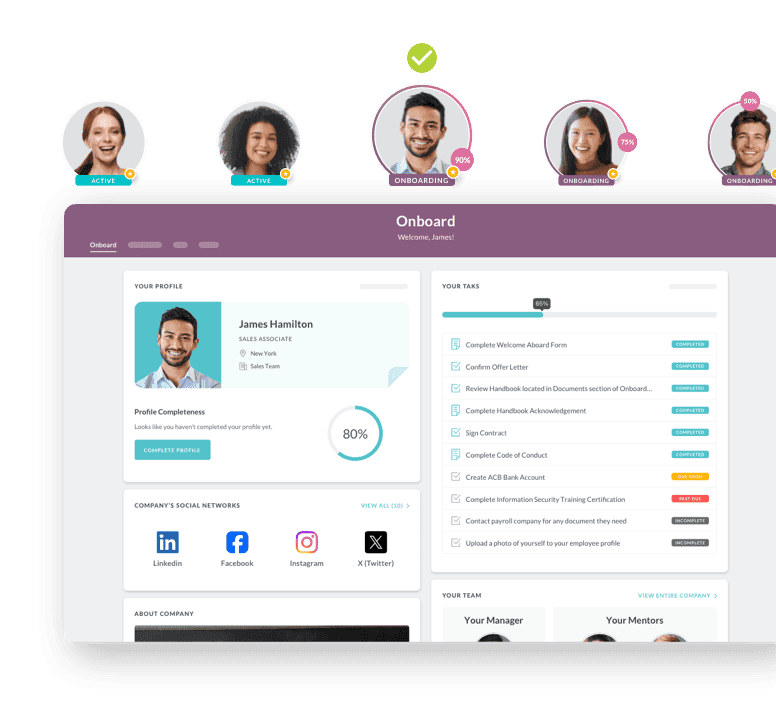
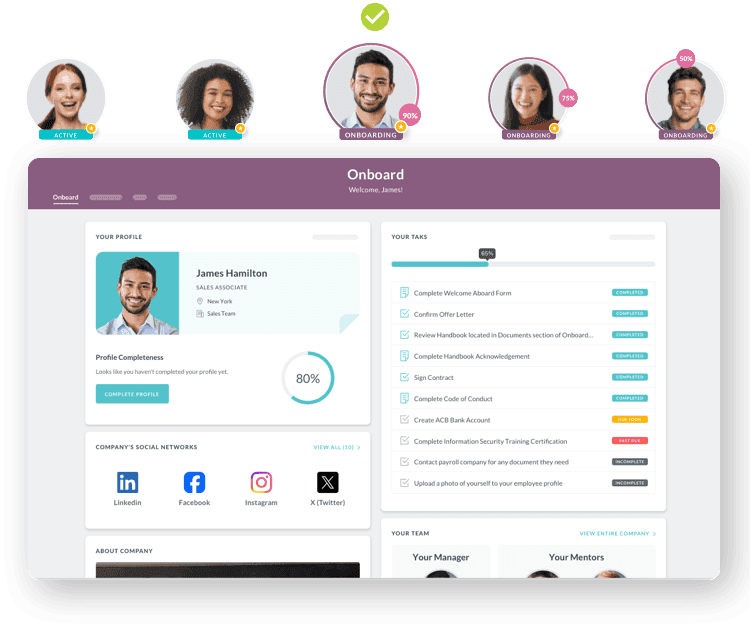
HR Cloud's Employee Onboarding Software is a powerful solution designed to streamline and enhance the onboarding process for new employees. With this software, organizations can create a seamless and engaging onboarding experience that ensures new hires feel welcomed, supported, and equipped to hit the ground running while establishing clear performance goals and career goals aligned with professional development paths.
Furthermore, HR Cloud's Employee Onboarding Software includes analytics and reporting capabilities that support the performance review process and enable performance check-ins. HR teams can track key metrics related to the onboarding process, such as completion rates, time to productivity, and employee satisfaction. These insights enable organizations to identify areas for improvement, implement a performance improvement plan when needed, and optimize their onboarding strategies over time while fostering employee growth and employee accountability.
The platform also facilitates self evaluation opportunities, quarterly check-ins, and performance feedback mechanisms that support the annual performance review cycle. By incorporating self-reflection exercises and a self-evaluation form early in the onboarding journey, new hires can better understand their employee strengths and areas for development. This approach to performance management training helps establish clear performance expectations through a performance review template and supports the performance appraisal process from the start, including self-performance review activities that empower employees to take ownership of their development.
Therefore, HR Cloud's Employee Onboarding Software is a complete solution that revolutionizes the process of welcoming new employees. It provides a user-friendly interface, customizable checklists, collaborative features, engagement tools, document management capabilities, and analytics that track employee accomplishments and performance outcomes. With these features, organizations can create a smooth and effective onboarding experience that lays the foundation for long-term employee success and happiness while supporting talent development initiatives and ensuring strong employee retention.
Download your free employee onboarding checklist
Using this checklist ensures that you are not scrambling to make the new employees feel welcomed, prepared, and set up for long-term success.
Download Now
Conclusion
In conclusion, today's recruiters have access to a wide range of essential tools that can help them streamline the recruitment process, attract more qualified candidates, and make informed hiring decisions. From applicant tracking systems and candidate sourcing tools to email finding tools, video interviewing tools, job posting and distribution tools, assessment and testing tools, and onboarding instruments, such professionals have various options.
Using these essential instruments can help recruiters save time, reduce their workload, and improve the overall effectiveness of their recruitment efforts. By leveraging technology, recruiters can focus on building meaningful relationships with candidates, evaluating their potential for success, and ensuring they have a positive experience throughout the hiring process that sets the stage for future goal achievement and workplace performance excellence.

Discover how our HR solutions streamline onboarding, boost employee engagement, and simplify HR management
Book Your Free DemoFAQ's
1. What are recruiter tools?
Recruiter tools are software platforms that help HR teams manage sourcing, screening, interviewing, hiring, and onboarding. These tools reduce manual work by helping recruiters organize candidates, post jobs, schedule interviews, evaluate skills, and move new hires into onboarding. Common recruiter tools include applicant tracking systems, candidate sourcing tools, email finders, video interviewing platforms, job distribution tools, assessment tools, and onboarding software. For growing teams, the best recruiter tools connect hiring workflows instead of forcing HR to manage separate systems.
2. What are the most important tools every recruiter should use?
The most important recruiter tools include an applicant tracking system, candidate sourcing tool, email finding tool, video interviewing platform, job posting tool, assessment platform, and onboarding software. An ATS helps manage candidates and hiring workflows. Sourcing tools help find passive candidates. Job distribution tools expand reach. Assessment tools improve hiring decisions. Onboarding software completes the hiring cycle by helping new hires finish forms, tasks, documents, and training before or after day one.
3. How does an applicant tracking system help recruiters?
An applicant tracking system helps recruiters manage job openings, candidate applications, interview stages, hiring notes, and communication in one place. Instead of tracking applicants through spreadsheets or email threads, recruiters can see where each candidate stands and what needs to happen next. HR Cloud Recruit helps teams organize hiring workflows and connect recruiting with onboarding, so accepted candidates do not get lost after the offer stage. That handoff matters because recruiting does not end when the candidate says yes.
4. What is the difference between recruiting software and onboarding software?
Recruiting software helps HR teams attract, track, screen, and hire candidates. Onboarding software helps turn hired candidates into productive employees by managing forms, documents, tasks, policy acknowledgments, and role-specific checklists. The mistake many companies make is treating these as separate processes. In reality, the candidate experience continues into onboarding. HR Cloud supports both recruiting and onboarding workflows, helping teams move from job application to new hire setup without relying on disconnected tools.
5. Why should recruiters use onboarding software after hiring?
Recruiters should use onboarding software because the hiring process does not stop after an offer is accepted. New hires still need to complete paperwork, submit documents, review policies, meet managers, and prepare for day one. Without onboarding software, HR often has to chase forms, send reminders, and manually coordinate with managers, IT, and payroll. HR Cloud Onboard helps automate these steps with custom checklists, document collection, task reminders, and mobile-friendly workflows.
6. What recruiter tools help improve candidate experience?
Recruiter tools that improve candidate experience include applicant tracking systems, video interviewing tools, automated scheduling tools, communication platforms, and onboarding software. Candidates expect clear communication, fast follow-ups, and a simple hiring process. If your tools create delays or confusion, top candidates move on. HR Cloud helps improve the post-offer experience by giving new hires a guided onboarding journey with tasks, forms, documents, and reminders in one connected platform.I
7. What should companies look for when choosing recruiter tools?
Companies should choose recruiter tools that reduce manual work, improve visibility, support collaboration, and connect with the rest of the employee lifecycle. A good recruiting stack should help HR post jobs, track candidates, communicate clearly, evaluate fit, and onboard new hires without duplicate data entry. Avoid tools that solve one problem but create another handoff. HR Cloud is useful for teams that want recruiting and onboarding workflows to work together instead of living in separate systems.
8. Does HR Cloud offer recruiter tools for hiring and onboarding?
Yes. HR Cloud offers recruiting and onboarding tools that help HR teams manage the hiring journey from candidate tracking to new hire setup. HR Cloud Recruit supports recruiting workflows, while HR Cloud Onboard helps teams automate forms, checklists, document collection, policy acknowledgments, and task reminders. This makes HR Cloud a strong option for companies that want more than a standalone ATS. It helps connect recruiting, onboarding, and employee engagement in one HR platform.
About the author

Keep Reading


Like What You Hear?
We’d love to chat with you more about how HR Cloud® can support your business’s HR needs.
Book Your Free Demo