
- 1. Employee and Team Spotlight
- 2. Executive Leadership Updates
- 3. Interactive Polls, Quizzes, and Engagement
- 4. Wellness Tips and Resources
- 5. Company Culture Highlights
- 6. Workplace and Project Updates
- 7. Learning and Development Opportunities
- 8. Celebrations and Milestones
- 9. Anonymous Feedback and Q&A
- 10. Behind-the-Scenes Department Spotlights


What separates an internal newsletter employees actually read from one that gets deleted in three seconds?
The answer isn't design or send frequency — it's content strategy; when newsletters consistently deliver recognition, transparency, and genuine value, they become something employees look forward to rather than filter out, and that shift directly impacts engagement in a measurable way.
Why does this matter so much right now?
Gallup found that U.S. employee engagement hit an 11-year low in Q1 2024, with only 30% of workers engaged at work, which means the internal communication channels you already have — including your newsletter — are carrying more strategic weight than ever before.
So what kinds of content actually move the needle?
This article breaks down ten internal newsletter ideas that go well beyond company announcements — from anonymous Q&A sections that create psychological safety to behind-the-scenes department spotlights that break down silos — giving your team a practical playbook to build newsletters worth opening.
If not, you're missing out on a powerful way to improve internal communications, boost employee engagement, and drive productivity across your workforce. Employee engagement in the U.S. hit an 11-year low in Q1 2024, with only 30% of employees engaged at work, making strategic internal communication more critical than ever.
Maybe you're already sending corporate newsletters but need fresh ideas to break through inbox clutter and capture employee attention. This article delivers ten proven employee newsletter ideas to transform your internal company communications from overlooked to essential reading.
First, let's examine why internal newsletters remain one of the most effective tools in your HR communication arsenal.
The Strategic Benefits of Internal Employee Newsletters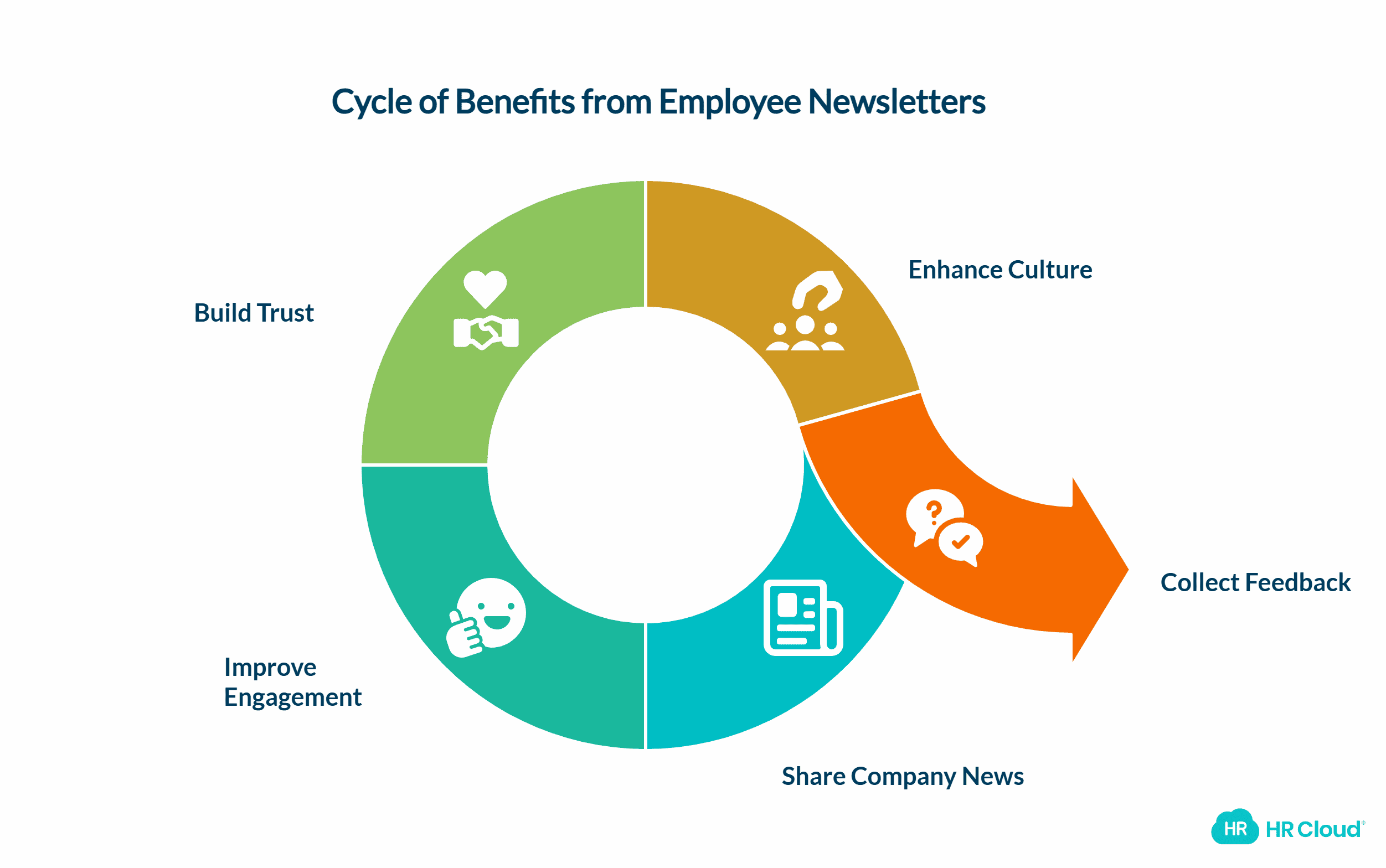
Company newsletters serve as your direct channel to keep team members informed, aligned, and engaged. Unlike scattered emails or outdated bulletin boards, well-designed employee newsletters consolidate the latest company news, updates, achievements, and culture-building content into a single, digestible format.
Internal company newsletters drive transparency about business developments, strengthen employee engagement and morale, and align workforce efforts with strategic company goals. When executed effectively, they transform one-way announcements into opportunities for dialogue, recognition, and community building.
Low engagement costs the global economy $8.8 trillion annually and accounts for 9% of global GDP. Organizations that prioritize internal communications through regular newsletters see measurably higher engagement, retention, and performance.
Core Benefits Employee Newsletters Deliver:
Minimize Communication Overload — Consolidate information into scheduled, expected touchpoints instead of constant email interruptions that employees overlook or delete.
Elevate Employee Morale — Share wins, celebrate achievements, and reinforce what makes your organization special. Recognition delivered through newsletters reaches wider audiences than private acknowledgments.
Strengthen Company Culture — Consistently communicate company values, highlight culture champions, and demonstrate how daily work connects to organizational mission.
Enable Employee Recognition — Spotlight individuals and teams who embody company values. Employee recognition programs integrated into newsletters amplify appreciation across the organization.
Gather Employee Feedback — Embed pulse surveys, polls, and feedback mechanisms directly in newsletter content to understand employee sentiment and priorities.
Facilitate Knowledge Sharing — Break down departmental silos by showcasing work across teams, sharing best practices, and connecting employees with expertise throughout the organization.
HR Cloud's Workmates platform makes creating and distributing engaging internal newsletters effortless through intuitive design tools, targeted distribution channels, and built-in analytics to measure impact.
Many HR teams recognize these benefits but struggle with content ideation, design consistency, or technical execution. That's where strategic planning and the right technology platform make all the difference.
Ten Creative Internal Newsletter Ideas That Drive Engagement
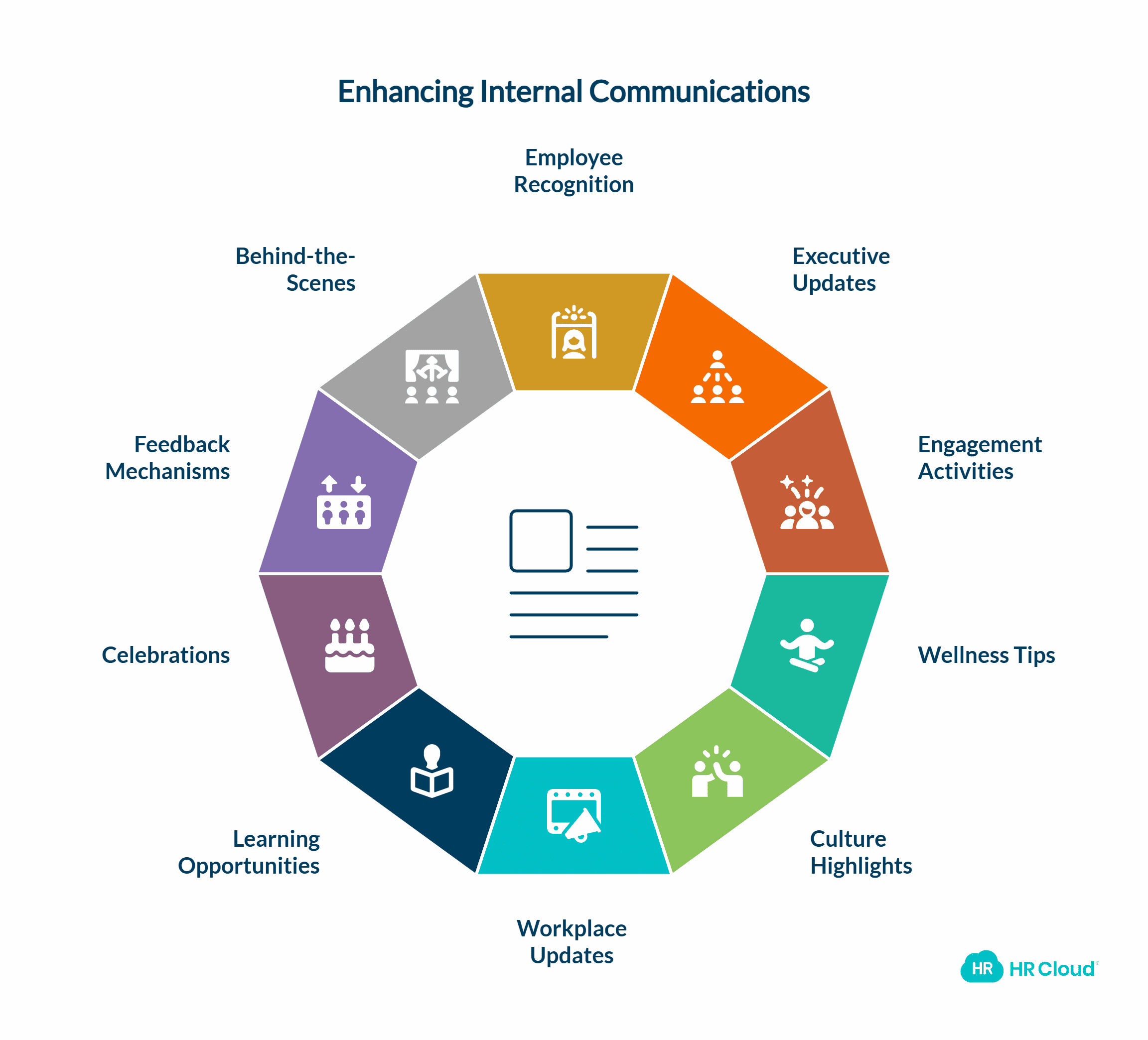
These ten employee newsletter ideas work as standalone concepts or can be combined to create comprehensive monthly communications. Each addresses specific engagement objectives while providing practical value employees actually want to read.
1. Employee and Team Spotlight
Recognize employees who exceeded expectations, demonstrated company values, or went above and beyond. Employee spotlights personalize your organization and give colleagues across departments faces and stories to connect with.
Feature individual contributors or entire teams who achieved project milestones, solved complex challenges, or supported colleagues during difficult periods. Include brief Q&A format interviews, "day in the life" narratives, or peer nominations explaining what makes featured employees exceptional.
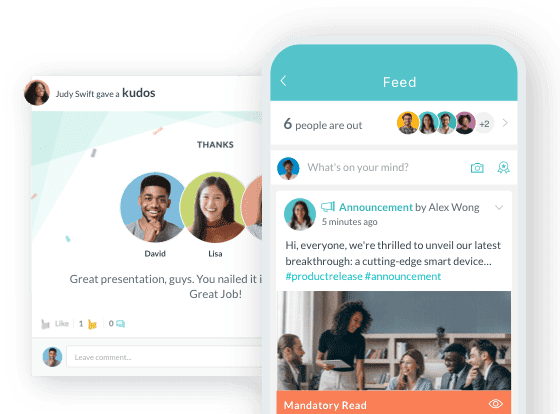
Workmates' recognition features let you seamlessly integrate kudos, badges, and peer-to-peer recognition directly into newsletter content, creating a continuous culture of appreciation.
2. Executive Leadership Updates
Give different executive team members rotating newsletter space to share strategic updates, company performance, organizational changes, or industry insights. This direct communication channel builds trust and transparency.
Structure executive updates around specific themes: quarterly results, new product launches, market positioning, competitive landscape, or vision for upcoming initiatives. Keep tone conversational and authentic rather than overly corporate.
CEO commentary, CFO financial breakdowns, or CTO technology roadmaps give employees context for daily work and demonstrate leadership accessibility. Include clear paths for employees to ask follow-up questions or provide input on shared strategies.
3. Interactive Polls, Quizzes, and Engagement
Break up information-heavy content with interactive elements that invite participation. Polls about workplace preferences, trivia about company history, or pulse checks on current initiatives transform passive readers into active contributors.
Examples include: preferred lunch options for upcoming team events, employee wellness priorities, professional development interests, or fun "get to know you" questions that build connections across distributed teams.
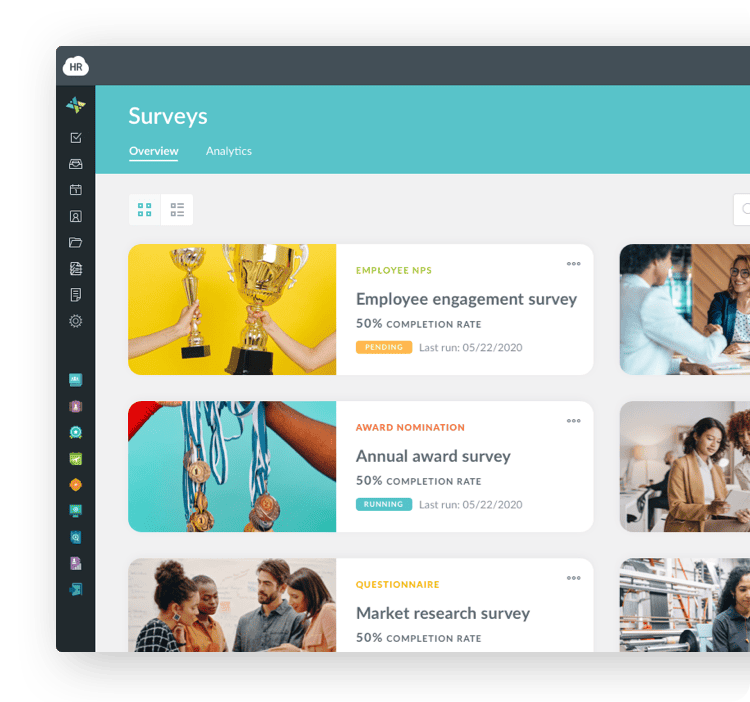
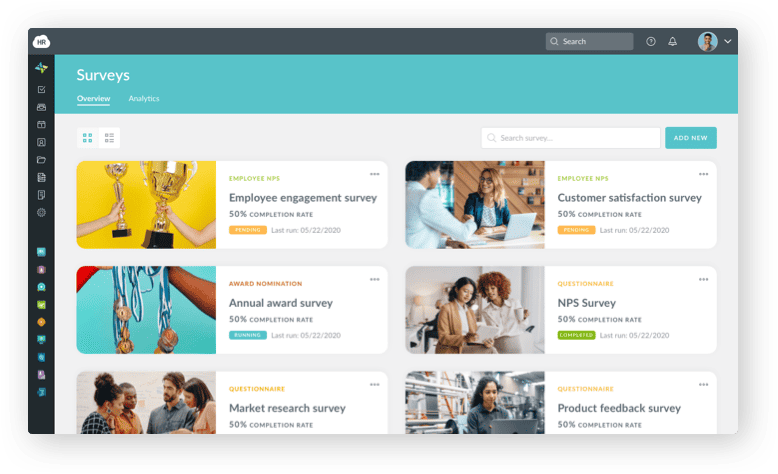
Workmates surveys and polls embed directly into newsletter feeds with one-click participation and real-time results visible to all employees, creating shared experiences and data-driven insights.
Always close the loop by sharing poll results in subsequent newsletters along with actions taken based on employee input. This demonstrates that feedback drives decisions, encouraging future participation.
4. Wellness Tips and Resources
89% of employees who work for companies with wellness programs are engaged and happy with their jobs. Newsletter wellness content shows organizational commitment to employee wellbeing beyond benefits brochures.
Share practical, actionable wellness advice: nutrition tips for busy professionals, desk stretches for remote workers, stress management techniques, sleep hygiene best practices, or financial wellness resources. Rotate focus across physical health, mental wellbeing, financial fitness, and social connection.
Feature employee wellness success stories, promote available EAP resources, highlight fitness challenges or step competitions, and provide quick wins employees can implement immediately. Link to comprehensive wellness program details in your company intranet or benefits portal.
Wellness content demonstrates authentic care for whole-person employee experience, particularly valuable for frontline workers, remote employees, and those managing work-life integration challenges.
5. Company Culture Highlights
Translate abstract company values into concrete examples by showcasing employees who recently embodied your cultural principles. Real stories create emotional connection and provide behavioral models.
If "Innovation" is a core value, feature an employee who proposed a process improvement that saved time or resources. If "Collaboration" matters, highlight cross-functional project success. Cultural highlights make values tangible rather than aspirational.
This content reinforces workplace culture with authentic examples, fostering community and encouraging employees to align behavior with organizational principles. Include diversity and inclusion initiatives, ERG spotlights, and cultural celebrations that demonstrate commitment to belonging.
Internal communication tools like Workmates make sharing culture content effortless through dedicated channels for different employee groups, announcement feeds with acknowledgment tracking, and mobile-accessible content for distributed workforces.
6. Workplace and Project Updates
Provide transparency about important organizational changes, project milestones, strategic initiatives, or business developments. Regular updates keep employees informed and reduce anxiety about change.
Examples include: office relocation timelines and FAQs, progress toward sales targets or company OKRs, new product launch preparations, policy changes affecting employees, client wins, or expansion into new markets.
For remote workers, include updates on virtual collaboration tools, distributed team best practices, or remote-first policy evolution. Structure updates with clear "what's changing," "why it matters," and "what to expect next" sections.
Transparency about challenges alongside successes builds trust. Acknowledge when initiatives fall short, explain lessons learned, and outline adjusted approaches. Employees respect authentic communication more than glossy corporate messaging.
7. Learning and Development Opportunities
Employees supported to learn new skills are 4.2x more likely to be engaged. Newsletter learning content demonstrates investment in employee growth and career advancement.
Showcase available training programs, upcoming webinars, skill development resources, mentorship opportunities, tuition reimbursement programs, or professional certification support. Feature "skill of the month" mini-lessons, book recommendations, podcast suggestions, or online course highlights.
Profile employees who recently completed certifications or acquired new capabilities. Explain how specific skills translate to career progression within your organization. Make learning resources directly accessible through embedded links and simple enrollment processes.
Performance management and development tools integrated with newsletter distribution ensure learning opportunities reach employees most likely to benefit based on role, tenure, or career aspirations.
 — Daniella Nickerson, Human resources, Toyota

8. Celebrations and Milestones
Recognize work anniversaries, birthdays, new hires, promotions, and personal achievements. Celebration content humanizes your organization and acknowledges employees as whole people.
Go beyond name lists—include photos, brief bios for new team members, "fun facts" for milestone anniversaries, or congratulatory messages from managers and peers. Employee-generated content like pet photos, hobby spotlights, or personal stories add personality.
Announce upcoming company events, social gatherings, volunteer opportunities, or team-building activities. Provide registration links and event details directly in newsletter content.
Recognition shouldn't feel perfunctory. Workmates' automated birthday and anniversary posting ensures no milestone gets overlooked while maintaining authentic, personal tone.
9. Anonymous Feedback and Q&A
Include "Ask Me Anything" sections where employees submit questions anonymously for HR or executive leadership teams to address in subsequent newsletters. This creates psychological safety for sensitive topics.
Transparent Q&A demonstrates openness, addresses rumor mills before misinformation spreads, and shows leadership values employee concerns. Answer questions honestly, acknowledge when you don't have answers yet, and follow up when more information becomes available.
Pulse surveys embedded in newsletters provide quick sentiment checks on specific initiatives, policy changes, or workplace satisfaction. Keep surveys short (3-5 questions maximum) and share aggregated results showing how feedback influences decisions.
Consider virtual suggestion boxes for ongoing input between newsletter cycles. Workmates survey capabilities include NPS tracking, heat mapping, and sentiment analysis to identify trends requiring leadership attention.
10. Behind-the-Scenes Department Spotlights
Offer employees visibility into areas of the organization they rarely see. Behind-the-scenes content breaks down silos, builds appreciation for different roles, and helps employees understand how various functions interconnect.
Profile departments through video interviews, photo essays, infographics explaining workflows, or day-in-the-life narratives. Showcase how teams overcome challenges, collaborate across functions, or support customer success.
Video content proves especially engaging for remote workers and creates personal connections. Short (2-3 minute) department spotlights with consistent branding become anticipated series employees look forward to.
Behind-the-scenes content works particularly well for dispersed teams where employees in different locations or departments never interact. It builds organizational knowledge and reveals career path possibilities employees might not otherwise discover.
Maximizing Newsletter Impact Through Strategic Design-3.png?width=2015&height=1571&name=Advantages%20and%20Disadvantages%20of%20Intranets%20-%20visual%20selection%20(1)-3.png)
Creative content ideas matter, but execution determines whether employees actually read your newsletters. These best practices amplify impact:
Responsive Design and Mobile Optimization — Ensure newsletters display perfectly on smartphones, tablets, and desktops. 45% of job seekers use mobile devices at least daily, and your existing employees check phones even more frequently.
Compelling Subject Lines — Test different approaches: curiosity gaps, urgent updates, employee names, or benefit-driven promises. Track open rates by subject line style to understand what resonates with your audience.
Clear Calls-to-Action — Every newsletter should include specific next steps: register for events, complete surveys, nominate peers for recognition, or access new resources. Make CTAs visually distinct and mobile-friendly.
Audience Segmentation — Tailor content by department, location, role, or tenure rather than sending identical newsletters organization-wide. Relevant content drives higher engagement than generic broadcasts.
Consistent Cadence — Establish predictable schedule (weekly, bi-weekly, monthly) so employees know when to expect communications. Sporadic newsletters train employees to ignore your content.
Newsletter Templates — Develop consistent visual identity using branded templates that balance text, images, and white space. Template consistency aids scanability and recognition.
Analytics and Measurement — Track open rates, click-through rates, time spent reading, survey responses, and section engagement. Use data to refine content mix and identify what employees value most.
Workmates' comprehensive analytics reveal which newsletter content drives highest engagement, optimal send times for your workforce, and demographic patterns in content consumption, enabling continuous optimization.
User-Generated Content — Encourage employees to submit content: success stories, photos from company events, customer testimonials, or innovation ideas. Employee voices feel more authentic than HR-written corporate messaging.
Content Calendar Planning — Map newsletter themes 3-6 months ahead aligned with business calendar: open enrollment periods, performance review cycles, busy seasons, or strategic initiatives. Advance planning ensures consistent quality.
Internal Linking Strategy — Connect newsletter content to deeper resources in your company intranet, training libraries, or policy repositories. Drive traffic to valuable resources employees might not discover organically.
Accessibility Considerations — Use sufficient color contrast, alt text for images, clear heading hierarchy, and plain language to ensure newsletters work for employees with varying abilities and language proficiencies.
Newsletter Design and Distribution Best Practices
Visual Design Principles — Research shows employees process visual information 60,000 times faster than text. Incorporate infographics summarizing data, photos of real employees (not stock images), branded color schemes maintaining corporate identity, and generous white space improving readability. Use visual hierarchy through heading sizes, color contrast, and strategic bolding to guide reader attention.
Subject Line Formulas That Work — Subject lines determine whether newsletters get opened. Test these proven approaches: Urgency ("Last Chance to Register for Leadership Summit"), Curiosity ("You Won't Believe What Engineering Achieved"), Personalization ("[Name], Your Team Was Mentioned"), Value ("3 Tips to Reduce Email Overload"), and Social Proof ("Join 847 Colleagues Who Already..."). Track open rates by formula to identify what resonates with your specific audience.
Content Calendar Planning — Map newsletter themes to business calendar: January (goal-setting, benefits enrollment), February (recognition month), March (Q1 review, professional development), April (wellness month), May (summer preparation), June (mid-year check-ins), July (safety focus), August (back-to-school), September (Q3 strategy), October (open enrollment), November (gratitude, recognition), December (year in review, holiday closures). Advance planning ensures timely, relevant content.
Measurement Frameworks — Establish benchmarks for success: 40-50% open rates (vs. 20-25% for external email marketing), 10-15% click-through rates, 25-30% poll/survey participation, 90-120 second average reading time, and 5-10 voluntary employee content submissions per newsletter. Track trends over time rather than obsessing over single-issue performance.
Mobile-First Design — With 67% of employees reading newsletters on smartphones, mobile optimization is non-negotiable. Use single-column layouts adapting to any screen size, large touch targets (44x44 pixels minimum) for buttons and links, compressed images loading quickly on cellular networks, concise paragraphs (3-4 sentences), and preview text optimized for mobile email clients showing first 40-50 characters.
Transform Internal Communications with HR Cloud Workmates
Engaging internal employee newsletters represent powerful opportunities to strengthen workplace communication, align teams with strategic priorities, and build culture of recognition and transparency.
By customizing these ten employee newsletter ideas to reflect your organization's personality and priorities, you create communication resources employees genuinely anticipate rather than ignore. The right content combined with thoughtful execution transforms newsletters from corporate obligation into competitive advantage.
HR Cloud's Workmates platform provides everything needed to design, distribute, and measure internal newsletters that drive measurable results:
-
Intuitive drag-and-drop newsletter builders requiring zero technical expertise
-
Customizable templates maintaining brand consistency across communications
-
Targeted distribution via email, mobile push notifications, or in-app feeds
-
Embedded surveys, polls, and feedback collection with real-time results
-
Recognition and rewards integrated seamlessly into content
-
Comprehensive analytics revealing exactly what employees read and value
-
Mobile-first design reaching frontline workers wherever they work
See how Workmates transforms internal communications for organizations ranging from 100 to 45,000 employees across distributed, mobile, and hybrid workforces.
 Experience how Workmates can transform communication and strengthen culture—all in one powerful platform
Frequently Asked Questions
What are internal employee newsletters?
Internal employee newsletters are regular digital communications sent within organizations to keep employees informed, engaged, and connected to company culture, goals, and developments. Effective newsletters balance company updates with recognition, learning resources, and opportunities for employee input.
What are the benefits of internal employee newsletters?
Internal newsletters improve information distribution, elevate employee engagement and morale, strengthen company culture, provide recognition platforms, gather employee feedback, facilitate cross-departmental knowledge sharing, and reduce reliance on scattered emails that employees overlook. Research from SHRM shows that effective internal communications directly correlate with higher employee engagement and organizational performance.
What are common challenges with internal newsletters?
Organizations frequently struggle with content ideation, maintaining consistent publishing schedules, designing mobile-friendly formats, balancing information density with readability, measuring actual engagement beyond open rates, and personalizing content for diverse employee populations.
How often should companies send internal newsletters?
Optimal frequency depends on organization size, information volume, and employee preferences. Most successful programs send weekly digests for large organizations, bi-weekly updates for mid-sized companies, or monthly comprehensive newsletters for smaller teams. Consistency matters more than specific frequency—establish a predictable schedule employees can rely on.
Can technology improve newsletter creation and distribution?
Yes. Modern platforms like HR Cloud's Workmates dramatically simplify newsletter design through templates and drag-and-drop builders, enable targeted distribution to specific employee segments, embed interactive elements like surveys and recognition, provide mobile-optimized delivery, and measure engagement through comprehensive analytics.
How do you measure newsletter success?
Track quantitative metrics including open rates, click-through rates, time spent reading, poll participation, and link clicks alongside qualitative indicators like employee feedback, voluntary content submissions, recognition activity, and anecdotal reports of improved communication flow. According to industry benchmarks, successful internal newsletters achieve 40-50% open rates and 10-15% click-through rates.

Keep Reading
New Manager Training Without a Formal L&D Program
Your best individual contributor just got promoted. They know the work cold. They know
The Manager's Role in Employee Retention: What the 2026 Data Shows
If your organization is spending money on engagement surveys, benefits upgrades, and
How to Use AI in HR: Moving From Drafts to Trackable Workflows Across the Full Lifecycle
You're an HR director at a 400-person company. You have three open requisitions, a