
Gamification is HR's Best Friend-Why Should Employees Play Games?

Gaming at work? It's not just acceptable anymore—it's strategic. As workplace dynamics shift toward flexible, hybrid environments, gamification has emerged as a powerful driver of employee engagement, productivity, and retention. Here's how incorporating game mechanics into your HR strategy can revolutionize your workplace culture.
What is Gamification in the Workplace?
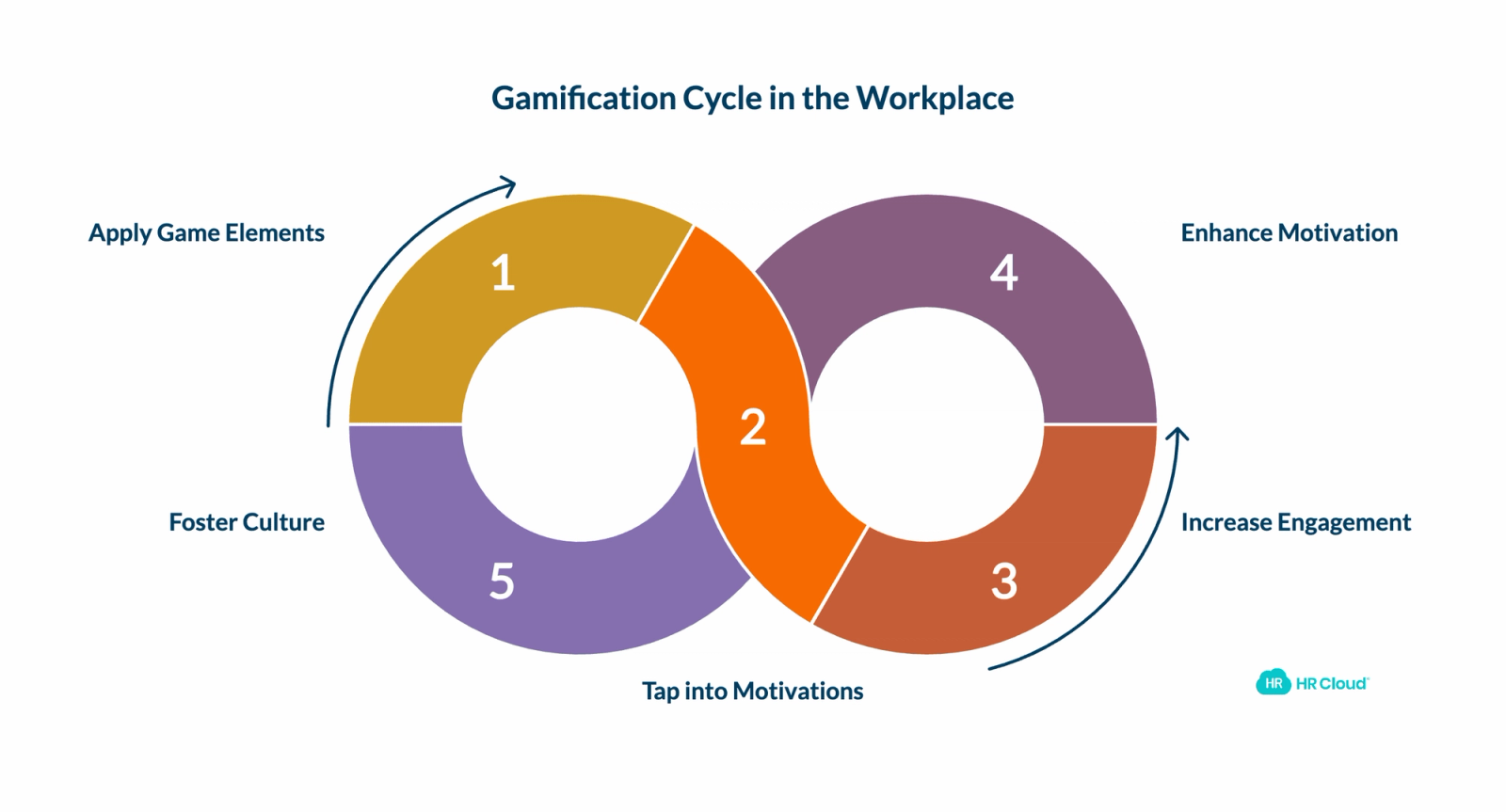
Workplace gamification applies game design elements—like points, badges, leaderboards, and challenges—to non-game contexts such as training, performance management, and employee recognition. Rather than turning work into literal games, gamification taps into fundamental human motivations: achievement, competition, collaboration, and recognition.
According to SHRM's 2024 research, implementing gamification strategies can increase employee engagement by up to 48%, while 83% of employees who receive gamified training report feeling more motivated compared to traditional methods. The global gamification market, valued at $15.43 billion in 2024, is projected to reach $48.72 billion by 2029, with the HR sector leading adoption at a 27.8% compound annual growth rate.
Modern gamification platforms like Workmates by HR Cloud enable organizations to seamlessly integrate recognition, rewards, and challenges into daily workflows—creating a culture where engagement becomes natural rather than forced.
The Business Case: Why Employee Gamification Drives Results
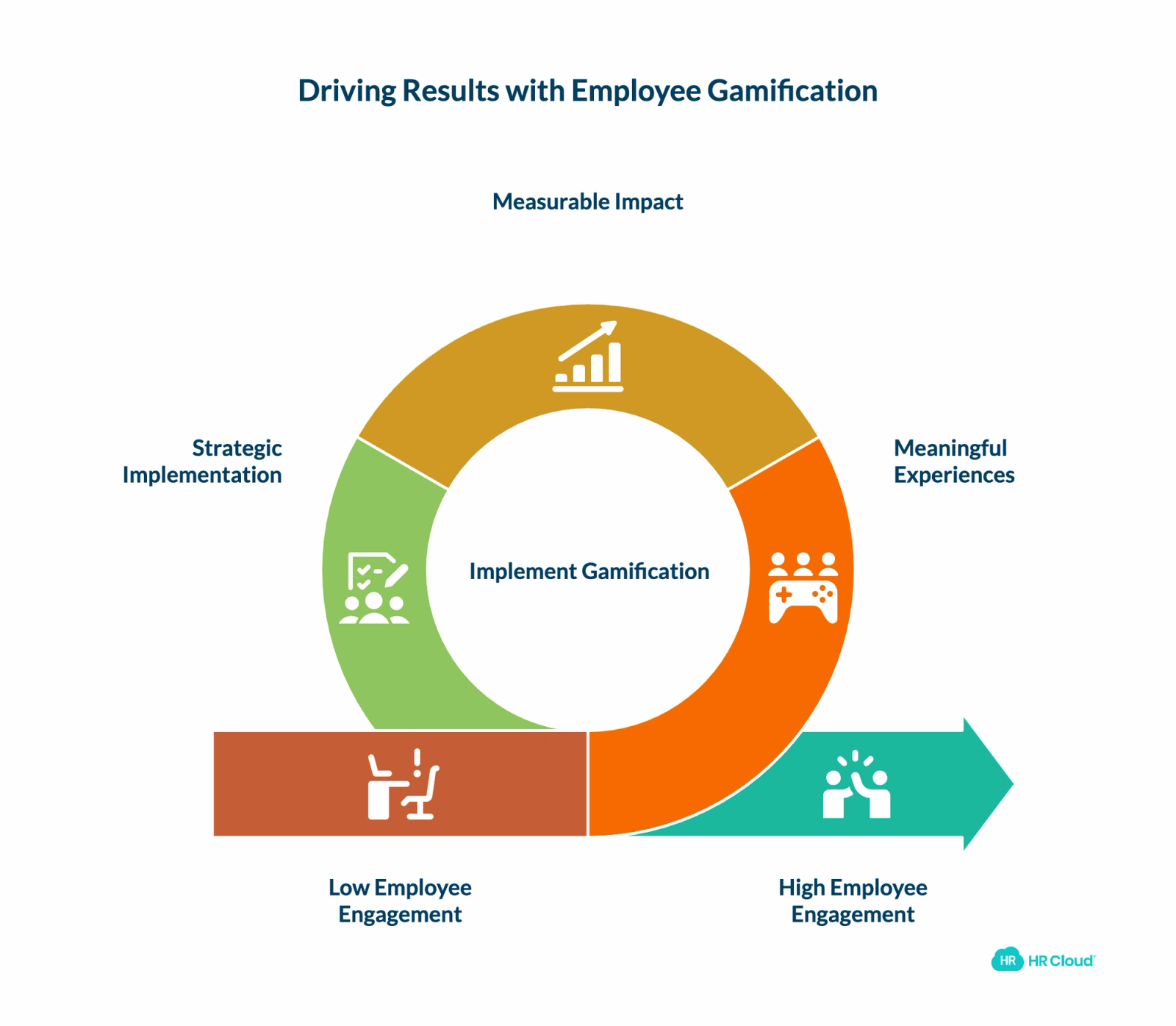
Traditional engagement tactics often fall flat because they don't address intrinsic motivation. Gamification succeeds by creating meaningful experiences that make employees genuinely want to participate.
Measurable Impact on Key Metrics:
Research from Gallup's State of the Global Workplace 2024 reveals that organizations using gamification strategies report:
- 50% increase in productivity through gamified workflows and goal-tracking
- 89% of employees feel more productive when working in gamified environments
- 417% increase in platform engagement (Ford's LMS gamification case study)
- 90% completion rates for gamified e-learning versus 25% for traditional training
- 30% reduction in early employee turnover through engaging onboarding experiences
Companies like Google, Microsoft, and Telus have leveraged gamification to achieve remarkable results. Telus improved their engagement rate from 54% to 87% through strategic implementation of role-playing games and recognition systems, while Deloitte's gamified onboarding reduced time-to-productivity and created stronger team connections among new hires.
Organizations can track these outcomes through comprehensive analytics platforms that measure engagement patterns, recognition frequency, and participation rates in real-time.
Core Benefits of Workplace Gamification
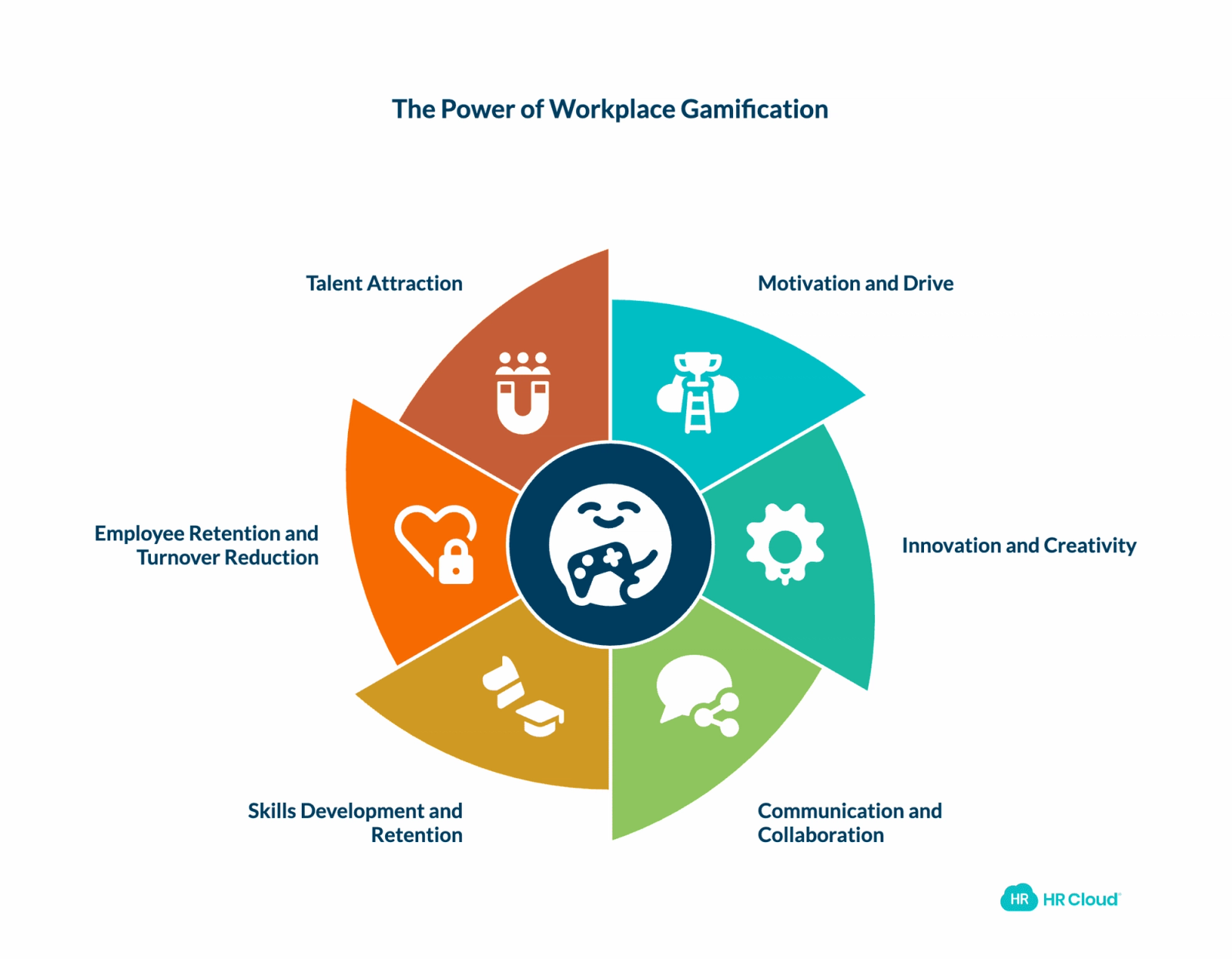
1. Amplify Employee Motivation and Drive
Gamification activates the brain's reward pathways, creating positive reinforcement loops that traditional management approaches struggle to replicate. When employees earn points, unlock badges, or see their names rise on leaderboards, dopamine responses trigger genuine satisfaction and motivation to continue performing.
According to Harvard Business Review's research, gamification creates sustained motivation by providing:
- Immediate feedback on performance
- Clear progress visualization toward goals
- Public recognition for achievements
- Meaningful rewards aligned with personal preferences
Recognition software enables peers and managers to acknowledge contributions instantly, creating a continuous recognition culture rather than relying solely on annual reviews.

2. Foster Innovation and Creative Problem-Solving
Game mechanics encourage experimental thinking and reduce fear of failure. When employees know they can "try again" or "level up" their approach, they're more willing to propose innovative solutions and think beyond conventional boundaries.
Tech giants like Google and Microsoft dedicate significant resources to gamified innovation programs where employees can pitch ideas, earn points for participation, and see their concepts evaluated through structured game frameworks. This approach has led to breakthrough products and process improvements that might never have emerged through traditional suggestion boxes.
3. Strengthen Communication and Collaboration
Gamification naturally brings teams together around shared objectives. Whether competing for the top spot on a sales leaderboard or collaborating to complete a team challenge, game mechanics create conversation starters and relationship-building opportunities.
Team communication channels integrated with gamification features allow employees to celebrate wins together, support each other's progress, and build camaraderie across departments and locations. This proves particularly valuable for distributed workforces where spontaneous water cooler conversations don't naturally occur.
4. Enhance Skills Development and Knowledge Retention
Gamified training transforms learning from a mandatory checkbox into an engaging experience. Breaking complex skills into achievable levels, providing instant feedback, and celebrating milestones keeps learners engaged and significantly improves information retention.
Studies show that gamified learning experiences increase knowledge retention rates by 90% compared to traditional methods. Employees remember what they've practiced in engaging scenarios far better than information passively absorbed from presentations or manuals.
5. Improve Employee Retention and Reduce Turnover
According to McKinsey research, 30% of employees who left jobs within the first six months stated that more recognition for their contributions would have encouraged them to stay longer. Gamification addresses this directly by making recognition frequent, visible, and tied to meaningful rewards.
Organizations using Company Challenges report stronger employee connections to company culture and values, reducing early-stage attrition and improving long-term retention rates.
6. Attract Next-Generation Talent
Millennials and Gen Z workers—who now comprise over 50% of the global workforce—grew up with games and digital rewards systems. They expect workplaces to incorporate similar engaging, technology-enabled experiences. According to industry surveys, 78% of job applicants view companies with gamified recruitment processes as more desirable employers.
Strategic Application Areas for HR Gamification
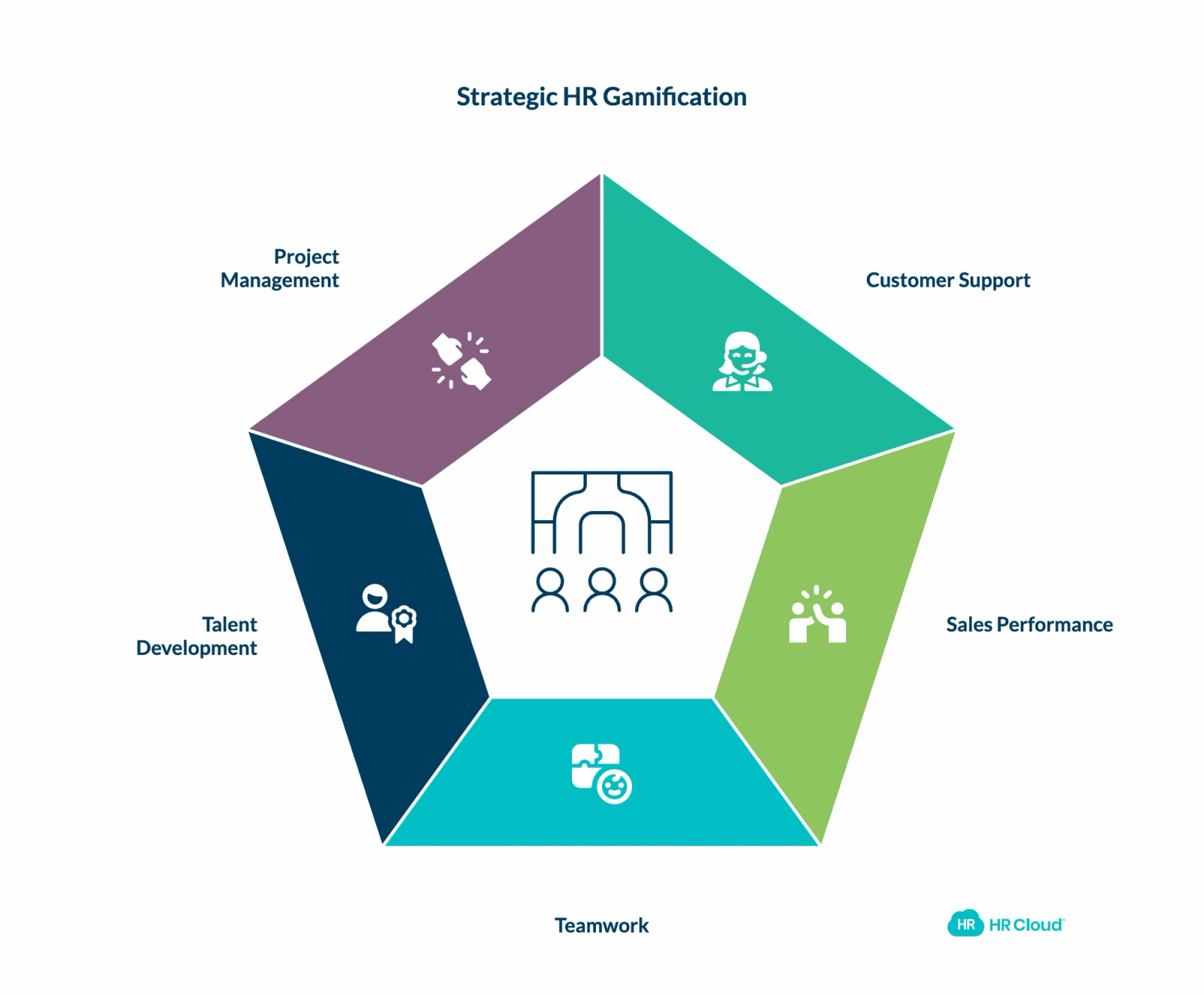
Customer Support and Service Excellence
Transform customer service teams from reactive problem-solvers to proactive engagement champions. Award points for:
- First-call resolution rates
- Customer satisfaction scores
- Knowledge base contributions
- Peer assistance and mentoring
Create leaderboards that highlight top performers and reward exceptional service with meaningful incentives. This approach shifts focus from handling volume to delivering quality experiences.
Sales Performance and Revenue Growth
Sales teams naturally understand competition, making gamification a perfect fit. Modern sales gamification extends beyond traditional quota boards to include:
- Real-time deal progression tracking
- Team collaboration bonuses
- Customer relationship milestones
- Cross-selling and upselling achievements
- Mentor recognition for supporting newer team members
The key is balancing individual competition with team collaboration to avoid creating toxic hyper-competitive environments.
Cross-Functional Teamwork and Knowledge Sharing
Break down silos by gamifying cross-departmental collaboration. Award points when:
- Marketing helps sales close deals
- Engineering supports customer success
- Operations streamlines processes for other teams
- Employees share best practices across departments
Companies like Ford saw dramatic increases in internal platform usage after gamifying knowledge sharing and collaborative problem-solving.
Human Resources and Talent Development
HR departments can leverage gamification across the entire employee lifecycle:
Recruitment: Create interactive assessments and virtual office tours that give candidates realistic job previews while making the application process more engaging.
Onboarding: Guide new hires through essential training using automated onboarding software with achievement milestones, welcome challenges, and connection-building activities.
Performance Management: Replace annual reviews with continuous feedback systems using performance management tools that track goal progress, celebrate achievements, and identify development opportunities.
Learning and Development: Transform compliance training and skills development into engaging experiences with levels, badges, and certification pathways.
Project Management and Deadline Achievement
Help teams deliver projects on time through milestone celebrations, progress visualization, and achievement recognition. Gamification reduces the stress of ambitious deadlines by:
- Breaking large projects into achievable sprints
- Celebrating incremental progress
- Maintaining team morale during challenging phases
- Encouraging healthy work patterns rather than burnout
Balance is critical—monitor time tracking data to ensure gamification motivates productivity without creating unhealthy work patterns.
Practical Gamification Examples for Immediate Implementation
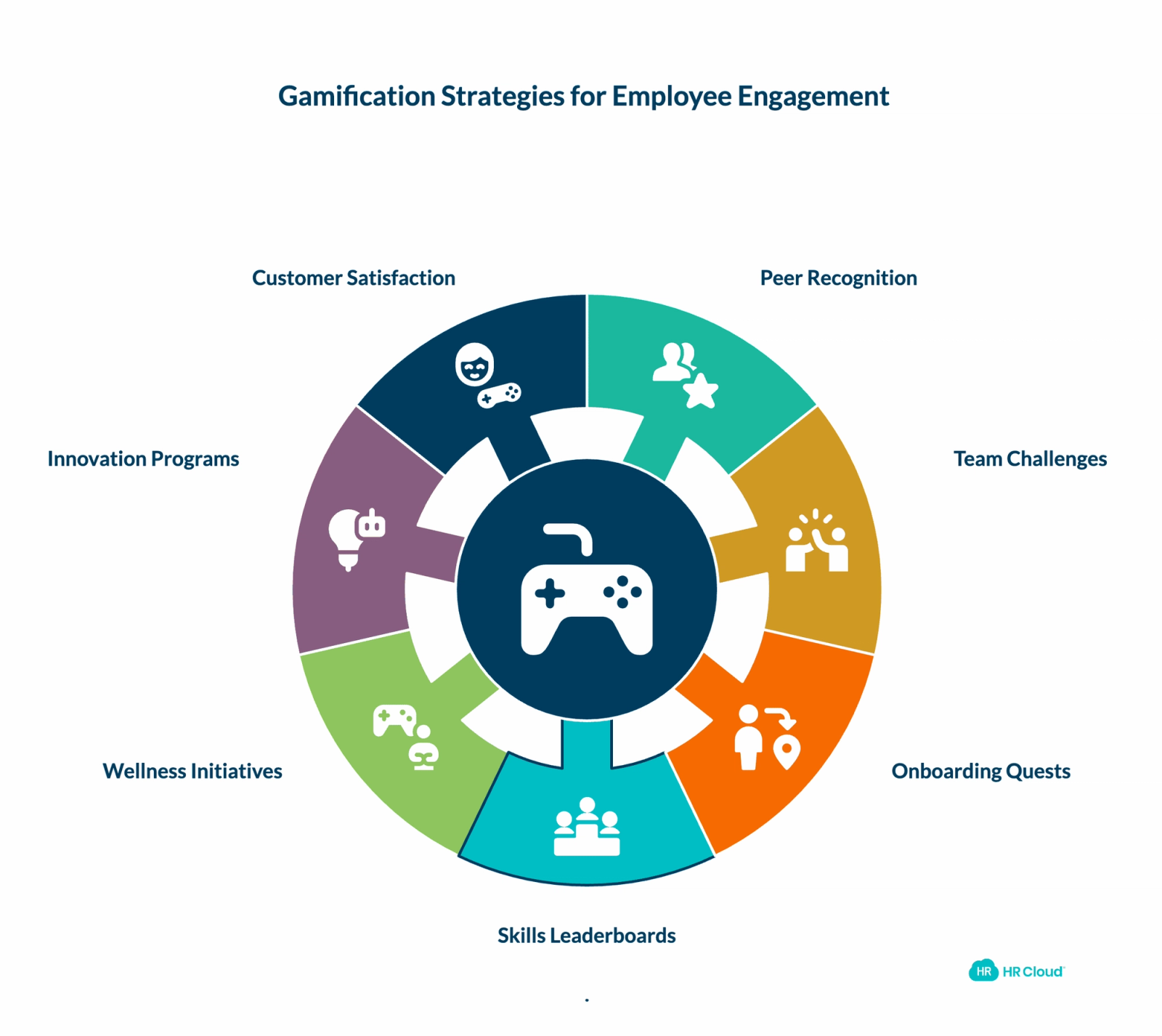
1. Peer Recognition and Kudos Systems
Implement digital recognition platforms where any employee can award kudos to colleagues who demonstrate company values, go above and beyond, or simply brighten someone's day. Make kudos visible company-wide and redeemable for meaningful rewards.
Implementation tip: Customize badges to align with your company values and culture rather than using generic awards. Employees engage more deeply when recognition feels authentic to your organization.
2. Team-Based Challenges and Competitions
Launch monthly or quarterly challenges that unite teams around shared goals:
- Wellness challenges (step counts, meditation minutes, healthy habits)
- Innovation challenges (submit process improvement ideas)
- Customer impact challenges (achieve specific satisfaction scores)
- Learning challenges (complete skill development modules)
The key is ensuring everyone can contribute regardless of role or starting skill level.
3. Onboarding Quest Journeys
Transform the overwhelming first few weeks into an engaging quest where new hires:
- Earn points for completing training modules
- Unlock badges for meeting team members
- Achieve milestones for understanding company systems
- Receive rewards for early contributions
Formapost reduced early turnover from 25% to 8% by gamifying their onboarding process, giving new postal carriers realistic job previews through game-based scenarios.
4. Skills Development Leaderboards
Create friendly competition around professional development by recognizing employees who:
- Complete certifications and training programs
- Share knowledge through presentations or documentation
- Mentor colleagues and contribute to team growth
- Earn external credentials that benefit the organization
Display progress transparently so employees can see how their development compares to peers and set personal growth goals.
5. Wellness and Work-Life Balance Initiatives
Combat burnout by gamifying healthy work habits:
- Award points for taking full lunch breaks
- Recognize employees who use time-off tracking systems appropriately
- Celebrate work-from-home setup improvements
- Encourage mindfulness or exercise challenges
This sends a clear message that the company values sustainable high performance over short-term hustle culture.
6. Innovation and Idea Submission Programs
Lower the barrier to suggesting improvements by making idea submission game-like:
- Award points simply for submitting ideas (regardless of implementation)
- Create bonus rewards for implemented suggestions
- Track idea-to-implementation rates
- Publicly celebrate innovative thinking
Google's famous "20% time" policy operates partly through gamified innovation tracking that recognizes experimental projects and creative contributions.
7. Customer Satisfaction and Quality Achievements
Make quality metrics visible and rewarding by gamifying:
- Customer satisfaction scores
- Quality assurance pass rates
- Peer review ratings
- Process compliance achievements
Balance this carefully to avoid gaming the system—focus on genuine quality improvements rather than manipulating metrics.
Critical Success Factors: Making Gamification Work
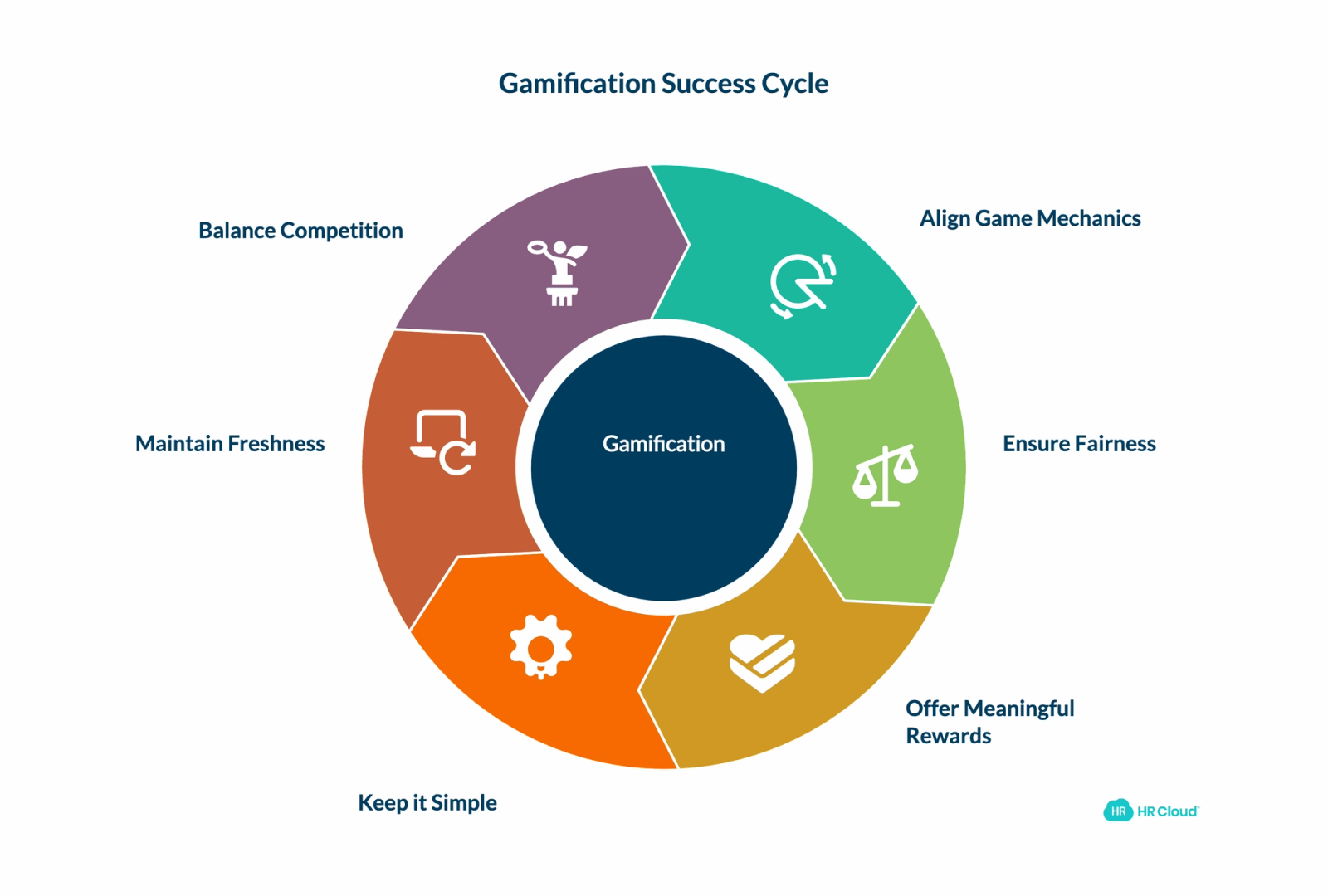
Align Game Mechanics with Business Objectives
Every game element should connect directly to meaningful business outcomes. Random badges and points feel arbitrary without clear purpose. Before implementing any gamification:
1. Define specific business objectives (reduce turnover, improve customer satisfaction, increase sales, etc.)
2. Identify behaviors that drive those outcomes
3. Design game mechanics that encourage those specific behaviors
4. Measure results against baseline performance
Ensure Fairness and Accessibility
Gamification fails when only certain employees can realistically win. Design systems where:
- Multiple paths to success exist
- Different roles and skill levels can achieve recognition
- Team collaboration balances individual competition
- Newer employees aren't permanently disadvantaged
- Intrinsic motivation complements extrinsic rewards
Make Rewards Meaningful and Personal
Generic gift cards or company swag don't motivate everyone equally. The best rewards systems offer:
- Choice in reward selection
- Mix of tangible and experiential options
- Immediate small wins plus larger long-term goals
- Recognition value (public acknowledgment) alongside material rewards
Modern employee rewards platforms provide extensive reward catalogs so employees can choose incentives aligned with their personal preferences.
Keep it Simple and Intuitive
Overly complex systems confuse employees and reduce participation. The best gamification feels natural and requires minimal explanation:
- Clear rules and objectives
- Transparent point values and reward thresholds
- Easy participation through existing workflows
- Minimal administrative burden
If employees need extensive training to understand your gamification system, it's too complicated.
Maintain Freshness Through Evolution
Even the most engaging games become stale over time. Successful gamification programs evolve by:
- Rotating challenge types and themes
- Introducing seasonal competitions
- Updating reward options based on employee feedback
- Expanding game elements as adoption grows
- Retiring mechanics that no longer drive engagement
Balance Competition with Collaboration
Poorly designed gamification can create toxic competitive environments. Prevent this by:
- Rewarding team achievements alongside individual performance
- Recognizing supporters and collaborators, not just top performers
- Celebrating progress and effort, not just final outcomes
- Creating multiple leaderboards so different strengths shine
- Monitoring for negative competitive behaviors
Common Pitfalls to Avoid
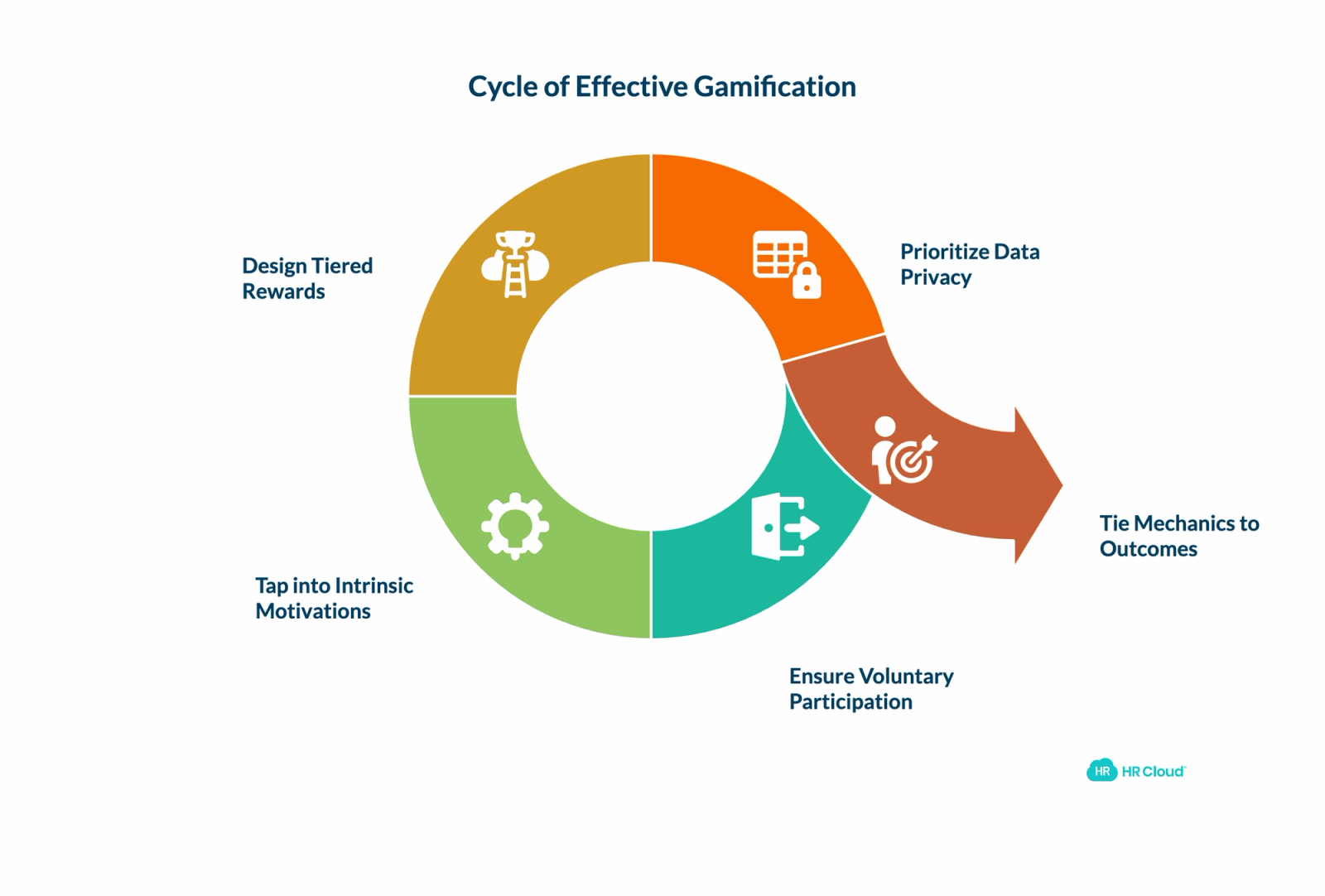
1. Mandatory Participation Never force employees to participate in gamification programs. This creates resentment and defeats the purpose of making work more engaging. Make systems opt-in or design them so thoughtfully that voluntary participation is high.
2. Focusing Solely on Extrinsic Rewards While points and prizes matter, the most sustainable gamification taps into intrinsic motivations: autonomy, mastery, purpose, and connection. If employees only participate for rewards, engagement disappears when incentives end.
3. Creating Winner-Takes-All Systems When only the top performer receives recognition, 99% of employees feel demotivated. Design tiered rewards and multiple recognition categories so many employees experience success.
4. Neglecting Data Privacy and Ethics Tracking employee activities through gamification requires transparency and consent. Clearly communicate what data you're collecting, how it's used, and who can see it. Never use gamification data for punitive purposes.
5. Gaming the System Without Substance Employees quickly learn to manipulate poorly designed systems. If you reward activity without quality, expect inflated numbers but diminished real performance. Tie game mechanics to meaningful outcomes, not just easy-to-game metrics.
Implementing Gamification: A Practical Framework
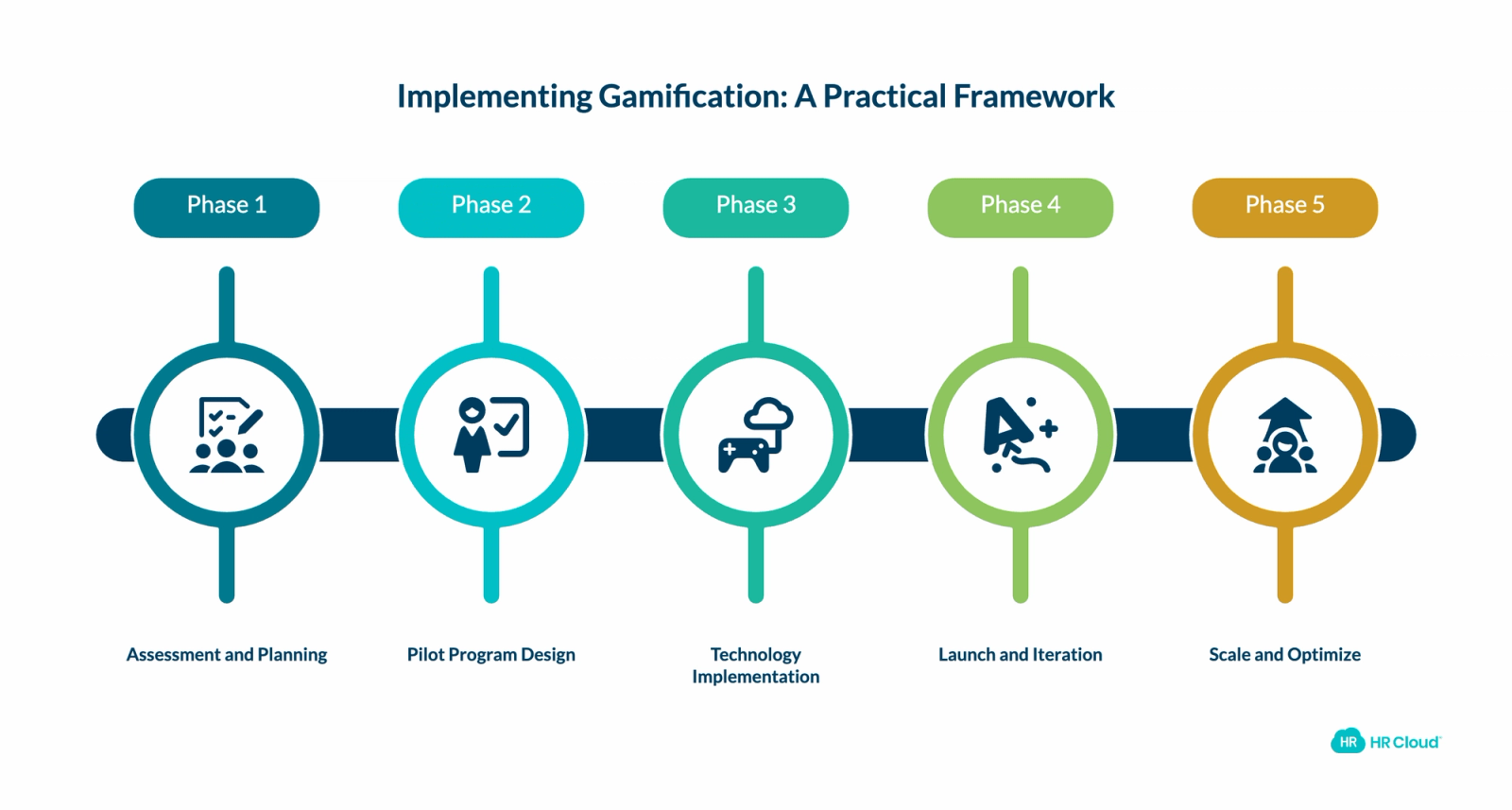
Phase 1: Assessment and Planning
- Survey employees about current engagement levels and pain points
- Identify specific business objectives gamification should address
- Assess your technology infrastructure and integration needs
- Research platforms and solutions aligned with your requirements
- Secure executive sponsorship and budget allocation
Phase 2: Pilot Program Design
- Select one department or team for initial implementation
- Design simple, focused game mechanics around 2-3 key behaviors
- Choose meaningful rewards within budget constraints
- Create clear communication about program objectives and participation
- Establish baseline metrics for measuring success
Phase 3: Technology Implementation
- Deploy gamification platform with proper integrations
- Train administrators and champions on system management
- Customize branding and game elements to match company culture
- Test thoroughly before full launch
- Create support documentation and resources
“One of the biggest benefits from using Workmates platform is that our associates are more connected to both the company and each other. Associates can comment, react, and provide feedback directly through the platform from their smartphone or desktop devices.”

— Daniella Nickerson, Human resources

Phase 4: Launch and Iteration
- Announce program with enthusiasm and clear explanation
- Recognize early participants and champions
- Monitor participation rates and engagement metrics
- Gather feedback through surveys and focus groups
- Make adjustments based on real usage patterns
Phase 5: Scale and Optimize
- Expand successful elements to additional teams
- Introduce more sophisticated game mechanics as adoption grows
- Regularly refresh challenges and reward options
- Share success stories and celebrate impact
- Continue measuring against business objectives
The Future of Workplace Gamification
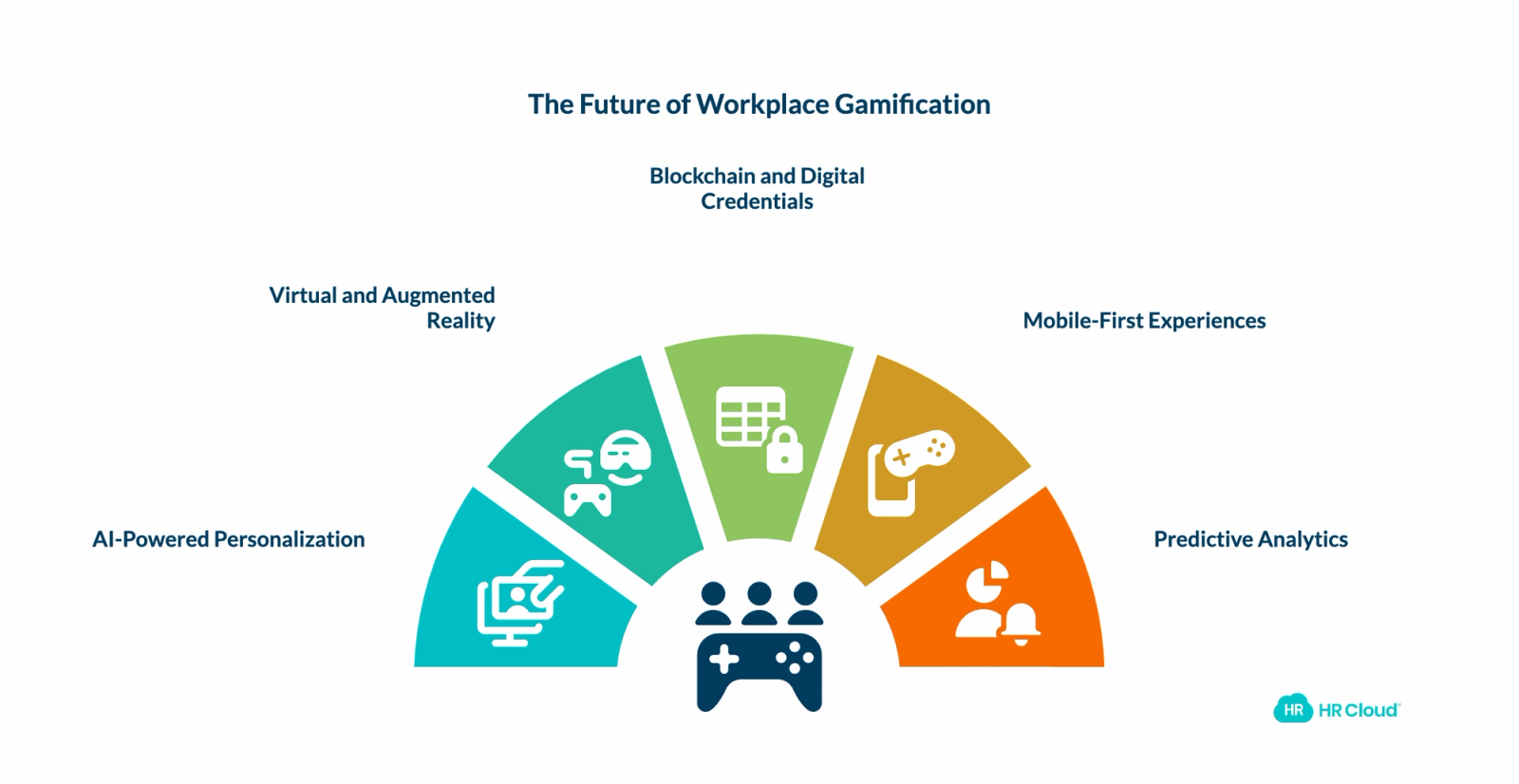
As technology evolves, so do gamification possibilities. Emerging trends include:
AI-Powered Personalization: Artificial intelligence can tailor game experiences to individual preferences, skill levels, and motivations, creating personalized engagement journeys at scale.
Virtual and Augmented Reality: Immersive training simulations and virtual team-building experiences bring gamification into three-dimensional spaces, particularly valuable for distributed workforces.
Blockchain and Digital Credentials: Portable digital badges and credentials that employees own and carry across employers, creating lifelong achievement records.
Mobile-First Experiences: As more workforces become distributed and deskless, mobile-optimized gamification through employee mobile apps becomes essential for reaching frontline workers.
Predictive Analytics: Advanced analytics will identify at-risk employees before disengagement becomes obvious, enabling proactive intervention through targeted gamification.
Transform Your Workplace Culture Through Strategic Gamification
Gamification isn't about making work frivolous—it's about making meaningful work more engaging. When implemented thoughtfully, game mechanics tap into fundamental human psychology to create workplaces where people genuinely want to contribute, grow, and succeed.
The most successful organizations don't view gamification as a standalone initiative but as an integral component of their employee experience strategy. By combining recognition, development, collaboration, and achievement into cohesive systems, companies create cultures where engagement becomes self-sustaining rather than requiring constant management intervention.
Ready to transform your workplace through strategic gamification? Explore how Workmates can help you build engaging employee experiences that drive real business results while making work more enjoyable for everyone.

Experience how Workmates can transform communication and strengthen culture—all in one powerful platform
Book Your Free DemoFrequently Asked Questions
What is gamification in the workplace?
Workplace gamification is the use of game-like elements such as points, badges, leaderboards, and challenges in everyday work activities. Instead of turning work into actual games, it applies game mechanics to motivate employees, encourage participation, and improve engagement in areas like training, recognition, and performance management.
Why should employees play games at work?
Employees should play games at work because gamification activates motivation through achievement, competition, and recognition. When employees see progress through rewards, points, or leaderboards, they feel more motivated to participate and perform better. These elements make routine work activities more engaging and enjoyable.
How does gamification improve employee engagement?
Gamification improves engagement by creating interactive experiences that motivate employees to participate actively in workplace activities. Features like challenges, rewards, and recognition encourage employees to stay involved and contribute more to team goals. Organizations using gamification strategies often see significantly higher engagement and participation levels.
What are the main benefits of gamification in the workplace?
Gamification offers several benefits, including increased motivation, better collaboration, stronger communication, improved learning retention, and higher employee satisfaction. By rewarding achievements and recognizing progress, gamified systems help employees stay motivated and connected to their work and organizational goals.
How can HR teams use gamification to motivate employees?
HR teams can introduce gamification through recognition programs, employee challenges, training modules, and goal-tracking systems. By awarding points, badges, or rewards for achievements, HR departments can encourage participation in development programs, wellness initiatives, and performance improvement efforts.
How does gamification support employee learning and development?
Gamified learning breaks complex training into smaller achievements or levels, allowing employees to track their progress and receive instant feedback. This interactive approach keeps employees engaged in training programs and significantly improves knowledge retention compared to traditional learning methods.
Can gamification improve teamwork and collaboration?
Yes, gamification often encourages teamwork through group challenges, shared goals, and collaborative competitions. These activities help employees interact more frequently, celebrate team achievements, and support each other’s progress, strengthening relationships across departments and teams.
What are some examples of gamification in the workplace?
Common examples include peer recognition systems, team challenges, onboarding quests for new hires, and leaderboards for skill development or sales performance. These activities reward participation and achievement while making workplace processes more interactive and engaging.
What challenges should companies consider when implementing gamification?
Organizations should ensure gamification does not create unhealthy competition or distract employees from meaningful work. Clear goals, balanced rewards, and inclusive participation are important to ensure gamification motivates employees without causing stress or disengagement.
How can companies successfully implement workplace gamification?
Companies should start by identifying specific goals such as improving engagement, learning, or collaboration. They can then introduce game elements like rewards, challenges, and progress tracking through HR platforms. Continuous feedback and analytics help organizations measure results and refine gamification strategies over time.
About the author

Keep Reading


Like What You Hear?
We’d love to chat with you more about how HR Cloud® can support your business’s HR needs.
Book Your Free Demo