The Impact of Florida's E-Verify Requirement on Businesses and HR Practices

What is E-Verify
E-Verify serves as a vital tool for verifying employment eligibility, playing a significant role in the context of Florida's E-Verify requirement. This user-friendly system allows employers to confirm the legal status of newly hired employees, promoting a compliant workforce and enhancing the overall employee onboarding experience. By electronically cross-referencing employee information with government databases, E-Verify helps businesses ensure they hire authorized workers, which is crucial for maintaining positive employee experiences and workplace culture throughout the employee lifecycle.
Understanding the inner workings of E-Verify is essential for businesses and HR practices navigating Florida's requirements. Employers submit an employee's Form I-9 information to the system, then check it against records from the Social Security Administration and the Department of Homeland Security. Within seconds, employers receive a confirmation or tentative non-confirmation, allowing them to proceed accordingly with the onboarding process for new employees.
The significance of E-Verify lies in its ability to assist businesses in maintaining a legal and authorized workforce, promoting compliance with immigration laws. It provides peace of mind by reducing the risk of employing individuals without proper work authorization, thereby safeguarding businesses from potential penalties and legal consequences. This, in turn, contributes to a more stable work environment, improved employee retention, and reduced employee turnover.
Take a look at Onboards E-Verify solution for smooth sailing through the employee onboarding process and ensuring a great employee experience from day one.
How E-Verify Works
E-Verify streamlines the process of employment verification, providing businesses with a reliable tool to ensure a legal workforce. Understanding how E-Verify works is essential for grasping its impact on businesses and HR practices in the context of Florida's requirement, as well as its role in shaping the onboarding experience and overall employee journey.
1. Initial Submission: Employers enter employee information from the Form I-9 into the E-Verify system, including name, Social Security number, and work eligibility status. This step is a crucial part of the employee onboarding process and sets the tone for the new hire experience.
2. Cross-Referencing: E-Verify electronically cross-references the submitted information with records from the Social Security Administration and the Department of Homeland Security.
3. Verification Results: Within seconds, employers receive a verification result. There are three possible outcomes: "Employment Authorized," "Tentative Non-Confirmation," or "DHS Verification in Process."
- Employment Authorized: This confirmation means that the employee's information matches the government records, indicating work eligibility and allowing for a smooth onboarding process.
- Tentative Non-Confirmation (TNC): In some cases, E-Verify may generate a TNC. This means that the information provided by the employee does not initially match the government records. The employer must notify the employee to resolve the discrepancy, which may impact the new hire's onboarding experience.
- DHS Verification in Process: Occasionally, E-Verify may require additional verification from the Department of Homeland Security (DHS) before providing a final result. In such cases, employers should follow the instructions provided by the system and communicate clearly with the new hire to maintain a positive onboarding experience.
4. Resolution Process: If an employee receives a TNC, they have the opportunity to contest the result and resolve any discrepancies with the appropriate government agency. Employers must provide the employee with a referral letter and allow them a reasonable amount of time to take necessary actions. This step is crucial for maintaining employee expectations and ensuring a fair onboarding process.
5. Final Confirmation: Once any issues are resolved, E-Verify provides a final result. If the employee is confirmed as authorized to work, the employer can proceed with confidence, knowing they have met their obligations under the E-Verify system and can continue with the onboarding process.
By simplifying the process of employment verification, E-Verify empowers businesses to maintain a compliant workforce. It minimizes the risk of employing unauthorized workers while facilitating efficient and accurate verification procedures, ultimately contributing to a positive employee experience, improved employee engagement, and onboarding success.
As we delve into the impact of Florida's E-Verify requirement on businesses and HR practices, understanding how E-Verify works is crucial for comprehending the practical implications and adapting to the evolving landscape of employment verification and onboarding processes.
Florida's E-Verify Requirement on Businesses and HR Practices
Florida's E-Verify requirement has brought significant changes to businesses and HR practices within the state. This legislative mandate compels employers to use the E-Verify system for employment verification, ensuring a legal and authorized workforce. The requirement encompasses all employers in Florida, with exceptions for federal contractors and agricultural employers. By implementing E-Verify, businesses aim to promote compliance with immigration laws and reduce the risk of employing unauthorized workers, while also focusing on creating a positive onboarding experience for new hires and enhancing the overall employee journey.
Explanation of Florida's legislation and its key provisions
- Applicability: The requirement applies to all employers in Florida with 25 or more employees. There are certain exemptions for federal contractors and agricultural employers.
- Mandatory Use of E-Verify: Employers must use the E-Verify system to verify the employment eligibility of newly hired employees. This involves electronically submitting the required employee information for verification as part of the onboarding process, which is crucial for ensuring a smooth new employee orientation.
- Retention of Records: Employers must retain records of the verification process and related documents in compliance with state and federal record-keeping requirements. This is an essential part of the employee onboarding checklist and contributes to effective onboarding process management.
- Non-Discrimination: Employers must ensure that the E-Verify requirement is applied uniformly, without discrimination against job applicants or employees based on their national origin or citizenship status. This practice contributes to a positive workplace culture, employee satisfaction, and a good onboarding experience for all new hires.
Challenges Faced by Businesses in Implementing E-Verify
Implementing E-Verify poses several challenges for businesses as they adapt to the requirements and incorporate the system into their existing HR practices and onboarding processes. These challenges include:
1. Learning Curve: Businesses may encounter a learning curve when initially using E-Verify, especially if they are unfamiliar with the system. This can impact the overall onboarding experience for both employers and new hires, potentially affecting onboarding effectiveness and new hire engagement.
2. Increased Administrative Burden: E-Verify adds an additional layer of administrative tasks for HR departments. This includes entering employee information accurately, verifying documentation, and managing the compliance and record-keeping requirements associated with the system. These tasks can affect the efficiency of the onboarding process and may require additional onboarding resources.
3. System Downtime and Technical Issues: Like any technological platform, E-Verify may experience occasional system downtime or technical glitches, which can disrupt the onboarding process and potentially impact employee engagement. This can affect onboarding metrics and overall onboarding quality.
4. Limited Non-English Language Support: E-Verify primarily operates in English, which may present challenges for businesses with a multilingual workforce. This can affect the onboarding experience for non-English speaking employees and may require additional onboarding training or resources.
5. Keeping Pace with Changing Regulations: Immigration laws and E-Verify requirements can undergo updates and modifications over time. Staying up to date with these changes and ensuring compliance with evolving regulations pose ongoing challenges for businesses. Regular monitoring of legal updates and proactive adjustments to HR practices become essential to maintain compliance and provide a consistent onboarding experience throughout the employee lifecycle.
Solutions for Florida’s E-Verify Requirement
As businesses navigate Florida's E-Verify requirement, leveraging efficient solutions becomes crucial for streamlining the employment verification process and enhancing the overall onboarding experience. One such solution is the feature-rich offering provided by HR Cloud. Our software simplifies the E-Verify process, offering businesses a comprehensive platform to manage Form I-9 compliance and seamlessly integrate with the E-Verify system, contributing to onboarding success and a better onboarding experience.
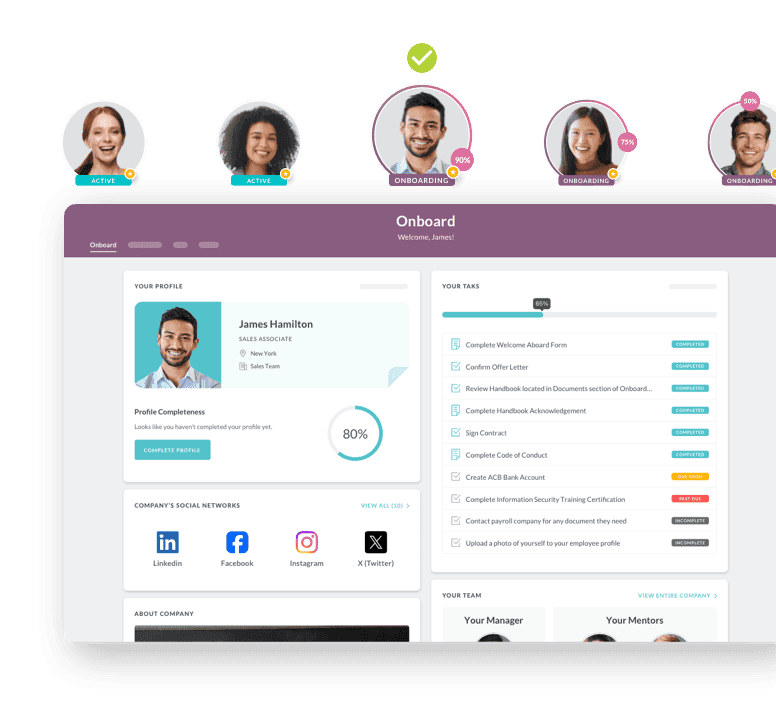
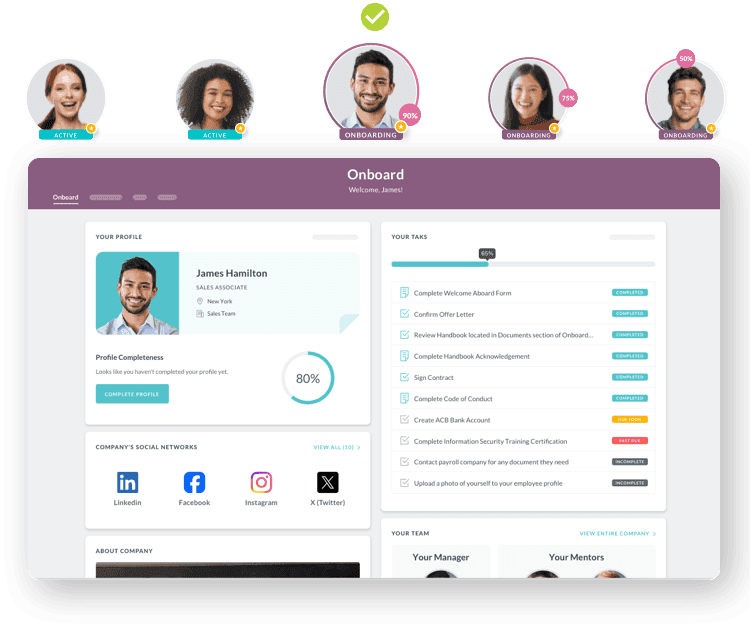
HR Cloud solves these issues with a modern I-9 compliance solution. As part of our industry-leading Onboarding solution, our I-9 software automates the process of collecting I-9 forms and then integrates this workflow with the Department of Homeland Security's E-Verify system. I-9 forms are then cross-checked with the appropriate government departments for full compliance, ensuring a smooth onboarding process for new employees and contributing to a great employee experience from day one.
With HR Cloud's software, businesses can automate the collection and storage of employee information, reducing manual data entry errors. The user-friendly interface guides HR personnel through the verification process, ensuring accurate submissions and compliance with E-Verify requirements. This not only improves the efficiency of the onboarding process but also contributes to a positive employee experience and sets the stage for successful new hire retention.
Take a look at our Onboarding software solution to see how it can enhance your employee onboarding program, improve onboarding effectiveness, and positively impact the overall employee journey.
Integration for ADP Users
You can integrate ADP with our Onboarding solution to create a seamless onboarding experience. Upon onboarding, individuals are guided through essential processes to ensure the proper completion of forms and adherence to deadlines. With Onboard, anyone can electronically sign, save, revise, and audit I-9s using any device. The HR department has the capability to directly submit employment verification requirements to agencies or establish recurring tasks to maintain compliance throughout each employee's lifecycle. This integration helps create a seamless onboarding experience, supports ongoing employee engagement, and contributes to onboarding success.
Conclusion
Florida's E-Verify requirement has brought significant changes to businesses and HR practices within the state. This legislative mandate aims to ensure a legal and authorized workforce, promoting compliance with immigration laws while also impacting the employee onboarding process and overall employee experience.
As businesses adapt to this requirement, it is crucial to address challenges through proactive measures, such as comprehensive onboarding training, effective integration of E-Verify systems, and staying informed about evolving regulations. By leveraging innovative solutions like HR Cloud's E-Verify software, businesses can streamline the employment verification process, enhance compliance, and improve the onboarding experience for new hires.
Embracing these strategies will enable businesses to navigate Florida's E-Verify requirement successfully and maintain a compliant workforce while contributing to a thriving and legally compliant business environment. Moreover, by focusing on creating a positive onboarding experience, gathering onboarding feedback through onboarding survey questions, and prioritizing employee engagement throughout the process, companies can set the stage for improved employee satisfaction, retention, and long-term success.
To ensure onboarding effectiveness and continuously improve the process, consider implementing onboarding feedback surveys and analyzing employee feedback to identify areas for onboarding improvement. By tracking onboarding metrics and evaluating the onboarding process regularly, businesses can refine their onboarding best practices and create a truly effective onboarding process that contributes to employee success and a positive global employee experience.

Discover how our HR solutions streamline onboarding, boost employee engagement, and simplify HR management
Book Your Free DemoAbout the author

Keep Reading


Like What You Hear?
We’d love to chat with you more about how HR Cloud® can support your business’s HR needs.
Book Your Free Demo