
AI Onboarding for Retail
What Is AI Onboarding for Retail?
AI onboarding for retail is the use of artificial intelligence and workflow automation to integrate new store associates, seasonal workers, and distributed retail staff across multiple locations. It addresses the high-volume, time-sensitive hiring cycles of retail organizations by automating document collection, role-specific training assignment, compliance tracking, and multi-location onboarding coordination through a mobile-first, self-service platform.
Retail onboarding carries a specific operational challenge: organizations must onboard large numbers of workers simultaneously, particularly during seasonal peaks, across many store locations, with HR teams that are stretched thin. Manual processes break under this volume. AI onboarding for retail scales without a proportional increase in HR staffing. The HR Cloud retail HR software page describes how retail-specific onboarding challenges differ from general workforce onboarding.
The Retail Onboarding Challenge
Annual turnover in retail regularly exceeds 60%, and a large portion of attrition occurs within the first 30 to 60 days. Poor onboarding is a consistent contributing factor. Workers who arrive without clear expectations, proper system access, or knowledge of their benefits and policies are likely to leave quickly. The distributed nature of retail compounds this problem: a store associate in one location may receive a completely different onboarding experience than their counterpart in a store 50 miles away. AI onboarding for retail enforces consistency across every location by automating the entire process. According to Gallup's State of the Global Workplace research, customer-facing industries consistently show that frontline engagement — which onboarding directly affects — correlates strongly with customer satisfaction and store performance metrics.

Core Capabilities
High-Volume Onboarding at Scale
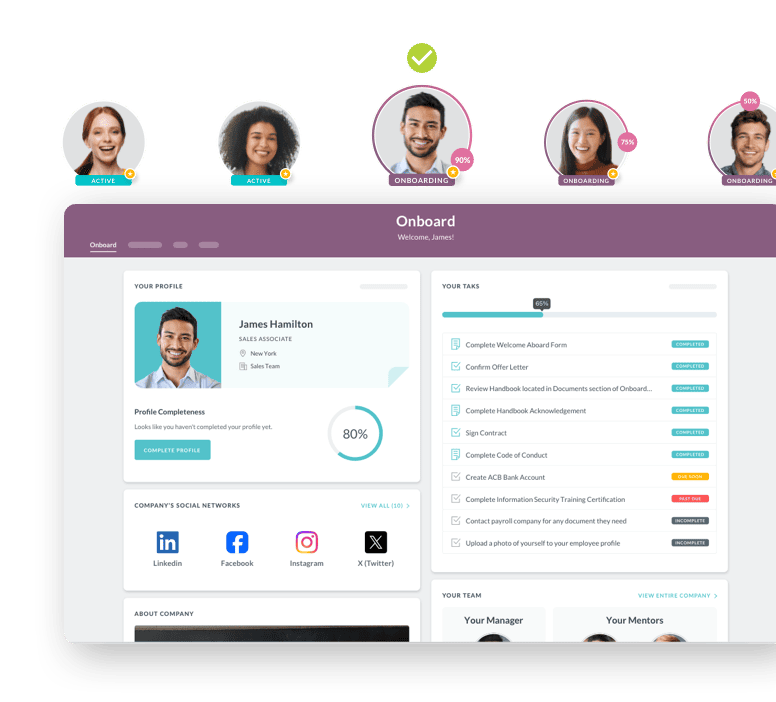
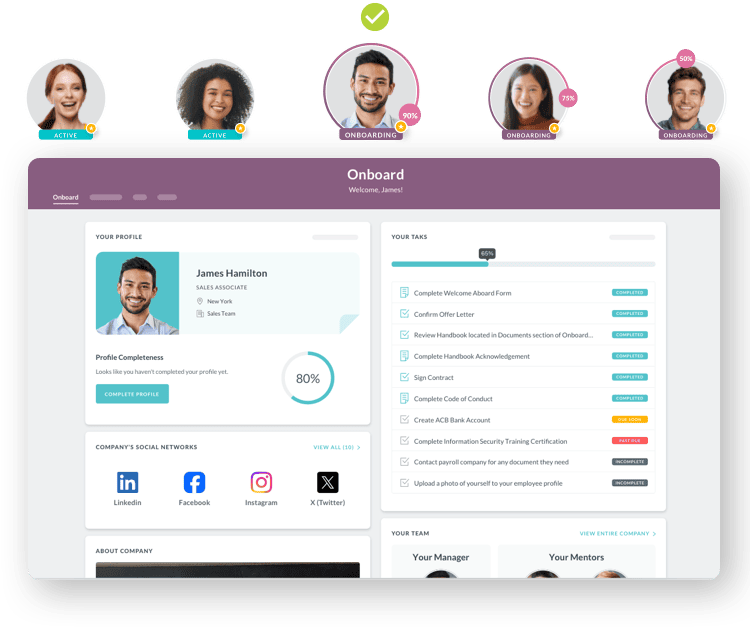
AI onboarding platforms process hundreds or thousands of new hires simultaneously without a corresponding increase in manual HR work. Workflows trigger automatically for each new hire added to the system. Document collection, training assignment, and compliance verification run in parallel across all active onboarding sequences. HR dashboards provide real-time visibility into completion status across every location. The HR Cloud employee onboarding software page details how these dashboards surface bottlenecks at the individual store level.
Tablet and Mobile Accessibility
Retail associates do not have corporate email or desktop computers. AI onboarding for retail is built to work from tablets available at the store level and from personal smartphones. New hires complete onboarding paperwork in-store before their first shift using a tablet-optimized interface, or at home through their phone the night before.
Multilingual Support
Retail workforces are frequently multilingual, and onboarding in a worker's non-native language creates comprehension gaps that increase early attrition and safety incidents. AI onboarding platforms with built-in multilingual support deliver all content, including policy documents and training modules, in the worker's preferred language.
Certification and Compliance Tracking
Retail roles carry industry-specific compliance requirements: food safety certifications for grocery and food service roles, alcohol server certifications for stores with liquor sales, and forklift operator qualifications for retail distribution centers. AI onboarding platforms automate assignment, track expiration dates, and send renewal reminders. A broader discussion of compliance automation capabilities is available in HR Cloud's HRIS system overview.
Seasonal Hiring Surge Support
AI onboarding for retail is particularly valuable during seasonal hiring surges when organizations onboard large cohorts of temporary workers in compressed timeframes. Automated workflows handle the volume that would otherwise overwhelm HR teams. New hire experiences remain consistent regardless of whether 10 or 1,000 workers are onboarding simultaneously. According to SHRM's research on AI adoption in HR, high-volume hiring scenarios are among the strongest drivers of AI onboarding adoption across industries.
Measuring Retail Onboarding Effectiveness
Organizations with AI-driven retail onboarding track 30-day and 90-day retention rates by cohort, time-to-floor-readiness, compliance completion rates by store, and new hire satisfaction scores from automated post-onboarding surveys. These metrics identify underperforming stores before the problem shows up in turnover data. For context on how these metrics should be benchmarked against industry norms, Gallup's workplace engagement research provides relevant industry-level data on turnover costs and onboarding ROI.
Keep Reading


Ready to streamline your onboarding process?
Book a demo today and see how HR Cloud can help you create an exceptional experience for your new employees.
Book Your Free Demo