10 Tips to Welcome and Onboard New Employees

What is An Employee Onboarding Process?
An employee onboarding process is the strategic framework for integrating new hires into your organization's culture, systems, and teams. According to the Society for Human Resource Management (SHRM), organizations with structured onboarding see 69% of employees staying for at least three years, compared to those with ad hoc approaches.
The typical employee onboarding process extends 90 days or longer, though research from Brandon Hall Group indicates that companies with onboarding programs lasting up to a year help new hires reach full productivity 34% faster. For most organizations, the employee onboarding process begins the moment an offer letter is accepted—not on day one.
Why does this matter? Gallup research shows that only 12% of employees believe their company delivers a great onboarding experience, yet those who experience exceptional onboarding are 2.6 times more likely to be extremely satisfied with their workplace. The financial impact is equally compelling: poor onboarding contributes to up to 20% of staff turnover within the first 45 days, with replacement costs reaching 90-200% of the departing employee's annual salary.
A successful employee onboarding program creates lasting first impressions, accelerates productivity, and builds the foundation for long-term engagement. Modern onboarding extends far beyond paperwork—it encompasses pre-boarding activities, cultural immersion, relationship building, and continuous feedback throughout the critical first quarter.
Tips for Successful Employee Onboarding
Employee onboarding covers numerous activities to make new hires feel they are an integral part of the company. Here is a comprehensive list of 10 tips for successfully onboarding new employees:
1. Don't Wait Till Their First Day
The first day of work is always nerve-wracking. Employers must include new hires in the team's communication from the time the offer has been made instead of waiting for the first day. This process is commonly known as employee pre-boarding.
Research from Aberdeen shows that best-in-class organizations are 2x more likely to engage new hires during the pre-boarding period. During pre-boarding, employers send materials to help new hires get up to date with team dynamics and job duties. You can leverage onboarding automation tools to stay organized and ensure nothing falls through the cracks.
Effective pre-boarding includes:
- Sending a welcome package one week before the start date with company swag, first-week agenda, and team bios
- Providing access to the employee handbook and training videos
- Setting up accounts and equipment in advance
- Scheduling Day 1 meetings and introductions
Employees considering joining the organization usually have many questions, and answering them in advance improves the chances of them actually starting and feeling confident. Pre-boarding communication ensures employees begin building relationships with coworkers before they even walk through the door, whether that's physical or virtual for remote onboarding scenarios.
2. Prepare Managers to Welcome the New Hires
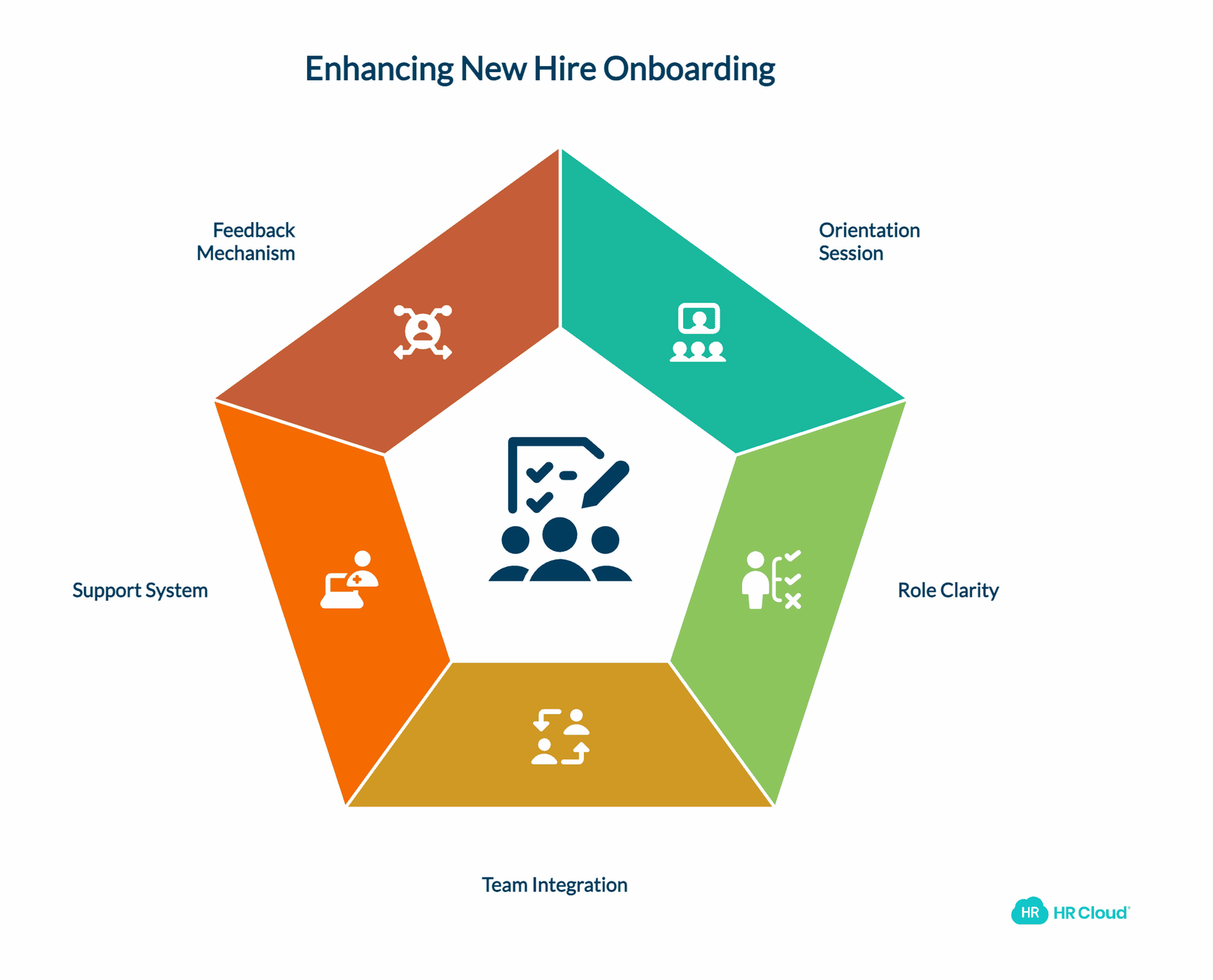
As part of new hire orientation, it is critical to prepare managers in advance to speed up the onboarding process. According to SHRM research, manager involvement during onboarding increases employee retention by 20% and helps get employees fully productive 25% faster than usual.
Onboarding checklists for managers should include:
- Sending personalized welcome messages for new employees
- Assigning a mentor or buddy for the new hire
- Discussing roles, responsibilities, and success metrics
- Setting up recurring onboarding check-ins
- Helping new hires build a social network within the team
- Preparing the workspace with necessary equipment and access
Use HR automation to create manager checklists that trigger automatically when a new hire is added to the system. This ensures consistency across all departments and eliminates the risk of managers forgetting critical steps.
Ultimately, it is beneficial for managers if the new hire starts contributing as soon as possible. New hires should not be considered as individual entities but as integral parts of the team from day one.
3. Teach Team Dynamics to New Hires
New hires must get familiar with the inner workings of the company as well as their respective teams. The employee onboarding process includes helping new hires understand team dynamics, especially because acclimatization to this may take more time compared to getting started with the duties of the job.
Create a "team operating manual" that documents:
- Communication preferences (email vs. Slack vs. in-person)
- Meeting rhythms and expectations
- Decision-making processes
- Informal team traditions and rituals
Research shows that 62% of companies offering peer mentorship during onboarding report faster team integration. Ensure that new hires get started on the right foot by educating them authentically, avoiding passing along biases from individual mentors. Keep things transparent using team communication channels and let employees build their own informed opinions about team culture.
During employee onboarding, maintaining transparency helps new team members form genuine connections and understand the authentic working environment they'll be operating in daily.
4. Define Robust Expectations
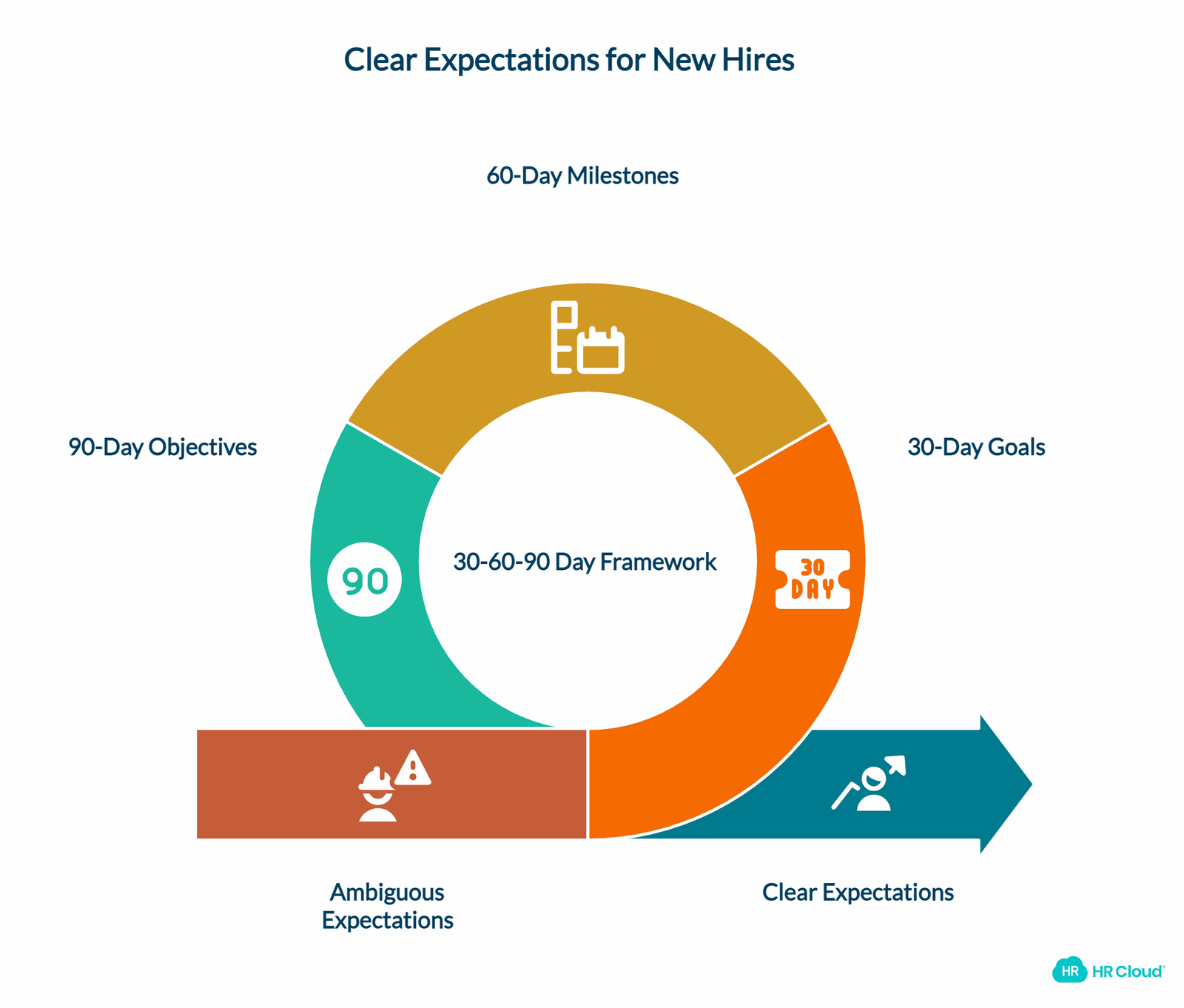
Avoid ambiguity while setting expectations at the beginning of the new job. Do not completely rely on employee handbooks and job descriptions to convey your expectations to the employee.
Employee onboarding must consist of managers preparing a robust set of guidelines using a 30-60-90 day framework:
First 30 Days:
- Complete all compliance training and paperwork
- Shadow team members and observe workflows
- Complete initial product/service training
- Meet with key stakeholders across departments
60 Days:
- Take ownership of specific projects or accounts
- Demonstrate understanding of core processes
- Provide feedback on onboarding experience
- Set preliminary performance goals
90 Days:
- Operate independently in primary responsibilities
- Contribute to team objectives measurably
- Complete formal performance review
- Establish development plan for next quarter
This should be a living document that can be revised multiple times throughout the new hire orientation process. According to research, 23% of employees who leave within six months cite unclear job expectations as the primary reason. Use performance goal tracking software to document these expectations and track progress transparently.
The document must cover company culture along with team-specific expectations. This process helps bring the employee to full productive capacity in minimal time.
5. Schedule Regular Check-Ins
Employee onboarding is an ongoing process. As discussed earlier, the employee onboarding process should start at the moment an offer letter is handed over to the employee. Similarly, the employee onboarding process must go beyond the point when the employee is considered to be up to speed with everything.
The best way to implement this is to schedule regular check-ins between the new hire and their manager using this cadence:
- Week 1: Daily 15-minute check-ins
- Weeks 2-4: Weekly 30-minute one-on-ones
- Months 2-3: Bi-weekly 45-minute meetings
- Month 4+: Monthly performance discussions
Research indicates that regular check-ins during onboarding increase new hire retention by 23%. This is the time when manager and employee can sit together and revisit expectations to set new ones. Onboarding best practices like this help new hires stay on track and feel supported throughout their transition.
Use performance management software to automate reminders for these check-ins and document feedback from each conversation.
6. Do Not Forget to Assign a Buddy/Mentor
Mentors can be greatly helpful for the new hire orientation process. Several companies have adopted a mentor program or buddy program where a high-performing employee assists the new hire in the initial days and greatly contributes to increasing their chances of success at the organization.
SHRM research shows that 56% of new hires who meet with an onboarding buddy even once in 90 days say it helped them become productive faster. During employee onboarding, the person assigned as mentor shall answer all the questions a new hire might have and take a more personal interest, as the manager is not always available.
Best practices for buddy programs include:
- Match buddies based on role proximity, not just availability
- Select mentors who exemplify company values
- Provide mentors with a structured guide and timeline
- Consider offering "buddy bonuses" like gift cards or extra PTO
- Schedule an initial introduction before Day 1 if possible
The mentor-mentee relationship will help new hires form social connections and have a positive role model in the office. This relationship often extends beyond the initial onboarding period and becomes a valuable professional connection for years to come.
7. Ensure That They Get to Know the Team
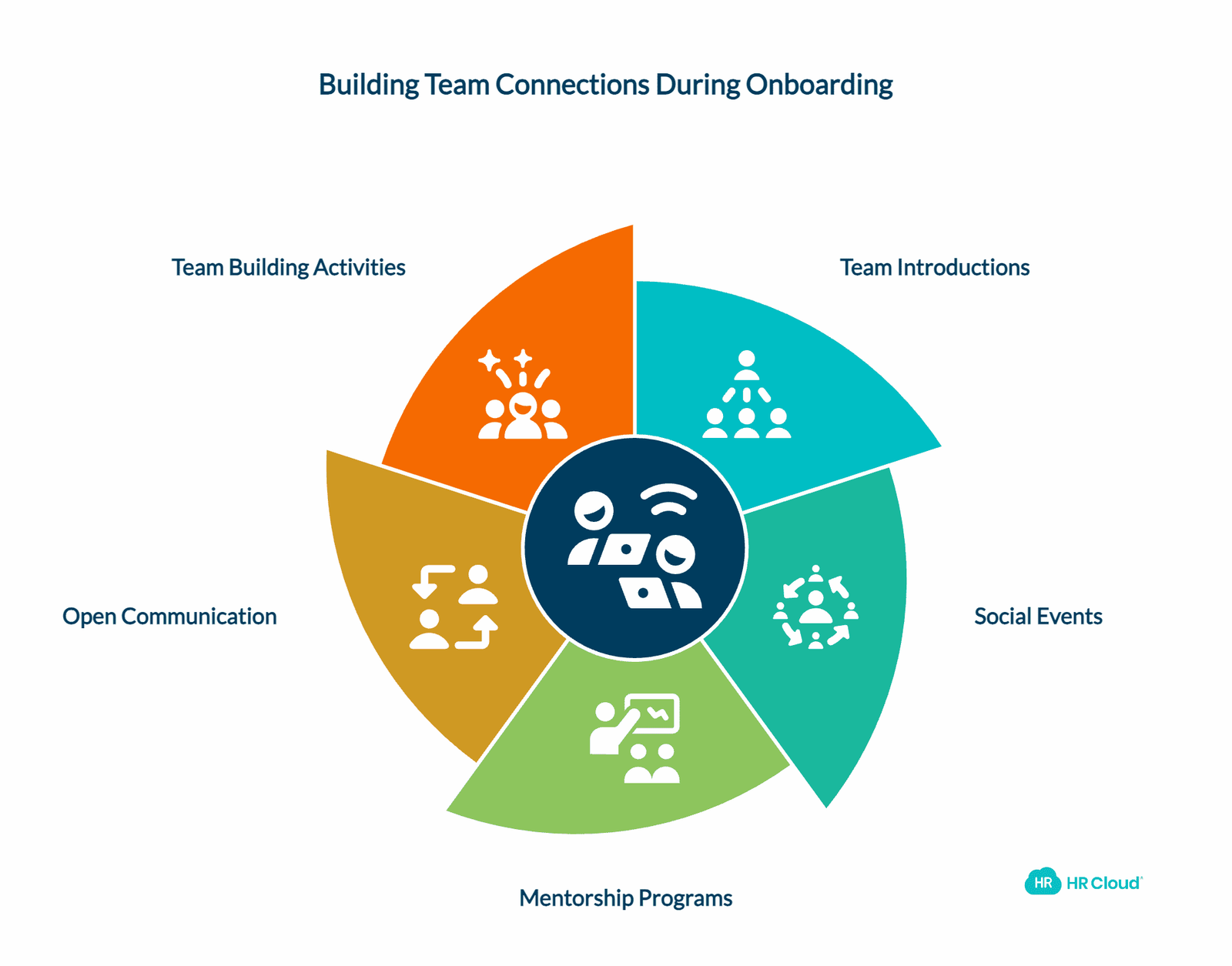
Onboarding best practices include ensuring that the new hire gets to know their team and forms meaningful connections. Research shows that employees who receive structured team introductions during onboarding are 49% more likely to collaborate effectively.
It may be an opportunity to form relationships with coworkers that will last for years to come, even beyond their employment at the current organization. As soon as the new hire gets comfortable in their working environment, they will start being productive. It should be a priority to make them feel part of the team from day one.
Effective team integration strategies include:
- Virtual coffee chats: Random pairings for 30-minute informal conversations
- Team lunch on Week 1: In-person or virtual group meal
- Cross-department introductions: Brief meetings with key collaborators
- Org chart walkthrough: Visual explanation of reporting structures and team relationships
Use your employee directory to help new hires navigate the organization and understand who does what. This reduces the intimidation factor and helps them identify the right people to approach for different needs.
Only 24% of workers feel connected to their colleagues according to recent research, making intentional relationship-building during onboarding even more critical.
8. Encourage New Hires to Ask Questions
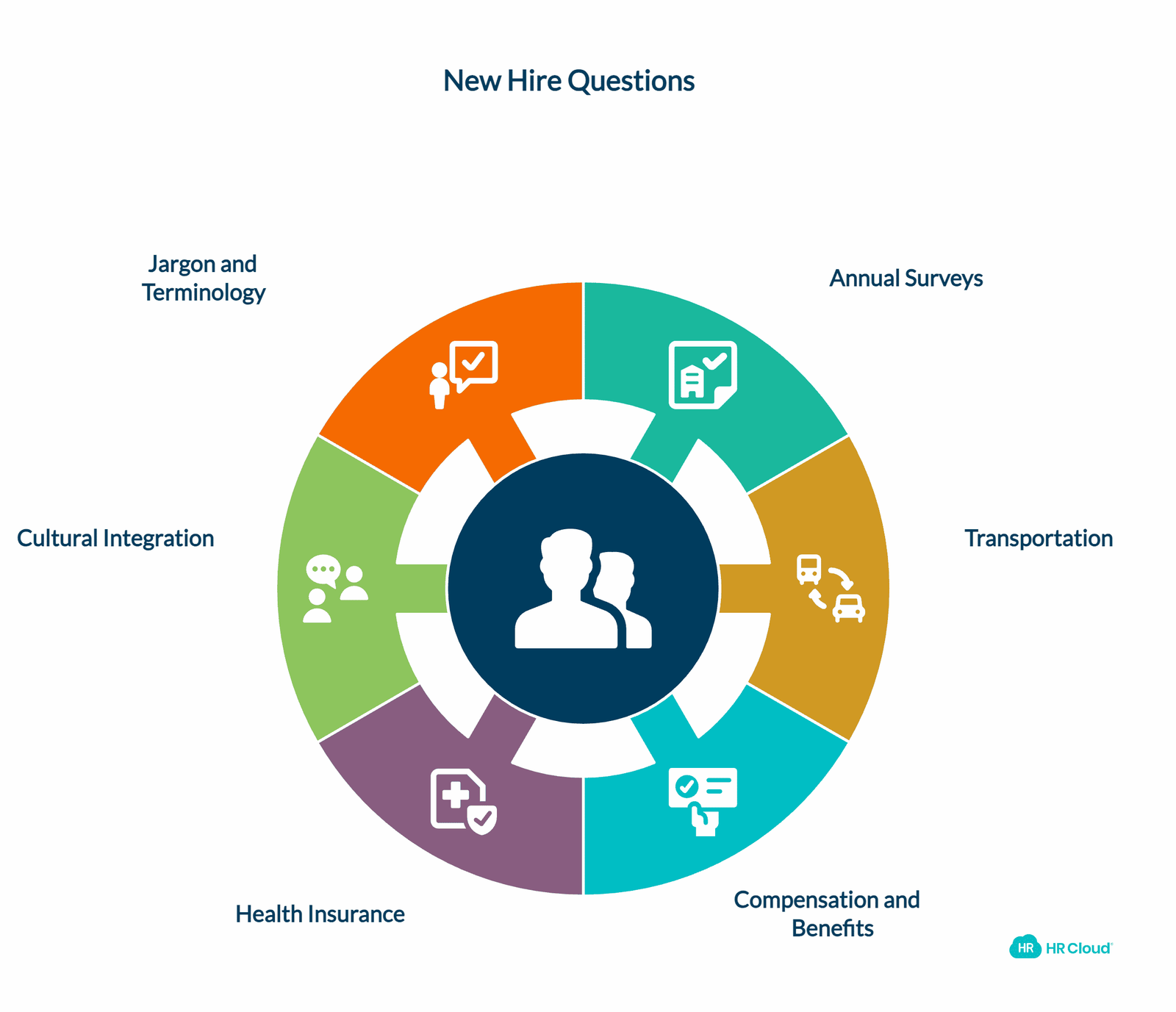
During employee onboarding, new hires are full of questions regarding their work, their team, transportation, cafeteria, compensation, benefits, health insurance, and countless other topics. The new culture, new tasks, new coworkers, and new jargon might confuse them, and they will inevitably seek guidance at multiple points.
To proactively deal with this reality, create a comprehensive FAQ document addressing common questions that may confuse employees. Research shows that 43% of employees wait more than one week to receive basic workstation logistics and tools—proactive communication prevents this frustration.
Create an environment of openness and comfort by:
- Establishing a dedicated Slack channel for new hire questions
- Normalizing the phrase "there are no dumb questions here"
- Having managers model question-asking behavior
- Celebrating questions that lead to process improvements
- Providing multiple channels for asking questions (email, Slack, in-person)
Leverage internal communication software to create searchable knowledge bases where new hires can find answers independently while still having easy access to live support when needed.
Assigning a mentor is another great initiative to make sure all the questions of the employee are being answered promptly and in a psychologically safe environment.
“Our hiring managers now have a reliable system that is easy to navigate. Our HR team can actively monitor the process, and assist if needed, but Onboard has helped them save so much valuable time and effort while increasing data accuracy.”
— Kaylee Collins, HR Analyst

9. Announce the New Hire's Arrival
Sending a welcome message for new employees can be part of the announcement that is aimed at letting team members know about the new joiner. Research from Harvard Business Review indicates that inspired employees are significantly more productive, and a warm welcome helps establish that inspiration from day one.
Schedule meet and greet events with collaborators and teams so that the new employee gets acquainted with the team. Consider organizing:
- Company-wide announcement: Email or newsletter feature with photo and bio
- Team meeting introduction: 5-minute presentation at the next all-hands
- Slack/Teams welcome post: Automated message in general channel
- Executive meet-and-greets: Brief introductions to company leadership
Use employee engagement platforms like Workmates to create automated welcome posts that celebrate new team members across multiple channels. This multichannel approach ensures maximum visibility and helps new hires feel genuinely welcomed.
Scheduling meets and greets with company leaders allows new hires to learn from their experiences and hear their stories firsthand. These events can be organized in both remote and physical settings, ensuring inclusivity regardless of work location.
Ensure that the new hire feels comfortable with the team and doesn't hesitate to ask for help from anyone.


10. Employee Engagement and Team Building Must Be an Ongoing Process
Once the onboarding is successfully completed, there is still much that can be done in terms of employee engagement and team building. Organizations with effective onboarding processes report 33% higher employee engagement and 70% greater new hire productivity according to research from Brandon Hall Group.
Provide new hires with ample opportunities to build key relationships by:
- Organizing monthly team-building events
- Pairing new hires randomly with different team members for virtual coffee meetings
- Creating cross-functional project opportunities
- Celebrating 30-60-90 day milestones publicly
Recognizing efforts and providing meaningful recognition can be powerful in motivating the new hire to keep contributing positively. Use employee recognition software to celebrate early wins and reinforce desired behaviors from the start.
Implement structured feedback mechanisms by having new employees fill out onboarding surveys at the 30, 60, and 90-day marks. Use employee engagement surveys to gather candid feedback on how your onboarding program is performing in reality and where improvements can be made.
According to Gallup research, companies that treat onboarding with enthusiasm equal to or greater than that of the new hire's create stronger emotional connections that translate to long-term retention.
How HR Cloud Onboard Automates These Best Practices
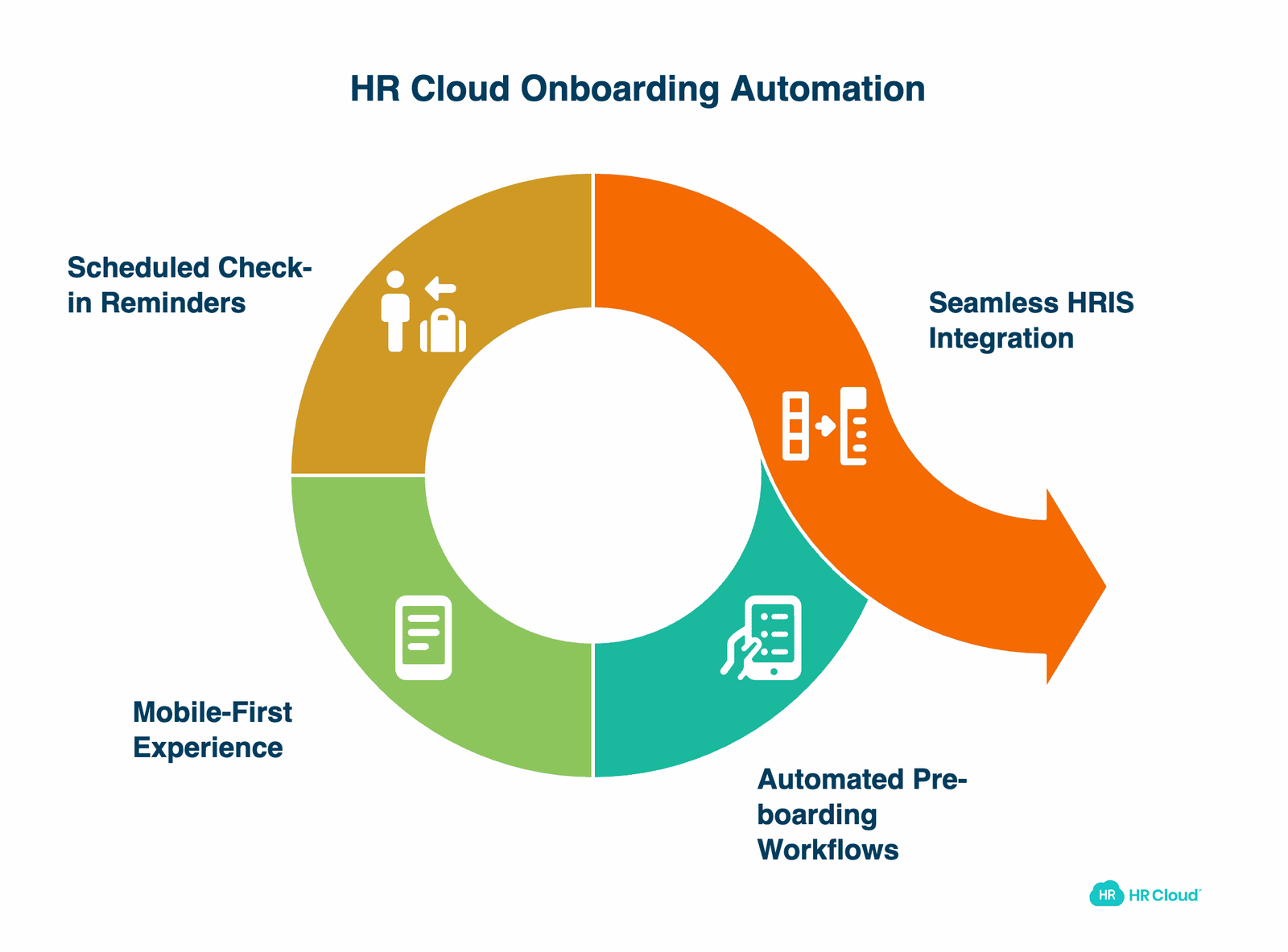
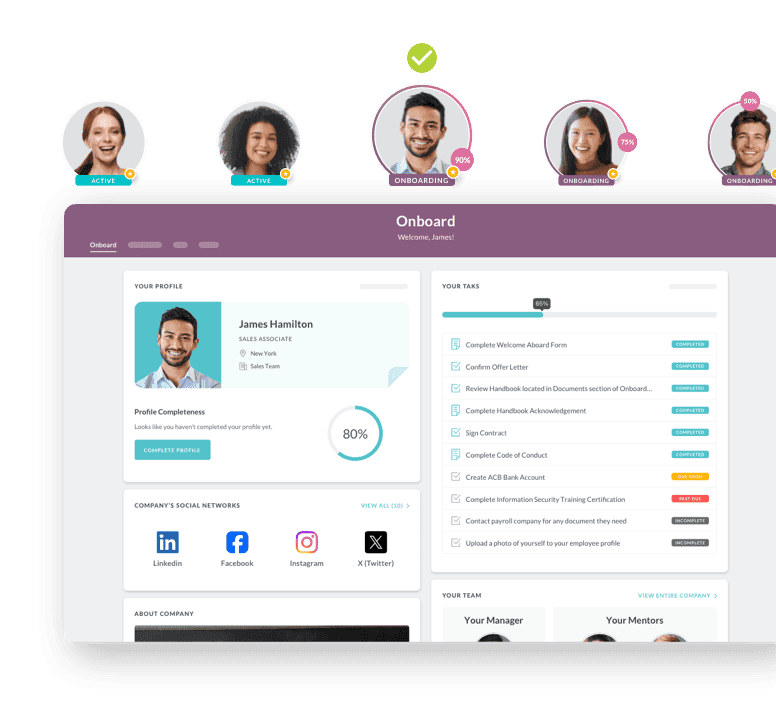
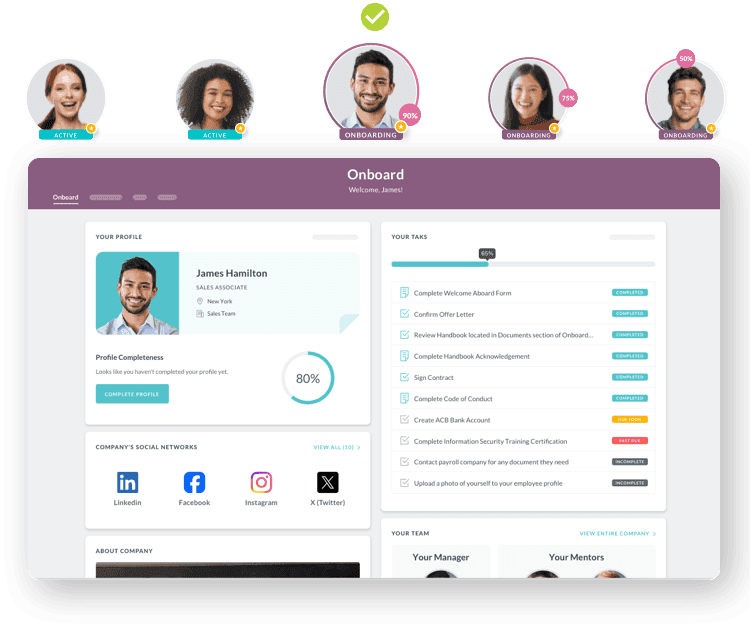
HR Cloud's Onboard platform transforms these manual best practices into intelligent automated workflows, eliminating follow-up burden while ensuring consistency across every new hire experience.
Key Capabilities:
Automated Pre-boarding Workflows
Trigger welcome emails, document requests, and equipment orders the moment an offer is accepted. New hires receive personalized onboarding portals with role-specific tasks before they even start.
Mobile-First Experience
New hires complete I-9, W-4, and company forms from any device before Day 1. Our mobile app enables frontline workers and remote employees to onboard seamlessly from their smartphones.
Built-in Buddy Assignment
Automatically match mentors based on role, department, and availability using conditional logic. The system notifies both parties and provides mentors with structured guidance.
Scheduled Check-in Reminders
Never miss a 30-60-90 day review with automated calendar invitations and reminder notifications. Track completion rates across all managers to ensure accountability.
Seamless HRIS Integration
Our ADP integration syncs employee data bidirectionally, eliminating duplicate entry. We also integrate with UKG, Workday, Paylocity, and other major payroll systems.
Integration with Workmates
Seamlessly announce new hires and track early engagement through the same platform. Use Workmates to celebrate onboarding milestones and foster connections from day one.
Organizations using HR Cloud Onboard report 60% faster onboarding completion, 3x improvement in first-month productivity, and 82% better retention rates in the first year. See how it works.
Measuring Your Onboarding Success
To continuously improve your employee onboarding process, track these key metrics:
Key Performance Indicators:
Time-to-Productivity
Measure how many days it takes for new hires to reach performance benchmarks. Companies with structured onboarding help employees reach full proficiency 34% faster.
90-Day Retention Rate
Track what percentage of new hires remain employed after 90 days. This is one of the strongest indicators of onboarding effectiveness.
New Hire Satisfaction Scores
Use pulse surveys at 7, 30, 60, and 90 days to gauge sentiment. Research shows that employees rating their onboarding as "exceptional" are 2.6x more likely to be extremely satisfied overall.
Manager Feedback
Collect structured feedback from hiring managers on new hire performance and readiness. This helps identify gaps in training or expectations.
Task Completion Rates
Monitor what percentage of onboarding tasks are completed on time. Low completion rates indicate either unclear expectations or lack of accountability.
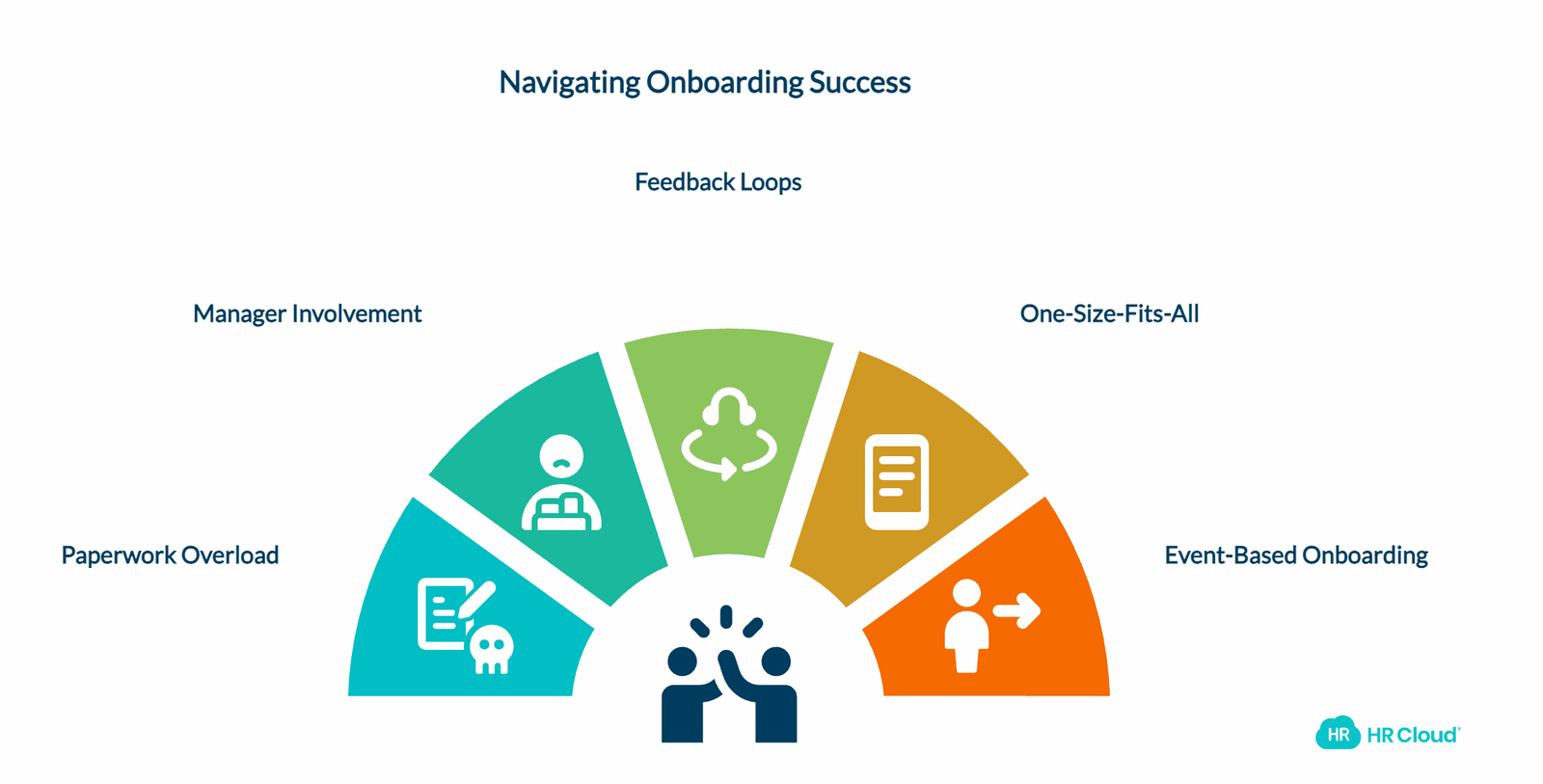
Common Onboarding Pitfalls to Avoid:
1. Paperwork overload on Day 1 - Complete administrative tasks during pre-boarding instead
2. Lack of manager involvement - Managers must be active participants, not just delegators
3. No structured feedback loops - Regular check-ins are non-negotiable
4. One-size-fits-all approach - Customize onboarding by role, department, and location
5. Treating onboarding as an event, not a process - Extend well beyond the first week
According to McKinsey research, organizations that invest in employee experience see measurable improvements in productivity, innovation, and retention.
Ready to Transform Your Employee Onboarding Process?
The employee onboarding process is one of the most critical investments your organization can make. With structured onboarding improving retention by 82%, increasing productivity by 70%, and ensuring 69% of employees stay three years or longer, the ROI is undeniable.
HR Cloud's Onboard platform helps growing teams onboard 3x faster with:
- Intelligent workflow automation
- Mobile-first employee experience
- Seamless HRIS and payroll integration
- Automated compliance tracking
- Real-time analytics and reporting
Join thousands of HR departments using our platform to reduce onboarding time by 60% and create exceptional first impressions that last. Book your free demo today to see how HR Cloud Onboard can transform your new hire experience.

Discover how our HR solutions streamline onboarding, boost employee engagement, and simplify HR management
Book Your Free DemoFrequently Asked Questions About Employee Onboarding
What is an employee onboarding process?
An employee onboarding process is the strategic framework for integrating new hires into your organization over typically 90 days or longer. It encompasses pre-boarding, orientation, training, cultural integration, and continuous feedback. Research from SHRM shows structured onboarding improves retention by 82%.
How long should employee onboarding last?
Effective onboarding extends at least 90 days, though best-in-class programs continue 6-12 months. Companies with year-long onboarding help new hires reach full productivity 34% faster according to Brandon Hall Group research.
What should be included in an onboarding checklist?
A comprehensive checklist includes: pre-boarding communication, workspace setup, Day 1 welcome, manager one-on-one meetings, team introductions, 30-60-90 day goals, buddy assignment, compliance training, regular check-ins, and feedback surveys.
When should onboarding start?
Onboarding should begin immediately after offer acceptance, not on Day 1. Pre-boarding activities reduce anxiety and allow new hires to complete paperwork early. Aberdeen research shows best-in-class companies are 2x more likely to engage during pre-boarding.
What's the difference between onboarding and orientation?
Orientation is a single event (often Day 1) covering logistics, policies, and paperwork. Onboarding is an ongoing process lasting months that includes cultural integration, skill development, relationship building, and performance expectations.
How do you measure onboarding success?
Key metrics include: time-to-productivity, 90-day retention rate, new hire satisfaction scores, manager feedback, completion rates for onboarding tasks, and first-year performance ratings. Use people analytics to track these metrics consistently.
What are the biggest onboarding mistakes companies make?
Common mistakes include: waiting until Day 1 to begin, overwhelming new hires with paperwork, lack of manager preparation, no buddy assignment, unclear expectations, infrequent check-ins, and treating onboarding as a one-week event rather than a 90+ day process.
How can technology improve employee onboarding?
Onboarding software automates task assignment, sends reminder notifications, digitizes forms and e-signatures, creates self-service portals, integrates with HRIS/payroll systems, and provides real-time analytics on completion rates and bottlenecks.
About the author

Keep Reading


Like What You Hear?
We’d love to chat with you more about how HR Cloud® can support your business’s HR needs.
Book Your Free Demo