AI Applicant Tracking for K-12 Schools: Why the Old Tools Are Costing You Your Best Candidates

You found a strong special education candidate in February. She was certified, experienced, and genuinely excited about your district. Your hiring process took 47 days. She accepted an offer from a neighboring district on day 31.
That scenario is not an outlier. It is the norm for K-12 districts running hiring processes built for a different era — and it is getting more expensive every year.
According to the Learning Policy Institute's 2025 analysis, roughly 1 in 8 teaching positions nationwide is either unfilled or staffed by someone not fully certified for the role. And replacing a single teacher costs districts between $12,000 and $25,000, depending on district size. The teacher shortage is structural and persistent. But the hiring process is a variable districts can actually control — if they have the right technology behind it.
The right AI applicant tracking workflow helps districts reduce the delays they can control: slow screening, scattered principal feedback, missing credential documentation, manual approval routing, and weak communication between offer acceptance and Day 1. This post walks through where those delays concentrate and what better-configured hiring workflows can do about them.
Key Takeaways
• About 1 in 8 teaching positions is unfilled or staffed by an under-certified teacher, according to the Learning Policy Institute's 2025 national scan — and the problem has grown in 35 states over the past two years.
• K-12 hiring is uniquely constrained by academic calendars, board approval workflows, state licensure requirements, and distributed decision-making across schools — generic ATS platforms were not designed for any of these.
• The district that sends an offer first usually wins the candidate — speed-to-hire in education is a competitive differentiator, not just an operational metric.
• AI-assisted and workflow-based applicant tracking can reduce manual work at the screening, scheduling, and credentialing stages while helping HR maintain better visibility into required steps.
• A connected ATS-to-onboarding workflow helps reduce the "new hire data gap" that causes qualified candidates to disengage between offer acceptance and Day 1.
The K-12 Hiring Calendar Has No Margin for Slow Software
Most industries have flexible hiring windows. K-12 education does not.
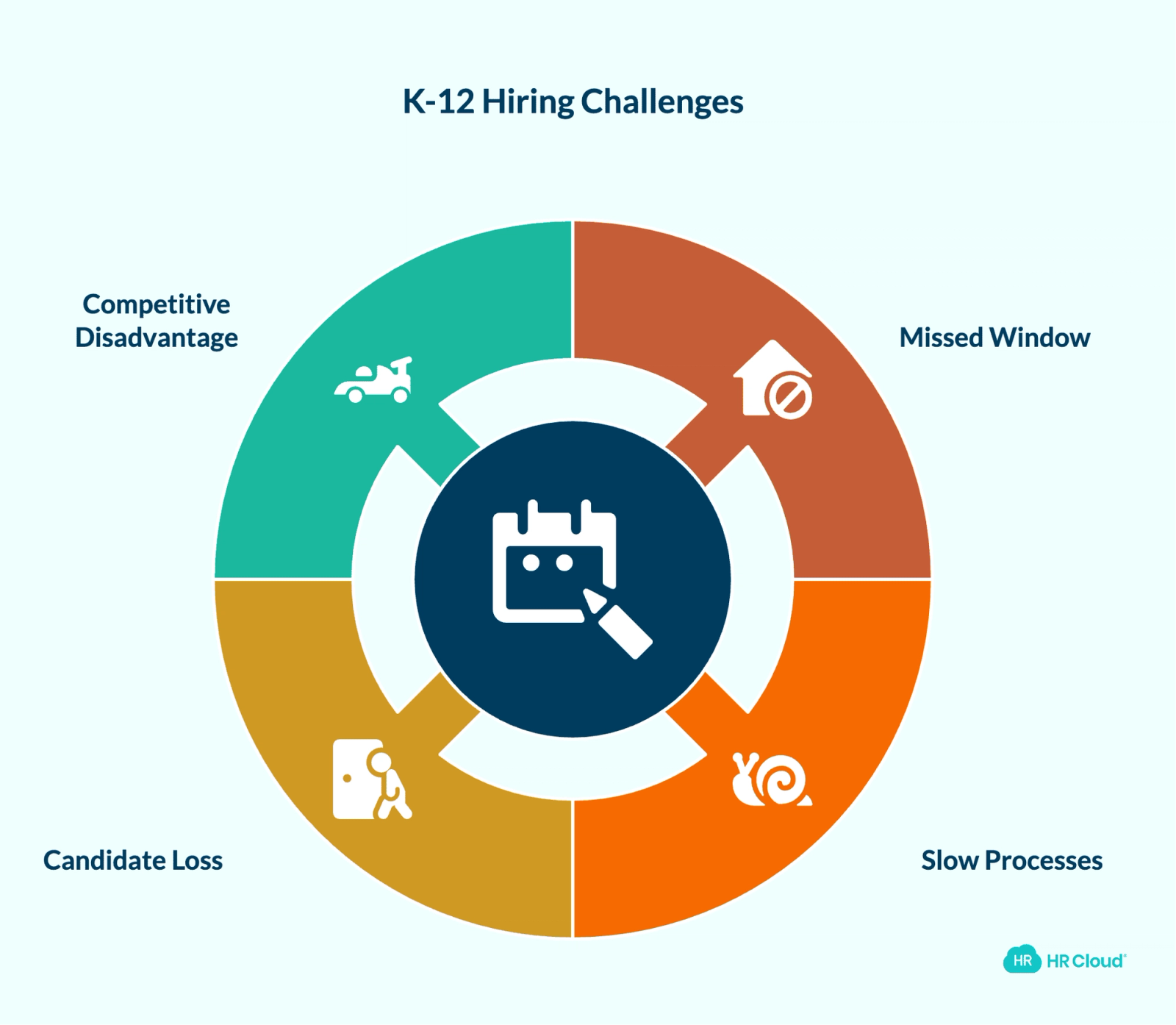
The typical district hiring season runs from March through September, with the sharpest pressure falling between March and June — when teachers make decisions about the following school year. Miss that window and you are either hiring from a depleted candidate pool in August or starting the school year with vacancies.
That compressed timeline collides directly with the slowest parts of most districts' hiring processes: board approval cycles, multi-school interview coordination, background check delays, and paper-based credential verification. A process that might be acceptable in a corporate environment where roles can sit open for 60 days becomes genuinely damaging in education, where an open classroom in September affects every student in it.
According to EAB's analysis of K-12 hiring data, the average time to hire in public education is 119 days — three times longer than the private-sector average of 36 days. That gap is not just an operational inefficiency; it is a direct cause of candidate loss. Applicants disengage during long, multi-step processes that provide no visibility into where they stand.
The calendar math that matters: If your average time-to-hire is 45 days and your competitor's is 20, you will consistently lose candidates to faster-moving districts — regardless of compensation, culture, or reputation. Speed is not just operational; it is your first impression.
What "Education-Built" Actually Needs to Mean
There is a category of ATS software that markets itself as built specifically for education. Some of it has deep institutional roots in K-12 districts. But "education-specific" does not automatically mean modern, and legacy platforms carry the technical debt of systems designed before AI screening, mobile application flows, and real-time integration with state licensure databases were possible.
What genuinely education-built AI applicant tracking should deliver comes down to five functional requirements that do not exist in the same combination anywhere else:
| Requirement | Why It's K-12 Specific |
|---|---|
| Academic calendar-aware workflows | Hiring peaks and deadlines are tied to school year start dates, not arbitrary quarters |
| Board approval routing | Most districts require school board approval before an offer is extended — this needs to be a built-in workflow stage, not a workaround |
| State teaching credential verification | Teaching licenses are state-specific, subject-specific, and have expiration dates — manual verification creates bottlenecks and compliance risk |
| Multi-school candidate routing | A candidate may be evaluated by multiple principals across different schools in the same district |
| Onboarding handoff without data re-entry | HR should not have to re-key application data into a separate onboarding system after a hire is confirmed |
Legacy systems may cover two or three of these. For K-12 districts, the strongest ATS workflows should support all five — without forcing HR to rebuild the process through spreadsheets, email, and manual reminders.
Why this configuration matters: K-12 HR teams are almost always under-resourced relative to the volume of hiring they manage. A district with 3,000 employees may have a two-person HR team responsible for 150 to 300 hires per year across teaching, administrative, and support staff. Without workflow automation, peak hiring season becomes a manual chase across principals, board packets, credential checks, and candidate follow-up — leaving no time for the judgment work that actually determines who gets hired.
The Five Places K-12 Hiring Breaks Down — and Where Better ATS Workflows Help
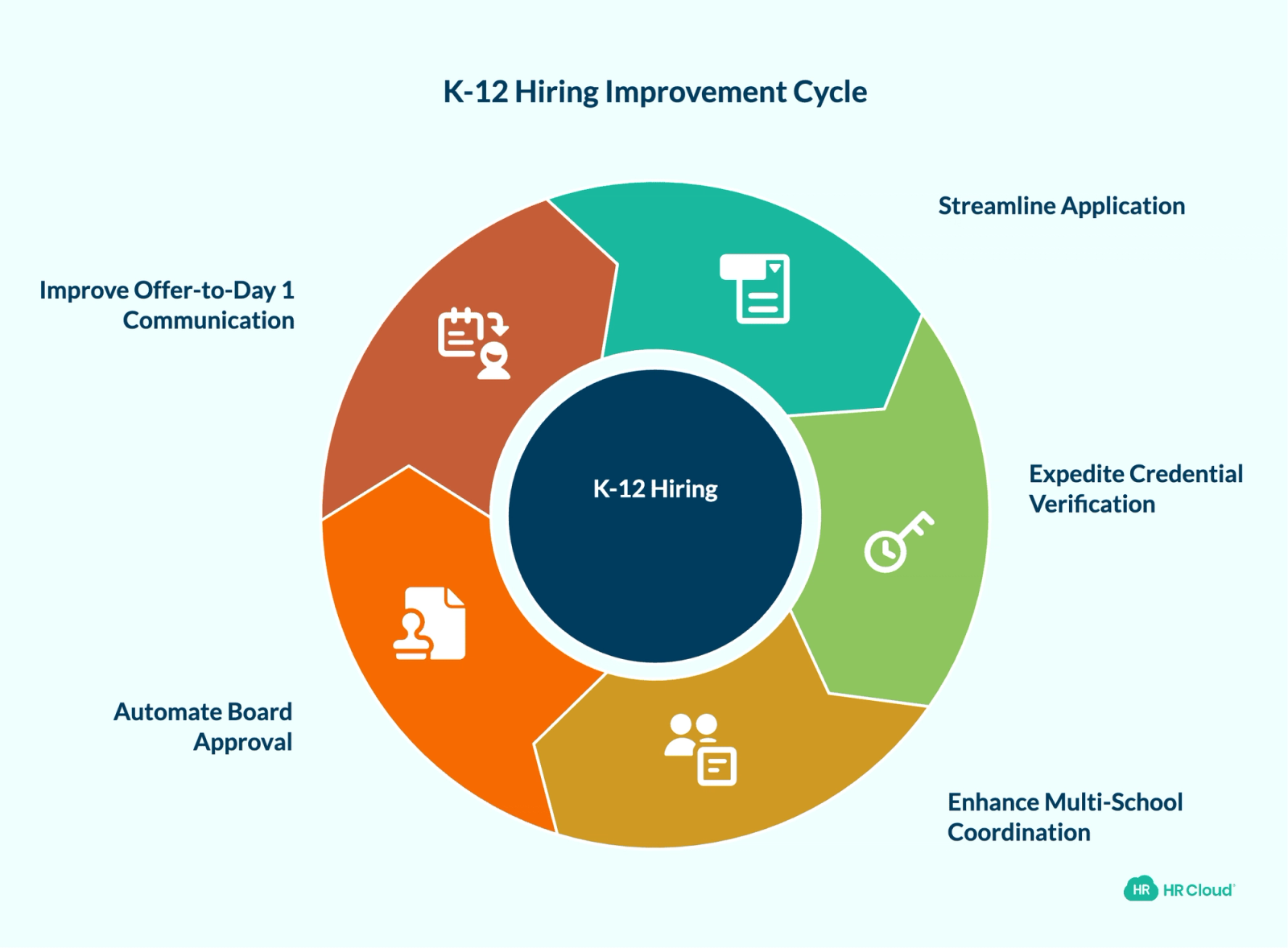
Most K-12 hiring failures are not caused by a lack of qualified candidates — though that is a real challenge in some subject areas. They are caused by process friction that pushes capable candidates out of the pipeline before a decision is made. Here is where that friction concentrates.
1. The Application Itself Filters Out Candidates Before It Should
Long, multi-field applications designed to collect every possible piece of information at the front end create drop-off before you have had a chance to evaluate anyone. A National Center for Education Statistics School Pulse Panel, which collected data from a sample of 1,392 public schools in August 2024, found that 62 percent of respondents cited "too few candidates applying" as a top challenge. Some of that is a genuine supply problem. But some of it is self-inflicted through application friction.
A better-configured applicant tracking workflow addresses this with progressive disclosure — collecting minimal information upfront to lower the barrier to entry, then gathering credential details, references, and documents in subsequent stages for candidates who make it past initial screening. Mobile-first, short-form application flows are particularly important for reaching candidates who are currently employed and applying on the go.
For K-12 specifically: Many strong teaching candidates are currently employed at other districts and will not complete a 45-minute application during their lunch break. A mobile-optimized, short-form initial application gets them into the funnel; structured follow-up stages gather what compliance requires.
2. Credential Verification Slows Everything Down
Teaching credential verification is one of the most consequential and most time-consuming parts of K-12 hiring. Every state has its own licensure system. Many certifications are subject-specific. Some have reciprocity agreements; many do not. And hiring an uncertified teacher — even unintentionally — creates compliance exposure.
Manual credential verification adds days to every hire. A modern ATS configured to support credential tracking can surface documentation status earlier in the pipeline, flag expired or mismatched certifications before they reach a hiring manager's desk, and maintain a verification record for audit purposes.
In a typical district workflow, HR staff check licensure status manually for each candidate who reaches the interview stage — one database lookup at a time, repeated across dozens of applications during peak hiring season. That is hours of staff time spent on lookup work rather than judgment work. Moving credential review earlier in the process — at the application stage rather than the interview stage — helps HR identify missing or expired documentation sooner, reduces back-and-forth with principals, and avoids investing interview time in candidates who still need verification.
Why this matters for HR Directors: Credential verification is not just a compliance checkbox — it is a safety net. Moving it upstream helps HR identify candidates whose licensure status is complete, missing, expired, or still under review before principals invest interview time. That supports better documentation visibility, reduces back-and-forth late in the process, and makes your hiring team more efficient at the same time.
3. Multi-School Coordination Without a Central System Creates Chaos
In most K-12 districts, principals are involved in hiring decisions for their schools. That is appropriate — they know their school culture, their team dynamics, and what instructional gaps they need to fill. But it also means a single candidate may be evaluated by multiple stakeholders across different buildings, often through a combination of email threads, shared drives, and phone calls.
A structured ATS gives every principal and department head access to the same candidate record, lets them submit structured feedback through the platform, and shows the candidate's current stage — without the HR team manually forwarding resumes and chasing responses.
The result is faster consensus and a clearer decision record if HR ever needs to review how a hiring decision was made.
Built-in benefit: When all reviewer feedback lives in one place, HR can identify patterns over time — which schools consistently evaluate candidates differently, where the most offers are declined, which subject areas have the longest approval cycles. That data drives better planning for the next hiring season — and feeds directly into a stronger performance management system for schools.
4. Board Approval Workflows Are Manual Where They Should Be Automated
Virtually every public school district in the United States requires school board approval before a teaching contract is formally extended. That is a governance reality that is not going away. But it does not need to be a bottleneck if it is built into the hiring workflow rather than bolted onto it.
Legacy systems treat board approval as a step outside the ATS — HR exports a list, formats a board report, waits for the next meeting date, and manually updates candidate statuses afterward. A configurable ATS can build board approval as a formal pipeline stage with task reminders, status visibility, and structured handoffs that reduce the manual coordination on either side of the meeting.
This does not speed up board meetings. But it reduces the manual work surrounding them — and it means candidates can be notified promptly when approval is granted, shrinking the window during which they might accept another offer.
The competitive pressure: A candidate who applied to three districts simultaneously — yours and two others — does not know or care about your board calendar. They will accept the first reasonable offer they receive. Tightening the time between "board approved" and "offer sent" is one of the highest-leverage process improvements a district can make.
5. The Gap Between Offer and Day 1 Loses Candidates It Shouldn't
Hiring does not end at offer acceptance. Even after a candidate says yes, districts can lose momentum when communication drops off before Day 1. An offer letter followed by weeks of silence is one of the most common — and most preventable — reasons new teachers quietly accept somewhere else.
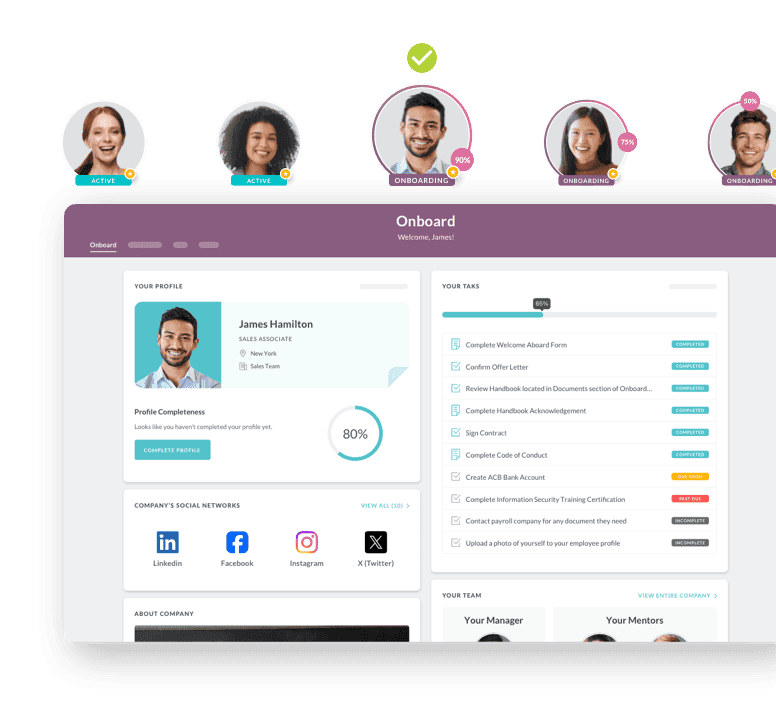
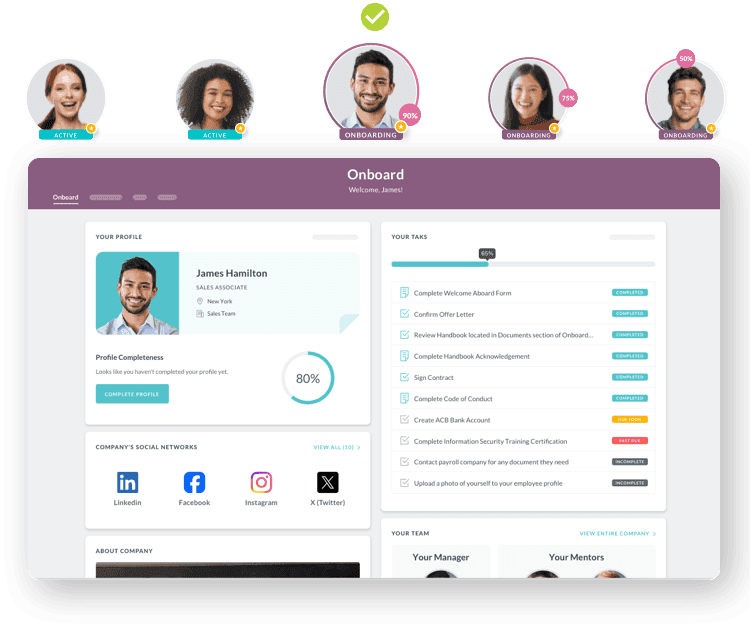
When recruiting and onboarding workflows are connected, the moment a candidate is marked as hired can trigger welcome communications, document collection, benefits enrollment, background check initiation, and pre-boarding tasks that keep new hires engaged before their first classroom day.
The Learning Policy Institute has found that beginning teachers who do not receive mentoring or induction leave at more than twice the rate of those who receive comprehensive support. That retention window opens before the first contract day — in the weeks between offer acceptance and walking into a classroom.
What HR Cloud's approach looks like: HR Cloud Recruit helps teams manage structured hiring workflows, candidate communication, and hiring team collaboration. When connected with HR Cloud's onboarding platform, teams can reduce the handoff gaps that typically slow new hire readiness — carrying candidate information forward so HR is not re-entering the same data twice. Pre-boarding tasks can be triggered early, keeping new teachers engaged between offer and Day 1. For a district-wide framework on what that onboarding experience should include, see the Teacher Onboarding Blueprint for Districts.
District-Wide Teacher Onboarding Blueprint Template
This comprehensive blueprint provides a standardized foundation for onboarding every new teacher in your district.
Download Now
Where AI Helps — and Where Human Review Still Matters
AI-assisted tools should support K-12 hiring teams, not replace their judgment. District HR still owns licensure interpretation, candidate fit assessments, employment decisions, board requirements, and compliance questions that require human context. What AI-assisted applicant tracking can do is reduce the repetitive follow-up, scattered tracking, and manual lookups that slow that judgment down — giving HR more time to evaluate candidates rather than chase paperwork.
District hiring also extends well beyond classroom teachers. Substitutes, aides, cafeteria employees, bus drivers, maintenance teams, and after-school staff are as essential to a functioning school as any certified educator — and they are rarely sitting at a desk checking email throughout the day. A mobile-friendly hiring and onboarding experience matters because the district workforce is more deskless than most ATS platforms are built to assume. The right system makes it as easy to apply for a paraprofessional role on a phone as it does to apply for a teaching position on a laptop. For a broader look at how AI tools fit across the full HR lifecycle — recruiting through retention — see HR Cloud's guide to AI-first HR infrastructure.
What to Look for When Evaluating AI Applicant Tracking for K-12
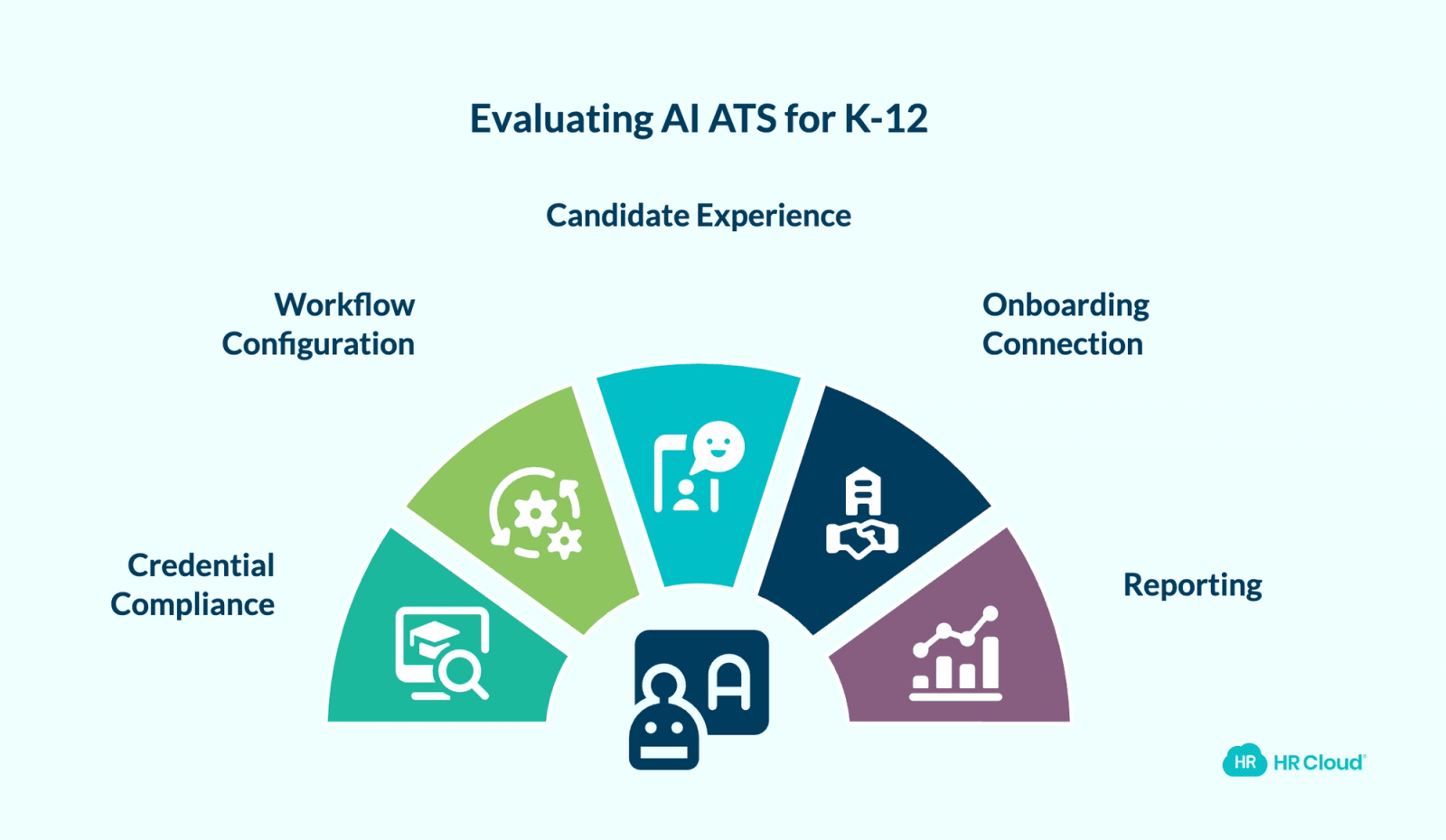
Not every AI ATS will serve a school district well. Many are built for corporate hiring environments where the compliance profile, calendar structure, and stakeholder model are fundamentally different. When evaluating platforms, K-12 HR directors should ask these questions:
On credential compliance: Does the platform integrate directly with state licensure databases, or does credential verification require manual lookup? Can the system flag expired or mismatched certifications automatically at the screening stage?
On workflow configuration: Can board approval be built as a configured pipeline stage with task reminders and status visibility? Can multi-school review workflows be set up without IT involvement?
On candidate experience: Does the platform offer a mobile-first application flow? Can candidates see their status in real time? Does the system send automated status communications, or does that fall to HR staff?
On onboarding connection: Does the ATS hand off to onboarding natively, or does HR re-key data into a separate system after a hire is confirmed?
On reporting: Can the platform surface time-to-hire by role, school, and hiring manager? Can it show where candidates are dropping out of the process? Can it compare source effectiveness across job boards?
A platform that can support these workflows is better suited to K-12 hiring than a generic recruiting system that requires workarounds for every education-specific requirement.
How to Turn AI Applicant Tracking Into Action: 3 Starting Points
Step 1: Map where time is going before you select a platform. Pull your last full hiring season's data. How many days passed between application and offer for your average teacher hire? Where did the most time get spent — credential verification, principal scheduling, board approval routing, or something else? The platform that solves your actual bottleneck matters more than the platform with the longest feature list.
Step 2: Audit your current application drop-off. If you have access to analytics from your current system, look at where candidates stop completing applications. If a significant percentage abandon the process before submitting, your application itself is filtering out people before you get a chance to evaluate them. A mobile-first, short-form initial application is usually the fastest win.
Step 3: Start with high-volume, high-urgency roles. Don't try to re-engineer your entire hiring process at once. Pick the two or three role categories where vacancies hurt most — often special education, STEM, and foreign language, which are consistently the hardest to fill — and configure the AI ATS workflow for those first. Build evidence internally before expanding.
The District That Moves Fastest Wins the Candidate
The teacher you need exists. The challenge is reaching them, moving them through your process, and getting to an offer before a faster-moving district does.
That is not only a sourcing problem. It is a process problem — and better hiring workflows can help districts control it.
Every delayed hire has consequences that travel well beyond the HR department. A vacant classroom in September means substitute costs, principal workload, instructional gaps, and in some districts, the kind of community concern that lands on a superintendent's desk. Hiring speed is not just an HR operations metric — it is a budget line, a board agenda item, and a direct input to student outcomes.
HR Cloud's Recruit ATS is built for organizations with distributed workforces, complex compliance requirements, and hiring processes that cannot afford unnecessary delays. If your district is ready to see what a faster, more connected hiring process looks like in practice, we'd be glad to show you.
Request a Demo of HR Cloud Recruit

Discover how our HR solutions streamline onboarding, boost employee engagement, and simplify HR management
Book Your Free DemoFrequently Asked Questions
What is an AI applicant tracking system for K-12 schools?
An AI-assisted applicant tracking system for K-12 schools is recruiting software that can help organize candidate information, support screening workflows, coordinate interviews, track credential-related documentation, and keep communication moving across HR, principals, and candidates — configured around the specific requirements of school district hiring, including board approval routing, academic calendar timing, and multi-school review coordination.
How does AI applicant tracking differ from a traditional ATS in education?
A traditional ATS tracks candidates through a pipeline using keyword filters and relies on the recruiter to do the rest. An AI-assisted ATS can help organize candidate information, identify likely matches based on configured criteria, reduce repetitive follow-up communication, and flag missing documentation earlier in the process. For K-12 districts, the practical value tends to show up in structured workflows around credential review, principal feedback coordination, communication, and onboarding handoff — not in AI making hiring decisions.
Can an AI ATS help with state teaching credential verification?
The strongest platforms support credential tracking workflows that surface documentation status earlier in the hiring process — flagging missing, expired, or mismatched certifications before HR invests interview time in a candidate who still needs verification. How deeply any platform integrates with state licensure systems varies; districts should ask vendors specifically what credential workflows are supported out of the box versus requiring configuration or third-party connections.
How does AI applicant tracking help with teacher shortages?
The Learning Policy Institute's 2025 national scan found that 1 in 8 teaching positions is either unfilled or staffed by an under-certified teacher. AI applicant tracking addresses the controllable portion of that gap by reducing time-to-hire — so districts make offers before candidates accept elsewhere — and by broadening candidate reach through multi-board posting and mobile-first applications that reduce drop-off from currently-employed teachers.
What should a K-12 district look for in an AI ATS that a corporate platform won't offer?
Academic calendar-aware workflows, built-in board approval routing, credential tracking support — with clear answers on whether state licensure integrations are available out of the box, through configuration, or through third-party connections — multi-principal review coordination, and a direct onboarding handoff without data re-entry. Most corporate ATS platforms require significant manual configuration — or workarounds — to approximate these, which adds implementation time and ongoing maintenance overhead.
Is there a compliance risk if a district uses a generic ATS not designed for K-12?
Yes. A platform that does not surface credential verification at the screening stage increases the risk of investing interview resources in candidates who are not licensed to teach in your state — and, in worst-case scenarios, progressing a hire through to an offer before the licensure gap is caught. For public school districts, this can create operational risk and may require legal or compliance review.
About the author

Keep Reading


Like What You Hear?
We’d love to chat with you more about how HR Cloud® can support your business’s HR needs.
Book Your Free Demo