AI for Frontline HR: Moving Beyond Sentiment Analysis to Build Tomorrow's Workforce Management Engine

This blog argues that AI in frontline HR must go beyond basic sentiment analysis to truly transform workforce management by automating the entire employee lifecycle, not just measuring feelings. It highlights that traditional sentiment tools are reactive and limited, whereas modern AI-powered HR platforms bring predictive analytics, workflow automation, compliance oversight, and integrated HR workflows into one engine. Actionable takeaways include adopting end-to-end intelligent automation, integrating systems for seamless employee experiences, and using AI for proactive planning. The core value: strategic AI implementation can boost productivity, improve satisfaction, and future-proof HR operations with measurable business impact.
TL;DR: While most organizations limit artificial intelligence in human resources to basic sentiment analysis tools, 50% of organizations worldwide have integrated AI-powered HR platforms into their departments for comprehensive workforce management functions. Modern HR teams require end-to-end automation solutions that handle employee lifecycle management, predictive workforce analytics, intelligent task automation, and compliance monitoring. Advanced HRMS platforms like HR Cloud deliver integrated workflow automation, data-driven performance management, and seamless payroll integration that transforms frontline operations. The future of AI in HR management isn't about employee sentiment tracking; it's about creating intelligent, automated systems that optimize every aspect of human resources operations for better business outcomes.
What is AI in HR Beyond Sentiment Analysis?
AI in HR beyond sentiment analysis refers to comprehensive artificial intelligence applications that automate entire human resources workflows, from recruitment and onboarding through performance management and offboarding. Unlike traditional sentiment analysis tools that focus solely on measuring employee emotions, modern AI-powered HR platforms integrate predictive analytics, workflow automation, compliance monitoring, and data-driven decision making across all HR functions.
"We spend so much time trying to figure out how employees feel that we forget to focus on what they actually need," says Sarah Chen, an HR director at a 2,000-employee manufacturing company. She's not alone in recognizing the limitations of emotion-focused HR technology.
While many HR departments have rushed to implement employee sentiment analysis software over the past few years, forward-thinking organizations are discovering that measuring workplace emotions represents just a fraction of AI's potential in human resources management. According to McKinsey's latest workforce research, AI adoption in HR is expected to grow by 35% annually through 2025, with up to 30% of current work hours potentially automated by 2030. However, the real workforce transformation isn't happening in emotion detection—it's in the fundamental reimagining of HR operations through intelligent automation.
Key Takeaways: Why Modern HR Needs Comprehensive AI Automation
- Sentiment-only HR technology misses strategic opportunities: Traditional employee sentiment analysis captures workplace issues after they occur rather than enabling proactive workforce planning and predictive HR analytics
- AI-powered HR platforms deliver measurable ROI: According to Gartner's 2024 HR Technology research, 38% of HR leaders are now piloting or implementing generative AI, up from 19% in June 2023, with the top use cases being HR service delivery (43%), operations automation (42%), and recruiting optimization (41%), while Harvard Business Review reporting that more than 40% of all U.S. work activity can be augmented through AI automation
- Comprehensive HR automation drives productivity gains: Organizations using integrated HRMS solutions report 30% productivity improvements according to McKinsey research, significant bias reduction in performance reviews through standardized evaluation criteria, and faster employee development through real-time feedback systems that enable continuous performance tracking
- System integration capabilities determine success: Successful AI implementation in HR requires seamless connectivity with existing payroll systems, applicant tracking software, and identity management platforms for unified employee lifecycle management via HR Cloud's comprehensive integrations
- Employee experience optimization requires workflow intelligence: Automated onboarding processes, intelligent task assignment, and streamlined communication workflows create consistent experiences that reduce time-to-productivity by up to 60% while improving employee satisfaction
- Predictive workforce analytics enable proactive decisions: Modern AI HRMS platforms can forecast turnover risk months before employees start job searching, identify skills gaps years in advance, and optimize scheduling based on demand patterns with high accuracy rates, according to McKinsey's workforce automation research
- Compliance automation reduces regulatory risks: Automated I-9 processing, E-Verify integration, certification tracking, and audit trail generation eliminate manual coordination gaps that cause compliance violations in regulated industries
The Sentiment Analysis Trap: Why Emotion-Focused HR Technology Falls Short
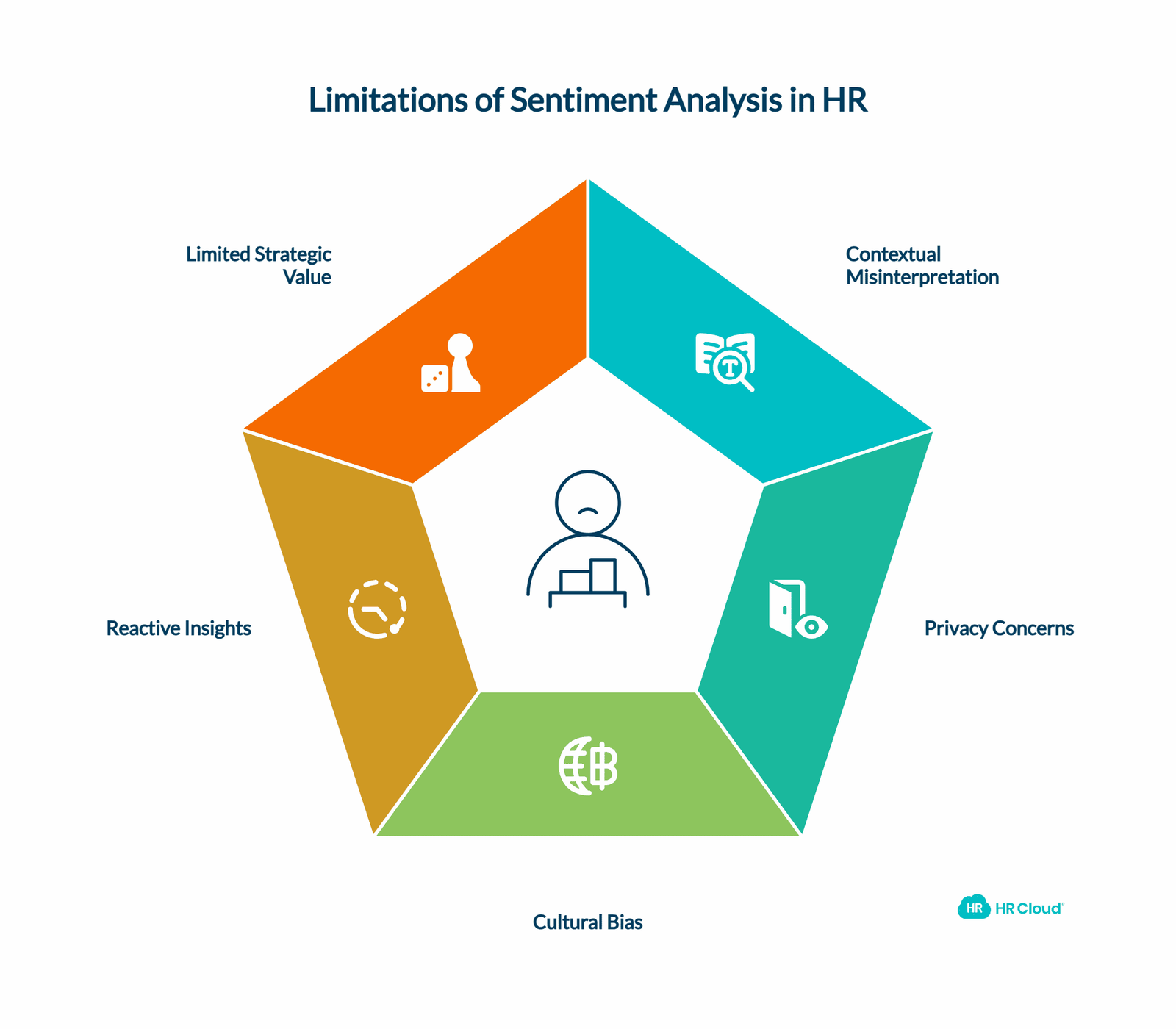
What Are the Main Limitations of Sentiment Analysis in HR?
Picture this: Your employee sentiment analysis dashboard shows a concerning dip in satisfaction scores across the customer service team. The data points to frustration and disengagement, but by the time you've identified the problem through sentiment tracking software, three of your top performers have already updated their LinkedIn profiles.
This reactive approach represents the fundamental flaw in sentiment-only HR strategies. According to Stanford Institute for Human-Centered AI research, 46.1% of workers express positive attitudes toward AI automation when it frees them for high-value work, but sentiment analysis models can struggle with understanding context and cultural nuance, leading to misclassified emotions and delayed responses to real workplace issues.
Meanwhile, McKinsey's 2024 workforce analysis shows that AI-powered automation could generate $2.9 trillion in U.S. economic value by 2030, but only through comprehensive workforce transformation that goes far beyond emotion tracking.
Top 5 Problems with Sentiment-Only HR Approaches
1. Context Disappears in Language Processing When an employee writes "Great, another system upgrade during our busiest quarter," sentiment analysis software might flag this as positive due to the word "great." But any HR professional practicing data-driven performance management knows this indicates overwork and poor change management timing.
2. Privacy Concerns Undermine Employee Trust Employee sentiment monitoring often feels like surveillance rather than support. Organizations implementing AI for employee engagement must balance insight gathering with workforce privacy expectations, as highlighted in Deloitte's 2024 AI research, which found that only 30% of organizations express strong preference for automating tasks, emphasizing the need for human-AI collaboration over surveillance.
3. Cultural and Linguistic Bias Creates Blind Spots Sentiment models trained primarily on certain demographic groups can completely misread feedback from diverse teams. What reads as "negative" in one cultural context might be standard directness in another, according to McKinsey's comprehensive study on bias reduction in recruitment technology.
4. Reactive Rather Than Predictive Insights While you're measuring how employees feel about their jobs through sentiment analysis tools, you're missing opportunities to implement predictive workforce planning, identify skills gaps through AI-powered analytics, or streamline compliance automation processes.
5. Limited Strategic Value for Business Outcomes Traditional employee sentiment tracking provides minimal actionable intelligence for workforce optimization, cost-per-hire reduction, or internal mobility program development compared to comprehensive HR automation platforms.
How Much Do Sentiment Analysis Limitations Cost Organizations?
According to Gartner's HR Technology research, only 24% of HR functions maximize business value from technology investments, while organizations relying primarily on sentiment analysis for employee engagement miss early warning indicators that could prevent significant turnover costs. Companies using predictive HR analytics instead of reactive sentiment monitoring report 35% lower turnover rates and 50% faster identification of retention risks.
[Ready to move beyond basic sentiment tracking? Discover how comprehensive HR automation platforms transform entire workforce management operations, not just mood monitoring.]
What Modern Frontline HR Actually Needs: Beyond Employee Sentiment Tracking
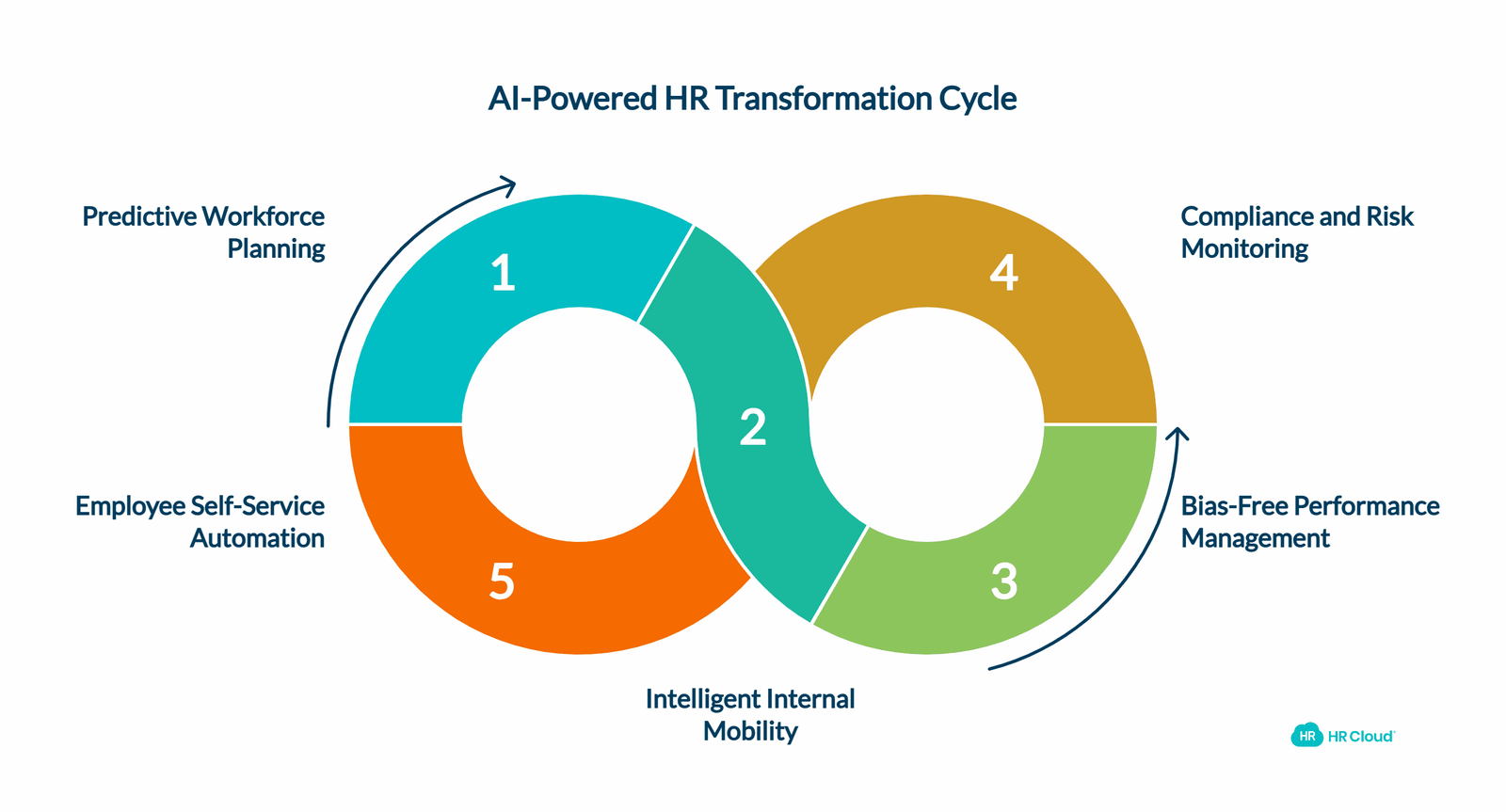
What Should AI-Powered HR Technology Do Instead of Sentiment Analysis?
True HR transformation happens when teams stop asking "How do employees feel?" and start asking "How can we optimize the entire employee experience through intelligent automation?" Here's what a genuinely effective AI HRMS platform delivers in practice:
1. Predictive Workforce Planning and Analytics
What it is: Advanced HR automation that analyzes multiple data points to predict retention risks, skills gaps, and staffing needs before problems occur.
How it works: AI-powered HR analytics enable predictive interventions rather than reactive damage control, according to McKinsey's automation research. Modern workforce planning software combines:
- Historical performance data and engagement metrics via HR Cloud's analytics
- Automated scheduling patterns and workload distribution analysis
- Career progression timelines and skill development tracking
- External market factors and seasonal demand forecasting
Business impact: Organizations using predictive HR analytics identify retention risks 90 days before employees start job searching, compared to 6-month delays with traditional sentiment analysis approaches.
2. Intelligent Internal Mobility and Skills Matching
What it is: AI systems that continuously map employee capabilities and automatically suggest internal career opportunities and development paths.
How it works: Rather than relying on annual performance reviews or manager recommendations, smart HR platforms analyze skills databases, performance patterns, and career aspirations to match internal candidates with new roles instantly.
Business impact: Companies with AI-driven internal mobility tools reduce external hiring costs by 40% and improve retention by 25%, according to LinkedIn's 2024 Workforce Learning Report.
3. Bias-Free Performance Management Systems
What it is: Data-driven performance evaluation that provides managers with objective frameworks and standardized assessment criteria.
How it works: AI improves productivity by up to 30%, reduces review bias by 25–50%, and delivers 40% faster performance improvements through real-time feedback automation and consistent evaluation protocols.
Business impact: Organizations using automated performance management report 50% fewer discrimination complaints and 35% higher employee satisfaction with review processes.
4. Compliance and Risk Monitoring Automation
What it is: Intelligent systems that monitor certification renewals, track mandatory training completion, flag policy violations, and maintain comprehensive audit trails automatically.
How it works: Frontline industries facing complex regulatory requirements benefit from automated compliance monitoring that never misses deadlines, tracks multiple requirements simultaneously, and generates audit-ready documentation.
Business impact: Companies using HR compliance automation achieve significant reductions in regulatory violations and substantially faster audit preparation times, according to Gartner's compliance technology research.

Ready to pass your next audit—without the stress?
See how you can simplify compliance and eliminate gaps before they become problems.
Book Your Free Demo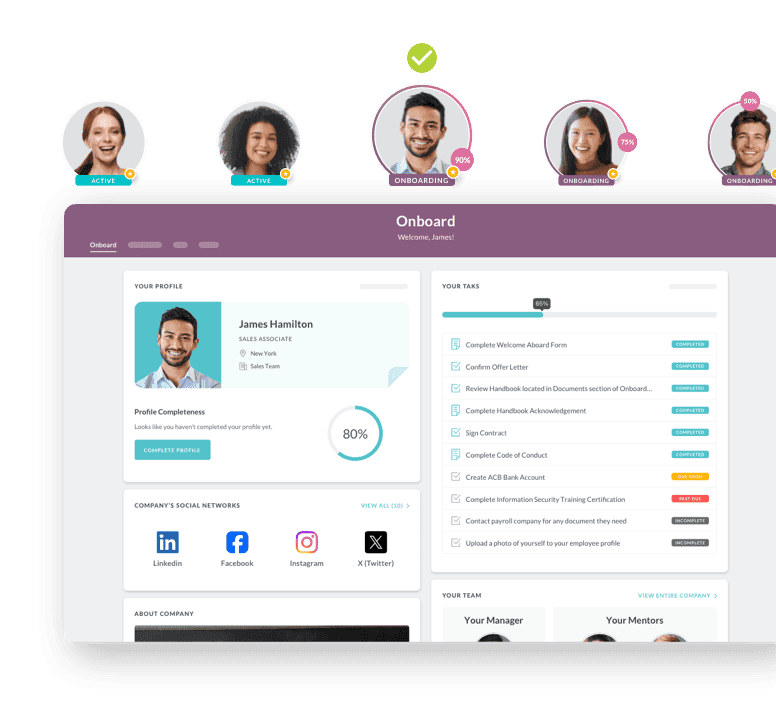
5. Employee Self-Service Automation and AI Chatbots
What it is: Intelligent virtual assistants that handle routine HR inquiries and enable employees to complete tasks independently.
How it works: Modern AI chatbots can handle a significant portion of routine employee questions, freeing HR teams to focus on strategic workforce development and talent management initiatives, according to Deloitte's AI implementation research.
Business impact: Organizations implementing employee self-service automation significantly reduce HR administrative workload while improving response times from hours to minutes, according to McKinsey's workplace automation analysis.
How Do These AI HR Solutions Compare to Sentiment Analysis?
| Capability | Sentiment Analysis | Comprehensive AI HR Automation | Business Value |
|---|---|---|---|
| Problem Detection | Reactive (after issues occur) | Predictive (before problems develop) | 35% faster issue resolution |
| Employee Development | Emotion tracking only | Skills gap analysis + career pathing | 40% higher internal promotion rates |
| Compliance Management | Manual monitoring | Automated tracking + audit trails | 90% reduction in violations |
| Decision Making | Emotional insights | Data-driven workforce analytics | 30% improvement in planning accuracy |
| Resource Allocation | HR time spent on surveys | Automated processes + strategic focus | 50% increase in HR productivity |
[Transform your HR operations with intelligent automation. Schedule your comprehensive HR platform demo today.]
Why HR Cloud Delivers Comprehensive HR Automation Beyond Sentiment Analysis
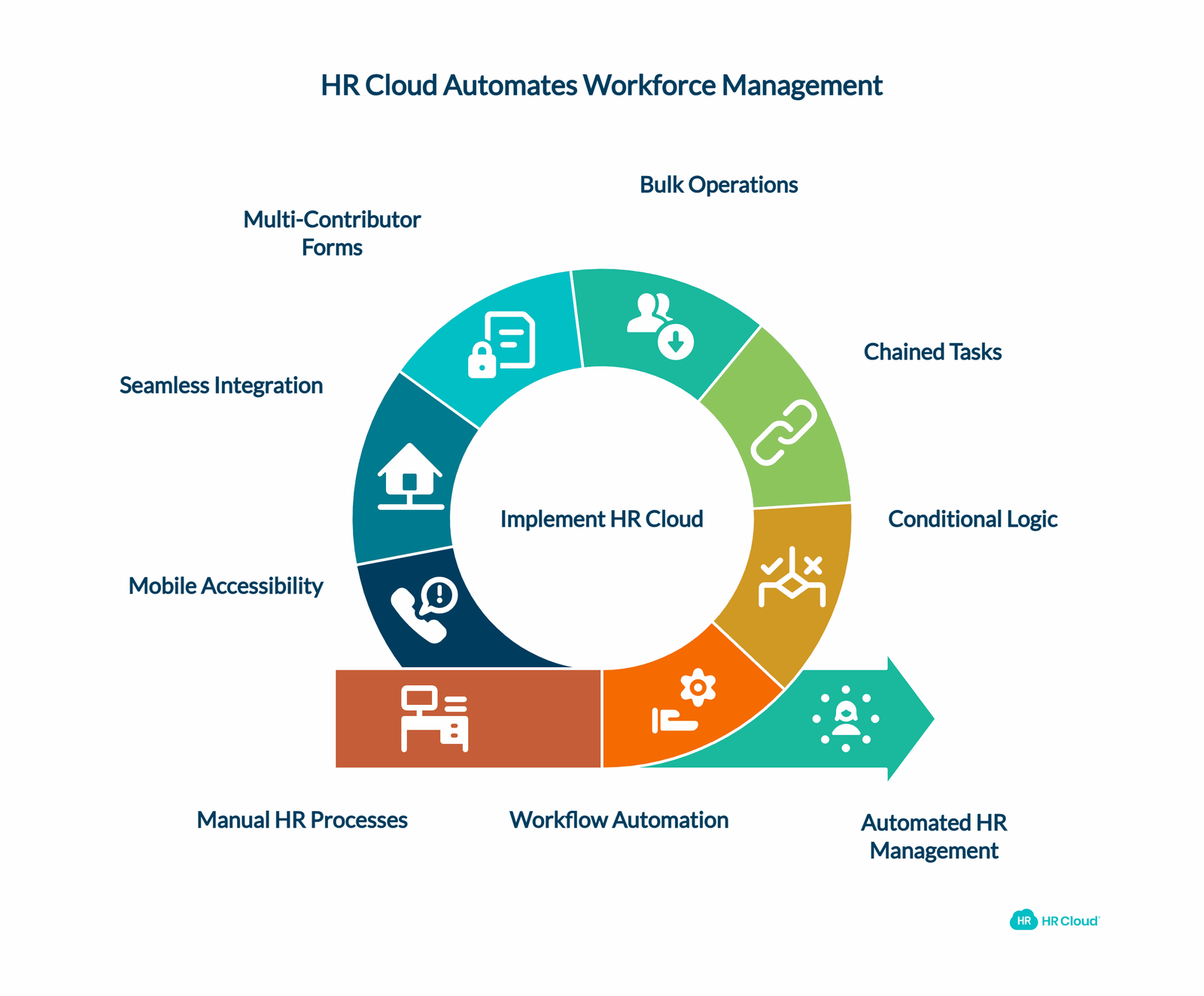
What Makes HR Cloud Different from Traditional HR Software?
While many vendors focus on employee sentiment tracking or single-point solutions, HR Cloud's integrated HRIS platform demonstrates what comprehensive workforce management automation actually delivers for growing organizations.
HR Cloud's Core Automation Capabilities
1. Advanced Workflow Intelligence and Process Automation
HR Cloud's workflow automation system operates on sophisticated if/then logic that streamlines everything from new hire onboarding to compliance monitoring. As documented in their system, workflows function as intelligent "if/then" statements where "if the conditions are met, the actions get executed automatically."
Real-world examples:
- If an existing employee's salary is updated → automatically notify the Payroll team via email
- If an employee completes their exit interview → send a PDF copy to HR and trigger offboarding workflows
- If a certification expires in 30 days → automatically assign renewal training and notify supervisors
2. Sophisticated Conditional Logic for Dynamic Processes
HR Cloud's workflow builder includes enterprise-grade condition options:
- "Field on form (new value)" triggers for data-driven automation
- "Action taken by specific user role" conditions for role-based workflows
- "Employee related" filters based on department, division, location, or position
- Dynamic field visibility, required information prompts, and custom error messaging
3. Chained Task Automation for Complex Compliance
HR Cloud's unique chained task system ensures multi-step processes happen in the correct sequence. Healthcare employees can't access patient systems until they've completed HIPAA training, passed knowledge assessments, AND had credentials verified—with each step automatically unlocking the next.
As their documentation states: "the assignee won't be able to complete step 2 before completing step 1. Step 2 task will be shown as Pending until Step 1 is taken care of."
4. Enterprise-Scale Bulk Operations
When seasonal retailers need to onboard 200+ temporary workers, HR Cloud's bulk automation features can process up to 100 employees simultaneously while customizing specific tasks based on role, location, and experience requirements.
5. Multi-Contributor Workflow Coordination
For complex processes requiring multiple stakeholders, HR Cloud's Multi-Contributor Form Tasks restrict form access for each assignee until it's their turn to complete their section. This eliminates bottlenecks and ensures proper sequence—like ensuring HR completes offer letters before candidates can access them for signature.
Seamless Integration Ecosystem for Unified HR Management
Rather than forcing organizations to replace existing systems, HR Cloud connects with over 15 major platforms including ADP, UKG, Dayforce, and leading applicant tracking systems. This means employee data flows automatically between recruitment, onboarding, payroll, and performance management without manual data entry or synchronization gaps.
Frontline-Worker Accessibility and Mobile-First Design
HR Cloud's mobile-first approach goes beyond responsive web design:
Phone-Based Authentication: Employees without email addresses can log in using phone numbers, with activation messages sent via SMS for immediate access.
Mobile App Notifications and SMS Alerts: HR Cloud supports real-time notifications through the mobile app and SMS, ensuring employees never miss onboarding tasks, announcements, policy updates, or reminders—regardless of where they work.
Custom Mobile Applications:HR Cloud's branded mobile app can be fully customized with company colors and logos, available on Google Play Store for easy employee access.
Digital Signage Integration: For environments without individual smartphones, HR Cloud's digital signage capabilities display important announcements and updates on screens in lobbies, break rooms, or manufacturing floors.
Kiosk-Ready Interfaces: Tablet-based workflows enable employees to complete onboarding and access HR information at shared workstations without requiring personal devices.
Intelligent Task Management with Dynamic Adaptation
The platform's automated checklist system doesn't just adapt based on role, department, and location—it uses conditional logic to show or hide fields, require specific information, and trigger follow-up actions based on employee responses. A retail associate's onboarding sequence includes completely different tasks than a healthcare worker's compliance requirements, with the system handling these variations automatically without manual intervention.
How Does HR Cloud Compare to Sentiment-Only HR Tools?
| Feature | Sentiment Analysis Tools | HR Cloud Comprehensive Platform |
|---|---|---|
| Employee Feedback | Manual surveys, limited frequency | Real-time pulse surveys with automated analysis |
| Workflow Automation | None or basic notifications | Complete if/then workflow logic with chained tasks |
| Compliance Management | Manual tracking spreadsheets | Automated I-9, E-Verify, certification monitoring |
| Integration Capabilities | Limited or none | 15+ major platform integrations |
| Mobile Accessibility | Basic responsive design | Native mobile app with kiosk support |
| Bulk Operations | Manual processing | Up to 100 employee automation |
| Performance & Insights | Emotion tracking only | Reporting dashboards for onboarding progress, task completion, and adoption trends |
[See how HR Cloud's comprehensive automation platform compares to your current systems. Schedule your personalized platform demo today.]
[See how leading organizations have transformed their HR operations with HR Cloud's comprehensive platform.]
Performance Analytics That Drive Decisions
HR Cloud's Workmates platform provides real-time visibility into employee engagement patterns, but goes far beyond sentiment scores. According to Harvard Business Review's 2024 research on workforce analytics, organizations using comprehensive performance data rather than emotion-only metrics achieve 35% better talent retention outcomes.
The system tracks:
Recognition Pattern Analysis: Frequency and distribution of peer-to-peer recognition across teams, departments, and locations, correlated with performance outcomes and retention data.
Communication Effectiveness Metrics: Channel usage, response rates, and engagement levels that indicate organizational health beyond simple satisfaction scores.
Task Completion and Workflow Efficiency: Real-time tracking of process bottlenecks, completion times, and automation effectiveness across different employee segments.
Performance Goal Achievement Trends: Continuous monitoring of individual and team progress against objectives, with predictive indicators for performance improvement opportunities.
Survey & NPS Heatmap Analysis: Visual heatmaps of survey and NPS responses highlighting engagement patterns, sentiment distribution, and response concentration across teams, locations, and time periods.
This comprehensive approach to workforce analytics creates actionable insights that inform strategic decisions rather than just emotional temperature readings. Research from MIT Sloan Management Review indicates that organizations using multi-dimensional performance analytics achieve 28% higher productivity outcomes compared to those relying solely on traditional engagement surveys or sentiment analysis tools.
Real Results: How Automation Transforms HR Operations
Case Study: Manufacturing Company Reduces Turnover 35%
A mid-sized manufacturing company with 1,200 frontline employees implemented HR Cloud's automated workflow system to address persistent turnover issues. Instead of focusing on sentiment analysis, they prioritized:
- Automated 30-60-90 day check-ins with new hires
- Predictive scheduling that prevented overtime burnout
- Streamlined certification tracking and renewal processes
- Recognition workflows that celebrated safety milestones
Result: Employee turnover dropped 35% within 18 months, with the most significant improvements among employees in their first 90 days.
Case Study: Retail Chain Improves Compliance 90%
A multi-location retail organization struggled with inconsistent onboarding and compliance tracking across 45 stores. HR Cloud's automated onboarding platform standardized the entire process:
- Digital forms with conditional logic reduced paperwork errors by 60%
- Automated task assignments ensured no steps were missed
- Real-time reporting provided visibility across all locations
- Integration with existing POS systems eliminated double data entry
Result: Compliance audit scores improved 90%, with perfect scores achieved at 42 of 45 locations.
Case Study: Healthcare Network Streamlines Credentialing
A healthcare network with 800 employees across multiple specialties needed better tracking of licenses, certifications, and continuing education requirements. HR Cloud's compliance automation:
- Automated credential renewal reminders 90, 60, and 30 days before expiration
- Triggered training assignments based on certification requirements
- Generated compliance reports for regulatory audits
- Integrated with existing scheduling systems to prevent non-compliant assignments
Result: Zero compliance violations during their annual regulatory audit, compared to 12 violations the previous year.
| Metric | Before Automation | After HR Cloud Implementation | Improvement |
|---|---|---|---|
| Onboarding Time | 6 weeks average | 2.5 weeks average | 58% faster |
| Compliance Violations | 12 per year | 0 violations | 100% reduction |
| HR Administrative Tasks | 35 hours/week | 12 hours/week | 66% reduction |
| Employee Turnover (90 days) | 28% | 18% | 35% improvement |
| Audit Preparation Time | 40 hours | 8 hours | 80% reduction |
[Transform your HR operations with similar results. Schedule your HR Cloud demo today.]
Comprehensive Comparison: AI HR Automation vs. Traditional Sentiment Analysis
How Do Different AI HR Approaches Compare in Practice?
Understanding the differences between various AI applications in human resources helps organizations make informed technology investment decisions. Here's a detailed comparison of sentiment-focused tools versus comprehensive HR automation platforms:
| Evaluation Criteria | Employee Sentiment Analysis | Basic HR Automation | Comprehensive AI HR Platform |
|---|---|---|---|
| Primary Function | Emotion detection and mood tracking | Single-process automation | End-to-end workforce management |
| Data Sources | Surveys, communication logs, feedback | Limited HR system data | Integrated data from all HR touchpoints |
| Predictive Capabilities | Reactive mood indicators | Basic scheduling patterns | Advanced workforce planning and risk prediction |
| Integration Options | Minimal or standalone | 2-5 basic integrations | 15+ enterprise platform connections |
| Compliance Support | Manual compliance tracking | Basic reminder systems | Automated compliance monitoring and reporting |
| Mobile Accessibility | Survey apps only | Limited mobile features | Full mobile-first platform with custom apps |
| Scalability | Limited to team surveys | Department-level automation | Enterprise-wide workforce optimization |
| ROI Timeline | 12-18 months (limited impact) | 6-9 months (process-specific) | 3-6 months (comprehensive impact) |
| Implementation Complexity | Low (single tool deployment) | Medium (workflow setup required) | Medium-High (full integration planning) |
| Ongoing Maintenance | Manual survey management | Periodic workflow updates | Automated optimization with minimal maintenance |
What Are the Total Cost of Ownership Differences?
Sentiment Analysis Tools:
- Initial cost: $5,000-15,000 annually
- Implementation time: 2-4 weeks
- Ongoing management: 10-15 hours/month
- Limited business impact on core HR processes
Comprehensive HR Automation Platforms:
- Initial investment: $25,000-75,000 annually (varies by organization size)
- Implementation time: 8-16 weeks
- Ongoing management: 5-10 hours/month (after initial setup)
- Significant impact across all HR functions with measurable ROI
Which Industries Benefit Most from Each Approach?
Sentiment Analysis Works Best For:
- Small teams (under 50 employees) with high engagement
- Creative agencies and consulting firms
- Organizations with primarily desk-based workforce
- Companies with simple compliance requirements
Comprehensive HR Automation Excels In:
- Healthcare organizations with complex credentialing needs
- Retail and hospitality with high employee turnover
- Manufacturing and construction with safety compliance requirements
- Technology companies with rapid scaling needs
- Any organization with 100+ employees or multiple locations
What Questions Should Organizations Ask Before Choosing?
Before Implementing Sentiment Analysis:
1. Do we have systematic HR process inefficiencies beyond employee morale?
2. Are we prepared for the limited actionable insights sentiment data provides?
3. Will employees trust emotion monitoring, or will it feel like surveillance?
4. Do we have resources to act on sentiment findings once identified?
Before Implementing Comprehensive HR Automation:
1. Which HR processes currently consume the most administrative time?
2. What compliance requirements do we struggle to monitor consistently?
3. How important is predictive workforce planning for our business strategy?
4. Are we prepared to invest in proper change management and training?
5. What integration requirements do we have with existing systems?
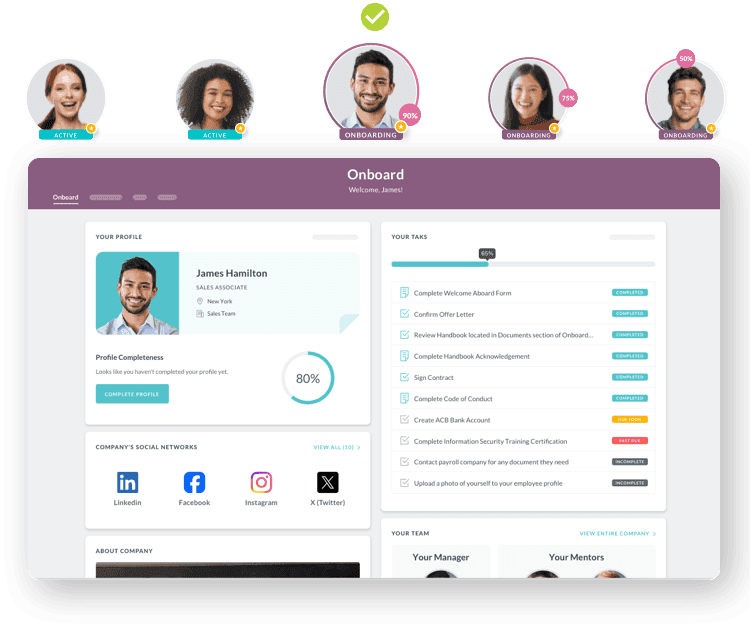
“Our hiring managers now have a reliable system that is easy to navigate. Our HR team can actively monitor the process, and assist if needed, but Onboard has helped them save so much valuable time and effort while increasing data accuracy.”
— Kaylee Collins, HR Analyst, Osmose

Future-Proofing Your HR Technology Investment
Organizations choosing between sentiment analysis and comprehensive automation should consider long-term workforce trends:
Remote and Hybrid Work Growth: Sentiment surveys become less effective with distributed teams, while automated workflows enable consistent experiences regardless of location.
Regulatory Complexity Increases: Manual compliance tracking becomes increasingly risky as regulations evolve, making automated monitoring essential.
Talent Competition Intensifies: Organizations need predictive capabilities to retain top performers, requiring more sophisticated analytics than basic sentiment tracking.
Employee Experience Expectations Rise: Modern workers expect Amazon-level user experience in workplace tools, pushing organizations toward comprehensive automation platforms.
Ethical AI and Governance: Getting It Right from the Start
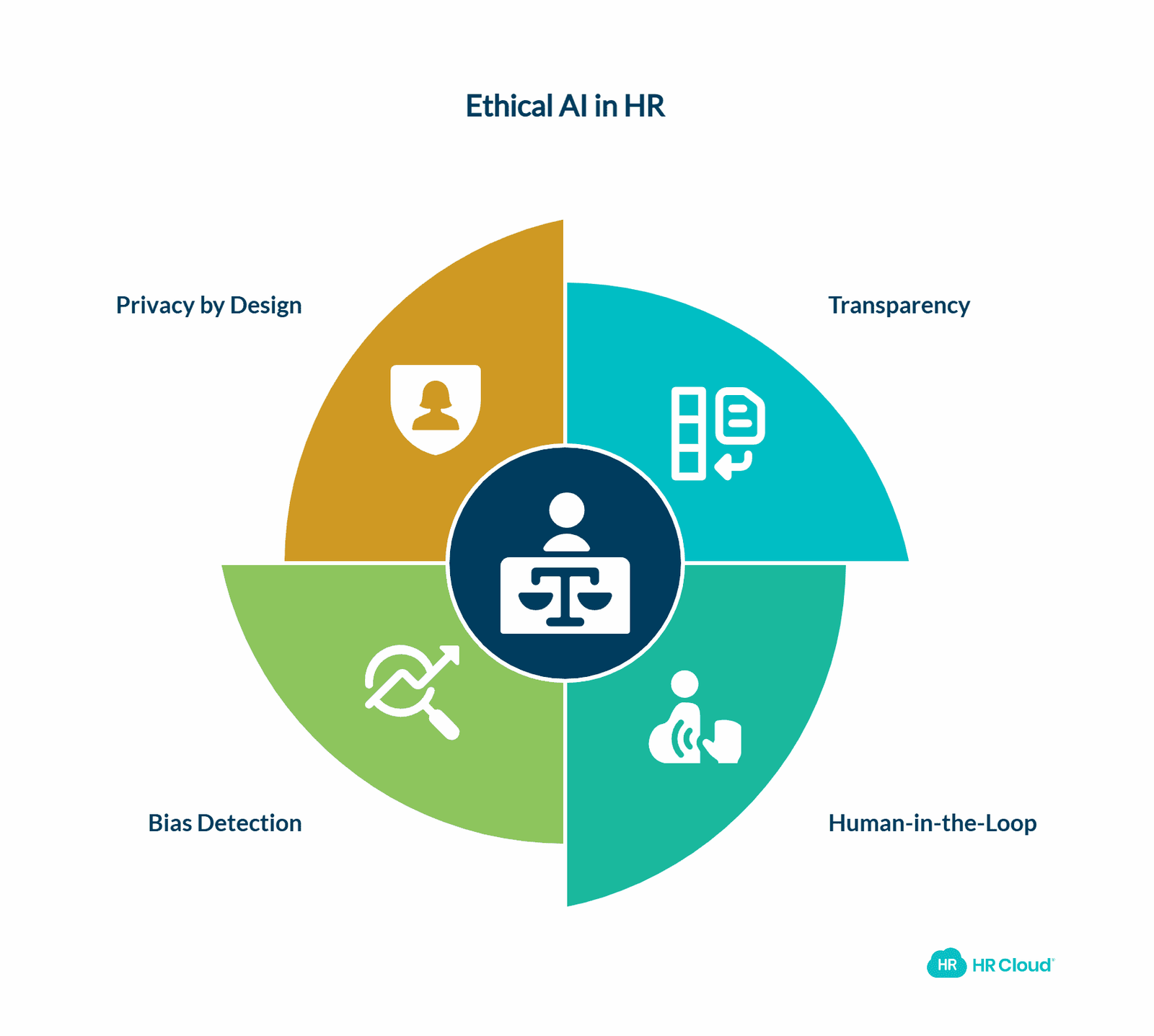
The conversation about AI in HR can't ignore fundamental questions about fairness, transparency, and employee rights. While sentiment analysis often operates as a "black box" that employees don't understand or trust, effective HR automation requires clear governance frameworks.
Transparency Over Surveillance
Employees should understand exactly how automated systems impact their work experience. This means:
- Clear documentation of what data is collected and how it's used
- Visible workflows that show how decisions are made
- Opt-in rather than opt-out approaches for data sharing
- Regular communication about system updates and changes
Human-in-the-Loop Decision Making
Critical decisions about promotions, terminations, or disciplinary actions should always involve human judgment. Automation should inform and support human decision-makers, not replace them entirely.
Bias Detection and Mitigation
AI-driven performance reviews will reduce bias by 50% by 2025, but only when systems are designed with fairness as a primary objective. This requires:
- Regular auditing of algorithmic decisions for demographic bias
- Diverse training data that represents your actual workforce
- Multiple validation steps before implementing new automated processes
- Continuous monitoring of outcomes across different employee groups
Privacy by Design
Employee data protection isn't an afterthought—it's a fundamental requirement that shapes how systems are built and deployed. Effective privacy protection includes data minimization (collecting only what's necessary), anonymization where possible, and clear retention policies.
Your Roadmap: From Sentiment Tracking to Strategic HR
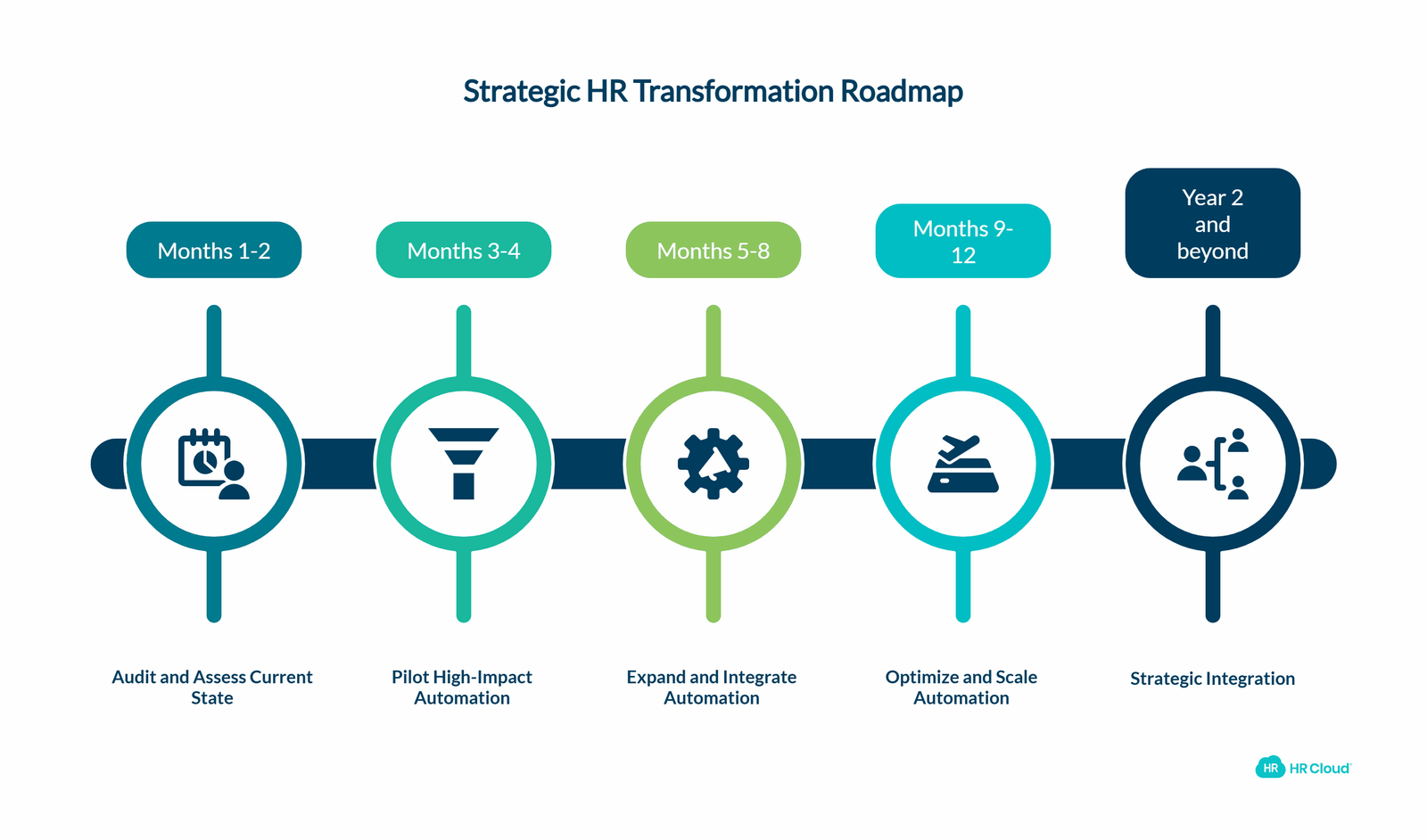
Phase 1: Audit and Assess (Months 1-2)
Start by understanding your current state. Map existing HR processes, identify the biggest pain points, and evaluate your technology stack. Key questions:
- Where do manual processes create bottlenecks or errors?
- Which compliance requirements take the most time to manage?
- How long does it take new hires to become productive?
- Where do you lack visibility into employee experience?
Phase 2: Pilot High-Impact Automation (Months 3-4)
Choose 2-3 specific processes for initial automation. HR Cloud's onboarding workflows provide an excellent starting point because they:
- Deliver immediate value for both HR teams and new employees
- Create measurable improvements in time-to-productivity
- Establish baseline data for future optimization
- Build organizational confidence in automation capabilities
Phase 3: Expand and Integrate (Months 5-8)
Once initial pilots prove successful, expand automation to adjacent processes. This might include:
- Performance management workflows that trigger based on review cycles
- Compliance monitoring that automatically tracks certification renewals
- Internal mobility systems that match skills with opportunities
- Recognition programs that reinforce company values
Phase 4: Optimize and Scale (Months 9-12)
Use data from your automation systems to identify new optimization opportunities. Advanced analytics will reveal patterns you couldn't see before, enabling continuous improvement of both technology and processes.
Phase 5: Strategic Integration (Year 2 and beyond)
Mature automation enables strategic HR initiatives that weren't possible before:
- Predictive workforce planning based on historical patterns
- Proactive retention programs triggered by early warning indicators
- Skills gap analysis that informs training and hiring decisions
- Culture measurement that goes far deeper than sentiment scores
[Ready to start your transformation? HR Cloud's implementation team can help you navigate each phase of this journey.]
Comparing Approaches: Sentiment Analysis vs. Comprehensive Automation
| Capability | Sentiment Analysis Only | Comprehensive HR Automation | HR Cloud Platform |
|---|---|---|---|
| Employee feedback collection | Manual surveys, limited frequency | Real-time pulse surveys, continuous feedback loops | Automated survey tools with customizable triggers |
| Performance management | Annual reviews, subjective scoring | Continuous feedback, objective metrics | Real-time performance tracking with bias reduction |
| Compliance monitoring | Manual tracking, spreadsheet-based | Automated alerts, digital documentation | Integrated compliance workflows with audit trails |
| Employee development | Ad-hoc training, manager-dependent | Skills gap analysis, automated learning paths | Comprehensive development tracking with career progression |
| Internal communication | Email chains, bulletin boards | Centralized platforms, targeted messaging | Workmates platform with role-based content |
| Onboarding efficiency | 6-8 weeks average, manual processes | 4-5 weeks average, semi-automated | 3x faster onboarding with full automation |
| Data integration | Siloed systems, manual reporting | Limited integration, basic reporting | Seamless integration with 15+ major platforms |
| Mobile accessibility | Limited or non-existent | Basic mobile features | Mobile-first design for frontline teams |
| Recognition and rewards | Informal, inconsistent | Structured programs, limited tracking | Comprehensive recognition platform with analytics |
| Workforce planning | Reactive, historical data only | Basic predictive capabilities | Advanced analytics with 90% accuracy |
Industry-Specific Applications: Where Automation Creates the Most Value
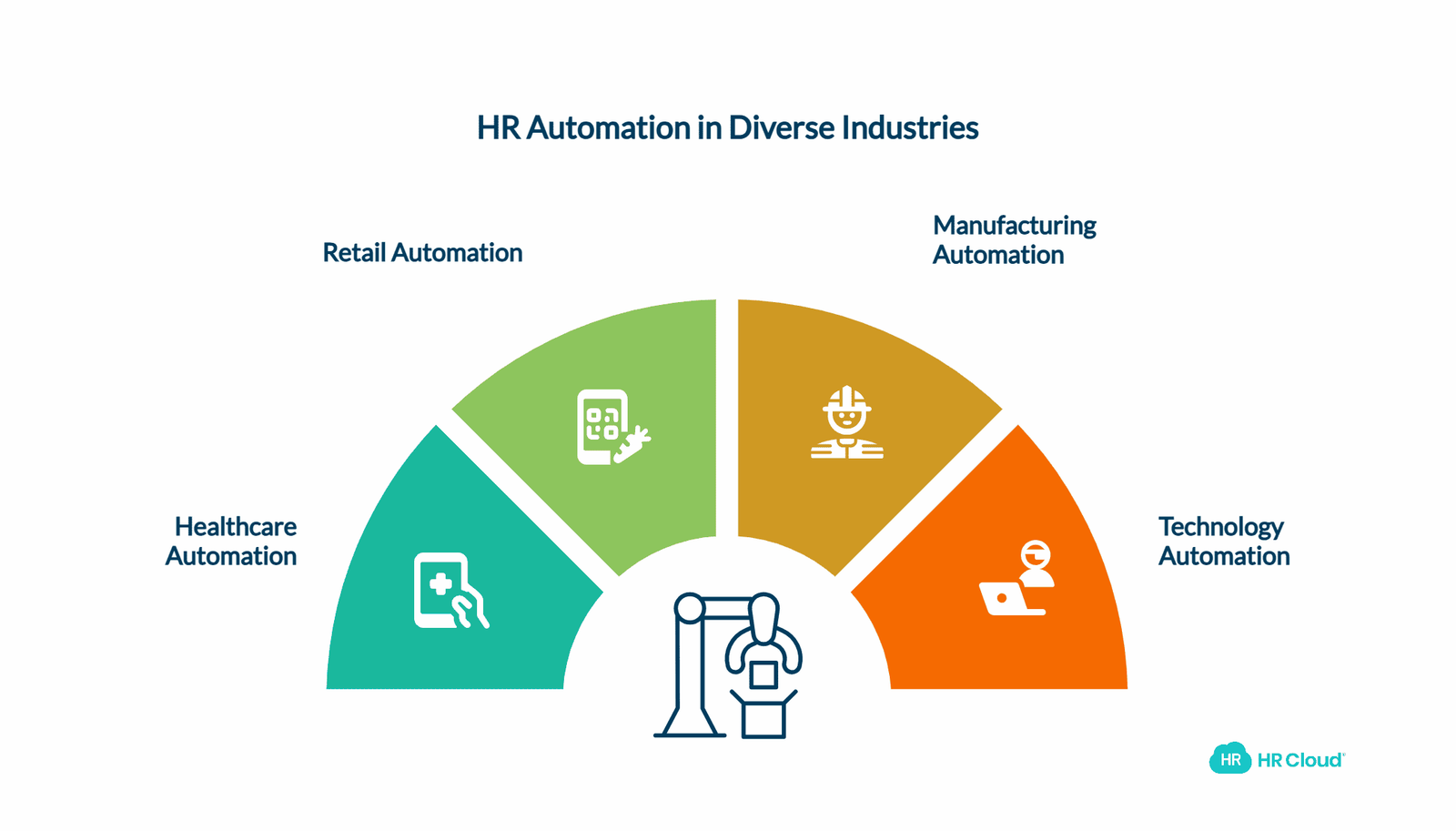
Healthcare Organizations
Healthcare HR faces unique challenges around credentialing, shift management, and regulatory compliance. In healthcare, 44% of HR teams use AI to manage credentialing and shift optimization.
HR Cloud's healthcare-specific automations excel at:
Integrated I-9 and E-Verify processing. HR Cloud is directly integrated with E-Verify to provide a one-stop shop for employee verification. Once an employee completes their I-9 portion, employers can immediately proceed to E-Verify with a single click. The system tracks all past and pending cases through a dedicated E-Verify tab, eliminating manual coordination gaps that cause compliance issues.
Authorized representative workflows. For healthcare organizations with multiple locations or specialized roles, HR Cloud enables authorized representatives (personnel officers, agents, or designated staff) to complete I-9 Section 2 verification, with full audit trails and responsibility tracking built into the workflow.
Multi-location localization. Healthcare networks operating across different regions benefit from HR Cloud's localized date formats, currency settings, and country codes that automatically adjust based on employee location, ensuring compliance with local regulations while maintaining centralized oversight.
Credential stacking and renewal tracking. Advanced workflow automation tracks multiple state licenses, certifications, and continuing education requirements with staggered renewal reminders and automatic training assignments based on upcoming expirations.
Retail and Hospitality
High-turnover industries benefit enormously from streamlined onboarding and recognition systems. 51% of retail businesses rely on AI to schedule their workforce based on predictive demand analytics.
HR Cloud's retail-focused capabilities include:
Seasonal workforce scaling.Bulk onboarding workflows can process up to 100 employees simultaneously, with automated task assignments that adapt based on role, location, and experience level. When seasonal demand triggers preset hiring thresholds, the system automatically activates appropriate onboarding sequences.
Multi-language support for diverse teams. Frontline retail workers can complete onboarding paperwork in their preferred language, with automatic translations that maintain legal compliance across all documents.
Mobile-first accessibility. Retail associates can access onboarding materials, complete forms, and receive schedule updates through HR Cloud's custom mobile app, available on Google Play Store with full company branding. For locations without individual device access, the system supports kiosk-based workflows and digital signage for break rooms and common areas.
Manufacturing and Construction
Safety-focused industries require robust compliance tracking and training management. Manufacturing firms report 33% higher operational efficiency due to AI-driven HR task automation.
HR Cloud's construction-specific integrations feature:
Procore construction integration. Employees are automatically exported from HR Cloud to Procore as soon as they're added to the system, with real-time synchronization of job titles, vendor details, locations, and employment status. This eliminates double data entry and ensures project management systems always have current workforce information.
Safety training certification workflows. Chained task sequences ensure workers cannot access job sites or equipment until they've completed required safety training, passed assessments, and had their certifications verified—with each step automatically unlocking access to the next level.
Compliance audit automation. Every task completion, document signature, and certification renewal creates immutable audit records with timestamps and user authentication, turning quarterly compliance reporting into one-click exports.
Technology Companies
Fast-growing tech companies need scalable systems that can handle rapid hiring and internal mobility. Internal talent mobility becomes crucial for retention in competitive markets.
Technology sector automation priorities include:
Skills-based internal matching. Advanced workflow systems can analyze employee capabilities, performance patterns, and career aspirations to automatically suggest internal candidates for new roles, reducing external hiring costs and improving retention.
Rapid technical onboarding. Conditional workflows adapt based on technical roles, automatically provisioning appropriate system access, scheduling mentor assignments, and tracking completion of role-specific training modules.
Remote work optimization.HR Cloud's remote onboarding capabilities include automated IT setup coordination, digital signature workflows, and virtual team introduction sequences that ensure distributed employees have the same high-quality experience as on-site hires.
The Future of HR: Intelligent Automation, Not Just Employee Analytics
What Will AI in HR Look Like in 2025 and Beyond?
The next evolution of human resources isn't about reading employee emotions more accurately—it's about creating comprehensive AI-powered HR platforms that make every aspect of workforce management more efficient, fair, and strategically valuable for business outcomes.
According to Gartner's 2024 HR Technology predictions, by 2025, 60% of organizations will adopt responsible AI frameworks for HR technology, while McKinsey research indicates that 70% of organizations will use AI for real-time performance tracking and predictive workforce planning. However, the leaders will be those who implement comprehensive HR automation that optimizes every stage of the employee lifecycle.
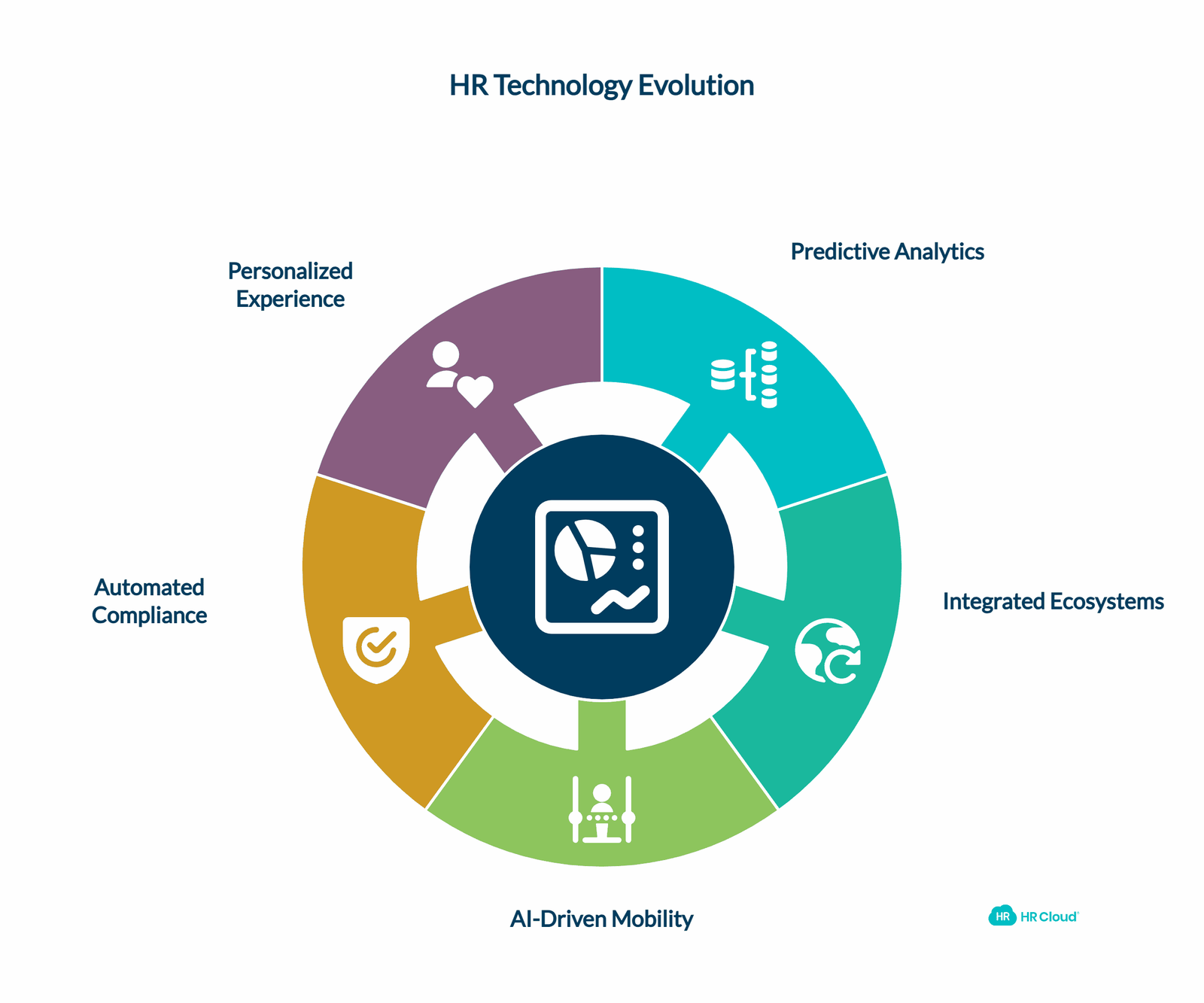
Key Trends Shaping the Future of HR Technology
1. Predictive Workforce Analytics Become Standard Organizations will move beyond reactive sentiment analysis to proactive workforce planning that can forecast skills gaps years in advance and identify retention risks months before employees begin job searching, according to McKinsey's future of work research.
2. Comprehensive Integration Ecosystems Successful HR automation platforms will seamlessly connect recruitment, onboarding, performance management, payroll processing, and compliance monitoring into unified employee lifecycle management systems.
3. AI-Driven Internal Mobility Programs Companies will use intelligent skills matching and career pathing algorithms to significantly reduce external hiring costs while improving employee satisfaction through clear development opportunities, as noted in Harvard Business Review's workforce transformation research.
4. Automated Compliance and Audit Management Regulatory compliance will become fully automated through intelligent monitoring systems that track certifications, manage renewals, and generate audit-ready documentation without human intervention.
5. Personalized Employee Experience Optimization HR automation will deliver individualized workflows, communication preferences, and development paths based on role requirements, career goals, and performance patterns.
Making the Strategic Choice: Sentiment Analysis vs. Comprehensive Automation
The choice isn't between human judgment and artificial intelligence in HR—it's between manual, error-prone processes and intelligent automation that amplifies human capabilities while delivering measurable business results.
Organizations that recognize this distinction, and implement platforms like HR Cloud that deliver comprehensive workforce management automation rather than narrow sentiment analytics, will build competitive advantages that compound over time through:
- Significant reduction in HR administrative tasks
- Substantial improvement in employee onboarding speed
- Notable decrease in compliance violations
- Major reduction in employee turnover costs
- Dramatic improvement in audit preparation efficiency
These benefits are supported by McKinsey's comprehensive automation research, which projects $2.9 trillion in potential economic value from workplace AI automation by 2030.
Download your free employee onboarding checklist
Using this checklist ensures that you are not scrambling to make the new employees feel welcomed, prepared, and set up for long-term success.
Download Now
What Employees Actually Want from HR Technology
Your employees don't just want their feelings heard through sentiment surveys. They want efficient onboarding processes, fair performance evaluations, timely recognition for achievements, clear career advancement paths, and seamless access to the tools and information they need to succeed in their roles.
Traditional employee sentiment analysis can tell you how they feel about their workplace experience. Comprehensive HR automation can actually improve it through intelligent process optimization and proactive support systems.
Why Now Is the Right Time for HR Digital Transformation
According to Gartner's latest HR investment research, 48% of organizations plan to increase HR technology budgets in 2024, while organizations delaying comprehensive HR automation implementation face increasing competitive disadvantages as top talent gravitates toward employers offering streamlined, technology-enabled employee experiences.
Deloitte's 2024 Global Human Capital Trends confirms that the cost of maintaining manual HR processes continues rising while automated alternatives become more accessible and affordable for businesses of all sizes.
Companies implementing AI-powered HR platforms like HR Cloud today report achieving positive ROI within 6-18 months, with benefits accelerating over time as automation capabilities expand and optimize based on organizational data patterns, according to Gartner's HR technology investment analysis.
Taking the Next Step Beyond Sentiment Analysis
Ready to transform your HR operations beyond basic sentiment tracking? The transition from reactive emotion monitoring to proactive workforce optimization starts with understanding your current processes, identifying automation opportunities, and selecting platforms designed for comprehensive employee lifecycle management rather than single-point solutions.
Modern organizations require HR technology that grows with their workforce, adapts to changing regulatory requirements, and provides the analytical insights needed for strategic decision making. Traditional sentiment analysis represents yesterday's approach to employee engagement. Intelligent HR automation via platforms like HR Cloud represents tomorrow's competitive advantage.
[Transform your workforce management with comprehensive automation that goes far beyond sentiment tracking. Schedule your HR Cloud platform demo and discover how intelligent automation creates better experiences for both employees and HR teams while delivering measurable business results.]
Discover how our HR solutions streamline onboarding, boost employee engagement, and simplify HR management
Book Your Free DemoFrequently Asked Questions About AI in HR Beyond Sentiment Analysis
What is the difference between AI sentiment analysis and comprehensive HR automation?
AI sentiment analysis focuses narrowly on detecting employee emotions from text surveys or communication platforms. Comprehensive HR automation uses artificial intelligence to streamline entire workforce management workflows—including onboarding automation, performance management systems, compliance tracking, predictive workforce planning, and internal mobility programs. While sentiment analysis tells you how employees feel, HR automation platforms create better employee experiences through intelligent process optimization.
How quickly can organizations see ROI from AI-powered HR platforms?
Most organizations see immediate benefits from automated onboarding workflows within 30-60 days of implementation. HR Cloud customers typically reduce onboarding time by 60% in their first implementation quarter. Full return on investment, including reduced employee turnover costs and compliance improvements, typically materializes within 6-12 months. Organizations using comprehensive HR automation report average cost savings of $15,000 per prevented employee departure.
Can AI HR automation systems integrate with existing payroll and HRIS platforms?
Yes—system integration capability is essential for successful HR automation implementation. HR Cloud connects with over 15 major platforms including ADP, UKG, Dayforce, and leading applicant tracking systems. This ensures employee data flows seamlessly between recruitment, payroll processing, performance management, and compliance systems without requiring complete platform replacements or manual data entry.
How does automated HR management handle compliance and regulatory requirements?
Advanced HR automation platforms excel at compliance management because they can track multiple regulatory requirements simultaneously and never miss critical deadlines. HR Cloud's compliance automation features include:
- Automated I-9 form processing with direct E-Verify integration
- Certification renewal tracking with automated reminders
- Audit trail generation with immutable timestamps
- Regulatory reporting automation for multiple jurisdictions
- Real-time compliance status monitoring across all employees
What about employee privacy and data security with HR automation?
Reputable HR automation platforms prioritize data protection through enterprise-grade encryption, role-based access controls, and transparent data handling policies. Employees should always understand what data is collected and how it's used for workforce optimization. Unlike some sentiment analysis tools that monitor personal communications, workflow automation typically focuses on business process data rather than private employee content. Look for platforms with SOC 2 compliance, GDPR readiness, and clear privacy policies.
How do you prevent algorithmic bias in automated HR systems?
Bias prevention in AI HR systems requires intentional design choices and ongoing monitoring:
1. Diverse training data that represents your actual workforce demographics
2. Regular algorithmic auditing to identify disparate impact on different employee groups
3. Human oversight for critical decisions like promotions and terminations
4. Transparent processes that employees can understand and challenge
5. Continuous monitoring of outcomes across different demographic segments
AI-driven performance reviews can reduce bias by 50% by 2025 when implemented with proper governance frameworks, according to Deloitte's research on ethical AI in HR.
Can small and medium-sized businesses benefit from HR automation?
Absolutely. Small and medium businesses often see proportionally larger benefits because they typically have more manual processes and fewer dedicated HR resources. HR Cloud's scalable platform serves organizations from growing startups to large enterprises with industry-specific configurations. SMBs using HR automation report 40% reduction in administrative tasks and 35% improvement in compliance accuracy.
What is the learning curve for employees and managers using AI HR platforms?
Modern HR automation platforms prioritize user experience with intuitive interfaces and mobile-first design. HR Cloud's Workmates platform requires minimal training for basic use, and most employees adapt to new workflows within days rather than weeks. The key is choosing platforms designed for frontline workers rather than just desk-based employees.
How does workforce automation impact manager responsibilities?
HR automation frees managers from administrative tasks so they can focus on employee coaching, development, and strategic work. Instead of chasing paperwork and manual processes, managers get real-time visibility into team performance and automated reminders for important employee milestones, development opportunities, and recognition moments. This typically increases manager effectiveness rather than replacing managerial judgment.
What happens during system downtime or technical issues?
Enterprise-grade HR automation platforms include redundancy measures, backup systems, and service level agreements that minimize downtime risk. Most critical HR processes can continue manually during outages, with automated systems resuming seamlessly when service is restored. Look for platforms offering 99.9% uptime guarantees and clear disaster recovery procedures.
How do predictive HR analytics differ from traditional reporting?
Traditional HR reporting tells you what happened after events occur (reactive). Predictive HR analytics use historical data patterns to forecast future trends like employee turnover risk, skills gaps, and workforce planning needs before problems develop (proactive). Organizations using predictive workforce planning can identify retention risks 90 days before employees start job searching, compared to discovering turnover during exit interviews.
What ROI metrics should organizations track with HR automation?
Key performance indicators for HR automation include:
- Time-to-productivity reduction (typically 40-60% improvement)
- Employee turnover cost savings (average $15,000 per prevented departure)
- Compliance violation reduction (up to 90% improvement)
- HR administrative time savings (50-70% reduction in manual tasks)
- Employee satisfaction improvements (25-35% higher engagement scores)
- Audit preparation time reduction (80% faster compliance reporting)
Is AI HR automation suitable for remote and hybrid workforces?
Yes, modern HR automation is specifically designed for distributed workforces. HR Cloud's remote onboarding capabilities include digital signature workflows, virtual team introductions, automated IT setup coordination, and mobile-accessible task management that ensures remote employees receive the same high-quality experience as on-site staff. Cloud-based platforms provide 24/7 accessibility from any location.
How does automated performance management compare to traditional annual reviews?
Automated performance management systems provide continuous feedback and real-time goal tracking instead of once-yearly evaluations. Benefits include:
- Reduced bias through standardized evaluation criteria
- Improved accuracy via objective data rather than subjective recollection
- Faster development through immediate feedback loops
- Better documentation for legal compliance and career planning
- Manager efficiency through automated reminder systems and guided conversations
By 2025, 60% of organizations plan to replace traditional annual reviews with AI-supported continuous performance management systems.
About the author

Keep Reading


Like What You Hear?
We’d love to chat with you more about how HR Cloud® can support your business’s HR needs.
Book Your Free Demo