
Employee Rewards and Recognition That Drive Engagement

Recognition shouldn’t feel this hard, right?
You know employee recognition programs matter but what used to be a “nice-to-have” now feels like a missing piece of your culture puzzle.
Maybe you’ve caught yourself thinking, “We give shoutouts… but is it enough?”
Or worse, “We’re doing things the old way and it shows.”
That nagging feeling? You’re not imagining it.
Disengaged teams, quiet quitting, high performers walking out, it all adds up.
This guide breaks it all down without any jargon or fluff. Real talk on what works, what doesn’t, and how to finally make recognition click.
Let’s begin.
What Is an Employee Recognition Program?
An employee recognition program is a structured way for organizations to acknowledge and reward their employees’ contributions. That could mean celebrating big wins like hitting sales targets or small, everyday efforts like helping a teammate meet a deadline.
Call it a recognition program, an appreciation initiative, or R&R, it all means just one thing: letting people know their work matters.
Done right, recognition builds belonging. It signals, “You’re seen, you’re valued, and you make a difference here.”
That’s culture in action, and it always starts with intent.
Why Employee Recognition Matters?
Recognition isn’t just about employee morale. It’s a business lever. Teams that feel appreciated stick around longer, show up stronger, and care more.
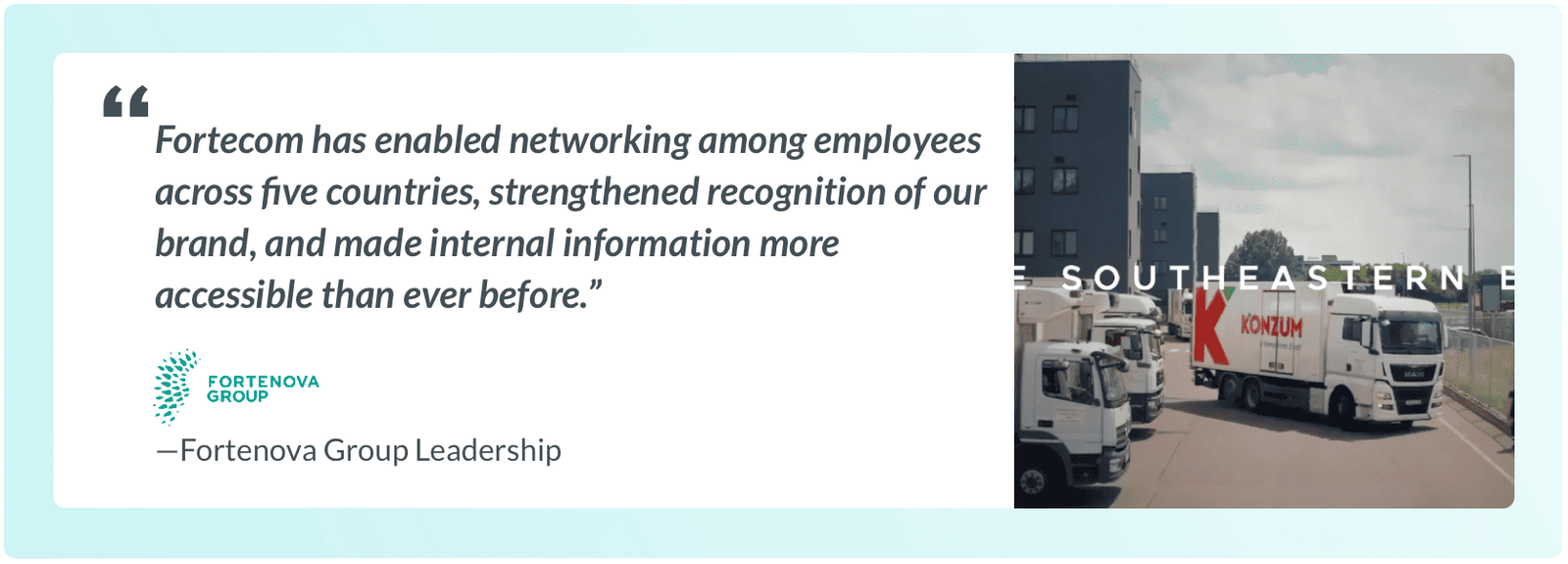
Take Fortenova Group, for example. After rolling out HR Cloud’s Workmates platform, over 80% of employees actively used it to celebrate peers and share kudos. That’s not just adoption we are talking about; that’s a cultural shift.
Recognition programs help reduce attrition, increase engagement, and improve productivity. When done right, these programs make a difference to the bottom line.
5 Types of Employee Recognition
A successful employee recognition program includes more than just plaques and applause. It gives employees the visibility and validation they crave, without making it feel forced or fake.
Here are the five core types of recognition to include in your strategy.
1. Top-Down Recognition
This type of recognition flows from leaders to their teams. It works because employees want to know their efforts are seen and valued by decision-makers.
When a manager highlights a team member in a town hall or sends a personal email acknowledging their impact, it reinforces performance and builds trust.
Top-down recognition is especially effective when it's tied to company goals or values. For example, praising a product designer for their problem-solving during a launch not only rewards the individual but also signals what success looks like across the org.
2. Peer-to-Peer Recognition
Peer recognition empowers employees to celebrate one another. It builds team morale, breaks silos, and surfaces contributions that managers may not always see.
It might be as simple as a kudos message, a nomination on a recognition board, or a shoutout in a team meeting.
At Toyota Material Handling, another Workmates user, peer-to-peer recognition took center stage.
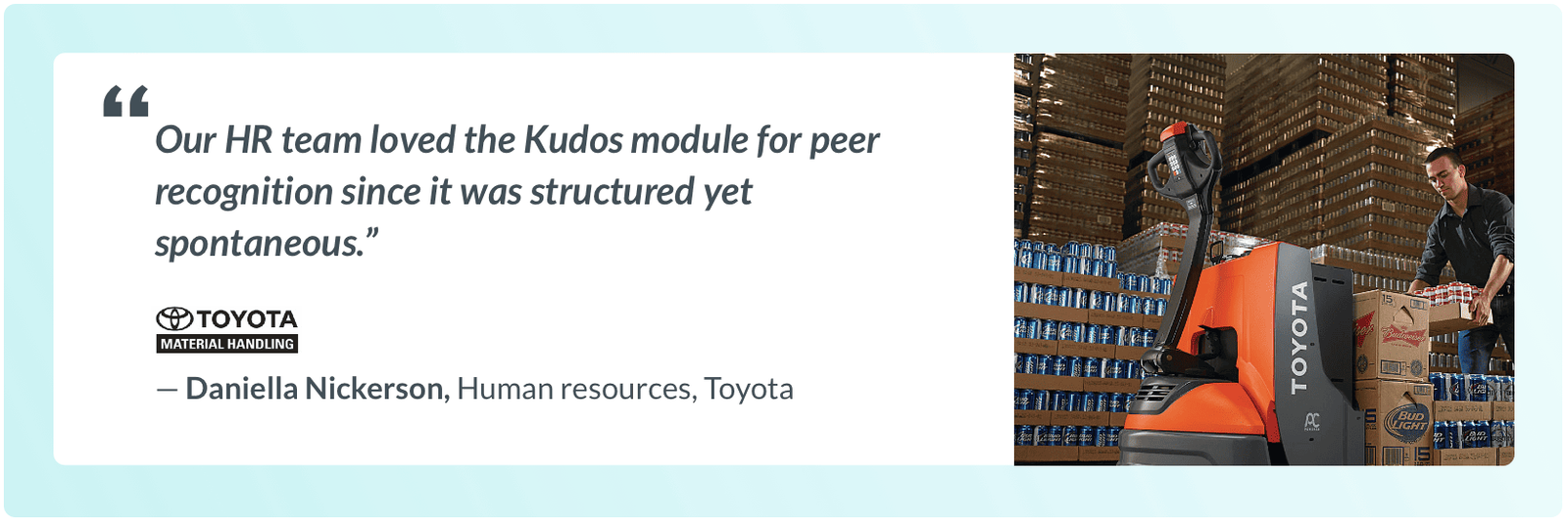
Giving peers a voice in appreciation encourages a culture where recognition becomes part of daily interactions and not just manager checklists.
3. Formal Recognition
Formal recognition programs involve structured, scheduled efforts like awards, milestone celebrations, or performance bonuses.
These programs provide clarity and visibility into what employees stand to gain. Especially when achievement criteria are communicated well.
Examples of formal recognition include monthly “employee spotlight” features, five-year work anniversary gifts, or recognition ceremonies during company retreats. While they offer legitimacy, formal programs must be balanced with more spontaneous, everyday efforts to avoid feeling transactional.
4. Informal Recognition
Informal recognition is timely, casual, and often unexpected. It can be a quick Slack message, a verbal thank-you during a team call, or a handwritten note left on a desk.
Its impact lies in immediacy.
Recognizing someone’s extra effort during a hectic week or publicly acknowledging support during a crisis shows you’re paying attention. Informal recognition humanizes work and it feels honest because it is.
5. Monetary and Non-Monetary Recognition
Both tangible rewards and symbolic gestures have their place in the larger scheme of things.
Monetary recognition includes bonuses, spot awards, or gift cards. These offer direct value and work well for hitting major goals.
Non-monetary rewards include flexible hours, lunch with leadership, or extra vacation days. They may not come with a price tag, but they carry emotional value.
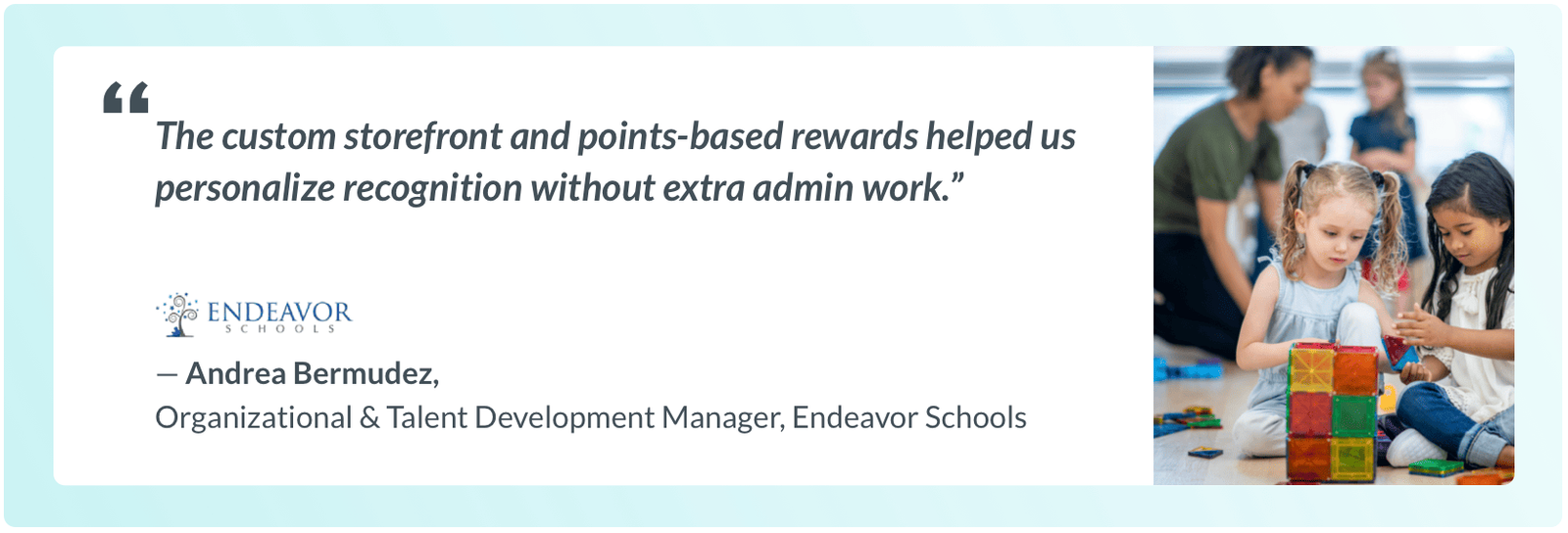
Endeavor Schools took this one step further with a points-based storefront that gave employees freedom to choose their rewards.
👉 Explore their recognition journey →
Offering both types ensures your program can motivate across different personalities and preferences.
When your employee recognition program includes a mix of these types, it becomes more inclusive, more meaningful, and far more likely to succeed.

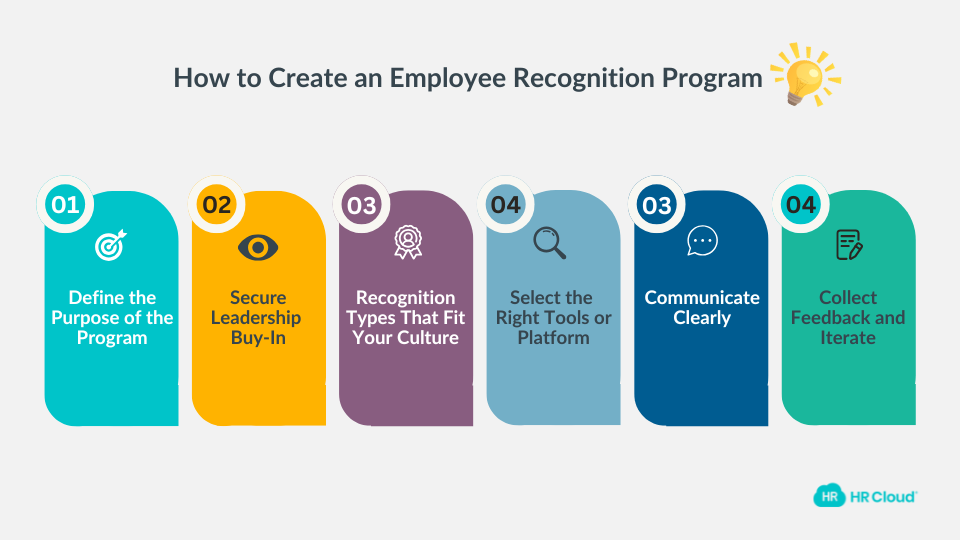
How to Create an Employee Recognition Program
A good employee recognition program doesn’t happen by accident. It’s built with purpose, buy-in, and consistency.
Here’s a step-by-step guide to help you do it right from scratch.
Step 1: Define the Purpose of the Program
Before designing anything, get clear on why you're building this. Do you want to boost morale, reduce turnover, improve team performance, or reinforce company values?
Why it matters: A clear goal anchors the program and guides every future decision such as what to recognize, how often, and in what format.
How it helps: Purpose defines the path you need to take. For instance, if your goal is retention, you’ll prioritize frequent, inclusive recognition. Or, if goal is engagement, peer-to-peer shoutouts and informal recognition might take the lead.
Step 2: Secure Leadership Buy-In
No matter how well-designed your employee recognition scheme is, it won’t work without visible support from the top. Leadership sets the tone.
Why it matters: If employees don’t see leaders participating, it feels perfunctory to them and participation decreases. Leadership participation encourages them to recognize others, receive feedback, and live by the values.
How it helps: Leaders can amplify participation, unlock budget, and ensure that recognition is not an afterthought.
Step 3: Choose Recognition Types That Fit Your Culture
Pick a mix of recognition styles that suit your team and business model. Include a blend of peer-to-peer, top-down, formal, informal, monetary, and non-monetary options.
Why it matters: A flexible program speaks to different personalities and work styles. What motivates a sales rep might not work for an engineer.
How it helps: A multi-layered approach makes the program inclusive, scalable, and more effective at building trust across departments.
Step 4: Select the Right Tools or Platform
Use what works for your team. If you’re starting small, spreadsheets and email templates might do. But as you scale, tools like HR Cloud’s Workmates automate recognition, track participation, and offer built-in rewards.
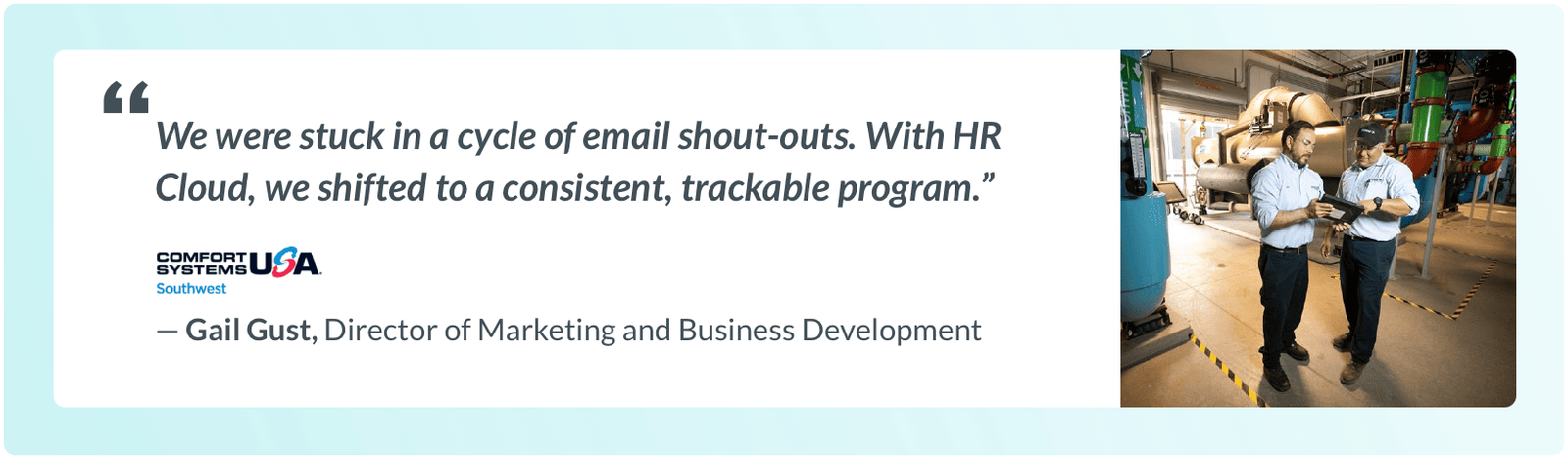
Comfort Systems USA Southwest moved from disjointed emails to a centralized recognition platform, enabling them to prioritize their recognition programs.
👉 Know all about Comfort Systems transformation →
How it helps: The right platform removes admin friction and builds visibility—two things that make or break engagement.
Step 5: Communicate Clearly
Before launch, explain what the program is, who can participate, what kinds of behaviors are recognized, and what the rewards look like.
Why it matters: Confusion kills momentum. If people don’t understand the rules, they won’t join in.
How it helps: Clear communication builds trust and sets the tone. People know what to expect and what’s expected of them. This makes roll out smooth and drives adoption.
Step 6: Collect Feedback and Iterate
Don’t set it and forget it. Ask employees what's working, what feels forced, and what they’d change. Check usage metrics. Pay attention to tone being used for recognition. Ask: are shoutouts meaningful or just routine?
Why it matters: Feedback keeps your recognition program relevant and employee-driven.
How it helps: When people see their input being used to improve the program, it boosts buy-in. Small tweaks based on real feedback can make a big difference.
5 Best Practices to Make the Recognition Program Stick
Launching a recognition program is one thing. Embedding it into your culture? That’s where most companies fall short.
A one-off campaign or a dashboard no one opens won’t cut it. For employee recognition to work long-term, it needs to feel natural, meaningful, and regular.
Here’s how to make that happen.
1. Recognize Often and Not Just at Review Time
Recognition shouldn’t be reserved for annual awards or end-of-quarter emails. Frequent, timely acknowledgment tells employees their everyday efforts matter. The closer the recognition is to the behavior being recognized, the more powerful it feels.
2. Make It Specific and Personal
“Great job” is nice. But “Thank you for handling that client escalation with patience and clarity; our reputation was on the line” is much better.
Specific recognition shows you’re paying attention. It also helps others understand what great performance looks like.
3. Tie Recognition to Company Values
Call out behaviors that reflect your culture, whether it’s innovation, collaboration, or customer obsession. Over time, this shapes how people work. It also keeps your values visible, not buried in an onboarding doc.
4. Mix Recognition Types for Reach and Relevance
Not everyone wants a public shoutout. Some prefer private praise or quiet rewards. Combine informal kudos with formal awards, and blend peer-to-peer with manager-driven praise.
When employees see multiple channels for recognition, they’re more likely to engage.
5. Make Participation Easy
The easier it is to give recognition, the more people will do it. Create templates for managers. Set up Slack or Teams integrations. Use tools like HR Cloud’s Workmates, where recognition is just a click away.
At Endeavor Schools, simplifying participation through a points-based system made recognition feel approachable and personalized.
👉 Explore their recognition journey →
How to Measure Success
A recognition program can be deemed successful only if it works. That means tracking whether it’s actually improving engagement, retention, or morale.
You don’t need a massive data operation. But you do need a few clear metrics and regular check-ins.
Start with participation: Are people using the system? Are managers giving regular feedback? If peer-to-peer tools are in place, how many employees are sending kudos or shoutouts each month? Low numbers often mean the program isn’t visible, accessible, or valued.
Track recognition frequency and distribution: Is recognition happening weekly or only at performance reviews? Are certain teams left out? If it’s always the same five people getting praise, something’s off. Use reports to spot gaps and course-correct.
Use surveys and pulse checks: Ask employees if they feel valued. Use short, regular questions to assess how the program is landing. Look for signals that recognition is changing how people show up and interact.
Watch for downstream impact: Recognition done right affects more than feelings. You might see better collaboration, stronger retention, or improved customer feedback. Tie these shifts back to the program, especially in engagement or exit surveys.
At Fortenova Group, early adoption data showed strong traction:
“Over 80% of employees actively used the platform to give feedback and celebrate wins.”
👉 Read the Fortenova case study →
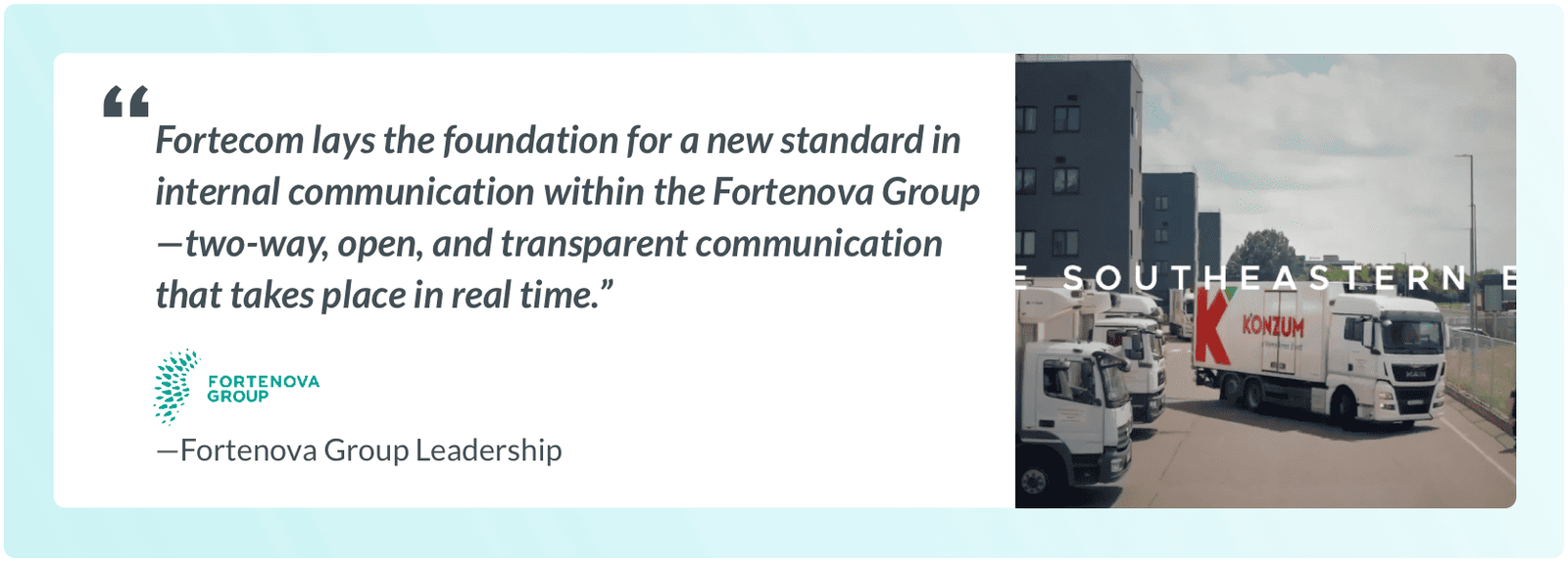
After gathering the adoption data, Fortenova used it to expand their use of Workmates across more departments. The high engagement rate validated the platform’s value, prompting them to roll it out more broadly and integrate it further into their daily communication and recognition routines.
Metrics won’t capture everything. But they’ll show whether your recognition program is moving in the right direction — from intent to impact.
Employee Recognition Program Policy Tips
Even the best employee recognition programs need guardrails.
A simple recognition policy helps teams stay consistent, fair, and aligned. It answers key questions such as:
- What qualifies as recognizable behaviour?
- Who can give recognition?
- How are rewards handled?
Start with a basic recognition policy.
Define who’s eligible, what behaviors or outcomes are recognized, how recognition is given (peer, manager, platform), and how rewards are distributed. Include guidelines for frequency and tone to keep things respectful and inclusive.
You can also give your program a name that reflects your company culture. Something like “Bravo Board,” “High Five Fridays,” or “Kudos Club.” It makes the program feel personal.
Templates for Rolling Out Recognition Programs
You can even offer templates to remove guesswork. A few pre-written messages for managers or team leads can help kickstart participation.
Recognition Message Templates
Use these as starting points:
- Peer-to-peer shoutout template:
“Thanks, [Name], for jumping in to help with [task/project]. You made a huge difference!” - Manager recognition note:
“Your handling of [situation] showed real leadership. Thank you for setting such a strong example.” - Milestone celebration:
“Congrats on [X years] with us! Your contributions over the years have helped shape our culture.” - Team Collaboration Template
"Shoutout to [Name] for being the glue that held the team together during [project/sprint]. Your coordination, patience, and clarity made all the difference." - Customer Impact Template
"Big thanks to [Name] for going the extra mile with [client/customer name]. The positive feedback we received says it all. That you can turn a challenge into a win." - Above and Beyond Template
"Wanted to recognize [Name] for stepping in at the last minute and owning [task]. It wasn’t expected, but it was exactly what the team needed. Thank you!" - Quiet Excellence Template
"You don’t always make noise, [Name], but your work on [task] was rock solid. Just wanted to take a moment to say we see it—and we appreciate it." - Milestone Celebration Template
"Happy [X]-year work anniversary, [Name]! Your consistency, commitment, and contributions have helped shape the team in ways we can’t fully capture. Here’s to many more."
Templates and checklists help HR managers align tasks, timelines, and ownership.
Consider offering a downloadable employee recognition program template or checklist.
Here are a few to get the ball rolling.
Employee Recognition Program Launch Checklist
Employee Recognition Program Starter Kit
Get started on your own employee recognition program using this Recognition Program Starter Kit.
Download Now
Final Thoughts
You don’t need to overthink employee recognition programs.
Start small. Be specific. Celebrate often. Make it consistet, inclusive, and easy to use. And listen to what your people respond to.
Because at the end of the day, employee recognition programs aren’t just about praise. They’re about creating a workplace where people want to stay and do their best work.
Ready to build a culture of appreciation? You know what to do next. Download the free resources and get started.

Experience how Workmates can transform communication and strengthen culture—all in one powerful platform
Book Your Free DemoFAQs
What is an employee recognition program?
It’s a structured way for organizations to acknowledge, reward, and celebrate employee efforts and achievements. This can include both formal awards and informal, everyday appreciation.
What are the best employee recognition programs?
The most effective programs are consistent, inclusive, and tied to company values. They blend top-down and peer-to-peer recognition with both monetary and non-monetary rewards.
What’s the difference between recognition and R&R programs?
Recognition highlights effort or behavior, while rewards offer tangible incentives like bonuses or perks. Together, they form an R\&R (Rewards and Recognition) program that drives motivation and engagement.
How do I build an employee recognition program from scratch?
Start by defining your goals and getting leadership buy-in. Then choose recognition types, select a platform, communicate the program clearly, and improve it based on employee feedback.
What’s an example of employee recognition?
A manager thanking a team member in a meeting for handling a client crisis calmly and professionally. It’s specific, timely, and shows the impact of their actions.
How can I recognize my employees effectively?
Be specific about what they did and why it mattered. Recognize them close to the moment and make it visible to others when appropriate.
How do I promote an employee recognition program internally?
Use internal channels like Slack, email, and team meetings to share how the program works. Highlight early wins and encourage leaders to model the behavior.
What should I call my employee recognition program?
Pick a name that fits your culture. Something short, clear, and memorable like “Kudos Club,” “Bravo Wall,” or “High Five Fridays.” A name builds identity and earns faster buy-in from stakeholders.
This article is written by Shweta in close association with HR Cloud. HR Cloud is a leading provider of proven HR solutions, including recruiting, onboarding, employee communications & engagement, and rewards & recognition. Our user-friendly software increases employee productivity, delivers time and cost savings, and minimizes compliance risk.
Keep Reading


Like What You Hear?
We’d love to chat with you more about how HR Cloud® can support your business’s HR needs.
Book Your Free Demo