How Do You Track Employee Skills and Equipment Certifications Across Projects?

A general contractor staffing a new project usually knows, in general terms, which trades it needs. What it often doesn't know with any confidence is which specific workers already on payroll hold the exact certifications that project requires, right now, without an expired card turning up on day one. That gap, between knowing you employ certified people and knowing precisely who, with what, valid through when, is what skills tracking software construction companies actually need solves. This guide covers why that gap opens up in the first place, what specifically needs tracking on a construction workforce, what a real centralized system does differently from a spreadsheet, and how to build one without pretending a single piece of software replaces every part of the process. At its core, this is a question about whether a company has a real workforce skills database. Worth being precise about what that means in practice: everything this guide covers is certifications, licenses, and equipment qualifications, documented, dated credentials, not an abstract inventory of trade skills like welding proficiency or estimating ability that carry no expiration date. A workforce skills database, for the purposes of this guide, is one place where every worker's certifications and qualifications live and stay current, rather than a collection of disconnected project files that happen to contain some of the same information.
Why Skills Data Matters for Project Staffing
Staffing a construction project is, underneath the scheduling and the bidding, a matching problem: specific tasks that require specific certified people, assembled against a deadline. When that matching happens from memory, a supervisor's recollection of who did well on the last job, or from a phone call to a foreman asking who's available, the company is staffing based on who's easiest to remember, not necessarily who's actually qualified and current on the paperwork that task legally requires. That gap between memory-based staffing and actually-qualified staffing widens with every project a company runs concurrently. A company managing one active job can probably get away with a supervisor's informal knowledge of the crew. A company running five or ten projects simultaneously, with workers rotating between them, is relying on that same informal knowledge to scale far past what any one person can actually hold in their head accurately.
Matching certified workers to the right jobs
The cost of getting this wrong isn't hypothetical. A worker assigned to operate equipment or perform work requiring a certification that's actually lapsed can create real safety, compliance, contractual, and operational risk the moment that assignment is made, regardless of whether anyone notices before an inspector does. That risk exists the moment the assignment is made, not the moment it's discovered, which is exactly why relying on discovery, an inspector's visit, an incident, a random audit, as the primary check against expired certifications is a genuinely risky way to run a compliance program rather than a minor inefficiency. Getting it right, assigning workers whose certifications are confirmed current for the exact scope of a specific project, is a data problem before it's a scheduling problem: the company needs to know, in one place, who holds what, and through when, rather than reconstructing that picture project by project from whichever supervisor happens to remember. Reframing this as a data problem rather than a scheduling problem is itself the useful shift: scheduling software helps once you already know who's qualified. It does nothing to answer the qualification question in the first place. That reconstruction cost is easy to underestimate until someone actually measures it: a project manager spending even thirty minutes a week calling around to confirm who holds what certification is losing real hours annually, hours a properly built equipment certification tracking process would eliminate almost entirely.
What Skills and Certifications Typically Need Tracking
Construction workforces carry a wider mix of credential types than most industries, and treating them as one undifferentiated category is part of why tracking them tends to fail.
Equipment operation, trade licenses, safety certifications
Three broad categories cover most of what a construction workforce needs tracked, and each behaves differently enough that treating them identically is itself a source of tracking failures.
Equipment operation certifications, forklift, crane, aerial lift, cover a worker's authorization to run specific machinery, and OSHA generally requires powered industrial truck operators to be certified by their employer under a formal evaluation program, not simply trained once and assumed competent indefinitely. Trade licenses, electrical, plumbing, HVAC, are typically state-issued and carry their own renewal cycles independent of anything the employer controls directly. That independence matters practically: a company can build the most disciplined internal tracking system imaginable and still be at the mercy of a state licensing board's own processing timeline for a renewal, which is exactly why lead time for trade-license renewals needs to be set generously rather than assumed to match a faster internal turnaround. Safety certifications sit in a category worth understanding precisely rather than assuming: OSHA's 10-hour and 30-hour Outreach Training courses, the OSHA cards most general contractors require for site access, are voluntary programs under federal law and the cards themselves don't carry a federal expiration date. What actually drives a renewal requirement is state law or a specific general contractor's site-access policy, many of which require refreshing an OSHA 10 or 30 card every three to five years even though OSHA itself imposes no such expiration. That distinction matters for anyone building a tracking system: the expiration date that matters for a given card isn't a fixed federal rule, it's whatever the strictest state requirement or GC policy applicable to a given project actually sets, which means a tracking system needs to handle per-project, per-jurisdiction rules rather than one blanket expiration cycle applied to every credential of a given type. A national or multi-state contractor faces this most acutely: the same OSHA 10 card might need no renewal at all for a project in one state and a mandatory three-year refresh for a project in another, purely based on where the work is happening, not based on anything about the card itself or the worker holding it. A tracking system that hardcodes one expiration rule per credential type, rather than allowing that rule to vary by project location, will eventually get this wrong in one direction or the other. Getting this distinction wrong in either direction causes real problems: treating an OSHA card as permanently valid when a specific state or GC requires a refresh creates a compliance gap, while assuming a federal expiration exists when none does can trigger unnecessary retraining costs and scheduling friction for no regulatory reason at all.
Why Manual Skills Tracking Fails Across Projects
A spreadsheet, or a folder of scanned certification cards, can technically hold all of this information. What it can't do is stay current, stay linked to the right worker across multiple concurrent projects, or surface a lapsed certification before that worker is already assigned to a task that requires it. The failure isn't a matter of the tool being too simple. A spreadsheet can technically hold every field a dedicated database could. The failure is behavioral: nobody owns keeping a shared spreadsheet current across every project simultaneously, and the moment one person stops updating their section, the whole document becomes unreliable without anyone necessarily noticing right away. That silent unreliability is the most dangerous part of it. A spreadsheet that's visibly broken gets fixed. A spreadsheet that looks complete and current, but is quietly six months out of date on one project's section, keeps getting trusted right up until someone makes a staffing decision based on stale information.
No centralized view across job sites
The specific failure mode is fragmentation. One project's site file has a set of certification records. Another project, staffed partly by the same workers, keeps a separate set, updated on a different schedule by a different site administrator. Neither administrator is doing anything wrong in isolation. Each is maintaining accurate records for their own project. The failure only appears at the company level, where nobody is responsible for reconciling the two, and often nobody even realizes the same worker appears in both files until a scheduling conflict or a compliance question forces the comparison. When a worker moves between those two projects, which happens constantly in construction, nothing forces the two records to reconcile, so a certification renewed on one project's paperwork may still show as expired, or simply not show up at all, on the other. The company technically has the data. It just doesn't have it anywhere a staffing decision can actually reach it in time. That's the precise definition of the problem this guide is solving for: not an absence of data, an absence of access to data at the moment it matters. This is also where the cost compounds silently: a company with active projects in three states may be running three different informal tracking systems simultaneously, each maintained by whoever happens to be handling paperwork on that particular site, with no single person responsible for reconciling them against each other.


What a Centralized Skills Database Enables
Centralizing this data changes two specific things: how fast a company can confirm a worker is qualified for a task, and how much of its available, certified talent it can actually see when staffing a new project. Both of those changes come from the same underlying shift: moving from records that exist per-project to records that exist per-worker, which sounds like a small structural change but rewires how every staffing and compliance decision downstream actually gets made. A per-project record answers the question "who's certified on this job" for exactly one job. A per-worker record answers a fundamentally more useful question: "what is this person qualified to do, right now, anywhere in the company," which is the question every staffing decision, compliance check, and bid estimate actually needs answered.
Faster crew assignment and compliance checks
The value of getting this right shows up in two places at once: how quickly a company can staff a project with confidence, and how much risk it's carrying at any given moment without necessarily realizing it.
When certification status lives in one system tied to the worker rather than to whichever project's paperwork happens to be current, confirming a worker is qualified for a specific task becomes a lookup instead of a phone call chain. That same lookup, run in reverse, is also what makes a compliance check fast: instead of pulling paper files from a job trailer when a project inspector asks for proof that every worker on-site holds a current, required certification, a compliance report can be generated directly from the centralized record. The speed difference here isn't marginal. A supervisor fielding an inspector's request on-site, with no time to make phone calls or dig through a filing cabinet, needs an answer in minutes, not by the end of the day, and a centralized system is the only realistic way to deliver that without either bluffing or shutting the site down while records get located. There's a second, quieter benefit to fast compliance checks that's easy to overlook: they change how a company behaves before an inspection, not just how it responds during one. When pulling a compliance report takes seconds rather than hours, a safety manager can run that check proactively and routinely, catching a lapsed certification before an inspector ever asks about it, rather than only discovering the gap under pressure.
Cross-project visibility into available talent
The staffing benefit compounds once a company has more than one active project. A centralized system means a project manager staffing a new job can see, across the entire workforce rather than just the crew currently assigned to their own project, exactly which certified workers are available and current, rather than staffing exclusively from whoever happens to be between assignments and visible to that one manager. That cross-project visibility is precisely what a real workforce skills database, in the certification-and-qualification sense defined above, adds that a project-by-project spreadsheet never can: a single, current picture of who the company employs, which certifications and equipment qualifications each person currently holds, and where they're currently assigned, queryable by anyone staffing a new job rather than locked inside one project manager's personal knowledge of their own crew.
How Construction Firms Are Centralizing Skills Data Today
The construction companies making progress here are generally not building a custom database from scratch. They're connecting the employee data they already maintain in an HR system to a dedicated tool built specifically for tracking expiring documents against role-based requirements, rather than trying to force a general-purpose HR platform to also function as a compliance-document engine. That's a meaningful design decision worth understanding rather than glossing over: a general HR platform is built to manage people, roles, and the employee lifecycle broadly, while a dedicated expiration-tracking tool is built specifically around the one job of knowing exactly when a document expires and who needs to hear about it before it does. Connecting the two, rather than expecting one platform to do both jobs equally well, tends to produce a system that's actually reliable at both, instead of a single tool that's mediocre at each.
Using skills data to staff new projects faster
Once certification data is centralized and tied to role-based requirements rather than living in a single project's file, staffing a new project starts with a query instead of a cold search: which currently certified workers, across every active project, are available and qualified for the specific scope this new job requires. That's a meaningfully faster starting point than the alternative, working backward from a list of available bodies and then checking, one by one, whether each one's paperwork is actually current, a process that scales badly the moment a project needs more than a handful of workers assigned quickly. This shift in workflow order matters more than it sounds. Starting from a list of who's available and only then checking certifications means a company routinely staffs projects with the most convenient people rather than the best-matched ones, discovering the gap only when a certification check finally happens, often after an assignment is already effectively locked in. Starting from a list of who's certified and current, and then checking availability, inverts that: the company staffs from its actual qualified talent pool first, and availability becomes the second filter rather than the only one.
Step-by-Step: Building a Skills Tracking System
Step 1: Inventory certifications and skills by trade
Before digitizing anything, build a complete list of which certifications and skills actually matter for each trade the company employs, equipment operation credentials, trade licenses, OSHA cards, specialized safety training, rather than assuming one generic list covers every role. A framing carpenter and a crane operator carry entirely different certification requirements, and a tracking system built around one generic template will miss exactly the credentials that matter most for the roles carrying the highest liability. This inventory step is also where a company usually discovers it's been tracking the wrong things all along, chasing a generic list of common certifications while missing a specific, high-liability credential that only applies to one trade or one type of equipment on-site. Building the inventory trade by trade, rather than starting from a generic industry checklist, is what catches that gap before it becomes a compliance problem on an actual job site. It's a slower start than grabbing a generic template off the internet, but it's the difference between a tracking system that actually reflects the company's real risk and one that looks thorough while quietly missing the credentials that matter most.
Step 2: Digitize records into a central database
Move existing certification records, whatever form they currently exist in, paper files, scattered PDFs, a spreadsheet maintained by one site administrator, into a single system tied to each worker's employee record rather than to any one project. The goal isn't just scanning documents. It's making sure every certification record is attached to the actual person who holds it, in a system every project can query, not just the one where the record originated.
Step 3: Link skills to project staffing decisions
A centralized record only pays off if it's actually consulted before a staffing decision, not just referenced afterward to confirm compliance. That means building the habit, and ideally the workflow, of checking certification status as part of assigning a worker to a task, not as a separate audit step that happens after the assignment is already made. In practice, that means the person or system making a staffing assignment needs certification status visible at the moment of assignment, not buried in a separate database that requires a deliberate, extra step to consult. A workflow that makes the check automatic, flagging a worker whose certification doesn't cover a task before the assignment is finalized, catches problems a purely reference-based system never will, because a reference tool only helps the people who remember to use it. That last point is worth dwelling on: even a perfectly accurate database provides zero protection if checking it isn't actually built into the moment a staffing decision gets made.
Step 4: Automate expiration alerts
Manual tracking fails specifically at the expiration date, since nobody proactively checks a static record until something forces the question. Automated alerts, set per credential type with enough lead time to actually renew before a card lapses, are what turn a static database into a system that actually prevents a compliance gap rather than just documenting one after the fact. The lead time itself needs to vary by credential type rather than defaulting to one generic window: a trade license renewal that involves a state board and continuing education hours needs far more advance notice than an OSHA card refresh that can be scheduled and completed in a day. A system that alerts everyone thirty days out regardless of what's actually required will leave the slower renewals scrambling anyway, which defeats the purpose of automating the warning in the first place.
Step 5: Audit before each project kickoff
Before a new project starts, run a compliance check against every worker being assigned to it, confirming every required certification for that specific project and jurisdiction is current, rather than assuming yesterday's staffing list is still accurate today. This is also where jurisdiction-specific rules matter most directly: a project in a state that mandates an OSHA card refresh every three years needs that checked explicitly, not assumed to match whatever a different project's requirement happened to be. Treating kickoff as a fixed checkpoint, rather than an occasional or informal glance at who's staffed, is what turns certification compliance from something a company hopes is true into something it has actually confirmed before workers set foot on a new site.
How HR Cloud Centralizes Certifications and Skills
Centralized skills and certification database
HR Cloud's own role in this picture is being direct about: HR Cloud is the system of record for the people, employee profiles, roles, departments, and the onboarding infrastructure, document request tasks, chained tasks, e-signature, role-based document access, that already handles collecting and organizing compliance documents during onboarding. For a dedicated, expiring-document-specific database with automated per-credential alert rules built around role-based requirements, HR Cloud connects to Expiration Reminder, a third-party compliance-tracking platform, through a confirmed integration. Once connected, employee records sync automatically from HR Cloud, and a company defines which roles need which documents, an OSHA 30 card for site supervisors, an equipment certification for operators, a trade license for licensed electricians, and the integration tracks each one against its own expiration timeline. That role-based configuration is worth understanding as the actual mechanism doing the work here: rather than manually tracking each individual worker's documents one by one, the company defines the requirement once, per role, and every worker who holds that role automatically inherits the tracking rule, which is what makes the system scale to a large, rotating workforce without the tracking effort scaling linearly alongside it. It also means role changes handle themselves correctly by default: a worker promoted into a supervisory position that requires an OSHA 30 rather than an OSHA 10 picks up that new requirement automatically the moment their role updates in HR Cloud, rather than requiring someone to remember to manually add the new tracking rule for that specific person. That division is worth being precise about rather than blurring: HR Cloud is the employee system of record, and Expiration Reminder is the document and expiration system of record, and the integration is what keeps the two synchronized rather than either platform trying to be both on its own. Concretely, that sync means the moment a new worker is added, or a role or department changes, inside HR Cloud, that update propagates to Expiration Reminder automatically, so the document-requirement rules attached to that role apply without anyone manually re-entering the same person into a second system. A worker transferred from a general-labor role to an equipment-operator role, for example, picks up whatever certification requirements attach to that new role the moment the change is made in HR Cloud, rather than requiring a separate, easily forgotten update to a parallel tracking spreadsheet. That automatic inheritance is a small detail with outsized practical impact, since manually remembering to update a tracking rule for every individual role change is exactly the kind of step that gets skipped under real project pressure.
Automated expiration alerts
The integration's own documented construction use case describes exactly the scenario this guide has been building toward: a general contractor managing tradespeople across active projects, with the integration tracking OSHA 10 and 30 cards, equipment certifications, safety trainings, and trade licenses by role, and generating a compliance report in one click when a project inspector asks for proof that everyone on-site is current, rather than requiring calls to subcontractors or a search through paper folders. That one-click report is worth sitting with as a concrete example of what this guide has been describing throughout: the difference between a company that can prove compliance in the time it takes to load a webpage, and one that needs the rest of the day, and several phone calls, to assemble the same information from scattered paper and memory. Alerts go out ahead of an expiration date to the people who own the renewal, rather than the gap only becoming visible once a card has already lapsed and a worker is already on-site without valid credentials. The specific value of setting alerts per credential type, rather than one blanket timeline for everything, shows up clearly here: a trade license that takes weeks to renew through a state board needs a much longer lead time than an OSHA card refresh that can be scheduled and completed on short notice, and a system that treats every credential type identically will either warn too late for the slow renewals or waste attention warning too early for the fast ones.
Common Mistakes in Skills Tracking
Siloed records per project instead of centralized
The single most damaging habit in construction certification tracking is letting each project maintain its own separate record of who's certified for what, because that's how the fragmentation described earlier in this guide gets built into the process by default rather than by any deliberate decision. A worker's certification record needs to belong to that worker, centrally, and travel with them to whichever project they're assigned to next, rather than resetting, or simply not existing, every time they move to a new site. This mistake usually isn't a deliberate choice either. It's the default outcome of letting each project set up its own paperwork process independently, because that's simpler to administer in the moment than coordinating a shared system across every active project, and by the time the fragmentation becomes obviously costly, the company has years of scattered, project-specific records to reconcile rather than one clean history to build from. That reconciliation project, done all at once after years of neglect, is far more painful than the alternative would have been: building the centralized habit from the start and letting it compound in the company's favor instead of against it. The fix is rarely to throw out existing records and start over. It's to pick a single system of record going forward, HR Cloud's employee profiles connected to a dedicated expiration-tracking tool, and migrate existing certification data into it deliberately, project by project, rather than letting every new project default back into its own separate file.
What Centralized Skills Tracking Delivers
Faster staffing and reduced compliance risk
The value of getting this right shows up in two places at once: how quickly a company can staff a project with confidence, and how much risk it's carrying at any given moment without necessarily realizing it.
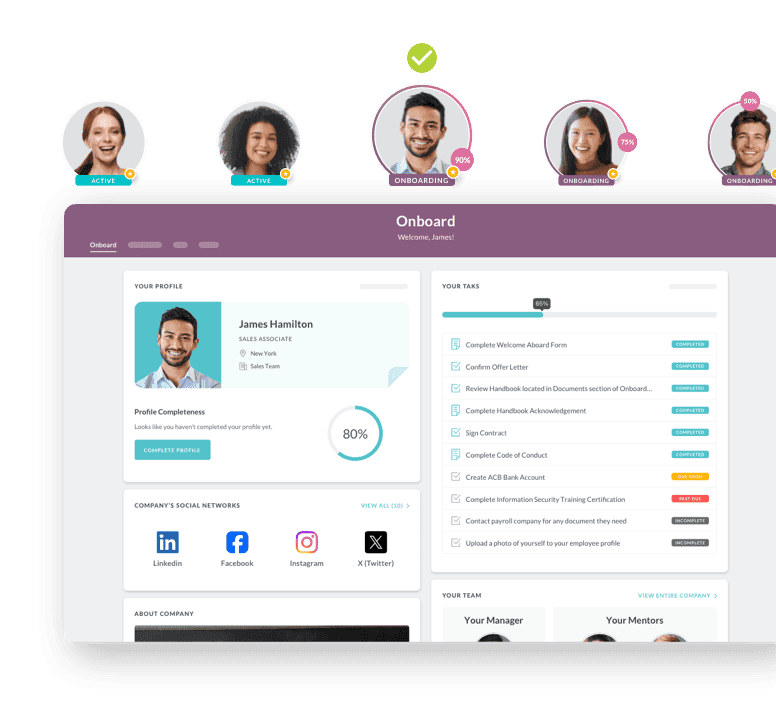
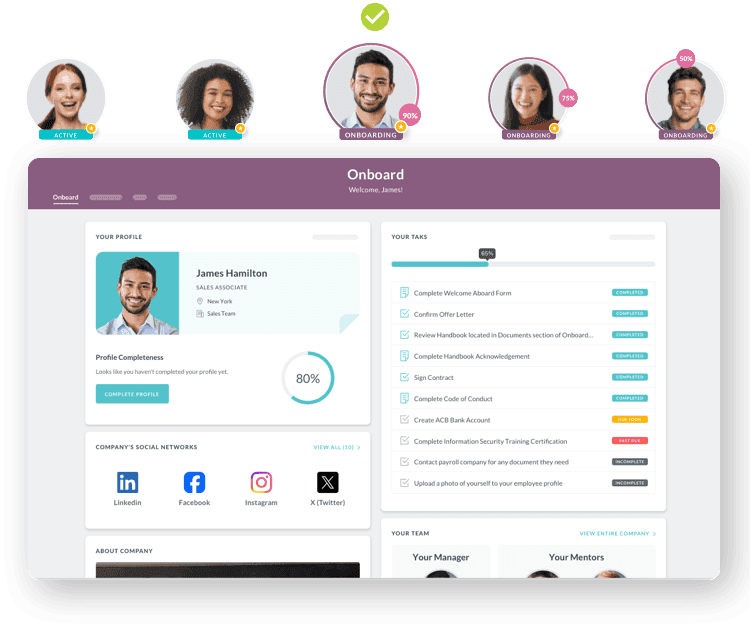
Osmose Utilities Services, a construction and utility-structure inspection company with a heavily field-based workforce, offers a relevant, if adjacent, data point here. Before adopting HR Cloud's Onboard product, the company's onboarding process, built around a field-based workforce spread across sites with no central office, took up to two hours per new hire and sometimes produced data entry errors that created additional compliance risk around meeting I-9, E-Verify, and industry-specific deadlines consistently. After implementation, HR Analyst Kaylee Collins described a system the HR team could actively monitor with increased data accuracy, rather than a process prone to the kind of error that a compliance-focused, certification-heavy workforce can least afford. That result is about onboarding accuracy specifically, not certification tracking directly, worth being clear about that distinction, but it documents the same underlying mechanism this guide has argued matters most: centralizing a field-based workforce's records in one system that HR can actually monitor, rather than leaving accuracy to whichever process a distributed team happens to be following that week. Extend that logic to certification tracking specifically, and the connection is direct: a company that can't reliably capture accurate employee data during onboarding across a distributed, field-based workforce is unlikely to reliably track that same workforce's certification status after onboarding either, since both problems come from the same root cause, no single, centralized system the whole distributed team is actually using consistently. A construction company reading this case study for certification-tracking purposes specifically should draw the narrower, honest conclusion: Onboard demonstrably improved data accuracy and HR visibility for one field-based construction workforce, which is directly relevant groundwork for reliable certification tracking, even though the case study itself doesn't measure certification outcomes.
Conclusion
Tracking skills and certifications across construction projects isn't primarily a technology problem. It's a data-ownership problem: whether a worker's certification record belongs to that worker, centrally, or belongs to whichever project's paperwork happened to capture it last. HR Cloud handles the employee side of that directly, profiles, onboarding documents, role-based access, and connects to Expiration Reminder for the dedicated expiration-tracking and compliance-reporting side, rather than claiming to be a single tool that does both from the ground up. A construction company evaluating this shouldn't be looking for one piece of software that magically knows every OSHA card's real expiration rule. It should be looking for a system where a worker's certifications live in one place, stay linked to that worker across every project they touch, and generate an alert before a card lapses rather than a compliance finding after it already has. That standard is achievable without exotic technology. It requires exactly two things working together: an employee system that actually reflects who works where and in what role, and a document-tracking layer built specifically to watch expiration dates against those roles and warn the right person before a deadline passes. Most of what goes wrong in construction certification tracking traces back to one of those two pieces being missing, or the two existing but never actually connected to each other. Get those two pieces right, and connected, and the rest, faster staffing, cleaner audits, fewer scrambles when an inspector shows up unannounced, follows from that foundation rather than requiring a separate initiative of its own.

Discover how our HR solutions streamline onboarding, boost employee engagement, and simplify HR management
Book a DemoFAQs
Can skills data be shared across multiple active projects?
Yes, provided the underlying record is tied to the employee rather than to any single project. A centralized system built the way this guide describes, employee records in HR Cloud connected to a dedicated expiration-tracking tool like Expiration Reminder, makes a worker's certification status visible to every project staffing decision, not just the one where the record was originally entered. Practically, that means a project manager staffing a job in one location can see certification status for a worker whose most recent project was in a different state entirely, without needing to contact that other project's site administrator to ask.
How do you verify equipment certifications are current?
By checking a centralized, per-worker record against the specific requirement for the task and jurisdiction in question, rather than relying on a physical card the worker happens to be carrying that day. OSHA generally requires employers to certify powered industrial truck operators through a formal evaluation process rather than treating a one-time training as sufficient indefinitely, so "current" needs to be checked against the applicable requirement, not assumed from the existence of a card alone. A centralized record that stores the actual expiration or renewal date, rather than just a scanned copy of the card itself, is what makes that check fast and reliable rather than requiring someone to read a physical card and do the date math themselves every time.
Does this help with project bidding and staffing planning?
Yes, indirectly but meaningfully. Knowing exactly which certified workers are available, and for how long their credentials remain valid, before a bid is finalized lets a company staff a project plan against real, current qualifications rather than an optimistic assumption that enough certified people will be available when the project actually starts. That's a meaningful shift for bidding specifically: a company that can confirm, before submitting a bid, exactly how many currently certified crane operators or licensed electricians it has available in a given window is bidding from real capacity rather than hoping the numbers work out once the contract is signed. That's the difference between a bid built on an optimistic headcount and one built on a defensible, checkable number.
Can subcontractor certifications be tracked in the same system?
This depends on how the subcontractor relationship is structured, and it's worth being direct about the limitation rather than implying a universal yes. HR Cloud's employee records, and the Expiration Reminder sync built on top of them, are built around a company's own workforce. A subcontractor's crew, employed by a separate company rather than added to HR Cloud as employees, generally sits outside that specific sync unless the general contractor has a separate process for collecting and verifying subcontractor certifications, which is a real gap worth planning around rather than assuming the same system automatically covers it. Companies that rely heavily on subcontracted labor should treat subcontractor certification verification as its own explicit process, collecting and confirming credentials at the point a subcontractor is brought onto a project, rather than assuming a system built around direct employees will somehow extend automatically to cover a separate company's workforce. Some companies address this by requiring subcontractors to submit certification documentation as a condition of the subcontract itself, then tracking that documentation manually or through a separate log, since the subcontractor's own workers were never going to appear as HR Cloud employee records in the first place. Whether that manual subcontractor process eventually gets folded into the same centralized system, or stays deliberately separate, is a decision each company needs to make based on how much subcontracted labor it actually relies on, not something this guide can answer generically.
About the author

Keep Reading


Like What You Hear?
We’d love to chat with you more about how HR Cloud® can support your business’s HR needs.
Book Your Free Demo