
How to Start an Employee of the Month Program in Your Organization

How do you build an employee of the month program that actually motivates people rather than quietly damaging morale?
The difference comes down to structure. An employee of the month program works when selection criteria are transparent, nominations involve peers, and rewards reflect what individual employees actually value — not what's easiest to hand out. Without those elements, even well-intentioned programs can feel arbitrary or exclusionary.
Why do so many recognition programs lose steam after the first few months?
Because they launch without measurable objectives tied to business goals, which means there's no way to know if the program is working — and no compelling reason to keep it running when participation drops.
What does a fair nomination process look like in practice?
Peer involvement is the single biggest credibility lever: research shows organizations with peer recognition see 35% higher employee satisfaction than those relying on manager-only selection, and colleagues observe daily contributions that managers simply miss. This guide covers all seven steps to get it right from day one.
What is an Employee of the Month Program?
An employee of the month program is a structured recognition initiative that identifies and rewards one or more employees each month for exceptional performance, embodying company values, or achieving outstanding results. These programs typically include nomination processes, evaluation criteria, public recognition, and tangible rewards ranging from monetary bonuses to experiences and professional development opportunities.
Modern employee of the month programs use digital recognition platforms to streamline nominations, track engagement, and measure program effectiveness. Research shows that organizations with effective recognition programs experience 31% lower voluntary turnover and can save up to $16.1 million annually in turnover costs for companies with 10,000 employees.
7 Things to Keep in Mind While Starting an Employee of the Month Program
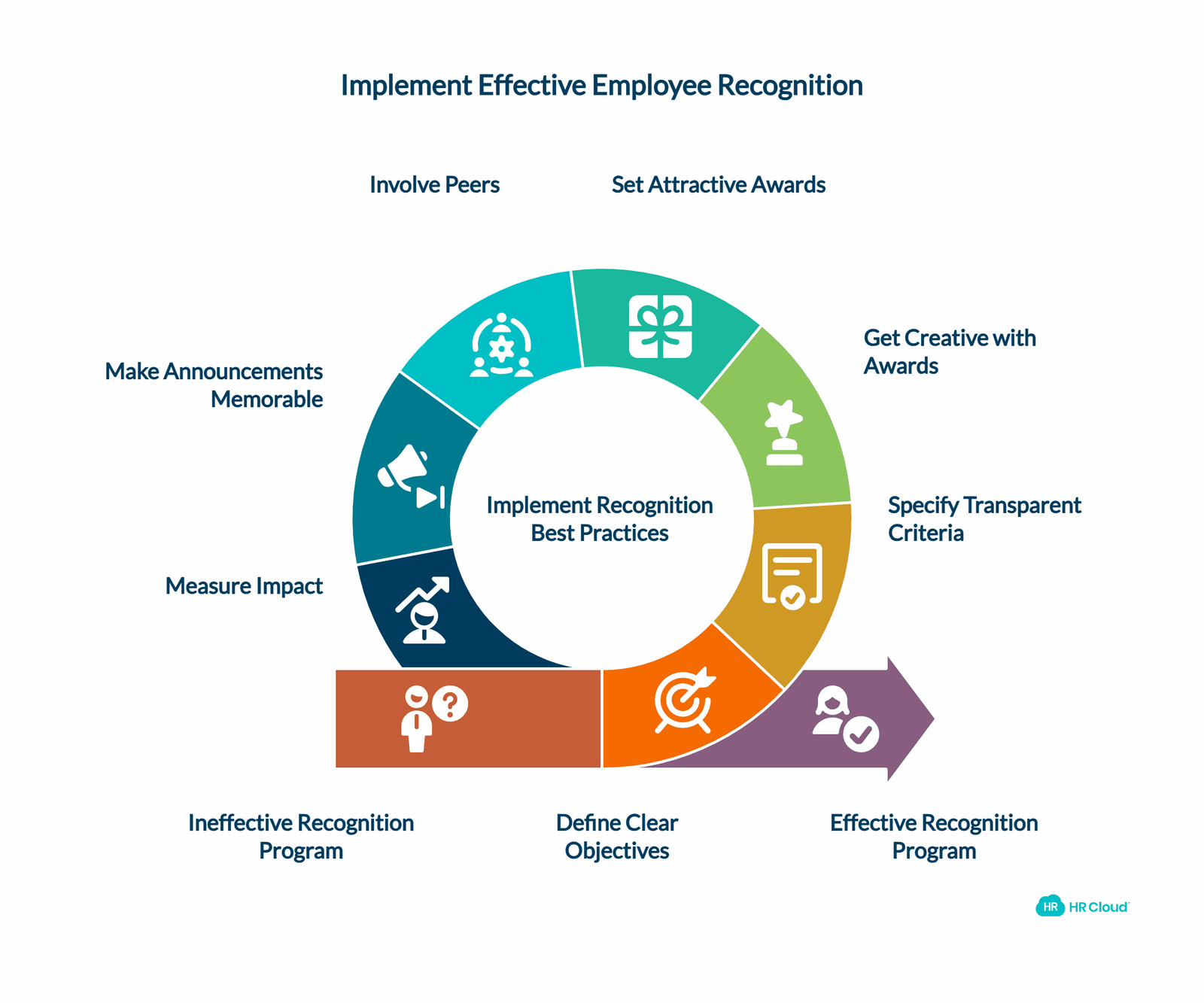
1. Define Clear Objectives Aligned with Business Goals
Many organizations launch employee recognition initiatives without clearly defined goals. Are you targeting increased engagement, higher retention, improved performance, or cultural transformation? Without specific objectives aligned to your company values, recognition programs often fail to deliver meaningful impact.
Before implementing your employee of the month program, establish clear, measurable objectives. If you want a collaborative work environment, reward teamwork and cross-functional cooperation. To promote innovation, recognize employees who generate and implement new ideas. For customer-focused organizations, celebrate exceptional service delivery.
Critical success factors for objective-setting:
- Align recognition criteria with company mission and strategic priorities
- Set measurable KPIs (engagement scores, retention rates, productivity metrics)
- Ensure objectives support desired behaviors and cultural values
- Communicate how recognition connects to business outcomes
Modern employee engagement platforms like Workmates enable organizations to track recognition patterns and measure their impact on engagement metrics, providing data-driven insights into program effectiveness.
When you recognize specific behaviors consistently, employees understand expectations and are more likely to repeat those actions, creating a positive reinforcement cycle that enhances overall performance, motivation, and employee engagement.

2. Specify Transparent, Measurable Criteria
The most common failure point for employee of the month programs is unclear or inconsistent criteria. In worst cases, awards are distributed arbitrarily, rendering the program meaningless and potentially damaging to morale. Research indicates that 68% of employees value recognition more when criteria are transparent and equitable.
Establish specific, observable behaviors and achievements that qualify for recognition. Employees must understand program guidelines and know exactly what actions lead to winning. Creating detailed employee of the month criteria examples helps guide both nominators and potential recipients.
Keep winning criteria clear and the nomination process transparent. Eliminate biases in your rewarding system by:
- Using objective, measurable performance indicators
- Implementing multi-source nomination processes
- Documenting recognition decisions
- Regularly reviewing criteria for fairness and relevance
Recommended recognition behaviors include:
- Reliability and consistent high performance
- Emotional intelligence and interpersonal effectiveness
- Teamwork and social skills
- Performance consistency exceeding expectations
- Innovation and creative problem-solving
- Commitment to organizational mission
- Quick learning and skill development
- Mentoring and knowledge sharing
- Regular attendance and punctuality
- Customer service excellence
- Cross-functional collaboration
Remove ambiguity by addressing all program questions upfront. Prepare a comprehensive FAQ document covering nomination eligibility, voting procedures, award frequency, and appeals processes. Modern recognition platforms streamline this process by automating nominations and maintaining transparent criteria.
Ensure fairness and accessibility: Everyone should feel they have a genuine opportunity to win. Guidelines must clearly specify who can vote, voting timelines, and how winners are selected. Consider developing employee-of-the-month nomination ideas templates to standardize the process and ensure comprehensive evaluation.
3. Get Creative with Recognition Award Names
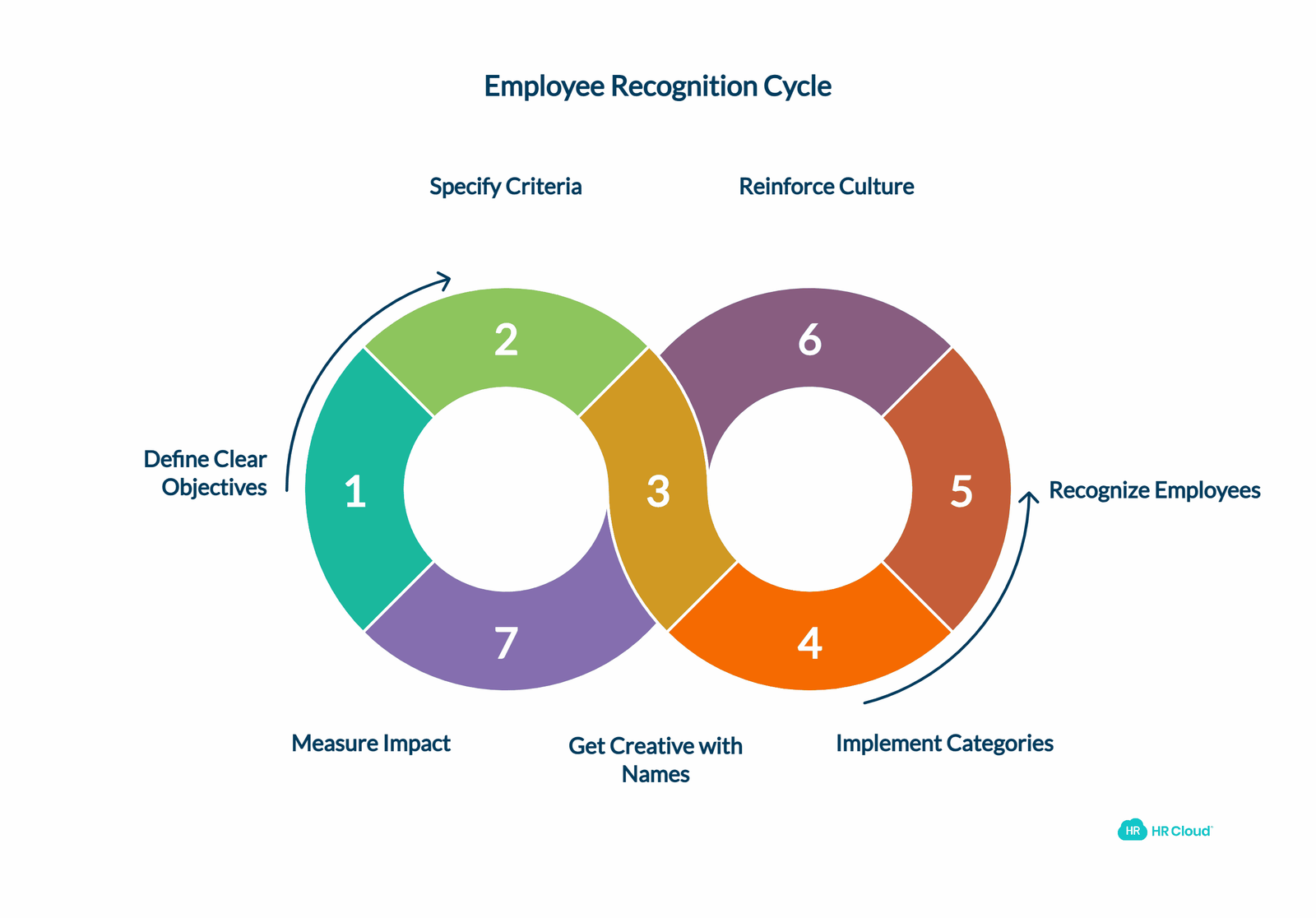
Traditional "Employee of the Month" awards can limit recognition potential. When you have multiple deserving employees demonstrating excellence across different dimensions, having diverse award categories enables you to acknowledge various contributions without overlooking worthy candidates.
Solution: Implement multiple recognition categories. Don't restrict yourself to generic monthly awards. Get specific with award titles that reflect the traits and behaviors you want to reinforce in your organizational culture.
Creative award title examples:
- Champions of Change Award — for employees who best adapt to and lead through transformation
- Best Mentor Award — for those who develop others and share knowledge generously
- Problem Solver Award — for creative, innovative thinkers who tackle challenges
- Ultimate Team Player — for employees with exceptional collaborative spirit
- The Engagement Champion — for highly engaged team members who energize others
- Standout Performer — for consistently exceptional work that exceeds expectations
- Culture Champion — for employees who embody and promote company values
- Customer Hero — for outstanding client service and relationship building
- Innovation Pioneer — for introducing new ideas that drive business forward
Employee recognition software like Workmates allows you to create unlimited custom award categories, each with unique badges, point values, and recognition workflows, enabling a more nuanced and comprehensive appreciation strategy.
4. Set Attractive, Personalized Awards
Awards must be desirable enough to motivate genuine effort. Effective rewards combine monetary and non-monetary benefits to reward employees. However, reward preferences vary significantly across generations, roles, and individual preferences, making personalization critical.
Consult employees before deciding on rewards. This is where personalizing the staff recognition tool becomes essential. Each employee is unique—what motivates one person may not resonate with another. Use employee feedback tools to gather input on preferred rewards and continuously refine your offerings.
Diverse reward categories include:
Monetary Rewards:
- Cash bonuses or gift cards
- Additional paid time off
- Professional development stipends
- Student loan repayment contributions
- Retirement account bonuses
Experience Rewards:
- Event tickets (concerts, sports, theater)
- Travel vouchers or hotel stays
- Spa days or wellness packages
- Restaurant certificates
- Adventure experiences (skydiving, cooking classes)
Professional Development:
- Conference attendance
- Certification courses
- Mentorship opportunities
- Leadership training
- Book allowances
Recognition & Visibility:
- Feature in company newsletter or social media
- Lunch with executive leadership
- Parking space for the month
- Office upgrades or equipment
- Wall of Fame placement
Lifestyle Benefits:
- Gym memberships or fitness equipment
- Subscription services (streaming, meal kits)
- Tech gadgets
- Customized company merchandise
- Charitable donations in their name
Modern employee rewards platforms offer digital catalogs with thousands of options, allowing winners to choose rewards that matter most to them. Workmates' rewards marketplace includes gift cards, merchandise, experiences, and charitable giving options, ensuring every employee finds meaningful recognition.
Check out our comprehensive guide on how to reward employees who go the limit for additional creative recognition ideas.
5. Involve Peers in the Recognition Process
While individual recognition is valuable, programs focused exclusively on individual achievement can inadvertently promote unhealthy competition. Employees may begin viewing teammates as competitors rather than collaborators, potentially sabotaging team dynamics and organizational culture.
Peer-to-peer recognition programs address fairness concerns and enhance program credibility. Democratic participation through peer nominations ensures transparency and reduces perceptions of favoritism. Research shows that organizations with peer recognition programs experience 35% higher employee satisfaction compared to manager-only recognition.
Why peer recognition matters:
- Visibility: Peers observe daily contributions that managers may miss
- Authenticity: Colleague nominations feel more genuine and meaningful
- Team Building: Strengthens relationships and collaborative culture
- Fairness: Reduces bias and favoritism concerns
- Engagement: Increases program participation and investment
Employees understand their colleagues' contributions more intimately than managers often can. When peers nominate teammates, it strengthens work relationships and builds trust in both the recognition system and the organization. Knowing that respected colleagues nominated them amplifies the impact of recognition significantly.
Employee engagement platforms like Workmates facilitate seamless peer-to-peer recognition through social newsfeeds, customizable badges, and points systems that employees can access via mobile or desktop devices, ensuring recognition happens in real-time across distributed teams.
6. Make Recognition Announcements Memorable
Recognition loses impact when delivered privately or inconsistently. Public acknowledgment magnifies appreciation and reinforces desired behaviors throughout the organization. Social recognition makes employee of the month awards genuinely worth pursuing and creates lasting positive impressions.
Effective public recognition channels include:
- Company-wide meetings or town halls
- Digital signage in high-traffic areas
- Internal communication platforms and newsfeeds
- Social media (LinkedIn, Twitter, Instagram)
- Company newsletter features
- Wall of Fame or recognition boards
- Employee spotlight videos
- Department celebrations
- Executive emails or messages
Research indicates that 87% of employees consider meaningful recognition a major factor in job satisfaction. Making recognition public and celebratory increases its perceived value and motivates others to strive for similar acknowledgment.
Workmates, HR Cloud's employee recognition and communication software, features a dynamic newsfeed that broadcasts recognition moments company-wide. Employees can comment, react, and celebrate colleagues' achievements in real-time, creating a culture of continuous appreciation.
Personalize the recognition experience beyond generic messages. Don't rely on standardized certificates or gift cards alone. Include specific details about:
- What the employee accomplished
- How their contribution impacted the team or business
- Why their efforts exemplify company values
- Personal qualities that make them exceptional
- Future potential and development opportunities
Consider organizing employee appreciation events to celebrate achievements more prominently. Thank-you notes—whether handwritten or digital—add personal touches that employees treasure long after the formal recognition moment passes.
7. Measure Impact with Data and Employee Feedback
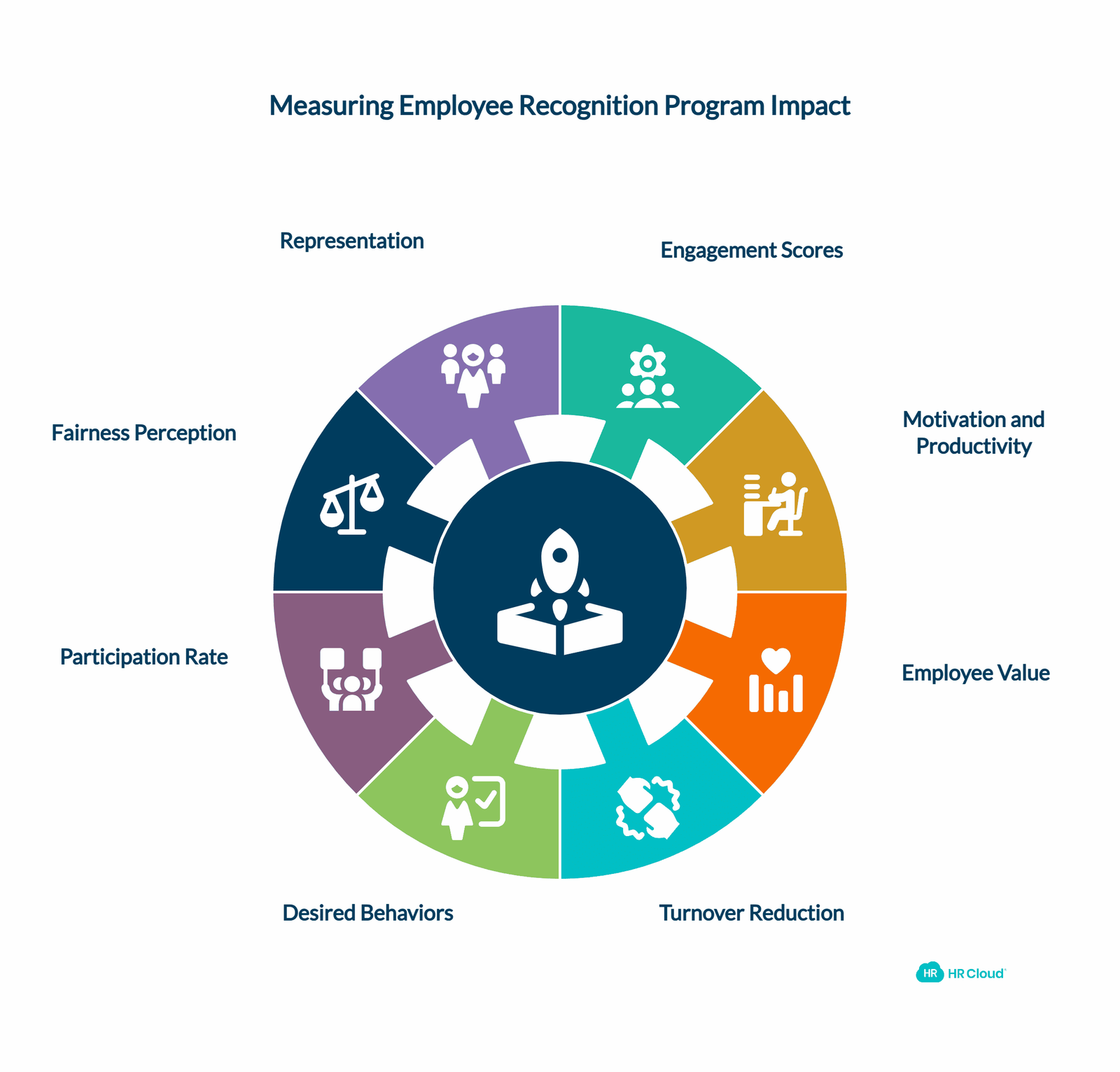
Launching your employee of the month program is just the beginning. Without continuous assessment and optimization, even well-designed programs can lose effectiveness over time. Only 43% of organizations regularly review their recognition programs' effectiveness, representing a significant missed opportunity.
Critical measurement questions:
- Is recognition positively impacting engagement scores?
- Are employees more motivated and productive?
- Do employees value the recognition and rewards offered?
- Is turnover decreasing among recognized employees?
- Are desired behaviors increasing across the organization?
- Is participation rate growing or stagnating?
- Do employees understand criteria and feel the process is fair?
- Are certain teams or demographics underrepresented in nominations?
Recognition preferences evolve. Employees may seek different types of acknowledgment, criteria clarity, or more frequent recognition opportunities. Cases where deserving candidates are overlooked signal process problems requiring immediate attention.
Implementation best practices for measurement:
Conduct regular surveys: Use employee engagement surveys to gather feedback about recognition experiences and improvement suggestions. Get feedback from employees about their recognition experience and ask for suggestions.
Track key metrics:
- Recognition frequency by department/team
- Time between nomination and award
- Participation rates in nominations
- Correlation between recognition and performance
- Impact on retention and turnover
- Employee Net Promoter Score (eNPS) changes
Monitor engagement analytics: Companies with the best incentive programs leverage analytics platforms to track recognition patterns, identify trends, and make data-driven improvements.
Benchmark against industry standards: Recent research shows that employees receiving weekly recognition are 9x more likely to feel a strong sense of belonging and 2x more likely to perform at their best. Use these benchmarks to evaluate your program's frequency and impact.
Organizations using recognition software benefit from built-in analytics dashboards that track program effectiveness in real-time, enabling rapid adjustments and continuous improvement.
The Employee Of The Month Award Ideas
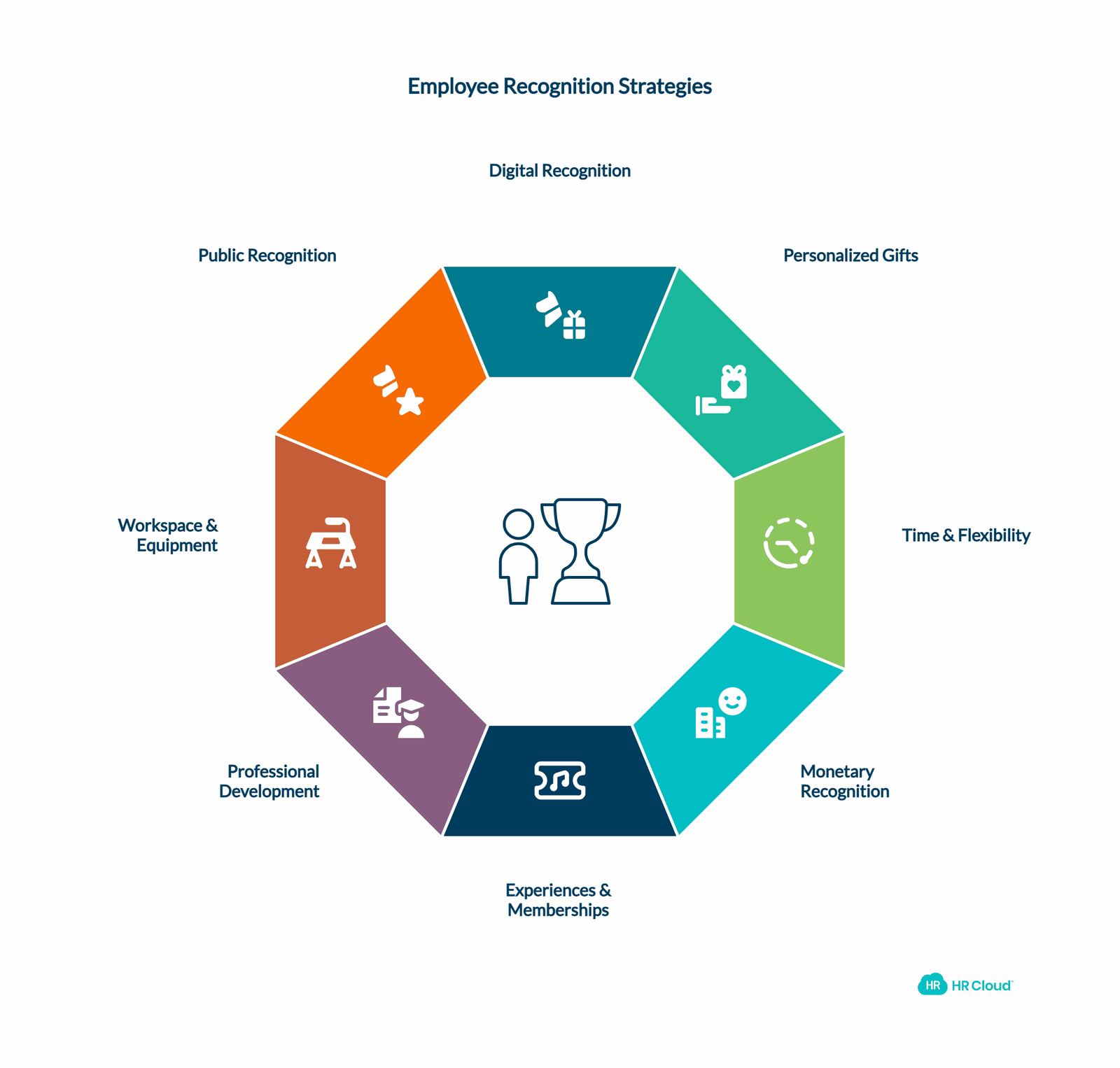
Successful recognition programs offer diverse, meaningful rewards that resonate with different employee preferences and motivations. Here are proven employee of the month rewards and recognition ideas:
Digital & Social Recognition:
- Social media appreciation posts through online engagement platforms
- Feature in company newsletter or blog
- Spotlight video interview
- Executive shout-out in company meeting
- Digital badge or certificate
Personalized Gifts:
- Customized items (coffee mugs, t-shirts, desk accessories)
- Hobby-related gifts (music, gardening, cooking equipment)
- Tech accessories (wireless chargers, headphones, smart devices)
- Personalized artwork or plaques
Time & Flexibility:
- Paid vacations and extra PTO days using work schedule apps
- Flexible work schedule options
- Remote work privileges
- Extended lunch breaks
- Early departure passes
Monetary Recognition:
- Performance bonuses
- Cash awards
- Gift cards to popular retailers
- Cryptocurrency or investment contributions
- Salary increase considerations
Experiences & Memberships:
- OTT platform subscriptions (Netflix, Spotify, Disney+)
- Fitness or wellness club memberships
- Restaurant and food coupons
- Event tickets (concerts, sports, theater)
- Learning platform subscriptions (Masterclass, Coursera, Udemy)
Professional Development:
- Conference or training attendance
- Professional certification funding
- Executive coaching sessions
- Mentorship program participation
- Industry association membership
Workspace & Equipment:
- Tech and work equipment upgrades
- Ergonomic furniture improvements
- Standing desk conversion
- Dual monitor setup
- Noise-canceling headphones
Public Recognition:
- Wall of Fame feature
- Company website spotlight
- Annual report acknowledgment
- Client meeting introduction
- Industry publication feature
- LinkedIn endorsement from leadership
Organizations using employee rewards platforms can offer hundreds of reward options through digital catalogs, allowing employees to choose recognition that truly resonates with their personal preferences and lifestyle.
Understanding Program Costs and ROI
Employee of the month programs range from minimal investment to comprehensive systems:
Budget Tiers:
- Basic ($0-500/month): Manual tracking, certificates, small gift cards, public recognition
- Mid-Tier ($500-2,000/month): Digital platform, peer recognition, rewards catalog, basic analytics
- Enterprise ($2,000-10,000+/month): Full recognition platform, unlimited categories, advanced analytics, integration with HRIS
Cost Per Employee:
- Digital recognition platforms: $3-8 per employee monthly
- Reward budgets: $50-200 per recognition moment
- Total investment: $5-15 per employee monthly for comprehensive programs
Expected ROI:
- 31% reduction in voluntary turnover saves $3,000-15,000 per prevented departure
- 17% productivity increase from engaged employees
- 45% lower attrition among recognized employees within 24 months
- Typical 3-5x ROI within first year
“The platform connects associates to each other in a way that doesn’t happen through email.”
— Gail Gust, Director of Marketing and Business Development

In Conclusion
An employee of the month program represents a strategic investment in workplace culture and organizational performance. When designed thoughtfully with clear criteria, meaningful rewards, and consistent execution, these programs drive measurable improvements in engagement, retention, and productivity.
The best approach starts with listening to your employees. Take their input while designing a holistic employee recognition strategy that reflects your organizational culture and values. There's no one-size-fits-all solution to recognition—what motivates healthcare frontline workers differs from what energizes tech developers or retail associates.
Key implementation principles:
- Reward behaviors that align with organizational goals and strategic priorities
- Make recognition regular, bias-free, and genuinely meaningful
- Use technology to streamline processes and increase participation
- Measure impact continuously and adjust based on data and feedback
- Combine formal and informal recognition approaches
- Enable both leader-to-direct and peer-to-peer recognition channels
By implementing these evidence-based strategies, you'll create one of the best employee recognition programs that authentically motivates and engages your workforce while delivering measurable business outcomes.
Remember to incorporate both formal recognition (structured programs with criteria) and informal recognition (spontaneous appreciation) in your approach. Leader-to-direct recognition provides authority and validation, while peer recognition builds community and collaboration. Utilize diverse recognition ideas—from traditional awards to modern digital approaches like eCards and social media shout-outs—to create a comprehensive and effective employee recognition program that resonates across your entire organization.
Ready to transform your recognition strategy? Explore Workmates, HR Cloud's comprehensive employee engagement and recognition platform designed for today's distributed workforce.

Experience how Workmates can transform communication and strengthen culture—all in one powerful platform
Book Your Free DemoFrequently Asked Questions
What is the purpose of an Employee of the Month program?
The goal is to recognize and reward exceptional employee performance, boost morale, promote healthy competition, and increase overall productivity and retention. Research shows employees who receive meaningful recognition are 45% less likely to leave within two years.
How do you choose the Employee of the Month fairly?
Set transparent criteria, define clear performance metrics, ensure peer involvement through peer-to-peer nominations, and maintain a bias-free nomination and voting process. Use employee recognition software to track and document all nominations.
What are some creative alternatives to "Employee of the Month"?
Award titles like Champions of Change, Best Mentor, Problem Solver, Ultimate Team Player, Culture Champion, or Innovation Pioneer make the recognition more personalized and meaningful by targeting specific behaviors.
What are the benefits of an Employee of the Month program?
Benefits include increased employee motivation, reduced turnover by up to 31%, stronger team dynamics, improved productivity by up to 17%, and a more positive workplace culture. Companies can save millions annually in turnover costs through effective recognition.
Should peers be involved in the nomination process?
Yes, involving peers ensures fairness, builds trust, and increases engagement in the recognition process. Peer recognition programs show 35% higher employee satisfaction compared to manager-only recognition.
How do you announce an Employee of the Month effectively?
Use public recognition like team meetings, intranet newsfeeds, social media shoutouts, and personalized certificates or video messages for maximum impact.
What types of rewards can be offered to the Employee of the Month?
Consider a mix of rewards like bonus payouts, gift cards, extra time off, public shoutouts, customized trophies, experiences, professional development opportunities, or charitable donations.
How do you measure the success of an Employee of the Month program?
Track employee engagement metrics, gather feedback through surveys, monitor changes in performance and retention, analyze recognition frequency patterns, and use analytics platforms to evaluate effectiveness.
Author Bio:
Saurabh Wani is a digital marketer at ZoomShift, an employee scheduling tool. He has worked as a human resources (HR) recruiter for over three years, where he defined the recruitment life cycle that helped employees find the right job.
Keep Reading


Like What You Hear?
We’d love to chat with you more about how HR Cloud® can support your business’s HR needs.
Book Your Free Demo