How Much Should a Mid-Size Tech Company Budget for HR Software?

A mid-size tech company, roughly 50 to 500 employees, should budget somewhere between $8 and $30 per employee per month for core HR software, with most companies in that growth band landing between $15 and $40 PEPM once payroll, recruiting, and performance modules are added on top of a basic HRIS. HR software pricing for tech companies varies this widely because the number that matters isn't the advertised entry rate, it's the total cost once headcount growth, module count, and implementation are all factored in, not the number on a vendor's homepage.
That range answers the immediate question. This guide uses 50 to 500 employees as its working definition of "mid-size tech company" for budgeting purposes, not a universal industry standard, since that definition varies by source. The rest of this guide breaks down what actually drives HR software pricing for tech companies specifically, what a realistic HRIS cost per employee looks like at different growth stages, how to evaluate vendor quotes without getting blindsided by hidden costs, how HR Cloud pricing for tech companies is actually structured, and how to build a business case that survives a CFO's questions rather than one built on a single number pulled from a sales call.
Why HR Software Pricing Varies for Tech Companies
HR software pricing for tech companies swings more widely than it does for other industries for one structural reason: tech companies grow headcount unevenly, add modules in bursts tied to fundraising or product milestones, and run distributed teams across states or countries almost from day one, all of which change what a vendor actually has to price for.
Compare that to a more stable industry, say a regional retail chain adding a predictable handful of stores a year. That company's headcount curve is smooth, its HR needs are largely the same this year as last, and a vendor can quote it with real confidence. A tech company raising a Series B and doubling engineering headcount in six months presents a completely different pricing problem: the vendor is being asked to price not just today's 80 employees but a company that might be 160 employees by the time the contract renews, spread across new states as remote hiring picks up, and possibly running a formal performance cycle for the first time because a board member asked for one. Vendors price in some allowance for that unpredictability, and buyers who don't account for it in their own budget are the ones most likely to be surprised at renewal.
Growth stage, headcount, and feature needs
A 40-person seed-stage startup and a 400-person Series C company are both "mid-size tech" in a loose sense, but they buy completely different things. The 40-person company usually needs core HRIS functionality, applicant tracking for a handful of open roles, and basic onboarding, nothing more, because there's no dedicated People team yet to run anything heavier. The 400-person company is usually running formal performance cycles, multi-state compliance, a real recruiting pipeline, and often an engagement or recognition layer to keep a distributed workforce connected, and each of those is typically a separate module with its own line item. The feature gap between those two companies is the real reason a quoted price can range from a few hundred dollars a month to five figures a month for what both companies would describe, in casual conversation, as "HR software."
Growth stage matters as much as raw headcount here, sometimes more. A 120-person company that just closed a Series B and expects to double within a year has different needs than a 120-person bootstrapped company holding steady at that size for the foreseeable future, even though both would show up identically on a headcount-based pricing tier today. The first company should be evaluating vendors partly on how well their pricing and platform hold up at 240 employees, not just at 120, while the second can reasonably optimize for what fits best right now without weighting future scale as heavily in the decision.
The table below sketches illustrative budget scenarios using the PEPM ranges cited earlier as a baseline, not surveyed market benchmarks and not any single vendor's exact rate card.
| Company size | Typical HR maturity | Common module set | Illustrative monthly range |
|---|---|---|---|
| 50 employees | First formal HR hire or none yet | Core HRIS, basic onboarding | $400–$1,250 |
| 150 employees | Small dedicated People team | HRIS, payroll integration, recruiting, time off | $2,250–$6,000 |
| 500 employees | Multiple HR specialists | Full HCM: HRIS, payroll, recruiting, performance, engagement | $7,500–$15,000+ |
These ranges are directional, built from the PEPM benchmarks discussed below, not a quote for any specific vendor; a company's actual number depends heavily on which modules it selects and which vendor's pricing philosophy it's working with. Two companies at the same headcount can also land in genuinely different places on this range for reasons that have nothing to do with negotiating skill: a 150-person company with employees spread across eight states has more compliance surface to cover than a 150-person company operating out of a single headquarters, and that difference shows up in the quote regardless of which vendor either one talks to.
What Factors Affect HR Software Pricing
Three variables drive most of the spread in a vendor quote once you get past the advertised starting price: headcount, growth trajectory, and how many systems the HR platform needs to talk to.
Headcount, growth stage, integration needs
Headcount is the most obvious lever, since most vendors price per employee per month or in headcount-banded tiers, so the bill scales directly with hiring. Growth trajectory matters almost as much and is easy to underprice for: a company budgeting for its current 80 employees but planning to hit 200 within 18 months needs to ask what the per-employee rate looks like at that future headcount, not just today's, since some vendors drop the rate at scale and others raise it once you cross a tier threshold. Integration needs are the quieter cost driver. A tech company running payroll through ADP or a benefits platform through a separate provider needs an HR system that connects cleanly to both, and integration work, especially with a named payroll provider, is one of the most common places an implementation quote grows past the headline number.
Geographic spread is a quieter driver of cost. A tech company hiring remotely across a dozen states, or across countries, often triggers compliance requirements, multi-state tax handling, or localization needs that a single-location company never has to think about, and vendors that support that complexity well tend to price it as its own line item rather than folding it quietly into the base rate. Asking a vendor directly how their pricing changes for a distributed, multi-state workforce, rather than assuming it's included, avoids a gap between the quote you received and the quote you actually need.
Number of modules (recruiting, performance, engagement)
Core HRIS, the system of record for employee data, is usually the cheapest layer. Every module added on top, applicant tracking, performance management, employee engagement and recognition, time tracking, carries its own incremental cost, and most vendors price them as separate add-ons rather than folding them into one flat number. A 2026 pricing guide from Oyster puts core HRIS pricing at roughly $8 to $25 per employee per month on its own, before any additional modules are layered in, which gives a useful floor for what "just the basics" actually costs.
A separate 2026 breakdown of module-level pricing gives a sense of what each module typically adds on top of that floor: advanced applicant tracking and talent acquisition tools commonly run an extra $3 to $5 per employee per month, structured performance-review workflows add roughly $4 to $10 per employee, and time and attendance tracking with automated features adds another $3 to $8 per head. Stack two or three of those onto a base HRIS rate and it becomes clear why a "full HCM suite" quote can land meaningfully higher than the entry-level number a vendor leads with in a demo. A tech company that only needs one or two of these modules, rather than the full set, should expect, and ask for, a quote that reflects that narrower scope rather than accepting a bundled full-suite price by default.

Post Jobs, Evaluate Candidates, and Hire the Best with Our Applicant Tracking System
Book Your Free Demo
What's Typically Included at Each Pricing Tier
Core HRIS vs. full HCM suite
A core HRIS tier typically covers employee records, basic self-service, document storage, and time-off tracking, the functional floor most vendors will quote at their lowest per-employee rate. A full HCM, or human capital management, suite adds recruiting, performance management, learning, and often a dedicated engagement layer on top of that floor, and vendors typically price it higher, both because of the added functionality and because HCM buyers tend to be larger, more complex organizations willing to pay for it. According to research cited by HR Tech SaaS, most mid-market buyers land between $15 and $40 per employee per month once core HRIS is paired with payroll, and that same source estimates implementation, data migration, and integration work can add 30 to 150 percent to the total first-year cost on top of the subscription itself, a wide range worth confirming with each specific vendor rather than assuming as a fixed rule.
Where a specific tech company lands on that spectrum usually comes down to one question: does HR run as a part-time responsibility layered onto someone's existing role, or is there a dedicated People team running formal processes. The first scenario almost never justifies a full HCM suite, since nobody is available to configure or run the advanced modules even if the company paid for them. The second scenario usually outgrows core HRIS quickly, because a dedicated team needs the reporting, workflow, and compliance tools that only show up in the higher tiers. Buying ahead of that transition, paying for HCM-tier capability before there's anyone to operate it, is one of the more common ways tech companies overspend on HR software in their first two years.
A common middle case is a company with one HR generalist wearing multiple hats, typical at the 80 to 150 employee range, where the honest answer sits between "part-time responsibility" and "dedicated team." That company typically does best evaluating modules one at a time against what that single person can actually operate well, rather than either under-buying at core HRIS only or over-buying the full suite on the assumption that growth will justify it eventually. A generalist trying to run a full performance-review cycle, a recruiting pipeline, and an engagement program simultaneously, on top of everything else in the role, tends to run all three poorly rather than any one of them well, and the software cost isn't the constraint in that scenario, the person's time is.
| Tier | Typical PEPM range | What it usually covers |
|---|---|---|
| Core HRIS only | $8–25 | Employee records, self-service, time off, basic reporting |
| HRIS + payroll | $15–40 | Core HRIS plus payroll processing and tax filing |
| Full HCM suite | $30+ | Core HRIS, payroll, recruiting, performance, engagement, analytics |
How to Budget for HR Software as You Scale
Per-employee pricing and growth forecasting
Budgeting for HR software as a growing tech company means modeling cost at your headcount in 12 and 24 months, not just today's headcount, since a per-employee rate that looks reasonable at 80 people can become a meaningfully larger line item at 200 without the underlying rate ever changing. The safest way to do this is to ask every vendor directly, during the sales process, what the per-employee rate does at your projected headcount, whether it stays flat, steps down at a volume tier, or increases once you cross a threshold that triggers a different plan. A vendor that can't answer that clearly in a sales conversation is one where a budget surprise is more likely later.
A practical way to forecast this: take your current headcount, your hiring plan for the next two years, and each vendor's stated PEPM at both the current and projected headcount, then build a simple two-year projection rather than a single-point estimate. If a vendor quotes $18 PEPM flat regardless of headcount, that's a predictable line to model. If a vendor quotes $12 PEPM at your current 60 employees but that rate only applies below a 100-employee tier, and jumps to $22 PEPM once you cross it, your two-year forecast needs to reflect that step change explicitly, not just extrapolate today's rate forward. This is also where fixed-license models like HR Cloud's differ meaningfully from pure per-employee pricing: a fixed annual license sized to a headcount band changes the forecasting math from "rate times future headcount" to "which band will we be in, and when do we expect to cross into the next one." Building both versions of this projection side by side, for whichever vendors you're comparing, is what actually reveals which pricing structure suits your specific growth curve rather than relying on which one sounds simpler in a sales pitch.
Step-by-Step: Evaluating HR Software Costs
Step 1: Define must-have vs. nice-to-have features
Before requesting a single quote, separate what your company genuinely needs today, core HRIS, basic onboarding, time-off tracking, from what would be nice eventually, a full performance-review cycle, an engagement platform, advanced analytics. This list is what keeps a vendor conversation from ballooning into every module they sell; a tech company that only needs core HRIS and onboarding right now shouldn't be quoted, or budgeting, for a full HCM suite it won't touch for another year. Write the list down before the first vendor call, not during it, since a sales conversation is not the ideal setting to be figuring out what your company actually needs for the first time.
Step 2: Request quotes from 3–5 vendors
Get quotes from a real spread, not just the three most recognizable names, since pricing philosophy varies more than most buyers expect between a pure per-employee model, a tiered flat-rate model, and a custom-quote model. Ask every vendor for the same scope, same headcount, same module list, so the quotes are actually comparable side by side instead of comparing one vendor's bare-bones tier against another's full suite. Include at least one vendor that prices per employee and at least one that uses a fixed or tiered license, since seeing both models side by side against the same scope makes it much easier to spot which one actually fits how your company plans to grow.
Put every request for a quote in writing, and ask for the response in writing as well, rather than relying on notes from a call. A verbal quote from a sales conversation can shift once it reaches a written proposal, sometimes because a discount discussed informally doesn't make it into the paperwork, and having the request and the response both on record makes it much easier to hold a vendor to what was actually offered.
Step 3: Model cost per employee at current and projected headcount
Take each vendor's quote and divide it by your current headcount to get a real, comparable HRIS cost per employee, then run the same math against your projected headcount in 12 and 24 months. This step is what surfaces a pricing structure that looks fine today but grows disproportionately as you hire, which is a common and avoidable budgeting mistake. Build this as an actual spreadsheet, not a mental estimate, with one row per vendor and columns for current headcount cost, 12-month projected cost, and 24-month projected cost, so the comparison is visual and easy to bring into a budget conversation with finance rather than something only you remember the reasoning behind.
Step 4: Factor in integration and implementation costs
Ask every vendor directly for implementation cost, data migration cost, and any per-integration fee for connecting to your existing payroll or benefits provider, since these are the costs most likely to be left off a headline pricing page. A quote that looks lower on the subscription line can end up more expensive in year one once implementation is added, so compare total first-year cost, not just the monthly recurring number. Also ask what happens to that fee if the rollout takes longer than planned, since some vendors charge implementation as a flat project fee and others bill it hourly, and the difference matters a great deal if your internal team is slow to gather the data the vendor needs to migrate.
Step 5: Calculate 2–3 year total cost of ownership
Add subscription cost, implementation cost, and any expected annual price increase together across a two- to three-year window, since that's the real number a CFO will want to see before approving the purchase. A platform with a higher year-one implementation cost but a flat, predictable annual license can end up cheaper over three years than a platform with a lower entry price but per-employee costs that climb every time you hire. Present this total cost of ownership number, not the monthly rate, as the headline figure in any internal budget request, since a monthly number invites the reasonable but misleading comparison of "this seems expensive relative to our current spreadsheet-based process," which ignores everything the current process is silently costing in HR staff time, error correction, and slower hiring that the new platform would recover.
Ask each vendor directly what their standard annual price increase looks like at renewal, since this is a term that's negotiable more often than buyers assume, and locking in a cap during the initial contract, rather than accepting whatever increase is proposed two years in, is one of the more overlooked ways to keep a three-year total cost of ownership close to what was originally budgeted.
How HR Cloud Prices for Tech Companies
Modular, scalable pricing
HR Cloud's own pricing page states its pricing model directly: a fixed annual license, not a per-seat or per-employee meter, so headcount growth during the year doesn't trigger a surprise recalculation. Three things shape the quote: team size, which suite you start with, either the Onboard Suite or the full HR Suite, and which add-ons you combine with it, Employee Engagement, Assets, or Time Clock. Paying annually instead of month-to-month saves 20% on the license, and implementation, setup, configuration, data import, and training, is included in every plan, though certain third-party payroll integrations may carry a one-time fee. The contract structure is a 12-month minimum term, with multi-year agreements available for companies that want to lock in a longer commitment. HR Cloud also runs a separate pricing track for companies under 250 employees, which is worth checking directly if your company sits at the smaller end of the mid-size range this guide covers, since a smaller-headcount track can carry different terms than the pricing described above.
To be direct about the pricing model for a buyer doing HR Cloud pricing for tech company research specifically: HR Cloud does not publish a rate card or a self-serve free trial as of this writing, and these are commercial terms that can change, so confirm current details directly with HR Cloud rather than treating this guide as a permanent record of them. Pricing is quoted directly for your headcount and module selection, which is common among mid-market platforms and is one reason the company's own blog post on this exact question exists, to walk through what shapes that quote in more depth than a pricing page alone can. A buyer evaluating HR software pricing for tech companies broadly should treat any third-party-listed dollar figure for a quote-based vendor with real skepticism, since aggregator sites frequently list stale or scraped numbers that don't reflect current, direct-from-vendor quotes.
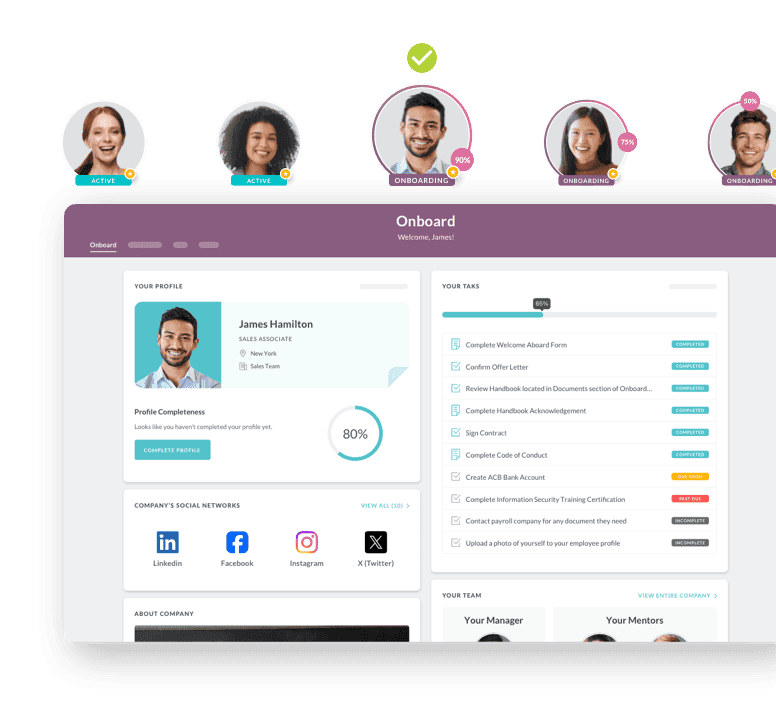
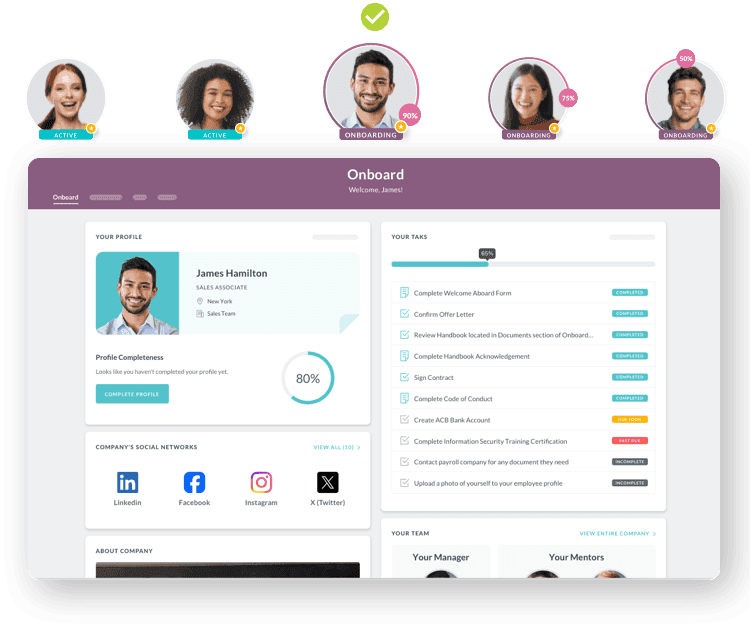
For a tech company specifically weighing which suite to start with, the Onboard Suite covers new-hire onboarding, offboarding, and core People HRIS, the layer most early-stage companies need first. The full HR Suite adds Recruit ATS, performance management, and time-off tracking on top of that, which tends to make sense once a company has a dedicated People function running those processes formally rather than ad hoc. Add-ons like Assets, for tracking company equipment and inventory, and Time Clock, for hourly or project-based time tracking, are combined with either suite rather than requiring an upgrade to the higher tier, which is a meaningful distinction for a tech company that needs one specific capability, equipment tracking for a hardware-heavy engineering team, for example, without paying for the entire HR Suite to get it.
How to Calculate ROI on HR Software Spend
Time saved, turnover reduced, hiring accelerated
The core ROI formula is straightforward: total annual savings minus the software's annual cost, divided by the software's annual cost. The three categories that typically drive the savings side for a growing tech company are HR staff time recovered from manual work, reduced turnover, and faster time-to-productivity for new hires.
Hiring acceleration is the category most often left out of an ROI case entirely, even though it's often the most visible to the rest of the company. A recruiting and onboarding platform that shortens time-to-hire and gets a new engineer to a productive first sprint faster has a real dollar value, since every week a role sits open or a new hire spends ramping up instead of shipping is a week of output the company doesn't get. This is harder to quantify precisely than turnover or HR time savings, since it depends on role-specific productivity assumptions, but it's worth including directionally in a business case rather than omitting it because the number is fuzzier than the other two categories.
Turnover is usually the biggest and most overlooked category to model, even though its exact dollar value depends entirely on your own numbers, not a generic figure. HR Cloud's own ROI research post cites SHRM data showing that replacing a single employee costs at least half of that employee's annual salary once recruiting, lost productivity, and ramp-up time are counted, a useful baseline for estimating what a retention improvement would be worth, if your company achieves one. That same post separately reports that HR Cloud customers report saving 7 to 8 hours of HR staff time per new hire after automating onboarding; treat that as a starting benchmark to test against your own onboarding hours before and after, not as a number that automatically applies to your team.
A rough way to structure the math, using your own inputs rather than assumed outcomes: multiply your annual new-hire volume by the HR hours you currently spend per hire, value that time at a loaded HR salary rate, and compare it against the software's annual cost. Do the same separately for turnover, using your company's actual historical turnover rate and the SHRM replacement-cost baseline above, without assuming the software itself will move that rate by any specific amount. Present these as two separate lines in the business case, time savings and turnover exposure, rather than combining them into one blended figure, since a CFO reviewing the request will want to see which assumptions are close to certain, HR time is fairly measurable, and which are speculative, a retention improvement has not happened yet and shouldn't be presented as though it has. HR Cloud's Onboarding ROI Calculator runs this calculation against your actual headcount, new-hire volume, and turnover rate, which is a more honest starting point than a generic worked example, since a worked example using assumed inputs can imply a causal result, "the software saved this money," that the underlying data doesn't actually establish. Whether HR software specifically improves your retention or reduces your time-to-hire is something to verify against your own before-and-after numbers once you're using it, not something to assume in the budgeting stage.
Hidden costs to ask about before you sign
A handful of costs consistently show up after a contract is signed rather than during the sales process, and asking about them directly, before signing, is the difference between a budget that holds and one that gets revised mid-year. Ask specifically about: annual price increases built into the renewal terms, since a 5 to 7% yearly increase compounds meaningfully over a multi-year contract; per-seat or per-module add-on pricing that isn't included in the headline quote; minimum seat or minimum contract-value requirements that don't flex if headcount temporarily dips; and support-tier pricing, since some vendors quote a base price assuming standard support and charge extra for priority or 24/7 coverage. None of these are unusual or predatory on their own, but a buyer who doesn't ask about them upfront is the buyer who finds them on an invoice instead.
Common Budgeting Mistakes
Not planning for headcount growth in pricing model
The single most common budgeting mistake is pricing HR software against today's headcount and never checking what the rate does at tomorrow's. A per-employee rate that looked affordable at 60 people can become a materially larger line item at 150 if the vendor's tier structure isn't understood upfront, and by the time that's discovered it's usually mid-contract, not during the evaluation window when there was still room to negotiate or choose differently. This mistake is especially common at tech companies specifically, because hiring plans tied to a funding round or a product launch can shift headcount faster than the HR budget was originally modeled for, and a vendor conversation held before that growth happened doesn't automatically get revisited once it does.
A closely related mistake is comparing only the subscription line across vendors and ignoring implementation cost, which, per the research cited earlier, can add 30 to 150 percent to a first-year total. A vendor with a lower monthly rate but a heavier implementation fee can easily cost more in year one than a vendor with a higher rate and a lighter, included setup process. Comparing total first-year cost, not just the recurring monthly number, avoids this trap. This is also where the Step 5 total-cost-of-ownership exercise earns its keep: a spreadsheet that only tracks the monthly subscription line will consistently favor whichever vendor has the lowest headline number, even when that vendor turns out to be the more expensive choice once implementation and multi-year price increases are added in.
A third mistake is buying every module up front because it's available, rather than buying what the company needs at its current size and adding modules as it actually grows into them. A 60-person company paying for a full performance-management suite it isn't ready to run formally is paying for capacity it won't use for a year or more, budget that could otherwise go toward a module the team needs today. A related pattern behind that one: skipping the total-cost-of-ownership math in Step 5 and evaluating vendors purely on the number quoted verbally during a demo call, which rarely includes implementation and routinely understates the actual first-year commitment once it's put in writing.
Conclusion
HR software pricing for tech companies isn't one number, it's a range shaped by headcount, growth trajectory, module count, and integration complexity, and the buyers who budget well are the ones who model cost at their future headcount, not just their current one, and who compare total first-year cost rather than the advertised monthly rate alone. Whether that lands at $15 PEPM for a core HRIS or $40 PEPM for a full HCM suite depends entirely on what your company actually needs this year versus what it will need in two. The five-step evaluation process above, defining scope, collecting real quotes, modeling cost at future headcount, pricing in implementation, and calculating total cost of ownership, applies regardless of which vendor or pricing model you end up choosing, and running through it before signing anything is what turns an HR software budget from a guess into a number finance can actually approve with confidence. See how HR Cloud's pricing works for growing teams, or book a free demo to get a quote sized to your actual headcount and growth plan.
Discover how our HR solutions streamline onboarding, boost employee engagement, and simplify HR management
Book a DemoFrequently Asked Questions
Is HR software priced per employee or as a flat fee?
Both models exist. Per-employee-per-month, or PEPM, pricing is the most common structure for SMB and mid-market platforms and scales directly with headcount. Some vendors instead use flat, headcount-banded tiers or a custom annual license, like HR Cloud's model, where the price is set for the contract term rather than recalculated automatically with every hire. Ask directly which model a vendor uses before comparing quotes, since the two aren't apples to apples, and confirm in writing exactly how each vendor handles headcount changes during the contract term, since that detail varies by vendor and by contract, not something to assume from the pricing model's general description alone.
What hidden costs should tech buyers watch for?
Implementation and data migration fees are the most commonly missed cost; one 2026 industry estimate puts that add-on as high as 30 to 150 percent of first-year cost depending on the vendor and complexity, a wide range worth confirming directly with each vendor rather than assuming applies to your situation. Per-integration fees for connecting to an existing payroll provider, annual price increases baked into multi-year contracts, add-on modules priced separately from the base platform, and support-tier pricing, since some vendors quote a base price assuming standard support and charge extra for priority or 24/7 coverage, are the other line items worth asking about directly before signing.
How does pricing change as we scale from 50 to 500 employees?
Per-employee pricing commonly holds flat or decreases slightly at higher volume tiers, since vendors want to reward larger commitments, though this varies by vendor and is worth confirming rather than assuming. The bigger shift at that range is usually feature need, not just price: a 50-person company can often run on core HRIS alone, while a 500-person company typically needs the full module set, recruiting, performance, engagement, multi-state compliance, which changes which pricing tier applies regardless of the per-employee rate itself. Budgeting for that transition ahead of time, rather than reacting to it once the current tier no longer fits, is what separates a smooth vendor conversation from a rushed one.
Are there startup-friendly pricing options?
Yes. Most HR software vendors, including HR Cloud, offer a lighter starting tier built around core HRIS and onboarding rather than requiring a company to buy the full suite on day one. The more important question for an early-stage tech company isn't whether a cheaper tier exists, it's whether that vendor's pricing model makes sense once the company doubles in headcount, since switching HR platforms mid-growth is disruptive enough that it's worth budgeting one step ahead rather than picking on today's price alone. A short conversation with a vendor about their pricing at double your current headcount, before signing anything, is one of the cheapest ways to avoid a costly platform switch eighteen months later.
About the author

Keep Reading


Like What You Hear?
We’d love to chat with you more about how HR Cloud® can support your business’s HR needs.
Book Your Free Demo