Is HR Cloud Software Worth It for Small Businesses?

HR Cloud is worth it once a small business's HR operations get more complicated than a spreadsheet and a basic payroll tool can comfortably handle, not at a specific headcount, but when onboarding volume, a frontline or multi-location workforce, or growing manager coordination starts creating real friction. A 40-person home health agency with mobile field staff can have more genuine HR complexity than a 150-person desk-based office, and that complexity, not the size of the company, is what determines whether HR Cloud earns its cost.
The Real Question Isn't "How Big Is Your Business?"
Most "is X worth it for small business" advice defaults to a headcount cutoff: fewer than 20 employees, use a lighter tool; more than 50, upgrade. That's a reasonable starting heuristic, but it misses what actually drives HR software value: operational complexity, not company size.
A 12-person accounting firm with salaried staff and one office has genuinely simple HR needs. A 40-person home health agency with staff spread across dozens of patient homes, rotating credentials, and mobile-only access has far more operational complexity despite the smaller headcount. Employee count alone doesn't capture that difference, but it's the variable that actually determines whether a small business gets real value out of a platform like HR Cloud. The rest of this guide is organized around that distinction: not "are you big enough," but "is your HR operation complicated enough that a spreadsheet and a payroll tool are starting to break down."
What Does HR Cloud Actually Cost for a Small Business?
HR Cloud's small-business pricing is published outright rather than requiring a sales call, structured in three package tiers by employee band:
| Plan | What's included | Starting price (1-50 employees) |
|---|---|---|
| Essential HR | Core HRIS, standard integrations, email/chat support | $295/month |
| Professional HR | Everything in Essential, deeper onboarding and HR operations | $595/month |
| Culture HR | Everything in Professional, plus Workmates Premium and AI-assisted engagement features | $895/month |
Pricing increases by employee band as the company grows (51-100, 101-250 employees), and moves to a custom enterprise quote beyond 250 employees. Annual billing saves 20% off the monthly rate. Core HR functionality, onboarding workflows, document management, time tracking, is bundled into the package price rather than sold as separate add-ons, according to the pricing page's FAQ.
One real limitation worth flagging upfront: HR Cloud's package pricing does not include payroll processing itself. As HR Cloud's own comparison against TriNet notes, you keep your existing payroll provider and budget for that separately, HR Cloud is not a payroll-first platform the way Gusto or ADP RUN is.
Which HR Cloud Plan Actually Fits Your Situation?
Rather than picking a tier by employee count alone, match it to what's actually creating friction in your business:
Essential HR fits a small business whose core need is simply centralizing employee records and standard HR processes, no complex onboarding workflows, no engagement program yet, just replacing scattered spreadsheets with one system of record.
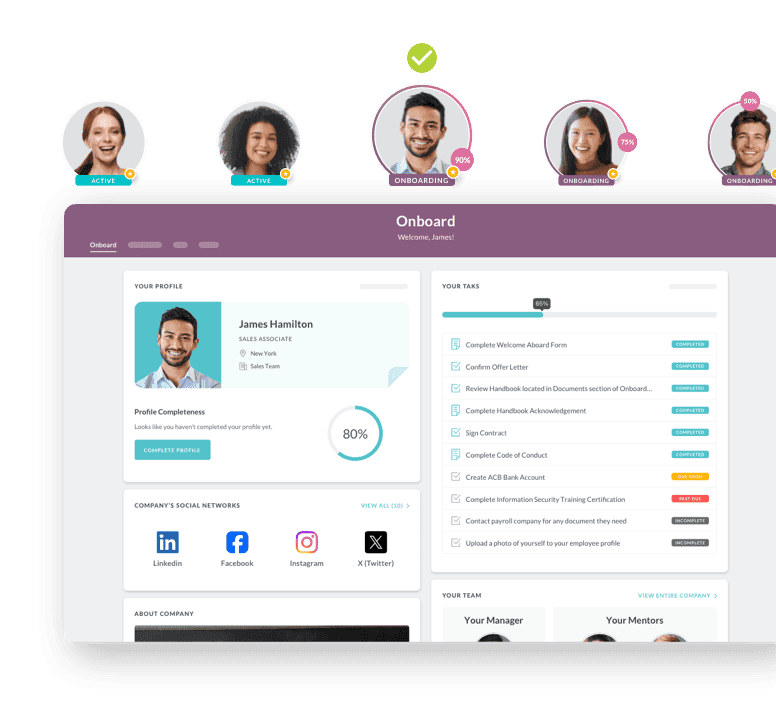
Professional HR fits a business where onboarding itself is the pain point, inconsistent new-hire paperwork, missed steps, no visibility into what's still outstanding for a given hire. This is where HR Cloud's core strength as an onboarding-first platform (reflected in its "Onboard" product naming) actually earns its higher price over Essential.
Culture HR fits a business that has onboarding under control but is now losing people after they start, weak early engagement, no recognition system, high early-tenure turnover. Bundling Workmates Premium here matters specifically if retention, not just onboarding efficiency, is the driving cost.
The mismatch to avoid: buying Culture HR for engagement features while your actual problem is still messy onboarding, or buying Essential HR when your real bottleneck is onboarding complexity that Essential doesn't address. Matching the tier to the specific operational pain point, not just the employee count, is what determines whether the higher-priced tiers are worth the jump.
How Long Does it Take to Get HR Cloud Up and Running?
Implementation speed is a real, practical part of "is it worth it," since a slow rollout delays the return on the investment. Industry-wide, HRIS implementation timelines vary considerably by source: general guidance from Calamari puts most small and medium business implementations at 4-8 weeks, while a more skeptical analysis from HRStak argues vendor-quoted timelines of 1-2 weeks are often optimistic, with real-world small business implementations averaging closer to 6-12 weeks once data migration and employee adoption are factored in.
Against that backdrop, HR Cloud's own implementation benchmarking states that HR Cloud averages 6 weeks to implementation based on customer data, comparing that to BambooHR's stated 4-6 weeks for SMBs and Rippling's stated 1-3 weeks for small business deployments (with Rippling's own mid-market timelines running 4-8 weeks). These are vendor-stated figures rather than independently audited numbers, and the broader research above suggests actual timelines across the industry tend to run longer than vendor pitches. Treat any single vendor's stated timeline, including HR Cloud's, as a starting estimate, and ask for a realistic timeline based on your specific data complexity during evaluation.
What Should You Prepare Before Switching to HR Cloud?
The single biggest factor in whether an implementation hits its stated timeline isn't the software, it's how ready your existing data is. According to a general HRIS migration guide from GoCo, the most common cause of migration delays is starting the process before employee, payroll, and benefits data has been cleaned and standardized, not the new system itself. A parallel HRIS migration checklist from HiBob frames this as protecting time and decision-making confidence, poor-quality source data doesn't just slow the migration, it undermines trust in the new system once it's live.
Practically, before starting an HR Cloud implementation, it's worth having ready: a clean, current employee roster (removing duplicates and outdated entries), standardized formats for names, addresses, and dates, a clear map of who owns which piece of the transition internally (HR, a specific manager, or an outside consultant), and a realistic sense of which historical records actually need to migrate versus simply being archived. None of this is HR Cloud-specific, it's true of any HRIS switch, but small businesses without a dedicated HR or IT function are the most likely to underestimate this step, which is often what turns a stated 6-week timeline into a 10-week one.
What Should You Ask During an HR Cloud Demo?
Vendor demos are, by design, built around the smoothest path through the product. A useful HRIS demo-questions framework suggests asking the vendor to run the demo on your actual workflows, not a generic script, since polished walkthroughs rarely reveal where a system creates friction for messy, real-world scenarios like a job change, a multi-location approval chain, or an unusual leave request.
A few questions worth bringing to any HR Cloud demo specifically, given what's covered above:
- Can a new hire complete onboarding entirely from a phone, without a company email address, if that matches your workforce?
- What happens when a manager misses an approval or onboarding task, does anything surface that gap, or does it silently stall?
- Which of our current payroll fields sync automatically, and which require manual entry? (Confirm this against your specific payroll provider, not a generic answer.)
- What exactly is included in the tier we're being quoted, versus what would require upgrading later?
- What does our team need to prepare or own during implementation, versus what HR Cloud's team handles directly?
These map to the tradeoffs already discussed above (payroll integration depth, mobile access, plan-tier scope, implementation timeline), so the demo becomes a way to verify claims already made in this guide rather than a generic sales conversation.
Is HR Cloud Worth it for Your Specific Small Business Industry?
This is where the operational-complexity thesis matters most: industry shapes complexity more than headcount does.
Small healthcare practices (clinics, home health, small hospice providers) typically carry more HR complexity per employee than their headcount suggests, credential tracking, dispersed field staff, no central office. HR Cloud's healthcare product page describes its onboarding tools as built for field-based clinical staff who complete forms and credential submissions from a smartphone, with role-based access controls limiting who can view sensitive records. For a small clinic or home health agency without a dedicated HR department, this kind of structured, mobile-first onboarding matters more than it would for an office-based small business of the same size, since manual paper processes are harder to manage across dispersed staff. Organizations with specific regulatory recordkeeping requirements for health-related data should confirm those requirements separately with their own compliance counsel rather than assuming any general HR platform covers them.
Small manufacturing and construction businesses carry similar complexity for a different reason: shift-based, job-site workers rather than desk-based employees. HR Cloud's manufacturing and construction pages both center on mobile access for this workforce type. Per general industry guidance from Lumos's onboarding software roundup, mobile-first onboarding is increasingly treated as a baseline requirement for this kind of workforce rather than a nice-to-have, and not every small-business HR platform prioritizes it equally.
Small professional services firms (law, accounting, consulting) are the clearest counter-example: salaried, desk-based staff, where complexity comes from multi-state compliance and fast onboarding for lateral hires, not mobile access. According to Netchex's review of payroll and HR options for professional services firms, firms in this category particularly value fast multi-state payroll setup and clean data connections to utilization and billing metrics. HR Cloud doesn't run payroll natively (as covered above), so this is a case where a smaller headcount doesn't necessarily mean lower complexity, it just means a different kind of complexity that HR Cloud alone doesn't fully solve.
Small retail and hospitality businesses share more in common with manufacturing/construction (frontline, hourly, often high-turnover) than with professional services, and the same mobile-first advantage applies. Labor scheduling laws, tip credit rules, and other state-specific wage-and-hour requirements are separate from what any general HR platform handles automatically; these employers should evaluate those compliance requirements independently with their own legal resources rather than assuming HR Cloud or any HR software covers them.
“The flexibility of the HR Cloud system is invaluable in ensuring compliance. It helped us stay a step ahead of changing document collection requirements.”

— Jesse Rose, Provider recruitment, onboarding, and compliance manager

What do Actual Users Say About HR Cloud?
On G2, Onboard by HR Cloud holds a 4.7 out of 5 star rating from over 100 verified reviews (as of this writing), with the majority of reviewers in the mid-market segment (roughly 51-1,000 employees) rather than the smallest end of the small-business range. Reviewers repeatedly cite strong customer support responsiveness and customizable onboarding workflows as standout strengths, and in direct comparisons against larger platforms, reviewers rated Onboard by HR Cloud's quality of support notably higher than Workday HCM's.
HR Cloud's review volume (100+ on G2) is meaningfully smaller than category leaders like BambooHR (5,600+ reviews) or larger payroll platforms like ADP RUN (5,000+ reviews). A smaller review base means the aggregate rating, while strong, is statistically less stable than a platform with thousands of reviews, worth factoring into how much confidence to place in the star rating alone.
What Makes HR Cloud Worth it for Some Small Businesses
Predictable, band-based pricing instead of a per-seat meter. Adding a handful of hires within your current employee band doesn't automatically increase your bill, unlike platforms where every hire adds a line item to the invoice.
Onboarding depth beyond basic HRIS. HR Cloud's core strength is structured onboarding workflows rather than being primarily a payroll or benefits platform, a direct fit for a business whose main pain point is chaotic, ad hoc new-hire paperwork.
Support for frontline and multi-location complexity. As covered above, this is where HR Cloud's mobile-first design earns more of its cost, in businesses where operational complexity outpaces headcount.
Room to grow without switching platforms. The Culture HR tier bundles engagement tools alongside core HR, letting a business add engagement capability later without adopting a separate system.
Where HR Cloud May Not Be Worth it
Businesses with genuinely low operational complexity. A company whose primary need is running payroll correctly, with limited onboarding volume and a single location, is likely better served starting with a simpler, cheaper payroll-first tool. HR Cloud's own review base skewing toward mid-market is a reasonable signal here, though it's a pattern, not a strict cutoff at any specific headcount.
Businesses that need payroll processing built in. Since HR Cloud doesn't run payroll natively, a business without an existing payroll provider needs to add one separately or consider a payroll-inclusive competitor instead.
Small professional services firms whose complexity is payroll-driven, not onboarding-driven. As covered above, this profile often needs multi-state payroll connectivity more than mobile-first onboarding, which shifts the calculus.
Businesses prioritizing the deepest independent review history above all else. HR Cloud's smaller review volume compared to BambooHR or ADP is a legitimate consideration for buyers who weight vendor risk that way, even though its per-review rating is strong.
Businesses needing to go live in under two weeks. Given HR Cloud's own stated 6-week average and the broader industry pattern of real timelines running longer than estimates, an urgent go-live requirement warrants checking a realistic timeline for your specific data situation before committing.
What's the Realistic Cost-Benefit Picture?
Actual ROI depends entirely on your own hiring volume, current process inefficiency, and turnover rate, not a generic formula, so treat the following as context rather than a promised return.
General HR technology research from Keka found that 57% of HR professionals report working beyond normal capacity, often driven by routine administrative tasks that automation can reduce, relevant to any small business owner currently handling HR admin personally. Separately, SHRM's own published estimate puts the cost of replacing an employee at 50% to 200% of their annual salary depending on role and seniority, meaning even modest improvements in onboarding quality or early retention carry outsized financial weight for a small business, where losing one or two employees represents a larger proportional impact than at a larger company.
Neither figure is specific to HR Cloud or a projected return. The more useful exercise: your current hiring volume, roughly how much owner or staff time goes into onboarding and HR admin today, and your current turnover rate, weighed against the pricing tiers above, plus your realistic implementation timeline and any migration prep effort, rather than an industry-wide average.
How Does HR Cloud Compare to Other Small Business Options?
| HR Cloud | Gusto | BambooHR | |
|---|---|---|---|
| Starting price | $295/month (flat, by band) | Per-employee-per-month | Custom quote |
| Payroll included | No, integrates with existing provider | Yes, payroll-first | Available as add-on |
| Typical implementation | ~6 weeks (vendor-stated average) | Not directly comparable (payroll-first) | 4-6 weeks (vendor-stated, SMB) |
| G2 rating | 4.7/5 (100+ reviews) | 4.6/5 (thousands of reviews) | 4.4/5 (5,600+ reviews) |
| Best fit | Onboarding-heavy, frontline/multi-location complexity | Very small teams, payroll-first needs | Mid-market, simplicity-focused |
(Figures reflect information available as of August 2026.) G2 ratings per G2's comparison data; Gusto rating per independent 2026 HR software comparison; implementation figures per HR Cloud's own benchmarking page.
The Bottom Line
HR Cloud is not automatically worth it because a company reaches a particular headcount. It becomes worth evaluating once a small business's HR operations get more complicated than a spreadsheet and a payroll-only tool can comfortably handle, whether that complexity comes from onboarding volume, a frontline or multi-location workforce, or growing manager coordination. A smaller company with real operational complexity can get more value from HR Cloud than a larger one without it. It's a weaker fit for businesses whose HR needs remain genuinely simple, professional services firms prioritizing multi-state payroll above onboarding depth, teams with an urgent go-live deadline, or buyers who prioritize the deepest possible independent review history above all else.

Discover how our HR solutions streamline onboarding, boost employee engagement, and simplify HR management
Book Your Free DemoFrequently Asked Questions
Is HR Cloud good for a small business with under 20 employees?
It depends on operational complexity, not headcount alone. A very small team with simple, single-location, payroll-centric needs may find HR Cloud more platform than necessary. A small team with meaningful onboarding volume, multiple locations, or frontline workers may find it worthwhile even at a smaller headcount.
Does HR Cloud include payroll?
No. HR Cloud handles HR functions, onboarding, HRIS, engagement, but integrates with your existing payroll provider rather than processing payroll natively.
How much does HR Cloud cost for a small business?
Plans start at $295/month for the Essential HR tier, covering up to 50 employees, with Professional HR at $595/month and Culture HR at $895/month for the same band, according to HR Cloud's published SMB pricing.
How long does it take to implement HR Cloud?
HR Cloud states an average implementation time of 6 weeks based on customer data, per its own benchmarking page. Treat this as a starting estimate, actual timelines depend heavily on data readiness and decision-making speed.
What should I prepare before switching to HR Cloud?
A clean, deduplicated employee roster, standardized data formats, a clear internal owner for the migration, and a decision on which historical records actually need to migrate versus being archived. Data readiness, not the software itself, is the most common cause of implementation delays industry-wide.
What do real users say about HR Cloud?
On G2, Onboard by HR Cloud holds a 4.7 out of 5 rating from over 100 verified reviews, with customer support responsiveness and onboarding workflow customization as the most frequently cited strengths.
Is HR Cloud worth it compared to Gusto or BambooHR?
It depends on the primary need. Gusto is generally the stronger fit for very small, payroll-first teams; BambooHR has a larger review base; HR Cloud tends to be the stronger fit for businesses with onboarding-heavy or frontline/multi-location operational complexity.
Does HR Cloud work well for frontline or multi-location small businesses?
Yes, one of its stronger fits. HR Cloud's industry pages for healthcare, manufacturing, and construction all emphasize mobile-first access for employees who don't work at a desk.
Is HR Cloud a good fit for a small professional services firm?
It depends on priorities. HR Cloud's onboarding and HRIS strengths are real, but firms in this category often weigh multi-state payroll connectivity heavily, and since HR Cloud doesn't process payroll natively, such firms should evaluate it alongside a separate payroll solution.
About the author

Keep Reading


Like What You Hear?
We’d love to chat with you more about how HR Cloud® can support your business’s HR needs.
Book Your Free Demo