What's the Best Applicant Tracking System for High-Volume Manufacturing Hiring?

The best applicant tracking system for high-volume manufacturing hiring is manufacturing ATS software built around three things: a mobile-first application candidates can finish in a few minutes, automated screening and communication that don't require a recruiter to touch every resume, and a direct connection to onboarding so an accepted offer moves straight into paperwork instead of sitting in a separate system waiting for someone to notice it. A general-purpose ATS built for hiring a handful of salaried roles a month doesn't hold up under the volume, speed, and turnover a manufacturing recruiting team actually deals with, no matter how well it's configured.
Manufacturing recruiting doesn't look like office hiring. A single plant might need to fill 20 to 50 hourly production roles in a month, sometimes on a seasonal spike, with candidates who are applying from a phone, comparing several openings at once, and gone to a competitor's job posting if the process takes too long. This is a genuinely different problem than filling a handful of salaried roles a quarter, and treating it with the same tools and the same process is where many manufacturing hiring pipelines start to break down. An Appcast study tracking more than 500,000 job seekers and 30,000 completed applications, reported by SHRM, found that cutting an application down to five minutes or less can lift conversion by up to 365%, and that completion rates drop by nearly half once an application asks 50 or more questions instead of 25 or fewer. For high-volume manufacturing hiring, the application itself is often the first place candidates are lost, before a recruiter ever sees a resume.
This guide covers what makes manufacturing hiring different, where the process typically breaks down, what to actually look for in high-volume recruiting software built for this volume, and how to roll one out without losing the candidates you're trying to hire in the process.
Why High-Volume Manufacturing Hiring Is Different
Seasonal spikes and fast time-to-fill needs
A corporate recruiting team hiring for a handful of salaried roles a quarter can afford a multi-step, multi-week process: a detailed application, a resume review, two or three rounds of interviews, a background check, then an offer. That process doesn't work when a plant needs 30 machine operators filled inside three weeks ahead of a seasonal production ramp, or when a distribution center needs to backfill a shift that's short-staffed this week, not next month.
Manufacturing hiring runs on volume and speed at the same time, which is a harder combination than either alone to solve well. Volume without speed means a recruiter drowning in applications with no way to process them quickly. Speed without volume tools means an ATS that works fine for ten applicants a month and falls apart at 200. High-volume manufacturing roles also tend to have higher turnover than salaried office roles, which means the hiring pipeline isn't a one-time project, it's a standing, ongoing function that has to keep up every month, not just during a single hiring push.
The candidate pool itself behaves differently too. A candidate applying for a salaried office role is often applying to a handful of companies over several weeks and can afford to wait for a response. A candidate applying for an hourly production role is frequently applying to multiple openings the same day, sometimes the same hour, at whichever employers are hiring in the area, and in high-volume hourly hiring, the faster-moving employer often has the advantage when a candidate is weighing two or three roughly comparable openings at once. Speed isn't a nice-to-have in that dynamic, it's often a real factor in who actually shows up on day one.
Seasonal spikes make this harder still. A manufacturer ramping up for a peak production season, a new product line, or a contract win might need to more than double its hourly headcount in a matter of weeks, then scale back down once the spike passes. An ATS that requires manual configuration for every new requisition, or that can't handle a sudden jump in applicant volume without slowing down, turns a seasonal spike into a bottleneck instead of a manageable surge.
Turnover compounds the volume problem in a way that's specific to hourly, shift-based manufacturing work. A salaried role that turns over once every few years is an occasional hiring event. An hourly production role with meaningfully higher annual turnover means the same requisition gets filled, and refilled, multiple times a year, which means whatever friction exists in the hiring process isn't a one-time cost, it's a recurring one that compounds every time a role reopens. A process that's merely inconvenient for a single hire becomes a real operational drag once it's repeated dozens of times a year across dozens of open roles.
| Hiring profile | Typical volume | Typical process | What breaks first |
|---|---|---|---|
| Corporate/salaried role | 1-2 openings per quarter | Multi-week, multi-interview | Rarely breaks; volume is low |
| Standard hourly hiring | 5-15 openings per month | Weekly batches, manual review | Recruiter time at moderate volume |
| High-volume manufacturing | 20-50+ openings per month | Continuous, ongoing | Application length, screening, scheduling all break under sustained volume |
| Seasonal manufacturing spike | 2-3x normal volume for weeks | Same process, compressed timeline | Everything that was merely slow becomes a hard bottleneck |
Common Bottlenecks in Manufacturing Recruiting
The volume and speed problem described above shows up in practice as a handful of specific, recurring bottlenecks. Most manufacturing hiring processes that struggle aren't struggling everywhere at once, they're struggling at one or two specific points in the pipeline that get worse as volume increases.
Manual resume screening at scale
When 200 applications come in for 30 openings, someone has to sort through them, and if that sorting happens by hand, it's the single biggest time sink in the entire hiring process. A recruiter manually reading every resume, checking for basic qualifications, and deciding who moves forward can spend hours on work that's largely repetitive: confirming availability, shift preference, certifications, and location before a single interview is scheduled.
The cost isn't just recruiter time. Manual screening is also where good candidates get lost simply because there are too many applications to review quickly, and the candidates who are actively job hunting, the ones you most want to reach, are often the ones who accept a competing offer while your team is still working through the stack. A resume that sits unreviewed for three or four days in a busy hiring period isn't a resume that's still waiting patiently; in a tight labor market, it's usually a candidate who's already accepted somewhere else. The math is unforgiving at scale: if a plant needs to fill 30 roles and loses even a modest share of qualified applicants to review delays every week, the pipeline needs a proportionally larger top-of-funnel just to compensate, which means more job ad spend and more sourcing effort to offset a problem that a faster screening process would have prevented in the first place.
There's a fairness cost too, less visible but real: manual screening under time pressure tends to get less consistent, not more, as volume increases. A recruiter reviewing the fortieth application of the day, at the end of a long shift of screening, isn't applying the same level of scrutiny as they did on the fifth. Automated first-pass screening against explicit, consistent criteria, availability, shift, basic qualifications, doesn't replace human judgment on who to hire, but it does mean every candidate gets evaluated against the same bar regardless of when in the stack their application landed, whether it was the first one reviewed that morning or the last one before the recruiter clocked out.
Slow scheduling and interview coordination
Coordinating an interview for a single candidate sounds simple until it's happening 30 or 40 times a month across multiple shifts and, often, multiple plants. Email back-and-forth to find a time, a phone call to confirm, a manual calendar entry, then the same process again when a candidate needs to reschedule, all of this adds days to a process where days matter. A candidate who applied to three openings at three different companies is often gone by the time a manufacturer gets back to them with an interview slot.
Multi-shift scheduling compounds the problem. A plant hiring across first, second, and third shift needs to coordinate interviews around each shift's supervisor availability, not just the candidate's, which means the scheduling problem isn't just recruiter-to-candidate, it's recruiter-to-candidate-to-hiring-manager, with more chances for something to fall through at each additional handoff.
None of this shows up as a single dramatic failure. It shows up as a slow accumulation of days: a day for the application to be reviewed, two more for an interview to be scheduled, another for the hiring manager to confirm, a few more for an offer to go out. None of those individual delays looks unreasonable on its own. Added together across a 30-to-50-day pipeline, they're the reason a manufacturer loses candidates to a competitor who moved faster, not because the competitor's job was better, but because the competitor's process was.
Interview no-shows are a related, often overlooked cost of a slow pipeline. A candidate who scheduled an interview five days ago, while also interviewing elsewhere, has had five days to accept a different offer, and a no-show at the interview stage wastes a hiring manager's time on top of the recruiter time already spent getting the candidate that far. Shortening the days between application and interview doesn't just speed up hiring, it directly reduces how many scheduled interviews never happen at all.
What to Look for in an ATS for Manufacturing
Mobile applications and quick scheduling
Most candidates applying for hourly manufacturing roles are doing it from a phone, often while comparing several openings at once, so the application itself needs to be built for that reality: short, mobile-responsive, and completable in a few minutes rather than requiring a desktop and twenty minutes of typing. A long, form-heavy application that works fine on a laptop can become nearly unusable on a phone screen, and per the Appcast research cited above, that's exactly where candidates drop off.
There's a distinction worth making here between a mobile-friendly candidate application and a mobile app for the hiring team itself. Both matter, but they solve different problems. The candidate-facing application needs to render cleanly and load fast on any phone browser without requiring a download. A separate mobile app for recruiters and hiring managers, letting them review applications, message candidates, and approve next steps from a phone rather than being tied to a desktop, is what keeps the hiring side of the process moving as quickly as the candidate side.
Scheduling needs the same treatment. An ATS that lets a hiring manager send an interview invitation with a video link in a couple of clicks, rather than switching between email, a calendar app, and the ATS separately, removes days from the process without adding staff.
Automated candidate communication
At high volume, a recruiter can't personally email every applicant an update on where they stand, but candidates who never hear back are candidates who assume they've been rejected and stop paying attention to your openings, even the ones they'd have been a fit for. Automated status updates, templated but personalized outreach, and standardized offer communication let a small recruiting team keep every candidate informed without manually messaging each one.
This gap widens specifically in manufacturing hiring, because the same candidate pool is often applying to several similar openings at competing employers in the same area at once. A candidate who hears back within a day or two from one employer and hears nothing from another for a week has already made an implicit comparison between the two companies before either has made them an offer.
Integration with onboarding
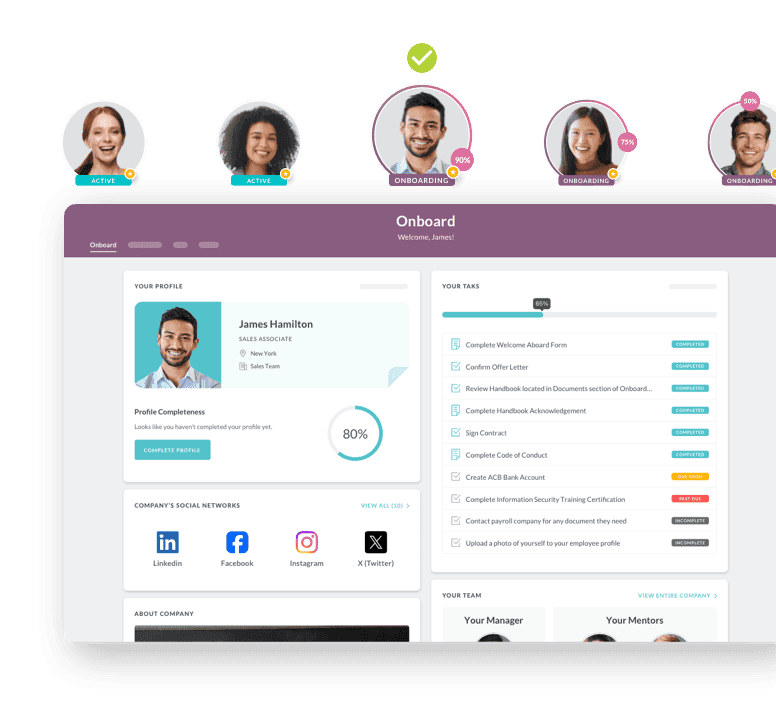
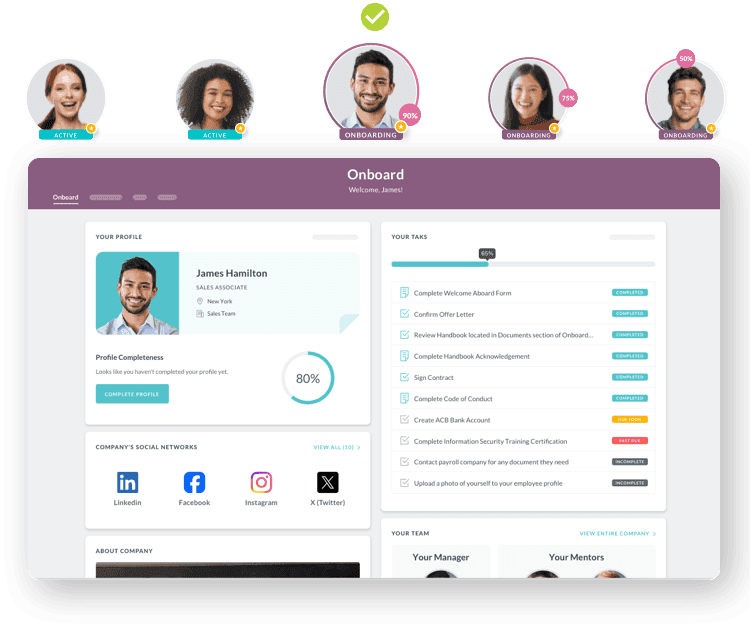
A candidate who accepts an offer shouldn't have to wait for a recruiter to manually transfer their information into a separate onboarding system before their paperwork starts. An ATS that connects directly to onboarding moves an accepted candidate's record automatically into I-9 forms, tax documents, safety acknowledgments, and any other required paperwork, so day one is ready to go the moment the offer is signed instead of days or weeks later once someone gets around to the handoff.
The offer isn't the finish line. A manual ATS-to-onboarding handoff that a recruiter can keep up with at ten hires a month becomes a real liability at forty, particularly during a seasonal spike when the same recruiter is also fielding a doubled volume of new applications at the same time.
Beyond these three areas, a few other things are worth checking directly before committing to a factory hiring platform, regardless of vendor:
| What to check | Why it matters at high volume |
|---|---|
| Bulk requisition and posting tools | Opening 20 roles at once for a seasonal spike shouldn't take 20 times the manual setup work |
| Shared, multi-shift interview calendar | Scheduling across first, second, and third shift needs more than one hiring manager's calendar |
| Reporting broken out by plant and role | A single company-wide time-to-fill number hides which specific site or role is the actual bottleneck |
| Configuration effort per new requisition | A platform that needs heavy manual setup for every opening turns a seasonal spike into extra work instead of a manageable surge |
How Manufacturers Are Speeding Up Hiring Today
Mobile-first application processes
The shift happening across manufacturing recruiting right now is a move away from lengthy, desktop-oriented applications toward short, mobile-first ones, often paired with automated screening that filters for basic qualifications before a recruiter spends time on a candidate. This isn't about lowering the bar for who gets hired. It's about not losing qualified candidates to a slow or clunky process before a recruiter ever gets the chance to evaluate them.
This is usually a phased shift, not a single cutover, with a manufacturer shortening the application first, since that's where the most candidates are lost, then adding automated screening and communication once the intake side is working, and connecting the ATS to onboarding last, once the hiring side of the process is reliable. A manufacturer doesn't need every piece of a high-volume recruiting software rollout in place on day one to see a real difference; shortening the application alone, based on the Appcast research, is often the single highest-leverage change available.
Compliance requirements factor into this shift too, in a way that's more pronounced in manufacturing than in many other industries. I-9 verification, and E-Verify where applicable, has to happen for every hire regardless of volume, and a high-volume hiring process that's fast everywhere except compliance paperwork just moves the bottleneck downstream instead of removing it. Manufacturers speeding up hiring today are generally pairing faster sourcing and screening with a faster, still-compliant onboarding handoff, not skipping required steps to save time, since a shortcut on required paperwork trades a solvable speed problem for a much harder compliance one.
Step-by-Step: Optimizing High-Volume Hiring
Not every manufacturer needs to rebuild its entire hiring process at once. A practical approach starts with the highest-leverage change, the application itself, and works through the rest of the pipeline from there, rather than trying to fix screening, scheduling, and onboarding simultaneously.
To make each step concrete, consider a hypothetical composite plant: a manufacturer hiring 35 hourly production employees a month across two shifts, with a seasonal spike that roughly doubles that volume for eight weeks a year. This is an illustrative example, not a researched industry sample, useful only for showing how the five steps play out in practice.
Step 1 — Simplify the application to mobile-first
Start with the application form itself: cut it down to what's genuinely needed to make a first-round decision (contact information, availability, shift preference, basic qualifications) and move anything else, background check authorization, detailed work history, to later in the process. Confirm the form actually works well on a phone screen, not just that it technically renders there.
For the composite plant, that likely means trimming a legacy application from 40-plus fields down to something closer to 10 or 15, moving detailed employment history to the interview stage rather than the application stage. That single change, based on the Appcast research, is the one most likely to move the needle before anything else on this list is touched.
Step 2 — Automate initial screening
Once the application is short and mobile-friendly, automate the first-pass filtering: basic qualification checks, availability matching, and certification requirements, so a recruiter's time goes toward evaluating candidates who've already cleared the minimum bar rather than reading every application from scratch. This step should sit downstream of Step 1, not replace it: automating the screening of a still-too-long application just means candidates drop off before there's anything left to screen.
Step 3 — Streamline interview scheduling
Move interview coordination out of email and into a system that lets a candidate pick from available times and a hiring manager see confirmed interviews in one place, with video links generated automatically rather than added by hand. For a multi-shift plant, this needs to account for each shift's supervisor availability specifically, not just a single hiring manager's calendar, and should let a second- or third-shift supervisor set their own availability directly rather than routing every scheduling request through a single daytime coordinator.
Step 4 — Connect ATS directly to onboarding
Once a candidate accepts an offer, their record should move into onboarding without anyone having to manually re-enter their information. This is the step that most directly affects time-to-start, not just time-to-hire: a fast interview-to-offer process still loses its value if the new hire then waits two weeks for paperwork to catch up. For a role with a hard start date tied to a production ramp, a delay at this step can mean a new hire misses the exact window they were hired to cover.
Step 5 — Track time-to-fill by role/plant
Once the process is running, measure time-to-fill broken out by role and by site, not as a single company-wide average. A plant with a longer time-to-fill than others in the same company usually points to a specific local bottleneck, a smaller local candidate pool, a slower-responding hiring manager, worth investigating directly rather than assuming the overall process needs a company-wide fix.
For the composite plant, tracking time-to-fill separately for the steady-state 35-a-month volume versus the eight-week seasonal spike shows whether the process holds up under pressure or only works at normal volume, which is exactly the scenario most likely to break first.

Ready to simplify hiring from job post to offer?
Track candidates, customize hiring stages, schedule interviews, and connect recruiting to onboarding in one easy-to-use ATS.
Book Your Free Demo
How HR Cloud's Recruit ATS Speeds Up Factory Hiring
The five steps above describe what a manufacturer needs from any ATS built for high-volume hiring. Here's specifically how HR Cloud's Recruit ATS covers them, and what's actually verified rather than assumed.
Mobile application experience
HR Cloud's Recruit ATS includes a mobile recruitment app that connects a hiring team, recruiters and hiring managers, so candidate activity, new applications, and pending tasks are visible and actionable without being tied to a desktop. Recruit also supports branded job boards, and includes AI-generated job description drafting to speed up posting new requisitions during a hiring surge rather than writing each one from scratch. One feature worth calling out specifically for a factory hiring platform: Recruit can turn any live job posting into a scannable QR code, print-ready, meant for career-fair flyers, storefront windows, break-room boards, or table tents, so a candidate standing in front of a physical posting at the plant can scan and start an application on their phone on the spot, rather than having to remember a URL later. Toyota Material Handling, Comfort Systems USA, and Osmose are named customers using Recruit for hiring, verified against HR Cloud's own published customer case studies, on the high-volume, frontline-hiring side of a customer base that includes more than 760 organizations overall.
Automated candidate communication
Recruit's Offer Letters feature sends automated, personalized messages to candidates at each stage of the process, notifying them of next steps or a hiring decision, and lets a recruiting team extend and manage offers through customizable templates rather than drafting each one individually. Candidate communication isn't limited to email either: Recruit supports configurable SMS templates for applicant messaging, useful for a candidate pool that's more likely to see and respond to a text than an email sitting in an inbox they don't check daily. Recruit also includes an AI Applicant Assistant, available to candidates through the Applicant Portal, that answers questions in natural language, checks application status, and surfaces pending tasks and next steps, drawing on recruitment-specific information an HR admin uploads and configures, so a recruiter isn't manually answering the same handful of status questions from every applicant in a high-volume pipeline.
Interview coordination gets a more direct fix than calendar links alone: Recruit supports built-in video interviews, where every candidate records their answers to the same predefined questions on their own time rather than joining a live call, and the hiring team reviews and rates the recorded responses at their convenience. For live interviews that still need to happen, a hiring manager can generate a Teams or Zoom link in two clicks and see every confirmed interview populated into a centralized Recruit Calendar, instead of coordinating across email, a separate calendar app, and the ATS.
Direct connection to onboarding
HR Cloud Recruit connects directly to the Onboard module, so when a candidate accepts an offer, their record moves automatically into onboarding without a manual file transfer between systems. HR Cloud's own product documentation cites this specifically for high-volume, frontline hiring: Interim Healthcare uses Recruit and Onboard together and reports a full rollout completed in six weeks, a 60% efficiency improvement, and 97% monthly active usage across all its locations, with its Chief People Officer crediting the connection for reducing new-hire time-to-productivity by months. That's not a manufacturing-specific example, but it's the same structural pattern manufacturing hiring needs: high volume, compliance-heavy paperwork, and a hard deadline (day one) that a manual handoff regularly misses.
The distinction between "connects to" and "integrates with" matters here, and it's worth pressing on during any ATS evaluation, not just HR Cloud's. Some platforms describe an integration that's really a manual export-and-import step performed periodically, which still requires someone to move data by hand, just on a schedule instead of per-candidate. HR Cloud's own description of the Recruit-to-Onboard handoff is that candidate information moves into the next stage with fewer manual handoffs, without requiring a separate export or re-entry step. HR Cloud also connects this recruiting-to-onboarding flow into ADP Workforce Now specifically, as an ADP Platinum Marketplace Partner, layering on top of ADP rather than replacing it, alongside broader integrations covering UKG, Workday, Paylocity, and more than 180 other systems in total.
Recruit's reporting shows candidate sources, pipeline movement by stage, open roles, and recruiting activity at a glance, filterable by job, department, location, and date, useful for the time-to-fill tracking described in Step 5, broken out by plant rather than as a single blended number. For a manufacturer running the same requisition across several plants, filtering by location specifically is what surfaces a slow site before it becomes a pattern rather than an isolated bad month.
Common Mistakes in High-Volume Hiring
In many high-volume hiring workflows, two problems deserve particular scrutiny ahead of everything else. Fixing these two tends to resolve most of the downstream symptoms, missed deadlines, frustrated hiring managers, candidates who disappear mid-process, without a wholesale process rebuild.
Long, desktop-only application forms
The clearest, most fixable, mistake in high-volume manufacturing hiring is an application that was built for a desktop-based, low-volume hiring process and never redesigned for a mobile-first, high-volume one. A 40-question application that took a recruiter's own team an hour to build feels thorough from the employer's side, but from a candidate's side, on a phone, deciding between three open positions at three different companies, it's the reason they close the tab. Fixing this doesn't require a new ATS necessarily; it requires actually cutting the application down to what's needed for a first-round decision, which is a content problem as much as a technology one.
A related version of this mistake is treating the application form as a settled, one-time project rather than something to revisit. An application that was appropriately short two years ago can quietly grow back to 40 questions as different teams add "just one more field" over time, so the length is worth auditing periodically, not just fixed once and forgotten. A quick, recurring check, pulling up the live application on a phone and timing how long it actually takes to complete, catches this kind of drift before it becomes a real problem again.
Disconnected ATS and onboarding systems
The second most damaging mistake is treating recruiting and onboarding as two separate systems connected by a person manually re-entering data between them. Every manual handoff is a place where a new hire's start date slips, where a document gets missed, or where a recruiter has to spend time on data entry instead of sourcing the next round of candidates. This mistake often isn't visible until volume increases: a manual handoff that was tolerable for five hires a month becomes a real bottleneck at 35 or 40, especially during a seasonal spike when the volume doubles and the manual work doubles right along with it. It also tends to hit hardest exactly when it's most costly, during the same seasonal ramp that made speed matter in the first place, since that's when a recruiter has the least spare time to catch a handoff that fell through the cracks.
What a Faster Hiring Process Delivers
Reduced time-to-fill and lower candidate drop-off
The clearest return on fixing a high-volume manufacturing hiring process is fewer candidates lost to a slow or clunky process before a recruiter ever gets to evaluate them. Since the Appcast research found conversion can improve by up to 365% simply by cutting an application to five minutes or less, the single highest-leverage fix in most manufacturing hiring pipelines is often the application form itself, not the sourcing strategy or the job postings.
Time-to-fill improves for a related but distinct reason: once screening, scheduling, and the ATS-to-onboarding handoff are automated instead of manual, the process doesn't slow down as volume increases. A recruiting team that can process 200 applications for 30 openings without falling behind is in a fundamentally different position than one that can only keep pace with the volume by working overtime or triaging poorly, and that difference shows up most clearly during a seasonal spike, exactly when the process is under the most pressure.
The two metrics don't always move together, which is worth watching for directly. A platform can shorten time-to-fill by rushing candidates through screening without actually reducing drop-off, or reduce drop-off at the application stage without fixing a slow downstream scheduling process that still costs candidates later. Tracking both, drop-off rate at each stage of the pipeline and time-to-fill by role and plant, is what shows whether a fix is actually working end to end rather than just moving the bottleneck to a different step, which is a much more useful signal than either metric checked in isolation.
There's a downstream effect worth naming too: a faster, less frustrating application and hiring process is itself part of a candidate's first impression of the company, before they've even started. A manufacturer competing for the same pool of hourly workers as several other employers in the area is not just competing on pay and shift, it's competing on how easy it is to actually apply and get an answer, and that's a lever a recruiting team can control directly, faster than it can change compensation.
Conclusion
High-volume manufacturing hiring doesn't get faster by adding more recruiters to a slow process. It gets faster by removing the specific points where candidates and time are lost: a long application, manual screening, scheduling coordinated over email, and a disconnected handoff into onboarding. The right manufacturing ATS software helps, but only once those bottlenecks are actually identified. Start with the application, since that's usually where the most candidates are lost, then work through screening, scheduling, and the onboarding connection from there, and track time-to-fill by plant and role so you know whether the fix is actually working.
The platform matters, but the audit matters more. A strong ATS applied to an unchanged 40-question application will still lose candidates on the first step. Shorten the application first, then evaluate platforms against the rest of the pipeline, rather than assuming new software fixes a process problem on its own. Measure drop-off at each stage and time-to-fill by plant after any change, rather than assuming it worked because the process feels faster.
See how HR Cloud's Recruit ATS compares to other options in the ATS buyer's guide, or look at how best ATS software is evaluated more broadly before you commit to a platform for high-volume hiring.
If you're ready to see what a mobile-first, high-volume hiring process looks like for your plant, request a demo of HR Cloud's Recruit ATS and walk through your own application form against the five-minute benchmark before you talk to sales.

Discover how our HR solutions streamline onboarding, boost employee engagement, and simplify HR management
Book a DemoFAQs
How long should a factory job application take to complete?
Aim for five minutes or less. Appcast's research on more than 500,000 job seekers, reported by SHRM, found conversion rates improve by up to 365% when an application takes five minutes or less, and completion rates drop by nearly half once an application asks 50 or more questions instead of 25 or fewer. If your current application takes longer than that, cutting it down is very likely the single highest-leverage change available before touching anything else in the hiring process.
Can an ATS auto-schedule interviews?
Many modern platforms, including HR Cloud's Recruit, let a hiring manager generate a video-conference link and populate a shared calendar in a couple of clicks, and some support candidates self-selecting from available time slots directly, removing the email back-and-forth that typically adds days to scheduling. For multi-shift manufacturing hiring specifically, confirm the platform can reflect each shift's supervisor availability separately rather than routing every request through one calendar.
Does the ATS connect directly to onboarding software?
It depends on the platform, but the better ones do. HR Cloud's Recruit ATS connects directly to its Onboard module, so an accepted candidate's record moves automatically into required paperwork without manual re-entry, the same pattern its healthcare customer Interim Healthcare uses for high-volume, compliance-heavy hiring. Confirm this specifically during evaluation rather than assuming it, since "integration" sometimes means an export-and-import step rather than a genuinely automatic handoff.
How do you handle seasonal hiring spikes in the system?
The platform needs to handle a sudden jump in applicant volume without requiring manual reconfiguration for every new requisition, which usually means automated screening and communication are already in place before the spike hits, not built during it. Tracking time-to-fill separately during a seasonal spike versus normal volume, as outlined in Step 5, shows whether the process actually holds up under pressure, and reviewing the results after each spike is what lets the process improve before the next one.
About the author

Keep Reading


Like What You Hear?
We’d love to chat with you more about how HR Cloud® can support your business’s HR needs.
Book Your Free Demo