Best Viventium Alternatives in 2026: Payroll, HR & Workforce Software Compared

The best Viventium alternatives depend on which part of the stack you need to replace. ADP, Paylocity, Paycor and UKG are payroll-first suites, so they fit when payroll itself is the reason to leave. BambooHR and Rippling start from the employee record and add payroll as a module. HR Cloud fits when payroll already works and the harder problem is onboarding, engagement and mobile HR for frontline staff, because HR Cloud does not run payroll.
This guide reads each option against what Viventium actually does. It uses vendor-published pages first, labels third-party numbers as third-party, and says plainly where HR Cloud is the weaker choice. Several Viventium competitors beat HR Cloud on payroll, because HR Cloud has none, and some readers should simply stay with Viventium. Both points are covered below.
What Is Viventium?
Viventium is a payroll, HR and workforce platform built for healthcare. It calls itself the only unified workforce platform built for post-acute care, combining recruiting, onboarding, scheduling and payroll in one system. Its payroll page names homecare, hospice, ABA, senior living and skilled nursing facilities as its settings.
The product list is wider than payroll. Viventium's unified platform page lists applicant tracking, onboarding, HR services, benefits administration, scheduling, time and attendance, ACA compliance, business intelligence, learning management, exclusion monitoring, on-demand pay and job sponsorship management. It also says its onboarding flows candidate information directly into employee records, and that its recruiting tools automate primary source verification and background checks at the point of hire.
The payroll engine is the center of the product. Viventium lists flexible rate rules by department, location and contract, retroactive overtime recalculation, blended-rate overtime, automated union dues, unlimited earnings and deduction codes, and Payroll Based Journal (PBJ) reporting for skilled nursing and senior living. Payroll data is available through an API, and general ledger integrations are listed. Employees and managers get iOS and Android apps. For healthcare payroll software, that is the profile of a specialist.
Recruiting got bigger in 2026. Viventium announced its acquisition of Apploi on February 4, 2026. The release says the deal closed on January 30, 2026, and that Apploi adds recruiting and credentialing to Viventium's payroll, HR and workforce management. Viventium says it serves clients in all 50 states and supports nearly 800,000 healthcare employees. Financial terms were not disclosed.
Beyond payroll, Viventium describes a digital, always-current compliance file for every clinician across all 50 states and schedules tied directly to payroll data, so labor cost is visible where the pay is calculated. Its business intelligence product lists hundreds of pre-built reports alongside a custom report builder, and exclusion monitoring is a separate listed product. Viventium also states 90% or higher client retention and a Net Promoter Score of 70 or more. Those are Viventium's own figures, and the page does not describe how they were measured.
Two things to verify in a demo. Viventium's own product list does not name a dedicated employee engagement, recognition or internal communications product, and it does not name performance management. A third-party listing on Software Advice does list performance management, goal tracking and employee surveys among Viventium's features, so ask Viventium what is included and at what depth. Viventium also does not list prices on the pages reviewed for this article, so a demo request is the only route to a number.
Why Companies Consider Viventium Alternatives
Viventium's narrow focus is the reason many organizations choose it and the reason others look elsewhere. Six patterns come up when buyers start searching for Viventium alternatives, and each one points to a different kind of replacement.
Healthcare-Focused Orientation
A healthcare-only platform fits skilled nursing, hospice and home care well. It fits less well when healthcare is one business among several. Viventium's industry menu covers home care, hospice, home health, skilled nursing, senior living, CCRC, ABA and other health services. A behavioral health group with clinics, a staffing arm and a corporate office may want one set of tools that treats a therapist, a recruiter and a facilities manager the same way. Viventium is purpose-built for healthcare, so a mixed-workforce organization should test how that specialization translates to its corporate, operational and nonclinical teams.
The same orientation is a strength for buyers who want healthcare payroll software with the vocabulary already built in. Nobody has to explain blended rates or PBJ to the vendor.
Payroll Requirements
Some buyers want one payroll engine for the whole company, not only the care workforce. Others already run a payroll provider they trust for corporate staff and want healthcare staff on it too. A third group finds that PBJ reporting and blended-rate overtime are not rules they need at all.
Changing payroll is the most expensive move on this list. ADP, Paylocity, Paycor and UKG matter mainly when payroll is the reason for leaving. If the payroll engine works, replacing it to fix something else is the wrong trade.
Broader HR Requirements
Viventium describes its HR product as access to industry-specific HR experts. That is a service model. Teams that want a configurable system of record, with custom fields, workflows, org charts and review cycles, compare HRIS alternatives such as BambooHR, Rippling and HR Cloud. Viventium's own product list does not name performance management, which pushes some buyers toward platforms that state it plainly, though a third-party listing says Viventium offers it. For larger employers weighing enterprise systems, HR Cloud's Workday alternatives guide covers that end of the market.
Integration Requirements
Viventium answers system sprawl with consolidation. It describes one system of record from candidate to paycheck. Buyers who want to keep an existing payroll, or who already run a separate applicant tracking system, ask a different question: which platform connects cleanly to what we own.
HR Cloud documents an integration with ADP Workforce Now, and its site links to UKG and Paylocity integration pages. Viventium points the other way, exposing payroll data through an API and listing general ledger integrations. Either route works. The choice is whether you want one vendor or several.
Employee Experience
Viventium gives employees self-service for pay stubs, W-2s and PTO requests, plus mobile apps. That covers administration. A dedicated recognition or internal communications product does not appear in the product list on the pages reviewed.
For a workforce that never sits at a desk, the phone is the workplace. Organizations that watch retention look for tools that reach people there, and that search is often what starts the comparison.
Organizations Outside Healthcare
Viventium describes itself as built exclusively for healthcare, and its platform page frames the fit as post-acute care. A construction firm, a municipality, a hotel group or a manufacturer sits outside that design. Those organizations need a different payroll and HR system, and every option in this guide works outside healthcare. Only Viventium is limited to it.
7 Viventium Alternatives
These Viventium competitors split into payroll-first suites and HRIS alternatives. The table compares all seven. Vendors that publish no price are marked as such, because an option you cannot price is harder to evaluate.
| Vendor | Strongest fit | Payroll | Recruiting and onboarding | Published pricing |
|---|---|---|---|---|
| HR Cloud | Frontline onboarding, engagement and mobile HR on top of an existing payroll | None. HR Cloud states payroll is not required and not bundled | Recruit ATS from Professional HR, I-9 verification in every plan, and Maya SMS onboarding | Published for 1 to 250 employees: $295 to $1,995 per month by plan and headcount band |
| ADP | Midsized organizations that want payroll, HR, benefits and time in one suite | Core of Workforce Now: Select covers payroll and HR, Plus adds benefits administration, Premium adds Time and Attendance | Talent tools are part of Workforce Now | Not published. ADP shows a Get pricing form |
| Paylocity | Organizations that want HR, payroll, time and talent on one platform | Payroll is one part of a modular HR suite | Recruiting and onboarding are listed for healthcare; Recruiting is an optional add-on per its pricing FAQ | Not published. Paylocity shows a Get Pricing form |
| Paycor | HCM, payroll and talent software, now part of Paychex | HCM and payroll, per Paychex's announcement | Talent software, per Paychex | Not published in the sources reviewed |
| UKG | Healthcare organizations where scheduling is the hardest problem | Payroll is listed on UKG's healthcare page, which also says UKG automates PBJ reporting | UKG Rapid Hire covers high-volume hiring through onboarding, per UKG | No public price list in the sources reviewed |
| BambooHR | HR-first teams that want records, hiring and time off, with optional payroll | Payroll, benefits administration and time and attendance sold as add-ons, with a 15% U.S. bundle discount for payroll plus benefits | ATS with 5, 25 or 50 job openings by plan | Published: $10, $17 and $25 per employee per month (Core, Pro, Elite), with a $250 monthly flat rate for 25 employees or fewer |
| Rippling | Teams that want HR, payroll and IT modules on one platform | Payroll is a separate product bought alongside the core platform | Recruiting and performance management are listed as products | Starts at $8 per user per month, then a custom quote. Gusto reports Rippling's own pages show a $35 or $40 monthly base fee |
HR Cloud
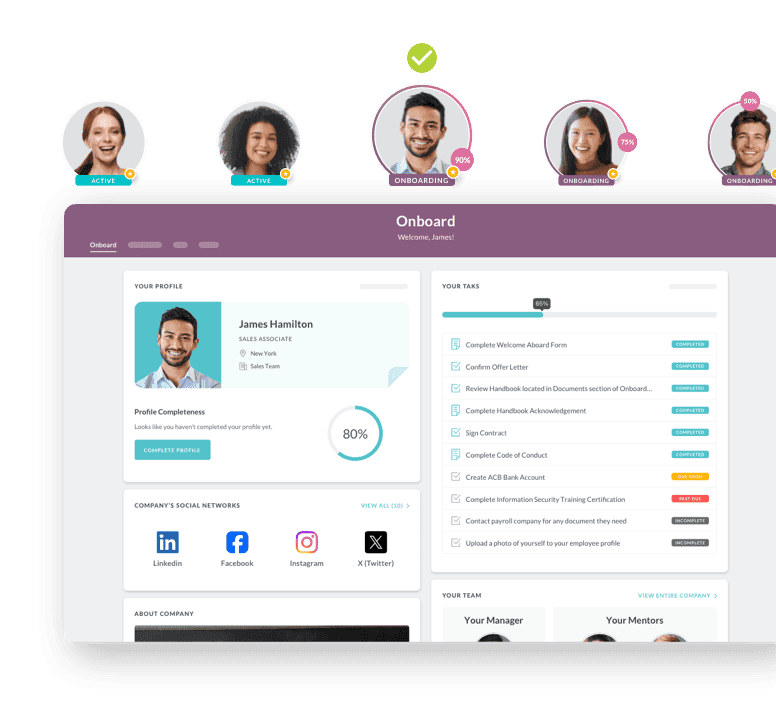
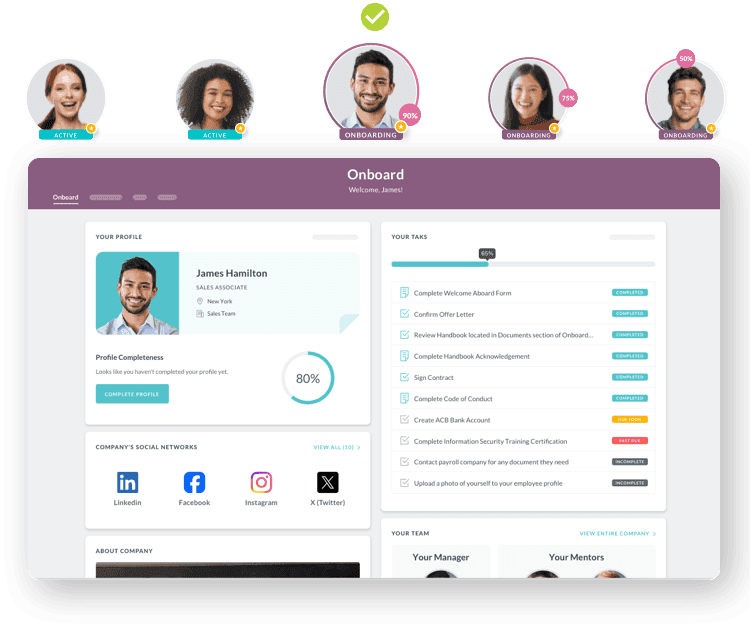
HR Cloud is an HR and employee experience platform that keeps your payroll where it is. HR Cloud states that payroll is not required to use its core features, and that no payroll is bundled into the package price. Employee, time-off and time-clock data can sync to an existing payroll provider. That makes HR Cloud a layer on top of Viventium's payroll engine, or on top of whatever payroll replaces it.
Prices are published for teams of 1 to 250 employees on the small-business pricing page:
Essential HR costs $295 per month for up to 50 employees, $495 for 51 to 100 and $795 for 101 to 250. It includes the Onboard Suite, time off, basic HRIS functionality and standard integrations.
Professional HR costs $595, $995 and $1,495 across the same bands. It adds performance management, applicant tracking, assets management and Kudos recognition.
Culture HR costs $895, $1,395 and $1,995. It adds a custom branded mobile app, personalized journeys by role and location, eNPS and pulse surveys, company announcements, secure chat and digital signage.
Annual billing saves 20%, per the page. Above 250 employees, the main pricing page describes a fixed annual license quoted to your team size, with no per-seat fees. Its pricing pages disagree on some terms (for example, implementation fees and support hours), so confirm every commercial term in writing.
The frontline case rests on Maya, HR Cloud's SMS onboarding agent. HR Cloud says Maya collects I-9 documents, direct deposit details and policy acknowledgments by text and, for healthcare, license and credential documentation before Day 1. HR Cloud reports 89% task completion for SMS onboarding against 52% for portal onboarding. That figure is HR Cloud's own, and the page does not describe the method. Confirm Maya's availability on your plan before you count on it.
Where HR Cloud is weaker: it does not run payroll. PBJ reporting, ACA reporting and benefits administration do not appear in the plan tables on its pricing pages. It is not healthcare-exclusive. Its pricing pages describe Time Clock timesheets, approvals and custom policies but say little about scheduling depth, so test your shift rules in a demo.
ADP
ADP is the name most buyers already know.
Workforce Now is its suite for midsized organizations, and ADP's product page offers demos for both 50 to 999 and 1,000-plus employees. It comes in three packages. Select covers payroll and HR. Plus adds benefits administration. Premium adds Time and Attendance. ADP publishes no prices, and the page routes to a Get pricing form.
ADP lists AI-powered insights that surface unusual payroll changes. It also cites a 4.4 Capterra rating from 7,228 reviews as of July 15, 2026, and notes that the ratings include incentivized reviews.
For a Viventium buyer, the question with ADP is fit. ADP lists healthcare among its industries, but the page reviewed for this article does not describe PBJ reporting or post-acute pay rules. Ask for both in writing.
HR Cloud and ADP are built to run together. HR Cloud carries a Platinum ADP Marketplace Partner badge on its pages and documents an ADP Workforce Now integration. Neither replaces the other. If you keep ADP payroll, HR Cloud can carry the onboarding and engagement work around it, and the HR Cloud vs ADP Workforce Now comparison covers the detail.
Paylocity
Paylocity publishes no price. Its pricing page describes a customizable HR, Finance and IT suite and routes buyers to a Get Pricing form. That page says the HR suite carries core features with optional add-ons such as Recruiting, Employee Voice and Learning, so the number depends on what you add.
Paylocity is the one payroll-first option here that speaks to healthcare directly. Its healthcare page lists credential-based scheduling, PBJ reporting requirements, certification tracking, integrated recruiting and onboarding, employee surveys, and recognition. Paylocity also says its scheduling syncs with electronic visit verification (EVV) systems. Those are Paylocity's own claims, and none says how deep each feature goes, so test them against your pay rules.
HR Cloud lists a Paylocity integration and compares itself directly in HR Cloud vs Paylocity.
Paycor
Paycor is no longer independent. Paychex announced the completion of its acquisition of Paycor at about $4.1 billion in enterprise value, and describes Paycor as a provider of HCM, payroll and talent software.
For buyers, that raises practical questions. Which product line does your quote sit on? Which pricing model applies at renewal? Paycor's prices were not published in the sources reviewed, so both answers have to come from the vendor.
HR Cloud lists a Paycor payroll integration and compares the two in HR Cloud vs Paycor.
UKG
UKG puts substantial emphasis on healthcare workforce scheduling. In a February 2026 release, UKG describes Advanced Scheduler for patient-to-nurse ratios and fatigue rules, Clinical Scheduling Extensions that quantify workload intensity, EZCall for physician schedules, Rapid Hire for high-volume hiring, and Wallet for on-demand pay. The same release says UKG is a partner to more than 3,500 hospitals and 10,000 post-acute care facilities, and the headline says nearly 90% of the largest U.S. healthcare systems use it. Those are UKG's claims, and they describe scale more than fit.
On its healthcare page, UKG lists payroll, scheduling, time and attendance, HR and talent. For post-acute and senior living, that page says UKG automates Payroll-Based Journal reporting. UKG sells through UKG Pro and UKG Ready. Match it to scheduling complexity: a home care agency whose problem is variable pay rules will find less of UKG relevant than a multi-site health system whose problem is shift coverage.
The sources reviewed show no public UKG price list. HR Cloud documents a UKG integration, so a UKG payroll customer can still add HR Cloud for onboarding and engagement.
BambooHR
Does BambooHR run payroll? Yes, as an add-on. BambooHR's pricing page lists payroll, benefits administration, time and attendance and global employment as add-ons to its Core, Pro and Elite plans. It offers a 15% discount for U.S. customers who bundle payroll and benefits administration with any plan.
Unlike most vendors in this guide, BambooHR publishes its prices: $10, $17 and $25 per employee per month for Core, Pro and Elite, with a flat rate starting at $250 per month for companies of 25 employees or fewer. Applicant tracking is capped at 5, 25 or 50 job openings by plan. Performance management and recognition start at Pro. Volume discounts apply automatically.
HR Cloud's own guidance is candid on fit: it says growing headcount at one desk-based site favors BambooHR or Gusto, per its BambooHR alternatives guide. For care teams spread across shifts and sites, HR Cloud publishes a direct HR Cloud vs BambooHR page.
Rippling
Rippling packages its products separately, which shapes how you buy it.
Pricing has no full rate card. Rippling's pricing page says it starts at $8 per user per month and sends buyers to a custom quote. Gusto reports that Rippling's own pages show a monthly base fee of $35 in one article and $40 on the small-business page. Gusto competes with Rippling, so verify both with Rippling.
Payroll is separate. Rippling's FAQ says products such as payroll and benefits can be purchased separately, alongside the required core platform.
The catalog is broad. The pricing page lists payroll, time and attendance, benefits administration, ACA and COBRA administration, recruiting, learning management, performance management, surveys, PEO services, IT products and spend management. Fit depends on how many of those you want under one vendor.
Rippling's page also says its team imports year-to-date payroll information when a customer switches, which is worth asking every payroll vendor about. HR Cloud covers the trade-offs in its enterprise implementation comparison.
Viventium vs HR Cloud
Viventium vs HR Cloud compares a healthcare payroll and workforce system with an HR experience platform that expects payroll to live somewhere else. Viventium optimizes payroll accuracy and healthcare compliance inside one vertical system of record. HR Cloud matters when the harder problem starts after payroll is settled: getting frontline staff onboarded from a phone, keeping them connected, and giving HR one place to see it. HR Cloud is not a substitute for a healthcare payroll engine, and each section below says where.
Payroll
Viventium runs payroll, with healthcare rules built in. HR Cloud does not. HR Cloud states that payroll is not required and not bundled, and it syncs employee, time-off and time-clock data to your existing provider.
Viventium wins this category outright. If you want payroll, PBJ reporting and pay rules for variable schedules in the same system as HR, HR Cloud is the wrong answer and Viventium is the right one.
HR
Viventium's HR product is access to industry HR experts plus a set of compliance tools. HR Cloud's small-business plans include document management with e-signature, an employee HRIS, onboarding and offboarding workflows, and time off, and its higher plans add performance management. HR Cloud lists SOC 2 Type II certification.
The split is service against software. Viventium gives you people who know healthcare rules. HR Cloud gives you configurable workflows your own HR team runs without IT, and HR Cloud publishes that 70 or more workflows are managed by HR, not IT in customer stories on its pricing page. Those are HR Cloud's customer-story figures, not an independent measurement.
Recruiting
Viventium's recruiting is deepening. It lists applicant tracking with multi-board posting and, through Apploi, credentialing. It also says its platform automates primary source verification and background checks at the point of hire. That is a healthcare-specific hiring pipeline.
HR Cloud's applicant tracking, Recruit ATS, starts in Professional HR. The pricing page confirms the module but does not describe posting or credential verification. HR Cloud's help center lists job board and background check integrations, so ask for a demo against your actual hiring flow. If clinical hiring volume is your problem, Viventium's Apploi tie-up is the stronger fit today.
Onboarding
Both platforms list onboarding. Viventium's flows candidate data into employee records. HR Cloud's Onboard Suite includes personalized onboarding plans, workflows and checklists, I-9 verification, a mobile app and approval workflows in every plan. HR Cloud also lists E-Verify as an integration, so confirm enrollment and availability with your account manager.
The difference is the channel. Maya delivers onboarding tasks to a personal phone by text, with no portal login. For staff who do not check work email between shifts, that is the feature to test first.
Employee Engagement
This is where the vendor pages differ most. Viventium's product list names no dedicated engagement or recognition product. HR Cloud's Culture HR plan adds eNPS and pulse surveys, company announcements, secure chat, digital signage and personalized journeys, and Professional HR adds Kudos recognition.
If recognition and communication for a shift-based workforce are on your list, HR Cloud states those tools plainly. Ask Viventium what it offers here, since third-party listings describe some survey features.


Workforce Management
Viventium lists scheduling and time and attendance, with customizable clock-in options and schedules tied to payroll data. HR Cloud lists a Time Clock module with timesheet management, project tracking, approvals and custom policies, and its help center documents a Shift Planner.
Viventium is the stronger choice when scheduling has to feed healthcare payroll rules directly. HR Cloud's published pages say little about scheduling depth, so validate shift-swap, open-shift and overtime scenarios before you treat it as a scheduling replacement.
Integrations
Viventium offers an API and general ledger integrations. HR Cloud's help center lists integration categories for payroll and tax, applicant tracking systems, background checks, job boards, single sign-on, learning management systems, E-Verify and Procore.
HR Cloud's ADP documentation includes a caveat worth reading: the ADP integration does not receive all the data and forms in an HR Cloud employee profile. Ask for the field mapping before you commit.
Healthcare Specialization
Viventium is healthcare-exclusive. HR Cloud is not. It serves healthcare alongside other frontline industries, and its own pricing pages feature customer stories from Interim Healthcare, Medlinks and Behavioral Progression. In one story, HR Cloud reports that Behavioral Progression's HR team saves 8 hours a week on new-hire onboarding. That is a vendor-published customer story. HR Cloud's healthcare HR software page and its guide to the best HR software for healthcare go deeper on the vertical.
If your compliance file is built around PBJ, ACA and multi-state clinical pay rules, specialization decides it, and it decides for Viventium. If your problem is getting clinicians and caregivers through onboarding on their phones, HR Cloud is built for that job.
Who Should Stay With Viventium
Stay with Viventium if you run skilled nursing, senior living, hospice or home care and payroll accuracy under complex pay rules is the job that matters most. Stay if you want recruiting, onboarding, scheduling and payroll in one system, especially now that Apploi has been added. Stay if your current payroll works and your staff already complete onboarding. Replacing a working healthcare payroll engine to fix an engagement gap is an expensive way to solve a smaller problem.
Sometimes the right Viventium alternative is staying put and adding one tool. Add tools around Viventium, not instead of it, when the gap is narrow. A recognition program or a text-based onboarding step can sit beside a payroll system that works.
The Middle Path: HR Cloud on Top of Your Existing Payroll
HR Cloud documents integrations with ADP Workforce Now and links to UKG, Paylocity and Intuit integration pages from its site. No HR Cloud page reviewed for this article documents a Viventium integration, so a Viventium customer should not assume a ready-made connection.
The middle path fits organizations that move payroll to ADP, UKG or Paylocity and then add HR Cloud for onboarding, engagement and mobile HR. It also fits organizations that already run one of those payrolls. The HR Cloud API is documented in its help center for teams that need a custom connection, though custom work carries its own scope and cost.
Payroll Software vs Complete HR Platform
Payroll software answers one question: who calculates and files the pay. It handles gross-to-net calculations, tax withholding and filing, direct deposit and year-end forms. Payroll software alternatives compete on accuracy, compliance and service, and the winner is usually the vendor that handles your specific pay rules without workarounds. In healthcare, those rules include shift differentials, blended-rate overtime and PBJ reporting.
An HRIS answers a different question: where does the employee record live. It holds documents, org charts, time off and reporting. HRIS alternatives compete on configurability and ease of use for the HR team.
A complete HR platform adds the lifecycle around the record: recruiting, onboarding, performance and engagement. Vendors sell that in three shapes.
| Approach | What you buy | Where it fits | Where it strains |
|---|---|---|---|
| Payroll-first suite | Payroll engine with HR and time modules attached | One vendor for pay, HR and time | Onboarding and engagement depth depends on the package |
| Vertical suite | One system for one industry | Deep rules for a single workforce type | Limited fit outside the industry |
| HR layer on existing payroll | Onboarding, engagement and HRIS without payroll | Organizations whose payroll works | You own the integration |
Viventium is a vertical suite. ADP's Select, Plus and Premium packages are a payroll-first suite. HR Cloud is an HR layer. BambooHR and Rippling sit between, selling HR first and payroll as an add-on.
The trade-off is consolidation against specialization. One vendor means one record and one invoice, and it means you accept the vendor's weakest module along with its strongest. Several vendors mean better fit per function and an integration to maintain. The right pick depends on which failure costs you more: a missed payroll rule or a new hire who never finishes onboarding.
Frontline settings sharpen the choice. A new hire without a work email may not reliably receive or act on a portal-based onboarding request before the first shift. HR Cloud's Maya page makes this point directly and answers it with text-message onboarding. Payroll accuracy and onboarding completion are different problems, and a system that solves one does not automatically solve the other.
Pricing shapes differ too. BambooHR publishes per-employee prices, while ADP, Paylocity and Rippling send buyers to a quote. HR Cloud publishes flat monthly packages by headcount band, so a 90-person team pays one figure between $495 and $1,395 per month depending on plan. Flat pricing is predictable. It is also a reminder that the price excludes payroll, which you will still pay for elsewhere.
Hidden costs deserve their own line in the comparison. Ask what implementation costs and who performs it. Ask which modules are separate line items: BambooHR, for example, sells payroll, benefits and time and attendance as add-ons. Ask what an integration costs to build and to maintain. Ask about contract length and how renewal pricing is set. HR Cloud lists its own answers on the main pricing page, which describes a 12-month minimum term for the quoted license (with special monthly contracts possible for smaller businesses) and add-on modules for Employee Engagement, Assets and Time Clock. Hold every vendor on this list to the same standard of disclosure.
Bring the same four questions to every demo. Who runs payroll, and does the vendor handle your pay rules in writing? Where does the employee record live? How does a new hire complete onboarding on a personal phone? What does each integration transfer, and what does it leave out? The answers usually settle the payroll software vs complete HR platform decision faster than a feature grid does.
Which Viventium Alternative Is Right for Your Organization?
Start with the job. The Viventium alternative that fits a payroll problem is different from the one that fits an onboarding problem.
If payroll is the reason you are leaving, shortlist ADP, Paylocity, Paycor and UKG, and ask each for written answers on PBJ reporting, blended-rate overtime and multi-facility pay rules. Those payroll software alternatives sell through quotes in the sources reviewed, so budget for a sales process. ADP shows three packages, and the price arrives after the form. Paylocity shows a Get Pricing form. UKG fits best where scheduling across sites is the hardest part.
If the HR record is the reason you are leaving, compare BambooHR and Rippling. BambooHR publishes its prices, lists payroll and benefits as add-ons and caps job openings by plan. Rippling sells HR, payroll, IT and spend products separately and starts at $8 per user per month before a custom quote. Both are worth a demo, and both need the same phone test as everyone else.
If payroll works and the gap is frontline onboarding, recognition and mobile HR, add HR Cloud on top. That is the honest position of Viventium vs HR Cloud: they solve different problems, and HR Cloud does not replace what Viventium does best. HR Cloud publishes prices for teams up to 250 employees, which makes the cost check quick.
If you run skilled nursing, senior living, hospice or home care and your payroll rules are complicated, stay with Viventium and add tools only where the gap is real.
If you are outside healthcare, drop Viventium from the list. Every other option here serves organizations beyond healthcare, and the choice between them follows the same split: payroll-first, HR-first, or a layer on top.
Sequence matters when payroll is the thing changing. Moving payroll means carrying year-to-date earnings and tax balances into the new system, and a cutover date that splits a quarter or a tax year creates extra reconciliation. Ask each payroll vendor how year-to-date balances transfer, who owns the parallel run, and what the cutover calendar looks like. Adding an HR layer such as HR Cloud carries none of that risk, because payroll stays untouched. That is one reason an HR layer is the lower-risk first move when payroll is not the complaint.
Before you decide, run a structured two-week evaluation. Give each finalist your three hardest pay scenarios and your worst onboarding case, a new hire with no work email who starts on Monday. The vendor that handles both without a workaround is your shortlist. If one vendor handles only one, that tells you where to add a second.
HR Cloud for Organizations Looking Beyond Payroll
Payroll gets people paid. It does not get them onboarded from a phone, connected to their team or recognized for a good shift. That work sits after payroll, and it is where many organizations that start looking for a Viventium replacement find the real gap.
HR Cloud is the Viventium alternative for organizations whose payroll is not the complaint. It runs alongside your payroll, not in place of it. Onboard covers workflows, I-9 verification and a mobile app. Maya delivers onboarding tasks by text. Culture HR adds pulse surveys, announcements, secure chat and recognition for a workforce that does not sit at a desk. Prices are published for teams up to 250 employees, and HR Cloud documents an ADP Workforce Now integration with links to UKG and Paylocity integrations.
HR Cloud's own customer stories give a sense of the outcomes it targets. On its pricing page, HR Cloud reports a 70%-plus mobile onboarding completion rate for Medlinks and 97% monthly active usage for an Interim Healthcare franchise. Both are HR Cloud-published customer figures, not independent measurements, and they describe those customers' results, not a guarantee for yours.
HR Cloud will not replace a healthcare payroll engine, and it does not claim PBJ or ACA reporting in its plan tables. If payroll and scheduling are your hardest problems, keep a payroll-first vendor and use HR Cloud for everything that happens around it.

Discover how our HR solutions streamline onboarding, boost employee engagement, and simplify HR management
Book a DemoFAQ’S
What are the best Viventium alternatives in 2026?
The best Viventium alternatives depend on the job. ADP, Paylocity, Paycor and UKG are the payroll software alternatives that replace payroll. BambooHR and Rippling replace the HR record and sell payroll as a module. HR Cloud adds onboarding, engagement and mobile HR for frontline teams and keeps your existing payroll. Viventium remains the healthcare payroll specialist.
Does HR Cloud replace Viventium payroll?
No. HR Cloud states that payroll is not required for its core features and that none is bundled into its package price. It syncs employee, time-off and time-clock data to an existing payroll provider. Organizations that want payroll, PBJ reporting and scheduling in one healthcare system should keep Viventium or choose another payroll-first suite.
Is Viventium only for healthcare?
Yes, by its own positioning. Viventium describes its platform as built exclusively for healthcare, and its industry pages cover home care, hospice, home health, skilled nursing, senior living, CCRC, ABA and other health services. Organizations outside healthcare, such as construction, hospitality or municipalities, need a different platform.
How much does Viventium cost?
Viventium does not list prices on the pages reviewed for this article, so pricing comes from a demo and a quote. Ask for a written quote that itemizes payroll, HR, recruiting, scheduling and time and attendance separately, because Viventium lists these as distinct products.
Which Viventium competitors publish their prices?
HR Cloud publishes prices for teams of 1 to 250 employees, from $295 to $1,995 per month. BambooHR publishes $10, $17 and $25 per employee per month. Among payroll software alternatives, ADP and Paylocity show quote forms instead of rate cards, and Rippling shows a starting price of $8 per user per month before a custom quote.
What is the best healthcare payroll software for skilled nursing facilities?
Viventium, UKG and Paylocity each say on their own pages that they support Payroll Based Journal reporting. No page proves which handles your pay rules best. Confirm PBJ reporting, blended-rate overtime and multi-facility pay rules in writing with any vendor before signing.
Can HR Cloud work with my existing payroll?
HR Cloud documents an ADP Workforce Now integration in its help center and links to UKG, Paylocity and Intuit integration pages from its site. Its help center notes that ADP does not receive every field and form from an HR Cloud profile, so request the field mapping before you commit.
Which HRIS alternatives suit frontline teams without work email?
Look for onboarding that runs by text or mobile, not a desktop portal. HR Cloud's Maya agent delivers onboarding tasks by SMS. BambooHR and Rippling deserve the same test. Ask every vendor to show a new hire finishing onboarding on a personal phone.
About the author

Keep Reading


Like What You Hear?
We’d love to chat with you more about how HR Cloud® can support your business’s HR needs.
Book Your Free Demo