 Communicate

 Recognize
 Engage
 HR Operations
 Company Announcements
 Internal Communication
 Crisis Communication
 Employee Advocacies
 Recognition
 Rewards
 Company Challenges
 Powerful Analytics
 Company Culture
 Polls and Surveys
 Campaign Manager
 Content Management System
 Directory & Org-Chart
 Digital Signage
 New-Hire Onboarding
 Offboarding
 Time Off (PTO)
 Employee Database
 Recruit ATS
 Performance Management
 Time Clock
 Forms & Checklists
 HR Automation
 FB Workplace Alternative
 Customize to Fit Your Brand
 Enterprise Social Network
 Employee App
 Healthcare
 Technology
 Manufacturing
 Hospitality
 Education
 Food & Beverage
 Construction
 Retail
 Public Sector
 ADP Integration
 UKG Integration
 Intuit Integration
 Paylocity Integration
 All Integrations
 Webinars
 Case Studies
 Blog
Blog
 Ebooks
 Glossary
 About HR Cloud
 Customer Experience
 Integrations
 Reviews
 Contact Us
.png)

- Understanding What Makes a Work Environment Healthy
- 15 Research-Backed Strategies for Healthy Work Environments
- Implementing a Healthy Work Environment: Technology Considerations
- Measuring Healthy Work Environment Success
- Building Lasting Cultural Change
- Take Action: Assess Your Current State
- Experience How Modern Engagement Platforms Support Healthy Cultures


A healthy work environment is a workplace where employees experience psychological safety, receive consistent recognition, access growth opportunities, and maintain work-life balance through flexible arrangements. According to Gallup and Workhuman research, organizations prioritizing these elements see 69% lower turnover and $20 million productivity gains per 10,000 employees.
Key characteristics include open communication enabling honest feedback, trust-based cultures where mistakes drive learning rather than punishment, appreciation systems recognizing contributions regularly, and technology infrastructure supporting distributed workforces. Whether managing on-site, remote, or frontline teams, healthy environments require both strategic frameworks and enabling platforms.
Recent data reveals a concerning trend: fewer than one in four employees believe their organization cares about their wellbeing—nearly half the number who felt this way before the pandemic. Yet companies addressing this gap through comprehensive engagement strategies see measurable business impact: 55% higher engagement, 23% greater profitability, and 43% lower turnover in high-turnover industries.
This guide outlines 15 evidence-based strategies to build workplace cultures where employees thrive—backed by current research and practical implementation frameworks designed for modern, distributed workforces.
Understanding What Makes a Work Environment Healthy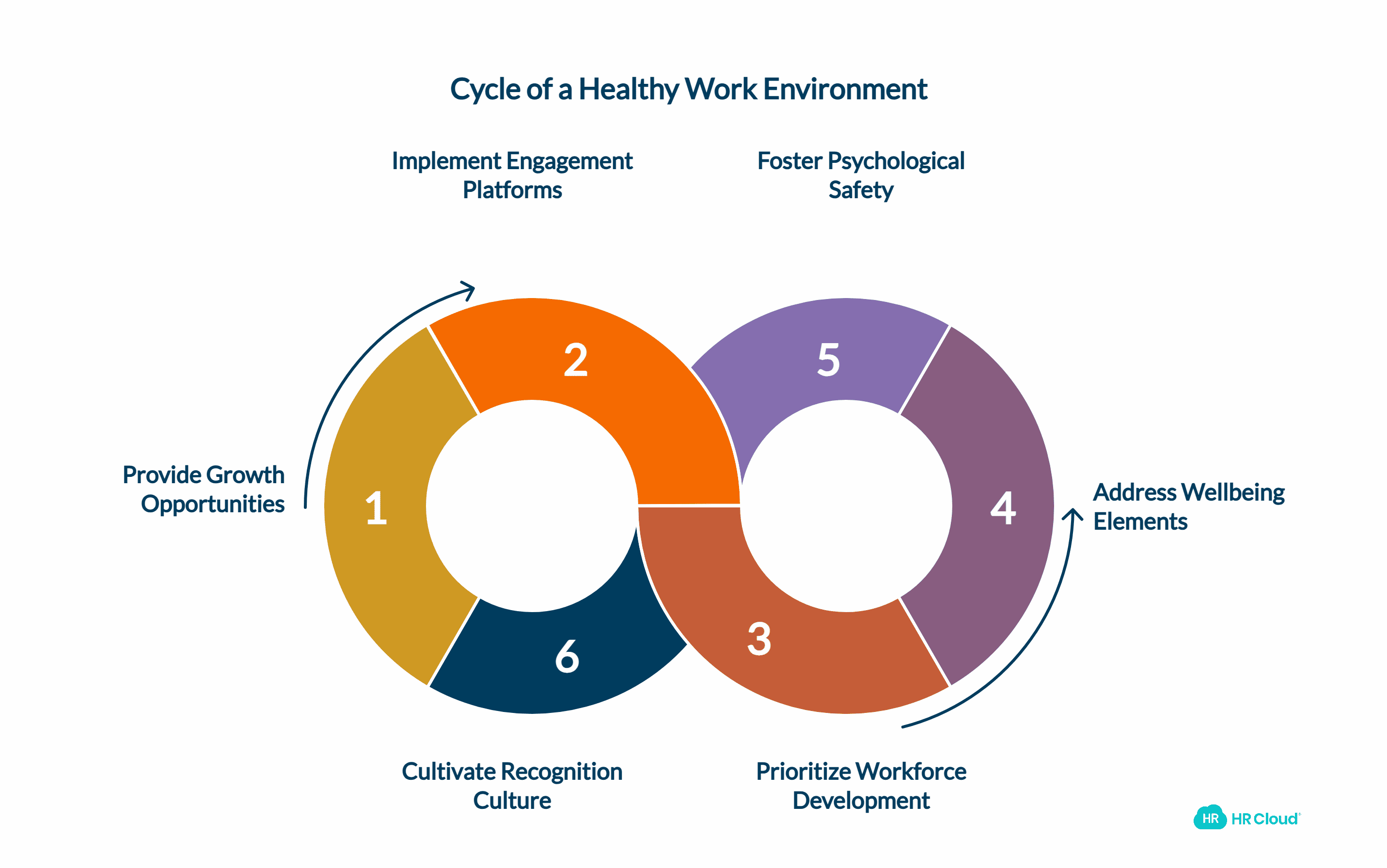
A healthy work environment goes beyond ergonomic chairs and competitive salaries. According to Gallup's five elements of wellbeing, thriving workplaces address career fulfillment, social connections, financial security, physical health, and community engagement. Organizations excelling in these areas report 55% higher employee engagement and significantly lower absenteeism.
The foundation includes three critical components: psychological safety (employees can voice concerns without fear), recognition culture (contributions are acknowledged consistently), and growth opportunities (clear paths for skill development). Modern employee engagement platforms like HR Cloud's Workmates help organizations operationalize these principles through integrated communication, recognition, and feedback tools designed for both office-based and frontline workers.
Research from SHRM indicates that organizations prioritizing long-term workforce development and engagement strategies outperform competitors during economic fluctuations and talent shortages. The shift from reactive HR practices to proactive culture-building represents a critical competitive advantage.
15 Research-Backed Strategies for Healthy Work Environments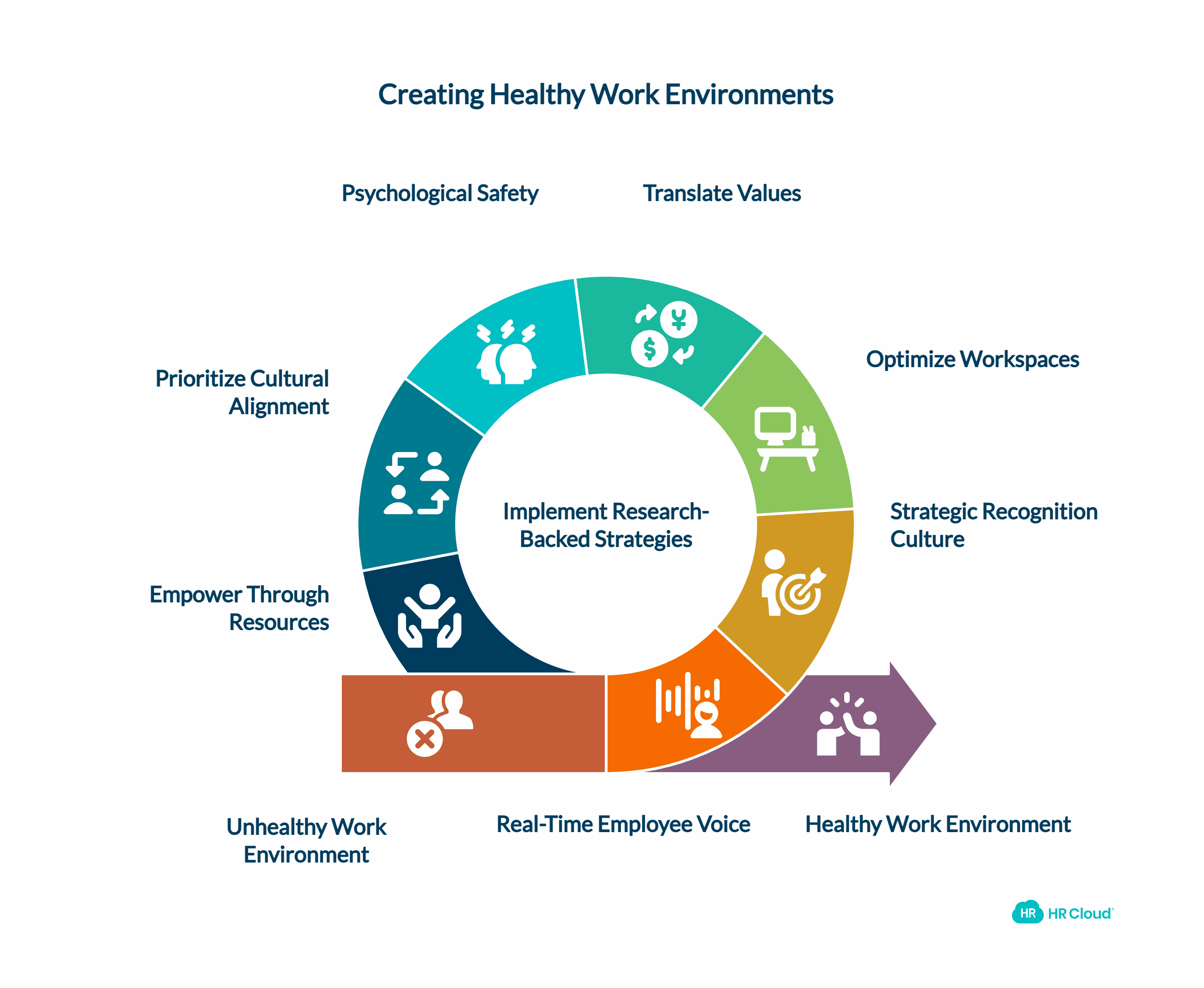
1. Establish Real-Time Employee Voice Mechanisms
Creating channels for authentic employee feedback transforms organizational responsiveness. Rather than relying solely on annual surveys that provide outdated insights, implement pulse survey tools that capture sentiment continuously. Research from SHRM indicates that organizations using frequent feedback mechanisms see 36% higher engagement scores.
Effective voice programs combine multiple collection methods: anonymous pulse surveys, direct manager conversations, dedicated feedback channels, and town hall sessions. Technology platforms with built-in pulse survey functionality enable HR teams to spot engagement trends before they impact retention. Workmates' survey and feedback features allow organizations to gather, analyze, and act on employee input in real time, closing the feedback loop that builds trust.
The key differentiator is response speed. According to workplace wellbeing research, employees who see their feedback translated into action within 30 days are 2.5x more likely to participate in future surveys and 3x more likely to recommend their employer. This creates a virtuous cycle where voice leads to action, action builds trust, and trust encourages more honest feedback.
2. Build a Strategic Recognition Culture
Recognition represents more than occasional appreciation—it's a strategic driver of engagement and retention. Gallup and Workhuman research reveals that employees recognized monthly are 36% more likely to be highly engaged and productive. Yet most organizations struggle with recognition consistency across locations and shifts.
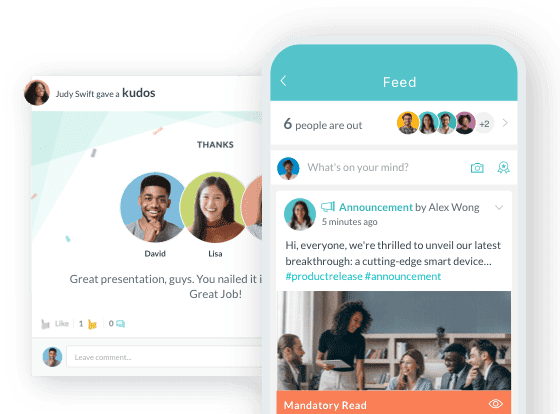
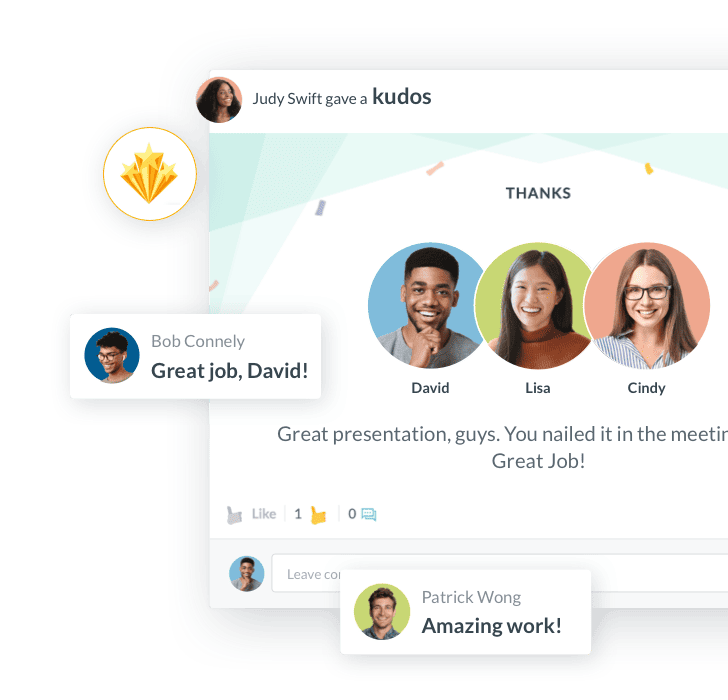
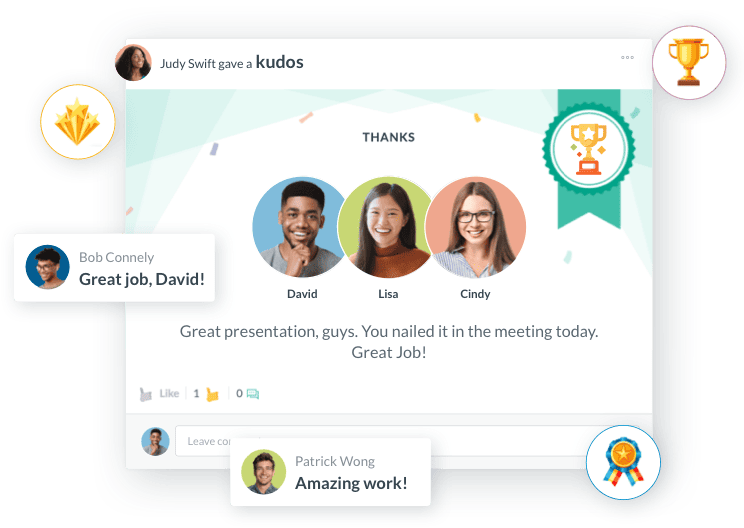
Effective recognition programs share five characteristics identified by research: fulfilling frequency expectations, authentic delivery, personalization to individual preferences, equitable distribution across all employee populations, and cultural embedding into daily workflows. HR Cloud's Workmates employee recognition software provides peer-to-peer kudos functionality, customizable recognition badges aligned to company values, points-based reward systems, and mobile accessibility ensuring frontline workers participate equally.
Recognition technology solves the distributed team challenge. When shift workers, remote employees, and office staff operate on different schedules, centralized recognition feeds with mobile access ensure visibility regardless of work location or time zone. The platform's analytics also reveal recognition patterns, helping HR leaders identify overlooked teams and underrecognized departments before disengagement occurs.
3. Optimize Physical and Virtual Workspaces
Whether employees work from corporate offices, home setups, or mobile environments, workspace quality directly impacts productivity and wellbeing. Recent Gallup workplace studies show that 76% of hybrid workers cite improved work-life balance as a primary benefit, yet only 20% feel their employers help them thrive remotely—revealing a significant gap between policy and support.
For office environments: Provide ergonomic furniture, adjustable lighting, collaboration spaces, quiet zones for focused work, and biophilic design elements that research shows reduce stress by 15%. For remote workers: Offer home office stipends ($500-1,000 annually), equipment allowances, internet subsidies, and regular check-ins about workspace adequacy and ergonomic needs.
Digital workplace optimization matters equally. Centralized platforms that unify communication, document access, recognition, and task management reduce the tool fatigue affecting 67% of knowledge workers. Workmates creates a digital workplace hub accessible via desktop and mobile, ensuring distributed teams access company updates, important documents, and team channels from anywhere—eliminating the information inequality that undermines remote employee engagement.
4. Translate Values Into Lived Behaviors
Values statements printed on office walls rarely translate to behavioral change. According to research on cultural alignment, companies where values actively inform decision-making see 20% higher profitability and stronger talent retention. The difference lies in reinforcement mechanisms that make abstract principles concrete and observable.
Operationalizing values requires multiple touchpoints: incorporating values into hiring criteria, using values-aligned recognition badges, evaluating leadership on value demonstration, celebrating stories of value-driven decisions, and addressing value violations consistently. When recognition systems explicitly connect appreciation to organizational values, employees quickly understand which behaviors drive success and career advancement.
HR Cloud's customizable kudos badges can be designed around company values—integrity, innovation, customer focus, teamwork, safety—creating visible connections between stated principles and rewarded actions. Over time, this shapes organizational norms more effectively than policy documents alone. Employees receiving recognition for demonstrating values are 3.2x more likely to repeat those behaviors and 2.8x more likely to help colleagues embody them.
5. Create Psychological Safety and Trust
Psychological safety—the belief that speaking up won't result in punishment or embarrassment—represents the foundation of high-performing teams. Google's Project Aristotle research identified psychological safety as the single most important factor distinguishing successful teams from struggling ones, more predictive than individual talent or resource availability.
Building psychological safety requires leader modeling (admitting mistakes publicly), manager training (responding constructively to bad news), creating low-stakes practice opportunities (brainstorming sessions with no wrong answers), rewarding productive disagreement, and addressing violations swiftly when employees face retaliation for honesty. Organizations with high psychological safety report 27% lower turnover and 40% fewer safety incidents.
Communication platforms with anonymous feedback channels help employees surface concerns without fear of identification. Workmates provides anonymous suggestion boxes and feedback mechanisms that allow HR teams to address systemic issues while protecting individual privacy. Combined with visible leadership response and transparent follow-through, these tools demonstrate organizational commitment to open dialogue that transcends hierarchical concerns.
6. Prioritize Cultural Alignment in Hiring
Cultural fit determines long-term retention more than skills in many roles. According to talent acquisition research, employees who align with organizational culture are 30% more engaged and stay 40% longer. However, cultural alignment differs from cultural homogeneity—diversity of thought within shared values drives innovation while cultural clones create groupthink.
Effective cultural hiring involves articulating authentic values (not aspirational ones), training interviewers to assess values alignment through behavioral questions, asking candidates about environments where they've thrived previously, involving team members in interviews to gauge chemistry, and being transparent about culture during recruitment so candidates self-select appropriately.
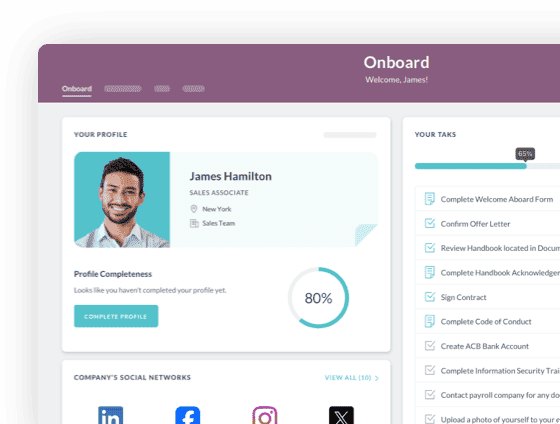
Onboarding reinforces cultural foundations. Digital onboarding portals that introduce new hires to company values, team structures, and communication norms accelerate cultural integration by 40%. HR Cloud's Onboard platform provides structured onboarding journeys ensuring consistent cultural messaging across locations, reducing the confusion new hires experience when cultural practices vary between departments or sites.
7. Empower Through Resources and Autonomy
Employee empowerment combines providing necessary resources with granting decision-making authority. Research shows empowered employees are 4.2x more likely to be highly engaged, yet empowerment requires careful scaffolding—authority without resources creates frustration, while resources without authority limit impact and signal distrust.
Successful empowerment programs include clear role expectations (understanding boundaries of authority), accessible tools and training (eliminating resource barriers), decision-making frameworks (guidance for complex situations), escalation pathways (when to involve leadership), and psychological safety for intelligent risk-taking. For distributed teams, digital access to resources becomes critical—central repositories where policies, procedures, and tools live.
Workmates' Pages feature allows organizations to create knowledge bases, departmental resources, training materials, and FAQ sections accessible to all employees via mobile or desktop. When shift workers can instantly access safety protocols or customer service teams can reference product information on their phones, empowerment becomes operational reality rather than aspirational rhetoric disconnected from daily work.
8. Foster Open, Multi-Directional Communication
Communication breakdowns cost organizations billions annually. Forbes research on workplace communication indicates that ineffective communication impacts job satisfaction for 50% of employees and stress levels for 42%. Yet most communication strategies focus on top-down announcements rather than creating genuine dialogue that flows in all directions.
Effective workplace communication operates in multiple directions: leadership to employees (strategic context and updates), employees to leadership (feedback and concerns upward), peer-to-peer (collaboration and knowledge-sharing horizontally), and team-based (project coordination). Technology infrastructure should support all communication types without forcing employees to navigate five different platforms.
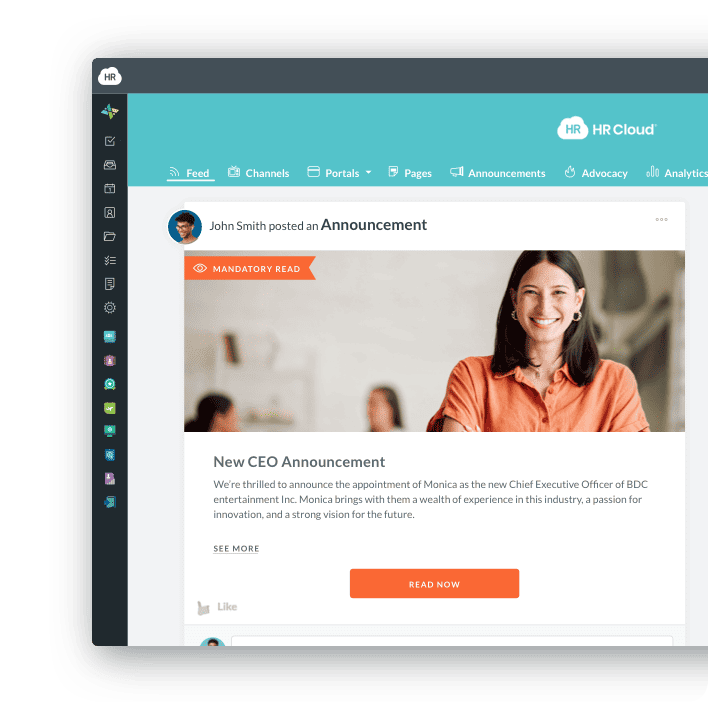
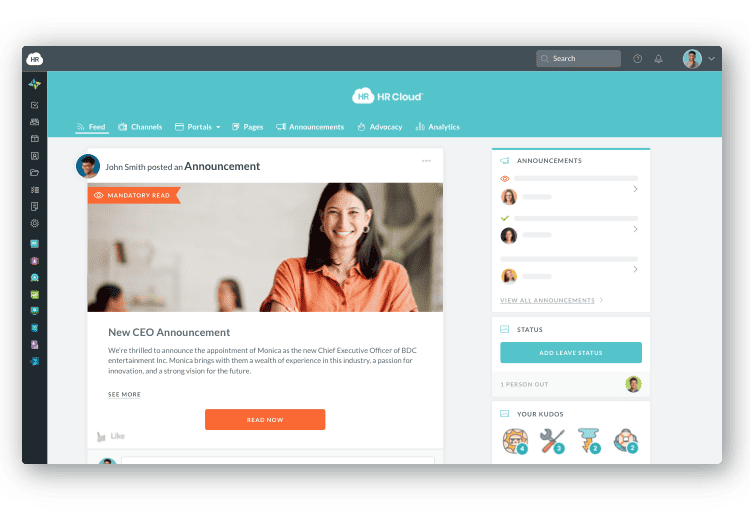
Modern employee communication platforms provide announcement feeds for company-wide updates, team channels for department-specific collaboration, direct messaging for one-on-one conversations, and feedback mechanisms for upward communication. HR Cloud's Workmates unifies these communication types in a single interface, reducing tool fatigue while ensuring message reach across dispersed workforces—particularly critical for frontline workers who lack constant computer access.
 — Andrea Bermudez, Organizational & Talent Development Manager

9. Invest in Career Growth and Development
Career development opportunities represent a primary retention factor—McKinsey research reveals that 65% of employees who leave cite lack of growth as the primary reason. Conversely, organizations prioritizing career equity see 48% of employees envisioning long-term futures with their employer (Achievers Workforce Institute research), transforming retention economics.
Comprehensive development programs combine multiple elements: clear career pathways showing advancement possibilities (not just promotion but lateral moves and skill expansion), skills training addressing capability gaps (both technical and leadership), mentorship programs connecting junior and senior employees (formal or informal), stretch assignments building new competencies (controlled risk-taking), and transparent promotion criteria eliminating favoritism and perceived politics.
Technology enables scalability for growing organizations. Learning management system integration with HRIS platforms ensures training completion tracking, while performance management tools document skill development over time. HR Cloud's goal-tracking features allow employees and managers to collaboratively set development goals, monitor progress quarterly, and connect achievements to career advancement discussions—making growth visible and measurable.
10. Implement Flexible Work Arrangements
Flexibility emerged as a decisive factor in workplace satisfaction post-pandemic. Research from Great Place to Work shows remote and hybrid workers are 60% more likely to go above and beyond in their roles when flexibility is genuinely supported (not just permitted grudgingly). However, flexibility requires infrastructure—both policy and technology—to function effectively without creating resentment.
Successful flexibility programs balance business needs with employee preferences: core collaboration hours with flexible scheduling around them, hybrid models appropriate to role requirements (not one-size-fits-all mandates), asynchronous work tools reducing meeting burdens, clear performance metrics independent of visibility (outcomes over activity), and equitable treatment across work locations (remote workers aren't second-class citizens).
For organizations with frontline workers unable to work remotely, flexibility might mean shift-swapping capabilities, schedule visibility in advance (reducing last-minute changes), or input into scheduling preferences. Digital shift management integrated with communication platforms allows real-time schedule updates and absence coverage coordination—extending flexibility benefits to populations traditionally excluded from work-from-home policies.
11. Enable Cross-Functional Collaboration
Collaboration breaks down silos, accelerates innovation, and builds organizational resilience. Research indicates employees who collaborate regularly are 17% more satisfied at work and significantly more likely to recommend their employer. Yet collaboration doesn't happen automatically—it requires intentional structure and enabling technology that makes working across boundaries frictionless.
Effective collaboration frameworks create cross-functional project teams with clear charters, establish shared goals cutting across departments (incentivizing cooperation over competition), design physical or virtual spaces facilitating interaction, recognize collaborative achievements (not just individual performance), and provide tools making collaboration effortless rather than administratively burdensome.
Workmates' channel structure allows organizations to create spaces for specific projects, initiatives, or cross-functional teams where relevant employees collaborate regardless of department or location. File sharing, task assignment, and threaded conversations keep collaboration organized and accessible to all participants—eliminating the email chains and version control nightmares that plague distributed collaboration.
12. Advance Diversity, Equity, and Inclusion
Inclusive workplaces outperform homogeneous ones across innovation, decision-making quality, and employee engagement. Research from McKinsey consistently shows diverse leadership teams achieving 20-35% higher financial returns. However, inclusion requires ongoing commitment beyond recruitment metrics—it's about creating environments where diverse voices are heard and valued.
Comprehensive DEI strategies address hiring practices reducing bias (structured interviews, diverse panels), leadership accountability for DEI outcomes (tied to compensation), inclusive communication practices (language, representation in materials), equitable recognition and advancement opportunities (data monitoring for disparities), employee resource groups supporting underrepresented populations, and regular climate assessments (measuring belonging, not just representation).
Recognition analytics in platforms like Workmates reveal recognition patterns across departments, levels, and demographics. If analysis shows certain groups receiving less recognition despite similar performance, HR leaders can address through manager training and norm-setting rather than waiting for engagement survey results to flag the issue months later—enabling proactive intervention before disengagement occurs.
13. Recognize Beyond Traditional Performance Metrics
Recognition programs historically focused on output metrics—sales numbers, productivity statistics, attendance records. However, recognition for values demonstration, peer support, customer service excellence, innovation attempts (even unsuccessful ones), and personal milestones creates more comprehensive appreciation cultures that employees experience as authentic rather than transactional.
Research from PwC shows employees value recognition from both peers and managers equally, with each serving distinct psychological needs. Platforms enabling 360-degree recognition—peer-to-peer, manager-to-employee, executive visibility—create appreciation cultures where recognition flows naturally rather than being reserved for formal review cycles that feel forced and politically motivated.
HR Cloud's Workmates recognition platform provides multiple recognition pathways: quick kudos with preset messages for everyday appreciation (reducing friction), formal nominations for quarterly awards (structured recognition), milestone celebrations (birthdays, anniversaries, work anniversaries), and custom recognition categories aligned to organizational priorities. Points-based rewards allow employees to accumulate recognition into meaningful incentives, from gift cards to extra time off.
14. Support Stress Management and Mental Health
With 50% of American employees experiencing significant daily work stress according to Gallup 2025 data, stress management represents a critical organizational responsibility. Burnout costs organizations through increased absenteeism (6.5 days annually per employee), healthcare expenses (28% higher), and turnover—yet prevention proves far more cost-effective than remediation after crisis.
Comprehensive wellbeing programs address multiple dimensions: mental health resources (EAP programs, counseling access, crisis support), stress reduction training (mindfulness, time management, boundary-setting), workload management (reasonable expectations, adequate staffing, workload audits), flexibility (schedule control, remote options, compressed workweeks), and leadership modeling (senior leaders taking vacation, respecting boundaries, discussing mental health openly).
Communication platforms can support wellbeing initiatives through dedicated wellness channels, mental health resource libraries, stress management tip sharing, and peer support communities. When organizations normalize wellbeing conversations through digital channels, stigma reduces and help-seeking increases—particularly important for populations historically reluctant to discuss mental health like men, executives, and frontline workers.
15. Invest in Team Building and Connection
Social wellbeing—the strength of workplace relationships—predicts engagement, retention, and even life satisfaction beyond work. Achievers Workforce Institute research shows employees with friends at work are 56x more likely to feel connected to company values and 12.8x more likely to feel wellbeing support—demonstrating the profound impact of workplace relationships.
Effective team building combines multiple elements: regular team activities (virtual or in-person, avoiding forced fun), informal interaction opportunities (coffee chats, lunch-and-learns), cross-departmental mixers (breaking down silos), celebration of shared accomplishments (team wins not just individual), and leadership participation demonstrating commitment. Activities should reflect organizational culture and accommodate diverse preferences—not everyone enjoys trust falls or escape rooms.
Digital platforms facilitate connection through social feeds highlighting team wins, birthday and anniversary celebrations, interest-based groups (book clubs, fitness challenges, volunteer opportunities), and spaces for non-work conversation. Workmates provides these connection points in a centralized platform accessible to all employees, ensuring remote and frontline workers participate equally in community building—avoiding the proximity bias where on-site employees develop stronger relationships.
Implementing a Healthy Work Environment: Technology Considerations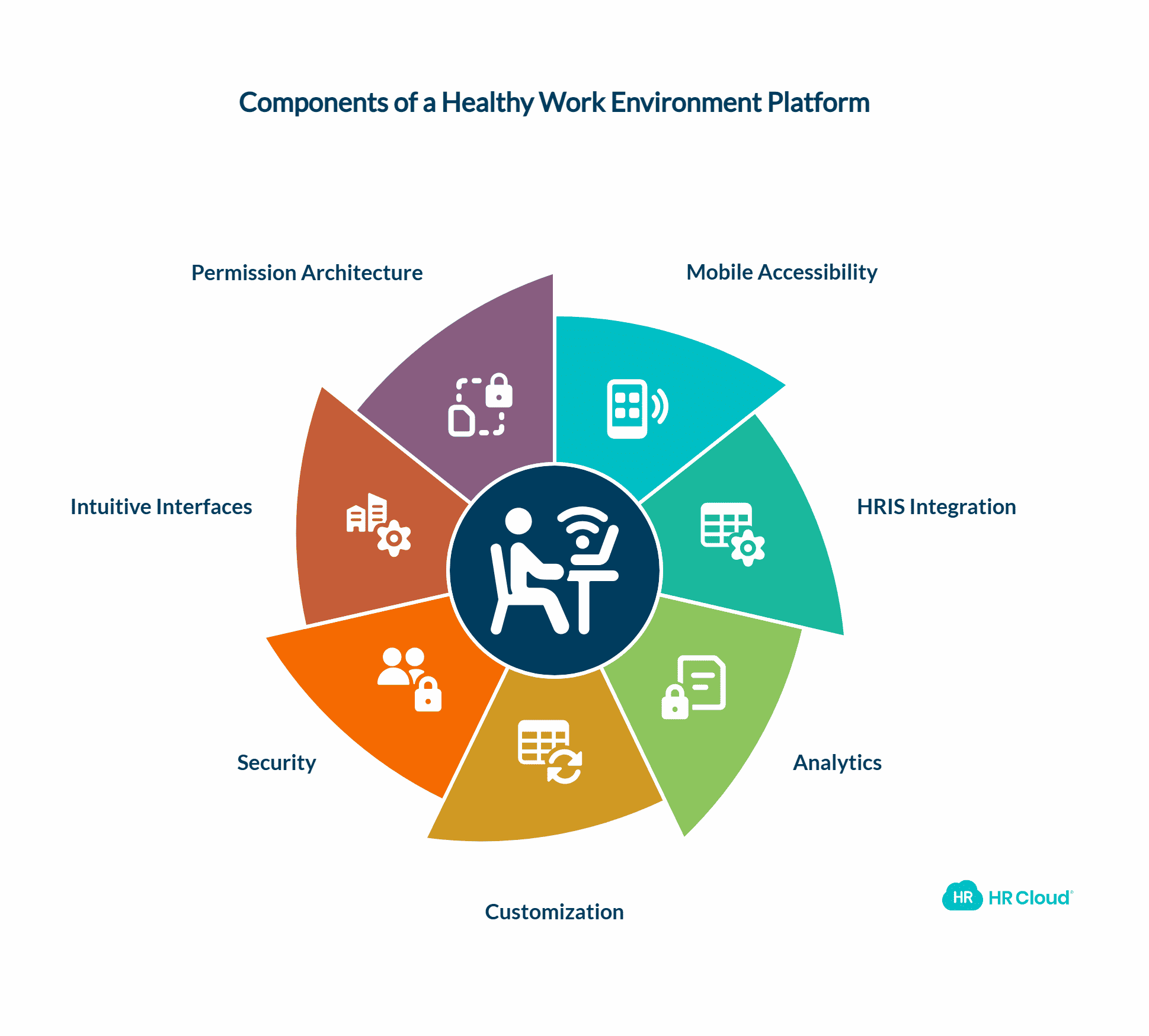
Creating sustainable healthy work environments at scale requires technology infrastructure supporting communication, recognition, feedback, and engagement measurement. According to recent HR technology research, organizations using unified engagement platforms see 40% higher adoption rates than those deploying multiple point solutions that create tool fatigue and fragmented data.
Key platform capabilities include mobile accessibility for frontline and remote workers (not just web-based), HRIS integration eliminating manual data entry and ensuring current organizational data, analytics providing engagement insights without requiring data science expertise, customization aligning to organizational culture and values, security protecting sensitive employee data (SOC 2 Type 2 minimum), and intuitive interfaces requiring minimal training for 80%+ adoption.
HR Cloud's Workmates exemplifies comprehensive employee engagement technology, combining communication channels and announcement feeds, peer recognition and rewards with customizable badges, pulse surveys and feedback tools with real-time analytics, document management and knowledge bases via Pages feature, mobile apps for deskless workers with offline capability, and integration with major HRIS systems including ADP (documented partner), Workday, UKG, Paycor, and Paylocity. This unified approach eliminates the tool fatigue common when employees must navigate separate platforms for communication, recognition, and information access.
The platform's mobile-first design specifically addresses frontline worker needs—employees in healthcare, manufacturing, retail, hospitality, and construction who lack constant computer access yet represent 80% of the global workforce. Push notifications for urgent updates, offline access to recent content, and one-touch recognition ensure these populations participate equally in organizational culture rather than being excluded by technology designed for desk workers.
Measuring Healthy Work Environment Success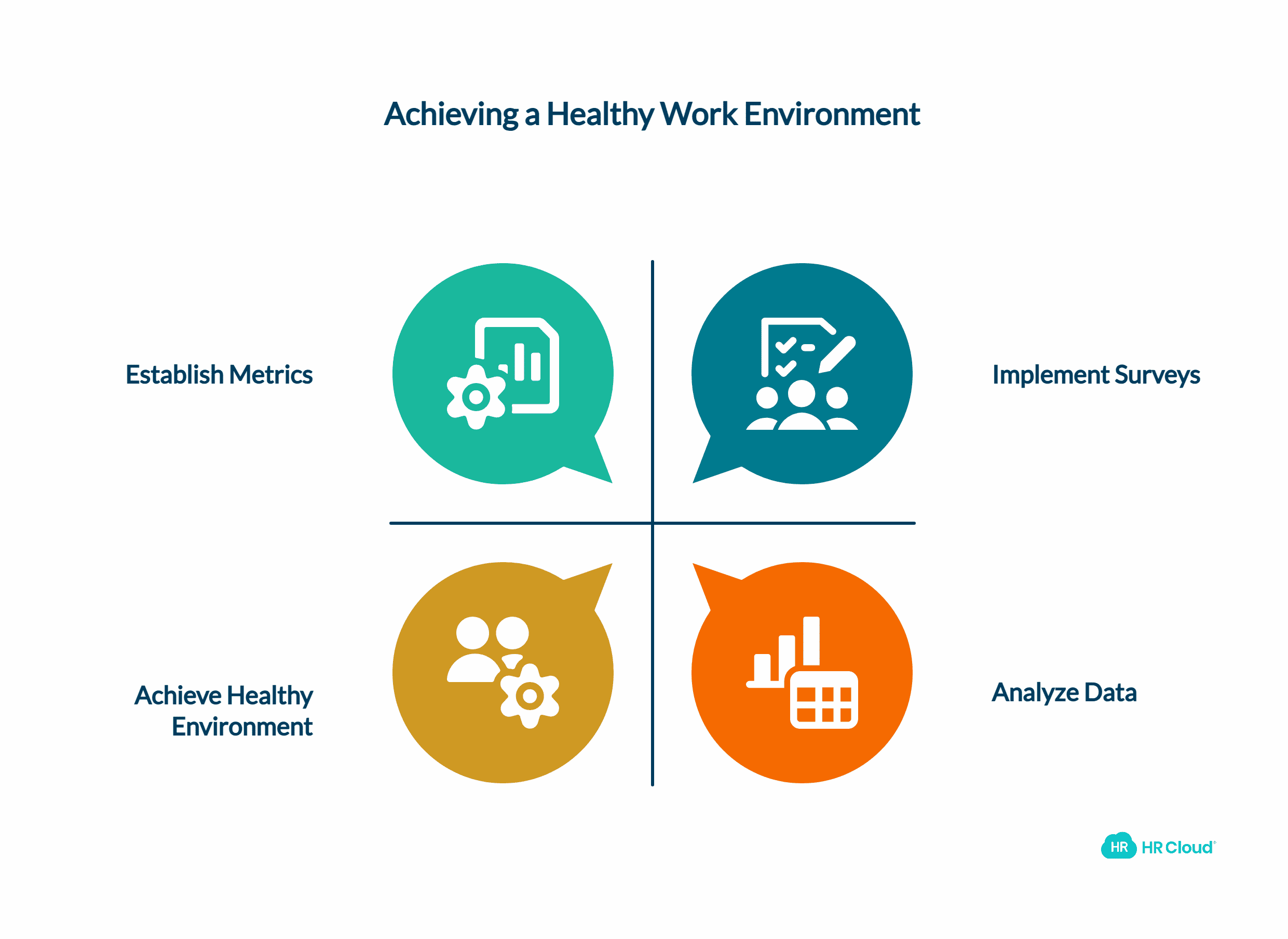
Establishing metrics allows organizations to track progress and identify areas requiring attention before they escalate to retention crises. Recommended measurement approaches include quarterly pulse surveys measuring specific wellbeing dimensions (not just overall engagement), recognition frequency and distribution analytics (identifying underrecognized teams), voluntary turnover rates by department and tenure (spotting problem areas), engagement scores benchmarked against industry standards (understanding relative performance), participation rates in wellbeing programs (measuring adoption), and manager effectiveness ratings from direct reports (leadership quality assessment).
Advanced platforms provide real-time dashboards showing these metrics, allowing HR leaders to spot declining engagement before it impacts retention. For example, if recognition data shows a specific team receiving significantly less appreciation than others despite similar performance, proactive manager coaching can address the gap before team members disengage or begin job searching—transforming reactive firefighting into preventive culture management.
Correlating engagement data with business outcomes (productivity, quality, safety, customer satisfaction) demonstrates ROI to skeptical executives. Organizations with high engagement scores consistently outperform on business metrics: 23% higher profitability, 18% higher productivity, 43% lower turnover in high-turnover industries, and 64% fewer safety incidents according to Gallup meta-analysis of 112,000 business units.
Building Lasting Cultural Change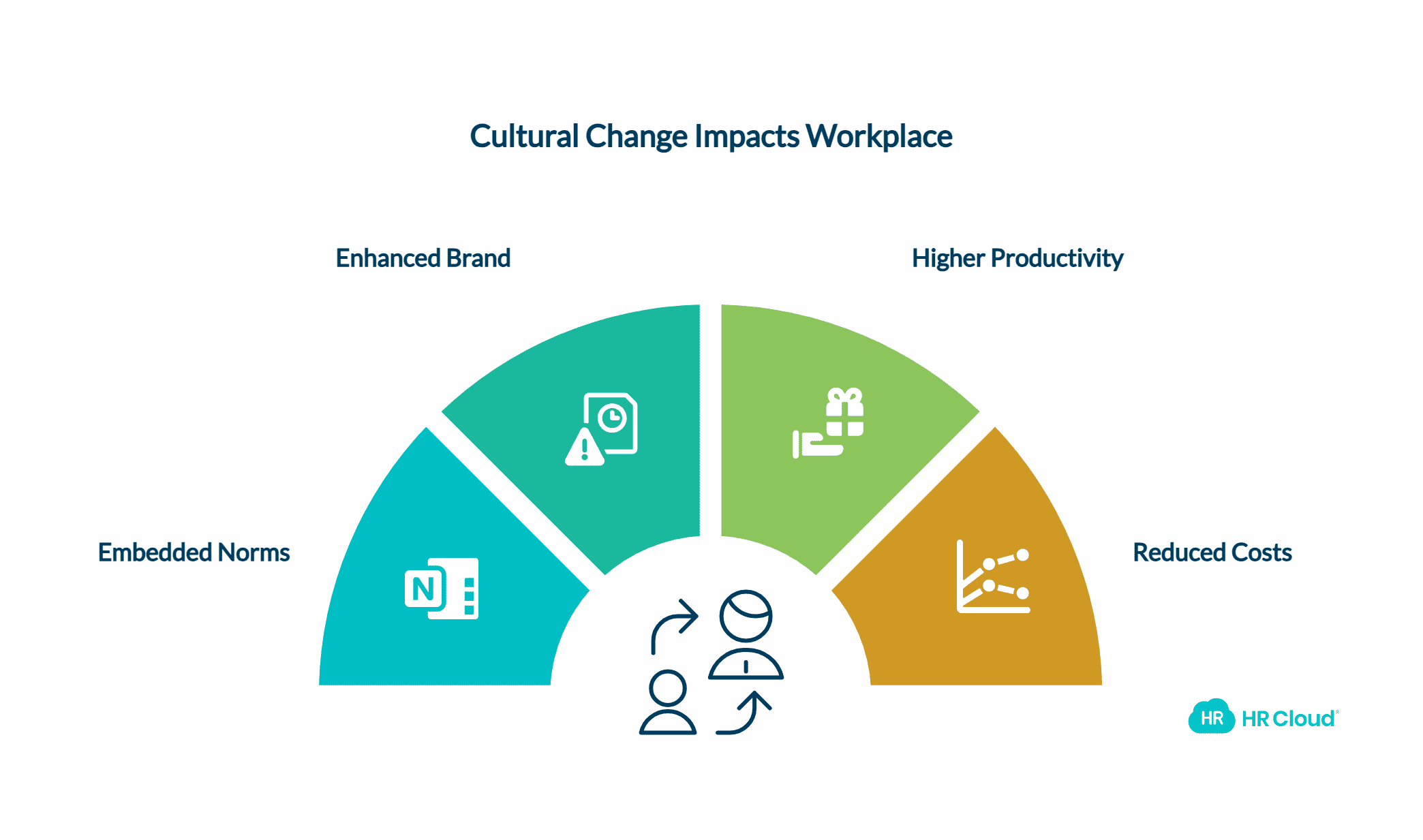
Creating healthy work environments requires sustained commitment beyond initial enthusiasm. Research on organizational change shows that cultural transformation typically requires 18-36 months of consistent reinforcement before new behaviors become embedded norms that survive leadership transitions and don't require constant policing.
Success factors include executive sponsorship demonstrating leadership commitment through visible participation, manager training providing skills to implement programs consistently (not just announcing them), technology enabling scalability across locations without excessive administrative burden, continuous measurement and adjustment based on data (not assumptions), celebration of early wins building momentum and believer networks, and patience through inevitable setbacks when old habits resurface.
Organizations achieving true cultural transformation report the investment pays dividends through enhanced employer brand attracting better talent, improved talent attraction and retention reducing recruitment costs, higher productivity and innovation from engaged employees, reduced healthcare costs through preventive wellbeing (28% lower), and workplace environments where both employees and organizations thrive rather than one exploiting the other.
Take Action: Assess Your Current State
Before implementing new initiatives, assess your organization's baseline across the 15 healthy work environment dimensions. Conduct anonymous surveys gauging employee perceptions honestly, analyze existing metrics (turnover, engagement, recognition frequency), gather manager feedback on current challenges and barriers, and benchmark against industry standards to understand relative performance.
This assessment reveals where to focus initial efforts for maximum impact rather than spreading resources thinly. Organizations typically see best results by addressing 2-3 priority areas deeply rather than superficially implementing all 15 simultaneously—cultural change requires depth not breadth initially, then expansion after proof of concept.
Experience How Modern Engagement Platforms Support Healthy Cultures
Technology alone doesn't create healthy workplaces, but the right platforms make cultural initiatives scalable, measurable, and sustainable beyond the tenure of individual HR leaders. HR Cloud's Workmates provides the infrastructure supporting recognition culture, communication excellence, employee voice, and wellbeing initiatives in a single, mobile-accessible platform designed for modern workforces including frontline and deskless populations.
The platform's combination of peer recognition with reward redemption, communication channels with announcement feeds, pulse surveys with actionable analytics, and mobile apps with offline capability addresses the complete spectrum of engagement needs—eliminating the point solution proliferation that creates tool fatigue and fragmented data preventing holistic culture assessment.
For organizations serious about building healthy work environments that survive leadership changes and economic pressures, investing in comprehensive engagement infrastructure proves far more cost-effective than reactive retention bonuses and constant recruiting to replace disengaged departures.
Schedule a Workmates demo to explore features tailored to your organization's specific needs and industry requirements.
 Experience how Workmates can transform communication and strengthen culture—all in one powerful platform
People Also Ask: Healthy Work Environment FAQs
What defines a healthy work environment?
A healthy work environment combines psychological safety where employees can speak honestly without fear of retaliation, regular recognition and appreciation of contributions (monthly minimum), opportunities for growth and skill development aligned to career goals, work-life balance through flexible arrangements respecting personal time, and open communication enabling information flow in all directions. Research shows these elements collectively drive 55% higher engagement and 69% lower turnover compared to organizations lacking these cultural foundations.
How do you measure workplace health?
Measure workplace health through employee engagement surveys assessing key dimensions like belonging, purpose, and wellbeing; pulse surveys capturing real-time sentiment between annual assessments; voluntary turnover rates by department revealing problem areas; recognition analytics showing appreciation patterns and potential inequity; participation rates in wellbeing programs indicating cultural adoption; manager effectiveness scores from team feedback (360-degree assessment); and productivity metrics balanced with wellbeing indicators. Quarterly measurement cycles allow trend identification and proactive intervention before engagement crises develop.
What are signs of an unhealthy workplace?
Warning signs include high turnover particularly among high performers (losing your best people), low engagement survey scores with declining trends, poor communication marked by rumors and uncertainty (information vacuum), minimal recognition or appreciation creating invisibility, lack of growth opportunities causing career stagnation, excessive workload and burnout indicators (high absenteeism, presenteeism), distrust between employees and leadership, and resistance to feedback or change indicating psychological rigidity. Early identification through regular measurement enables corrective action before cultural damage becomes irreversible and employer brand suffers.
How much does employee engagement software cost?
Employee engagement platform costs vary based on organization size, features required, and customization needs. Solutions typically range from $3-8 per employee per month for basic recognition tools to $12-20 per employee per month for comprehensive platforms including communication channels, pulse surveys, analytics dashboards, and advanced recognition with reward catalogs. Implementation and training costs add one-time expenses of $5,000-50,000 depending on complexity and organization size. View Workmates pricing options for transparent tier comparisons.
What ROI can organizations expect from engagement investments?
Research consistently demonstrates engagement ROI: organizations with high engagement see 23% higher profitability, 18% higher productivity, 43% lower turnover in high-turnover industries (saving $5,000-15,000 per prevented departure), and 64% fewer safety incidents (reducing workers' compensation costs). For every 10,000 employees, low wellbeing costs organizations approximately $20 million in lost productivity annually—making engagement investments highly cost-effective with typical payback periods of 6-12 months through retention savings alone.
How do distributed teams maintain workplace culture?
Distributed teams maintain culture through intentional digital connection: unified communication platforms ensuring information equity regardless of location, mobile-accessible recognition enabling appreciation across shifts and time zones, regular virtual team building and celebrations that feel authentic not forced, clear documentation of values and norms in searchable knowledge bases, leadership visibility through video updates and town halls, and technology eliminating the "out of sight, out of mind" dynamic affecting remote workers. Organizations succeeding with distributed culture invest in platforms designed for this purpose rather than adapting in-office tools.

Keep Reading
Nurse Onboarding Checklist for Hospitals and Clinics: Your Complete 2026 Guide
Hospital nurse turnover costs an average of $61,110 per RN replacement, with facilities
Why Compliance and Engagement Must Work Together in Healthcare HR
Picture your most experienced RN. She's twelve hours into a shift when she receives her
How to Improve Employee Engagement in Hospitals Without Increasing Headcount (6 Strategies Inside)
Picture a five-person hospital HR team managing 800 employees across three facilities.