
Employee Incentive Programs That Improve Motivation

What are employee incentive programs? Employee incentive programs are structured systems that reward and recognize employees for achieving specific goals, demonstrating company values, or contributing to organizational success. These programs range from monetary bonuses and recognition platforms to professional development opportunities and lifestyle perks.
Employee disengagement costs U.S. businesses $1.9 billion annually in lost productivity. For HR leaders managing distributed teams, frontline workers, or remote employees, the challenge isn't just keeping people busy—it's keeping them motivated, connected, and committed to your organization's success.
Effective employee incentive programs transform workplace culture by linking individual contributions to meaningful rewards. Organizations using recognition platforms see 3.7 times higher employee engagement and 55% lower turnover compared to companies without systematic recognition approaches. The key lies in choosing incentives that resonate with your workforce while aligning with business objectives.
This guide explores 25 proven employee incentive programs, implementation best practices, and how modern HR platforms like HR Cloud's Workmates make recognition seamless for teams of all sizes—from growing mid-market companies to enterprise organizations with 1,000+ employees.
What Are Employee Incentive Programs?
Employee incentive programs are external motivators designed to encourage specific behaviors, drive performance, and reinforce organizational values. Unlike base compensation, incentives provide variable rewards tied to achievement, effort, or demonstrated alignment with company culture.
The most effective programs combine multiple incentive types—financial rewards, public recognition, professional development, experiential perks, and work-life balance benefits—addressing diverse employee motivations rather than relying on one-size-fits-all approaches.
Modern incentive programs leverage technology platforms to deliver recognition at scale, track participation metrics, and ensure equitable access across distributed workforces including remote employees, frontline workers, and field staff who traditionally face barriers to workplace appreciation initiatives.
Why Employee Incentive Programs Matter
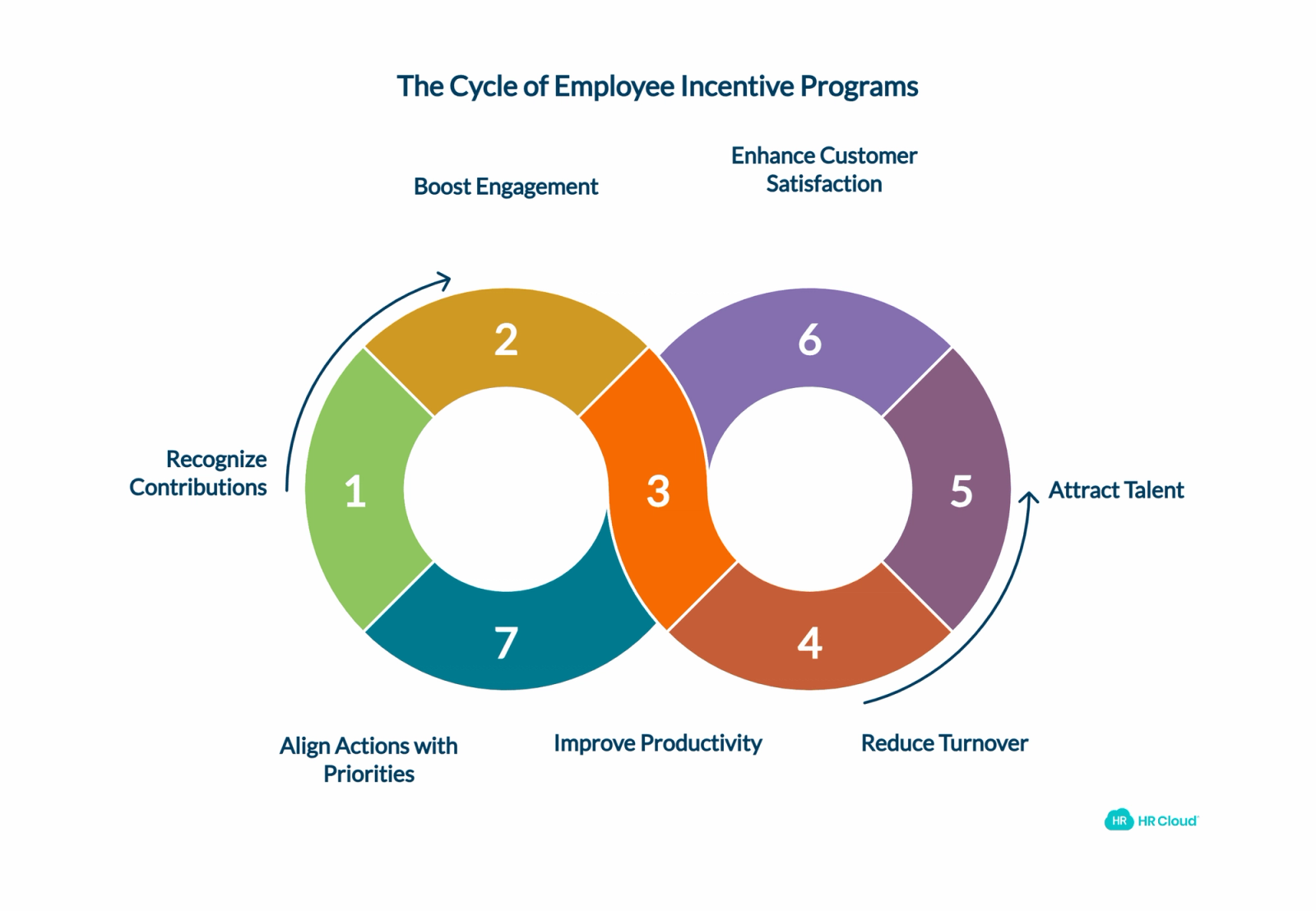
Recognition drives results. When employees feel valued for their contributions, they become more engaged, productive, and committed to organizational success. The absence of appreciation creates opposite effect—disengagement, turnover, and productivity losses that cost businesses billions annually.
According to SHRM research, nearly 70% of employees say rewards are a motivating factor at work, and 40% report feeling appreciated when redeeming recognition points. The psychological principle is straightforward: behaviors followed by positive reinforcement are more likely to recur.
Employee incentive programs also serve strategic business objectives beyond morale. They help organizations attract competitive talent, reduce costly turnover, improve customer satisfaction through engaged frontline workers, and build cultures that align individual actions with business priorities. In tight labor markets, robust incentive programs differentiate employers competing for the same talent pools.
25 Employee Incentive Programs to Improve Engagement
1. Social Recognition Programs
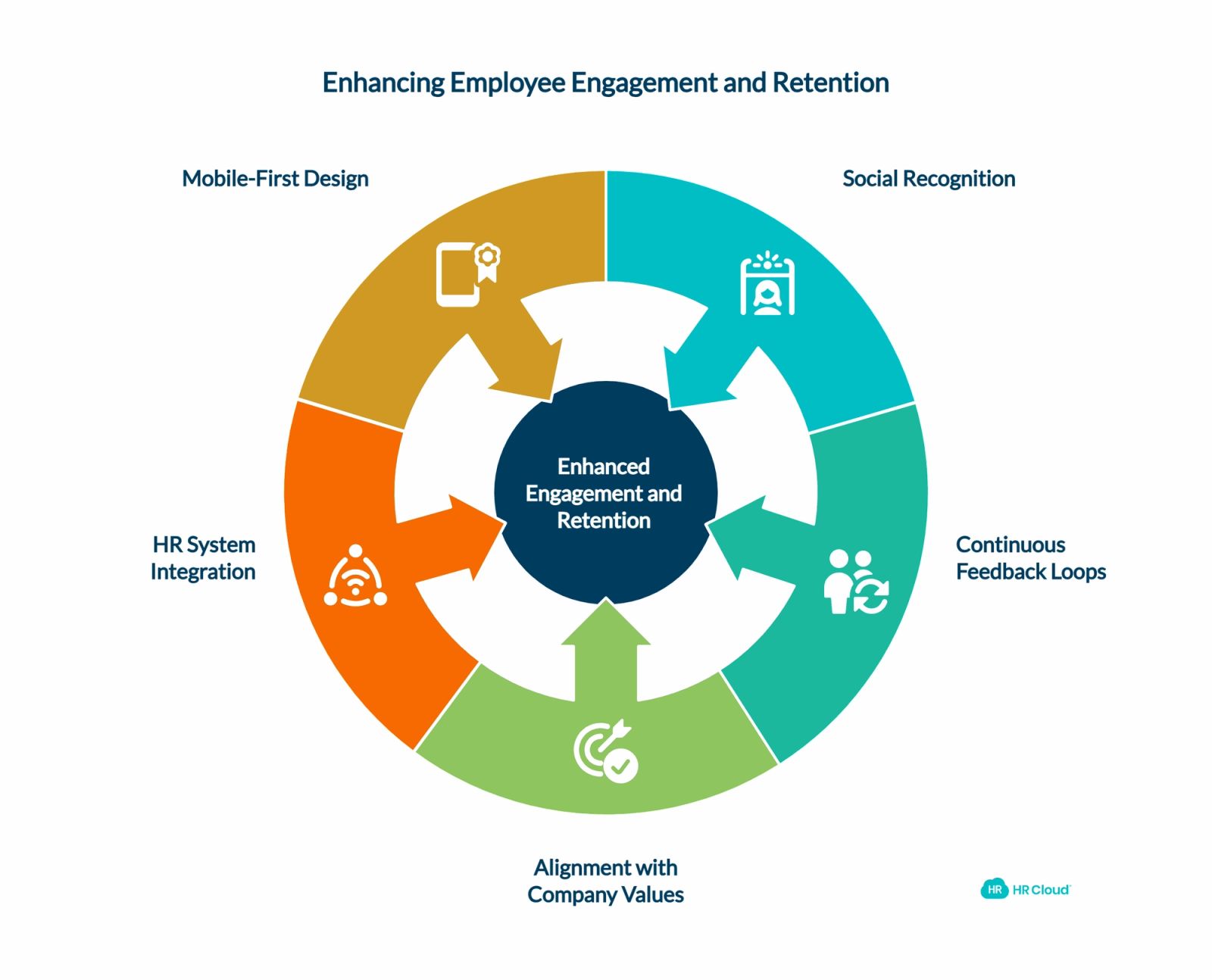
What it is: Social recognition platforms create digital spaces where employees publicly celebrate each other's achievements, reinforcing positive behaviors and building company culture visibility.
Why it works: Recognition isn't just about feeling good—it's about behavioral reinforcement. When accomplishments are acknowledged publicly, employees are 3.7 times more engaged and 55% less likely to leave. Social recognition creates continuous feedback loops that strengthen team connections and align individual work with company values.
Implementation with HR Cloud:HR Cloud's Workmates platform provides social media-style recognition feeds where employees give peer-to-peer kudos, comment on achievements, and react to recognition moments. Managers and peers can recognize contributions instantly through desktop or mobile apps, creating real-time appreciation visible across the organization.
The platform integrates with major HR and payroll systems such as ADP and UKG, with additional integrations available based on customer configuration. For distributed workforces and frontline employees, mobile-first design ensures deskless workers participate equally in company culture regardless of location.
Pro tip: Create recognition badges aligned to specific company values (innovation, customer focus, teamwork) so each kudos reinforces what matters most to your organization. Track recognition analytics to identify highly engaged teams and areas needing culture strengthening.
2. Points-Based Recognition and Rewards Programs
What it is: Points-based systems let employees earn redeemable points for performance achievements, milestone completions, or demonstrating company values. Accumulated points exchange for gift cards, company rewards, or custom perks.
Why it works: Gamification creates tangible motivation. According to Gallup research, 70% of employees say rewards motivate them at work, and 40% report feeling appreciated when redeeming points. Points-based programs work because they provide visible progress, choice in rewards, and immediate gratification for contributions.
Implementation with HR Cloud:Workmates enables customizable points programs where organizations set point values for different recognition types. Employees accumulate points through peer kudos, manager recognitions, milestone achievements, or participation in company initiatives.
The reward marketplace offers flexible redemption options—from major gift card brands to custom company perks—giving employees meaningful choices that match personal preferences. Unlike fixed reward catalogs, HR Cloud lets you configure rewards by location, department, or employee classification while maintaining unified point tracking across all teams.
For budget-conscious organizations, points provide cost control since you fund redemptions only when employees actually use points, versus pre-purchasing gift cards that may go unredeemed.
Pro tip: Establish clear point values and redemption thresholds upfront. For example: peer recognition = 50 points, manager quarterly award = 250 points, annual achievement = 500 points. Communicate redemption options regularly so employees know what they're working toward.

3. Employee Referral Programs
What it is: Referral programs incentivize employees to recommend qualified candidates for open positions, typically offering bonuses or recognition when referred candidates are hired and remain with the company.
Why it works: Employees who refer candidates tend to stay 46% longer than other hires, and referred employees often fit company culture better since current staff understand organizational values and job requirements. Referral programs turn your workforce into active recruiters while improving hiring quality and reducing agency fees.
Implementation considerations: Successful referral programs require tiered rewards (initial bonus at hire, additional bonuses at 90-day and 6-month retention milestones), transparent tracking systems so employees know referral status, and integration with your applicant tracking system for seamless candidate flow.
Consider recognizing top referrers publicly through your employee recognition platform to create positive peer pressure and encourage participation. Some organizations offer non-monetary incentives like extra PTO days or priority access to professional development opportunities alongside cash bonuses.
Pro tip: Make referral submissions simple—mobile-friendly forms or direct email forwarding reduce friction. Track referral source quality metrics to identify which employees consistently recommend successful hires, then engage them as informal recruiting ambassadors.
4. Professional Development Programs
What it is: Organizations invest in employee growth through training budgets, certification programs, conference attendance, mentorship opportunities, or tuition reimbursement for relevant courses.
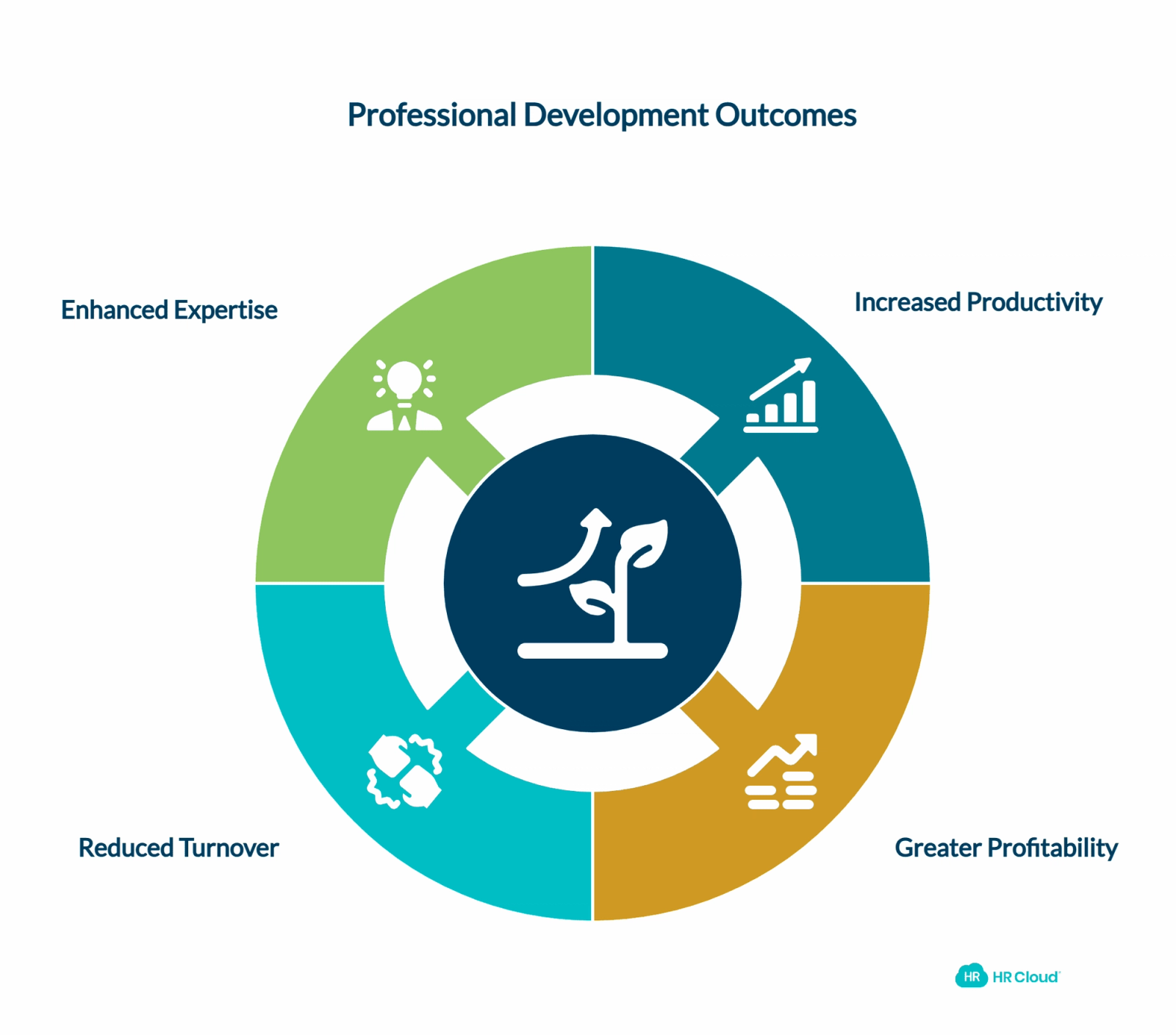
Why it works: Companies offering training to engaged employees see 17% higher productivity and 21% greater profitability, according to research by DevlinPeck. Professional development signals long-term investment in employee careers, reducing turnover while building internal expertise that drives competitive advantage.
Implementation considerations: Effective development programs align learning opportunities with both business needs and individual career goals. Establish clear policies on eligible programs, approval processes, and any service commitments required after completing expensive certifications.
Consider creating internal "learning paths" for different roles or career trajectories, making it easy for employees to see how skill development connects to advancement opportunities. Track completion rates and measure impact on performance reviews to demonstrate ROI.
Pro tip: Don't limit development to formal training. Implement job shadowing, cross-functional project assignments, and internal mentorship programs that cost little but deliver significant career growth experiences.
Learn more about building comprehensive employee development workflows with HR Cloud Perform.
5. Profit-Sharing Programs
What it is: Profit-sharing distributes a portion of company profits to employees based on organizational performance, creating direct financial stake in business success.
Why it works: When employees share in company success, they become more engaged in decisions that impact profitability. Profit-sharing aligns individual work with business outcomes, fostering ownership mentality and long-term commitment.
Implementation considerations: Establish transparent formulas for profit distribution (percentage of salary, flat amounts, tenure-based tiers), clear performance thresholds that trigger payouts, and regular communication about company financial health so employees understand how their work contributes.
For smaller organizations without profit-sharing budgets, consider 401(k) matching programs as alternative equity-building incentives. Both approaches communicate long-term investment in employee financial security.
Pro tip: Communicate profit-sharing as "shared success" rather than entitlement. Link payouts to specific business achievements (revenue milestones, customer satisfaction scores, operational efficiency gains) so employees see direct connections between their contributions and financial rewards.
6. Health and Wellness Programs
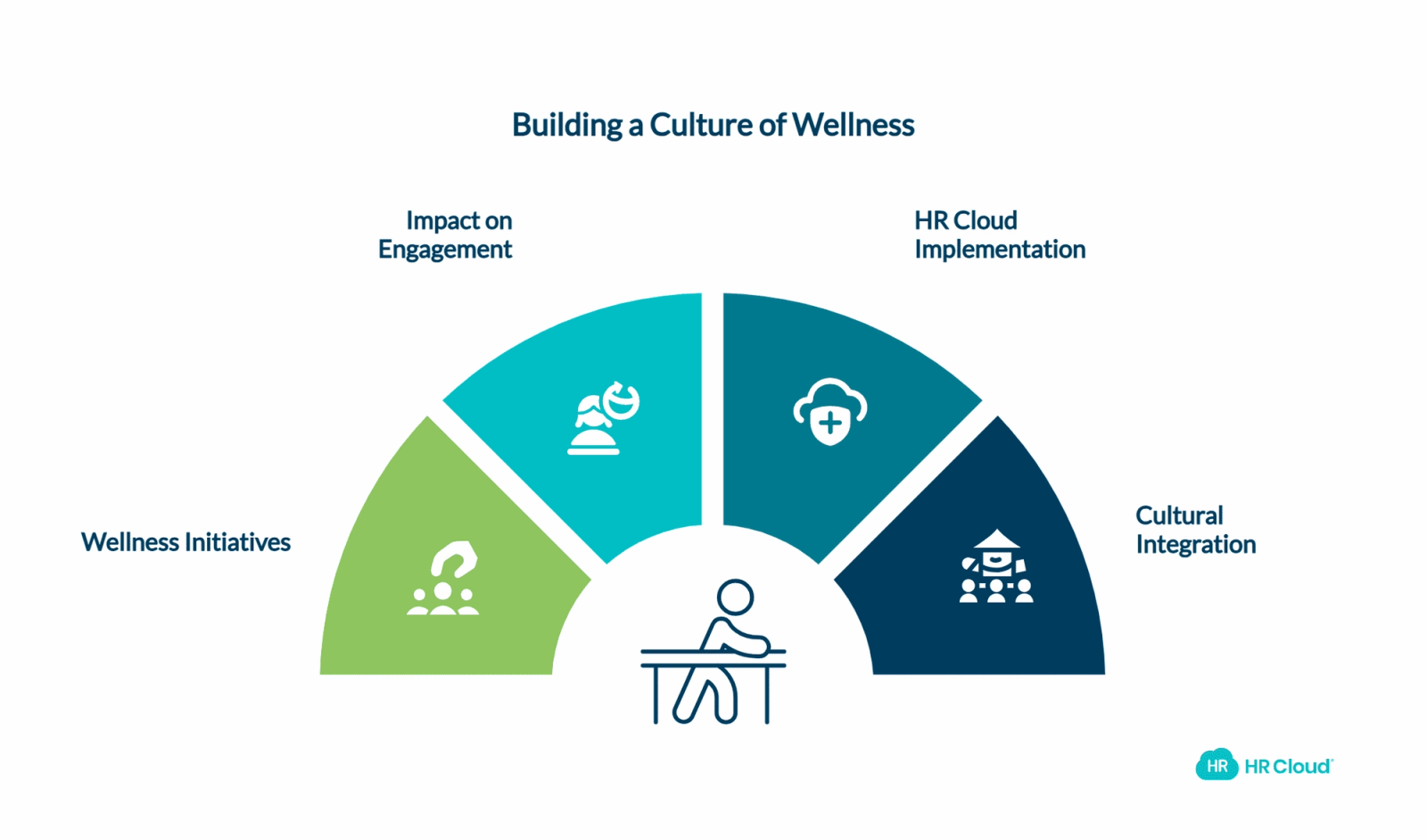
What it is: Wellness initiatives include fitness challenges, mental health resources, standing desk stipends, gym memberships, meditation app subscriptions, or on-site wellness activities.
Why it works: With 80% of employees reporting burnout according to recent surveys, wellness programs address systemic exhaustion that undermines engagement and productivity. Organizations prioritizing employee wellbeing see reduced healthcare costs, lower absenteeism, and higher job satisfaction.
Implementation with HR Cloud: Use Workmates to promote wellness challenges (step competitions, hydration tracking, meditation minutes) where employees earn recognition points for participation. Create dedicated wellness channels for sharing healthy recipes, workout tips, or mental health resources.
Mobile accessibility ensures remote and frontline workers access wellness content from anywhere, while survey features let you gauge program effectiveness and identify emerging wellness needs across your workforce.
Pro tip: Focus on creating culture of wellness rather than just offering perks. Encourage managers to model healthy behaviors (taking PTO, respecting work boundaries, prioritizing mental health) so wellness becomes embedded in how your organization operates.
7. Tuition Reimbursement Programs
What it is: Organizations cover full or partial costs for employees pursuing degrees, certifications, or continuing education relevant to current or future roles.
Why it works: 84% of employees feel more prepared for their roles after receiving education support. Tuition reimbursement attracts ambitious talent while building internal pipeline of qualified candidates for leadership positions.
Implementation considerations: Define eligible programs (undergraduate degrees, graduate programs, industry certifications), reimbursement limits (annual caps, percentage covered), grade requirements (minimum GPA for reimbursement), and service commitments (stay for 2 years post-graduation or repay tuition).
Create simple submission processes with clear documentation requirements and reasonable reimbursement timelines (within 30 days of semester completion). Consider offering course pre-approval to reduce uncertainty for employees.
Pro tip: Expand beyond traditional degrees—coding bootcamps, professional certifications, and online course platforms often deliver faster ROI. Let employees propose programs that align with career goals even if outside typical academic paths.
8. Performance Bonuses and Salary Raises
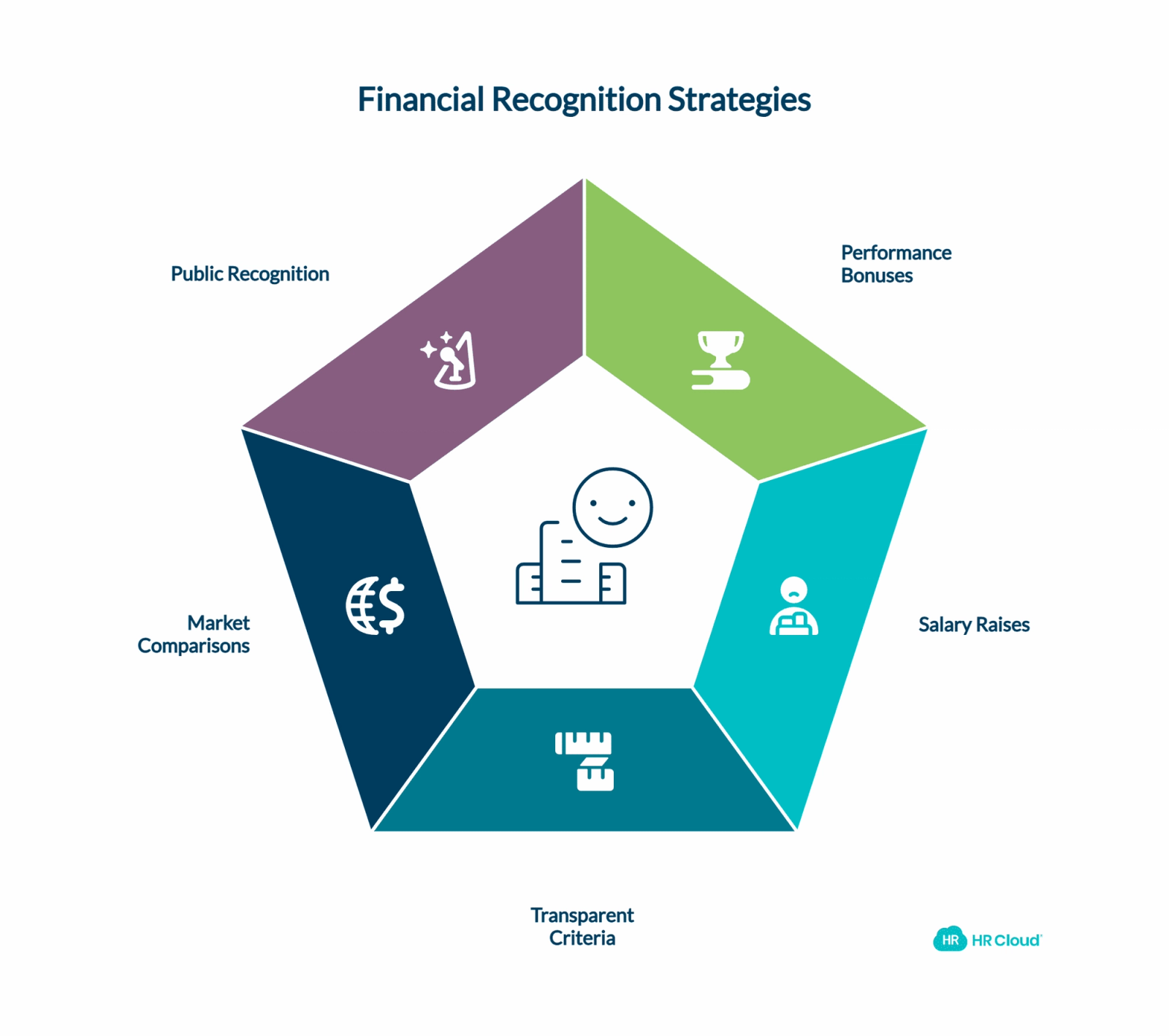
What it is: Direct financial rewards tied to individual, team, or company performance achievements, delivered as one-time bonuses or permanent salary increases.
Why it works: 52% of workers feel more valued when receiving annual bonuses, according to Benefits Canada research. Financial recognition provides immediate gratification and long-term security, communicating that exceptional performance translates to tangible compensation.
Implementation considerations: Establish transparent bonus criteria tied to measurable outcomes (sales quotas, project completions, customer satisfaction scores). Avoid subjective evaluation that breeds resentment or perception of favoritism.
For salary raises, conduct regular market comparisons to ensure competitive positioning. Implement merit-based raise frameworks where managers have guidelines for performance-to-raise correlations, reducing arbitrary decision-making.
Pro tip: Combine financial rewards with public recognition. When announcing bonuses, celebrate specific achievements that earned rewards so other employees understand what excellence looks like and how they can achieve similar recognition.
Track performance achievements with HR Cloud Perform for objective evaluation and transparent documentation.
9. Personalized Gifts and Experiences
What it is: Tangible gifts (tech gadgets, company swag, experience vouchers) or memorable experiences (concert tickets, spa days, adventure activities) tailored to employee preferences.
Why it works: Personalized gifts demonstrate individual appreciation rather than generic recognition. When gifts match employee interests, they create lasting positive associations with the workplace and specific achievements.
Implementation considerations: Use recognition platform surveys or preference centers where employees indicate gift preferences upfront, making selection easy when recognition moments arise. Consider milestone-based gifts (5-year anniversary, major project completion) alongside everyday recognition.
Gift cards offer flexibility when you don't know specific preferences, but personalized selections show extra effort that increases perceived value. Some organizations create tiered gift catalogs where employees choose from curated options at different point redemption levels.
Pro tip: Enable peer-to-peer gift giving through your recognition platform. When employees can send small gifts or gift cards to colleagues, it creates culture of continuous appreciation beyond manager-driven recognition.
Offer flexible gift card redemption through Workmates supporting rewards across multiple regions and countries.
10. Additional Paid Time Off
What it is: Extra vacation days, floating holidays, or flexible PTO awarded for achieving goals, demonstrating exceptional performance, or reaching tenure milestones.
Why it works: Time off provides universal value—everyone appreciates opportunity to recharge, pursue personal interests, or spend time with family. Unlike monetary bonuses that disappear into expenses, PTO creates memorable experiences and prevents burnout.
Implementation considerations: Establish clear earning criteria (complete major project = 1 extra PTO day, exceed annual goals = 2 days). Track PTO awards separately from standard accruals to maintain visibility and prevent confusion.
Consider "spot PTO" where managers grant same-day or next-day time off immediately following exceptional efforts, showing immediate appreciation while employee still feels accomplished from achievement.
Pro tip: Ensure managers actively encourage employees to use earned PTO. If extra days go unused due to workload pressures, the incentive loses motivational power and signals misalignment between reward offerings and operational realities.
11. Project Choice and Autonomy
What it is: Top performers gain first choice on upcoming projects, ability to lead initiatives aligned with interests, or autonomy over work approach and priorities.
Why it works: Autonomy drives engagement by letting employees apply strengths toward areas where they're most passionate. Choice signals trust and demonstrates that high performance earns increased responsibility and creative freedom.
Implementation considerations: Create transparent project selection processes where high performers have explicit advantages (first refusal, input on team composition, choice of client accounts). Balance autonomy with business needs so flexibility doesn't compromise essential work.
Document who gets project selection privileges and why, preventing perception that favorite employees receive preferential treatment. Make criteria for earning autonomy clear and achievable for all team members.
Pro tip: Pair autonomy with mentorship. When employees choose challenging projects, ensure they have support systems to succeed rather than setting them up for failure with insufficient guidance.
12. Comprehensive Employee Benefits Programs
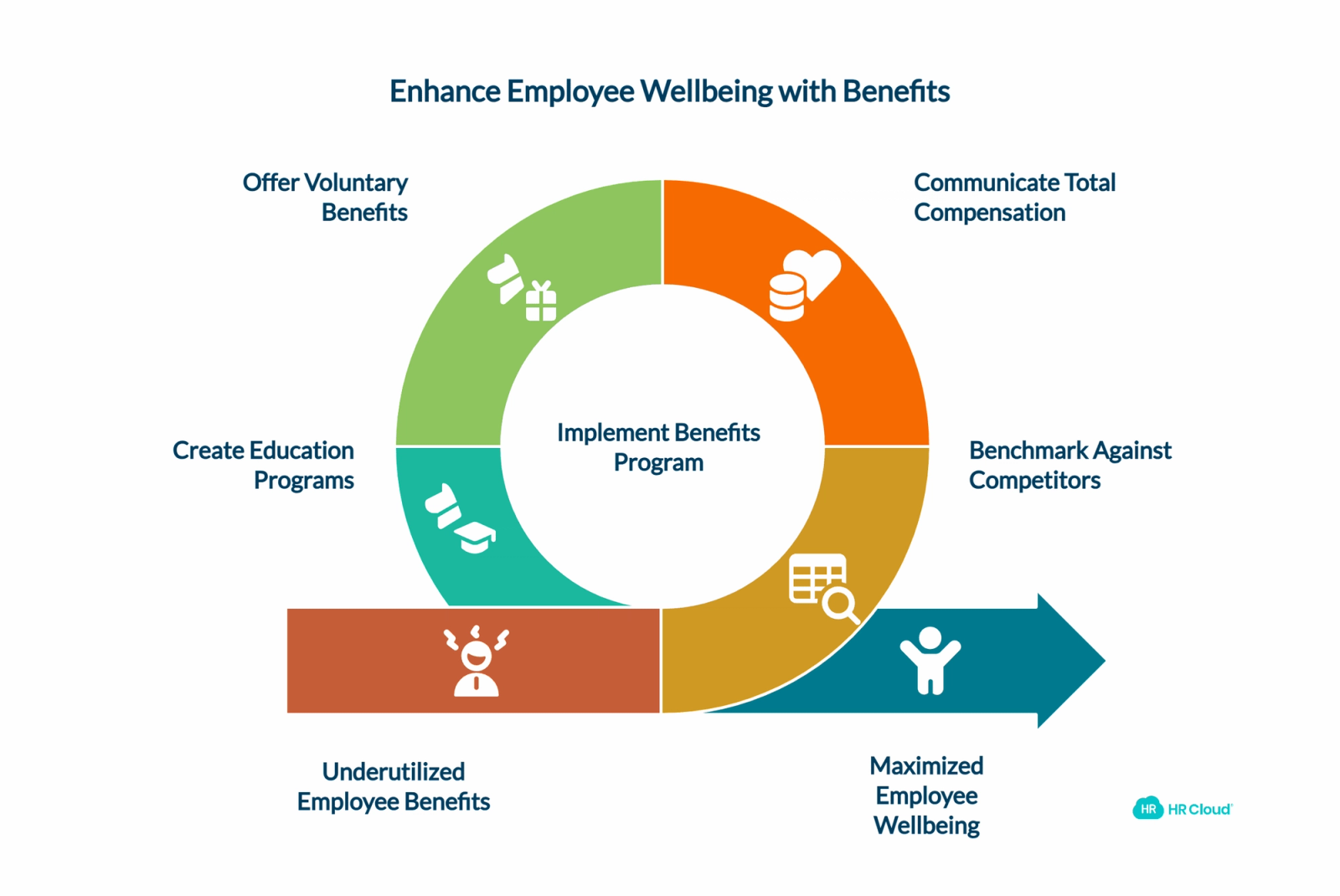
What it is: Robust benefits packages including health insurance, dental coverage, vision plans, life insurance, disability protection, retirement contributions, and family-leave policies.
Why it works: Comprehensive benefits demonstrate organizational investment in employee security and wellbeing. Quality benefits reduce financial stress, improve health outcomes, and create loyalty through long-term value proposition.
Implementation considerations: Regularly benchmark benefits against industry standards and regional competitors to ensure competitiveness. Communicate total compensation including benefits value so employees understand full investment beyond salary.
Consider voluntary benefits (pet insurance, legal services, financial planning) that employees can purchase at group rates without direct organizational cost but still providing value.
Pro tip: Create benefits education programs explaining how to maximize value (HSA contributions, preventive care coverage, retirement matching limits). Many employees underutilize benefits simply because they don't understand them.
13. Leadership and Talent Development Programs
What it is: Structured programs preparing high-potential employees for leadership roles through mentorship, executive coaching, leadership training, strategic project assignments, or rotational programs.
Why it works: Organizations focusing on talent development see significantly higher engagement and satisfaction. Employees with clear advancement paths and skill-building opportunities are more likely to stay and contribute at high levels.
Implementation with HR Cloud: Use HR Cloud's performance management and development tracking to identify high-potential employees, assign development goals, and monitor progress toward leadership readiness. Create visibility into available opportunities and nomination criteria so advancement feels achievable rather than mysterious.
Pro tip: Make leadership development accessible at multiple levels—not just executive prep. Frontline supervisor programs, project leadership opportunities, and technical leadership tracks provide growth paths for diverse career aspirations.
14. Performance Management Programs
What it is: Systematic processes for setting goals, providing feedback, conducting reviews, and aligning individual performance with organizational objectives.
Why it works: Despite importance, only 2 in 10 employees feel performance management motivates them to excel, and just 14% say reviews inspire improvement. Effective performance management shouldn't be annual event—it should be continuous dialogue connecting daily work to bigger picture.
Implementation with HR Cloud: HR Cloud Perform enables continuous performance management where managers and employees set goals collaboratively, provide real-time feedback, and track progress throughout the year rather than waiting for annual reviews.
Integrations with Workmates recognition ensure achievements are celebrated immediately when they happen, reinforcing positive behaviors before annual review cycles. Mobile accessibility means feedback happens in-the-moment rather than weeks after accomplishments.
Pro tip: Train managers on delivering effective feedback—both corrective and positive. Poor delivery undermines even well-designed performance management systems, while skilled managers turn reviews into motivational conversations about growth and potential.
15. Travel Incentives and Experiences
What it is: Fully paid trips, travel vouchers, or experience-based rewards for achieving significant milestones, exemplifying company values, or delivering exceptional performance.
Why it works: 53% of senior leaders consider travel incentives "must-have" programs, and 48% view them as strategic differentiators for morale, performance, and loyalty according to Incentive Research Foundation reports. Travel creates memorable experiences that employees associate with achievement and organizational appreciation.
Implementation considerations: Establish clear qualification criteria (hit annual sales target, complete major initiative, exemplify company values consistently). Offer flexibility in destinations and timing to accommodate diverse preferences and family situations.
Consider tiered travel rewards where smaller achievements earn weekend getaways while major accomplishments unlock international trips or extended vacations. Ensure non-sales roles have equitable access to travel incentives through alternative achievement criteria.
Pro tip: Create social sharing opportunities when employees earn travel rewards—announce in company meetings, share photos in recognition feeds, tell achievement stories that inspire others to pursue similar excellence.
16. Commission Programs
What it is: Variable compensation where sales and revenue-generating employees earn percentage of sales, deals closed, or revenue generated beyond base salary.
Why it works: Commission structures directly link effort to reward, motivating sales teams to pursue aggressive targets. Clear commission formulas create transparency where employees control earnings through performance.
Implementation considerations: Design commission structures balancing incentives for new business with client retention, preventing churning behavior where short-term wins undermine long-term relationships. Establish reasonable quotas based on market conditions and territory potential.
Consider team-based commission components alongside individual compensation to encourage collaboration rather than internal competition. With $200 billion spent on sales compensation in the U.S. annually, commission design significantly impacts revenue outcomes.
Pro tip: Communicate commission changes well in advance (minimum 90 days) and grandfather existing deals under previous structures. Surprise commission changes destroy trust and motivate top performers to explore opportunities at competitors.
17. Flexible Work Arrangements
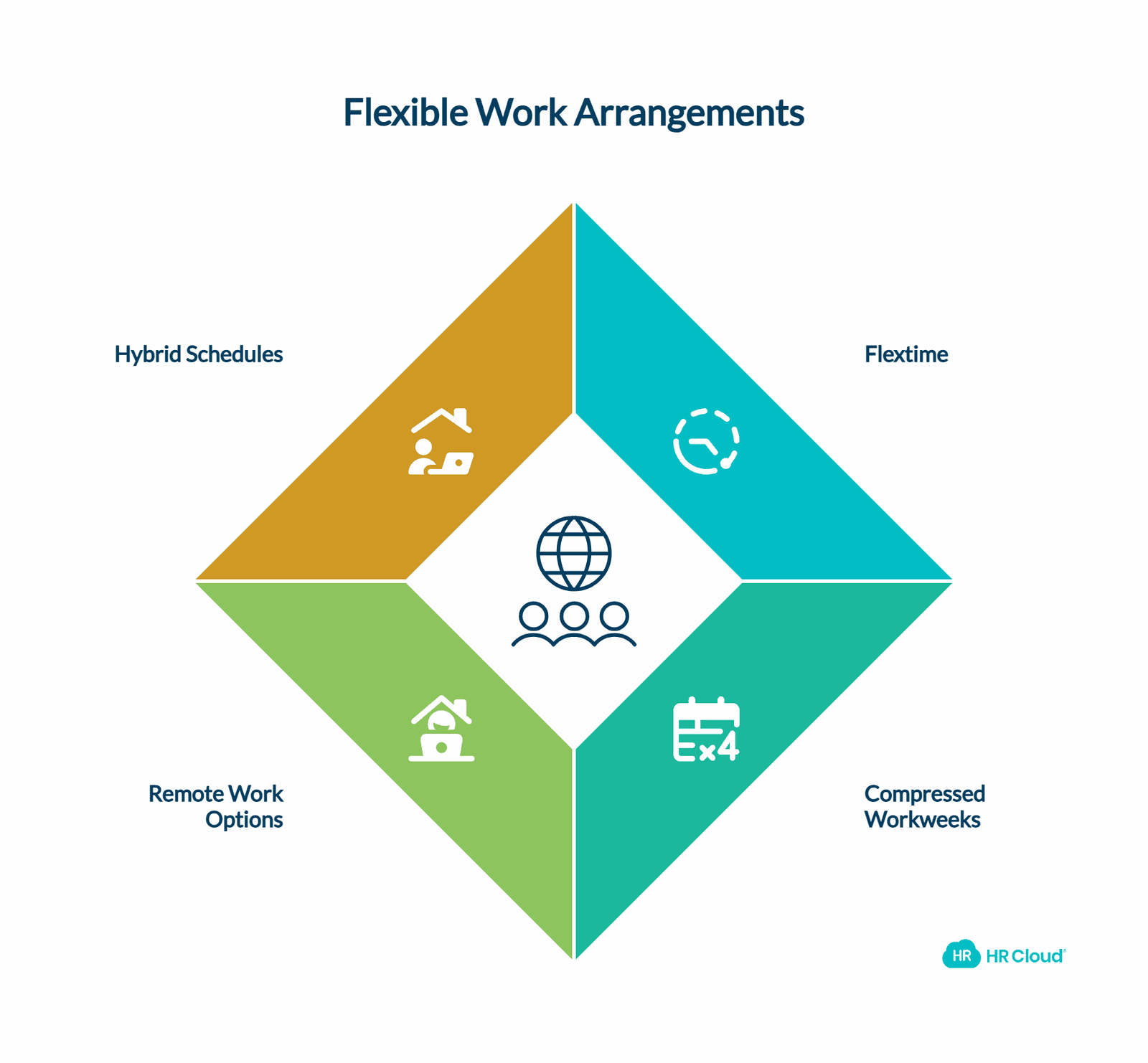
What it is: Flextime, compressed workweeks, remote work options, or hybrid schedules that let employees balance professional and personal responsibilities.
Why it works: 80% of employees say they'd stay longer with flexible work options according to Forbes research. Flexibility demonstrates trust while accommodating diverse life circumstances (caregiving, education, health needs) without forcing employees to choose between work and personal obligations.
Implementation considerations: Establish clear policies defining what flexibility means—core hours when all must be available, communication expectations for remote days, meeting scheduling considerations for distributed teams.
Use technology like HR Cloud to maintain team connectivity regardless of location. Communication channels, recognition feeds, and project collaboration tools keep remote and in-office employees equally engaged in company culture.
Pro tip: Train managers to evaluate output and outcomes rather than hours logged. Micromanaging remote workers undermines flexibility benefits and signals lack of trust that drove flexibility requests initially.
18. Employee Resource Groups (ERGs)
What it is: Voluntary employee-led groups organized around shared identities, interests, or experiences (women's networks, LGBTQ+ allies, veterans groups, working parents, ethnic affinity groups).
Why it works: Employees participating in ERGs are 34% more committed to their organizations and 20% less likely to job hunt according to research from Workhuman. ERGs create belonging, amplify diverse voices, provide mentorship networks, and offer professional development opportunities while strengthening organizational culture.
Implementation with HR Cloud: Use Workmates channels to create dedicated ERG spaces where members share resources, organize events, and communicate initiatives. Public recognition of ERG contributions demonstrates organizational commitment to diversity, equity, and inclusion.
Mobile accessibility ensures all employees can participate regardless of location or work arrangement. Frontline workers gain equal access to ERG benefits rather than missing out due to limited computer access during shifts.
Pro tip: Allocate budgets and executive sponsors to ERGs, signaling genuine organizational support rather than performative diversity initiatives. Track ERG member engagement and career progression to measure impact on retention and advancement.
19. Learning and Development Stipends
What it is: Annual or quarterly budgets employees control for professional development—conferences, online courses, books, coaching, certifications, or workshop attendance.
Why it works: Learning stipends show investment in employee growth while giving individuals autonomy over development paths. Unlike prescriptive training programs, stipends accommodate diverse learning styles and career interests.
Implementation considerations: Define eligible expenses (industry conferences yes, personal hobbies no), submission processes for reimbursement, and documentation requirements. Consider separate stipends for team development activities (offsite workshops, group training) versus individual learning.
Track utilization rates to identify whether budget levels match employee needs. Low utilization may indicate insufficient awareness or cumbersome reimbursement processes rather than lack of interest.
Pro tip: Create internal "lunch and learn" programs where employees who attended conferences or completed certifications share key takeaways, multiplying value of individual learning investments across entire teams.
20. Sabbatical Leave Programs
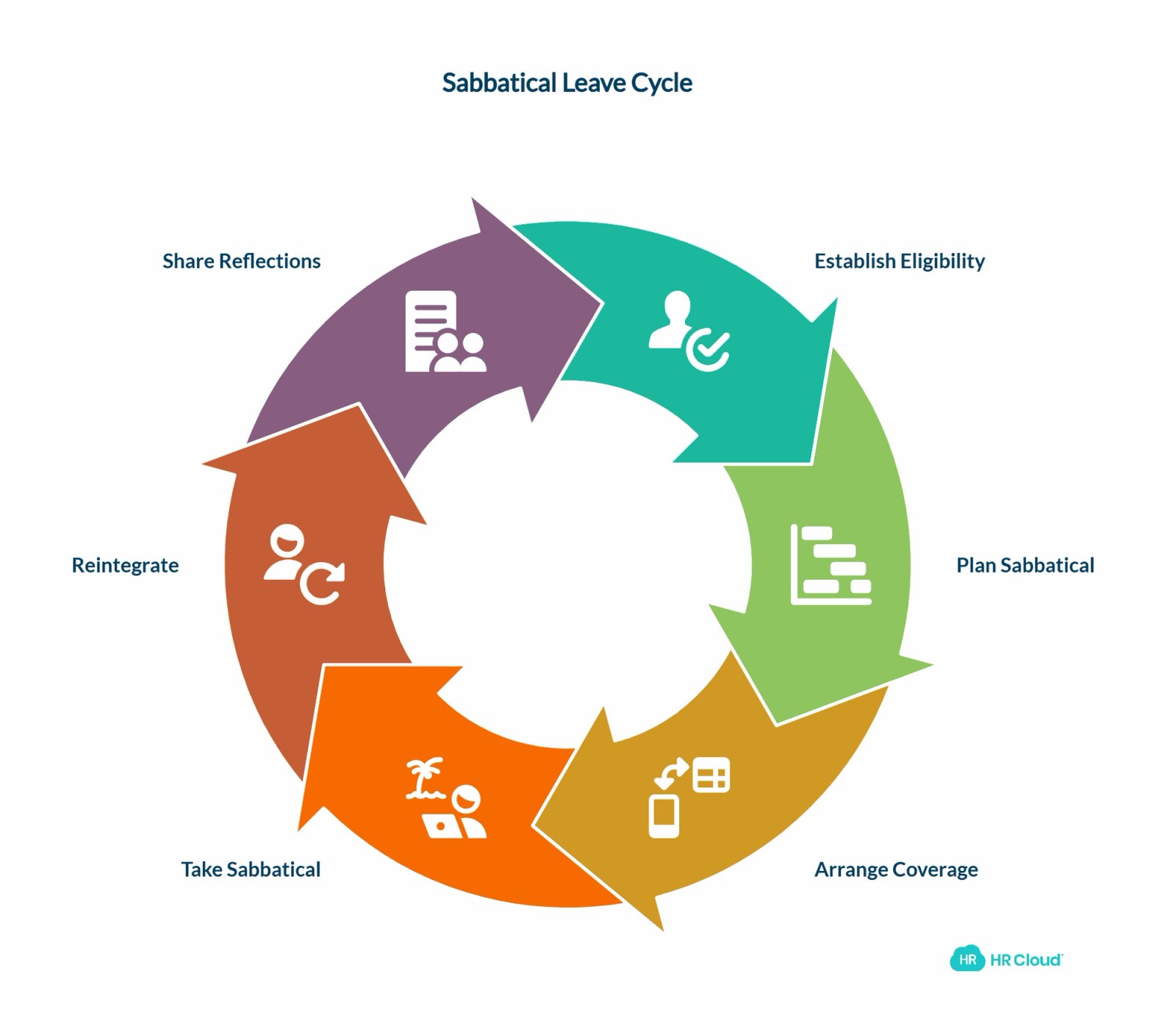
What it is: Extended paid or unpaid leave (typically 1-6 months) granted after reaching tenure milestones, allowing employees to recharge, pursue personal projects, travel, or gain new experiences.
Why it works: Sabbaticals prevent burnout among long-tenured high performers, providing reset opportunities that extend career longevity. Employees return refreshed with new perspectives and renewed commitment after meaningful breaks.
Implementation considerations: Establish eligibility criteria (typically 5-10 years tenure), required planning timelines (12-18 months advance notice), coverage arrangements during absence, and gradual reintegration schedules upon return.
Consider partially paid sabbaticals where organization covers health benefits and partial salary rather than fully paid leave, balancing cost management with meaningful support for employee recharge.
Pro tip: Collect post-sabbatical reflections and share stories across organization. Hearing colleagues describe sabbatical experiences motivates others to commit to long-term tenure while building culture that values work-life balance.
21. Sustainable Commuting Incentives
What it is: Financial support or recognition for eco-friendly commuting—public transit subsidies, bike-to-work stipends, electric vehicle charging stations, carpool parking priority, or remote work allowances.
Why it works: Green commuting programs reduce environmental impact while decreasing employee commuting costs. Organizations demonstrating environmental commitment attract talent who prioritize sustainability and social responsibility.
Implementation considerations: Offer multiple sustainable options since commuting feasibility varies by location, distance, and family circumstances. Consider monthly transit passes, bike maintenance stipends, or per-mile reimbursement for carpooling.
Track participation and calculate environmental impact (carbon reduced, miles not driven) to demonstrate program effectiveness and communicate sustainability wins across organization.
Pro tip: Gamify sustainable commuting through team challenges tracked in recognition platforms. Award points or recognition to departments with highest sustainable commuting participation rates.
22. Wellness Challenges with Rewards
What it is: Structured competitions encouraging healthy behaviors—step count challenges, nutrition goals, meditation streaks, hydration tracking, or fitness milestones with recognition and rewards for participation and achievement.
Why it works: Wellness challenges transform individual health goals into shared experiences that build camaraderie. Friendly competition motivates participation while rewards communicate organizational investment in employee wellbeing.
Implementation with HR Cloud: Launch wellness challenges through Workmates where employees track progress, share achievements, and earn recognition points for hitting milestones. Create team-based challenges so collective goals reduce pressure on individuals while fostering collaboration.
Mobile accessibility ensures frontline and remote workers participate equally. Push notifications remind employees to log activities without requiring constant desktop access.
Pro tip: Focus on participation over perfection—reward effort and consistency rather than just winning. Wellness is personal journey; programs should encourage everyone regardless of starting fitness levels.
23. Family-Oriented Benefits
What it is: Perks supporting employee families—dependent care flexible spending accounts, college scholarship programs for children, family event tickets, family volunteer days, or childcare subsidies.
Why it works: Family benefits acknowledge that employee wellbeing extends beyond workplace to include loved ones. Supporting family needs reduces stress and demonstrates holistic care for employee life circumstances.
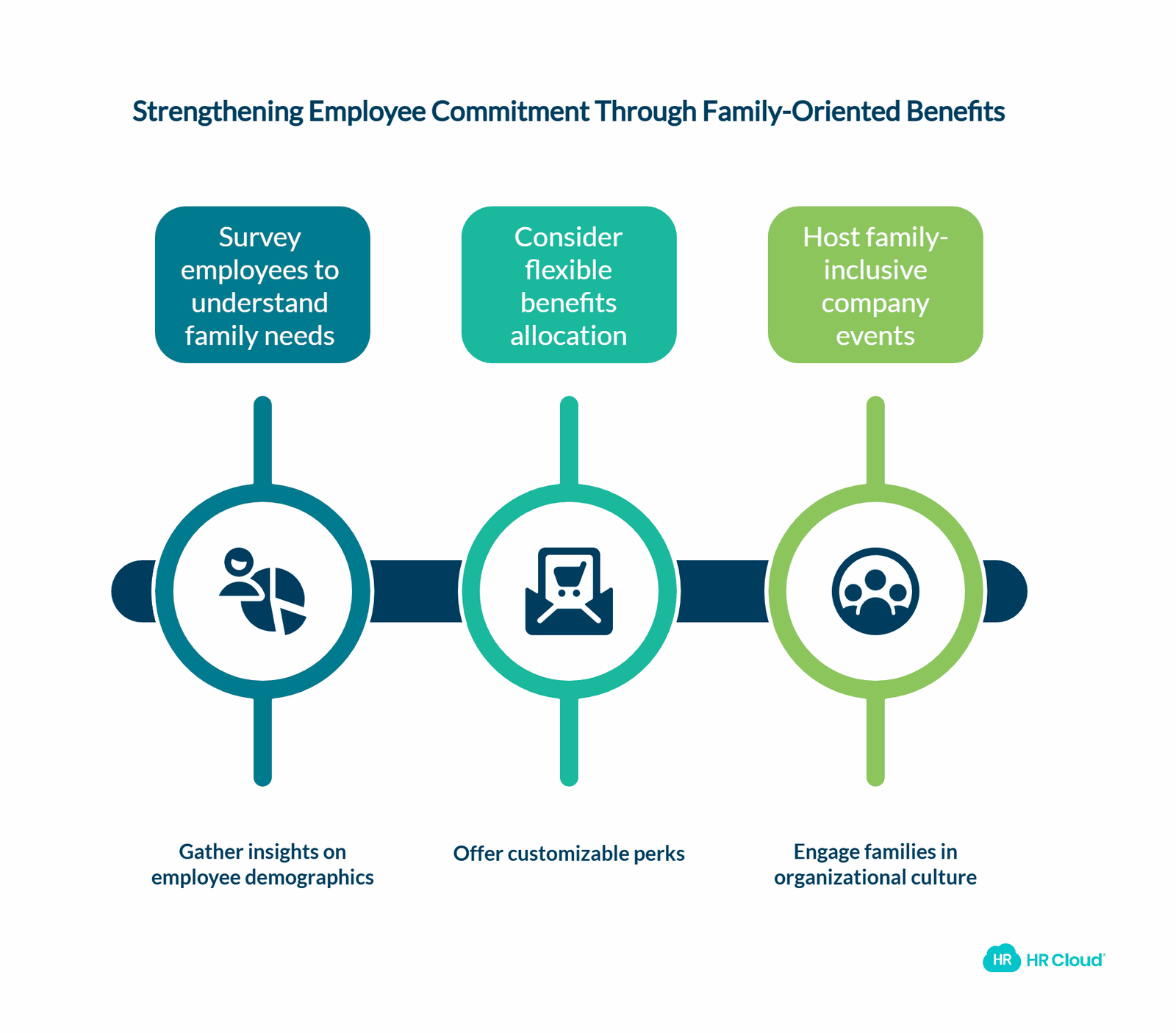
Implementation considerations: Survey employees to understand family needs rather than assuming what benefits would provide most value. Needs vary significantly based on employee demographics (young families, elder care responsibilities, single parents).
Consider flexible benefits where employees allocate credits toward family perks matching their situations rather than one-size-fits-all offerings that may not apply to everyone.
Pro tip: Host family-inclusive company events (kids' day, family volunteer projects, holiday celebrations) where employees' loved ones experience organizational culture firsthand, strengthening family support for employee commitment.
24. Peer Recognition Awards
What it is: Formal programs where employees nominate and vote for colleagues who demonstrate company values, exhibit exceptional collaboration, or deliver outstanding contributions—with quarterly or monthly award ceremonies.
Why it works: Peer recognition empowers employees at all levels to celebrate contributions they witness daily. Management may not see every achievement, but peers observe collaborative excellence, problem-solving, and value demonstration in real-time.
Implementation with HR Cloud: Enable peer nominations through Workmates where employees submit recognition with supporting details. Create voting mechanisms or manager review processes that validate nominations before formal awards.
Public announcement of peer award winners in company-wide communications reinforces culture of appreciation while providing specific examples of excellence for others to emulate.
Pro tip: Rotate peer award categories to recognize different contribution types—innovative thinking, customer service excellence, mentorship, cross-functional collaboration. Diversity in award types ensures various employees earn recognition rather than same people winning repeatedly.
25. Innovation Incentives
What it is: Rewards for creative ideas that improve processes, reduce costs, enhance products, or solve business challenges—including idea submission programs, innovation competitions, or implementation bonuses.
Why it works: Innovation incentives tap into employee expertise and frontline insights that leadership may not possess. Employees closest to work often identify improvement opportunities that drive efficiency and competitive advantage.
Implementation considerations: Create simple idea submission processes with clear evaluation criteria, transparent review timelines, and feedback on why ideas are implemented or declined. Consider tiered rewards where suggestions generating significant value earn larger recognition.
Recognize idea submission even when not implemented—participation matters, and today's unfeasible idea might become tomorrow's breakthrough as circumstances change.
Pro tip: Showcase implemented ideas and thank submitters publicly. When employees see ideas turning into reality with proper credit, it motivates continued innovation participation and demonstrates organizational commitment to employee input.
Collect employee feedback and ideas through Workmates surveys to maintain continuous improvement culture.
How to Implement Employee Incentive Programs: Best Practices
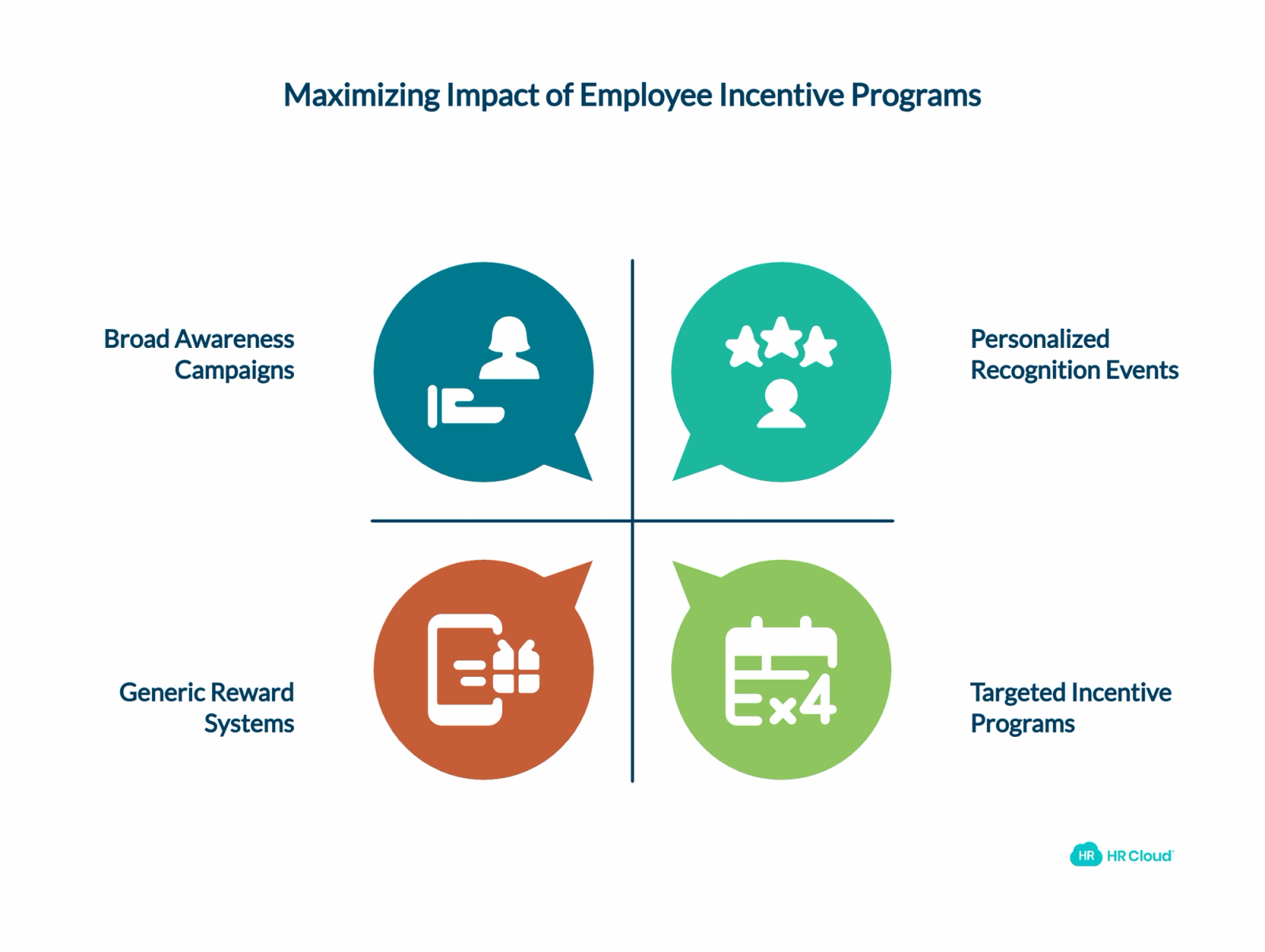
Choosing the right incentive programs represents just the first step. Successful implementation requires strategic planning, consistent execution, and ongoing optimization. Here's how to maximize impact:
Make Programs Inclusive and Accessible
Not all employees respond to identical incentives. Some value public recognition while others prefer private appreciation. Some prioritize monetary rewards; others seek professional development or work-life balance perks.
Design incentive portfolios offering variety—financial bonuses for sales achievers, learning stipends for development-focused employees, flexible schedules for parents, and public recognition for those who thrive on visibility. Inclusivity means accommodating diverse preferences without assuming one approach motivates everyone equally.
For distributed workforces including frontline and remote employees, ensure incentive program access doesn't require office presence. HR Cloud's mobile-first design means deskless workers engage with recognition, redemption, and communication tools equally with office-based colleagues. Programs designed for desk workers often unintentionally exclude hourly employees, retail staff, healthcare workers, and manufacturing teams who drive organizational success.
Actionable step: Survey employees about incentive preferences during onboarding and annually thereafter. Use data to evolve program offerings matching workforce priorities rather than leadership assumptions.
Communicate Consistently and Broadly
Even best-designed incentive programs fail if employees don't know they exist or understand participation requirements. Build comprehensive communication plans raising awareness through multiple channels—email campaigns, team meetings, poster displays in break rooms, mobile push notifications, and integration into onboarding for new hires.
Use your recognition platform's communication tools to promote upcoming incentive opportunities, celebrate recent winners, and remind employees of redemption options. Create dedicated channels or content series focused exclusively on recognition and rewards, making incentive information easy to locate when needed.
Don't assume one-time announcement suffices. Repetition and visibility across different touchpoints increase participation rates significantly. Consider monthly "incentive spotlights" highlighting different program aspects—one month focuses on peer recognition, next month covers points redemption, following month explains referral bonuses.
Actionable step: Establish communication calendar with monthly touchpoints reinforcing incentive program awareness. Track communication engagement metrics (email open rates, post views, channel participation) to identify which formats drive highest awareness.
“The platform connects associates to each other in a way that doesn’t happen through email.”
— Gail Gust, Director of Marketing and Business Development

Enable Leadership Participation
Managers aren't just program administrators—they're cultural ambassadors modeling appreciation behaviors. When leaders actively participate in recognition, provide meaningful feedback, and celebrate team achievements, employees understand that contributions genuinely matter.
Train managers on giving specific, timely recognition that connects individual actions to business outcomes. Generic "great job" praise lacks impact compared to detailed acknowledgment: "Your proactive communication with the client prevented the project delay and demonstrated our commitment to customer success."
Recognize managers themselves for building engaged teams with high recognition participation rates. Making leader effectiveness visible creates positive pressure and demonstrates organizational commitment to appreciation culture beyond lip service.
Actionable step: Include recognition participation metrics in manager performance evaluations. Measure how frequently managers acknowledge team contributions and whether their teams demonstrate above-average engagement scores.
Provide managers recognition tools through Workmates for seamless appreciation delivery.
Personalize Rewards and Recognition
Generic recognition feels transactional. Personalized appreciation demonstrates genuine understanding of individual preferences and contributions.
Use employee data captured in HRIS platforms to personalize milestone celebrations—reference specific tenure achievements, acknowledge career progression, connect recognition to individual goals established during performance reviews. AI-powered platforms can suggest relevant recognition moments based on performance patterns and upcoming anniversaries.
For reward redemption, offer choice. Flexible gift card catalogs, customizable perks menus, and tiered reward options ensure employees select incentives matching personal preferences rather than receiving identical rewards regardless of interest.
Actionable step: Build employee preference profiles capturing favorite gift cards, charitable causes, personal interests, and recognition styles. Reference profiles when selecting rewards so personalization feels intentional rather than generic.
Continuously Gather Feedback
Incentive programs aren't set-and-forget initiatives. Employee needs evolve, market conditions shift, and program effectiveness changes over time. Regular feedback collection through pulse surveys, focus groups, and one-on-one conversations identifies what's working and what needs adjustment.
Ask specific questions: Which incentives do you value most? What prevents you from participating in recognition programs? Which rewards would you redeem if available? What recognition moments would be meaningful in your role?
Use Workmates survey features to collect anonymous feedback reducing social desirability bias. Track participation trends identifying which demographics engage highly versus those showing low adoption rates, then investigate barriers preventing equal participation.
Actionable step: Conduct quarterly pulse surveys measuring incentive program satisfaction and gathering improvement suggestions. Act on feedback—when employees see suggestions implemented, it demonstrates that input influences decisions rather than disappearing into void.
The Business Value of Employee Incentive Programs
Investing in employee incentive programs isn't feel-good HR initiative—it's strategic business decision with measurable ROI. Here's why organizations prioritizing recognition and rewards see competitive advantages:
Quantifiable Impact
U.S. businesses spend $176 billion annually on incentives, recognition, rewards, and incentive travel—not because it's expected but because it drives outcomes. Organizations with effective recognition programs see:
- Higher retention rates: Well-recognized employees are 45% less likely to leave within two years
- Increased productivity: Companies with strong recognition cultures report 17% higher productivity
- Better profitability: Organizations prioritizing recognition see 21% greater profitability
- Improved engagement: Employees receiving regular recognition are 3.7 times more engaged than colleagues lacking appreciation
- Reduced turnover costs: With average replacement costs ranging from 50-200% of annual salary depending on role level, retention improvement delivers significant financial returns
Behavioral Psychology at Work
Incentive program effectiveness stems from fundamental behavioral principles. When employees receive positive reinforcement shortly after desired behaviors, they're more likely to repeat those actions. Frequent recognition creates stronger behavioral links than annual reviews or periodic bonuses.
Variable reward timing (sometimes immediate recognition, other times delayed rewards) creates sustained motivation better than predictable schedules. This explains why points-based systems with flexible redemption often outperform fixed monthly bonuses—the anticipation and element of choice enhance motivational power.
Competitive Differentiation
In tight labor markets, employee experience differentiates organizations competing for talent. Candidates evaluate total compensation including recognition culture, development opportunities, and workplace environment—not just base salary.
Organizations known for appreciating employees attract higher-quality candidates while competitors struggle with talent acquisition. Job seekers research company reviews, ask about recognition programs during interviews, and evaluate culture signals throughout hiring processes.
Current employees who feel valued become powerful brand ambassadors, referring qualified candidates and speaking positively about organizational culture in professional networks. Recognition culture creates self-reinforcing cycle where engaged employees attract similar talent.
Bottom line: Incentive programs aren't costs—they're investments in human capital that drive business performance. Organizations treating recognition strategically rather than perfunctorily see measurable advantages in retention, productivity, and market positioning.
Making Incentive Programs Work with Modern Technology
Traditional recognition approaches—paper certificates, annual appreciation dinners, service anniversary plaques—no longer match how modern workforces operate. Distributed teams, remote employees, frontline workers, and always-mobile professionals need recognition systems meeting them where they work.
The HR Cloud Advantage
HR Cloud's Workmates platform transforms employee incentive programs from administrative burden into strategic engagement tool by providing:
Unified Recognition Hub Single platform where peer recognition, manager appreciation, milestone celebrations, and reward redemption coexist without juggling multiple systems. Employees know exactly where to recognize colleagues or redeem earned rewards.
Mobile-First Accessibility Native iOS and Android apps ensure frontline workers, remote employees, and field staff participate equally with office-based colleagues. Recognition happens in-the-moment rather than waiting for computer access.
Seamless HRIS Integration Workmates connects directly with ADP, UKG, Workday, Paylocity, and Intuit, automatically syncing employee data for birthday recognition, work anniversaries, job changes, and organizational updates. No manual data entry or disconnected systems.
Flexible Reward Catalogs Global gift card marketplace spanning 190 countries with no markups or hidden fees. Employees choose rewards matching personal preferences rather than limited pre-selected options.
Real-Time Analytics Dashboards track recognition frequency, participation rates, reward redemption patterns, and engagement correlations. Identify high-performing teams, recognition gaps, and program effectiveness continuously.
Communication Integration Recognition flows into company communication feeds, Slack channels, and Microsoft Teams, creating visibility without separate platforms. Achievements become visible moments reinforcing culture rather than private transactions.
Scalable for Growth Start with essential recognition features, expand to premium capabilities (surveys, advanced analytics, automated campaigns) as needs grow. Pay for functionality you use rather than enterprise features unused by mid-market teams.
Schedule a demo to see Workmates in action →
Get Started with Modern Employee Incentive Programs
Employee incentive programs transform from administrative checkbox to strategic culture driver when supported by right technology, leadership commitment, and continuous optimization.
HR Cloud's Workmates platform provides everything needed to launch comprehensive recognition and rewards programs that work for modern, distributed workforces—from peer recognition and points-based rewards to communication tools and analytics tracking program effectiveness.
Whether you're starting first recognition program or upgrading outdated systems that don't serve distributed teams, frontline workers, and mobile employees, HR Cloud delivers enterprise-power recognition without enterprise complexity.

Experience how Workmates can transform communication and strengthen culture—all in one powerful platform
Book Your Free DemoFrequently Asked Questions About Employee Incentive Programs
What is the definition of employee incentives?
Employee incentives are external motivators encouraging specific behaviors or discouraging undesired actions. They drive desired attitudes and outcomes by offering rewards, recognition, or benefits. Incentives promise positive results—tangible rewards, professional development, public acknowledgment, increased autonomy—that make desired behaviors more likely to recur.
How do you effectively incentivize employees?
Effective employee incentivization combines multiple program types addressing diverse preferences—recognition platforms for public appreciation, performance bonuses for financial motivation, professional development for growth-minded individuals, wellness initiatives for health-focused employees, and flexibility for work-life balance seekers.
Tailor incentives to what employees actually value rather than what leadership assumes motivates. Survey preferences, track redemption patterns, measure engagement changes after introducing new programs. Most importantly, ensure recognition is timely, specific, and connected to organizational values so employees understand precisely what behaviors earn appreciation.
What are must-have employee incentive programs?
Must-have programs depend on workforce demographics and organizational priorities, but foundational elements include:
1. Peer recognition platforms: Enable continuous appreciation beyond manager-driven recognition
2. Performance bonuses: Provide tangible financial rewards for exceptional achievement
3. Professional development: Invest in employee growth signaling long-term commitment
4. Flexible work arrangements: Accommodate diverse life circumstances and demonstrate trust
5. Comprehensive benefits: Protect employee health and financial security
Beyond these foundations, industry-specific incentives matter—frontline retail workers value shift flexibility; healthcare professionals prioritize continuing education; sales teams respond to commission structures.
What are the different types of incentive programs?
Incentive programs fall into several categories:
Financial incentives: Bonuses, raises, profit-sharing, commission structures, stock options
Recognition incentives: Peer awards, public acknowledgment, achievement celebrations, milestone recognition
Development incentives: Training budgets, tuition reimbursement, mentorship programs, leadership development
Experiential incentives: Travel rewards, event tickets, team outings, special experiences
Work-life incentives: Flexible schedules, remote work options, additional PTO, sabbaticals
Wellness incentives: Fitness challenges, health insurance, gym memberships, mental health support
Effective programs combine categories addressing multiple motivation sources rather than relying solely on single incentive type.
What are the top 3 employee desired incentives?
Research consistently identifies:
1. Monetary bonuses: Direct financial rewards remain highly valued across demographics
2. Additional paid time off: Universal appeal as time provides autonomy over how to recharge
3. Professional development opportunities: Signals investment in employee career growth and advancement potential
However, individual preferences vary significantly—parents may prioritize flexible schedules over bonuses, early-career employees value development over retirement contributions, remote workers appreciate home office stipends while commuters prefer transit subsidies. Survey your specific workforce rather than assuming generic preferences apply universally.
What are common employee incentive program mistakes?
Launching without employee input: Programs designed in leadership vacuum often miss what employees actually value. Survey preferences before investing in incentives nobody wants.
Inconsistent communication: Employees can't participate in programs they don't understand. Regular communication across multiple channels ensures awareness.
Inflexibility: One-size-fits-all programs alienate employees whose preferences differ from majority. Offer variety accommodating diverse motivation sources.
Single reward type: Over-relying on financial incentives ignores employees motivated by recognition, development, flexibility, or experiential rewards.
Lack of measurement: Without tracking participation rates, engagement changes, and retention impact, you can't optimize program effectiveness or demonstrate ROI.
Delayed recognition: Annual appreciation loses motivational power compared to immediate acknowledgment when achievements occur.
Excluding certain employees: Programs accessible only to office workers or specific departments create resentment and undermine culture of appreciation.
About the author

Keep Reading


Like What You Hear?
We’d love to chat with you more about how HR Cloud® can support your business’s HR needs.
Book Your Free Demo