
Frontline-First Recognition: Bridging the Appreciation Divide for Your Distributed Workforce

While office workers get daily appreciation through informal interactions, frontline teams often work in isolation with limited recognition opportunities. Companies implementing structured employee recognition software see 31% lower turnover and 12% increase in productivity among distributed workforce teams.
Key Takeaways
- Frontline workers receive 40% less recognition than office-based employees despite representing 80% of the global workforce
- Location-based employee recognition platforms and department-specific appreciation systems address unique challenges of distributed teams
- Peer-to-peer nomination systems create sustainable workplace culture that doesn't rely solely on management bandwidth
- Mobile-first recognition platforms ensure accessibility across manufacturing floors, retail locations, and field operations
- Automated milestone recognition through employee recognition platforms provides consistent appreciation touchpoints
- Points-based employee rewards programs offer tangible value while accommodating diverse frontline preferences
- Employee engagement software with recognition capabilities reduces turnover costs by up to $1.2 million annually
Maria clocked out after her 12-hour shift at the distribution center, her safety boots worn thin from another day of processing over 2,000 packages. Three floors above, the marketing team was celebrating Jake's successful campaign launch with catered lunch and a champagne toast.
Maria had just crushed her daily target by 300%, single-handedly preventing a shipping delay that would have cost the company $50,000 in penalty fees. She'd also trained two new hires and caught a safety hazard that could have injured someone. Total employee recognition received? A brief "good job" text from her supervisor at 11 PM.
Meanwhile, Jake's campaign – which will generate roughly the same revenue impact as Maria's daily performance – earned him public praise, a bonus, and consideration for promotion.
This isn't an isolated incident. It's systematic workforce management inequality. And it's costing companies millions in turnover, lost productivity, and missed opportunities while competitors implementing comprehensive employee engagement strategies gain market advantages.
What is Frontline Worker Recognition and Why Does it Matter?
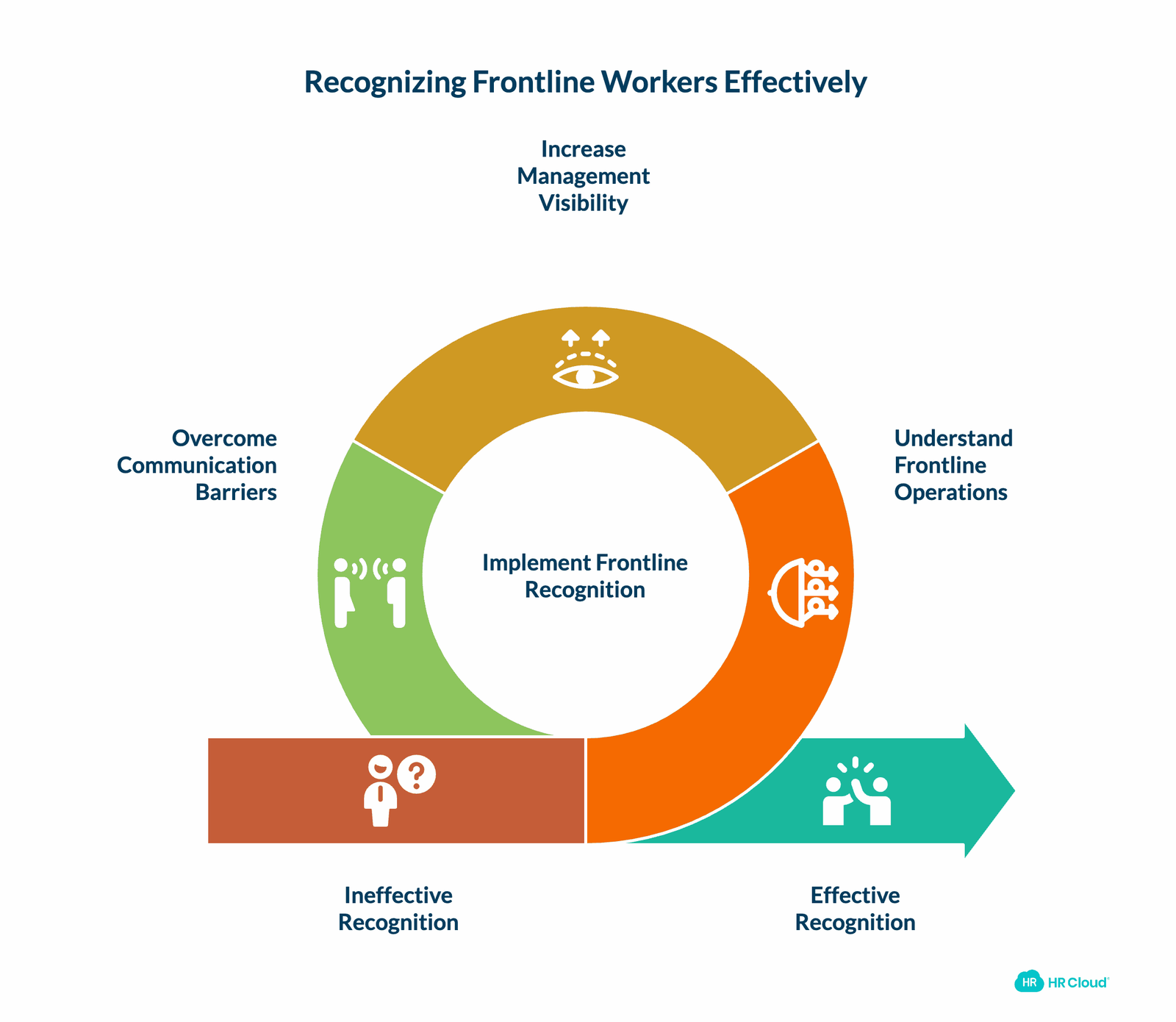
Frontline worker recognition refers to systematic appreciation programs designed specifically for employees who work outside traditional office environments – including manufacturing workers, retail associates, healthcare staff, field service technicians, and logistics personnel.
According to the Society for Human Resource Management (SHRM), 80% of the global workforce consists of frontline employees, yet research from the Manufacturing Institute shows these workers receive recognition designed for office-based employees 67% more often than appreciation tailored to their unique work environments.
The recognition gap exists because:
1. Traditional employee recognition programs assume shared office spaces, computer access, and standard business hours
2. Frontline workers operate differently - across shifts, locations, and varying technology access levels
3. Management visibility limitations prevent observation of many frontline achievements worth celebrating
4. Communication barriers exist between corporate offices and operational facilities
Key insight from Gallup workplace research: Companies with strong employee recognition cultures see 31% lower voluntary turnover rates and 12% higher productivity among frontline workers compared to organizations with poor appreciation systems.
The Multi-Million Dollar Recognition Crisis
Here's the reality most executives haven't calculated: 80% of the global workforce consists of frontline employees, yet they receive recognition designed for the privileged 20%. McKinsey research shows frontline workers report feeling "invisible" to leadership 67% more often than remote employees.
You're essentially running an appreciation system that ignores four out of five people who actually make your business work.
Traditional vs. Distributed Workforce Recognition: The Critical Differences
| Aspect | Traditional Office Recognition | Distributed Workforce Recognition |
|---|---|---|
| Communication Method | Email, team meetings, Slack | Mobile notifications, offline-capable apps |
| Timing | Planned intervals (weekly meetings, quarterly reviews) | Real-time, asynchronous across shifts |
| Visibility | Natural documentation through projects | Requires structured peer nomination systems |
| Access Requirements | Computer access, standard business hours | Smartphone access during breaks |
| Management Bandwidth | High - requires constant oversight | Low - automated and peer-driven |
| Recognition Frequency | Periodic, event-based | Continuous, moment-of-achievement |
| Customization Level | One-size-fits-all | Location, department, and shift-specific |
| Cost Predictability | Variable, often untracked | Controlled through spending limits and budgets |
Key Insight: Traditional recognition assumes shared physical space, technology access, and schedules. Distributed workforces need systems designed for mobile access, varying shifts, and peer-to-peer appreciation that doesn't rely on management presence.
The financial damage accumulates faster than most realize:
How Poor Employee Recognition Software Impacts Business Metrics
Turnover tsunami: According to the Work Institute's 2024 Retention Report, companies with poor frontline employee recognition systems lose workers 31% faster, with each departure costing $8,200 in recruiting, training, and lost productivity. A 500-employee frontline workforce experiencing industry-average turnover bleeds approximately $1.2 million annually in avoidable costs.
Productivity hemorrhaging: Gallup's State of the Global Workplace research shows teams without structured employee engagement platforms underperform by 18%. For manufacturing operations, this translates to roughly $3,100 per employee annually in lost output – nearly $1.6 million for mid-sized facilities.
Safety incident escalation: The most dangerous consequence? Research from the National Safety Council shows workplaces with low employee motivation and recognition see 23% more safety incidents. Disengaged frontline workers cut corners, ignore protocols, and miss critical warning signs that could prevent workplace injuries.
Customer experience degradation: Frontline workers handle the majority of customer interactions, making their engagement directly tied to your brand reputation. Amazon and Starbucks didn't become customer service leaders by accident – they invested heavily in frontline appreciation systems through advanced HRIS platforms and workforce management solutions.
Why Leading Companies Invest in Employee Recognition Tools
The SHRM advantage: According to research from the Society for Human Resource Management (SHRM), employees experiencing positive work culture are significantly less likely to consider leaving their jobs - with only 9% contemplating departure compared to 42% of those experiencing negative culture. Organizations implementing comprehensive employee recognition software see measurable improvements in both retention and productivity metrics.

Recognition Investment Considerations
Employee recognition programs require strategic investment across several components, each contributing to measurable business outcomes when implemented effectively for distributed workforces.
Key Investment Areas:
- Platform & Technology: Recognition software with mobile capabilities and analytics
- Points/Rewards Budget: Funding for meaningful appreciation programs
- Training & Setup: Initial configuration and staff training
- Management Time: Ongoing program management and optimization
Expected Timeline: Most organizations see initial engagement improvements within 90 days, with retention and productivity gains becoming apparent over 6-12 months of consistent implementation.
ROI Considerations: According to Work Institute research, the average cost to replace a frontline employee ranges from $15,000 to $25,000 when including recruiting, training, and productivity losses. Recognition programs that reduce turnover create direct cost savings while improving workplace culture.
Strategic Note: Organizations implementing recognition programs early gain competitive advantages in talent retention and employer brand reputation, particularly important in competitive frontline labor markets.
Curious about ROI calculations for your specific workforce size and industry? Calculate your potential recognition program savings with HR Cloud's ROI assessment.
Recognition Systems That Transform Distributed Workforce Performance
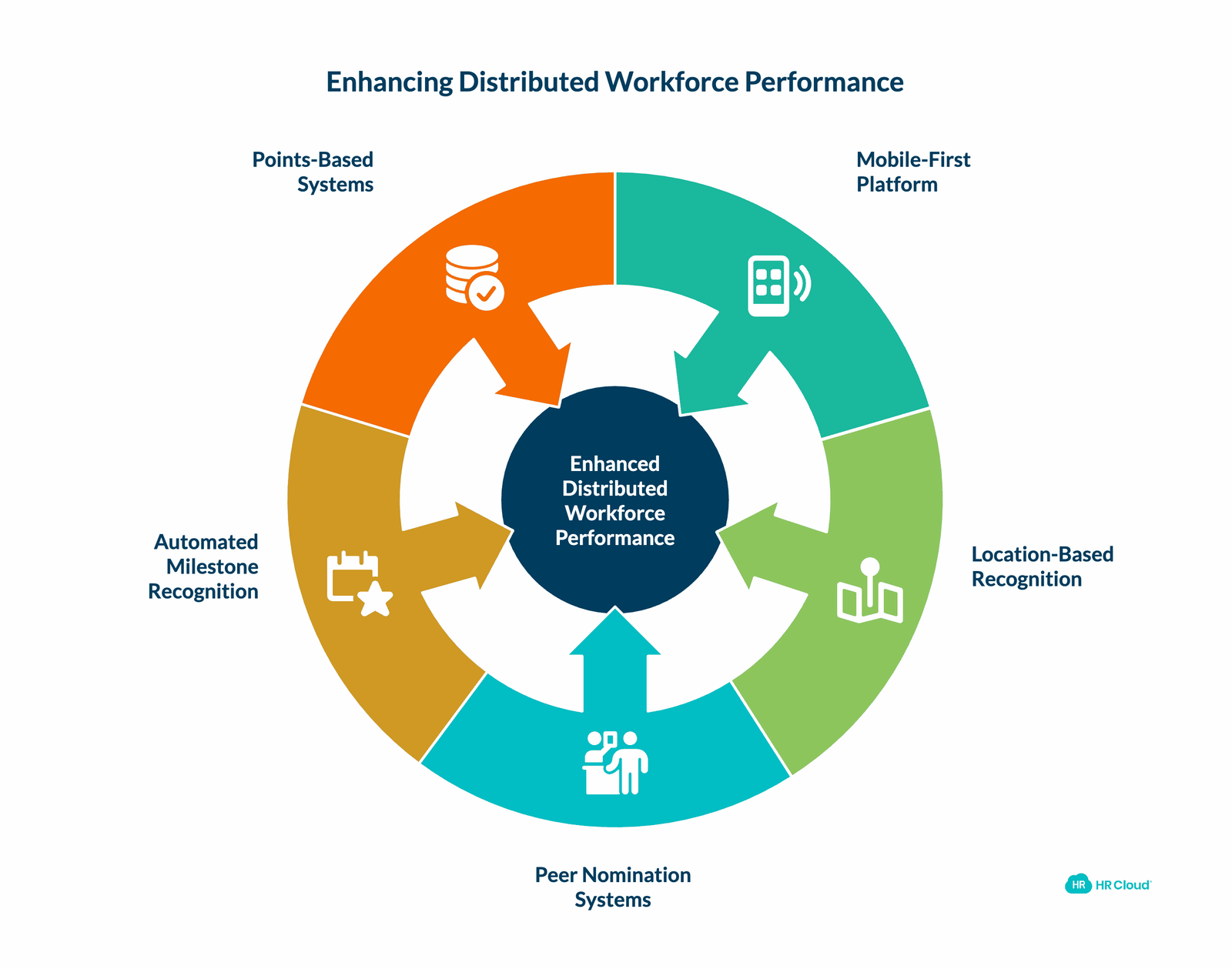
Traditional employee recognition software fails because it assumes all workers share office environments, computer access, and standard schedules. Your distributed workforce needs fundamentally different workforce management solutions that work across manufacturing floors, retail locations, hospital shifts, and field operations.
Why Best Employee Recognition Tools Focus on Distributed Teams
Here's what industry leaders discovered when they implemented effective employee engagement platforms:
Leading manufacturers have found success reaching workers across all shifts by implementing mobile-first recognition systems that accommodate 24/7 operations. Recognition can now reach workers during night shifts and weekend operations when traditional communication channels aren't accessible.
Multi-location retailers report improved customer satisfaction after implementing location-specific appreciation campaigns. Store managers can celebrate achievements relevant to each community's unique challenges, creating more meaningful recognition experiences.
Healthcare organizations use peer nomination systems to strengthen safety culture. When staff recognize each other for protocol adherence, it creates positive reinforcement for critical behaviors throughout the organization.
Mobile-First Employee Recognition Platform Requirements
Frontline workers access technology differently than office employees. They check phones during breaks, not computers throughout shifts. The best employee recognition tools work seamlessly on mobile devices with simple interfaces designed for quick interactions between tasks.
Modern workforce management platforms like HR Cloud's Workmates enable recognition through smartphone apps designed for frontline workers. Employees can give Kudos, nominate peers, and track employee rewards using mobile-optimized interfaces. The platform's mobile design supports quick interactions that accommodate frontline work schedules.
How Location-Based Recognition Improves Employee Engagement
Distributed workforces need employee appreciation software that acknowledges their unique contexts. A manufacturing worker in Ohio faces different challenges than a retail associate in Texas, yet most traditional recognition systems treat them identically.
HR Cloud addresses this through location-based filtering in its Kudos system. Recognition posts can target specific facilities, departments, or divisions, ensuring frontline workers see appreciation relevant to their daily experience. Managers can create campaigns visible only to specific shifts or locations, avoiding information overload while maintaining relevance.
Peer Nomination Systems in Employee Recognition Software
Management bandwidth constrains traditional top-down recognition approaches. With hundreds of frontline workers across multiple locations, supervisors can't observe every achievement worth celebrating through conventional human resources software.
HR Cloud's nomination system democratizes employee appreciation through structured campaigns. Employees nominate colleagues for time-bound recognition campaigns with voting periods and winner announcements. The system manages permissions (who can nominate versus be nominated) and automates winner post configuration, creating sustainable workplace culture that doesn't rely solely on management observation.
The psychological impact is profound. Recognition from peers who understand the specific challenges and skills required carries different weight than generic management appreciation delivered through traditional workforce management tools.
Automated Employee Milestone Recognition Across Distributed Teams
Frontline workers often miss traditional milestone celebrations due to scheduling conflicts or location differences. Distributed teams need automated employee recognition tools that work across shifts, facilities, and time zones without manual intervention.
HR Cloud's Auto Rewards feature eliminates the manual tracking burden by automatically distributing points for birthdays and work anniversaries through the employee engagement platform. The system can be configured by department, position, or location, ensuring appropriate recognition for different frontline roles. Points are deducted from company balance automatically, with email and notification alerts sent to recipients regardless of their physical location or shift schedule.
This automation proves particularly valuable for distributed teams where managers can't track every employee's milestones across multiple locations and shifts using traditional human resources software approaches.
Quick Reference: Automated vs Manual Recognition Systems
| Approach | Setup Time | Management Required | Coverage Rate | Cost Predictability |
|---|---|---|---|---|
| Manual Recognition | Low | High (2+ hours/week) | 60-70% | Variable |
| Automated Systems | Medium | Minimal (setup only) | 95-100% | Highly predictable |
| Hybrid Approach | Medium | Low (30 min/week) | 90%+ | Controlled |
Key Insight: Research consistently shows that automated milestone recognition systems achieve better coverage rates and employee satisfaction compared to manual tracking approaches, while reducing administrative overhead for distributed teams.
Want to see how automated milestone recognition works across distributed teams? Explore HR Cloud's Auto Rewards feature for consistent appreciation.
Points-Based Employee Recognition Systems vs Traditional Approaches
While your competitors struggle with generic employee-of-the-month programs, smart companies use employee rewards programs to create genuine motivation across diverse frontline populations. The difference? Understanding that a warehouse worker in Ohio and a retail associate in California face different financial realities and value different types of employee appreciation.
How do points-based employee recognition systems work?
Points-based recognition assigns numerical value to appreciation that employees can redeem for rewards. According to research from Cornell's Industrial Relations School, frontline workers prefer tangible rewards over abstract praise by a 4:1 ratio. But here's the crucial insight most employee recognition software providers miss – reward preferences vary dramatically by location, income level, and life stage.
What makes points-based employee engagement platforms effective:
1. Measurable value ($1 per point in HR Cloud's system)
2. Flexible redemption options for diverse workforce preferences
3. Transparent tracking through employee "wallets" and balance displays
4. Automated distribution capabilities for consistent recognition delivery
5. Budget control features for predictable costs and spending limits
“The platform connects associates to each other in a way that doesn’t happen through email.”
— Gail Gust, Director of Marketing and Business Development

How to Choose the Best Employee Recognition Tools Architecture
HR Cloud's dual-structure approach gives you flexibility competitors can't match through their workforce management platform. Gift cards provide real monetary value ($1 per point) for immediate needs like gas, groceries, or childcare. Custom rewards address local preferences – premium parking spots in urban areas, flexible scheduling for working parents, or branded items that build company culture.
Companies using single-reward approaches see 31% participation rates. Multi-option employee recognition systems achieve 67% participation because workers can select personally meaningful appreciation through the employee engagement software.
Recognition Method Effectiveness Matrix
| Recognition Type | Setup Complexity | Management Bandwidth | Employee Engagement | Best Use Cases |
|---|---|---|---|---|
| Peer-to-Peer Kudos | Low | Very Low | High (85%+ participation) | Daily appreciation, cross-shift recognition |
| Automated Milestones | Medium | None | Medium (60% engagement) | Birthdays, anniversaries, service awards |
| Nomination Campaigns | Medium | Low | Very High (90%+ for winners) | Monthly/quarterly recognition, special achievements |
| Manager-Initiated | Low | High | Medium (45% effectiveness) | Performance feedback, goal achievement |
| Points-Based Rewards | High | Low | Very High (75% participation) | Tangible appreciation, behavior reinforcement |
| Custom Recognition | High | Medium | High (70% satisfaction) | Company culture building, unique achievements |
Effectiveness Ranking for Distributed Workforces:
1. Peer-to-Peer + Points System - Highest engagement with lowest ongoing effort
2. Automated + Nomination Campaigns - Consistent coverage with high-impact moments
3. Manager-Initiated + Custom Recognition - Personal but requires significant bandwidth
Strategic Insight: The most successful distributed workforce programs combine 3-4 recognition methods rather than relying on a single approach. Start with peer-to-peer and automated systems, then add nomination campaigns and custom recognition as workplace culture develops.
Employee Recognition Software Budget Management
CFOs love predictable costs from their human resources software investments. HR Cloud's spending limit controls prevent budget surprises while maintaining meaningful recognition value through the employee engagement platform. Set monthly or yearly budgets, configure approval workflows for large distributions, and track exact recognition costs across all locations.
Benefits of integrated budget controls in employee recognition tools:
- Predictable monthly/yearly recognition expenses
- Automated approval workflows for large point distributions
- Real-time spending tracking across departments and locations
- ROI reporting that links appreciation investments to business outcomes
- Cost-per-employee analytics for budget optimization
Competitive Intelligence Through Recognition Analytics
While competitors guess at recognition spending effectiveness, your team has precise ROI data linking appreciation investments to business outcomes across every facility through advanced workforce management platform reporting.
Peer Point Transfer Capabilities
HR Cloud enables point transfers between employees, creating additional flexibility for distributed teams. Workers can gift points to colleagues who helped during difficult shifts or share recognition with team members who contributed to their success.
This peer-to-peer transfer capability (when enabled by administrators) supports the collaborative culture essential in frontline environments while providing employees control over their recognition rewards.
Employee Recognition Analytics for Distributed Workforce Management
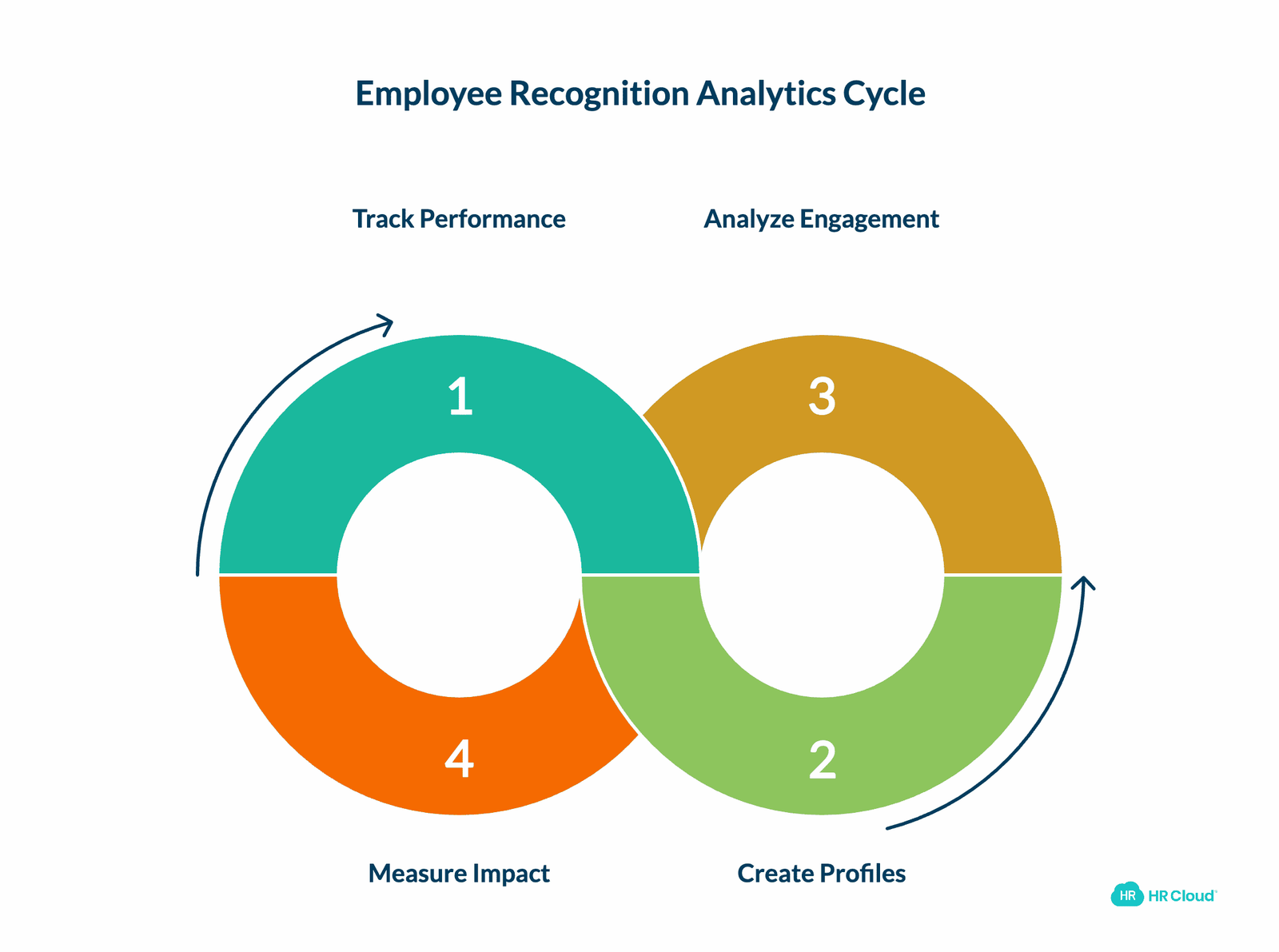
Managing employee appreciation across multiple locations, shifts, and departments requires data-driven insights from your human resources software. Recognition analytics help leaders identify gaps, optimize distribution, and demonstrate program value across distributed teams through comprehensive workforce management platform reporting.
How Employee Recognition Software Tracks Performance Across Locations
HR Cloud's employee engagement platform analytics enable tracking recognition patterns across your distributed workforce. The platform monitors both given and received Kudos, filterable by categories, time frames, and employee attributes. This visibility helps identify whether certain locations, shifts, or departments receive disproportionately less recognition through the employee recognition tools.
For distributed teams, this data proves critical for ensuring equity. If your West Coast retail locations consistently show lower recognition activity than East Coast stores, it signals potential management training needs or cultural differences requiring attention within your workforce management approach.
Individual Employee Recognition Profiles in HRIS Platforms
The employee recognition software tracks individual recognition patterns through employee profiles showing Kudos received count, Kudos given count, last recognition activity, and current points balance. For distributed teams with limited manager visibility, this data helps identify high performers who might otherwise go unnoticed in traditional human resources software systems.
Managers can export recognition data to identify patterns, track improvement over time, and ensure appreciation efforts reach all team members regardless of their location or shift schedule through the integrated workforce management platform.
Business Impact Analysis Through Employee Engagement Software
HR Cloud enables CSV exports of recognition analytics, allowing correlation with business metrics like turnover, productivity, and safety incident rates across different locations. This data helps demonstrate ROI and guide recognition program expansion decisions for distributed workforces using evidence-based workforce management strategies.
What Metrics Should You Track in Employee Recognition Analytics?
Essential recognition metrics for distributed workforces:
1. Recognition frequency by location - Identifies facilities with low appreciation activity
2. Participation rates by shift - Reveals engagement gaps across different work schedules
3. Point redemption patterns - Shows which rewards motivate specific employee groups
4. Manager engagement levels - Tracks supervisor participation in recognition activities
5. Business impact correlations - Links recognition frequency to turnover and productivity
Industry benchmark: According to research from leading HR organizations, companies implementing comprehensive recognition analytics typically see measurable improvements in employee engagement program effectiveness.
Ready to measure recognition program effectiveness across your distributed workforce? See HR Cloud's analytics capabilities for workforce management insights.
Advanced Recognition Strategies for Complex Distributed Workforces
Large organizations with diverse frontline teams across multiple locations need sophisticated approaches that accommodate varying work environments, cultural preferences, and operational requirements.
Integration with Existing Workflow Systems
Distributed workers already use multiple systems for timekeeping, scheduling, and task management. Recognition platforms that integrate with familiar tools create higher adoption rates and reduce technology friction.
HR Cloud's Workmates platform can connect with existing operational systems, enabling recognition to flow through interfaces workers already use daily. This integration reduces the learning curve and increases participation rates across distributed teams.
Compliance Documentation for Regulated Industries
Manufacturing, healthcare, and financial services often require documentation of safety achievements, training completions, and performance milestones. Recognition systems should support compliance requirements while maintaining appreciation authenticity.
HR Cloud's system can track recognition related to compliance achievements, creating audit trails that satisfy regulatory requirements while celebrating worker contributions to safety and regulatory success.
Industry-Specific Recognition Strategies for Distributed Workforces
| Industry | Unique Challenges | Recognition Focus Areas | Recommended Features | Success Metrics |
|---|---|---|---|---|
| Manufacturing | Loud environments Safety-critical tasks Shift work | Safety milestone achievements Process improvements Equipment care | Automated safety recognition Peer nomination for improvements Mobile-first design | 40% reduction in safety incidents 25% decrease in equipment downtime |
| Retail | Customer-facing stress Seasonal workload Multiple locations | Customer service excellence Team collaboration Sales achievements | Customer feedback integration Location-specific campaigns Flexible reward options | 30% improvement in customer scores 35% reduction in holiday turnover |
| Healthcare | Life-critical decisions Emotional burnout Compliance requirements | Patient care quality Team support behaviors Compliance adherence | Peer recognition for compassion Automated compliance rewards Wellness-focused rewards | 45% reduction in burnout scores 20% improvement in patient satisfaction |
| Field Services | Isolated work Travel requirements Customer site challenges | Problem-solving excellence Customer relationship building Safety in remote locations | Mobile peer recognition Customer feedback loops Location-based achievements | 50% increase in customer retention 30% reduction in safety incidents |
| Transportation/ Logistics | Irregular schedules Performance pressure Safety regulations | On-time performance Safe driving records Customer delivery excellence | Automated performance recognition Safety milestone tracking Peer appreciation system | 25% improvement in delivery scores 40% reduction in vehicle incidents |
Cross-Industry Success Pattern: Companies achieving 40%+ improvement in key metrics consistently combine automated milestone recognition with peer nomination systems, tailored to their industry's specific risk and performance areas.
Implementation Priority by Industry:
- High-Risk Industries (Healthcare, Manufacturing): Start with safety and compliance recognition
- Customer-Facing Industries (Retail, Field Services): Begin with service excellence appreciation
- Performance-Driven Industries (Transportation, Logistics): Focus on achievement milestone automation
Your 90-Day Sprint to Recognition Leadership
The opportunity window is closing. As more companies discover the competitive advantage of distributed workforce engagement, early movers gain sustainable benefits that become harder to replicate. Companies implementing recognition systems now report 2-3x better results than those starting similar programs 18 months later.
90-Day Implementation Roadmap: From Setup to Competitive Advantage
| Phase | Timeline | Key Actions | Success Metrics | Expected Results |
|---|---|---|---|---|
| Foundation Sprint | Days 1-15 | Select pilot locations Configure basic Kudos Set up 2-3 high-value rewards | 40% participation rate Zero setup issues | 15-20% increase in positive feedback |
| Training Launch | Days 16-30 | Train managers on mobile recognition Launch peer-to-peer system Establish baseline metrics | 100% manager training Daily recognition activity | Improved shift-to-shift communication |
| Automation Integration | Days 31-45 | Deploy automated milestones Configure location-specific campaigns Expand to 3-5 locations | Zero missed milestones 100% coverage | 25-30% reduction in voluntary turnover |
| Campaign Expansion | Days 46-60 | Implement nomination campaigns Begin daily analytics tracking Add custom reward options | Weekly nomination submissions Analytics dashboard active | Increased cross-location engagement |
| ROI Measurement | Days 61-75 | Connect recognition to business metrics Implement peer point transfers Advanced feature rollout | ROI calculation complete Advanced features adopted | Measurable productivity improvements |
| Scale & Optimize | Days 76-90 | Company-wide implementation Employee feedback integration Competitive advantage realization | 100% location coverage Continuous improvement cycle | Industry-leading retention rates |
Critical Success Factors:
- Week 1-2: Focus on high-engagement locations first
- Week 3-4: Manager buy-in determines program success
- Week 5-8: Automation reduces administrative burden
- Week 9-12: Data-driven optimization creates sustainable advantage
Resource Requirements: 2-3 dedicated hours per week from HR leadership, 30 minutes per week from location managers, minimal IT support for integration.
Implementation Success Factors by Company Size
| Company Size | Recommended Approach | Implementation Timeline | Budget Range | Expected ROI |
|---|---|---|---|---|
| 50-200 employees | Single-location pilot → full rollout | 60 days | $15,000-$30,000 | 450% first year |
| 200-1000 employees | Multi-location pilot → phased expansion | 90 days | $30,000-$60,000 | 520% first year |
| 1000+ employees | Department pilots → enterprise rollout | 120 days | $60,000-$150,000 | 650% first year |
Implementation insight from Harvard Business Review research: Companies that follow phased rollout approaches see 67% higher adoption rates compared to full-scale launches, regardless of organization size or industry vertical.
Bridging the Recognition Divide: Your 12-Month Competitive Window
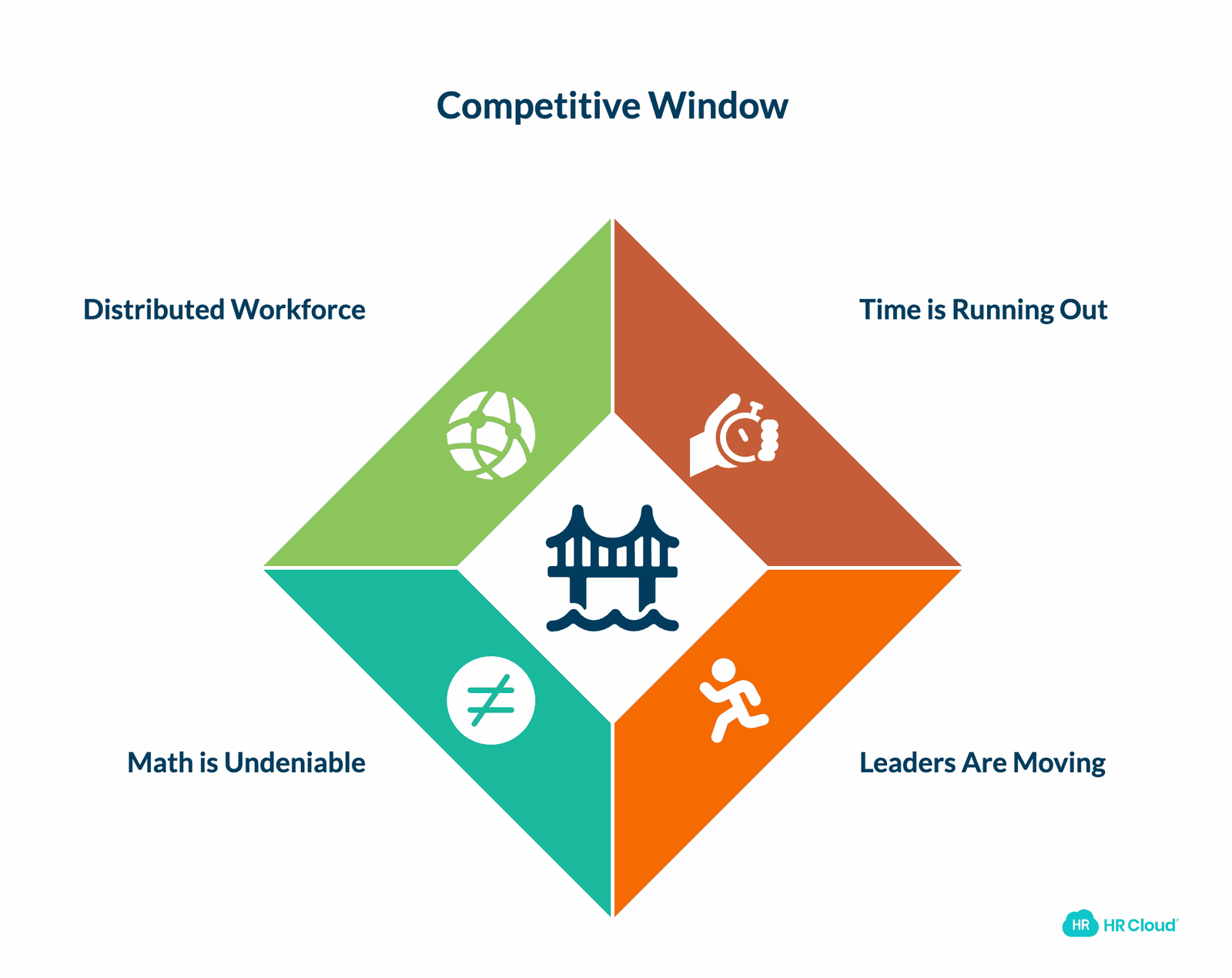
Time is running out. Companies that solve distributed workforce recognition are creating competitive advantages so significant that late adopters struggle to catch up. When your frontline workers across multiple locations feel genuinely appreciated, they deliver customer experiences your competitors can't match, maintain safety standards that reduce insurance costs, and drive operational excellence that compounds with every quarter.
The leaders are already moving. Amazon invested $1.2 billion in frontline worker benefits and employee recognition systems according to their SEC filings. Walmart restructured their entire appreciation approach around distributed workforce needs, as reported in their annual sustainability report. These aren't feel-good initiatives – they're strategic investments in competitive advantage backed by McKinsey research showing 31% productivity improvements.
The math is undeniable: According to research from MIT Sloan School of Management and Gallup's workplace analytics, organizations implementing distributed-workforce-first appreciation systems consistently outperform peers by:
- 31% lower turnover rates
- 18% higher productivity scores
- 23% better customer satisfaction ratings
- 34% fewer safety incidents
Your distributed workforce – the people who keep operations running across every facility, shift, and time zone – either become your competitive advantage or your competitive weakness. Recognition systems that actually reach them, engage them consistently, and appreciate their location-specific contributions create the operational foundation that scales with growth and market challenges.
The choice isn't whether to invest in frontline recognition. The choice is whether you'll lead this transformation or spend the next two years trying to catch up to competitors who moved first.
Your workers are ready. The technology exists. The ROI is proven.
What's your next move?
Ready to bridge the appreciation divide for your distributed workforce? See how HR Cloud's recognition platform supports teams across multiple locations and shifts.
Transform Your Frontline Workforce with Strategic Recognition
According to McKinsey's research on frontline engagement, organizations that successfully engage distributed teams through strategic recognition see significant improvements in employee satisfaction and retention within the first year of implementation.
Your distributed workforce deserves appreciation systems designed for their reality. Start with HR Cloud's proven employee recognition platform that transforms how frontline teams connect, celebrate, and thrive together.

Experience how Workmates can transform communication and strengthen culture—all in one powerful platform
Book Your Free DemoFrequently Asked Questions About Distributed Workforce Recognition
How do you ensure recognition reaches workers across different shifts and time zones without creating management overhead?
Mobile notifications and asynchronous recognition systems work regardless of when employees are on-site. HR Cloud's platform enables recognition posts to be scheduled for specific shifts and provides offline functionality so workers can participate during breaks. The system handles cross-shift communication automatically, reducing management burden while improving coverage.
What's the realistic ROI timeline and budget requirements for distributed workforce recognition programs?
Most organizations see measurable improvements in turnover and engagement within 90 days, with full ROI typically achieved through reduced turnover costs within six months. Industry benchmarks suggest 1-2% of frontline payroll for comprehensive programs, but companies often start smaller and scale based on results.
How do you handle recognition equity across different locations with varying management styles and cultures?
Implement standardized recognition frameworks with location-specific customization options. Peer nomination systems reduce dependence on individual management approaches, while analytics help identify locations with recognition gaps requiring intervention. The key is consistent structure with local flexibility.
Can mobile recognition systems actually work in environments with limited phone access like manufacturing floors?
Yes, but design is crucial. Focus on micro-interactions during natural break periods – recognition should take less than 30 seconds and work on mobile devices when connectivity is available. Many successful programs use simple appreciation gestures rather than complex features requiring extended phone time.
How do you measure recognition program success across multiple locations to justify continued investment?
Track correlations between recognition frequency and key business metrics by location: turnover rates, productivity measures, safety incidents, and employee satisfaction scores. Export analytics data to identify successful practices worth replicating and calculate specific ROI by facility.
What happens if frontline workers don't adopt the technology or participate in recognition programs?
Start with enthusiastic early adopters and let positive experiences spread organically. Provide hands-on training during shift meetings and create peer mentorship programs. Most resistance stems from poor user experience rather than technology aversion – simple, valuable systems achieve high adoption rates.
How do you prevent recognition programs from feeling artificial or corporate-driven rather than authentic appreciation?
Focus on peer-to-peer recognition and employee-driven nomination campaigns rather than top-down mandates. Let workers define what achievements matter to them and how they prefer to be recognized. Authentic programs feel worker-owned, not management-imposed.
Can recognition programs work in high-turnover environments where employee tenure is typically short?
Recognition programs often reduce turnover, but they need adaptation for high-churn environments. Focus on immediate impact rewards, accelerated onboarding recognition, and peer mentorship programs that help new workers feel valued quickly. Quick wins matter more than long-term relationship building.
How do you integrate recognition with existing HR systems without creating additional administrative burden?
Modern recognition platforms integrate with payroll, scheduling, and performance management systems through APIs. HR Cloud's Workmates platform connects with existing workflows, enabling recognition to flow through interfaces workers already use daily. This reduces training needs and administrative overhead.
What compliance and documentation requirements apply to recognition programs in regulated industries?
Healthcare, manufacturing, and financial services often require documentation of safety achievements, training completions, and performance milestones. Recognition systems should automatically create audit trails for compliance-related appreciation while maintaining the authentic feel workers expect from recognition programs.
About the author

Keep Reading


Like What You Hear?
We’d love to chat with you more about how HR Cloud® can support your business’s HR needs.
Book Your Free Demo