What is Organizational Culture? Definition, Examples & How to Build It in 2026

This blog defines organizational culture as the shared values, beliefs, behaviors, and norms that shape how employees interact, make decisions, and do their work, going far beyond slogans to everyday actions. It explains why culture matters for engagement, retention, performance, and recruiting success, and breaks down common culture types and traits. The post then offers practical steps—from defining core values and embedding culture in onboarding to daily recognition and leadership modeling—to intentionally build and sustain a strong culture. The biggest value: a clear, strategic roadmap that helps HR leaders shape purpose-driven workplaces that improve business outcomes and employee experience.
Organizational culture is the shared set of values, beliefs, behaviors, and practices that define how employees interact, make decisions, and approach their work. It's not just what's written in your mission statement—it's what happens in daily interactions, team meetings, and moments of challenge. A strong organizational culture drives employee engagement, improves retention by up to 33%, and directly impacts business performance.
In this comprehensive guide, we'll explore what organizational culture means, why it matters for business success, and how HR leaders can build and sustain a high-performing culture using modern HR technology like employee recognition platforms, onboarding automation, and workforce engagement tools.
Understanding Organizational Culture: Definition & Core Elements
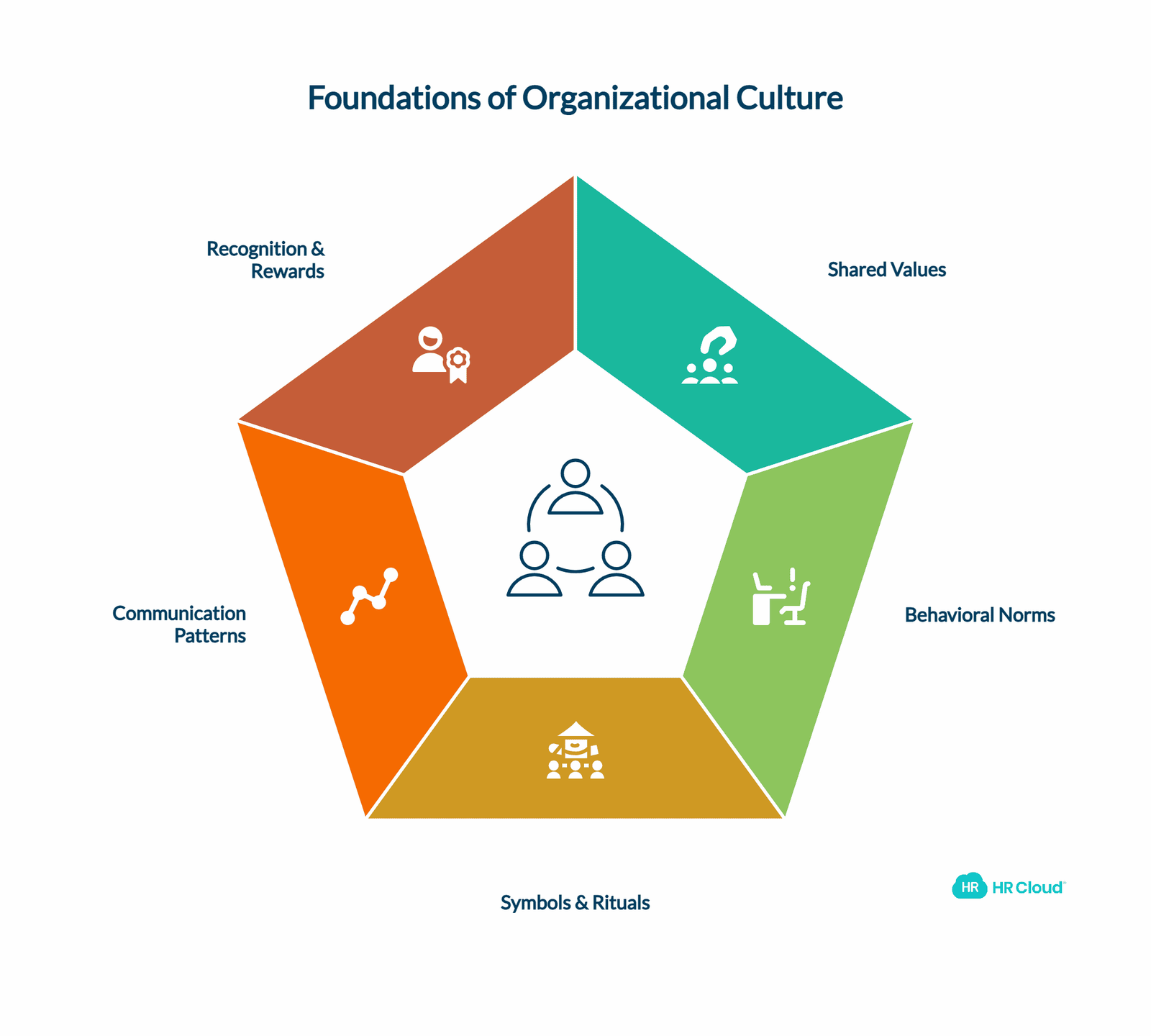
Organizational culture definition: Organizational culture encompasses the collective values, behaviors, traditions, and workplace norms that shape how employees work together and experience their workplace. According to SHRM, companies with strong cultures see 4x higher revenue growth and 30% better employee retention.
Culture isn't created by mission statements or posters—it emerges from consistent actions, leadership behaviors, and the daily employee experience. It shows up in:
- How teams collaborate and communicate
- How leaders make decisions and treat employees
- How recognition and appreciation are delivered
- How mistakes are handled and learning is encouraged
- How values are lived (not just stated)
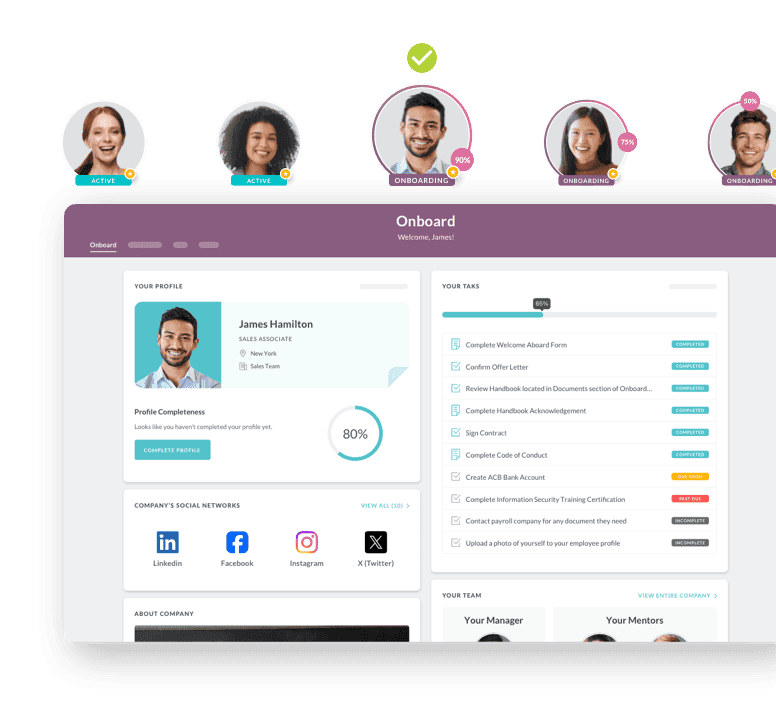
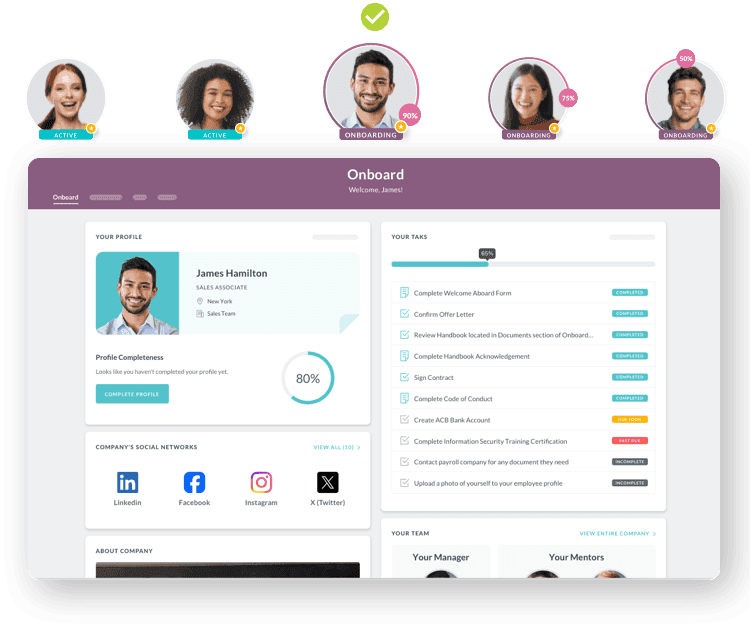
Modern employee onboarding software like HR Cloud's Onboard helps embed culture from day one by automating values-based welcome experiences, assigning culture ambassadors, and creating structured touchpoints that reinforce organizational norms during the critical first 90 days.
Core Elements of Organizational Culture
1. Shared Values: The fundamental beliefs that guide decisions and behaviors
2. Behavioral Norms: Unwritten rules about how work gets done
3. Symbols & Rituals: Recurring practices that reinforce culture (team meetings, recognition ceremonies)
4. Communication Patterns: How information flows and transparency is practiced
5. Recognition & Rewards: What behaviors get celebrated and reinforced
Employee recognition platforms like HR Cloud's Workmates make it easy to reinforce cultural values through peer-to-peer recognition, manager kudos, and values-based rewards that connect daily behaviors to organizational priorities.
The 4 Types of Organizational Culture
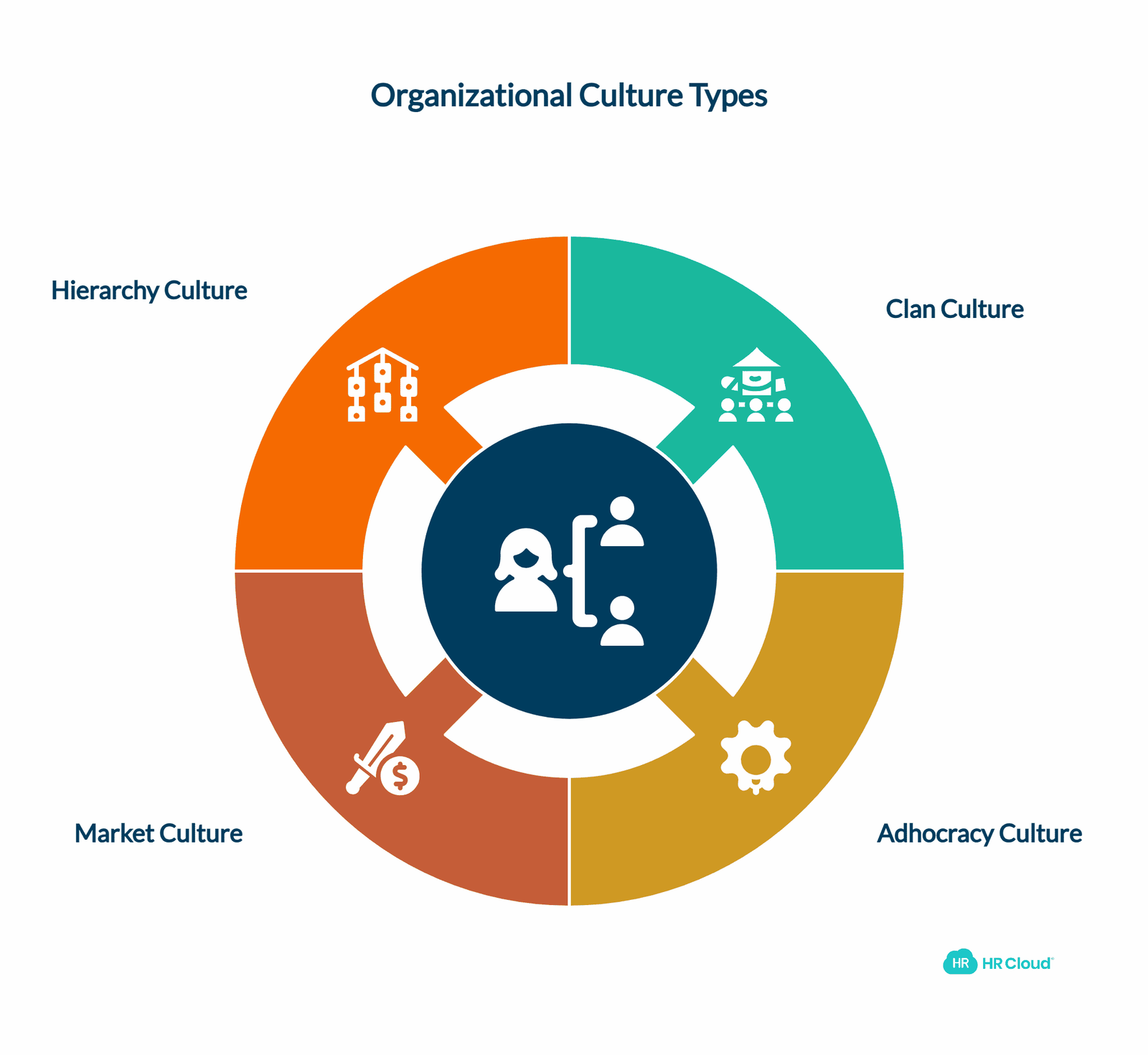
Research by organizational psychologists identifies four primary organizational culture types. Understanding your current culture type helps you determine where you are and where you want to go.
1. Clan Culture (Collaborative)
- Focus: People, teamwork, employee development
- Characteristics: Family-like atmosphere, mentorship, consensus decision-making
- Best for: Service industries, nonprofits, healthcare
- Tools that support it: Employee engagement platforms, peer recognition, team communication tools
2. Adhocracy Culture (Innovative)
- Focus: Innovation, risk-taking, agility
- Characteristics: Entrepreneurial, experimental, fast-paced
- Best for: Technology, startups, creative agencies
- Tools that support it: Idea management, rapid feedback loops, flexible workflows
3. Market Culture (Competitive)
- Focus: Results, achievement, winning
- Characteristics: Performance-driven, goal-oriented, externally focused
- Best for: Sales organizations, financial services
- Tools that support it: Performance management software, goal tracking, competitive recognition programs
4. Hierarchy Culture (Process-Driven)
- Focus: Stability, control, efficiency
- Characteristics: Structured, procedure-oriented, clear chain of command
- Best for: Government, manufacturing, regulated industries
- Tools that support it: Compliance management, workflow automation, audit trails
Most successful organizations blend elements from multiple types. HR Cloud's integrated HRIS platform supports all culture types with flexible workflows, customizable recognition programs, and configurable communication channels.
Why Organizational Culture Matters for Business Success
Strong organizational culture isn't just about employee satisfaction—it directly drives measurable business outcomes:
Business Impact of Strong Culture:
Financial Performance:
- Companies with strong cultures achieve 33% higher revenue growth (Deloitte)
- Organizations with engaged cultures outperform competitors by 202% (Gallup)
- Culture-focused companies show 4x higher earnings (Forbes)
Employee Retention:
- Strong culture reduces turnover by 48% (Columbia University)
- Recognized employees are 31% less likely to leave (Gallup)
- Engaged cultures reduce voluntary turnover costs by 25%
Use HR Cloud's turnover calculator to measure the ROI of culture improvements.
Productivity & Innovation:
- Engaged cultures show 17% higher productivity (Gallup)
- Innovation increases 3x in psychologically safe cultures (McKinsey)
- Collaborative cultures solve problems 20% faster
Recruitment & Employer Brand:
- 77% of candidates consider culture before applying (Glassdoor)
- Strong culture reduces hiring costs by 50% (LinkedIn)
- Engaged employees create 4x more referrals
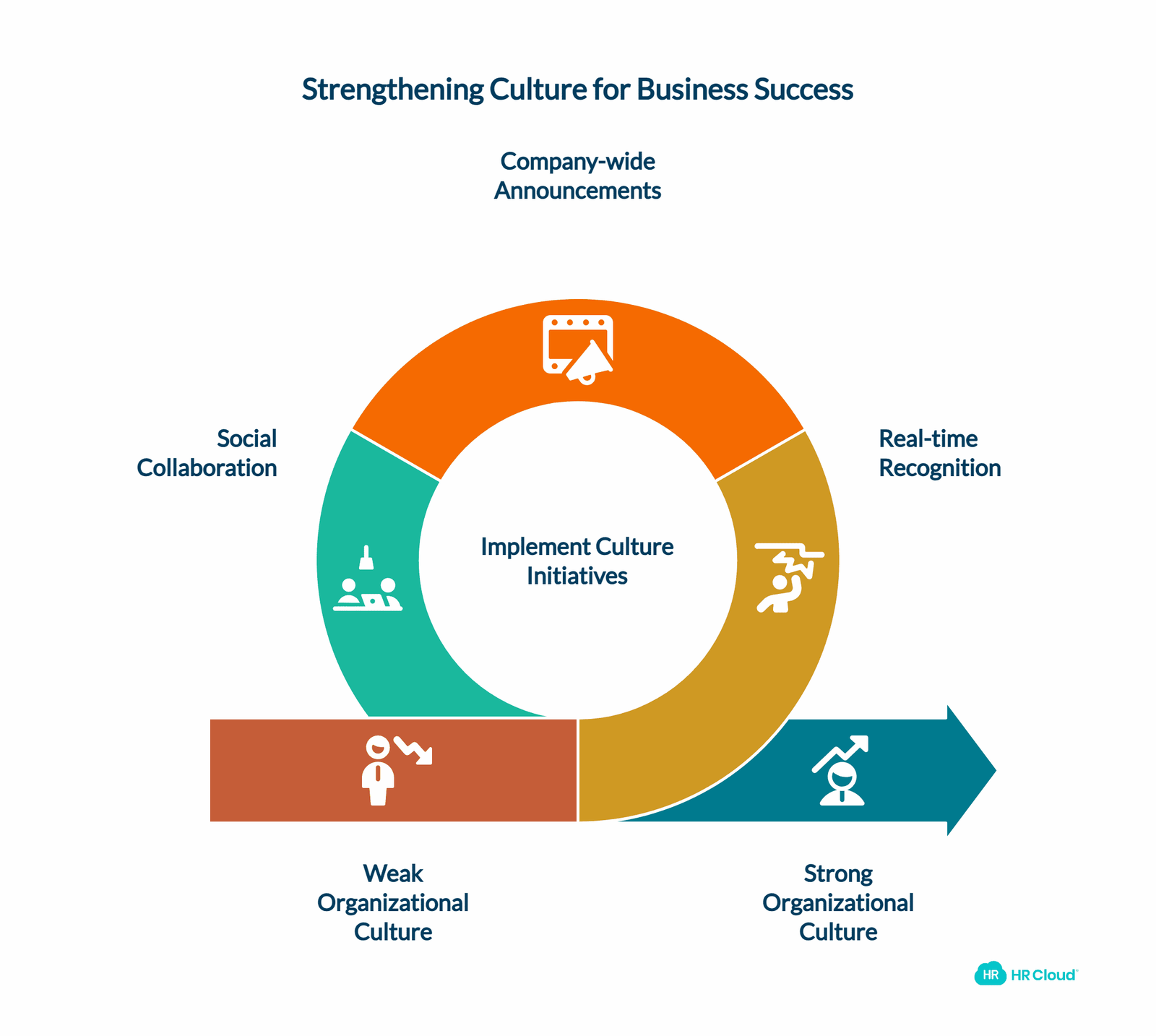
Employee communication platforms like Workmates strengthen culture by enabling real-time recognition, company-wide announcements, and social collaboration that keeps culture alive across remote and hybrid teams.
10 Characteristics of High-Performing Organizational Culture
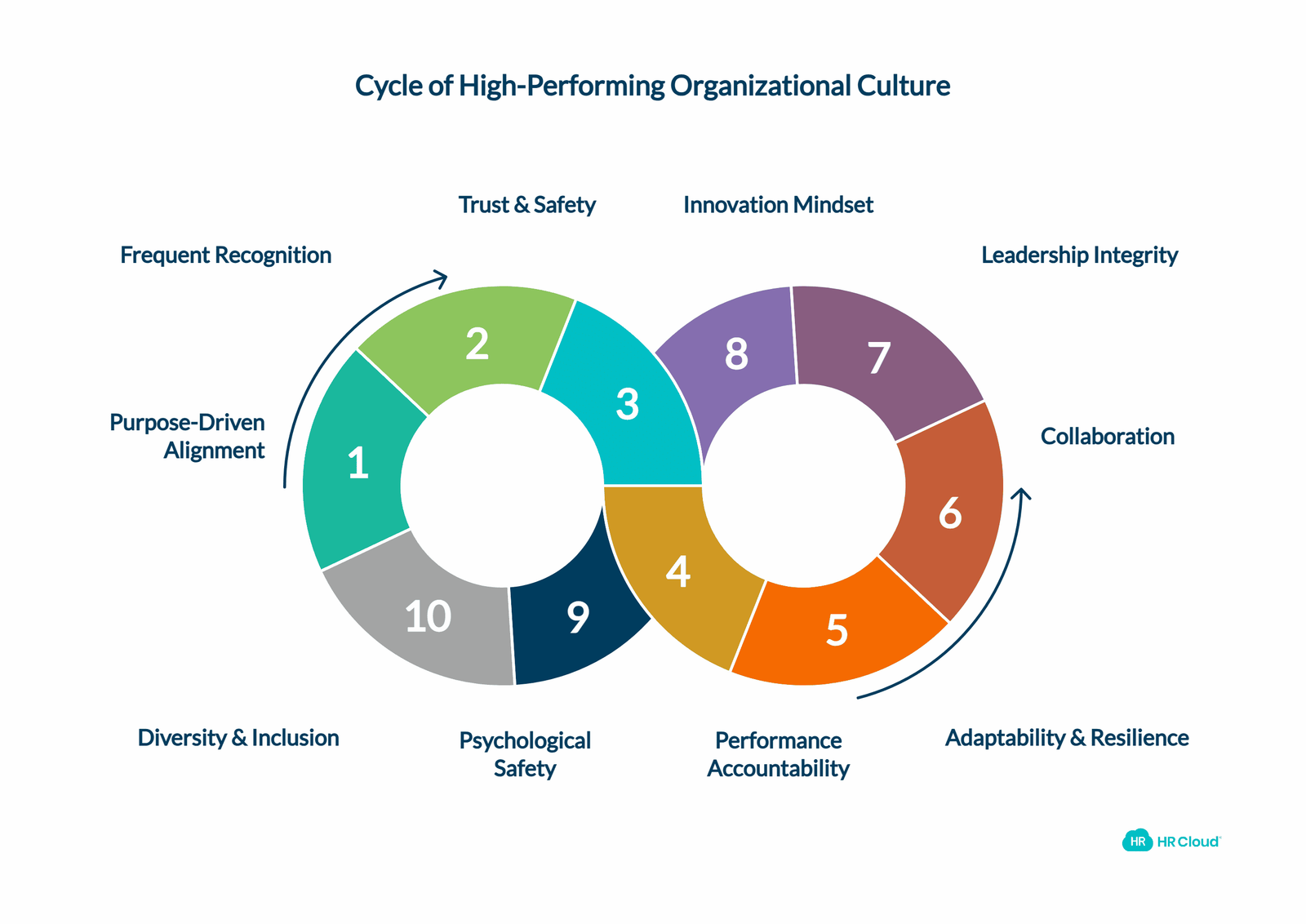
1. Purpose-Driven Alignment
Employees understand how their work connects to organizational goals. High-performing cultures link individual contributions to company mission through transparent goal-setting and regular communication.
How to enable it: Use HR Cloud's performance management tools to create clear goal cascades from company OKRs to individual objectives, with regular check-ins that reinforce purpose.
2. Frequent, Meaningful Recognition
Recognition isn't annual—it's continuous. According to Gallup, employees who receive recognition weekly are 44% more engaged than those who don't.
How to enable it: Implement employee recognition software that makes peer-to-peer and manager recognition effortless through Slack/Teams integrations, mobile apps, and points-based rewards.
3. Trust & Psychological Safety
Employees feel safe speaking up, sharing ideas, and taking calculated risks. Trust is built through consistent leader actions, transparent communication, and fair treatment.
How to enable it: Foster open dialogue through anonymous pulse surveys, regular 1:1s, and leadership that models vulnerability and accountability.
4. Performance Accountability
Great cultures balance psychological safety with high standards. Clear expectations, regular feedback, and consequence management ensure accountability without fear.
How to enable it: Use performance management systems with continuous feedback, goal tracking, and structured reviews that separate performance conversations from punitive measures.
5. Adaptability & Resilience
Cultures that thrive through change communicate transparently, support employees through transitions, and maintain core values while evolving practices.
How to enable it: Keep teams informed through internal communication tools that share updates, celebrate adaptations, and reinforce stability amid change.
6. Collaboration Over Competition
Team success matters more than individual wins. Cross-functional collaboration, knowledge sharing, and collective problem-solving define interactions.
How to enable it: Create social intranet spaces for project collaboration, celebrate team achievements, and structure recognition around collective wins.
7. Leadership Integrity
Leaders model values through actions, not just words. They're transparent about decisions, admit mistakes, and recognize others consistently.
How to enable it: Train managers on using recognition tools consistently, tie leadership performance to culture metrics, and hold leaders accountable for team engagement.
8. Innovation Mindset
New ideas are welcomed, experimentation is encouraged, and failure is treated as learning. Innovation isn't limited to product teams—process improvements count too.
How to enable it: Create idea submission channels, recognize innovative thinking, and use pulse surveys to gather continuous improvement suggestions.
9. Psychological Safety
The foundation for creativity and risk-taking. Employees speak up without fear of embarrassment, ask questions freely, and challenge ideas constructively.
How to enable it: Leaders must model fallibility, celebrate "intelligent failures," and respond constructively to dissenting opinions.
10. Diversity, Equity & Inclusion
Diverse perspectives are valued, equitable practices are embedded, and everyone feels they belong. DEI isn't a program—it's how work gets done.
How to enable it: Track representation metrics in your HRIS, audit recognition patterns for bias, and celebrate diverse contributions through inclusive recognition.
How to Build Strong Organizational Culture: 12 Proven Strategies
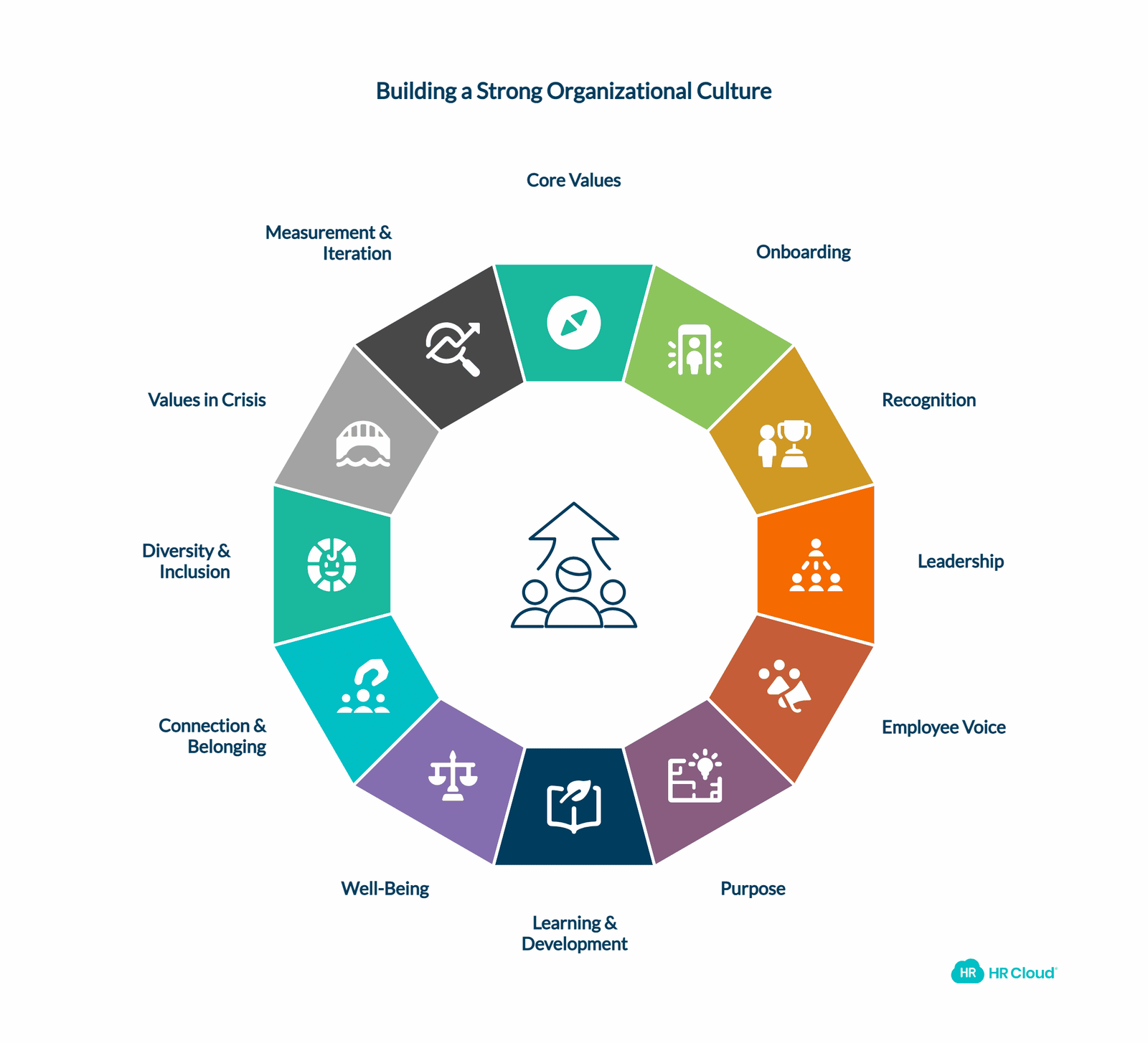
1. Define & Document Your Core Values
Start with 3-5 core values that are specific enough to guide decisions but broad enough to endure. Involve employees in defining values to increase ownership.
Action step: Create a values document with clear definitions and behavioral examples. Store it in your HR Cloud HRIS where all employees can access it.
2. Embed Culture from Day One
First impressions shape long-term engagement. A strong onboarding process introduces culture through immersive experiences, not just policy readings.
Action step: Use HR Cloud's Onboard to create automated onboarding workflows that include:
- Welcome videos from leadership explaining culture
- Values-based buddy assignments
- Cultural milestone check-ins at 30/60/90 days
- Early recognition for culture-aligned behaviors
Organizations using structured onboarding report 70% faster time-to-productivity and 50% better new hire retention.
3. Make Recognition a Daily Habit
Recognition reinforces values and makes culture visible. According to SHRM, frequent recognition increases engagement by 60% and reduces turnover by 31%.
Action step: Deploy employee recognition software that:
- Integrates with Slack, Microsoft Teams, email
- Allows peer-to-peer and manager recognition
- Ties recognition to specific company values
- Offers meaningful rewards through diverse catalogs
- Provides analytics on recognition patterns
HR Cloud's Workmates makes recognition effortless with mobile apps, social recognition feeds, and automated celebrations for birthdays, work anniversaries, and milestones.
4. Train Leaders as Culture Champions
Culture cascades from leadership. Managers need training, tools, and accountability to model and reinforce culture daily.
Action step: Equip managers with:
- Regular training on recognition best practices
- Performance management tools for ongoing feedback
- Dashboards showing their team's engagement metrics
- Recognition reminders and templates
5. Enable Employee Voice
Employees with voice are 4.6x more likely to feel empowered (Gartner). Listening isn't enough—act on feedback and close the loop.
Action step: Implement pulse surveys through HR Cloud's engagement tools to:
- Gather feedback on culture, communication, recognition
- Identify disengaged teams early
- Track improvements over time
- Share actions taken based on employee input


6. Connect Work to Purpose
Help employees see the impact of their work on customers, colleagues, and company mission. Purpose drives 33% higher engagement (McKinsey).
Action step: Share customer success stories, create recognition programs that highlight impact, and train managers to connect daily tasks to bigger goals during 1:1s.
7. Invest in Learning & Development
Growth-minded cultures retain talent 34% longer. Provide clear development paths, skills training, and stretch opportunities.
Action step: Track certifications, training completions, and career progression in your HRIS system. Celebrate learning milestones through recognition.
8. Prioritize Well-Being
Burnout damages culture. Support mental health, encourage work-life balance, and model healthy boundaries starting with leadership.
Action step: Implement flexible time-off tracking, encourage PTO usage, provide mental health resources, and recognize managers who support work-life balance.
9. Foster Connection & Belonging
Relationships at work drive engagement, especially in remote environments. Create opportunities for informal interaction beyond work tasks.
Action step: Use social intranet features to:
- Create interest-based channels (parents, gamers, runners)
- Host virtual coffee chats and team-building
- Celebrate personal milestones (weddings, new babies)
- Facilitate mentorship matching
10. Celebrate Diversity & Inclusion
Diverse teams outperform homogeneous ones by 35% (McKinsey). Make inclusion everyone's responsibility, not just HR's.
Action step: Audit recognition data for bias, celebrate diverse contributions, create employee resource groups (ERGs), and track DEI metrics in your HRIS.
11. Live Your Values in Tough Decisions
Culture is tested during layoffs, budget cuts, and crises. Transparent communication and values-aligned actions during hard times build trust.
Action step: When making difficult decisions, explicitly reference values, explain trade-offs, and acknowledge impacts honestly.
12. Measure & Iterate Culture Continuously
What gets measured gets managed. Track culture metrics, identify gaps, and adjust strategies based on data.
Action step: Monitor these culture indicators in HR Cloud's analytics dashboard:
- Employee engagement scores (eNPS)
- Recognition frequency and patterns
- Turnover rates by department/manager
- Pulse survey results
- Participation in culture programs
How Technology Enables Better Organizational Culture
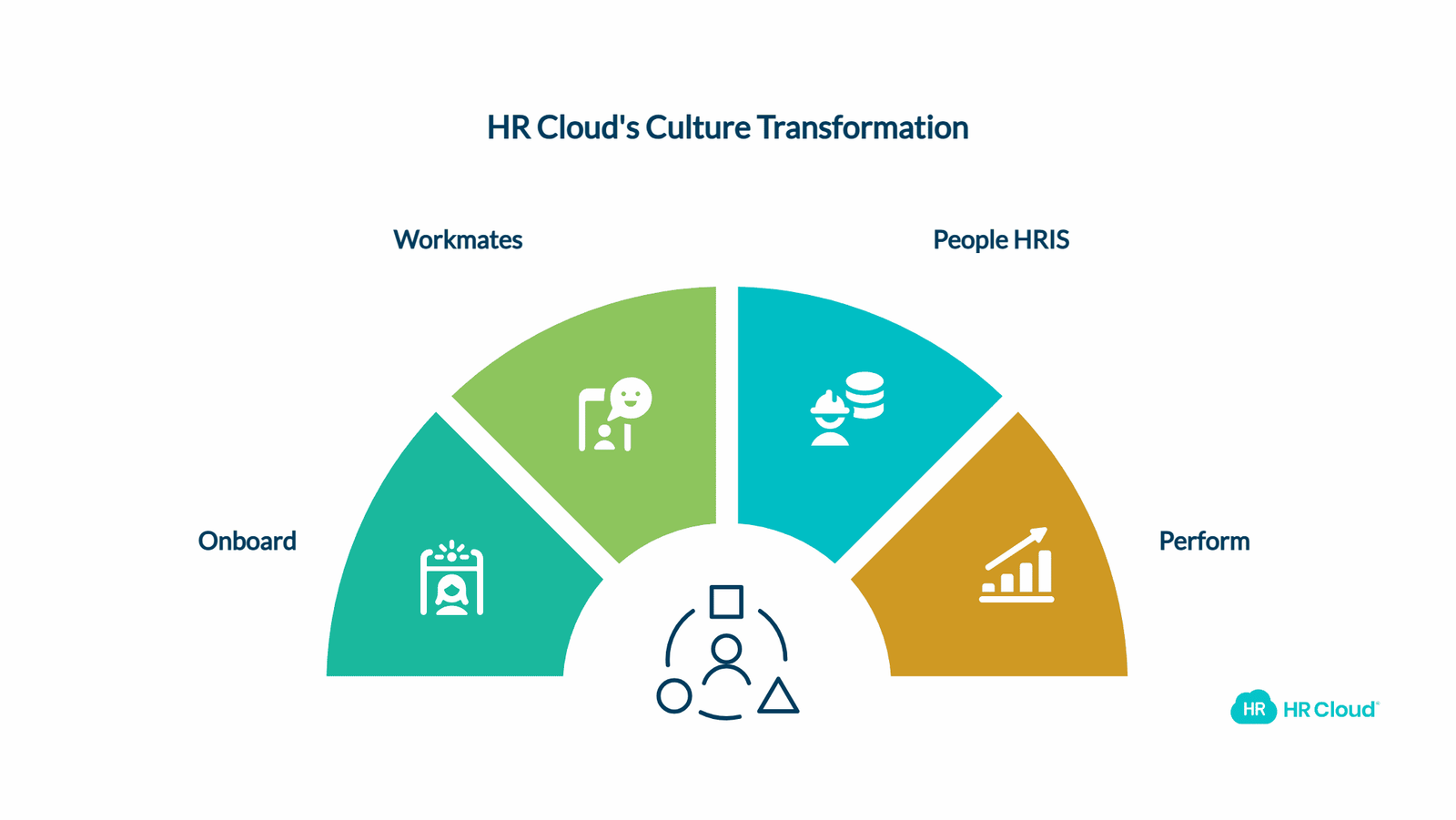
Modern HR technology transforms culture from abstract concept to daily practice. The right tools make recognition seamless, onboarding engaging, and communication transparent.
HR Cloud's Integrated Culture Platform
HR Cloud provides the only comprehensive platform that integrates onboarding, engagement, recognition, and HRIS in one system—eliminating data silos and creating unified employee experiences.
Onboard: Culture from Day One
- Automated workflows that embed culture into onboarding
- Custom portals showcasing values, team bios, and culture videos
- Mobile-friendly experiences for remote and frontline workers
- Integration with HRIS for seamless data flow
Result: 70% faster time-to-productivity, 50% better new hire retention
Learn more: HR Cloud Onboard
Workmates: Daily Culture Reinforcement
- Real-time peer and manager recognition
- Values-based rewards and points systems
- Social feeds for company announcements and team collaboration
- Pulse surveys and employee voice tools
- Mobile apps for recognition on-the-go
- Integrations with Slack, Teams, email
Result: Organizations report improved retention and higher engagement scores
Learn more: HR Cloud Workmates
People HRIS: Culture Data & Insights
- Centralized employee data management
- Compliance tracking and audit trails
- Custom workflows for HR processes
- Analytics on turnover, engagement, recognition patterns
- Employee self-service for autonomy and transparency
Result: 60% reduction in HR admin time, better compliance
Learn more: HR Cloud People HRIS
Perform: Align Performance to Culture
- Continuous performance feedback tied to values
- Goal management from OKRs to individual objectives
- 360-degree reviews and peer feedback
- Recognition integrated into performance conversations
Learn more: HR Cloud Perform
Why Integrated Systems Beat Point Solutions
Organizations using disconnected tools (separate ATS, recognition, surveys, HRIS) face:
- Data silos requiring manual syncing
- Low adoption due to tool fatigue
- Inconsistent user experiences
- Higher total cost of ownership
HR Cloud's unified platform eliminates these problems by providing one login, one dataset, and seamless workflows across all HR functions.
Calculate your ROI: HR Cloud ROI Calculator
Measuring Your Organizational Culture
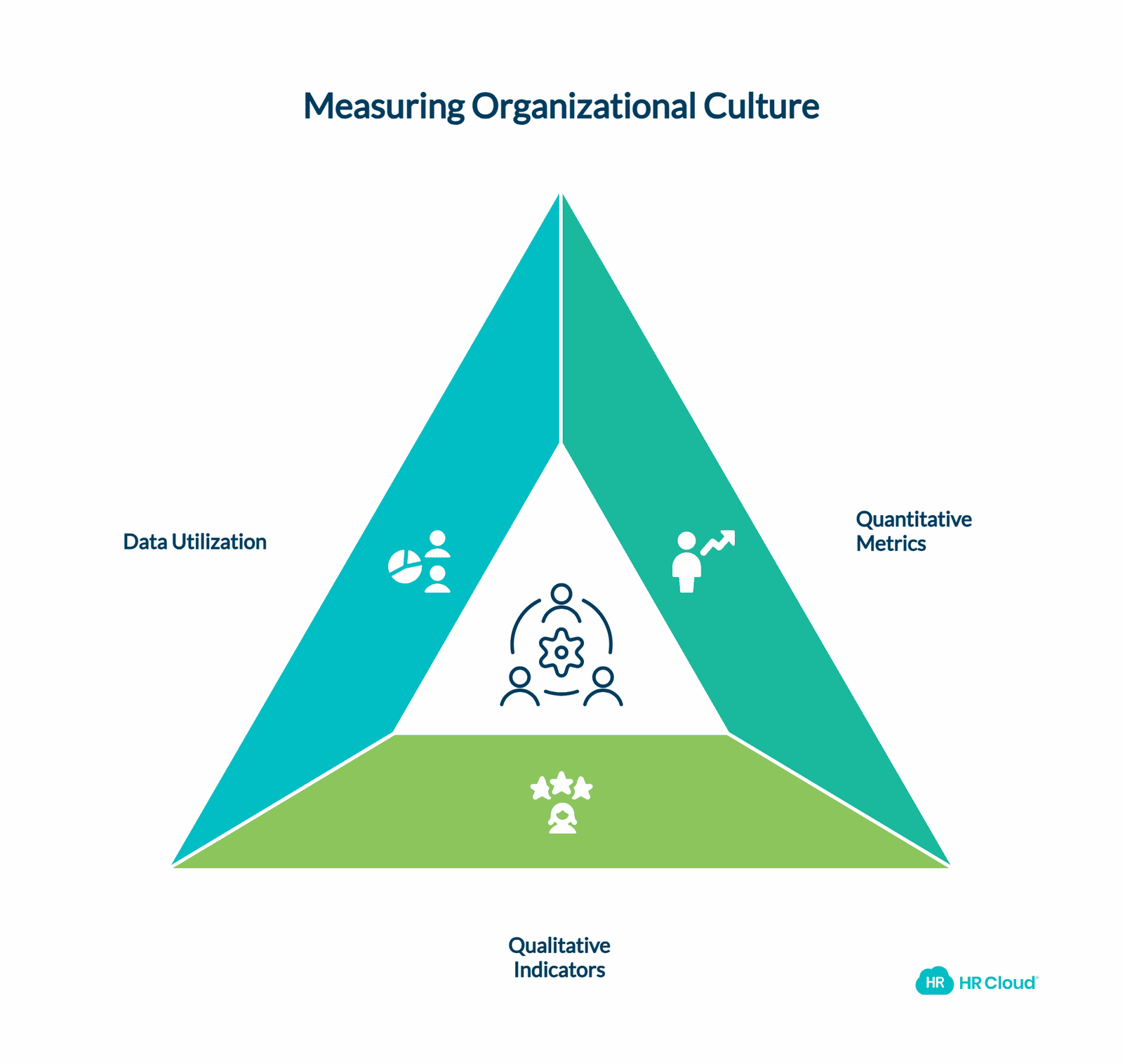
Culture measurement turns intangible feelings into actionable insights. Track these key metrics:
Quantitative Culture Metrics
1. Employee Engagement Score (eNPS)
- "How likely are you to recommend working here?" (0-10 scale)
- Target: 50+ is excellent, 70+ is world-class
2. Recognition Frequency
- % of employees giving/receiving recognition monthly
- Target: 80%+ participation, 2+ recognitions per employee monthly
3. Voluntary Turnover Rate
- Calculate by department, manager, tenure
- Target: <10% annually for strong culture
4. Pulse Survey Scores
- Track culture questions over time:
- "I feel recognized for my work" (Target: 80%+ agree)
- "Leadership models our values" (Target: 75%+ agree)
- "I feel psychologically safe" (Target: 70%+ agree)
5. Time to Productivity (New Hires)
- Days until 100% productive
- Target: 30-60 days depending on role
6. Internal Mobility Rate
- % of positions filled internally
- Target: 30-40% indicates growth culture
Qualitative Culture Indicators
- Exit interview themes
- Glassdoor/Indeed reviews sentiment
- Employee testimonials and stories
- Manager effectiveness feedback
- Open-ended survey comments
How to Use Culture Data
1. Benchmark: Compare scores to industry standards and past performance
2. Segment: Break data by department, location, manager, demographic groups
3. Prioritize: Focus improvements on lowest-scoring, highest-impact areas
4. Act: Share insights transparently, implement changes, measure again
5. Celebrate: Recognize teams and managers with strong culture scores
HR Cloud's Workmates analytics dashboard provides real-time visibility into engagement metrics, recognition patterns, and pulse survey results—making culture measurement effortless.
Organizational Culture Examples from Leading Companies
Example 1: Healthcare Organization Transforms Culture with HR Cloud
Challenge: 1,200-employee healthcare system struggled with high new hire turnover, low employee engagement, and inconsistent communication across 15 locations.
Solution: Implemented HR Cloud's integrated platform:
- Onboard: Automated 90-day culture immersion with values-based milestones
- Workmates: Launched peer recognition program tied to core values
- People HRIS: Centralized compliance tracking for licenses and certifications
Results (12 months):
- New hire retention improved significantly
- Employee engagement scores increased substantially
- Recognition participation reached 87% of employees monthly
- Onboarding time reduced from 45 days to 18 days
Read more: HR Cloud Healthcare Solutions
“The flexibility of the HR Cloud system is invaluable in ensuring compliance. It helped us stay a step ahead of changing document collection requirements.”

— Jesse Rose, Provider recruitment, onboarding, and compliance manager

Example 2: Manufacturing Company Builds Safety-First Culture
A 800-employee manufacturer used HR Cloud's Workmates to create a safety recognition program where employees nominate peers for following safety protocols. Monthly winners receive rewards, and stories are shared company-wide.
Result: Workplace accidents decreased 40% year-over-year while safety recognition increased 5x.
Example 3: Retail Chain Engages Frontline Workers
National retail chain with 2,500 frontline employees deployed HR Cloud's mobile app for instant recognition, company announcements, and shift swapping.
Result: Part-time employee engagement increased substantially, voluntary turnover decreased, and internal promotion rates doubled.
Explore more: HR Cloud Customer Stories
Common Culture Challenges & Solutions
Challenge 1: Remote/Hybrid Culture Disconnect
Problem: Remote employees feel isolated, culture weakens without in-person interactions
Solution:
- Daily recognition through mobile-friendly platforms
- Virtual coffee chats and interest groups
- Video updates from leadership
- Consistent communication through social intranets
Challenge 2: Rapid Growth Dilutes Culture
Problem: Scaling from 50 to 500 employees weakens original culture
Solution:
- Document culture values and behaviors early
- Structure onboarding to embed culture at scale
- Train managers as culture ambassadors
- Measure culture metrics during growth phases
Challenge 3: Multi-Generational Workforce Alignment
Problem: Boomers, Gen X, Millennials, Gen Z have different expectations
Solution:
- Offer recognition variety (public praise, private thank-yous, tangible rewards)
- Flexible work arrangements
- Multi-channel communication (email, Slack, in-person)
- Focus on universal values (respect, growth, impact)
Challenge 4: Post-Merger Culture Integration
Problem: Two companies with different cultures struggle to unify
Solution:
- Define shared values collaboratively
- Create cross-company recognition programs
- Celebrate both cultures' strengths
- Use neutral platforms like HR Cloud rather than imposing one company's systems
Challenge 5: Toxic Subcultures
Problem: Certain departments or managers create pockets of dysfunction
Solution:
- Segment engagement data by team and manager
- Provide manager training and coaching
- Hold leaders accountable for culture metrics
- Move or remove toxic leaders quickly

Discover how our HR solutions streamline onboarding, boost employee engagement, and simplify HR management
Book Your Free DemoFAQs About Organizational Culture
What is organizational culture?
Organizational culture is the shared values, beliefs, behaviors, and practices that define how employees work together, make decisions, and experience their workplace. It's shaped by leadership actions, recognition practices, communication patterns, and the daily employee experience—not just mission statements.
Why does organizational culture matter?
Strong organizational culture drives measurable business outcomes: 33% higher revenue growth, 48% lower turnover, 17% higher productivity, and 202% better performance versus competitors (sources: Deloitte, Columbia, Gallup, McKinsey). Culture also attracts top talent—77% of candidates research culture before applying.
What are the 4 types of organizational culture?
The four types are: (1) Clan culture (collaborative, people-focused), (2) Adhocracy culture (innovative, risk-taking), (3) Market culture (competitive, results-driven), and (4) Hierarchy culture (structured, process-oriented). Most successful companies blend multiple types.
How do you build strong organizational culture?
Building culture requires: defining clear values, embedding culture through onboarding automation, implementing frequent recognition programs, training leaders as culture champions, enabling employee voice, connecting work to purpose, and measuring culture metrics continuously.
How do you measure organizational culture?
Measure culture through: employee engagement scores (eNPS), recognition frequency rates, voluntary turnover by department, pulse survey results, time-to-productivity for new hires, internal mobility rates, exit interview themes, and Glassdoor review sentiment. Tools like HR Cloud's analytics dashboard automate culture tracking.
What role does technology play in organizational culture?
Modern HR technology enables culture at scale by: automating values-based onboarding, making recognition effortless through mobile apps and integrations, providing pulse surveys for employee voice, enabling transparent communication via social intranets, and tracking culture metrics in real-time dashboards.
How does HR Cloud help build organizational culture?
HR Cloud provides the only integrated platform combining onboarding (Onboard), recognition and engagement (Workmates), performance management (Perform), and HRIS (People) in one system. This eliminates data silos, creates seamless employee experiences, and makes culture a daily practice—not an HR initiative.
What's the difference between organizational culture and employee engagement?
Organizational culture is the environment and shared values, while employee engagement is how employees feel about that environment. Strong culture creates the conditions for high engagement. Culture is the "what" (values, norms, behaviors), engagement is the "outcome" (motivation, commitment, discretionary effort).
How long does it take to change organizational culture?
Culture transformation typically takes 18-36 months for sustainable change. Quick wins (launching recognition programs, improving communication) can happen in 90 days, but embedding new values and shifting behaviors across the organization requires consistent effort, leadership modeling, and measurement over multiple years.
Can small companies have strong organizational culture?
Yes—small companies often have stronger, more cohesive culture because close relationships make values more tangible. The challenge is maintaining culture during growth. Tools like HR Cloud help small businesses structure culture early so it scales as they grow.
About the author

Keep Reading


Like What You Hear?
We’d love to chat with you more about how HR Cloud®can support your business’s HR needs.
Book Your Free Demo