
Why Effective Internal Communication Is Essential for Enterprises

What happens when internal communication fails at an enterprise?
When communication breaks down, mistakes and delays compound across departments — slowing performance reviews, eroding team alignment, and costing real revenue. Effective internal communication is the connective tissue that keeps every part of an enterprise moving together toward shared goals.
Why does internal communication need to include frontline workers?
Frontline workers can't check email as fast as desk employees, which means standard communication channels leave them behind. A multi-channel approach ensures every employee, from the floor to the C-suite, receives the right information in a format they can actually use.
How does internal communication connect to performance management?
Consistent communication directly supports the performance review cycle — it ensures employees receive timely feedback, understand expectations, and complete self-evaluations without confusion. Without that foundation, even well-designed review templates fail in execution.
Key Takeaways
- Weak communication creates bottlenecks that compound across departments — fixing comms infrastructure often has more bottom-line impact than adding headcount.
- Multi-channel engagement isn't optional when your workforce spans desk employees, executives, and frontline workers; each group needs a channel that fits how they actually work.
- Measuring communication effectiveness (adoption, retention, engagement rates) is the only way to know whether a new platform is working — gut feel doesn't scale.
- Segmenting communications by team, role, and department prevents information overload and keeps sensitive performance data visible only to the right stakeholders.
- The shift to remote and hybrid work makes regular one-on-one meetings and performance review cycles more critical, not less — they are the primary accountability mechanism when managers can't observe work directly.
How Internal Communication has Evolved and Why it’s Important
Advances in technology over recent years have made for convenient systems that help foster internal communications. While it's true that technology has made some things more complex, it doesn't mean they are more complicated. Instead, processes improve, people are more transparent, and work feels significantly smoother. Modern performance tracking and employee assessment tools have become integral parts of this evolution.
When we properly train team members on how to use the latest communication technology, including performance review software and employee review software, their lives are more accessible than ever before. Once you implement strategic new processes and employees are utilizing efficient methods of connecting their teams, work will get done faster, and with fewer mistakes. This is where a solid internal comms plan can make a significant difference in improving internal communications and streamlining the employee performance review process.
Multi-Channel Engagement Approach
Today, there are many different communication channels you can use to engage employees and encourage them to engage with the company. If employees have a method that they find intuitive, helpful, and comfortable—whether it's for daily collaboration or completing their annual review using a performance review template — they are more likely to take advantage of it in productive ways. No communication channel should feel forced or cumbersome.
The key is selecting platforms that employees can implement seamlessly into their schedule, communication channels that improve their workdays rather than pose hurdles. Use this as an opportunity to build the company culture and facilitate regular employee feedback. 80% of people surveyed said that culture and employee engagement should be a top priority for enterprises so they can adequately respond to employees' needs.
Open up the lines of communication between employees at your enterprise by providing them with platforms to share work and personal updates. These messages could include reward announcements, birthday wishes, individual employee wins, and recognition that exceeds expectations. Teams that develop good relationships, see their coworkers as friends, and support each other tend to work together best. This is a prime example of how communication and engagement go hand in hand, highlighting the importance of employee engagement, communication and peer review culture.
And, if you think about it, the best ideas often come from team efforts. When lots of people are exchanging thoughts, open communication channels can ensure innovative notions don't slip through the cracks. People can build off of each other's opinions and feedback— including upward feedback and 360-degree feedback — to form the next great thing. This is where engagement communication can truly shine.
Modern-day technology has also made it easier to reach a broader range of workers all at once, including:
- Desk employees
- Executives and administrative employees
- Frontline workers who might not be able to check emails as fast, so they need another way of staying up to speed with others and accessing their review template or performance review template
The platforms available today can link all employees at any level. Tear down the company-wide barriers and motivate everyone to feel as though they are united. They each make up part of one big group with the same mission, values, and goals. This organizational alignment is crucial for success and can be achieved through effective internal communication strategies and consistent performance review cycles.

Going Remote: Dispersed Workforces
When you source candidates from across the globe, you increase your chances of getting the best talent. Their closeness to your office or headquarters is no longer a preliminary factor. A study found that workers who spend at least 60% of their time away from the actual office had the highest engagement rates. When you have an exemplary internal communication system that includes one-on-one meetings and regular performance reviews, it connects employees, even when miles apart.
These remote employees report feeling more motivated, productive, and happier overall. Allowing employees to work remotely wasn't previously possible. Enterprises are now embracing the choice to offer telecommuting after learning about the positive benefits to their bottom line, employee satisfaction, and retention. However, this shift requires robust performance management strategies and clear employee goals to ensure accountability.
You'll thank yourself for adding a remote work perk to your policies when workers are raving about the amazing work-life balance your company offers, rather than the burnout employees at other businesses complain of. The right programs will enable you to instill this feeling by making remote work a real option for your team while maintaining effective performance evaluation processes. We've heard some of the benefits, now let's take a closer look at how to build an internal communications program at your corporation that incorporates performance review best practices.
What to Consider When Building a Cohesive Communications Strategy
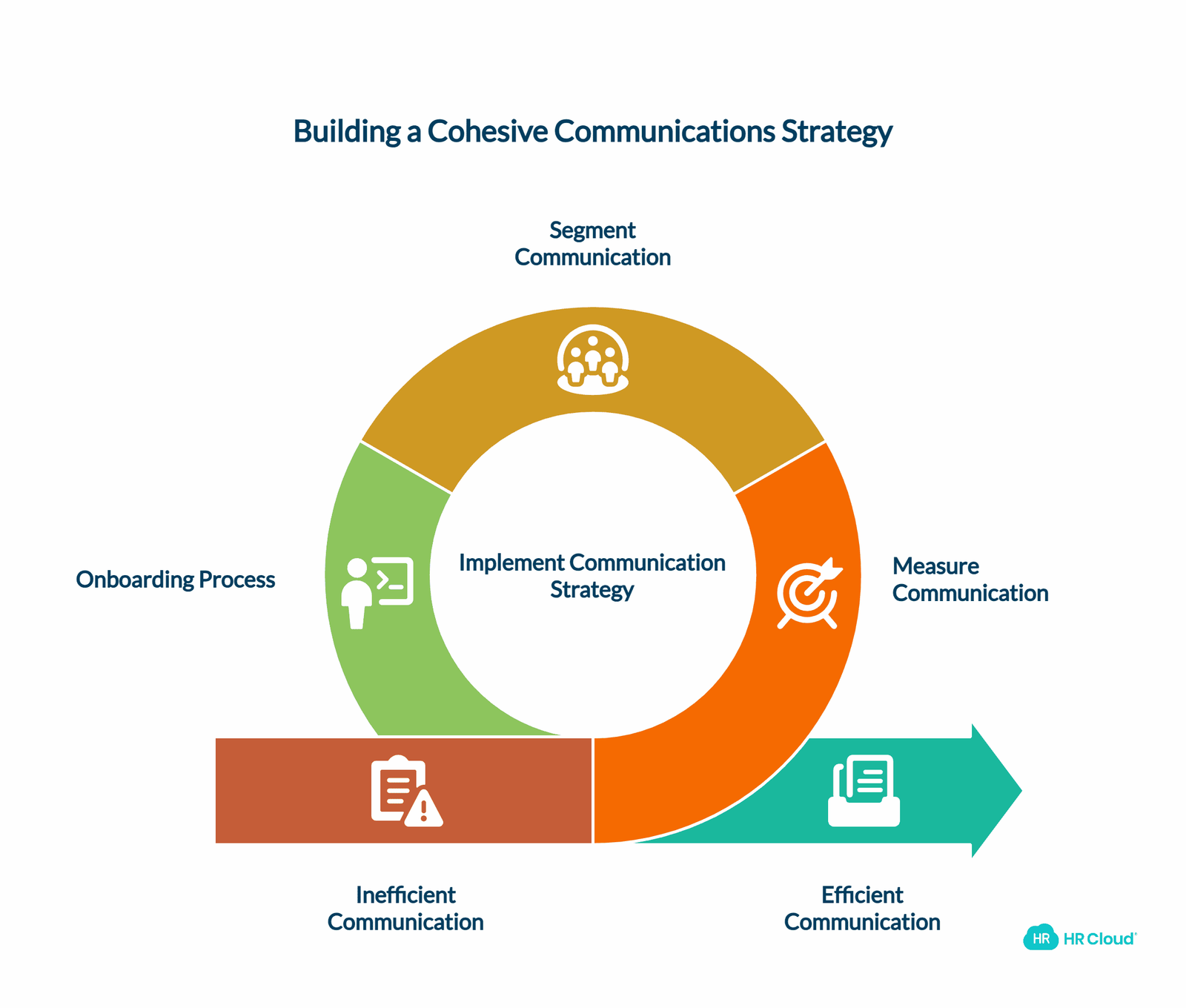
Know where to start. Make each decision a calculated and deliberate one. There is a lot to learn, and this is just the tip of the iceberg in terms of what you can do to get employees efficiently communicating. Here are some actionable items to get you on your way if you have yet to sit down and make a plan. This is where your internal communication strategy and performance management strategy come together.
Measure Communication: Internal Communication Goals
With any new process you adopt into your workforce or new tool you introduce to your staff, the key is setting measurements for success. Adoption, retention, and engagement rates are essential to understanding how effective your communication strategy is. Similarly, establishing clear performance metrics and a performance rating scale helps track employee development and progress.
As you may have guessed, this works best when each employee is open to the change and doing their part. More and more companies are prioritizing the employee experience through regular employee performance reviews and meaningful goal setting. To understand whether employees are genuinely receiving value from new communication software and a standardized performance review template, HR managers rely on analytics and performance data. Reviewing weekly or monthly insight reports on whether employees are utilizing their internal communication tools and completing their quarterly review template is crucial.
A universal base goal would be to have all departmental staff informed of significant updates, including performance review terms and expectations. How will a manager know if the staff is receiving and reading important notices or their employee reviews? With data. Some tools allow managers to review engagement data and connect with employees who are leaving important messages unopened, or who are not utilizing the programs as much as their colleagues. This same approach applies to tracking performance review workflow and ensuring employees complete their self-evaluation on time.
Set clear, measurable goals so you know you're always moving forward in your efforts to upgrade employee experience. Without proper aim, you're sure to run off track and land at square one (before you began to implement the programs). Also, think about your brand. It's vital that your workers all believe in what they, and the company at large, are doing. Using a standard review template and consistent review preparation processes helps maintain clarity.
Internal communications will align everyone on your business's identity. The emotional— often reflected in their annual performance review and team performance review results — investment of employees will ultimately play a role in how they interact with clients and customers when marketing your brand. With the right plan, values, and internal communication in place, they will become brand advocates naturally, boosting employee advocacy efforts. Regular review meetings and constructive feedback sessions reinforce this alignment.
Segmenting Internal Communication: Employees and Channels
Although we do want everyone to feel like one cohesive entity moving toward the same goal, there are ways to break things down into subsections. If done correctly, this should not break the feeling of company-wide unity. Simply visualize the breakdown as smaller teams within larger teams. It will not always be appropriate for each person to get the same message, whether it's a general announcement or a specific performance review template.
To avoid information overload, prevent message pile-up, and encourage everyone to use the chosen platform effectively, implement team segmentation. For example, if a piece of code has gone awry, you'll want to send a request to your developers or IT department, not your accountant. If someone needs help with logos, they're probably not going to the copywriters for advice. And a note for the CEO from mid-line managers doesn't need to be seen by the frontline employees. Similarly, a quarterly review template for sales teams may differ from one used for engineering departments.
With modern internal communication software, there are features where one can alert specific people or departments so that only relevant individuals or groups receive notifications. And within those, message threads are created where each response pops up for whoever is included in a given channel. No need to bother extra people with tasks they are not a part of or cannot assist with. This same principle applies when conducting performance reviews — only relevant stakeholders and the employee should have access to sensitive performance appraisal documents and manager comments
Consider when, how, and where employees will access various pieces of critical internal communication for your company, including their review template and performance review template. There should be a process for this, and it should be taught to new employees when onboarding— including how to access their 90-day review and employee development plan — so as not to waste time avoiding proper procedures. When all communication is appropriately filed and categorized, work is streamlined and organized. Efficient communications negate impediments and prevent prolonging the completion of a simple task.
Software That Supports Effective Internal Communications
We've gone over the fact that technology is continuously improving the efficiency of large organizations. Now, let's visit some of the options available. Internal communication platforms for employees are plentiful and available in various platforms, such as apps, websites, company Intranet, and even mobile. Many of these platforms now integrate performance review software and review templates to create a comprehensive employee experience. The following will cover mobile, other online apps, and the Intranet.
Mobile Applications
| Platform | Best For | Key Feature | Performance Review Support |
|---|---|---|---|
| Slack | Day-to-day team messaging | Segmented channels by department or function | Share review templates and facilitate quick review cycle communication |
| Telegram | Large distributed teams needing secure messaging | Encrypted messages, groups up to 200,000 members | Secure sharing of confidential performance data |
| Google Hangouts | Google Workspace organizations | One-click video from email or calendar | Schedule and conduct remote review meetings |
| GoToMeeting (GTM) | Geographically distributed enterprises | Audio and video from any device | Conduct remote performance appraisal sessions and 360-degree feedback |
| Microsoft Teams | Microsoft Office 365 environments | Native Office integration, customizable add-ons | Share performance reviews and employee assessments directly in-platform |
Intranet
Workmates:
One example of an Intranet for employee engagement and internal communication is Workmates. With this program, you can really feel the network and your whole team behind you. It’s a net to catch anyone who may be feeling lost and bring them back to the idea that we are all in it together.
Workmates is choc-full of helpful features that allow for collaboration, polling, announcements, integrations with other software, and even giving awards and recognition, which studies show is the best thing you can do to ensure employees feel valued. The platform also supports effective performance reviews by providing built-in performance review template options, a review template library, and tools for conducting performance reviews efficiently. It’s a private, virtual space that can only be seen and used by the people at your company. Here, employees can interact meaningfully with their coworkers, access their employee review form, track their employee development plan, and create a true culture that would make any corporation envious of your own. The system facilitates best performance reviews by enabling managers to provide regular employee feedback and maintain consistent performance analysis throughout the review cycle.
Download this free PDF and share it with your team to align your internal and external communication strategies.
Download Now
Difference Between Types of Internal Communication Solutions
Stand-Alone :
Stand-alone software can be beneficial if you adequately research and, subsequently, purchase the right one. Many of the latest stand-alone software programs being sold have been developed to fully integrate with the systems and products you’re already using, including your existing performance review software or employee review software. This makes for a fairly easy transition, so your workers won’t feel as though they must stop what they’re doing for too long in order to learn the new tools or adapt to a new performance review template.
Embedded:
Many apps come with the ability to be embedded within other apps. This is because the company you’re purchasing from hopes to give you an all-inclusive feel to help you see the value in their products.
They don’t want you to have to go to any other business to get the multitude of tools you want when trying to build out an entire, comprehensive system. This could include one program with instant messaging, file sharing, performance tracking capabilities, and the ability to share a good performance review or review template seamlessly. The idea is ease and simplicity for employees to connect without feeling slowed down or inconvenienced, whether they're collaborating on projects or completing their quarterly review template.
Industry-Specific :
Depending on your industry, you will also want to look into what’s out there to help your business create a customized experience. Not every company benefits the same from every communication software, so it’s important to find the one that’s right for you. For instance, organizations in the healthcare field will need to find software that is compliant with required key regulations like HIPAA, especially when handling sensitive employee review process and performance improvement plan documentation.
It’s often not one-size-fits-all when it comes to technology, even if ads for some programs claim their products are. See which providers offer trials and have your team test things out to gauge what really works best for your specific needs, including how well the platform handles performance review phrases, manager comments, and employee assessment workflows.
The Importance of a Connected Culture
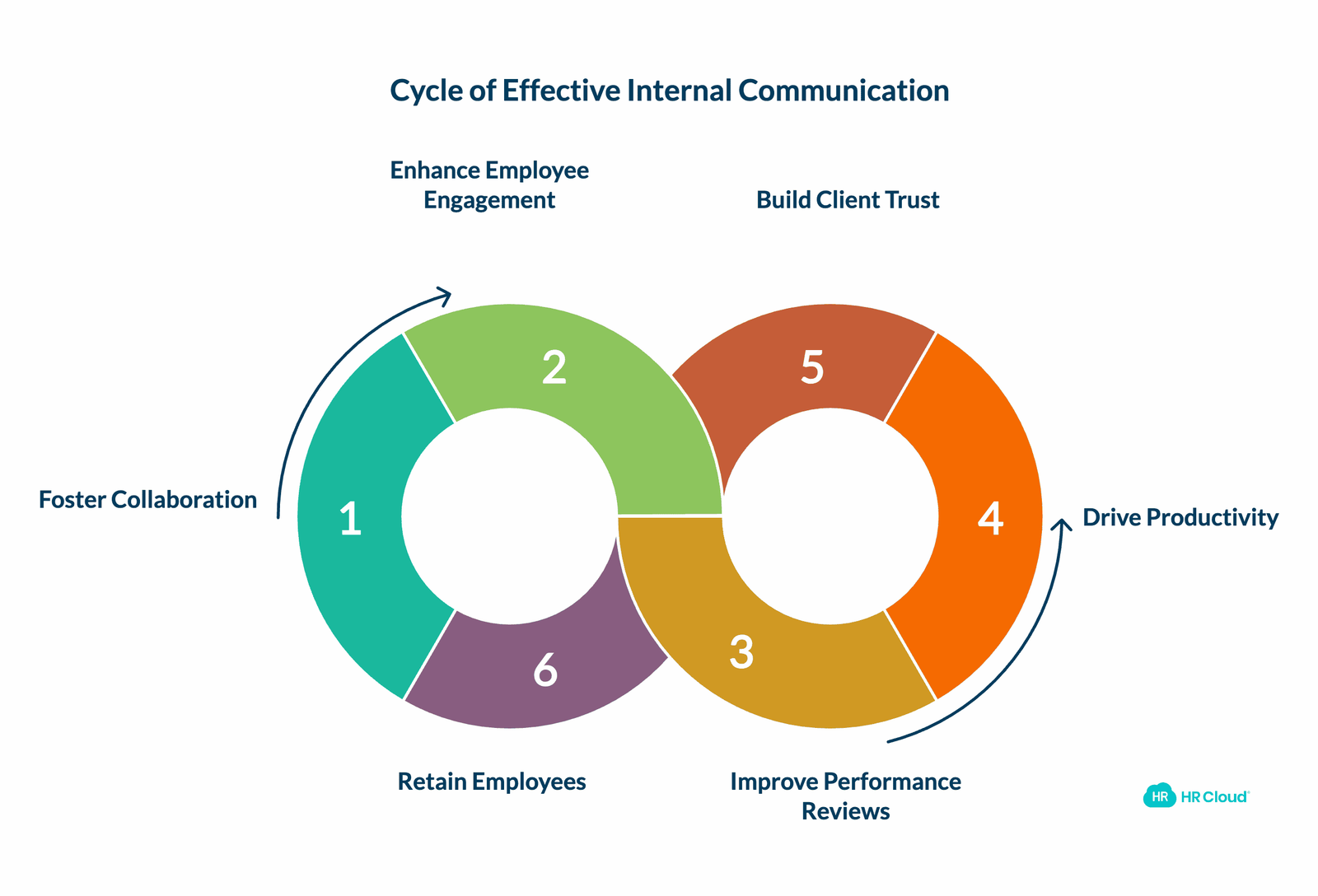
A lack of effective internal communication between employees, departments, and hierarchies within a business will cost money, time, resources, client trust, and employee retention rates—all of which can affect your bottom line. When it comes to internal communication, there is an unmistakable domino effect. Just like the Intranet we recommended you implement for your employees, the concept with people is the same. Poor communication can derail even the most effective performance evaluation processes and hinder employee development.
More gets done when people are happy, and there are many different ways to make your employees happy through collaboration and recognition. Internal communication is essential for many aspects of your enterprise. From actual workflow to culture and staying on-brand, there are very few areas it doesn’t touch. This includes facilitating effective performance reviews, enabling constructive feedback, and supporting continuous employee development through regular one-on-one meetings and performance analysis.
If workers are not on the same page, mistakes, slowdowns, and discouragement can happen across the board. Look internally first, and successful client interactions will come more naturally. Implementing a clear performance review process and providing employees with the right review template ensures everyone understands expectations and can work toward common employee goals.
People always want to feel connected, a part of something bigger than themselves, and that their contributions matter. Learn more about how to make your HR department more efficient when you adopt the tips in this FREE download. This valuable guide will help your HR Manager become more efficient by switching to cloud-based tools that streamline everything from daily communications to annual performance reviews. Contact us with any further questions, and we’ll be happy to help improve your internal communications and boost employee engagement.
To further enhance your internal communication strategy, consider implementing regular employee surveys and feedback mechanisms. These tools can provide valuable insights into the effectiveness of your communication initiatives and help identify areas for improvement. Additionally, creating a comprehensive communication roadmap can help align your internal communication efforts with broader organizational goals and change management initiatives. Integrating a standardized performance review template into this roadmap ensures that performance management becomes a natural part of your communication culture rather than a separate, dreaded process.
Remember, effective internal communication is not just about disseminating information; it's about fostering a culture of two-way communication, enhancing employee motivation, and ultimately driving employee productivity. By continuously refining your internal communication strategies and leveraging the right communication platforms— including those that support performance review template options and employee review processes —you can create a more engaged, aligned, and productive workforce. Whether you're conducting a simple performance review or implementing a comprehensive performance improvement plan, the foundation of success lies in clear, consistent communication.
Experience how Workmates can transform communication and strengthen culture — all in one powerful platform that includes integrated performance review capabilities, customizable review templates, and tools for conducting effective performance evaluations that drive employee development and organizational success.

Experience how Workmates can transform communication and strengthen culture—all in one powerful platform
Book Your Free DemoFAQ's
1. What is enterprise internal communication software?
Enterprise internal communication software helps companies share updates, connect employees, improve alignment, and keep teams informed across departments, locations, and roles. It replaces scattered emails, missed messages, and disconnected tools with one central communication hub. HR Cloud’s Workmates helps enterprises support announcements, employee updates, recognition, polls, feedback, and engagement in one connected platform.
2. Why is internal communication important for employee engagement?
Internal communication directly affects employee engagement because people need to feel informed, heard, and connected to company goals. When communication breaks down, employees miss updates, managers lose visibility, and teams become disconnected. Workmates by HR Cloud helps improve engagement through announcements, recognition, employee communities, surveys, and mobile-friendly communication tools.
3. What is the best internal communication platform for frontline workers?
The best internal communication platform for frontline workers is one that works on mobile, supports targeted updates, and does not depend only on email. Frontline employees often work away from desks, so they need simple access to announcements, recognition, feedback, and company updates. HR Cloud’s Workmates supports mobile-first communication for industries such as healthcare, manufacturing, construction, retail, hospitality, and field services.
4. How does HR Cloud improve internal communication?
HR Cloud improves internal communication through Workmates, its employee engagement and communication platform. Workmates gives companies a central place to share announcements, recognize employees, run polls, collect feedback, build employee communities, and keep teams aligned. It also connects communication with broader HR processes such as onboarding, employee engagement, performance management, and employee records.
5. How can companies measure internal communication effectiveness?
Companies can measure internal communication effectiveness by tracking message views, engagement rates, survey responses, employee participation, recognition activity, feedback trends, and platform adoption. The goal is not just to send more messages. The goal is to know whether employees receive, understand, and act on important updates. HR Cloud helps HR teams monitor engagement signals across communication, recognition, surveys, and employee feedback.
6. What features should an internal communication platform include?
A strong internal communication platform should include company announcements, mobile access, targeted messaging, employee recognition, surveys, polls, feedback tools, employee directories, integrations, analytics, and role-based communication. Workmates by HR Cloud includes communication, recognition, engagement, feedback, and community-building tools that help HR teams reach the right people with the right message.
7. How does internal communication support performance management?
Internal communication supports performance management by keeping employees aligned on goals, expectations, feedback, and review timelines. When communication is poor, employees miss deadlines, misunderstand priorities, and enter performance reviews without enough context. HR Cloud supports this broader employee experience through tools for communication, engagement, recognition, surveys, and performance management.
8. Is Workmates by HR Cloud an intranet or employee communication platform?
Workmates by HR Cloud works as both an employee communication platform and a modern intranet experience. It gives employees a private company space for announcements, updates, recognition, polls, feedback, collaboration, and culture-building. Unlike traditional intranets that often become static content libraries, Workmates focuses on active employee engagement across office, remote, and frontline teams.
About the author

Keep Reading


Like What You Hear?
We’d love to chat with you more about how HR Cloud® can support your business’s HR needs.
Book Your Free Demo