The Employee Offboarding Process From Start to Finish

Employee turnover is a natural part of any company’s life cycle. According to The Balance, the median tenure of employees ages 25 to 34 is just 3.2 years, less than a third of the 10.3-year median tenure of employees 65 years and older. Understanding the offboarding meaning and process is crucial for organizations, as it's essentially the opposite of onboarding.
The off-boarding can be stressful, as there are many moving pieces involved with a terminated employee. But whether you need to terminate an employee or the individual has accepted a new opportunity elsewhere, employee offboarding should be handled with the same degree of importance as a new employee onboarding program.
Clear offboarding procedures help manage the expectations of all parties involved. Having a good employee offboarding plan also helps preserve and improve your employer brand, generates good faith with the departing employee, and contributes positively to the overall employee lifecycle.
Some human resources software—like HR Cloud—includes offboarding tools that help facilitate the workflow and make sure tasks are disseminated to the proper stakeholders.
Here’s a step-by-step offboarding guide to the employee offboarding process, which can also be found in our employee onboarding and offboarding checklist at the bottom of this page.
1. Communicate the Termination
As a company, it’s helpful to understand why an employee is leaving (if they’re changing employers), and if you’re terminating someone, you must ensure that you’re following the law and legal requirements (even in at-will states).
Regardless of how the decision to leave was made, clear communication throughout the proper channels is key during the offboarding process. When you communicate with the employee, be kind and professional—even if they aren’t leaving under the best circumstances.
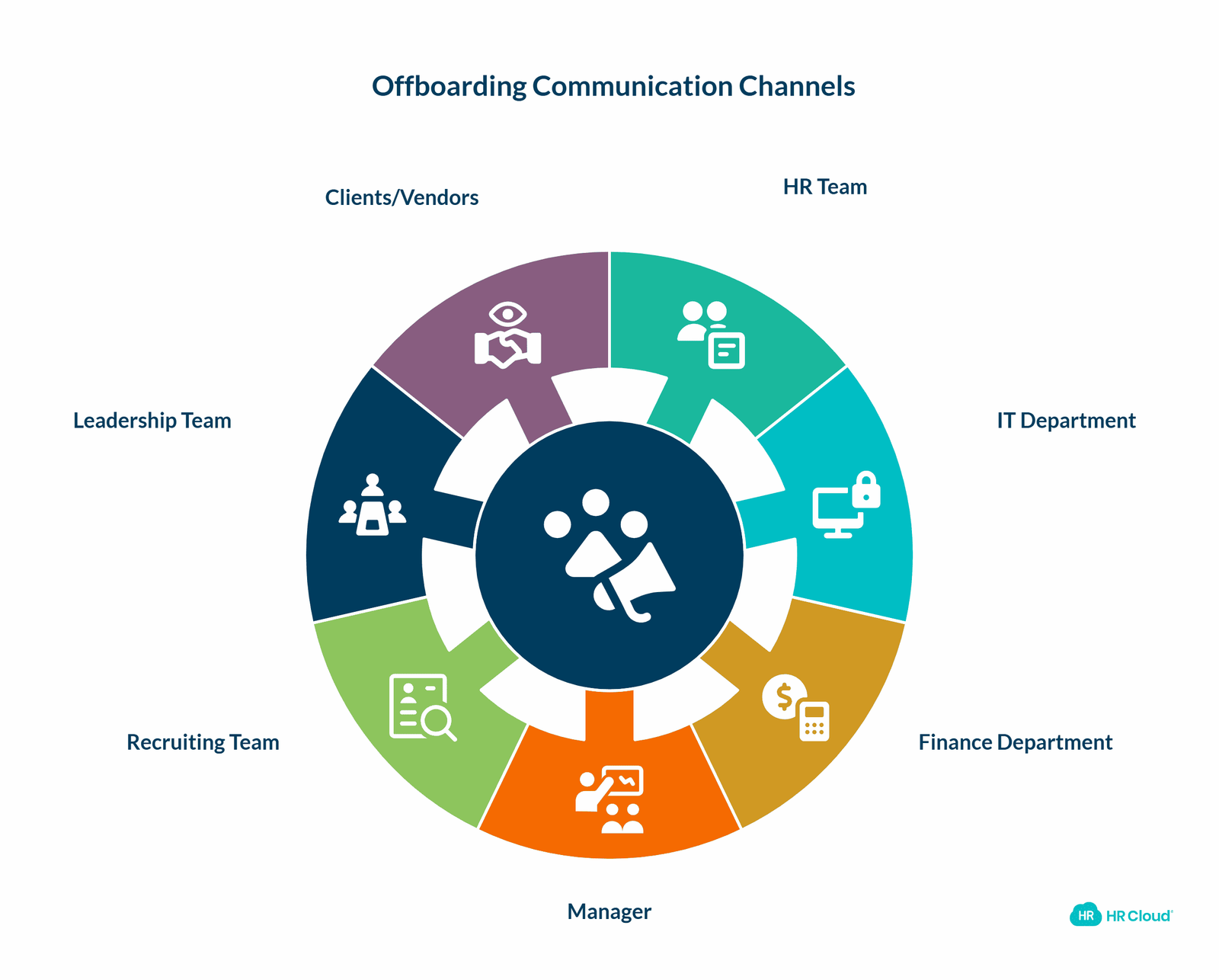
Groups who will likely need to be made aware of the resignation include:
- HR Team: Initiates and manages the offboarding workflow
- IT: Company asset recollection (key card, laptop, company credit card, etc.) and termination of systems access (work email, platforms and tools, etc.)
- Finance: Processes the final paycheck
- Manager: Manages change communication to the team and ensures a knowledge transfer plan takes place
- Recruiting: Evaluates and initiates a recruiting need for the backfill
- Leadership Team: For transparency
If the employee works directly with clients or vendors, you may want to notify them of the change as well so that they’re not surprised when they begin dealing with a new person.
2. Prepare Necessary Paperwork
Resignation letters, termination letters, non-disclosure agreements, W-2 forms, and other tax documents should all be prepared. Businesses can save some time by creating templates of all documents related to benefits and legal agreements. Make sure that your business keeps copies of everything.
Also, consider providing documentation on how the employee can move their retirement benefits, whether they will be paid for unused time off, and when other employee benefits will become void. This step is crucial for maintaining legal compliance and ensuring a smooth offboarding experience.

Streamline Your Processes with Offboarding Checklists, Custom Workflows, and More
Book Your Free Demo3. Provide Information to the Employee
The employee will need to know essential information, such as an overview of the offboarding process, a timeline, and what is expected of them.
Oftentimes, this information will be summarized for the employee and handed to them in an employee offboarding checklist. At the very minimum, the following should be covered:
- Exit interview process
- Final paycheck details
- Benefit continuation beyond their employment (i.e., COBRA)
- 401K and retirement plan transfer
- Returning company-owned equipment
- Any relevant state-mandated paperwork or procedures
Additional information that may be covered:
- Payment for unused vacation
- Exercising vested equity
- Signing a non-compete agreement
- Repayment of incurred reimbursable expenses
4. Develop a Transition Plan
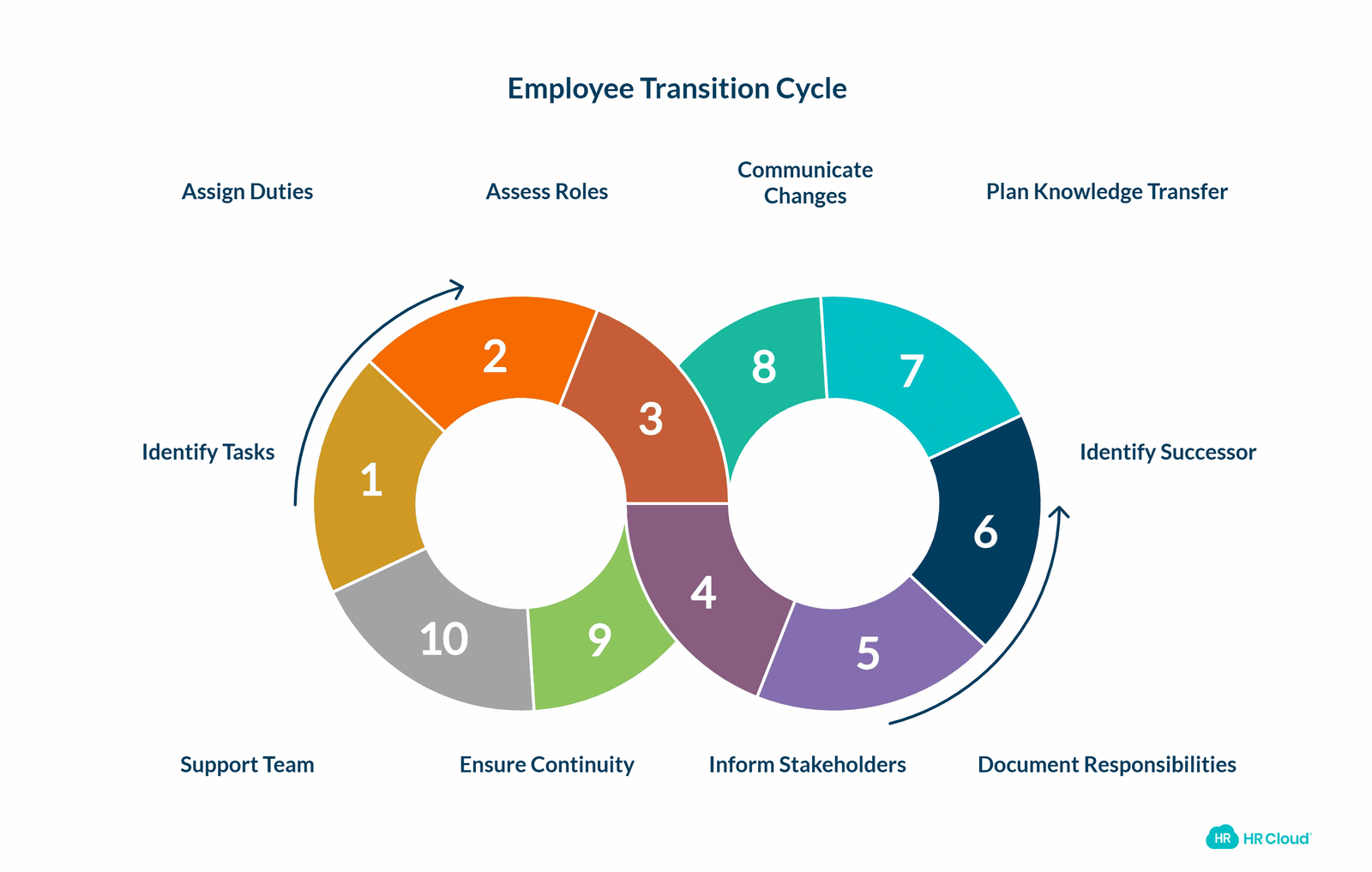
Identify tasks and projects the departing employee was handling and determine which team member(s) will take over these duties temporarily or permanently. Assess whether any roles need to be redefined or if new hires are necessary to fill gaps. This step is crucial for maintaining workforce management efficiency and preserving institutional knowledge.
The notable steps to an employee transition plan often include the following:
- Inform relevant stakeholders
- Have the outgoing employee document their responsibilities and processes
- Identify a successor or interim solution
- Plan for knowledge transfer (discussed below)
- Communicate changes to the team
- Ensure continuity of operations
- Support the remaining team members
Set clear timelines for handovers, arrange for knowledge transfer sessions, and update any relevant documentation.
5. Complete a Knowledge Transfer
When an employee leaves your company, someone else (or several people) must be trained to do their job. This process is called a knowledge transfer and, ideally, will be handled by the departing employee. In the event of a termination, though, there may not always be time for this.
A knowledge transfer is critical to avoid losing important information, access to documentation, or relationships with vendors or customers.
- Schedule a time between the departing employee and their manager to map out and transfer important role knowledge and current projects.
- Ensure all customers and/or vendors have been transitioned to a current team member as the new point of contact.
- Ensure that access to important documents or platforms has been transitioned to a current team member.
Here are some common best practices for the knowledge transfer process:
- Structured Documentation: This involves creating manuals, guidelines, or digital repositories where knowledge is stored.
- Training Sessions: Hands-on training sessions where the outgoing employee demonstrates daily tasks, introduces key stakeholders, and explains the nuances of their role.
- Shadowing Period: The incoming employee shadows the outgoing one to observe daily operations, ask questions, and understand the workflow.
- Mentoring and Coaching: Establishing a mentoring relationship where the outgoing employee provides guidance, feedback, and advice to the newcomer.
- Use of Technology: Leveraging technology platforms such as intranets, knowledge bases, and project management tools to facilitate the sharing of information and collaboration between employees.
- Standard Operating Procedures (SOPs): Development and update of SOPs to guide the new employees through common tasks and situations they might encounter.
- Feedback Mechanisms: Implementing feedback loops where the incoming employee can ask questions, seek clarification, and provide their own insights into the knowledge transfer process to improve it further.
- Cultural Integration: Beyond task-related knowledge, ensuring the incoming employee understands the company culture, values, and expectations to integrate smoothly into their new environment.
- Cross-Training: Encouraging cross-training within teams to ensure that knowledge and skills are not siloed but shared broadly, enhancing flexibility and resilience within the organization.
- Confidentiality and Security: Ensuring that the knowledge transfer process respects confidentiality agreements and data security protocols to protect sensitive information.
6. Conduct Exit Interview
Exit interviews are one of the purest and genuine forms of feedback a company can get from its employees.
If you’re not conducting interviews, you’re missing out on a wealth of both positive and constructive feedback your organization can use to improve itself. For example, perhaps you’ll discover a pattern in why people leave that should be addressed, which could help with employee retention and overall employee morale.
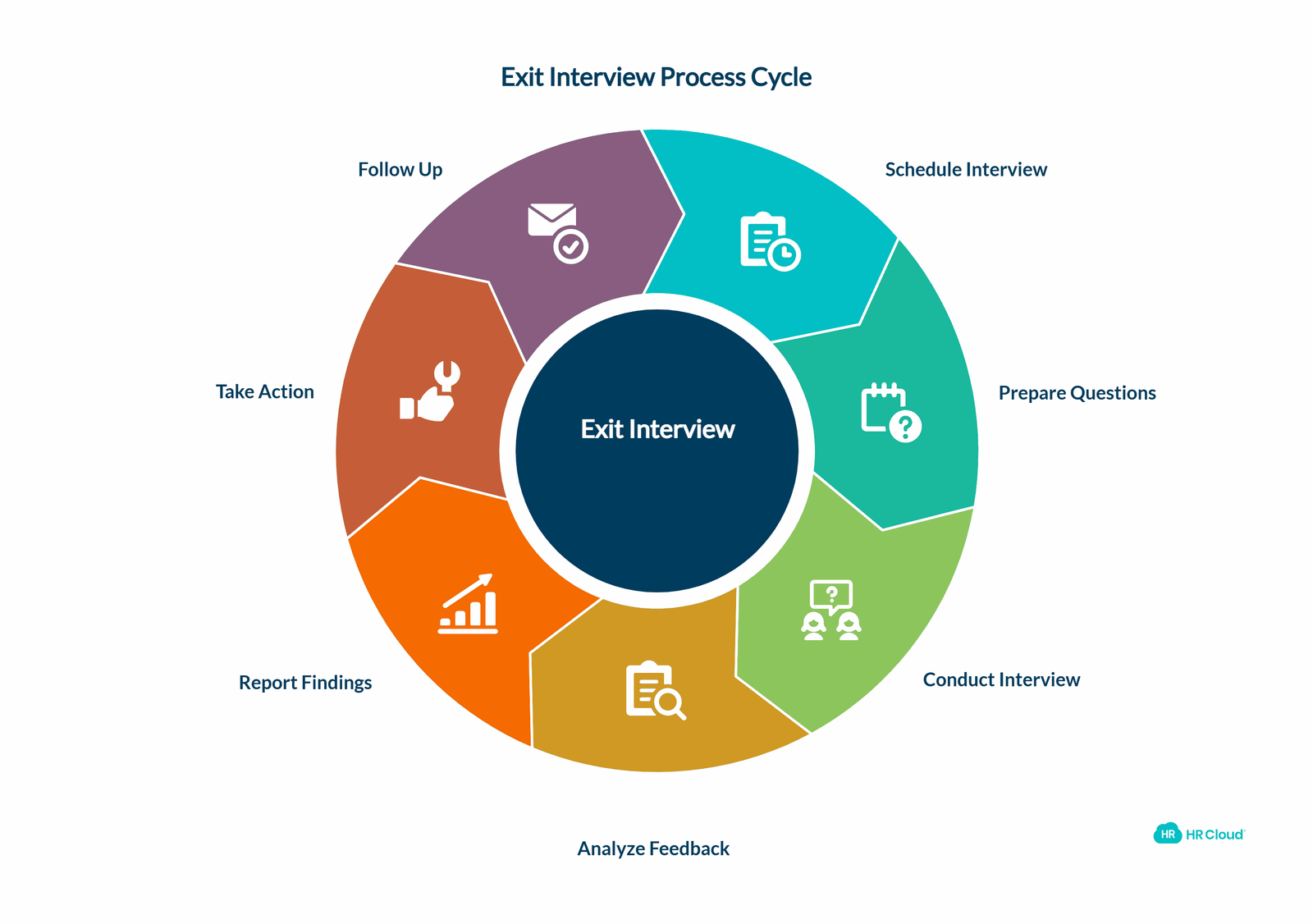
Common aspects of an exit interview include:
- Choosing an Appropriate Interviewer
- Preparing the Questions
- Creating a Comfortable Environment
- Explaining the Purpose
- Asking Open-Ended Questions
- Listening Actively
- Taking Notes
- Thanking the Employee
- Analyzing the Feedback
- Reporting the Findings
- Taking Action
- Following Up (with permission, and where appropriate)
All exit interview answers should be thoughtfully considered by your organization to ensure you’re creating a company atmosphere people want to be a part of long-term.
- Schedule a time for HR to meet with the departing employee.
- Prior to the exit interview, have the employee complete their feedback in an Exit Survey to capture the main points and to help prep HR for the exit interview.
7. Collect Company Assets and Terminate Systems Access
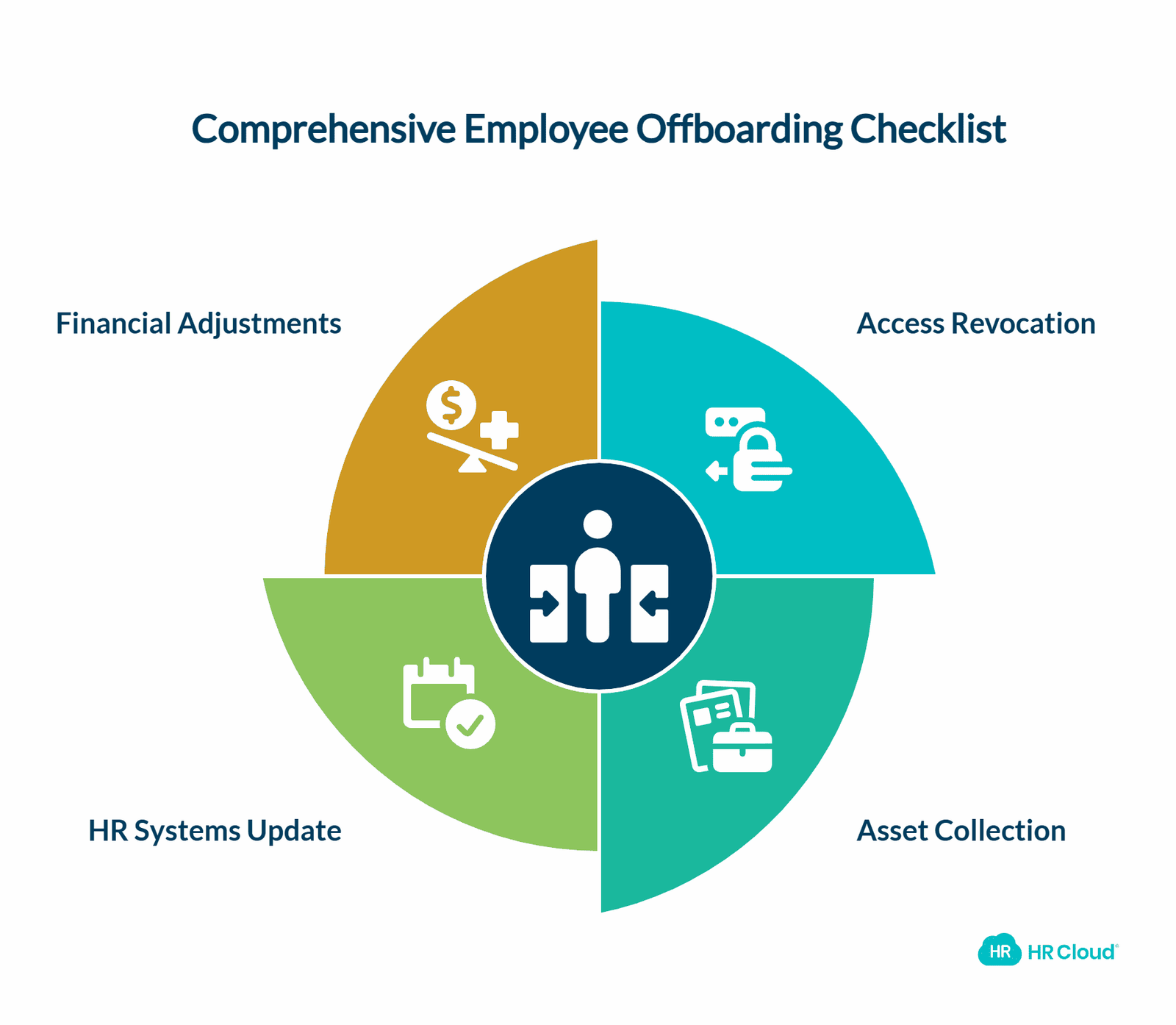
Whether it’s custom software, packaged CRMs, or company email, make sure that access to confidential company information has been revoked for the departing employee. Forgetting this part of the offboarding procedures could result in compromising your systems and posing significant IT security risks. Access revocation is a critical step in risk mitigation during the offboarding process.
Revoke access to critical infrastructure:
- Terminate work email and all systems/tools access.
- Mark the termination in relevant HR systems (HRMS, payroll, benefits, etc.).
You’ll also want to collect company-owned assets, such as:
- Company-issued Devices (computers, phones, tablets, etc)
- Access Cards and Physical Keys
- Digital Assets and Access
- Software and Hardware Licenses
- Intellectual Property
- Company Credit Cards
- Company Documents and Records
- Uniforms and Equipment
- Project Management and Collaboration Tool Access
- Social Media and Website Access
- Emergency Contact Lists
- Work-Related Subscriptions or Memberships
If the outgoing employee has an expense account or a company credit card, make sure that accounting is made aware of the change and appropriately addresses the situation.
8. Generate Good Faith
Lastly, remember to thank the employee for their commitment and contributions to the company. This last step wraps up an employee’s experience and leaves a final, positive impression of a company. A positive offboarding experience can lead to potential "boomerang employees" who may return to the company in the future, bringing valuable experience and knowledge with them.
HR Cloud’s Offboarding Checklist
Download and/or print out this handy employee offboarding checklist to ensure you're following offboarding best practices for employers.
Let HR Cloud Help With Employee Offboarding
Offboarding is just as important to HR processes as onboarding. With task notifications, customizable HR workflows, and asset management, HR Cloud's offboarding software automation tools automate the entire process, so the transition will be smooth. Our offboarding automation tools can significantly improve your offboarding strategy and overall offboarding experience. To learn more about how we can help improve your employee transition process, book a demo with an HR Process Consultant.
FAQs
What is employee offboarding?
Employee offboarding is the formal process of managing an employee’s exit from a company, including tasks like knowledge transfer, asset return, exit interviews, and revoking system access.
Why is offboarding important in HR?
Offboarding ensures legal compliance, protects company data, preserves institutional knowledge, supports team morale, and strengthens employer branding through a smooth transition.
What are the key steps in the employee offboarding process?
The steps typically include communicating the departure, preparing paperwork, creating a transition plan, conducting an exit interview, revoking access, collecting assets, and generating goodwill.
What should be included in an employee offboarding checklist?
A comprehensive checklist includes documentation (e.g., final paycheck, benefits), IT and asset recovery, knowledge transfer planning, HR system updates, and exit feedback collection.
How do you handle knowledge transfer during offboarding?
Use structured documentation, SOPs, shadowing, and mentoring to transfer responsibilities, contacts, and process insights to successors before the employee leaves.
What questions should you ask in an exit interview?
Focus on open-ended questions about the employee’s experience, reasons for leaving, suggestions for improvement, and perceptions of company culture and leadership.
How can HR software help with offboarding?
Tools like HR Cloud automate task assignments, asset tracking, notifications, and documentation workflows, ensuring a consistent, compliant, and efficient offboarding process.
What are common mistakes to avoid during offboarding?
Avoid poor communication, skipping knowledge transfer, failing to revoke system access, and neglecting the emotional impact on remaining employees and the departing individual.
About Author: This article is written by a marketing team member at HR Cloud. HR Cloud is a leading provider of proven HR solutions, including recruiting, onboarding, offboarding, employee communications & engagement, and rewards & recognition. Our user-friendly software increases employee productivity, delivers time and cost savings, and minimizes compliance risk.
Keep Reading


Like What You Hear?
We’d love to chat with you more about how HR Cloud® can support your business’s HR needs.
Book Your Free Demo