Best Employee Management
Managing employees effectively stands as one of the most critical factors determining organizational success. Best employee management encompasses the strategies, practices, and systems that enable you to maximize workforce performance while creating conditions where people thrive. This goes far beyond basic supervision or administrative tasks. It involves understanding what motivates your team members, providing clear direction and support, recognizing contributions, addressing challenges constructively, and building a culture where people feel valued and engaged. Organizations that excel at employee management consistently outperform competitors because they unlock the full potential of their most valuable asset: their people. Whether you lead a small team or oversee a large workforce, mastering employee management principles transforms how your organization operates and the results you achieve.
Core Elements of Best Employee Management
Effective employee management rests on several foundational principles that create the conditions for sustained high performance and engagement.
Clear Expectations and Accountability:
Employees perform best when they understand precisely what success looks like in their roles, how their work connects to larger objectives, and how performance will be evaluated
Consistent Communication:
Regular dialogue between managers and team members prevents misunderstandings, surfaces problems early, and reinforces alignment around priorities and goals
Recognition and Appreciation:
Acknowledging contributions both formally and informally reinforces positive behaviors, builds morale, and demonstrates that effort and results matter to the organization
Development Opportunities:
Providing pathways for skill building and career growth signals investment in employees' futures, increasing both capability and commitment
Fair and Transparent Processes:
Consistent application of policies regarding compensation, promotion, discipline, and other employment matters builds trust and reduces perceptions of favoritism
Appropriate Autonomy:
Empowering employees with decision-making authority within defined boundaries demonstrates trust while enabling faster responses and greater innovation
Management Approach Comparison
| Factor | Traditional Management | Best Practice Employee Management |
|---|---|---|
| Communication Flow | Top-down directives with limited feedback | Two-way dialogue with regular input from employees |
| Performance Focus | Annual reviews with historical focus | Continuous feedback with forward-looking development |
| Decision Authority | Centralized with managers | Distributed appropriately based on expertise and context |
| Employee Development | Occasional training when problems arise | Systematic ongoing learning aligned with career paths |
| Recognition Approach | Compensation-focused with limited acknowledgment | Multi-faceted including verbal praise, development opportunities, and rewards |
| Problem Resolution | Reactive response when issues escalate | Proactive identification and early intervention |
Building Excellence in Employee Management Practices
Creating a culture of effective employee management requires deliberate attention to several interconnected practices that work together to drive results.
Start by investing in manager development as your highest priority. Your frontline managers execute employee management daily through countless interactions and decisions. When managers lack the skills to provide constructive feedback, conduct meaningful performance conversations, or recognize contributions effectively, even the best policies and systems fail to deliver results. According to research from Gallup, managers account for 70% of the variance in team engagement scores.
Implement performance management systems that emphasize ongoing development rather than just annual evaluation. The best employee management happens through regular check-ins that provide timely feedback, adjust goals as circumstances change, and identify development needs before they become performance problems. Replace or supplement traditional annual reviews with quarterly or monthly conversations focused on growth and alignment.
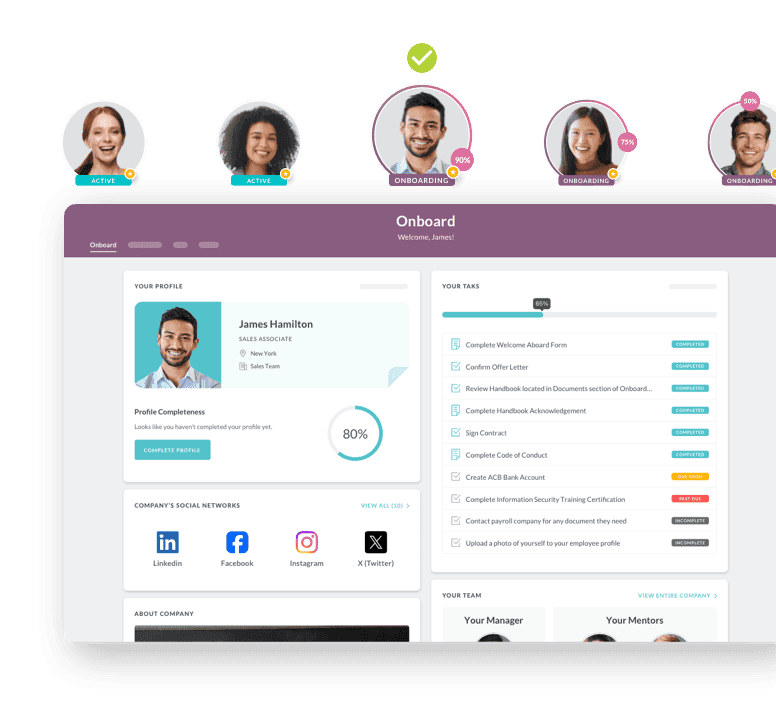
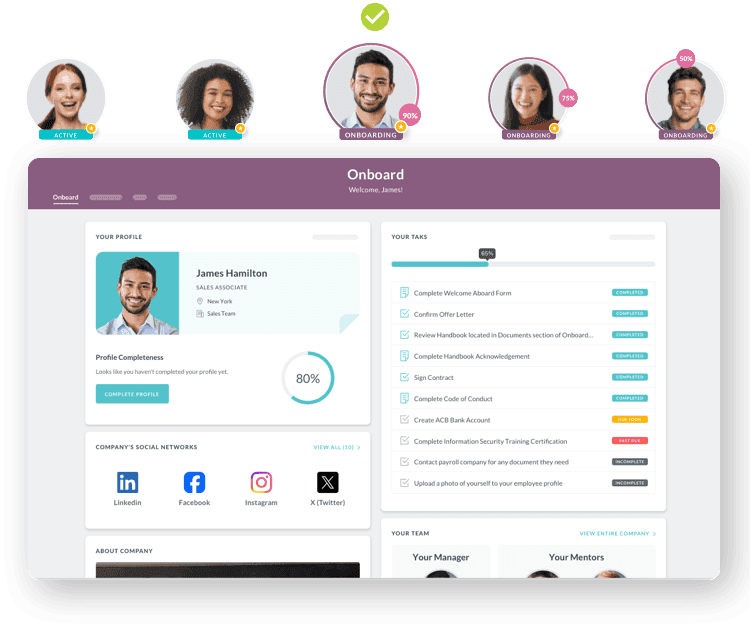
Create structured onboarding programs that set new employees up for success from day one. Effective onboarding accelerates productivity, builds connections with team members and organizational culture, and significantly improves retention. Companies with strong onboarding processes improve new hire retention by 82% and productivity by over 70%, according to the Society for Human Resource Management.
Establish clear career pathways that show employees how they can progress within your organization. When people see opportunities for advancement based on demonstrated capability and contribution, they invest more deeply in developing their skills and delivering results. Document competencies required for different roles and provide transparent processes for internal mobility.
Leverage technology to streamline administrative tasks so managers can focus on relationship building and development. HRIS platforms centralize employee information, automate routine processes, and provide self-service capabilities that reduce administrative burden. Time and attendance systems integrated with payroll eliminate manual data entry and reduce errors that frustrate both employees and managers.
Build recognition into your daily operations through multiple channels. While compensation matters, employees also value timely verbal appreciation, opportunities to work on interesting projects, visibility with senior leaders, and public acknowledgment of contributions. According to Harvard Business Review, regular recognition from managers increases employee engagement more than any other single factor.
Critical Mistakes That Undermine Employee Management
Even experienced leaders encounter challenges when managing people. Understanding common pitfalls helps you avoid them and build more effective practices.
Inconsistent application of policies and expectations creates the most corrosive management problem. When similar situations receive different responses based on personal relationships rather than consistent criteria, you destroy trust and create perceptions of unfairness. Employees watch how managers handle various situations, and inconsistency signals that favoritism matters more than merit or rules. Document your decisions and ensure similar circumstances receive similar treatment.
Avoiding difficult conversations allows small problems to become major crises. When managers delay addressing performance issues, behavior concerns, or interpersonal conflicts, the situations typically worsen while becoming harder to resolve. Early intervention prevents escalation and demonstrates that you care about maintaining healthy team dynamics. Provide managers with training and support for conducting challenging conversations constructively.
Micromanaging capable employees wastes time while damaging morale and development. When managers insert themselves into every decision and task, they create bottlenecks, prevent learning, and signal lack of trust. Define boundaries clearly, then allow employees appropriate autonomy within those parameters. Focus your attention on results rather than controlling every step of the process.
Neglecting top performers while focusing exclusively on struggling employees represents a common but costly mistake. Your highest contributors need attention too, including challenging assignments, development opportunities, and recognition. According to research from Gallup, organizations that focus on strengths-based management see 12% higher productivity than those that primarily address weaknesses.
Failing to provide clear feedback leaves employees guessing about their performance and how to improve. Vague comments like "good job" or "needs improvement" don't provide actionable information. Specific, timely feedback that describes observed behaviors and their impacts enables people to reinforce strengths and address development needs effectively.
Employee Management Excellence Across Industries
Best employee management adapts to different industry contexts while maintaining core principles that drive engagement and performance.
In healthcare settings, employee management must balance rigorous clinical standards with human connection in high-stress environments. Managers face the challenge of maintaining compliance with extensive regulations while supporting staff who deal with life-and-death situations daily. Effective healthcare managers prioritize team debriefings after difficult cases, recognize emotional labor alongside clinical competence, and create psychological safety where staff can discuss errors and near-misses without fear. Employee engagement platforms help healthcare organizations maintain connection and communication across multiple shifts and locations.
Manufacturing environments require employee management that emphasizes safety, quality, and continuous improvement. The best manufacturing managers involve frontline workers in problem-solving and process optimization, recognizing that those closest to the work often have the best improvement ideas. They create transparent production metrics that teams can influence, celebrate safety milestones, and invest in cross-training that builds both capability and flexibility. Recognition programs acknowledge suggestions that improve efficiency or reduce waste.
Retail and hospitality sectors face unique employee management challenges including variable schedules, seasonal workforce fluctuations, and customer-facing pressure. Successful managers in these industries focus on flexible scheduling that respects employee needs while meeting business requirements, consistent communication about expectations during peak periods, and real-time recognition when employees deliver exceptional customer experiences. Technology solutions like time tracking systems streamline schedule management while ensuring fair treatment.
Implementing Best Employee Management Systems
Transforming your approach to employee management requires systematic planning and consistent execution that builds capabilities over time.
Step 1: Assess your current employee management maturity honestly. Gather feedback from employees through surveys or focus groups about their management experiences. What works well? Where do frustrations exist? Review key metrics like turnover rates, engagement scores, and performance distribution to identify patterns requiring attention.
Step 2: Define your management philosophy and expectations clearly. What behaviors and practices do you expect from all managers regardless of department or level? Document these standards in writing so they can be communicated consistently and used for manager evaluation.
Step 3: Build comprehensive manager development programs that address both technical and interpersonal skills. Include topics like conducting effective one-on-ones, providing constructive feedback, managing performance issues, coaching for development, and building team culture. Make this training ongoing rather than one-time events.
Step 4: Establish regular cadences for key management activities. Schedule standing one-on-one meetings between managers and team members, quarterly goal reviews, monthly team meetings, and annual development planning conversations. Consistency matters more than perfection in these rhythms.
Step 5: Implement tools that support effective management without creating administrative burden. Select workforce management software that provides visibility into team performance, automates routine tasks, and enables better decisions through data and analytics.
Step 6: Create accountability for management excellence by including people management metrics in manager evaluations. Track retention rates within teams, employee engagement scores, internal promotion rates, and other indicators that reflect management quality. Recognize and reward managers who develop their people effectively.
Step 7: Build peer learning communities where managers share challenges, successful practices, and support one another. Regular manager forums or roundtables create opportunities for collaborative problem-solving and reduce isolation.
Step 8: Continuously refine your approach based on results and feedback. What worked three years ago may need adjustment as your workforce, business context, or organizational priorities evolve. Stay open to improvement while maintaining consistency in core principles.
Emerging Trends Shaping Employee Management
Employee management practices continue evolving as workforce expectations shift and new technologies enable different approaches to leadership and development.
Hybrid and remote work models fundamentally changed management requirements. Managers must now build trust and team cohesion without daily in-person interaction, monitor performance based on results rather than presence, and ensure equitable experiences for both remote and office-based employees. This shift demands new skills around virtual communication, asynchronous collaboration, and deliberate culture building. According to research from MIT Sloan Management Review, successful remote managers focus more on outcomes and less on activity monitoring.
Employee experience design applies consumer-grade thinking to workplace practices. Progressive organizations now map employee journeys from recruitment through offboarding, identifying friction points and opportunities to improve experiences at every touchpoint. This human-centered approach recognizes that excellent employee management requires removing obstacles, simplifying processes, and creating moments that matter.
Skills-based management replaces traditional job-focused approaches in many organizations. Rather than managing people within rigid job descriptions, forward-thinking managers now view their teams as collections of capabilities that can be deployed flexibly based on business needs. This fluidity increases agility while providing employees greater variety and development opportunities.
Artificial intelligence and analytics increasingly inform management decisions. Predictive tools identify employees at risk of leaving before they resign, enabling proactive retention conversations. Sentiment analysis of communication patterns surfaces team dynamics requiring attention. Performance analytics highlight development needs and succession planning gaps. These technologies augment rather than replace human judgment, providing insights that improve decision quality.
Wellbeing-centered management recognizes the connection between whole-person health and sustainable performance. The best managers now attend to physical, mental, financial, and social wellbeing as integrated aspects of employee support rather than separate benefits. This holistic approach acknowledges that life circumstances affect work performance and that organizations benefit from supporting employees comprehensively.
Continuous listening through pulse surveys and always-on feedback channels replaces annual engagement surveys in many organizations. This shift enables managers to identify and address issues quickly rather than waiting months for formal survey results. Real-time feedback creates opportunities for agile response while demonstrating that employee input drives meaningful action.
Personalized management approaches acknowledge that different employees need different support, communication styles, and motivational approaches. Rather than applying one-size-fits-all methods, sophisticated managers adapt their style based on individual preferences, development stages, and circumstances. This customization requires greater skill and effort but delivers significantly better results.
Best employee management represents an ongoing commitment to developing both the people you lead and your own leadership capabilities. By implementing the practices, systems, and mindsets described here, you create conditions where employees contribute their best work, grow their capabilities, and build meaningful connections with colleagues and organizational purpose. The investment in management excellence delivers returns through improved productivity, innovation, engagement, and retention that translate directly to competitive advantage and sustainable success.

Discover how our HR solutions streamline onboarding, boost employee engagement, and simplify HR management
Book Your Free DemoKeep Reading


Ready to streamline your onboarding process?
Book a demo today and see how HR Cloud can help you create an exceptional experience for your new employees.
Book Your Free Demo