
Employee Engagement Ideas That Increase Team Commitment

Quick Answer: The 15 most effective employee engagement ideas include peer-to-peer recognition programs, flexible remote work options, comprehensive onboarding experiences, regular feedback mechanisms, gamified rewards systems, career development opportunities, team-building activities, competitive compensation packages, work-life balance initiatives, volunteer programs, performance check-ins, office perks, autonomy in work approach, company-wide meetings, and themed celebration days.
Employee engagement ideas are practical strategies organizations use to boost workforce motivation, satisfaction, and emotional connection to their work. From recognition programs and flexible work arrangements to professional development and team-building activities, the right engagement initiatives transform workplace culture and drive measurable business results.
According to Gallup's 2025 State of the Global Workplace report, only 23% of employees worldwide are actively engaged at work—meaning 77% of your workforce could be quietly disengaged, costing organizations approximately $483-605 billion annually in lost productivity. The good news? Research consistently shows that companies implementing comprehensive employee engagement strategies see 21% higher profitability, 17% higher productivity, and 41% lower absenteeism.
The stakes have never been higher. With voluntary turnover costing 50-200% of an employee's annual salary, disengagement isn't just a culture problem—it's a business crisis. Yet many organizations still rely on outdated approaches: annual engagement surveys that gather dust, generic recognition programs that feel transactional, and one-size-fits-all perks that resonate with no one.
This guide presents 15 battle-tested employee engagement ideas organized by strategic category—from recognition and rewards to communication systems and performance development. Whether you manage frontline workers in healthcare and manufacturing, remote teams across multiple time zones, or hybrid workforces navigating the future of work, these strategies will help you create an environment where employees feel valued, heard, and motivated to contribute their best work.
What makes these engagement ideas different?
Unlike generic advice recycled across countless blog posts, these strategies come with specific implementation guidance, technology recommendations, and industry context. We'll show you not just what to do, but how to actually implement these ideas using modern tools like Workmates—HR Cloud's comprehensive engagement platform combining recognition, communication, and analytics in one mobile-first solution.
Quick Definition Box
Employee Engagement = The emotional commitment employees feel toward their organization, demonstrated through enthusiasm, discretionary effort, and alignment with company goals. Engaged employees don't just complete tasks—they actively contribute to organizational success and advocate for their workplace.
What You'll Learn:
- Why employee engagement directly impacts profitability, retention, and customer satisfaction
- 15 specific engagement ideas organized by category with implementation tips
- How to measure engagement success using both leading and lagging indicators
- The technology tools (including Workmates) that make engagement scalable
- Industry-specific applications for healthcare, manufacturing, retail, and technology
- Common implementation pitfalls and how to avoid them
What is Employee Engagement?
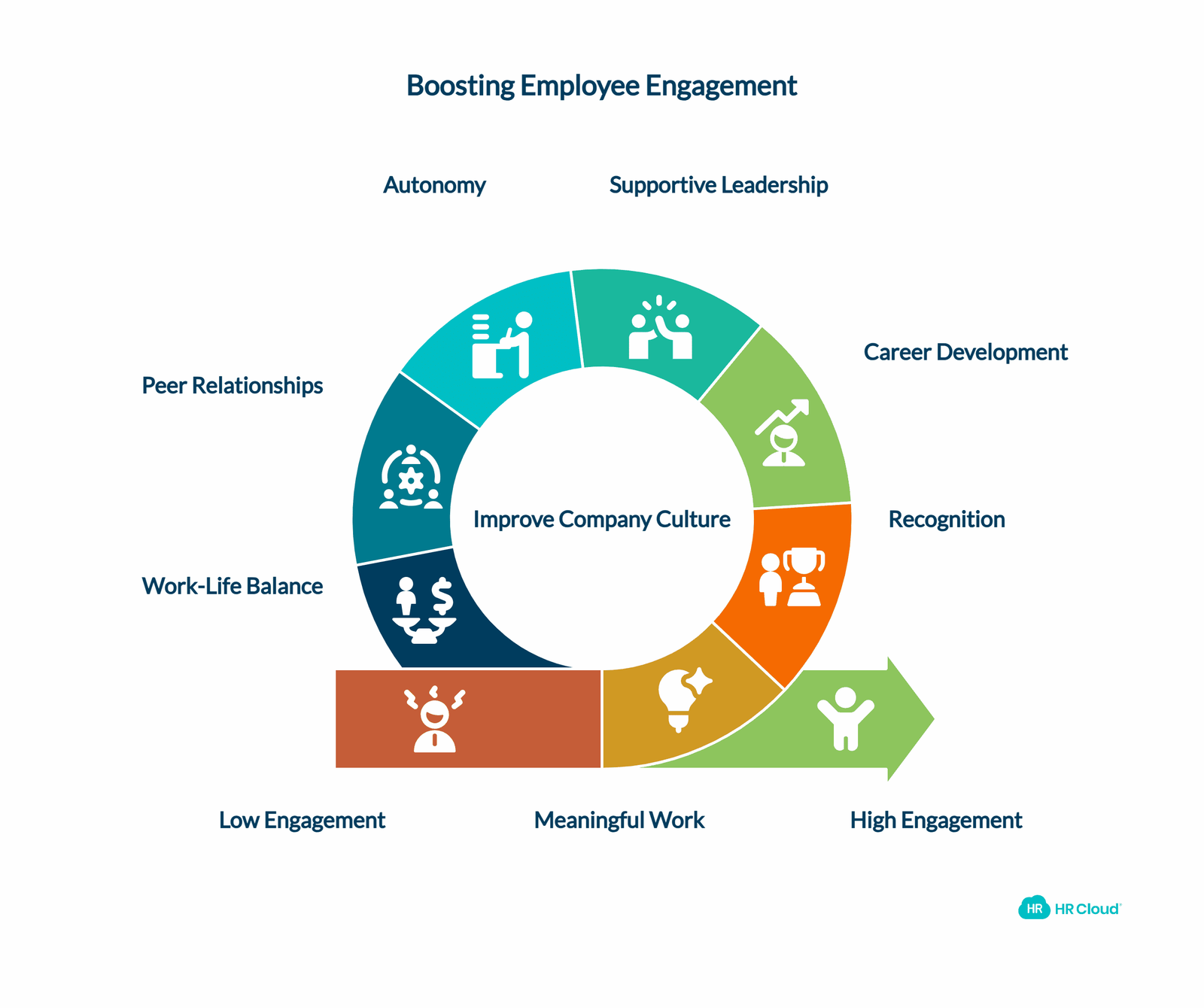
Employee engagement refers to the emotional commitment and enthusiasm employees feel toward their work, their team, and their organization. It goes far beyond job satisfaction—engaged employees don't just show up for a paycheck; they're invested in their company's success and willing to go above and beyond their basic job requirements.
The Engagement Spectrum
Understanding where your employees fall on the engagement spectrum helps you target your efforts:
- Actively Engaged (23%): Passionate, innovative contributors who drive performance
- Not Engaged (62%): Present but disconnected; doing minimum required work
- Actively Disengaged (15%): Unhappy employees who may undermine engaged colleagues
Engagement is, at its core, about company culture and the employee experience you create. The workplace should be an environment where employees feel valued, respected, and motivated, as they spend a significant portion of their lives there. Employee recognition platforms like Workmates significantly contribute to creating this positive environment by making appreciation visible, frequent, and meaningful across your entire organization.
Key Drivers of Employee Engagement
What Drives Employee Engagement:
- Meaningful work that aligns with personal values
- Recognition for contributions and achievements
- Clear career development pathways
- Supportive, authentic leadership
- Autonomy and trust in day-to-day work
- Strong peer relationships and team cohesion
- Work-life balance and flexibility
- Competitive compensation and benefits
Why Employee Engagement Matters for Business Success
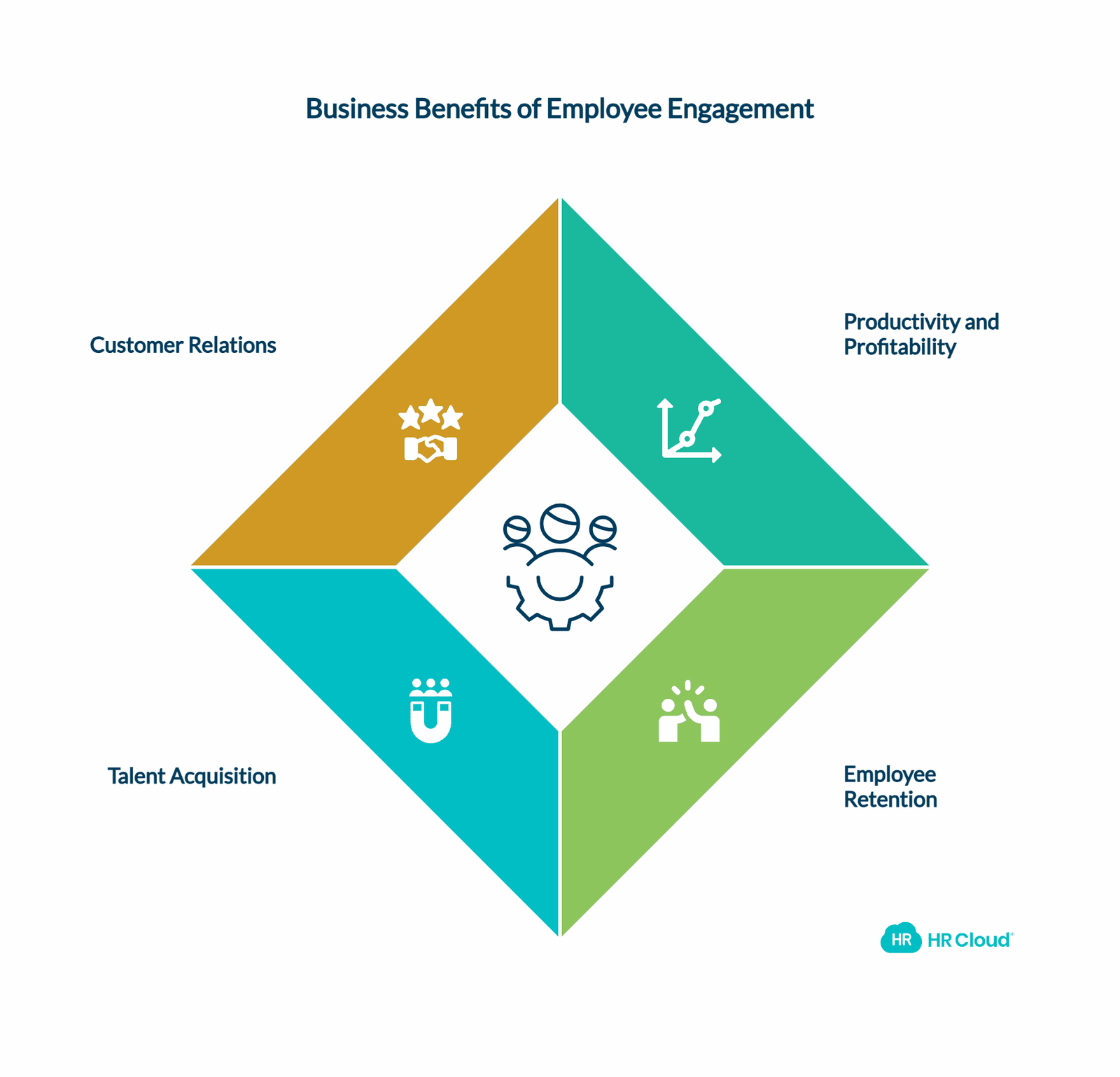
The impact of employee engagement extends far beyond "happy employees." Let's examine the concrete business outcomes that make engagement strategies essential.
Impact on Productivity and Profitability
Engaged employees are not just more pleasant to work with—they're dramatically more productive. Research from Gallup shows that highly engaged teams experience:
- 21% higher profitability
- 17% higher productivity
- 41% lower absenteeism
- 10% higher customer loyalty scores
The stock prices of businesses on Fortune's "100 Best Companies to Work For" have risen 14%, compared to just 6% for companies not on the list, according to Forbes research. When it comes to sales performance specifically, Harvard Business Review research found that happier salespeople can raise sales by an astounding 37% on average.
Effect on Employee Retention
Don't lose your best talent because they aren't sufficiently engaged while at work. High employee engagement boosts talent retention significantly—and the cost savings are substantial.
Voluntary employee turnover carries many hidden costs: recruiting expenses, training investments, lost productivity during vacancies, decreased team morale, and the departure of institutional knowledge. When employees see colleagues exiting the company, they often wonder if something is wrong and begin considering other opportunities themselves.
According to SHRM research on employee engagement and recognition, companies with comprehensive employee recognition programs report 31% lower voluntary turnover rates. Implementing systematic recognition through platforms like Workmates significantly improves retention metrics while strengthening organizational culture
Hiring Top Talent
When candidates research potential employers, they frequently consult websites that aggregate current and former employee ratings. When the majority of your team is pleased with their experience, positive reviews showcase your company as an employer of choice—giving you a competitive advantage in talent acquisition.
Strong employee engagement creates a powerful recruitment tool: your own employees become brand ambassadors. Engaged team members naturally share their positive experiences, recommend job openings to their networks, and help sell candidates on your culture during interviews.
Improving Client and Customer Relations
Happier employees consistently provide better experiences to clients and customers. They genuinely believe in what they're selling and want to go the extra mile for customer success. This improved service quality creates a virtuous cycle: better customer experiences lead to business growth, which creates more opportunities for employee advancement.
Employee engagement directly correlates with customer satisfaction scores, as engaged frontline workers, service representatives, and client-facing teams naturally deliver superior experiences that drive loyalty and referrals.

The Best Employee Engagement Ideas
The following 15 employee engagement strategies are organized into thematic categories for easy implementation. You don't need to tackle all of these at once—choose 2-3 that align with your biggest engagement challenges and build from there.
Recognition and Rewards Strategies That Drive Results
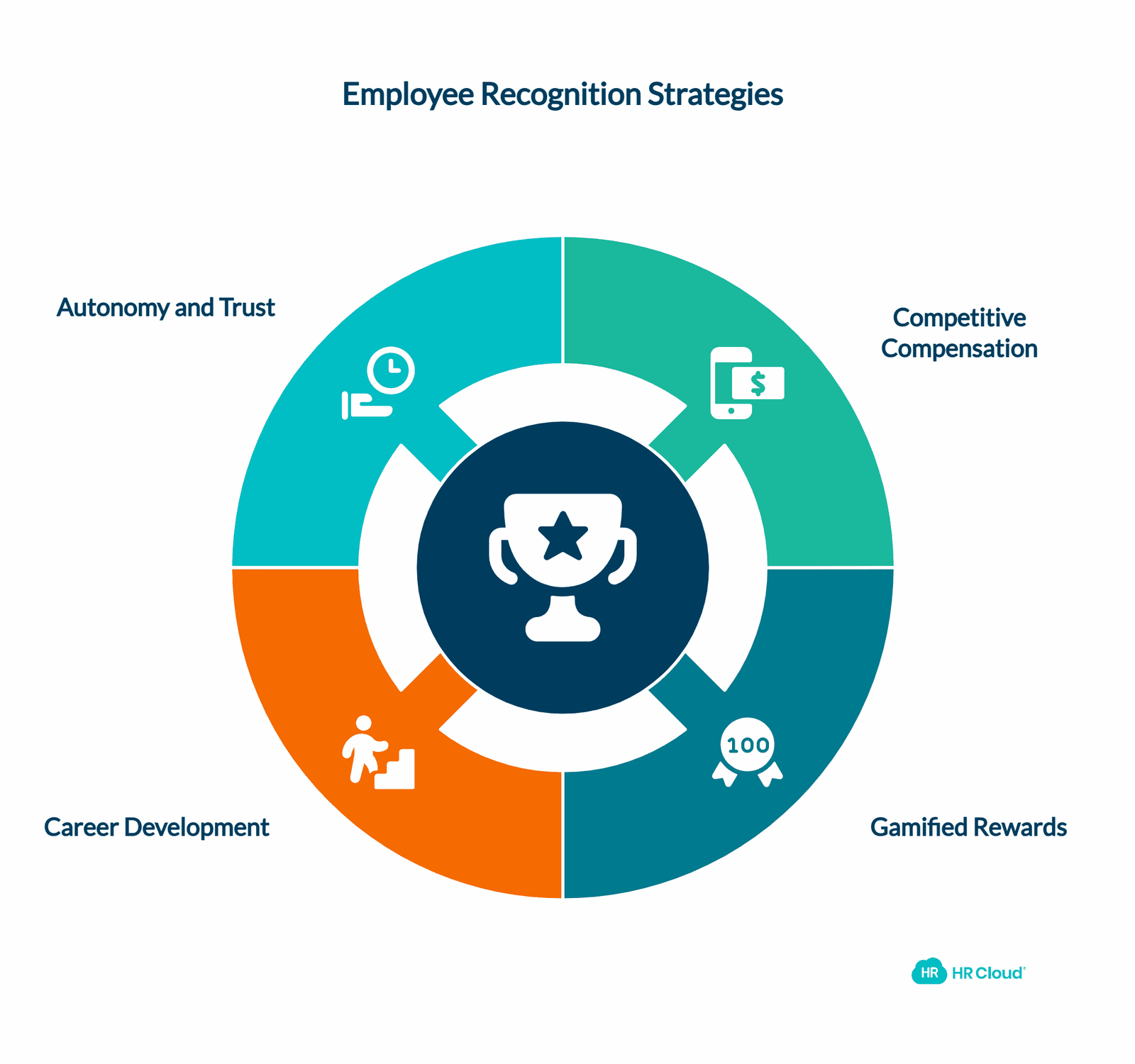
1. Compensate Competitively
People want to feel acknowledged for their hard work, and while salary is important, total compensation extends beyond base pay. Modern employees evaluate the full package when assessing whether they're fairly valued.
Be sure you're staying competitive in key areas:
- Base Salary: Regular market benchmarking against industry standards
- Healthcare Offerings: Comprehensive medical, dental, and vision coverage
- Retirement Plans: 401(k) matching or pension contributions
- Paid Time Off:Generous PTO policies including vacation, sick leave, and personal days
- Additional Perks: Student loan assistance, wellness stipends, professional development budgets
Platforms like HR Cloud's Time Off management make it easy for employees to view their PTO balances, submit requests, and see team calendars—ensuring your generous time-off policies are actually utilized and appreciated.
Implementation Tip: Conduct annual compensation audits comparing your offerings to industry benchmarks. If you can't match competitors on salary, get creative with non-monetary benefits that meaningfully impact employee wellbeing and work-life balance.
2. Establish a Gamified Rewards System
Whether you're working on marketing outcomes, productivity improvements, or employee engagement itself, few initiatives wouldn't benefit from a gamified recognition system.
Start bysetting clear, measurable goals that align with company objectives, then create engaging challenges or milestones around these goals. An effective employee rewards system could involve:
- Points-Based Recognition: Employees earn points for hitting targets, completing tasks, or demonstrating core values
- Redeemable Rewards: Points can be exchanged for various employee incentives such as extra vacation days, gift cards, experiences, or public recognition
- Visible Leaderboards: Gamification elements that create friendly competition while celebrating achievements
- Milestone Celebrations: Automated recognition for work anniversaries, project completions, and performance achievements
Example in Action: Employees might earn "innovation points" for contributing unique ideas, which are displayed on a digital leaderboard and lead to quarterly prizes for top performers. This creates a fun, competitive atmosphere that motivates everyone to engage more deeply with their work while reinforcing behaviors that drive business results.
You can make this process significantly easier by implementingWorkmates employee recognition software, which incorporates gamification elements, tracks recognition activity, and provides a customizable rewards catalog with 100+ gift card options. Workmates integrates directly with your workflow through Slack and Microsoft Teams, making recognition as easy as sending a message.
Implementation Tip: Start with a pilot program in one department before rolling out company-wide. This allows you to refine your approach based on real feedback and demonstrate ROI to leadership.
3. Offer Training and Career Advancement Opportunities
Employees don't want to remain in the same position indefinitely—they want growth opportunities and clear paths for advancement. Rather than preparing them to leave for "greener pastures," make your company the greenest pasture available by investing in their development.
Make sure every employee understands that promotions are not only possible but expected when they demonstrate strong performance and commitment. With this foundation, training and development programs will be enthusiastically received rather than seen as obligations.
Effective Development Approaches:
- Industry Conferences: Send employees to relevant events for learning and networking
- Workshops and Certifications: Support professional credential development
- Recommended Reading: Curate learning resources and provide stipends for books
- Online Learning Platforms: Subscriptions to platforms like LinkedIn Learning, Coursera, or Udemy
- Lunch-and-Learn Sessions: Internal knowledge sharing among team members
- Mentorship Programs: Pairing junior employees with senior leaders
- Company-Branded Training: Custom how-to videos for remote workers on company-specific processes
According to LinkedIn's Workplace Learning Report, 94% of employees would stay at a company longer if it invested in their career development. Companies that excel at internal mobility retain employees nearly twice as long as those that don't.
HR Cloud's Onboard platform can be used not just for new hire orientation but also for role transitions, promotion onboarding, and cross-training initiatives. Create customized learning portals for different career tracks, ensuring employees have clear visibility into what's required for advancement.
Implementation Tip: Create Individual Development Plans (IDPs) during performance reviews that outline specific skills to develop, training resources available, and timeline for advancement opportunities. Make development a regular discussion topic, not just an annual conversation.
4. Encourage Autonomy, Not Micromanagement
Nobody enjoys feeling micromanaged. While employees should certainly be held accountable for results, they want to know you hired them because you trust their abilities to execute their responsibilities effectively.
The Autonomy Approach:
- Provide clear direction and context for projects
- Set deadlines and success criteria upfront
- Give employees freedom to determine "how" within guardrails
- Use check-ins sparingly and strategically
- Frame oversight as support rather than surveillance
- Focus on outcomes rather than constantly monitoring processes
When you do need to guide them—perhaps because you notice something could be done more efficiently—position your input as helpful suggestions rather than criticism. If you're not checking up on them at all hours, they'll be more likely to see your check-ins as genuinely helpful rather than feeling a sense of dread.
Research from Cornell University found that businesses that give workers autonomy grow at four times the rate of control-oriented firms. Employees with high autonomy report 50% higher job satisfaction and demonstrate greater innovation.
Implementation Tip: For managers struggling to let go, implement a "results-based work" framework where deliverables and deadlines are clear, but employees have full ownership of their approach. Use project management tools for visibility without requiring constant status updates.
Work Environment and Flexibility Ideas
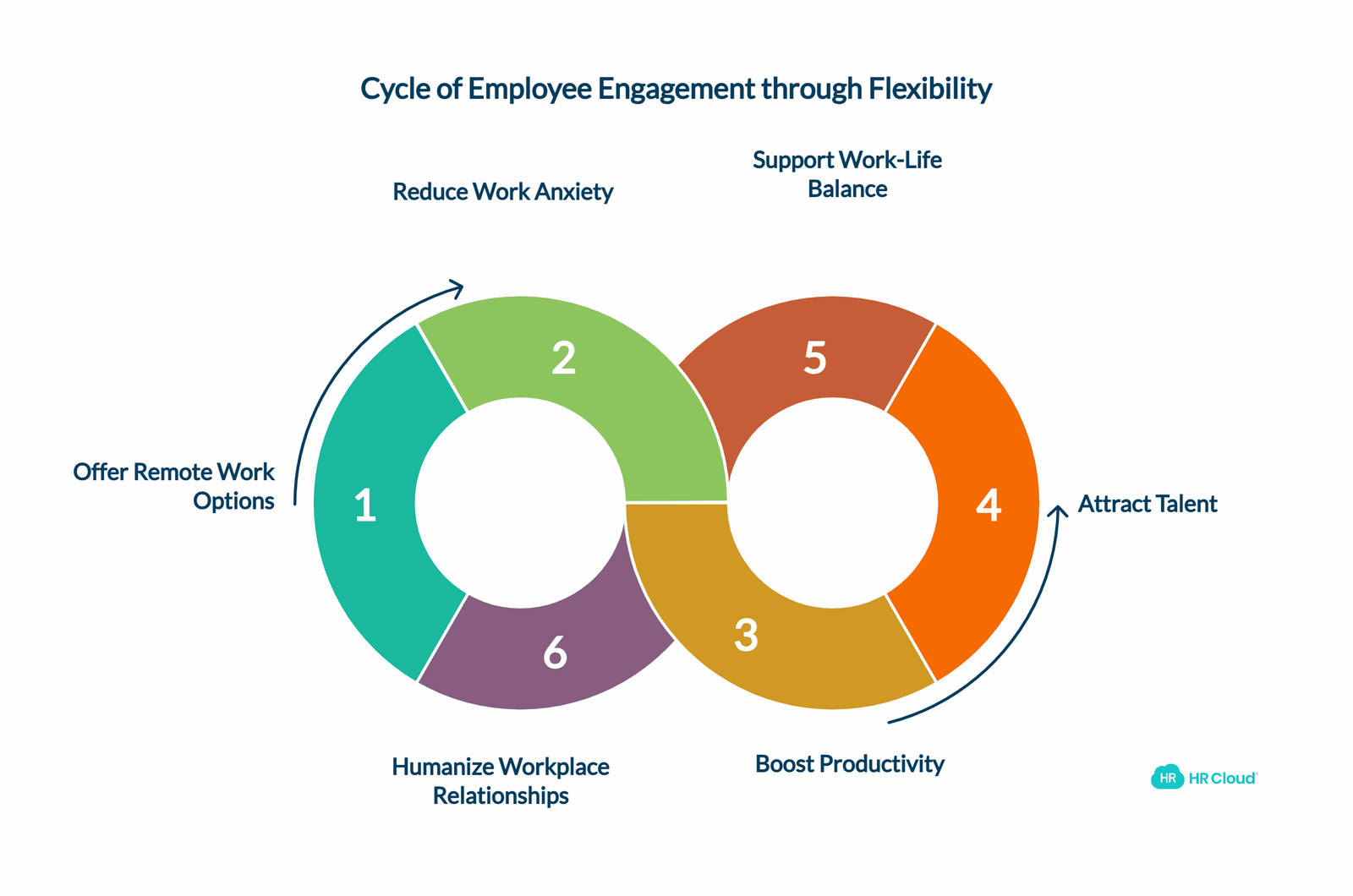
5. Offer Remote Work Options
It may seem counterintuitive to let employees work from outside the office to boost their engagement, but research consistently shows that flexibility drives both engagement and productivity. Negative office environments can cause work anxiety that significantly hinders employee engagement and performance.
Beyond relieving employee stress, offering remote working arrangements helps you stay competitive in today's talent market. Modern workers—particularly younger generations—expect flexibility as a standard benefit rather than a special perk.
Remote Work Options to Consider:
- Hybrid Schedules: Allow employees to work from home certain days of the week
- Satellite Offices: Set up smaller office locations in suburban areas
- Fully Remote Positions: Enable team members to work from anywhere with internet access
- Flexible Hours: Let employees choose their start and end times within core collaboration windows
- "Work from Anywhere" Weeks: Allow temporary location changes for extended periods
According to Gartner's research on hybrid work performance, employees with flexible work arrangements report 23% higher engagement scores and demonstrate better overall performance compared to those with rigid schedules. Additionally, Global Workplace Analytics research shows remote work arrangements save employers an average of $11,000 per year per half-time remote employee through reduced real estate costs, lower absenteeism, and increased productivity.
Ensure that your employee recognition platforms and internal communication tools are fully accessible to remote workers to maintain team collaboration and culture. Workmates provides mobile-first design with iOS and Android apps, ensuring distributed teams stay just as engaged as in-office employees. Features like virtual team channels, mobile kudos, and company-wide announcements keep remote workers connected and appreciated.
Implementation Tip: Create clear remote work policies outlining expectations, communication norms, and available times. Invest in collaboration tools (video conferencing, project management, async communication platforms) that enable seamless remote collaboration.
6. Encourage Work-Life Balance and Personal Projects
One of the top things employees look for in a workplace is one that fosters a healthy work-life balance. Encourage them to have fulfilling lives outside of work rather than making work their entire identity.
Supporting Personal Growth:
- Employees want to hone skills not directly related to their day job? Great—help them find resources and cheer them on
- Show up for their personal milestones however you can
- Create space for hobby discussions and personal interests
- Celebrate non-work achievements (marathons completed, books published, volunteer milestones)
When managers and their team members can talk about personal endeavors, it humanizes workplace relationships. If coworkers can share more about who they are outside work and help each other with hobbies or interests, they'll be happier overall and learn to build each other up in both professional and personal contexts.
According to Mental Health America's 2023 Workplace Health Survey, 71% of employees report their employer could do more to support work-life balance, with flexible scheduling ranking as the most desired benefit. Employees who feel they have good work-life balance work 21% harder than those who feel overworked.
Implementation Tip: Consider offering "passion project time" where employees can dedicate a small percentage of work hours (like 10%) to learning new skills or working on initiatives that interest them, even if not directly tied to their role. Google's famous "20% time" policy led to innovations like Gmail and Google News.
Communication and Feedback Systems
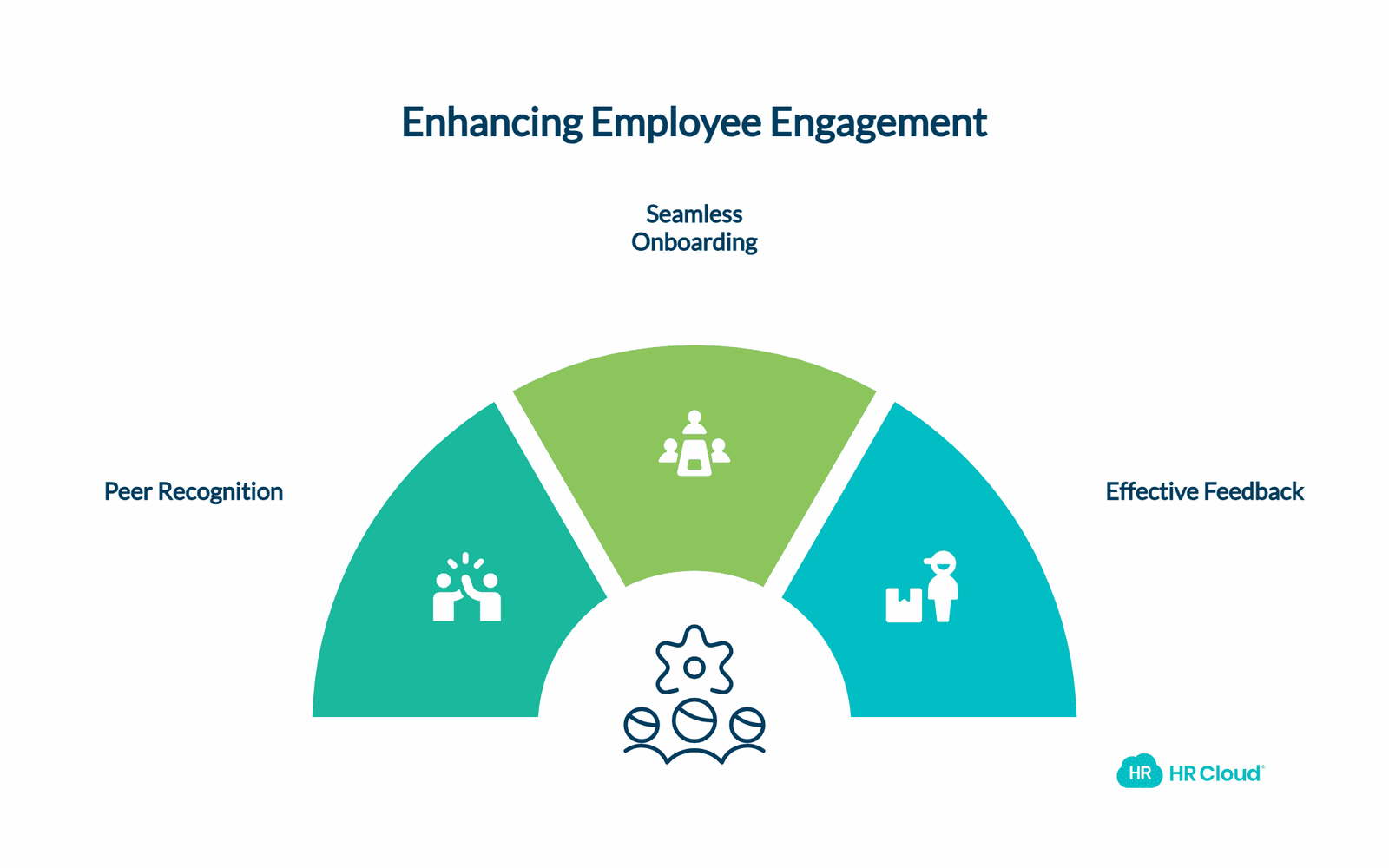
7. Facilitate Peer-to-Peer Recognition and Communication
Teams that genuinely like and appreciate each other collaborate most effectively. Create intentional opportunities for your employees to get to know each other and treat one another as respected individuals worthy of recognition.
Modern employee engagement software provides platforms for shout-outs and peer-to-peer praise that go beyond traditional top-down recognition. When team members can easily acknowledge each other's contributions, it shows everyone that their colleagues truly believe in them and are taking note of their accomplishments.
Why Peer Recognition Matters: Research shows that recognition from peers can be even more meaningful than recognition from managers, as it represents authentic appreciation from those who directly observe daily contributions and challenges.
Workmates excels at facilitating peer recognition through:
- Social recognition feeds that make appreciation visible across the organization
- Customizable kudos badges aligned with company values
- Comment and reaction capabilities that amplify recognition moments
- Mobile accessibility ensuring frontline and remote workers can participate equally
- Analytics showing recognition patterns and identifying potential gaps
Implementation Tip: Launch peer recognition with clear guidelines about what kinds of contributions should be celebrated. Provide examples tied to company values so recognition reinforces the behaviors and outcomes that matter most to your organization.
8. Make Onboarding a Seamless Experience
Nobody enjoys walking into a new job and immediately drowning in paperwork. You don't want mountains of administrative tasks to be the first thing new employees think about on their first day. You want them to be excited about the orientation process and focused on the actual job they were hired to perform.
Modern Onboarding Best Practices:
- Digital document management that eliminates physical paperwork
- Pre-boarding activities that engage new hires before day one
- Clear checklists for new hires, managers, HR, and IT
- Automated reminders ensuring nothing falls through the cracks
- Personalized welcome portals with role-specific information
- Mobile accessibility for completing tasks from any device
- Compliance tracking for I-9, W-4, and required certifications
- Integration with payroll and HRIS for seamless data flow
According to SHRM research, organizations with a strong onboarding process improve new hire retention by 82% and productivity by over 70%. Additionally, 86% of new hires decide how long they'll stay with a company in the first six months—making effective onboarding critical to long-term retention.
The right employee onboarding software enables smooth transitions for new hires rather than presenting administrative obstacles. HR Cloud's Onboard delivers automated workflows, personalized portals, digital forms with e-signatures, and real-time progress dashboards. The platform ensures new hires feel welcomed rather than overwhelmed, setting them up for engagement from day one. With Onboard, companies report onboarding new hires 3X faster while improving data accuracy by up to 30%.
Implementation Tip: Create different onboarding tracks for different roles and seniority levels. A frontline employee needs different information than a senior leader. Personalization shows you've thoughtfully prepared for their specific journey.
9. Welcome and Act on Employee Feedback
You want your organization to demonstrate integrity and transparency through genuine two-way communication. This doesn't mean dismantling your organizational hierarchy—most decisions should still come from leadership—but your employees need to feel that their voice is valued and heard.
Creating Effective Feedback Channels:
- Invite feedback from all team members—yes, even from interns and newest hires
- Ensure everyone understands they deserve to have their opinions heard
- Create multiple feedback mechanisms (surveys, suggestion boxes, open-door policies, town halls)
- Respond to feedback with transparency about what can and can't be implemented
- Close the feedback loop by explaining decisions made based on employee input
You don't need to accept every suggestion, but when employees bring concerns to your attention or ideas for improvement, hear them out. Thank them for their contribution and ensure it's genuinely considered. Recognition for sharing feedback—even when ideas aren't implemented—encourages ongoing dialogue.
According to Officevibe research on employee feedback, companies that implemented regular feedback systems saw 14.9% lower turnover rates than organizations without feedback mechanisms. Employees who feel heard are 4.6 times more likely to perform their best work.
Implementing regular employee surveys through platforms like Workmates can help systematize feedback collection. Pulse surveys provide ongoing insights into employee sentiment, while anonymous feedback channels ensure psychological safety. The platform's analytics help you identify trends, spot concerning patterns early, and track the impact of changes you implement based on employee input.
Implementation Tip: Don't just collect feedback—create a visible "You Said, We Did" communication showing how employee input led to specific changes. When people see their feedback matters, participation rates increase dramatically.
Team Building and Cultural Activities
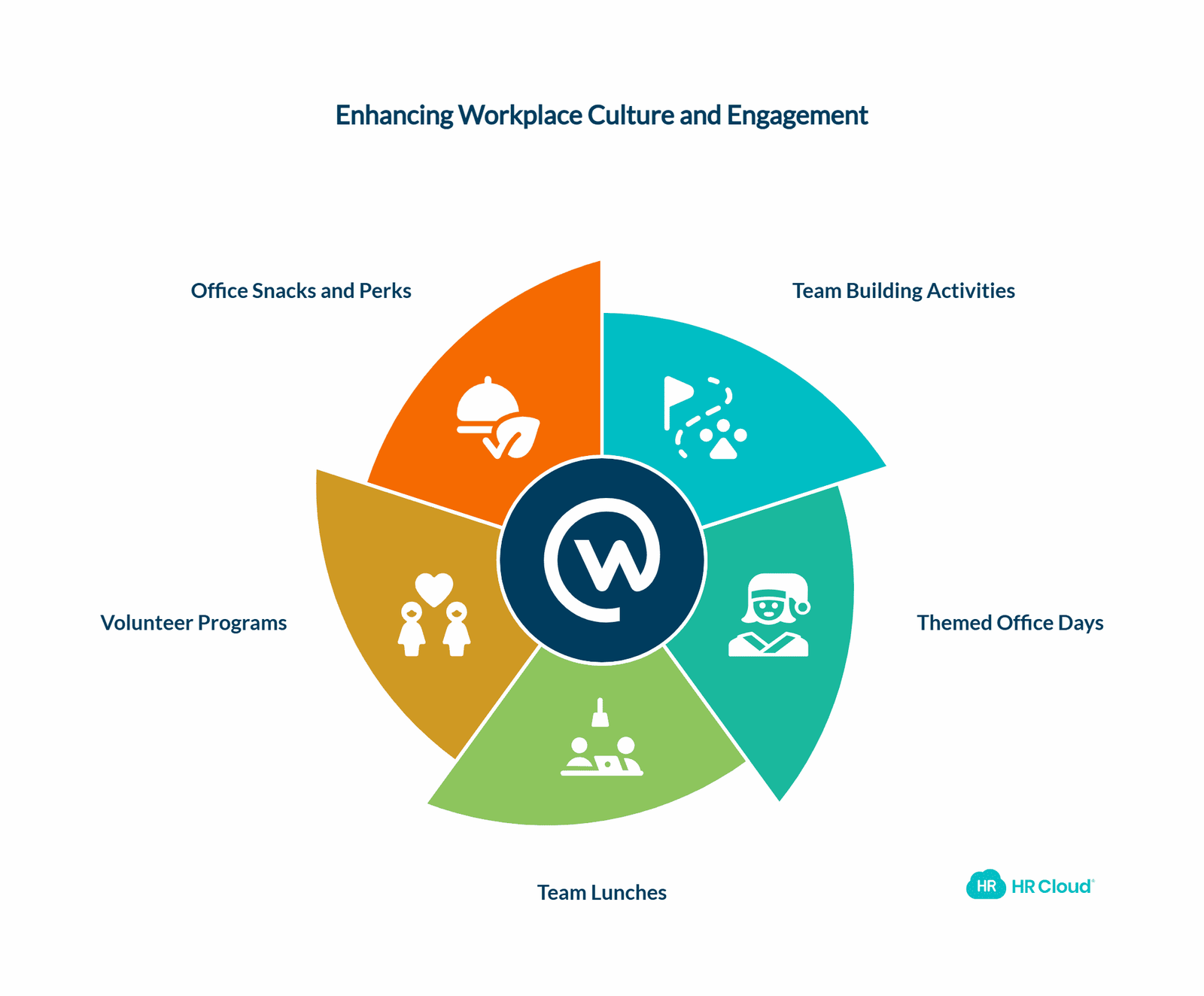
10. Hold Contests and Have Themed Office Days
Who said work can't be fun? Keep things interesting by holding games, contests, or themed days when appropriate for your workplace culture and industry.
Game Ideas That Build Connections:
- Game Night or Lunch: Trivia, Pictionary, board games, card games, or even sports
- Physical Challenges: Relay race obstacle courses, step challenges, fitness competitions
- Team Challenges: Escape rooms, scavenger hunts, cooking competitions
- Virtual Options: Online trivia, virtual escape rooms, gaming tournaments
Whether it's friendly competition or collaborative gameplay, activities that take minds off work stress help build authentic relationships within the company. As long as it's fun, cooperative, and relieves stress, it's a solid candidate for team building.
Themed Days Aligned with Celebrations:
- Major Holidays: Cook-off for Thanksgiving, costumes for Halloween, Secret Santa gift exchange for Christmas
- Cultural Celebrations: Recognition of diverse holidays and traditions within your team
- Company Milestones: Anniversary celebrations, product launch parties
- Birthdays: Personal recognition is easy to celebrate but just as easy to miss if you're not tracking
Use Workmates to highlight upcoming events, track birthdays and work anniversaries automatically, and encourage participation through gamification elements. The platform's event calendar and company feed ensure nobody misses opportunities to participate in celebrations.
Implementation Tip: Survey your team about their interests before planning activities. What seems fun to leadership may not resonate with employees. Create options for different personality types (competitive games for some, collaborative activities for others, quiet alternatives for introverts).
11. Take Employees Out to Lunch
Going out to lunch with employees provides valuable opportunities to build stronger relationships and gain insights into workplace dynamics. These informal settings often lead to more candid conversations than formal office environments.
Benefits of Team Lunches:
- Get to know team members better on a personal level
- Create comfortable environments for employees to open up about challenges
- Catch problems early through casual conversation
- Gather invaluable feedback about operations, culture, and management
- Learn what changes would make employees' jobs easier
- Identify operational inefficiencies from those closest to the work
Most veteran HR managers would agree they've had better luck identifying and addressing issues early when they already have rapport with employees built through informal interactions.
Scaling Lunch Programs:
- Small Team Lunches: Department or team-specific outings for deeper connections
- Skip-Level Lunches: Senior leaders taking individual contributors to lunch without their direct managers
- Quarterly Company-Wide Lunches: All-hands gatherings that remind everyone they're part of something bigger
- New Hire Welcome Lunches: Help new employees feel included from day one
These gatherings remind employees that they're part of something meaningful and worthwhile, not just cogs in a machine.
Implementation Tip: Provide a lunch stipend or budget rather than always making it a formal "team building expense." When managers have flexibility to spontaneously take team members to lunch, it feels more genuine than scheduled quarterly outings.
Download the free employee engagement checklist for managers
Use it to turn good intent into steady habits. Tick items, spot misses, and correct fast. The format is printable, one page, and built for hybrid and deskless teams.
Download Now
12. Volunteer as a Company
Many forward-thinking enterprises make giving back to the community a core priority. Don't just write checks to charities—make community involvement personal and participatory.
Why Volunteer Programs Matter: According to Deloitte's Human Capital Trends research, a significant majority of employees prioritize working for companies that support volunteer work and community giving. Millennials and younger generations especially value corporate social responsibility when evaluating potential employers, with many stating it significantly influences their employment decisions.
Volunteer Program Approaches:
- Team Volunteer Days: Encourage staff to volunteer together rather than only offering individual volunteer time off
- Diverse Causes: If you don't have a set organization, let employees vote on which charity or nonprofit to support each quarter
- Skills-Based Volunteering: Offer your company's professional expertise to nonprofits (marketing for a food bank, IT support for a school)
- Volunteer PTO: Provide paid time specifically for community service
- Company-Sponsored Events: Organize charity runs, fundraisers, or awareness campaigns
- Matching Programs: Match employee donations or volunteer hours with corporate contributions
Not only is this approach great for team building, but it also demonstrates your company's values in action and creates a sense of purpose beyond profit.
Use Workmates to highlight and celebrate volunteer efforts, creating visibility for these initiatives across the organization. Share photos, stories, and impact metrics from volunteer events. Recognize employees who go above and beyond in community service, further reinforcing that your company values extend beyond the office walls.
Implementation Tip: Partner with 2-3 local organizations on an ongoing basis rather than constantly changing causes. This creates deeper impact, allows employees to see the results of their efforts over time, and builds meaningful relationships with community partners.
13. Provide Office Snacks and Perks
Employees are more likely to engage positively with their work when they have access to thoughtful benefits—and quality snacks definitely qualify. You don't need to spend a fortune on professional catering or bog your team down with junk food.
Healthy Snack Options:
- Fresh fruit (bananas, apples, oranges, berries)
- Vegetables with hummus or other dips
- Nuts and trail mix
- Dark chocolate
- Yogurt and granola
- String cheese
- Whole-grain crackers
- Popcorn
- Protein bars
These nutritious options keep employees both satisfied and healthy, supporting energy levels throughout the day. Having quality snacks available even serves as an extra incentive during talent recruitment—candidates notice when companies invest in small daily comforts.
Consider using snack delivery services or rotating snack selections based on employee preferences. Some companies let different teams "own" snack selection for a month, adding variety and giving everyone a voice in office perks.
Implementation Tip: Survey employees about dietary restrictions and preferences before stocking your kitchen. Include options for common restrictions (gluten-free, dairy-free, nut-free, vegan) to ensure all employees feel included.
Performance and Development Strategies
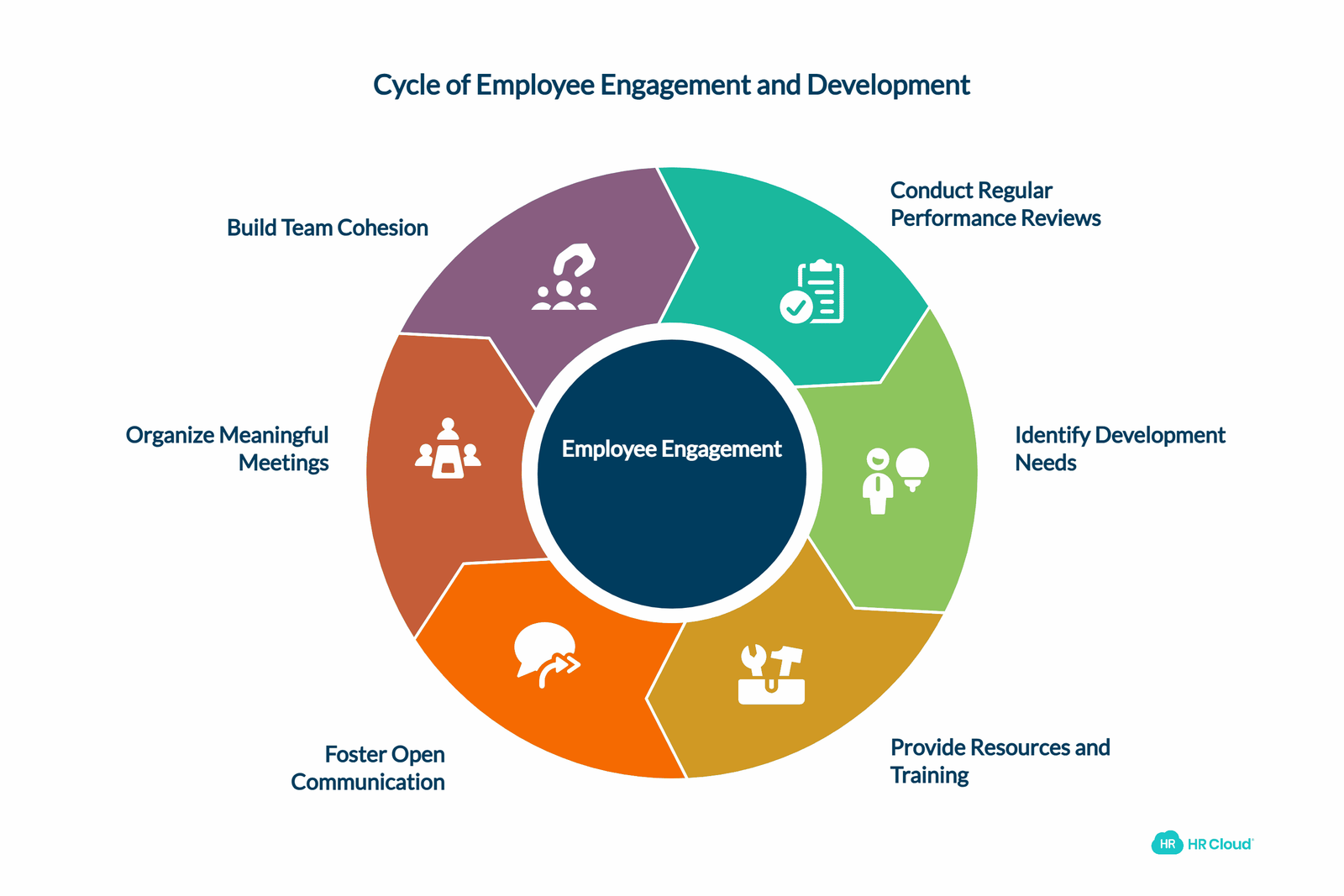
14. Review Performance Regularly to Gauge Happiness
Employees who regularly get to use their strengths, skills, and abilities are as much as six times more likely to be engaged at work—and 8% more productive—according to Gallup research on employee strengths.
Hold regular performance conversations with dual aims:
1. Performance Assessment: Gauging progress toward goals and evaluating skill development
2. Well-Being Check-Ins: Assessing overall happiness, engagement, and potential obstacles
If employees aren't showing the growth their managers expected, there's often an underlying reason worth exploring. Maybe they're struggling with unclear expectations, lack necessary resources or training, feel underutilized, or are dealing with personal challenges affecting work.
Making Reviews Effective:
- Make assessments a two-way conversation, not a one-sided evaluation
- Don't just talk at them—give them genuine opportunities to share their perspective
- Ask about their career goals and aspirations
- Inquire what you or their supervisors could do better as leaders
- Discuss what changes would improve their outlook and performance
- Get them to understand you take their development seriously
- If something can be identified that will help them succeed, commit to making that happen
This approach proves beneficial both for individual employees and for organizational success. When employees feel genuinely heard during reviews, they're more likely to stay engaged, share concerns before they become crises, and invest in their own development.
Utilize performance tracking features in Workmates to make review processes more efficient and data-driven. The platform provides valuable employee analytics showing recognition patterns, participation in company initiatives, and engagement trends that inform more meaningful performance conversations. Real-time feedback capabilities supplement formal reviews with ongoing check-ins.
Implementation Tip: Shift from annual reviews to quarterly conversations with monthly check-ins. More frequent, lighter-touch discussions prevent surprises and allow for course corrections throughout the year rather than only discovering issues months after they emerge.
15. Hold Regular Meetings In and Outside the Office
With all the digital collaboration tools available today, it doesn't matter if your team is distributed across the globe or sitting in adjacent cubicles—there are ways for them to not only work effectively together but genuinely connect on a human level.
Making Meetings Meaningful Inside the Office:
- Hold regular team meetings so everyone stays aligned on priorities and progress
- Create spaces for collaboration where people can share ideas and ask for help
- Use structured agendas but leave room for organic discussion
- Rotate meeting facilitators to give everyone a voice
- Mix formats: stand-ups, working sessions, brainstorming workshops, retrospectives
When people come together to share ideas, fewer potentially great innovations escape the organization. Some of the greatest breakthroughs started from collaborative efforts where diverse perspectives intersected.
For Remote Teams:
- Video conference meetings maintain face-to-face connection that emails cannot replace
- Record meetings for team members in different time zones
- Use virtual whiteboards and collaboration tools for real-time co-creation
- Implement "cameras-on" norms for key meetings to build authentic connections
Emails and Slack messages cannot always replace the nuances and camaraderie of face-to-face interaction, whether that interaction happens in person or via high-quality video.
Connecting Outside the Office:
- Organize opportunities for your people to connect beyond work discussions
- Hold private company events at rented venues (holiday parties, summer picnics)
- Invite local staff to join together at casual venues (coffee shops, restaurants, bars)
- For distributed teams with budget, gather everyone for annual or bi-annual retreats
- Create informal interest-based groups (book clubs, running clubs, gaming groups)
You want your team to feel like a cohesive group bonded by shared experiences. Teams that have fun together often stay together, creating memories that strengthen professional relationships and carry back into daily work.
Use Workmates' internal communication tools to keep everyone connected regardless of location. Create channels for different teams, projects, and interest groups. Share photos and celebrations from in-person gatherings to extend the positive feelings to those who couldn't attend. Use the platform's events calendar to promote upcoming gatherings and track RSVPs.
Implementation Tip: Create a social committee with a budget and autonomy to plan regular events. Rotate committee membership quarterly so different voices shape social programming.
Emerging Employee Engagement Trends for 2025
The employee engagement landscape continues evolving. Here are the strategies gaining traction:
AI-Powered Engagement Insights: Platforms like Workmates now use analytics to identify at-risk employees based on recognition patterns, survey sentiment, and participation metrics—allowing proactive intervention before disengagement leads to turnover.
Micro-Engagement Moments: Rather than relying solely on annual engagement surveys, leading organizations implement "micro-moments" of connection: 15-second pulse checks, spontaneous recognition, and bite-sized learning delivered through mobile apps.
Frontline-First Design: With 80% of the global workforce being deskless, successful engagement platforms prioritize mobile-first experiences. Workmates was built specifically for frontline workers in healthcare, manufacturing, and retail—ensuring all employees, not just office workers, feel valued.
Values-Driven Recognition: Gen Z employees (now 30% of the workforce) demand authentic recognition tied to organizational values. Generic "good job" messages no longer resonate—specificity and values alignment matter.
Hybrid Engagement Equity: Organizations must ensure remote employees receive equal recognition and advancement opportunities. Tools like Workmates solve this through virtual channels, mobile kudos, and analytics that surface potential "out of sight, out of mind" biases.
Measuring Employee Engagement Success
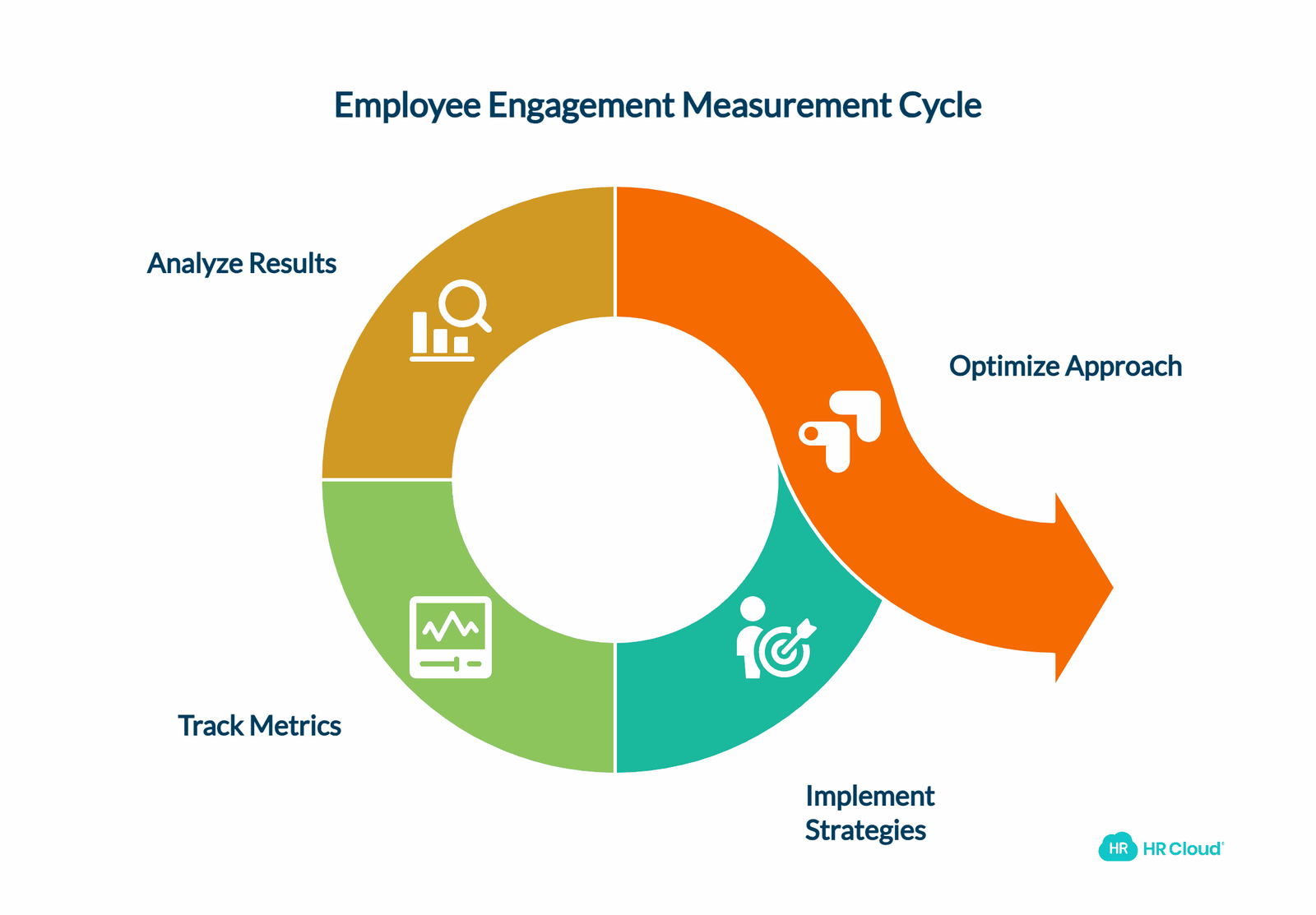
Implementing employee engagement strategies without measuring results is like navigating without a compass. You need clear metrics to understand what's working, where gaps exist, and how to optimize your approach.
Key Engagement Metrics to Track
Quantitative Metrics:
1. Employee Net Promoter Score (eNPS): Would employees recommend your company as a place to work?
2. Turnover Rate: Both voluntary and involuntary departure rates
3. Retention Rate: Percentage of employees staying beyond key milestones (90 days, 1 year, 3 years)
4. Absenteeism Rate: Unplanned absences indicating disengagement
5. Participation Rates: Engagement in recognition programs, surveys, company events
6. Productivity Metrics: Output per employee, project completion rates, quality scores
7. Internal Promotion Rate: Percentage of roles filled internally vs external hires
Qualitative Metrics:
1. Pulse Survey Results: Regular sentiment checks on key engagement drivers
2. Exit Interview Themes: Patterns in why people leave
3. Stay Interview Insights: Understanding why top performers stay
4. 360-Degree Feedback: How employees rate managers and leadership
5. Recognition Activity: Volume and quality of peer-to-peer recognition
Calculating Your Engagement Score
Simple eNPS Approach:
1. Ask: "How likely are you to recommend this company as a place to work?" (0-10 scale)
2. Segment responses:
- Promoters (9-10): Highly engaged advocates
- Passives (7-8): Satisfied but not enthusiastic
- Detractors (0-6): Disengaged or unhappy
3. Calculate: % Promoters - % Detractors = eNPS (-100 to +100)
Benchmark Ranges:
- Above +50: Excellent engagement
- +10 to +50: Good engagement
- 0 to +10: Moderate engagement
- Below 0: Critical engagement issues
“We highly recommend Workmates as it gives us the ability to communicate and connect our workforce.”

— Andrea Bermudez, Organizational & Talent Development Manager

Using HR Cloud to Measure Engagement
Workmates provides comprehensive analytics that connect recognition metrics to broader HR outcomes:
- Recognition Gap Identification: Dashboards highlighting employees who haven't received recent recognition
- Participation Tracking: Monitoring engagement in communication, surveys, and recognition activities
- Trend Analysis: Spotting engagement patterns over time and across departments
- ROI Demonstration: Connecting engagement initiatives to retention and productivity improvements
Implementation Tip: Don't wait until you have perfect measurement systems to start engagement initiatives. Begin with 3-5 key metrics you can track consistently, implement your strategies, and refine your measurement approach as you learn what matters most for your organization.
How to Implement Employee Engagement Strategies
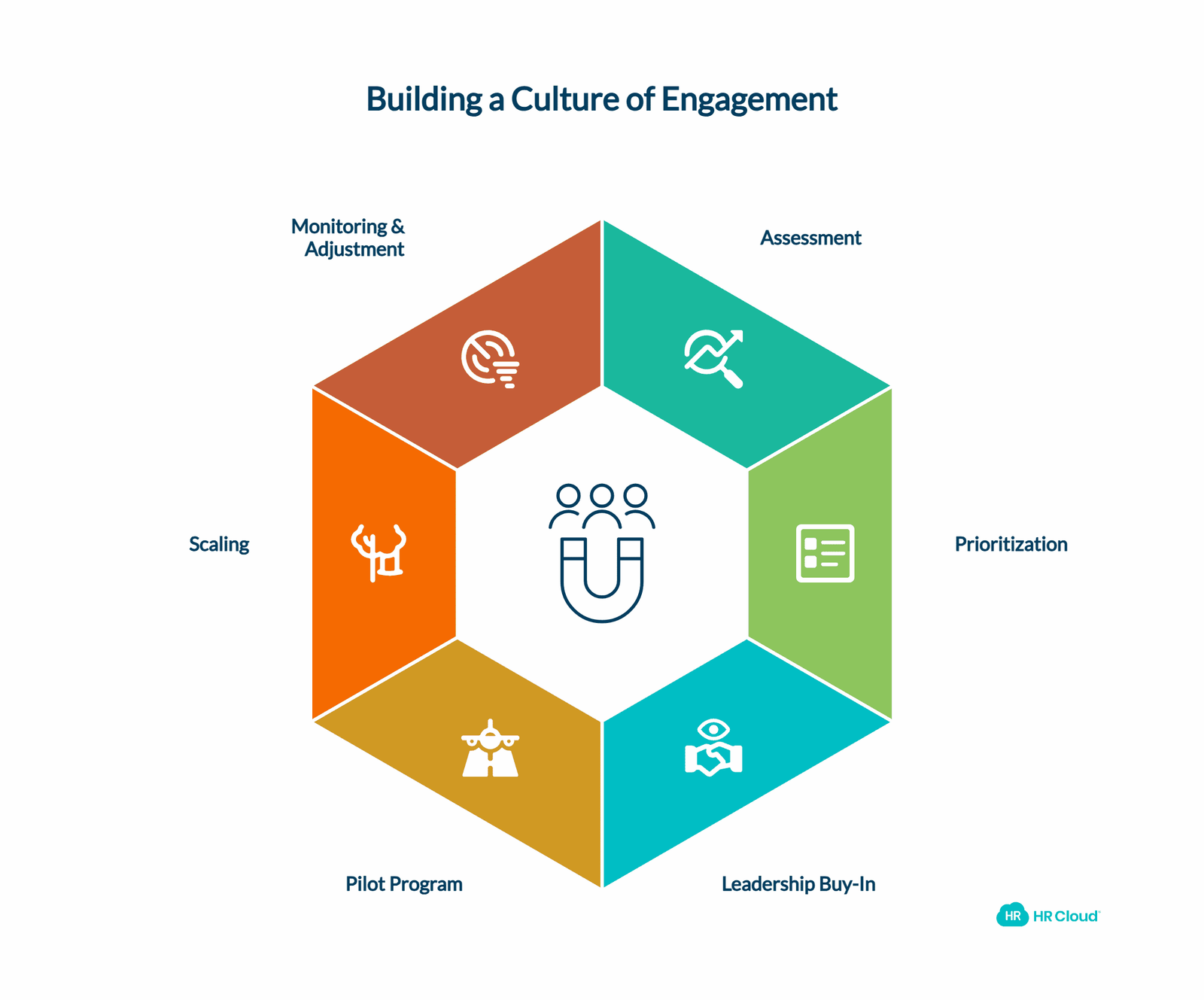
Reading about employee engagement ideas is one thing—actually implementing them effectively is another. Here's your practical roadmap for turning these concepts into reality.
Step 1: Assess Your Current State
Before launching new initiatives, understand where you're starting:
- Conduct an engagement survey to establish baseline metrics
- Analyze existing data (turnover rates, absenteeism, performance trends)
- Interview employees at various levels about what's working and what isn't
- Review exit interview themes from the past year
- Benchmark your current practices against industry standards
Step 2: Prioritize Based on Impact and Feasibility
You can't implement all 15 strategies simultaneously. Use this prioritization framework:
Quick Wins (High Impact, Low Effort):
- Peer recognition programs via existing tools
- Regular feedback channels
- Themed office days and celebrations
- Snacks and small perks
Strategic Investments (High Impact, Higher Effort):
- Comprehensive onboarding software
- Career development programs
- Recognition and rewards platforms
- Remote work policies
Nice-to-Haves (Lower Impact or Higher Maintenance):
- Elaborate volunteer programs
- Frequent off-site gatherings
- Complex gamification systems
Step 3: Get Leadership Buy-In
Build your business case:
- Present data on the cost of disengagement (turnover, lost productivity)
- Show ROI from industry research on engagement initiatives
- Start with a pilot program to demonstrate results before scaling
- Identify executive sponsors who will champion engagement efforts
- Connect engagement goals to business objectives leadership cares about
Step 4: Start with a Pilot
Test your approach before rolling out organization-wide:
- Choose 1-2 departments or locations for initial implementation
- Run the pilot for 8-12 weeks with clear success criteria
- Gather feedback from participants throughout
- Measure results against your baseline metrics
- Refine your approach based on what you learn
Step 5: Scale Thoughtfully
Once your pilot proves successful:
- Share results and testimonials from pilot participants
- Create implementation guides and training for managers
- Provide adequate resources and budget for rollout
- Establish clear ownership and accountability
- Set realistic timelines (culture change takes time)
- Celebrate early wins to build momentum
Step 6: Monitor, Adjust, and Sustain
Engagement isn't a one-time project—it's an ongoing commitment:
- Review engagement metrics monthly or quarterly
- Solicit continuous feedback on what's working
- Adjust programs based on participation and results
- Keep initiatives fresh with new recognition categories, events, and opportunities
- Recognize and reward managers who excel at engagement
- Make engagement a standing agenda item in leadership meetings
Common Implementation Pitfalls to Avoid:
- Launching too many initiatives at once and doing none well
- Treating engagement as an HR-only responsibility rather than a leadership priority
- Implementing programs without adequate training or communication
- Failing to allocate sufficient budget and resources
- Not holding leaders accountable for engagement outcomes
- Giving up too quickly when results don't appear immediately
Industry-Specific Engagement Strategies
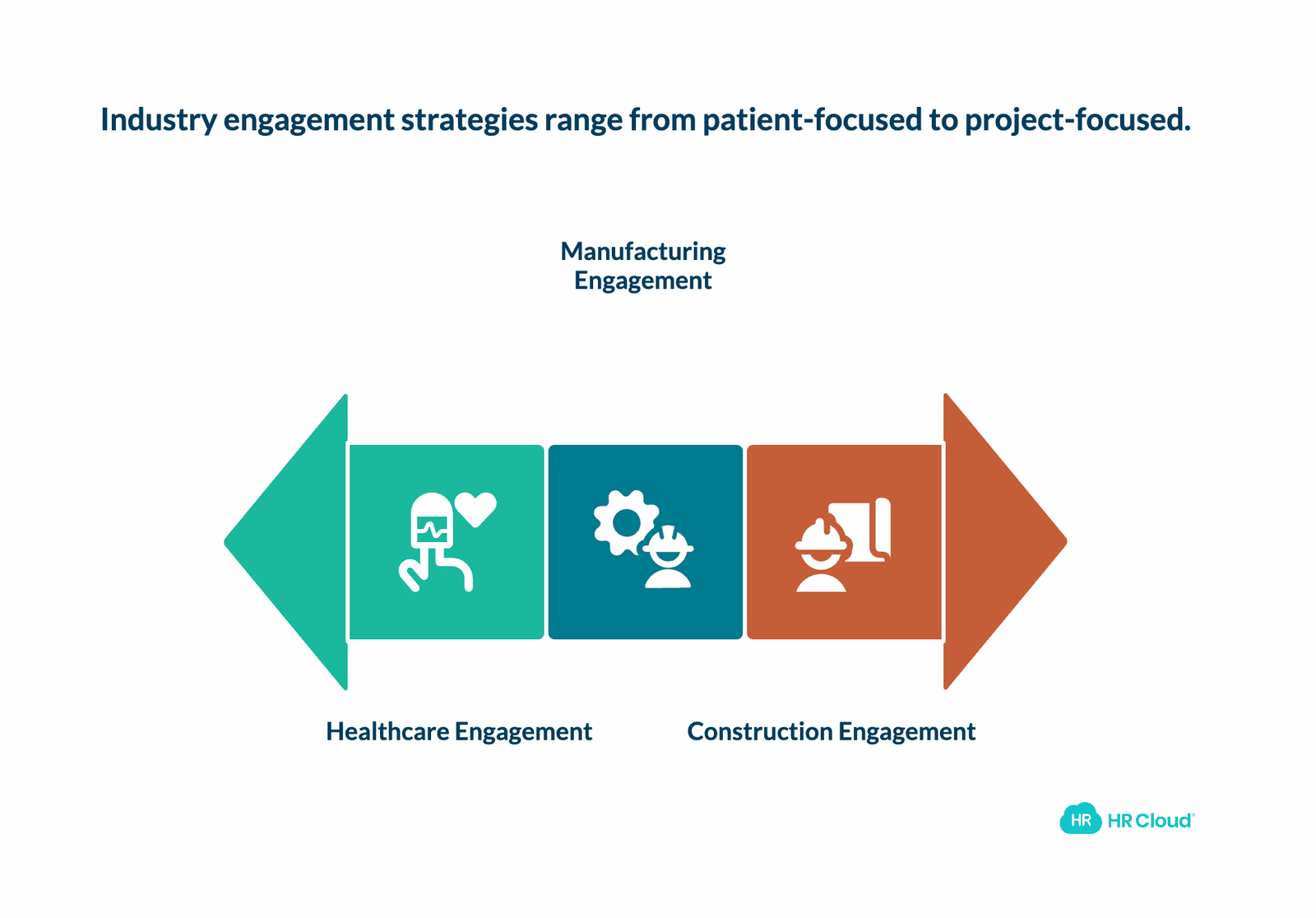
Healthcare Engagement
Healthcare organizations face unique challenges: shift-based schedules, high stress, and limited access to desktop computers. Effective approaches include:
- Mobile-first recognition enabling real-time acknowledgment of exceptional patient care
- Digital shift handoff communications ensuring continuity across 24/7 operations
- Milestone celebrations for years of service, certifications earned, patient satisfaction scores
- Anonymous pulse surveys addressing burnout and safety concerns
- Flexible PTO policies accommodating unpredictable shift changes
Manufacturing Engagement
Frontline manufacturing workers often feel disconnected from office-based corporate culture. Solutions:
- Digital signage in break rooms and production floors showcasing recognition and safety achievements
- Safety milestone celebrations with tangible rewards (branded gear, extra break time)
- Skills training programs with clear paths from operator to lead to supervisor
- Tablet-based onboarding for employees without corporate email addresses
- Production team competitions with leaderboards visible on factory floor
Construction Engagement
Project-based construction work creates inherent disconnection. Address through:
- Mobile check-ins ensuring jobsite workers receive company communications
- Photo-based recognition celebrating project milestones and craftsmanship excellence
- Safety-focused gamification rewarding zero-incident streaks
- Cross-project knowledge sharing connecting workers across geographically dispersed sites
- Equipment and certification tracking through mobile asset management
“One of the biggest benefits from using Workmates platform is that our associates are more connected to both the company and each other. Associates can comment, react, and provide feedback directly through the platform from their smartphone or desktop devices.”

— Daniella Nickerson, Human resources

Employee Engagement Tools and Software
If any of these employee engagement ideas sparked excitement while you pictured new ways to energize your team, we're here to help you turn that vision into reality.
Get in touch to explore how HR Cloud's suite of solutions can support your engagement strategy:
Workmates: Our comprehensive employee engagement platform combines:
- Peer-to-peer recognition and rewards
- Internal communication channels
- Pulse surveys and feedback tools
- Analytics and reporting dashboards
- Mobile apps for frontline and remote workers
- Integration with Slack, Microsoft Teams, and major HRIS platforms
As one of the top employee recognition companies, we offer a global employee recognition platform that caters to businesses of all sizes—from small businesses to enterprises managing thousands of employees across multiple locations.
Onboard: Ensure engagement starts from day one with:
- Automated onboarding workflows
- Digital forms and e-signatures
- Personalized new hire portals
- Real-time progress tracking
- Compliance management for I-9 and E-Verify
- 3X faster onboarding with 30% improved data accuracy
HR Cloud HRIS: Centralize your HR operations with:
- Employee records management
- Time-off tracking and PTO calendars
- Performance management tools
- Customizable workflows
- Comprehensive reporting
A tight-knit, more communicative, and all-around more productive work environment is possible with our expert guidance and acclaimed technology. To see engagement levels at your company rise faster than you ever thought possible, reach out and we'll help you reap the benefits of a truly engaged workforce. Book Your Free Demo
People Also Ask About Employee Engagement Ideas
What are some low-cost employee engagement ideas?
Low-cost engagement strategies include: peer recognition programs (free or minimal cost), flexible work schedules, lunch-and-learn sessions, themed office days, employee spotlight features, birthday/anniversary celebrations, walking meetings, informal feedback sessions, and employee-led interest groups. Many high-impact initiatives require time investment rather than budget.
How can small businesses improve employee engagement?
Small businesses have advantages in engagement: closer relationships, faster decision-making, and more flexibility. Focus on: regular one-on-ones with leadership, transparent communication about company direction, cross-training opportunities, flexible schedules, meaningful recognition, and employee input in decision-making. Platforms like Workmates scale for teams of 50-500+ employees.
What employee engagement activities work for remote teams?
Remote engagement activities include: virtual coffee chats, online team-building games, digital recognition through platforms like Workmates, virtual lunch-and-learns, async video updates from leadership, remote-friendly volunteer opportunities, digital wellness challenges, and celebration of milestones via video calls. Mobile-first tools ensure equal participation.
How do you measure employee engagement effectively?
Measure engagement through: pulse surveys (weekly/monthly short check-ins), eNPS scores (employee Net Promoter Score), participation rates in recognition and communication, turnover and retention metrics, absenteeism tracking, and 360-degree feedback results. Platforms like Workmates provide real-time analytics showing recognition patterns, survey sentiment, and engagement trends.
What's the difference between employee engagement and employee experience?
Employee experience encompasses all touchpoints an employee has with the organization (onboarding, workspace, tools, benefits, culture). Employee engagement is the emotional outcome of that experience—how connected, motivated, and committed employees feel. Great experience drives engagement, but engagement specifically measures emotional investment.
Ready to Transform Your Employee Engagement?
The 15 strategies outlined above aren't theoretical—they're proven approaches that organizations across healthcare, manufacturing, technology, and retail use daily to create workplaces where people genuinely want to contribute.
HR Cloud's integrated platform brings these strategies to life:
Workmates for peer recognition, internal communication, and pulse surveys
Onboard for streamlined new hire experiences that engage from day one
People HRIS for centralized employee data and self-service tools
Mobile-First Design ensuring frontline and remote workers stay connected
See it in action: Book Your Free Demo to discover how HR Cloud helps organizations onboard 3X faster, reduce turnover by 30%, and build cultures where employees thrive.
Or explore our resources:
- Calculate your employee turnover costs
- Download: The Ultimate Onboarding Checklist
- Read: Top 10 Best Employee Engagement Software

Experience how Workmates can transform communication and strengthen culture—all in one powerful platform
Book Your Free DemoFrequently Asked Questions About Employee Engagement
What is employee engagement and why is it important?
Employee engagement refers to the emotional commitment and enthusiasm employees feel toward their work, team, and organization. It goes beyond job satisfaction—engaged employees are invested in company success and willing to go above and beyond.
Engagement is crucial because it directly impacts productivity (21% higher), profitability (22% higher), customer satisfaction, and employee retention. Organizations with high engagement see dramatically better business outcomes across all key metrics, according to Gallup research.
How does employee recognition improve engagement?
Recognition boosts morale by making employees feel valued and appreciated for their contributions. It reinforces positive behaviors you want to see more of, creates a culture of appreciation, and demonstrates that individual efforts matter to organizational success.
Peer-to-peer recognition is particularly powerful, as acknowledgment from colleagues carries authentic weight. Platforms like Workmates make recognition frequent, visible, and tied to company values—driving long-term engagement and performance improvements.
What are the best employee engagement strategies in 2025?
Top strategies for today's workforce include:
- Flexible remote and hybrid work arrangements
- Gamified recognition and reward systems
- Continuous feedback tools (pulse surveys, always-on feedback channels)
- Robust skill development and career pathing programs
- Streamlined onboarding experiences that engage from day one
- Peer-to-peer recognition platforms accessible via mobile
- Transparent communication channels that give employees a voice
- Work-life balance support and wellness initiatives
The most effective approaches combine multiple strategies tailored to your specific workforce demographics and industry.
Which employee rewards and recognition platforms are most effective?
The most effective platforms combine ease of use with comprehensive features:
- Integration: Seamless connection with existing tools (Slack, Teams, HRIS)
- Mobile Accessibility: Full functionality for frontline and remote workers
- Peer Recognition: Easy ways for employees to recognize each other
- Customization: Rewards and recognition aligned with company values
- Analytics: Data showing program effectiveness and engagement gaps
- Flexibility: Both monetary and non-monetary recognition options
Platforms like HR Cloud's Workmates stand out for combining peer-to-peer recognition, gamification, communication tools, performance tracking, and seamless HRIS integration in one unified solution.
How can companies create a culture of continuous feedback?
Creating continuous feedback culture requires:
- Regular Pulse Surveys: Brief, frequent check-ins rather than only annual surveys
- Anonymous Feedback Channels: Ensure psychological safety for honest input
- One-on-One Conversations: Regular manager check-ins beyond formal reviews
- Action and Transparency: Visible follow-through on feedback received
- Recognition of Feedback: Acknowledging and thanking people for sharing
- Multiple Channels: Surveys, suggestion boxes, town halls, skip-level meetings
Use employee engagement software to systematize pulse surveys, track feedback over time, and ensure consistent follow-up. The key is closing the feedback loop—showing employees their input leads to real changes.
What makes a successful employee onboarding experience?
Successful onboarding combines administrative efficiency with cultural immersion:
- Pre-boarding: Engage new hires before their start date with welcome materials
- Digital Workflows: Eliminate paperwork through automated, mobile-friendly systems
- Clear Expectations: Well-defined responsibilities, goals, and success criteria
- Cultural Integration: Introduction to company values, norms, and team dynamics
- Early Wins: Opportunities to contribute meaningfully in the first weeks
- Ongoing Support: Regular check-ins throughout the first 90-180 days
- Relationship Building: Connections with peers, mentors, and leadership
A smooth digital onboarding system like Onboard handles administrative tasks efficiently, freeing new hires to focus on building relationships and ramping up productivity faster.
How do employee engagement tools help reduce turnover?
Engagement tools reduce turnover through multiple mechanisms:
- Recognition Visibility: Employees feel appreciated and valued regularly
- Communication Clarity: Clear channels prevent misunderstandings and isolation
- Development Support: Tools highlight career paths and skill-building opportunities
- Feedback Loops: Issues surface and get addressed before becoming resignation triggers
- Connection Building: Platforms help employees form relationships across the organization
- Data Insights: Analytics help HR identify flight risks before they leave
Organizations using comprehensive engagement platforms like Workmates report retention improvements when recognition and feedback tools are actively utilized.
Can remote teams stay engaged and motivated?
Absolutely! Remote and hybrid teams can be just as engaged as in-office teams—sometimes more so—when companies use the right tools and strategies.
Essential Elements:
- Frequent Communication: Regular video meetings, async updates, open channels
- Visible Recognition: Platforms that make appreciation public across the distributed team
- Inclusive Practices: Ensuring remote workers have equal access to information and opportunities
- Intentional Connection: Structured opportunities for relationship-building beyond work tasks
- Clear Expectations: Well-defined goals and success metrics that don't rely on "visibility"
- Technology Investment: Tools that enable seamless collaboration regardless of location
With Workmates' mobile apps and remote-friendly features, distributed employees can give and receive recognition, participate in company culture, and stay connected to their team from anywhere.
How long does it take to see results from engagement initiatives?
Timeline varies by initiative type:
Quick Wins (4-8 weeks):
- Recognition program participation rates
- Improved communication and feedback frequency
- Employee sentiment changes in pulse surveys
Medium-Term Results (3-6 months):
- Turnover rate reductions
- Productivity improvements
- Engagement score increases
Long-Term Impact (6-12+ months):
- Cultural transformation
- Employer brand improvements
- Significant retention and performance gains
Remember that engagement is a journey, not a destination. Start measuring from your baseline and look for positive trends rather than expecting overnight transformation.
What's the ROI of investing in employee engagement?
Research shows strong ROI across multiple dimensions:
Financial Returns:
- 21% higher profitability (Gallup)
- 17% higher productivity
- Reduced turnover costs (replacing an employee costs 50-200% of their salary)
- Lower absenteeism (41% reduction)
Operational Benefits:
- 10% higher customer satisfaction
- Fewer safety incidents
- Better quality outputs
- Higher innovation rates
Strategic Advantages:
- Stronger employer brand
- Easier talent acquisition
- Faster adaptation to change
- More resilient organizational culture
The exact ROI depends on your starting point and which initiatives you implement, but organizations consistently see returns that far exceed their investment in engagement tools and programs.
Ready to transform your employee engagement strategy? Schedule a demo with HR Cloud to see how Workmates and Onboard can help you build a workplace your employees will love.
About the author

Keep Reading


Like What You Hear?
We’d love to chat with you more about how HR Cloud® can support your business’s HR needs.
Book Your Free Demo