
AI and Authenticity: Finding the Right Balance in Enterprise Recognition Platforms

This blog explores how HR leaders can balance AI automation with authentic human recognition to make employee appreciation both efficient and meaningful. It explains the role of AI in surfacing moments worth celebrating, suggesting timely messages, and scaling recognition programs without replacing genuine human sentiment. The post offers actionable steps for pairing AI insights with personalized touches, setting guardrails for tone, and training leaders to use technology thoughtfully. The biggest benefit: a framework that helps organizations leverage AI to enhance—not dilute—authentic recognition, strengthen culture, and drive engagement.
The employee recognition landscape splits between AI-heavy platforms risking authenticity loss and basic tools lacking strategic depth. According to industry research, the majority of employees report that recognition significantly boosts engagement, yet organizations struggle with recognition software that feels automated or disconnected. The solution isn't more artificial intelligence—it's finding the right balance between technology and human connection. HR Cloud's Workmates demonstrates this balance through social recognition features, values-based appreciation systems, and robust analytics while using simple automation only for administrative tasks like milestone notifications. This approach maintains authentic peer connections while providing the mobile functionality and integration capabilities enterprises need for scalable employee engagement programs.
Key Takeaways
- Human connection drives recognition success: Industry studies suggest peer recognition can significantly increase engagement because it comes from authentic work relationships, not automated systems
- Simple automation beats AI complexity: The most effective platforms automate administrative tasks (milestone reminders, notifications) while preserving human judgment in actual recognition moments
- Values-based recognition creates strategic impact: Platforms that align recognition with company values see better cultural reinforcement and meaningful appreciation
- Social recognition scales authentically: Peer-to-peer platforms like Workmates enable organization-wide appreciation without losing personal touch
- Mobile-first design supports hybrid teams: Recognition must work equally well for remote, hybrid, and in-office employees through seamless mobile experiences
- Integration eliminates friction: Recognition embedded in existing workflows (Slack, Teams, HRIS systems) sees higher adoption than standalone platforms
The Employee Recognition Crisis: Why Most Programs Fail
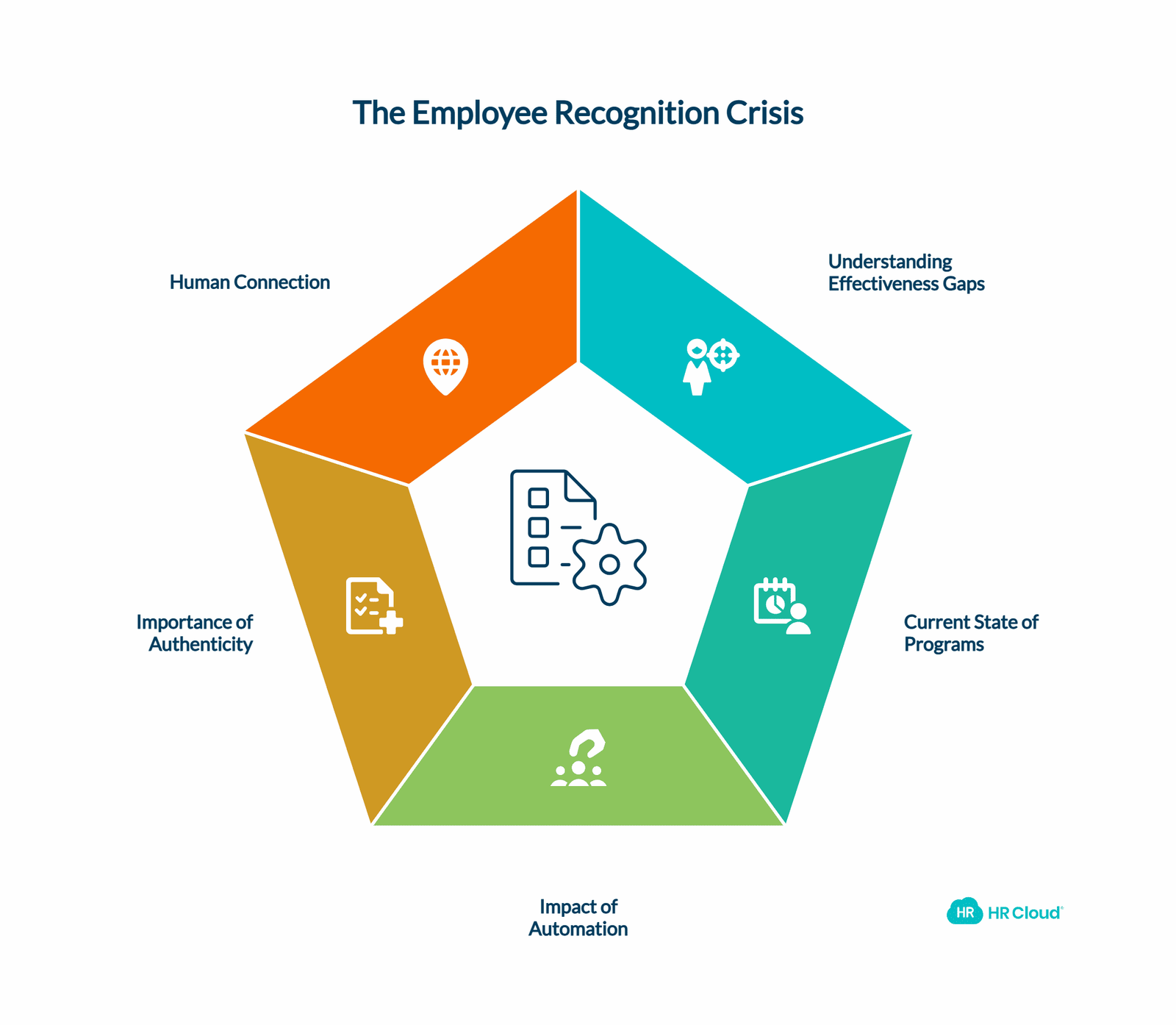
Understanding Recognition Program Effectiveness Gaps
Sarah, an HR director at a growing tech company, thought her team had employee recognition figured out. They'd implemented an expensive employee recognition platform with AI-powered suggestions and automated milestone alerts. But when she dug into their engagement data, she found something unexpected: employees were getting recognized more frequently, but they felt less appreciated than before.
The problem wasn't quantity—it was authenticity. Their recognition software had become so automated that it felt hollow.
Current State of Employee Recognition Programs
This reflects a broader challenge facing modern workplaces and HR technology adoption. According to SHRM research, while the vast majority of organizations have recognition programs, only a small percentage rate their effectiveness as high. The missing piece isn't better technology—it's maintaining human connection as programs scale.
Recognition Program Research Findings:
- Most organizations have some form of recognition program
- Only a fraction consider their programs highly effective
- Research indicates employees who don't feel genuinely recognized are significantly more likely to consider leaving
- Recognition that feels scripted or automated often backfires, creating cynicism rather than appreciation
Research from Harvard Business Review demonstrates that meaningful recognition, even for small accomplishments, significantly impacts employee motivation and performance. However, workplace culture studies show that automated recognition often undermines these benefits.
Struggling with recognition program effectiveness? Schedule a consultation with HR Cloud to explore human-centered approaches that drive real engagement.
The AI Recognition Dilemma: When Technology Replaces Human Connection
The Over-Automation Problem in Employee Recognition
Many recognition platform vendors are racing to add artificial intelligence features—automated message generation, predictive analytics, and smart recommendations. But this creates a new problem: employee recognition that feels increasingly artificial and disconnected from authentic workplace relationships.
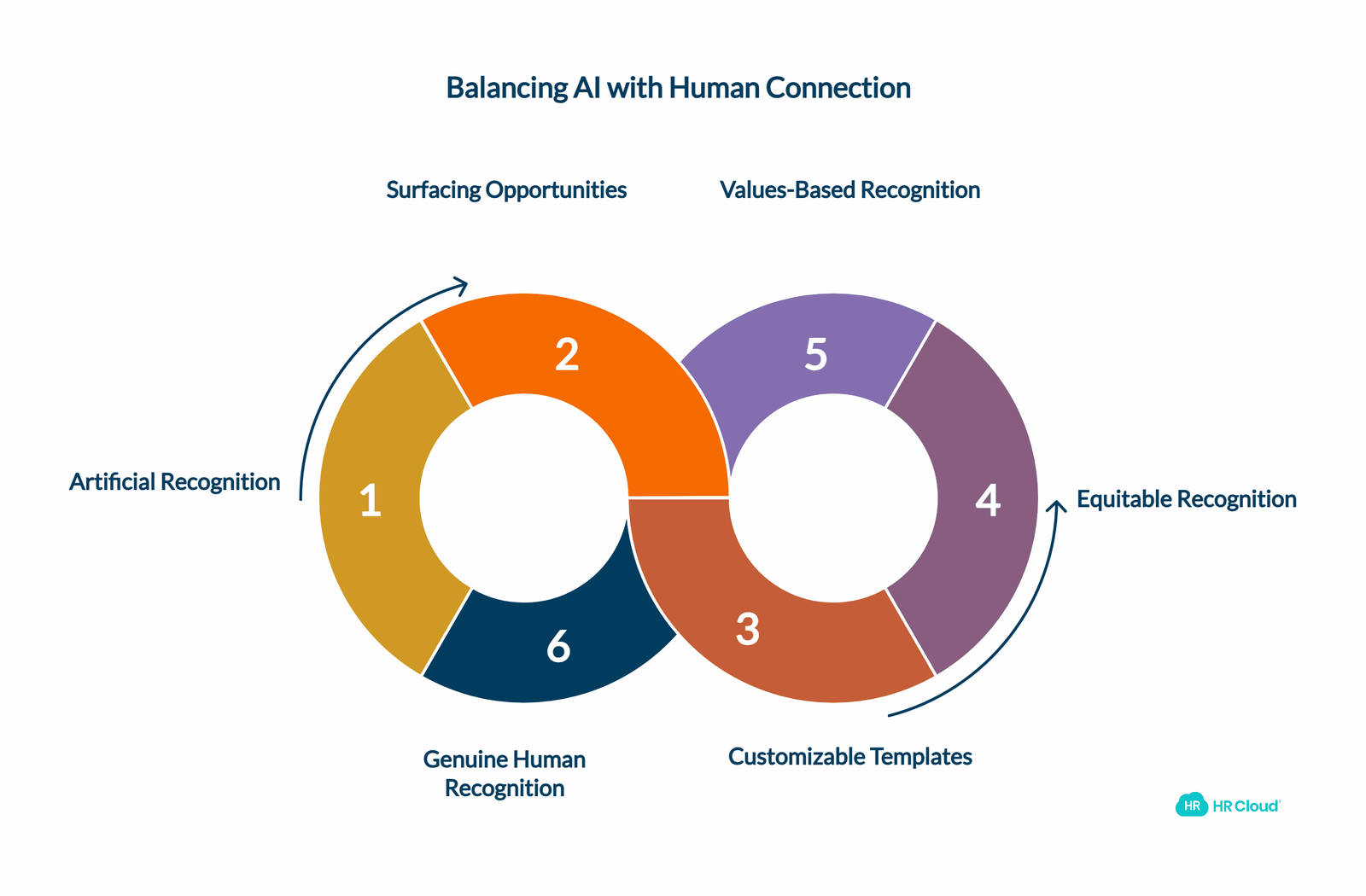
The real question for HR leaders isn't how much AI to add to recognition programs, but how to maintain authentic human connection while leveraging helpful automation for administrative efficiency. McKinsey research shows that the most effective employee engagement platforms find this balance by focusing on what technology does best (surfacing opportunities, tracking patterns) while preserving what humans do best (genuine appreciation and meaningful relationships).
Smart Automation vs. Artificial Appreciation
The Right Way to Use Automation in Recognition:
Platforms can automatically remind teams about work anniversaries, surface milestone achievements, and provide templates for recognition messages. This removes the administrative burden of remembering every celebration opportunity while ensuring consistent program participation across all departments and locations.
Successful automation enhances human connection by:
- Surfacing recognition opportunities based on project completions, work anniversaries, and achievement milestones
- Providing customizable templates that save time while preserving personal voice and specific appreciation
- Ensuring recognition reaches all employees equitably through demographic and participation tracking
- Creating consistent celebration of company values through guided recognition frameworks
Rather than complex AI algorithms, HR Cloud's Workmates focuses on making human recognition easier and more visible through social recognition networks. The platform provides tools like customizable badges tied to company values, social feeds for peer appreciation, and simple analytics—without overwhelming users with AI complexity that can reduce authentic human interaction.

Creating Recognition That Feels Genuinely Human
Peer Recognition as the Foundation: The most effective recognition platforms facilitate peer-to-peer appreciation because it comes from colleagues who understand the daily work challenges and individual contributions. Gallup research demonstrates that peer recognition creates stronger workplace relationships and higher engagement compared to top-down appreciation alone.
Values-Based Recognition Systems: Rather than generic appreciation, leading platforms enable recognition tied to specific company values. When employees give recognition, they connect achievements to organizational principles like "Innovation," "Collaboration," or "Customer Focus," creating strategic culture reinforcement alongside authentic appreciation.
Mobile-First Design for Inclusion: Recognition platforms must work equally well for office workers, remote teams, and frontline employees. Workmates provides comprehensive mobile functionality including chat capabilities, announcement viewing, recognition features, and survey participation through mobile-optimized interfaces designed specifically for diverse workforce needs.
Ready to see social recognition that feels genuinely human? Schedule a demo of HR Cloud's Workmates to explore peer-driven appreciation systems.
How HR Cloud's Employee Recognition Platform Strikes the Right Balance
Social Recognition Software Built for Enterprise Scalability
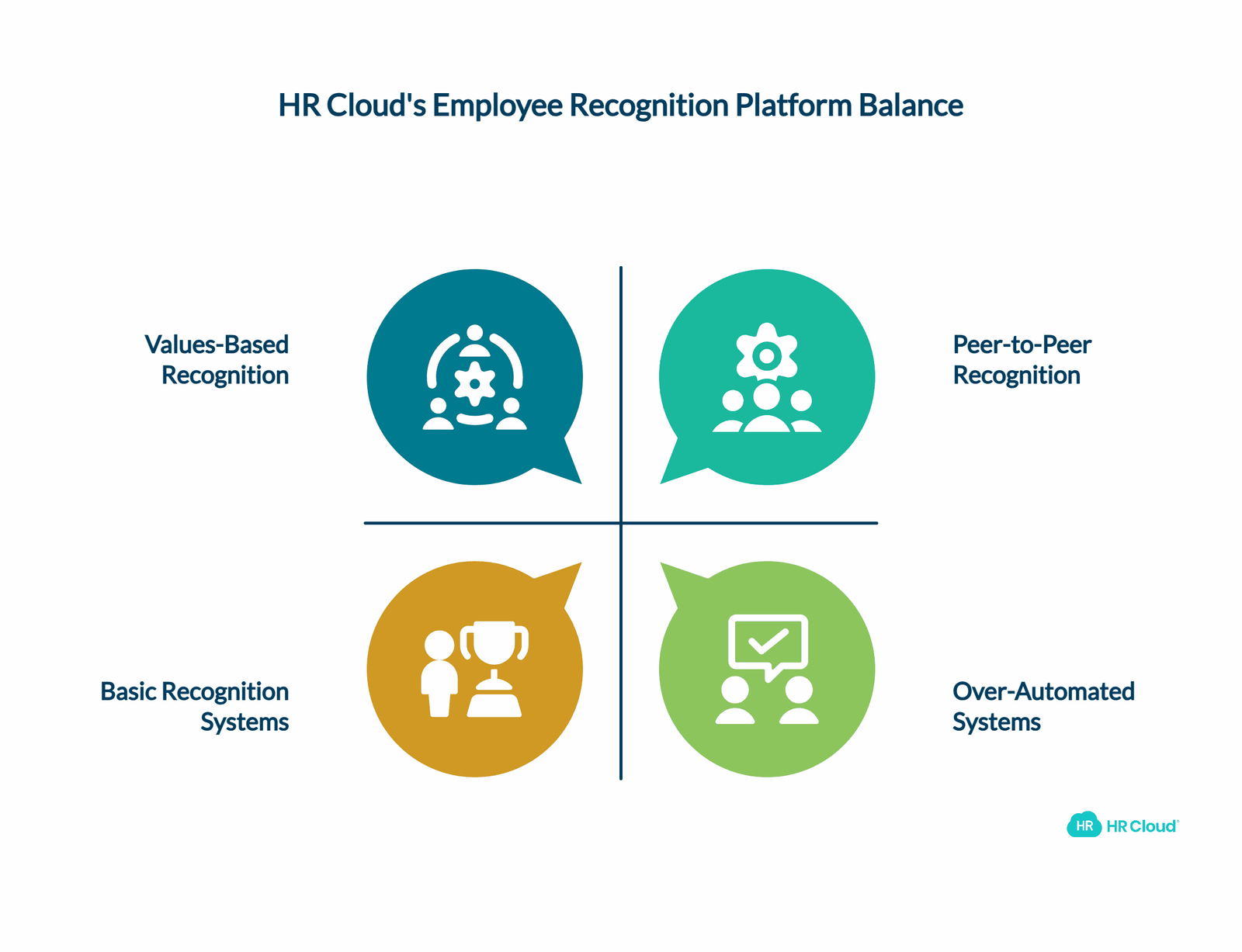
While competitors either under-invest in recognition technology or over-automate workplace appreciation, HR Cloud's Workmates employee recognition platform finds the optimal balance. The platform leverages helpful automation for administrative tasks while keeping human relationships at the center of employee appreciation programs.
Peer-to-Peer Recognition: Building Authentic Workplace Culture
Workmates centers on peer-to-peer appreciation through its social recognition feed, creating authentic employee engagement that drives retention and performance. Employees can give kudos with customizable badges tied to company values, add personal messages, and celebrate achievements publicly within secure company networks. Unlike AI-generated messages, every recognition comes from actual team members who understand the work being appreciated and the company culture context.
Social Recognition Features That Drive Engagement:
The platform supports various recognition formats optimized for different workplace scenarios:
- Quick kudos for daily wins and small accomplishments
- Formal nominations for major achievements and project completions
- Milestone celebrations for work anniversaries and career progression
- Team recognition for collaborative success and cross-department initiatives
Team members can enhance employee recognition with images, GIFs, or relevant documents, making celebrations feel personal and engaging rather than automated or generic. This approach to workplace appreciation builds stronger team relationships and reinforces positive company culture.
Smart Automation for HR Administrative Efficiency
Rather than automating the appreciation itself, Workmates automates the reminders and administrative work around employee recognition programs:
Automated Administrative Features:
- Auto-generated milestone posts for birthdays, work anniversaries, and new hire announcements with customizable styling options (animated backgrounds with animals, static neutral designs, or custom branded visuals)
- Customizable notification systems that prompt teams about recognition opportunities
- Integrated mobile experience ensuring recognition works seamlessly across devices and locations
- Automated budget tracking and spending limit notifications for reward programs
Industry-Leading Digital Communication Features: HR Cloud's platform includes several unique capabilities that distinguish it from competitors:
- Digital Signage Integration: Display recognition announcements and company updates on workplace screens with automated playlists and device management
- Campaign Management: Create pre-scheduled recognition content with timeline management for employee engagement initiatives
- Crisis Communication & Weather Alerts: Deliver urgent safety notifications for severe weather, emergencies, and critical events through push notifications and SMS text alerts. Location-based messaging ensures employees receive relevant information instantly on their mobile devices.
- Custom Branded Mobile Apps: Deploy company-branded mobile applications available on app stores with custom logos, colors, and up to 10 configurable homepage widgets (enterprise feature)
- Centralized file management for organizing recognition documentation and employee records.
Note: Some advanced features may require account manager approval and additional setup. Contact HR Cloud for specific feature availability.
This comprehensive approach preserves authentic peer connections while providing enterprise-level administrative automation that scales with organizational growth.
Values-Based Recognition: Aligning Culture with Performance
Workmates allows organizations to create custom recognition badges aligned with company values, ensuring employee appreciation reinforces desired behaviors and cultural norms that drive business success. When employees give kudos, they select badges that represent specific values like "Innovation," "Collaboration," or "Customer Focus."
Strategic Benefits of Values-Driven Recognition:
This values-based approach makes workplace recognition more strategic while maintaining personal meaning for both givers and receivers. Teams begin recognizing behaviors that matter most to organizational success, creating a positive feedback loop between company culture and employee performance.
Research on corporate culture effectiveness demonstrates that recognition programs tied to company values drive stronger employee engagement compared to generic appreciation systems, making this feature particularly valuable for organizations focused on culture transformation and retention improvement.
Employee Recognition Analytics: Data-Driven Culture Insights
The platform provides clear insights into recognition patterns without overwhelming users with complex data dashboards that require specialized training:
Advanced Analytics Capabilities: HR Cloud's analytics system goes beyond basic recognition counting with sophisticated user behavior tracking:
- User Activity Segmentation: Track employees as Contributors (content creators), Participants (reactors and commenters), Viewers (content consumers), or Dormant users (inactive), enabling targeted engagement strategies
- Recognition distribution across teams, departments, and geographic locations with export functionality
- Participation tracking to identify engagement gaps and at-risk integration of employee populations
- Values alignment reporting showing which behaviors get celebrated most frequently
- Trend analysis connecting recognition patterns to broader engagement metrics and retention data
- Multi-dimensional filtering: Customize reports by departments, locations, divisions, employment type, and time periods (365, 30, 7 days, or custom ranges)
- Channel-specific analytics: Separate insights for different communication channels and audience segments
Enterprise File Management Integration: The platform includes HR Cloud's proprietary Global Folder Tree system that automatically creates consistent folder structures across all employee files, ensuring recognition documentation, performance records, and appreciation history are organized uniformly across the entire organization.
Comprehensive Integration Ecosystem: Unlike competitors with limited connectivity, HR Cloud supports turn-key integrations with Slack, Microsoft Teams, Zoom, Twilio, Zapier (2,000+ apps), ADP, UKG, Paylocity, and custom API connections, creating a unified recognition experience across all workplace tools.
These insights help HR leaders spot potential retention risks before they impact turnover, understand how recognition impacts team dynamics and productivity, and make data-driven decisions about culture initiatives and employee engagement strategies.
Curious how comprehensive analytics and unique integrations transform team culture? Request a demo of HR Cloud's complete platform to see authentic workplace appreciation in action.
Employee Recognition Platform Implementation: Best Practices for Success
How to Implement Recognition Software for Maximum ROI
Successfully implementing an enterprise recognition platform requires strategic planning beyond technology selection. These evidence-based practices help ensure workplace recognition feels authentic while leveraging platform capabilities for measurable business impact on retention, engagement, and company culture.
Step 1: Establish Recognition Program Foundation Before Technology Deployment
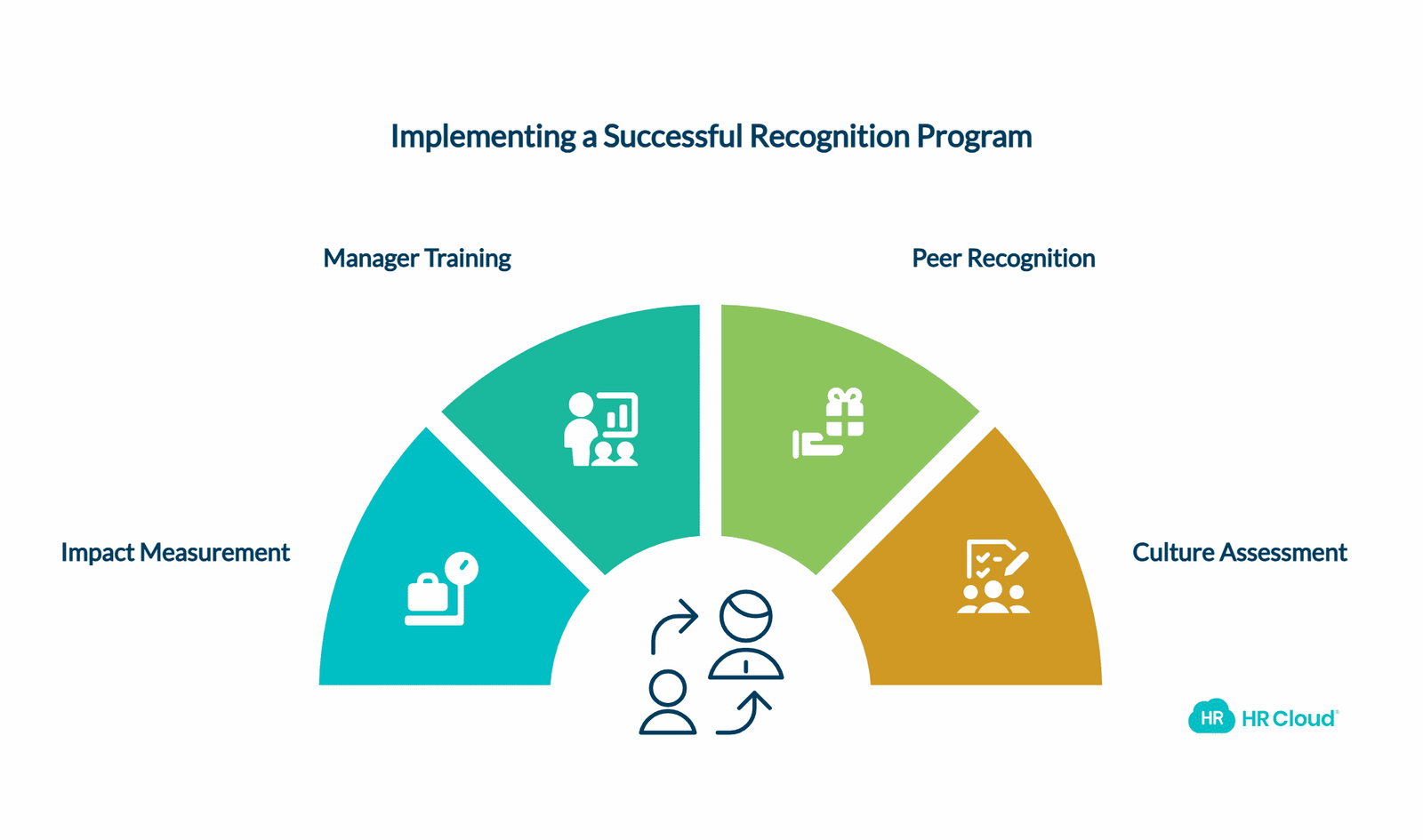
Culture Assessment and Values Alignment: Before rolling out any employee recognition software, conduct a comprehensive assessment of your organization's current culture and recognition philosophy. Technology should amplify existing cultural strengths rather than create artificial appreciation that employees will reject.
Key Foundation Elements:
- Define what authentic workplace appreciation looks like in your specific organizational context
- Identify existing recognition strengths to amplify through technology
- Establish clear connection between recognition and company values
- Set measurable goals for employee engagement and retention improvement
Step 2: Train Managers as Recognition Program Champions
According to Gallup workplace research, recognition from managers has particularly high impact on employee engagement, with research showing that managerial recognition significantly affects employee motivation. Manager training represents the most critical success factor for recognition platform adoption and effectiveness.
Manager Training Program Components:
- Using recognition platforms as tools for genuine appreciation rather than obligation-driven tasks
- Personalizing recognition based on individual employee preferences and career motivations
- Connecting recognition to specific behaviors and company values for strategic culture reinforcement
- Balancing formal recognition with informal peer-to-peer appreciation
Training ROI: SHRM studies indicate that organizations with comprehensive manager training see significantly higher recognition program participation rates compared to technology-only implementations.
Get started on your own employee recognition program using this Recognition Program Starter Kit.
Download Now
Step 3: Build Peer Recognition Networks for Authentic Workplace Appreciation
Peer recognition often feels more authentic than top-down appreciation because it comes from daily work colleagues who understand project challenges and individual contributions. Deloitte research demonstrates that creating strong peer recognition networks drives higher engagement and creates positive culture momentum.
Peer Recognition Best Practices:
- Create programs that encourage horizontal appreciation across teams and departments
- Make peer recognition visible across the organization to reinforce positive behaviors
- Provide easy tools for spontaneous colleague appreciation without complex approval processes
- Celebrate peer nominations alongside formal manager recognition in company communications
Step 4: Measure Recognition Program Impact Beyond Activity Metrics
Comprehensive Recognition Analytics Framework:
Track quality metrics alongside activity metrics for complete program assessment:
Activity Metrics (Participation Tracking):
- Number of recognitions given per month across departments
- Platform adoption rates by team and geographic location
- Recognition frequency patterns and seasonal trends
Quality Metrics (Business Impact):
- Employee satisfaction with recognition received (quarterly pulse surveys)
- Perceived authenticity of appreciation programs (annual engagement surveys)
- Connection between recognition and employee motivation (exit interview analysis)
- Impact on retention rates and voluntary turnover reduction
ROI Measurement: Use regular pulse surveys to gauge recognition quality alongside platform analytics for comprehensive program evaluation and continuous improvement opportunities.
Planning a recognition program implementation? Schedule a consultation with HR Cloud to develop a customized rollout strategy that ensures authentic appreciation and measurable business results.
Conclusion: Building a Recognition Strategy That Scales Without Losing Authenticity
The future of employee recognition isn't about choosing between technology and human connection—it's about finding platforms that enhance authentic appreciation while providing the administrative efficiency modern organizations need.
Key Principles for Sustainable Recognition Programs:
- Automate administration, not appreciation: Let technology handle reminders, tracking, and reporting while preserving human judgment in actual recognition moments
- Enable peer recognition at scale: Create systems that make colleague-to-colleague appreciation easy and visible across the entire organization
- Align recognition with values: Connect every appreciation moment to specific company values that reinforce desired behaviors and culture
- Design for mobile inclusion: Ensure recognition works equally well for office workers, remote teams, and frontline employees through comprehensive mobile functionality
- Measure what matters: Track both participation metrics and quality indicators to ensure recognition programs drive authentic engagement rather than just activity
Workmates by HR Cloud demonstrates how organizations can achieve this balance through social recognition networks, values-based appreciation systems, and smart automation that supports rather than replaces human connection.
When to Choose Workmates:
- You prioritize peer-to-peer recognition over top-down appreciation
- Your organization values authentic culture building over feature complexity
- You need comprehensive mobile functionality for distributed teams
- You want recognition integrated with broader communication and engagement tools
- You're willing to invest in culture transformation rather than just recognition transactions
When to Consider Alternatives:
- You need extensive global reward catalog options
- Your organization requires complex approval workflows for recognition
- You're prioritizing advanced AI features over human connection
- You're willing to sacrifice some authenticity for technological sophistication
Transform your organization's recognition culture with HR Cloud's Workmates platform. Schedule a personalized demo to see how balanced, authentic recognition drives measurable improvements in employee engagement and retention.

Experience how Workmates can transform communication and strengthen culture—all in one powerful platform
Book Your Free DemoFAQs
1. What is the biggest problem with AI-driven employee recognition platforms?
The biggest problem with AI-driven employee recognition platforms is loss of authenticity. When recognition is auto-generated or overly automated, employees often perceive it as impersonal or scripted, which reduces emotional impact and can actually lower engagement instead of improving it.
2. Can employee recognition be effective without heavy AI?
Yes. Employee recognition is most effective when technology supports administration rather than replaces human appreciation. Platforms that automate reminders and tracking—but leave the message, intent, and context to real people—consistently drive higher trust, engagement, and retention.
3. Why does authentic recognition matter more than automated recognition?
Authentic recognition matters because employees value appreciation that reflects real understanding of their work. Recognition coming from peers or managers who witness contributions firsthand creates stronger emotional connection, reinforces relationships, and positively influences motivation and loyalty.
4. What is peer-to-peer recognition and why is it important?
Peer-to-peer recognition allows employees to recognize colleagues directly for their contributions. It is important because it scales appreciation across teams, strengthens collaboration, and feels more genuine than top-down or automated recognition programs alone.
5. How should AI be used in employee recognition programs?
AI should be used to support administrative tasks such as milestone reminders, participation tracking, and analytics. It should not replace human judgment or message creation. The most successful programs use automation to reduce friction while preserving human voice and intent.
6. What is values-based employee recognition?
Values-based employee recognition ties appreciation to specific company values such as collaboration, innovation, or customer focus. This approach reinforces desired behaviors while making recognition more meaningful, strategic, and aligned with organizational culture.
7. How does mobile access impact employee recognition success?
Mobile access is critical for recognition success, especially for remote, hybrid, and frontline employees. A mobile-first recognition platform ensures all employees can give and receive recognition in real time, regardless of location, increasing participation and inclusivity.
8. How does HR Cloud’s Workmates balance AI and human recognition?
HR Cloud’s Workmates balances AI and human recognition by automating administrative functions like milestone notifications and analytics while keeping recognition itself peer-driven, values-based, and human-authored. This approach preserves authenticity while still scaling across enterprise teams.
About the author

Keep Reading


Like What You Hear?
We’d love to chat with you more about how HR Cloud® can support your business’s HR needs.
Book Your Free Demo