Caregiver Turnover in Home-Based Care: 5 Fixes That Actually Work

Home healthcare agencies face alarming turnover rates of 75%, with most caregivers leaving within their first 90 days. But organizations that implement structured onboarding, consistent communication systems, career development pathways, recognition programs, and technology-enabled scheduling are seeing retention improvements of 30% or more. This isn't about throwing money at the problem—it's about fixing broken workflows that drive caregivers away.
In late summer, Jennifer, the operations director at a mid-sized home healthcare agency serving three counties, stared at her quarterly workforce report. Her board had just approved a $420,000 budget increase for recruitment and retention. The catch? She had twelve weeks to reduce caregiver turnover from 78% to under 50%.
What made Jennifer's situation urgent: she wasn't skeptical about caregiver retention strategies. Home healthcare agencies across the country have successfully stabilized their workforces, with some organizations achieving turnover rates below 40% according to the 2025 Activated Insights Benchmarking Report. The tactics work. What kept Jennifer awake was something more specific—nearly four out of five caregivers leave their positions within the first 100 days. Not because they lack compassion or dedication, but because agencies fail to support them during those critical early weeks when turnover risk peaks.
A retention program is your stabilization mechanism—a coordinated system that addresses caregiver needs throughout their employment journey before turnover becomes inevitable. The program validates your operational capacity, measures workforce satisfaction, and projects long-term staffing stability. Jennifer understood something that many healthcare executives overlook: retention programs aren't testing caregiver commitment. They're testing whether your organization has built the infrastructure to keep caregivers engaged.
Home healthcare delivery requires agencies capable of maintaining both care quality and workforce stability simultaneously. Retention strategies provide this foundation, but success depends on something more fundamental than good intentions—systematic execution that addresses the root causes driving caregivers to leave.
Key Takeaways
- Home healthcare caregiver turnover dropped to 75% in 2024 from a peak of 79.2% in 2023, but remains critically high
- Most caregivers who leave do so within their first 90 days, making onboarding the highest-leverage retention opportunity
- Structured onboarding programs reduce turnover by up to 50% within two years according to industry benchmarks
- Organizations implementing comprehensive retention strategies see measurable improvements in both workforce stability and client satisfaction
- Technology platforms that automate scheduling, communication, and compliance tracking improve caregiver experience without increasing administrative overhead
The Real Cost of Caregiver Turnover
The numbers tell a sobering story. According to the 2025 Activated Insights Benchmarking Report, caregiver turnover reached 75% in 2024—a modest improvement from the 79.2% peak in 2023, but still representing a crisis-level workforce instability that prevents agencies from accepting new clients and threatens care continuity for existing patients.
Each caregiver who leaves costs approximately $2,600 to replace according to HHAeXchange research. But that figure dramatically understates the true impact. When a caregiver quits, clients experience disruption in their care relationships. Remaining caregivers absorb additional shifts, accelerating their own burnout. Administrative staff spend countless hours recruiting, screening, and training replacements instead of focusing on improving care delivery or business growth.
Home healthcare agencies report that workforce shortages now force them to turn away new clients, leaving vulnerable populations without access to needed services. Nearly half of U.S. states are approaching a caregiving emergency according to recent Otsuka analysis, with Massachusetts having only 22 caregivers per 1,000 residents needing care.
The catch? Most turnover is preventable. Research consistently shows that 30% of employees quit within their first 90 days—and home healthcare sees even higher early-stage attrition. The caregivers who leave aren't necessarily unsuited for the role. They're leaving because agencies haven't built systems to support them through those vulnerable early months.
Fix #1: Transform Your Onboarding from Checkbox Compliance to Career Foundation
Jennifer's first realization hit during a conversation with three recently departed caregivers. All three had quit within six weeks. All three described feeling "thrown in" without proper preparation. None had shadowed an experienced caregiver before their first solo assignment.
The problem isn't that agencies skip onboarding—it's that they treat it as a one-day paperwork marathon rather than a multi-week integration process. A caregiver completes forms, watches a few videos, receives credentials, and then finds themselves alone in a client's home handling situations they've never encountered.
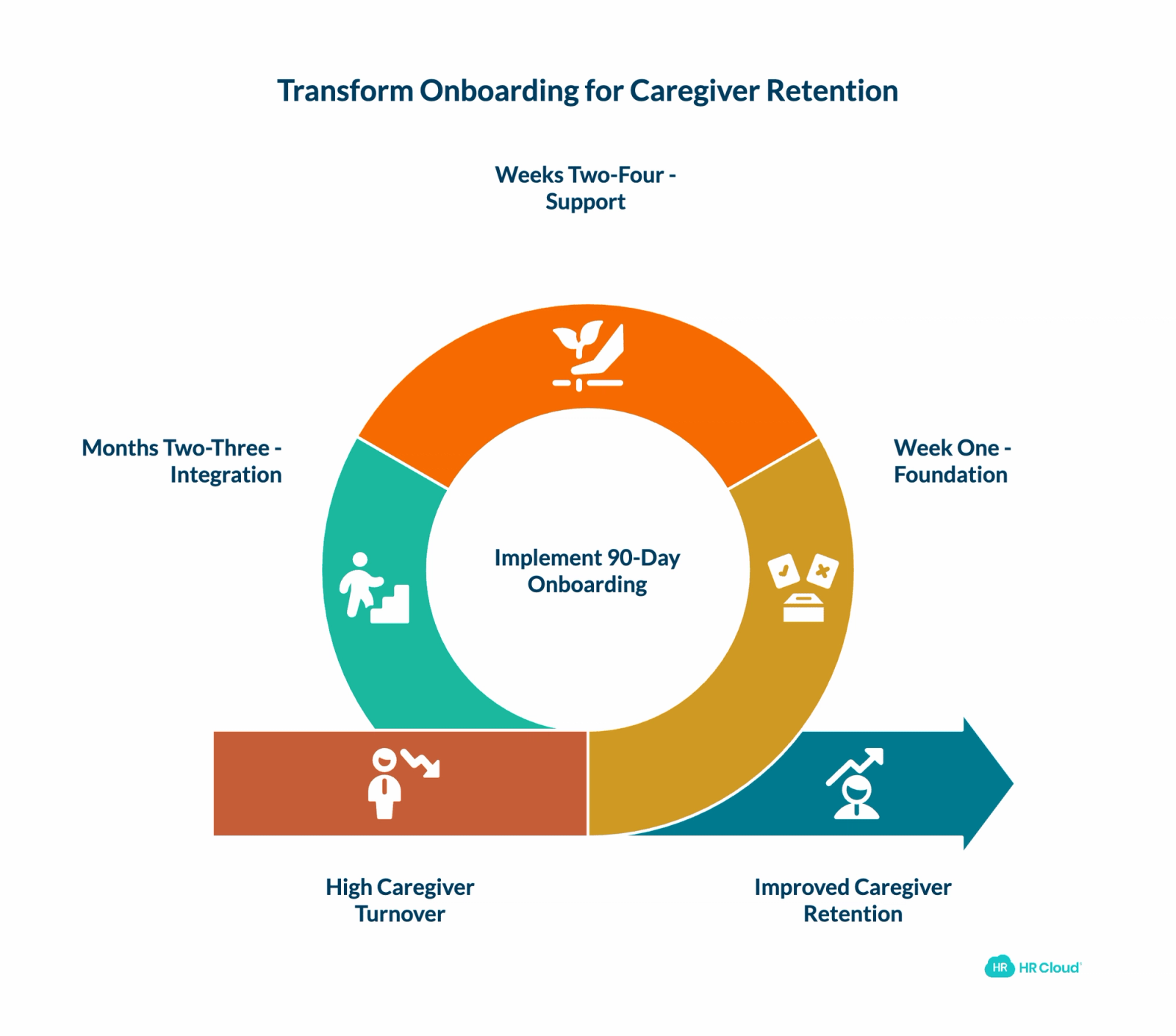
Effective onboarding extends across the first 90 days and includes specific structural elements. Research shows structured 90-day onboarding programs improve retention by 82% according to Brandon Hall Group compared to traditional approaches.
Week One - Foundation Building: The first week should establish clear expectations, safety protocols, and relationship building with mentors. Caregivers should never visit clients alone until they've shadowed experienced team members handling similar cases. One agency administrator shared that they extended their in-field paid onboarding, allowing new caregivers to work alongside veterans. This approach increased their 30-day retention rates significantly.
Weeks Two Through Four - Supported Independence: Gradually increase assignment complexity while maintaining frequent check-ins. Schedule brief daily connections during the first two weeks, then transition to weekly video calls or in-person meetings. Provide immediate coaching when issues arise rather than waiting for formal performance reviews.
Months Two Through Three - Integration and Growth: By this phase, caregivers should understand the full scope of their role and see pathways for advancement. Introduce them to specialized training opportunities and clarify how tenure translates to increased responsibility or compensation.
[Ready to build an onboarding system that reduces early-stage turnover? Discover how HR Cloud's automated onboarding workflows can guide new caregivers through structured 90-day programs with task automation, compliance tracking, and milestone notifications.]
| Onboarding Approach | Duration | Caregiver Experience | 30-Day Retention | Administrative Burden |
|---|---|---|---|---|
| Traditional (Paperwork-Focused) | 1 day | Isolated, unprepared for field reality | 55-60% | Low initially, high ongoing |
| Enhanced (Multi-Week Structure) | 30+ days | Supported, gradual responsibility increase | 75-80% | Medium setup, low ongoing |
| Comprehensive (90-Day Program) | 90 days | Confident, integrated, career-oriented | 85%+ | High setup, minimal ongoing |
Organizations using structured onboarding checklists report reducing caregiver turnover rates by up to 50% within two years. The return on investment becomes immediate—fewer replacements to recruit, less administrative time consumed by constant hiring, and improved client satisfaction as care relationships stabilize.
Fix #2: Build Communication Systems That Reach Caregivers Where They Work
Caregivers rarely visit your office. They work in clients' homes, traveling between appointments without regular face-to-face contact with supervisors or colleagues. This isolation compounds stress and prevents early intervention when problems develop.
The solution requires systematic communication infrastructure, not periodic pep talks. According to the 2025 HHAeXchange Homecare Insights Provider Voices Survey, agency leaders ranked real-time communication with caregivers as their top technology priority—above all other operational investments. More than 34% said they would prioritize tools that improve scheduling and communication over any other operational investment.
Poor employer communication ranks among the top factors harming home health workers' mental health, which directly impacts both turnover and patient care quality. When caregivers feel disconnected from their agency, small frustrations escalate into resignation decisions.
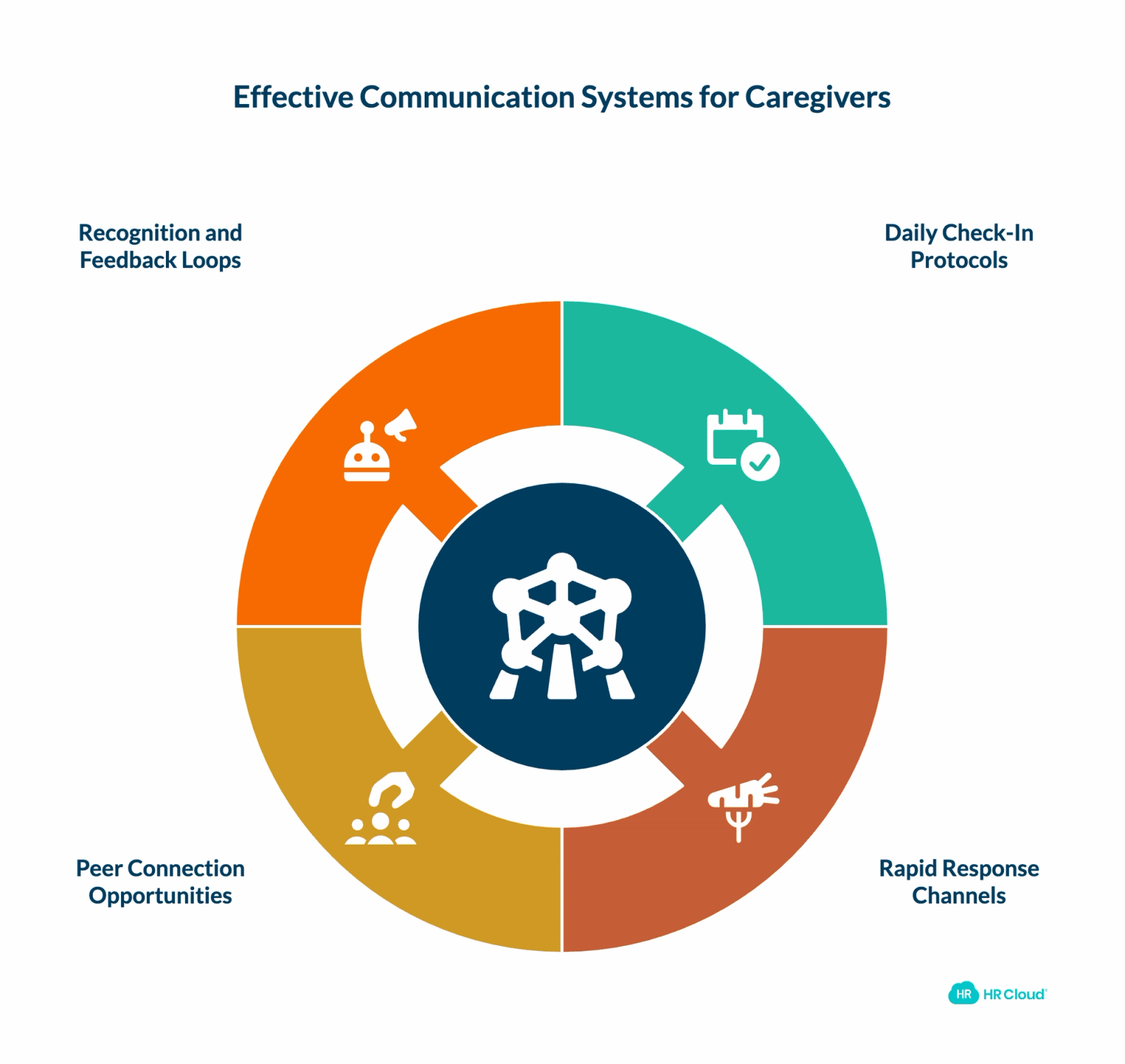
Effective communication systems include:
Daily Check-In Protocols: Brief text or app-based communications at consistent times allow caregivers to report concerns, ask questions, or request assistance without waiting for scheduled meetings. These touchpoints take minutes but signal that the agency remains engaged with their daily reality.
Rapid Response Channels: Caregivers need confidence that urgent questions receive timely answers. Whether it's medication questions, client behavior concerns, or scheduling conflicts, response time matters more than the communication method. Agencies successfully retaining caregivers prioritize response windows under two hours for non-emergency issues.
Peer Connection Opportunities: Isolation drives turnover. Create structured ways for caregivers to connect with colleagues—monthly meetups, digital discussion groups, or informal mentorship pairings. These relationships provide emotional support and practical knowledge sharing that reduces stress.
Recognition and Feedback Loops: Regular positive feedback matters enormously in remote work environments. Caregivers who receive consistent acknowledgment of their contributions report higher job satisfaction. This doesn't require elaborate programs—simple thank-you messages referencing specific actions demonstrate that leadership notices their work.
| Communication System | Response Time | Caregiver Satisfaction | Administrative Scalability | Early Problem Detection |
|---|---|---|---|---|
| Email Only | 24-48 hours | Low (42%) | High | Poor |
| Phone Calls + Email | 4-8 hours | Medium (58%) | Medium | Fair |
| Centralized Platform with Mobile Access | <2 hours | High (79%) | High | Excellent |
| Platform + Automated Check-Ins | <1 hour | Very High (87%) | Very High | Excellent |
Automated task reminder systems and mobile-accessible platforms allow agencies to maintain consistent communication without overwhelming administrative staff. Caregivers can access schedules, complete required training, submit documentation, and reach supervisors through centralized systems rather than juggling multiple disconnected tools.

Fix #3: Create Realistic Career Pathways (Even in Entry-Level Roles)
Home healthcare aides earn median wages around $16.77 per hour according to 2024 Bureau of Labor Statistics data, adjusted for inflation. Many caregivers can find comparable wages in less demanding roles with more predictable schedules. When agencies can't dramatically increase base pay, they must compete on total job quality—including realistic advancement opportunities and career development.
Caregivers want to know that their work leads somewhere. They're watching for signals that their employer invests in their growth rather than treating them as interchangeable labor. Organizations that retain caregivers consistently offer three types of development pathways:
Skill-Based Advancement: Provide pathways to specialized training that increases both capability and compensation. Caregivers who complete certifications in dementia care, medication management, or specialized condition management should see this reflected in their assignments and pay. Make the requirements and timeline clear from day one.
Leadership Tracks: Even small agencies can create mentorship roles, team lead positions, or recruitment support functions for experienced caregivers. These responsibilities recognize tenure while building organizational capacity. One agency implemented a mentorship program pairing new caregivers with veterans. This approach simultaneously addressed two critical issues: improving retention and enhancing client satisfaction through knowledge transfer.
Educational Support: Tuition reimbursement or certification sponsorship demonstrates long-term investment in caregiver futures. If you help employees pursue nursing credentials or advanced certifications, they're more likely to remain with your organization during their education period compared to quitting to return to school independently.
[Building career development programs becomes manageable when your HR systems automate compliance tracking and certification management. Explore how HR Cloud helps healthcare organizations track training requirements, manage credentials, and document skill progression without manual spreadsheet juggling.]
The key is transparency. Caregivers need to understand exactly what steps lead to each advancement level, what timeline applies, and how their progress gets measured. Vague promises about "growth opportunities" breed cynicism. Documented pathways with clear milestones build trust.
Fix #4: Implement Recognition Systems That Actually Mean Something
Here's what doesn't work: a generic "Employee of the Month" photo in the office that caregivers never visit. Annual appreciation events where busy schedules prevent attendance. Platitudes about "healthcare heroes" without tangible acknowledgment of daily contributions.
Recognition drives retention when it's specific, timely, and connected to behaviors the organization values. Caregiver work is emotionally taxing and physically demanding. When that effort goes unnoticed, burnout accelerates. When agencies consistently acknowledge contributions, caregivers report significantly higher job satisfaction.
Effective recognition includes:
Immediate Acknowledgment: When a client or family member shares positive feedback, communicate it to the caregiver within 24 hours. Don't wait for performance reviews or meetings. Text them directly. The immediacy signals that leadership actually pays attention to their work rather than relegating it to quarterly report statistics.
Peer Recognition Programs: Allow caregivers to nominate colleagues for acknowledgment. These peer-to-peer recognitions often carry more weight than supervisor praise because they come from people who understand the daily challenges firsthand.
Milestone Celebrations: Acknowledge tenure and achievements publicly but meaningfully. A caregiver completing their first year deserves more than a generic congratulations email. Personalized recognition that references specific contributions demonstrates genuine appreciation rather than procedural obligation through structured reward systems.
Small, Consistent Gestures: Recognition doesn't require significant budget allocation. Handwritten thank-you notes, extra paid time off, flexible scheduling preferences, or public acknowledgment in team communications cost little but signal genuine appreciation for caregiver contributions.
Organizations that prioritize employee recognition through structured systems see measurable improvements in retention metrics. Research shows that healthcare organizations with strong recognition programs experience 31% lower voluntary turnover according to SHRM compared to organizations without formal recognition systems. The investment isn't primarily financial—it's attention and intentionality in acknowledging the people delivering your core service through mobile-accessible platforms that reach frontline workers.
Fix #5: Deploy Technology That Reduces Friction (Not Just Digitizes Chaos)
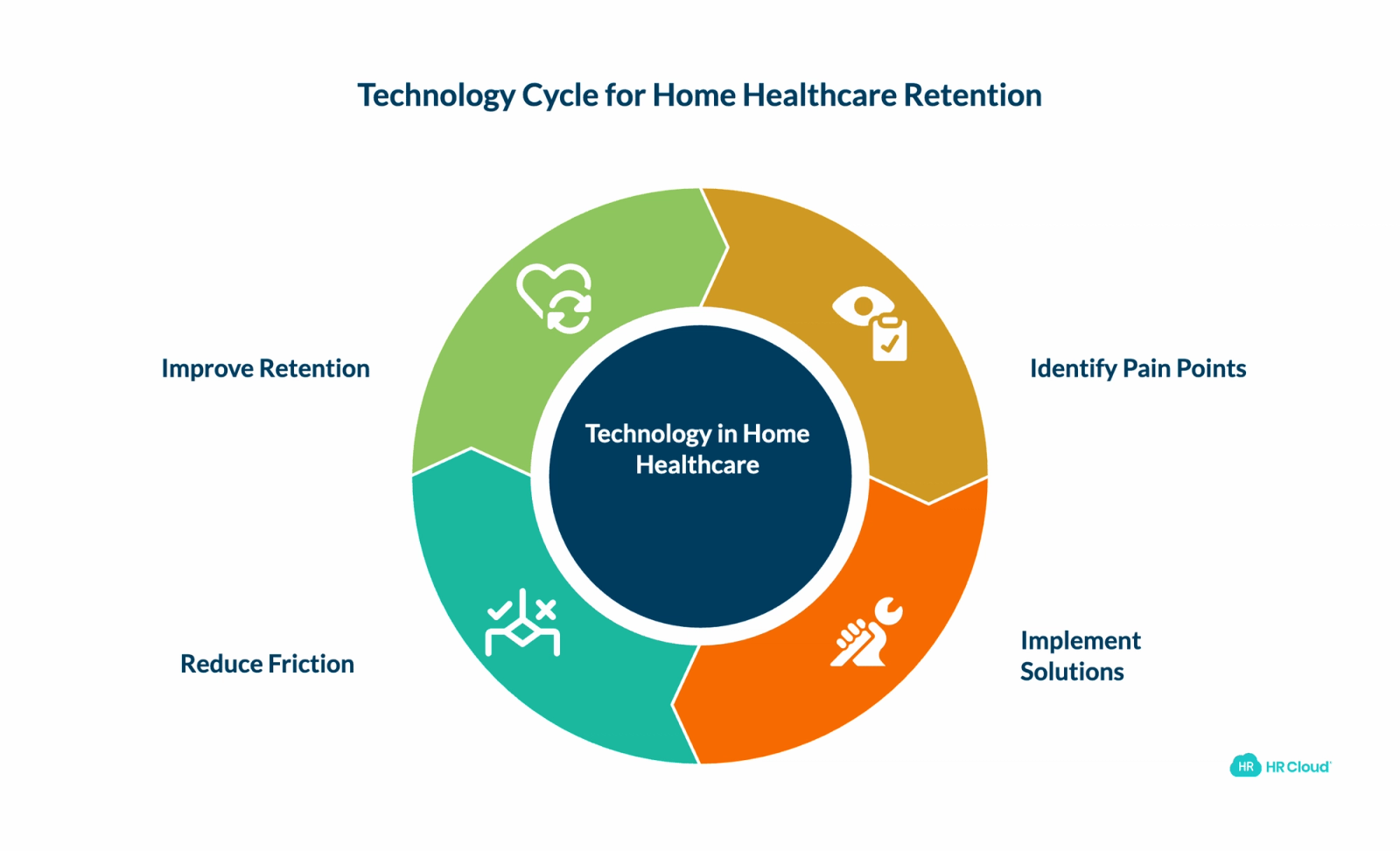
Jennifer's breakthrough came when she stopped thinking about technology as a cost center and started viewing it as infrastructure that either enables or prevents caregiver success. The right systems reduce the daily friction that accumulates into resignation decisions. The wrong systems add complexity without solving actual problems.
Home healthcare agencies that improve retention rates consistently implement technology addressing these specific pain points:
Intelligent Scheduling: Caregivers value predictability, reasonable travel distances between appointments, and schedule consistency that allows life planning. Technology platforms that optimize route planning, match caregiver availability with client needs, and allow schedule visibility weeks in advance reduce a major stress source. One agency using optimized scheduling achieved 88% of caregivers receiving more than 70% of their preferred work hours—directly contributing to improved retention.
Mobile Documentation: Requiring caregivers to travel to offices or complete paperwork during unpaid time creates frustration. Mobile-accessible systems that allow visit documentation, time tracking, and communication from their smartphones respect their time and reduce administrative burden.
Automated Compliance Tracking: Healthcare agencies face extensive regulatory requirements. Systems that automatically track certification expirations, required training completion, and credential renewals prevent the chaos of last-minute compliance scrambles. Caregivers appreciate working for organizations that maintain professional standards without creating constant administrative emergencies.
Transparent Communication Platforms: Centralized systems where caregivers access schedules, submit questions, complete required training, and receive updates eliminate the frustration of juggling multiple disconnected tools. When information flows smoothly, caregivers can focus on care delivery rather than hunting down answers to basic operational questions.
| Technology Approach | Implementation Cost | Caregiver Satisfaction | Admin Time Savings | Retention Impact |
|---|---|---|---|---|
| Paper-Based Systems | Low | Very Low (38%) | 0% (high burden) | Negative (-12%) |
| Disconnected Digital Tools | Medium | Low (51%) | 15% | Minimal (+3%) |
| Basic HR Platform | Medium-High | Medium (64%) | 30% | Moderate (+11%) |
| Integrated Healthcare HR Platform | High | High (82%) | 55% | Strong (+28%) |
The agencies seeing the strongest retention improvements use comprehensive HR platforms that integrate onboarding, scheduling, communication, compliance tracking, and performance management. This integration prevents data silos and redundant processes that waste time and create errors.
[Technology should simplify caregiver experience, not complicate it. Schedule a demo to see how HR Cloud's healthcare-focused platform streamlines operations while improving workforce engagement through mobile accessibility and automated workflows.]
The Compounding Effect of Retention Investment
Jennifer's twelve-week initiative didn't transform her agency overnight. But within six months, her caregiver turnover dropped to 52%—still above industry targets but representing a dramatic improvement from 78%. More importantly, the trajectory continued downward.
She documented the financial impact: recruitment costs decreased by $127,000 annually. Administrative time previously consumed by constant hiring cycles shifted toward quality improvement initiatives. Client satisfaction scores improved as care relationships stabilized. The agency could finally accept new referrals rather than turning away clients due to staffing constraints.
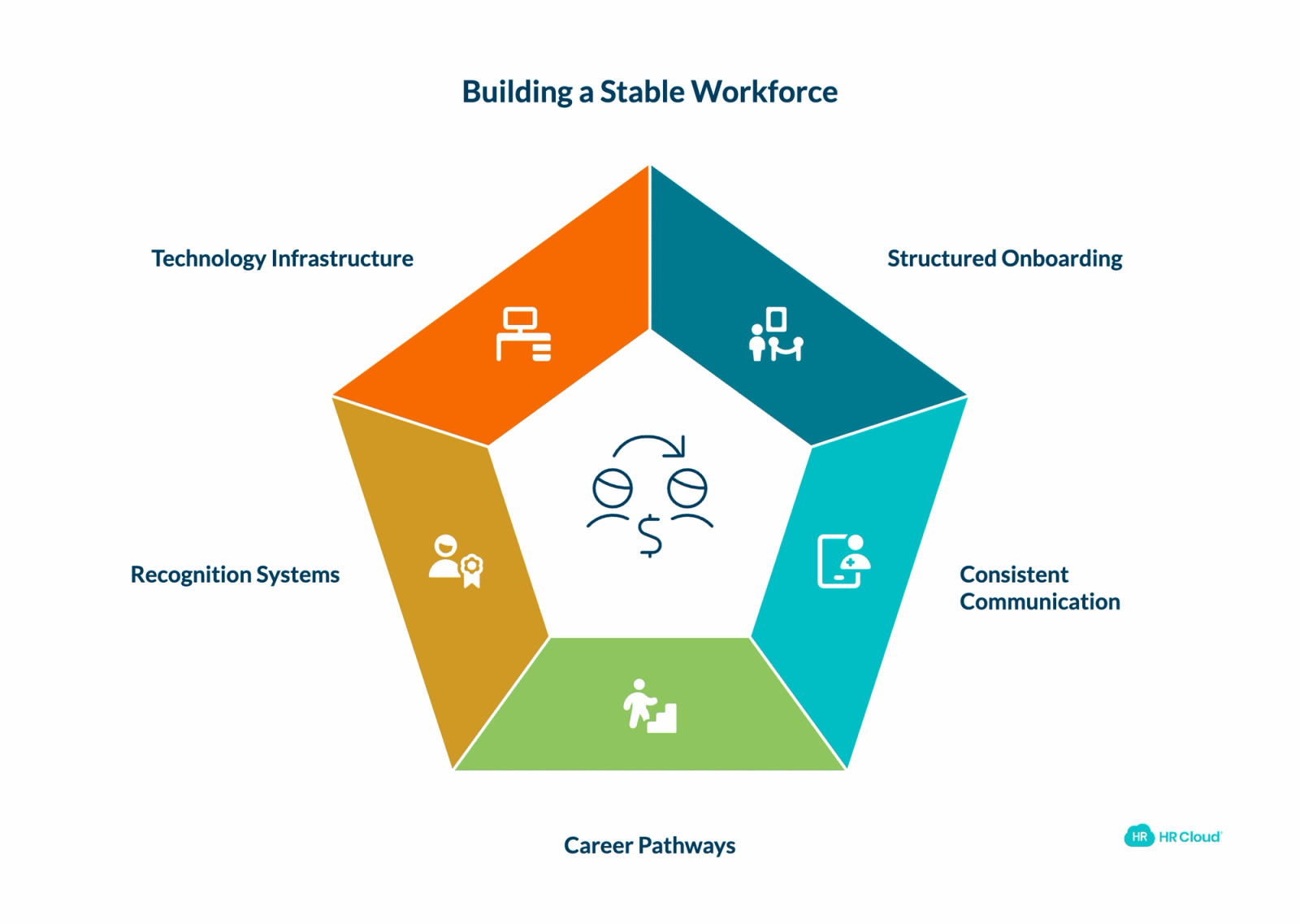
The fixes that worked for Jennifer's organization weren't exotic or expensive. They were systematic: structured onboarding that extends across 90 days, consistent communication systems that reach isolated workers, realistic career pathways that demonstrate long-term investment, recognition systems that acknowledge daily contributions, and technology infrastructure that reduces friction rather than creating it.
Workforce stability creates a virtuous cycle. When caregivers stay longer, they develop deeper client relationships and more refined skills. Client outcomes improve. Family satisfaction increases. Referrals grow. The organization's reputation strengthens, attracting higher-quality caregiver applicants. Retention breeds retention.
Moving From Crisis Management to Strategic Workforce Planning
Home healthcare caregiver turnover represents a solvable challenge, not an inevitable condition. The agencies achieving retention success haven't discovered secret strategies—they've systematically addressed the structural factors driving caregivers away.
Jennifer's story isn't unique. Hundreds of home healthcare agencies have reduced turnover from crisis levels to sustainable rates by implementing the five fixes outlined here: transforming onboarding into a comprehensive 90-day integration process, building communication systems that reach isolated workers, creating realistic career pathways, implementing meaningful recognition programs, and deploying technology that simplifies rather than complicates caregiver experience.
The investment isn't primarily financial. It's attention and intentionality in building systems that support caregiver success. Organizations that prioritize retention see compounding returns: lower recruitment costs, improved care quality, stronger client relationships, better reputation, and sustainable business growth.
Your retention challenge won't resolve through motivational speeches or occasional appreciation events. It requires infrastructure changes that address the daily friction points driving resignation decisions. But when you build that infrastructure, workforce stability becomes achievable—and with it, the capacity to serve more clients while delivering better care.
[Stop losing caregivers in their first 90 days. See how HR Cloud's automated onboarding platform helps home healthcare agencies build structured retention programs that reduce turnover and improve care continuity.]

Discover how our HR solutions streamline onboarding, boost employee engagement, and simplify HR management
Book Your Free DemoFrequently Asked Questions
Q: How long does it take to see retention improvements from these strategies?
Early indicators often appear within 30-60 days, particularly when onboarding improvements reduce first-month turnover. Substantial retention improvements typically materialize over 6-12 months as new systems mature and culture shifts take hold. Organizations implementing comprehensive retention strategies consistently report 30% or greater improvements within the first year.
Q: Can smaller agencies implement these fixes without dedicated HR staff?
Yes. Many successful retention programs at smaller agencies rely on automated HR platforms designed specifically for healthcare workforce management that handle routine tasks like compliance tracking, onboarding workflows, and communication systems without requiring full-time HR personnel. Organizations report 60-70% reduction in onboarding administrative time after implementing automated workflows. The key is choosing tools that eliminate administrative burden rather than creating it.
Q: What if we can't increase caregiver wages significantly?
While competitive compensation matters, total job quality drives retention decisions. Agencies successfully retaining caregivers despite wage constraints focus on schedule predictability, career development opportunities, recognition systems, reduced travel burdens through intelligent scheduling, and creating supportive work environments. These factors collectively influence resignation decisions as much as base pay.
Q: How do we measure retention program effectiveness?
Track specific metrics: 30-day retention rate, 90-day retention rate, annual turnover percentage, time-to-productivity for new hires, client satisfaction scores, and referral rates. Compare these metrics quarterly and analyze which interventions correlate with improvements. Comprehensive HR analytics platforms provide dashboards tracking these metrics automatically rather than requiring manual calculation.
Q: Should we focus on retention or recruitment?
Both matter, but retention provides better ROI. Each caregiver who stays avoids the $2,600+ replacement cost while building expertise and client relationships. Organizations with strong retention naturally improve recruitment as word-of-mouth referrals increase and the agency's reputation strengthens. Start with retention foundations, then optimize recruitment processes.
Q: What happens if caregivers leave despite our retention efforts?
Some turnover is inevitable and even healthy. Focus on reducing preventable turnover—particularly within the first 90 days. Conduct exit interviews to understand departure reasons and identify patterns. Use this feedback to refine your approach continuously. The goal isn't zero turnover; it's sustainable workforce stability that supports quality care delivery.
About the author

Keep Reading


Like What You Hear?
We’d love to chat with you more about how HR Cloud® can support your business’s HR needs.
Book Your Free Demo