
Company Core Values Examples: 25 Inspiring Ways to Build Culture Through Recognition

This blog shows HR leaders how defining authentic core values and reinforcing them through recognition can genuinely shape workplace culture rather than letting values sit unused in a handbook. It offers 25 inspiring core value examples with clear behavior descriptions and explains how to bring them to life through employee recognition tied directly to desired behaviors. The post also outlines how to define values that actually stick and how recognition platforms can help. The biggest benefit: a practical roadmap to embed values into everyday actions, boosting engagement, alignment, and retention.
Company core values shape every interaction in your workplace - from how decisions get made to how people treat each other. When values are clearly defined and actively reinforced through recognition, they create a culture where employees feel connected to something bigger than their job description. But according to Gallup research, only 23% of employees strongly agree they can apply their organization's values to daily work. That disconnect happens when values stay theoretical instead of becoming lived behaviors.
The solution? Turn your core values into visible, celebrated actions through employee recognition. Platforms like HR Cloud's Workmates make it easy to spotlight the moments when people demonstrate your values - whether that's innovation in solving a problem, integrity in a difficult decision, or collaboration on a crucial project. When recognition ties directly to values, those principles move from the company handbook into the heartbeat of your culture. Let's explore 25 inspiring core values examples and how to make them stick in your organization.
What Are Company Core Values? (And Why They Matter)
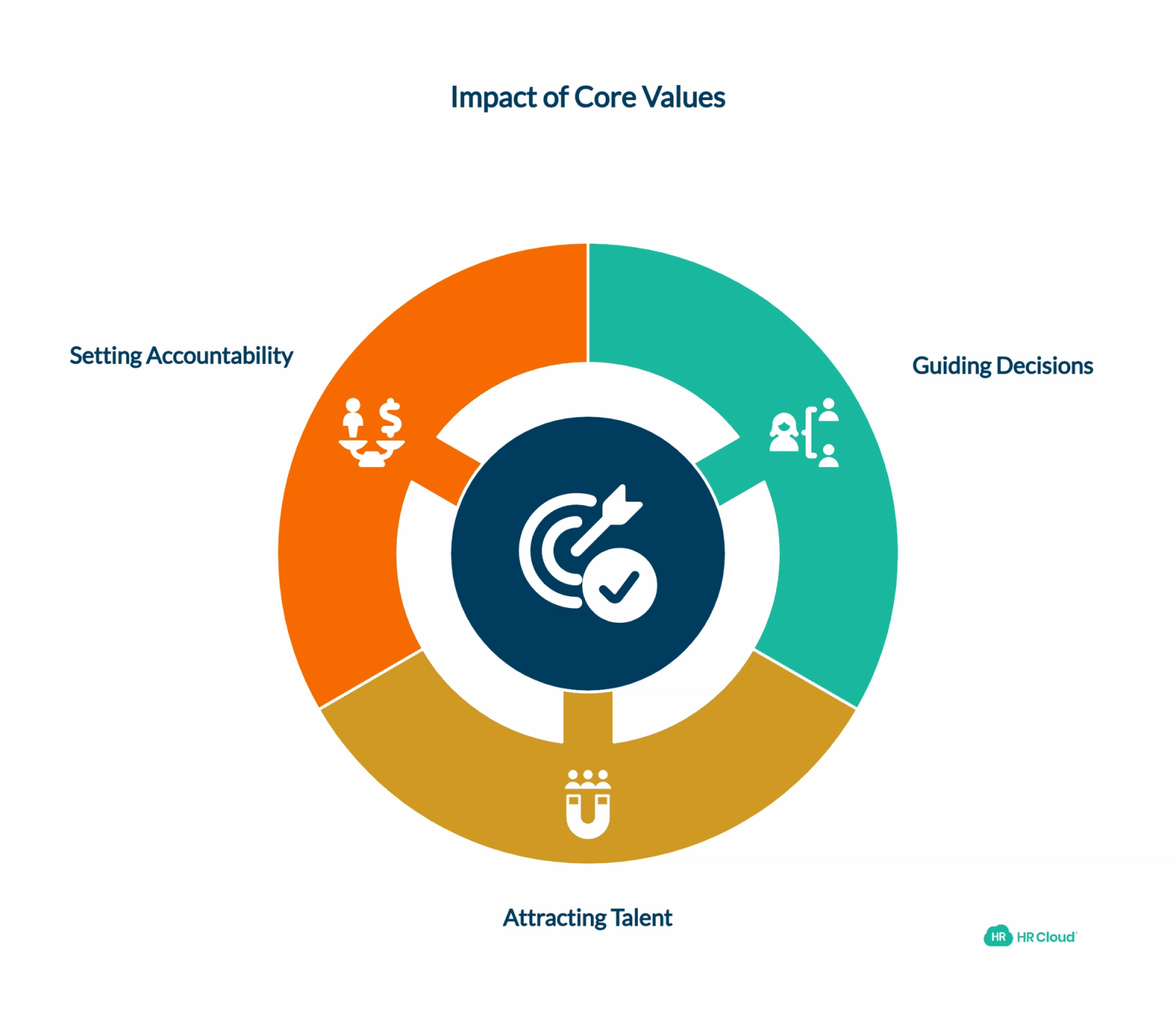
Company core values are the fundamental beliefs and principles that guide how your organization operates, makes decisions, and treats people. They're not marketing copy or aspirational statements - they're the behavioral standards that define your culture when nobody's watching. Think of them as your organization's operating system: they run in the background of every decision, interaction, and initiative.
When values are authentic and actively reinforced, they serve three critical purposes:
They guide decisions in ambiguous situations. When your team faces a tough call without a clear policy, values provide the compass. Should you prioritize speed or quality? Customer convenience or employee well-being? Your values answer these questions consistently across the organization.
They attract and retain people who fit your culture. Clear values act as a filter during hiring and a retention tool once people are onboard. Research shows employees who resonate with organizational values demonstrate significantly higher engagement and stay substantially longer than those who don't connect with your principles.
They set accountability standards. Values define what "good" looks like at your company. When someone demonstrates a value - or violates it - everyone recognizes it immediately. This shared understanding makes performance expectations transparent and fair.
The challenge? Most organizations struggle to move values from posters to practice. SHRM research shows that while 88% of employees believe strong culture drives business success, only a fraction see their company's values actually influencing daily work. The gap exists because values need reinforcement - and that's where employee recognition platforms become essential. When you celebrate people for demonstrating your values, you're showing everyone what those principles look like in action.
25 Company Core Values Examples That Drive Employee Engagement
The following values appear across industries because they address fundamental human needs and operational requirements. What makes each one powerful isn't just the concept - it's how you define it specifically for your organization and reinforce it through recognition. As you review these examples, consider which resonate with your current culture and which reflect where you're building.
Integrity-Based Core Values
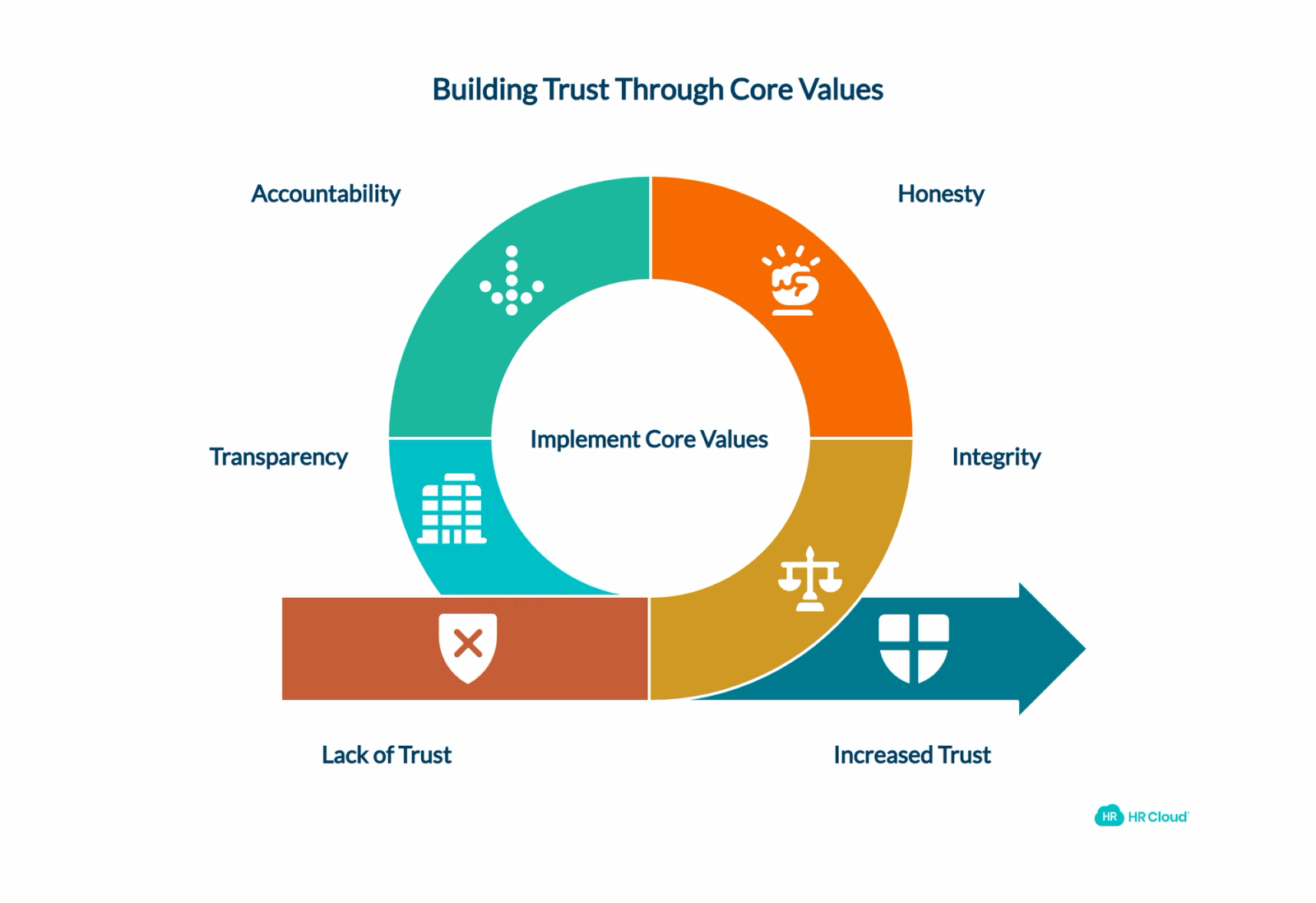
1. Integrity
Doing what's right, even when no one's watching and especially when it's inconvenient. Integrity means your word is binding, your commitments are reliable, and your actions align with your stated principles. In practice, this looks like admitting mistakes quickly, honoring promises even when circumstances change, and choosing ethical paths over expedient shortcuts.
2. Honesty
Transparent communication that builds trust through consistency. Honesty means sharing difficult news directly, admitting uncertainty instead of guessing, and creating environments where people feel safe raising concerns. Organizations with honesty as a core value see problems surface earlier because team members don't fear consequences for bringing forward challenging information.
3. Accountability
Owning outcomes - both successes and failures - without deflection. Accountability means following through on commitments, taking responsibility for results, and learning from mistakes rather than hiding them. When recognized through platforms like Workmates, accountability becomes contagious because people see their ownership celebrated and valued.
4. Transparency
Operating with openness that lets people see how decisions get made and why. Transparency reduces speculation, builds trust, and helps employees understand the "why" behind changes. This doesn't mean sharing everything, but it means defaulting to openness and only limiting information when there's a clear reason.
Innovation and Growth Values
5. Innovation
Embracing new ideas, challenging assumptions, and continuously improving how work gets done. Innovation isn't just about breakthrough inventions - it's about empowering people at every level to suggest better ways forward and experiment without fear of failure. Organizations reinforce this value by recognizing both successful innovations and valuable lessons from attempts that didn't pan out.
6. Curiosity
Maintaining a learning mindset that asks "why" and "what if" consistently. Curious organizations encourage questions, support professional development, and celebrate people who dig deeper into problems rather than accepting surface-level solutions. This value drives continuous improvement and helps teams adapt to changing conditions.
7. Adaptability
Staying flexible when conditions change and pivoting quickly based on new information. Adaptable cultures treat change as opportunity rather than threat. Employees who demonstrate adaptability - whether adjusting to new systems, taking on unexpected responsibilities, or shifting strategies mid-project - keep organizations resilient and responsive.
8. Growth Mindset
Viewing challenges as opportunities to develop rather than threats to avoid. Growth mindset cultures celebrate effort and progress, not just outcomes. When recognized for attempting difficult work, learning new skills, or helping teammates develop, employees lean into challenges instead of playing it safe.
People-First Core Values
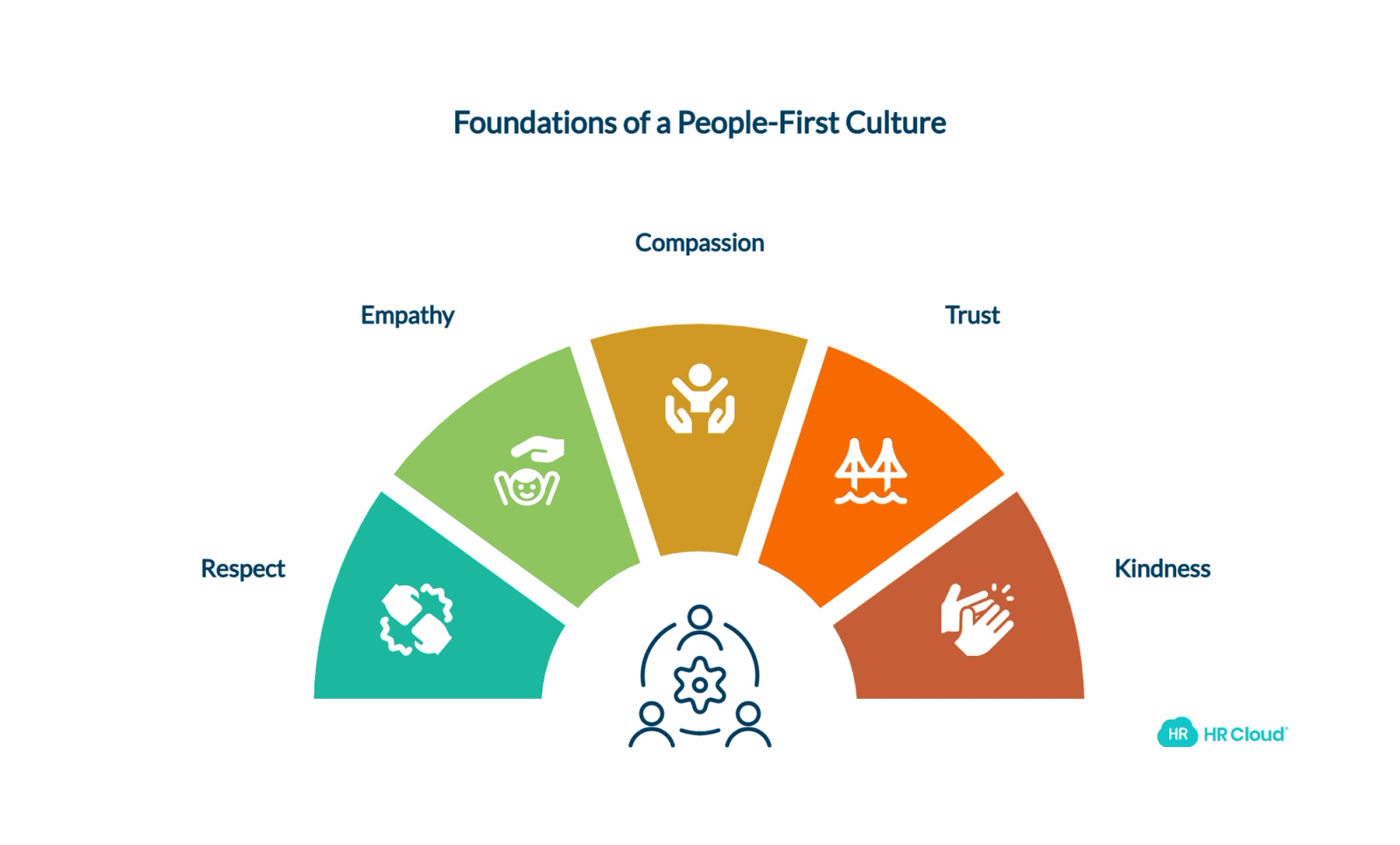
9. Respect
Treating every person with dignity regardless of role, background, or agreement. Respect shows up in how we listen, how we disagree, and how we acknowledge contributions. It means valuing different perspectives and creating space for all voices - especially those typically underrepresented.
10. Empathy
Understanding and considering others' experiences, especially during challenging circumstances. Empathetic organizations recognize that employees bring their whole selves to work, including stresses from outside the office. Demonstrating empathy - whether through flexible policies or simple acts of consideration - builds loyalty and psychological safety.
11. Compassion
Taking action to support others, not just understanding their situation. Compassion transforms empathy into practical help - covering for a colleague managing a family emergency, mentoring someone struggling with a new skill, or advocating for someone who can't speak up themselves.
12. Trust
Creating an environment where people feel safe being authentic, taking risks, and making mistakes. Trust develops when leaders demonstrate reliability, when feedback aims to help rather than punish, and when recognition highlights both achievements and effort. Organizations with high trust see higher engagement, faster problem-solving, and stronger collaboration.
13. Kindness
Approaching interactions with generosity, patience, and goodwill. Kindness in professional settings doesn't mean avoiding difficult conversations - it means having them with consideration for the other person's dignity. Small acts of kindness - a genuine thank you, checking in during stressful projects, celebrating teammates' wins - build cultural glue.
Performance and Accountability Values
14. Excellence
Consistently delivering high-quality work and pushing beyond "good enough." Excellence means taking pride in craftsmanship, paying attention to details, and treating every task as important. Organizations reinforce excellence by recognizing people who go above baseline requirements and help teammates raise their standards.
15. Commitment
Showing up fully with focus and follow-through. Committed team members honor deadlines, prepare thoroughly for meetings, and see projects through completion. This value particularly matters during challenging periods when maintaining effort takes extra discipline.
16. Dependability
Being someone others can count on consistently. Dependable employees meet commitments, communicate proactively when obstacles arise, and build reputation through reliable delivery. When celebrated through recognition, dependability becomes a competitive advantage.
17. Passion
Bringing energy and genuine care to your work. Passionate employees don't just complete tasks - they invest themselves in outcomes, think creatively about improvements, and inspire teammates through enthusiasm. This value attracts high performers and sustains motivation during difficult periods.
18. Ownership
Treating company success as personal responsibility. Employees with ownership mentality don't wait for direction - they identify problems, propose solutions, and drive initiatives forward. This value transforms compliance-based cultures into proactive ones.

Collaboration and Community Values
19. Teamwork
Combining diverse skills and perspectives to achieve more together than individually possible. Strong teamwork means supporting teammates' success, sharing credit generously, and prioritizing collective outcomes over personal recognition. Recognition platforms like Workmates make teamwork visible by celebrating collaborative achievements.
20. Collaboration
Working across boundaries to solve problems and create value. While teamwork focuses on defined groups, collaboration emphasizes connecting across departments, levels, and expertise areas. Collaborative cultures break down silos and surface insights from unexpected sources.
21. Community
Building a sense of belonging that goes beyond transactional employment. Community-oriented organizations create opportunities for connection, celebrate diversity, and help people feel part of something meaningful. This value particularly resonates with employees seeking purpose and connection in their work.
22. Diversity
Actively seeking and valuing different perspectives, backgrounds, and approaches. Diverse organizations don't just tolerate differences - they recognize that varied viewpoints lead to better decisions and more innovative solutions. This value requires ongoing action, not just good intentions.
23. Openness
Creating space for honest conversations, new ideas, and constructive disagreement. Open cultures encourage people to speak up, question assumptions, and offer alternative viewpoints without fear. This value makes psychological safety tangible and actionable.
24. Communication
Sharing information clearly, listening actively, and ensuring alignment across teams. Strong communication values emphasize two-way dialogue, especially across levels and locations. For distributed workforces, mobile-accessible communication tools ensure frontline and remote employees stay connected to organizational culture.
25. Recognition
Acknowledging contributions, celebrating achievements, and appreciating effort. Organizations that value recognition don't leave appreciation to chance - they build systems and norms that make acknowledgment regular, specific, and meaningful. This meta-value accelerates all others because it reinforces the behaviors you want to see.
How to Define Company Core Values That Actually Stick
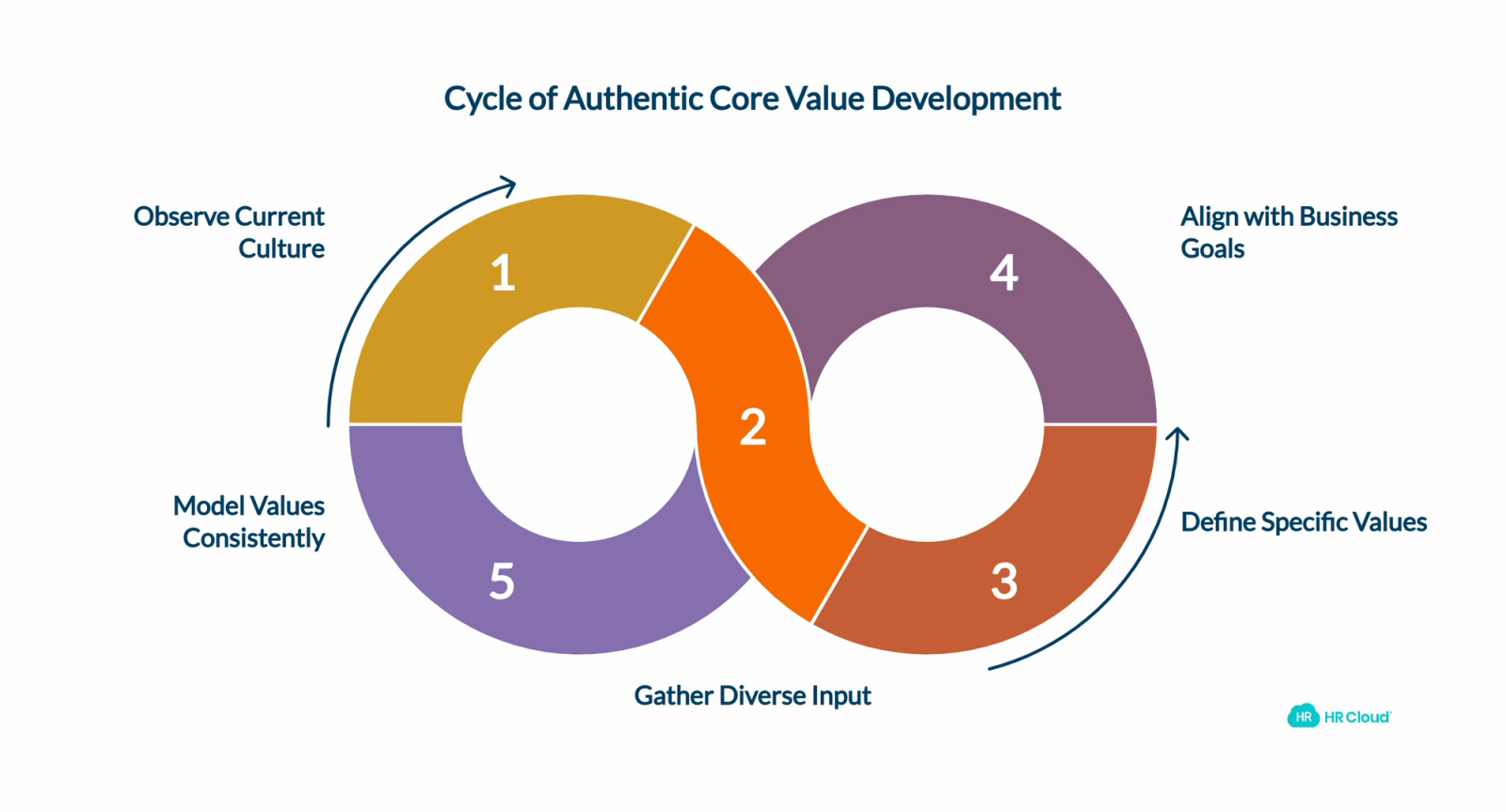
Defining values isn't the hard part - most leaders can brainstorm principles in a single meeting. Making those values authentic, specific, and actionable requires more thoughtful work. Here's how to develop core values that actually influence behavior rather than collecting dust in employee handbooks.
Start with Your Current Culture
The most authentic values emerge from honest observation of your actual culture, not aspirational thinking about the culture you wish existed. Before defining any values, spend time noticing:
What behaviors get rewarded? Look at your last few promotions. What did those people do that stood out? Which qualities appear consistently among your highest performers? The behaviors you promote reveal your real values, regardless of what's written in company materials.
What causes someone to get recognized? Review recent acknowledgments, awards, or public praise. Patterns in recognition reveal what the organization truly celebrates. If every award goes to individual achievement despite stated values of teamwork, that's valuable information.
What would cause someone to get fired? The line you won't tolerate people crossing indicates a value boundary. Organizations that fire for dishonesty value integrity intensely, even if they haven't articulated it explicitly.
What makes people proud to work here? Ask employees across levels and departments what they'd tell friends about your culture. Recurring themes in these stories reveal authentic values worth codifying.
This investigation often surfaces gaps between stated and actual values - and that's useful. You can either embrace the values you're actually living or make deliberate changes to align behavior with aspirational principles. Both paths work, but pretending the gap doesn't exist guarantees your values won't stick.
Gather Input from Every Level
Values created in executive retreats often feel disconnected from frontline reality. Inclusive value development ensures authenticity and builds buy-in from day one. Structure this input gathering thoughtfully:
Conduct real conversations, not generic surveys. Skip the checkbox questionnaire. Instead, facilitate small group discussions or one-on-one conversations where people can share stories and examples. Ask open questions: "When were you most proud to work here?" "What moment made you think 'this is the kind of place I want to be'?" "When have you seen someone go above and beyond?" These narratives reveal values in action.
Include diverse perspectives intentionally. Make sure you're hearing from different departments, tenure levels, locations, and roles. The manufacturing floor experiences your culture differently than the executive suite. Remote workers have different perspectives than office-based teams. Frontline employees see different values in action than middle management. All these viewpoints matter.
Look for patterns, not consensus. You're not trying to achieve universal agreement on every value. Instead, identify themes that appear consistently across different groups. When the sales team, operations crew, and customer service representatives independently mention the same principles, you've found authentic organizational values.
Test language with focus groups. Once you've drafted values, bring them back to diverse employee groups for feedback. Does this language resonate? Does it feel authentic or corporate? Can people imagine how to demonstrate this value in their specific role? This testing refines both wording and understanding.
Keep Values Short and Specific
Long, complex value statements get forgotten. Values need to be memorable enough for employees to internalize and specific enough to guide actual decisions. Apply these filters to every value you're considering:
Can someone remember it without looking it up? If your value requires a paragraph to explain, it's too complex. Aim for single words or short phrases that stick: "Own the outcome" is more memorable than "Taking personal responsibility for results while maintaining collaborative relationships and seeking continuous improvement opportunities."
Could it apply to any company? Generic values like "excellence" or "integrity" don't differentiate your culture unless you define them specifically. What does excellence look like at your organization? What does integrity mean in your context? Add the specificity that makes each value uniquely yours.
Can an employee apply it to a specific decision? Good values function as decision-making tools. When someone faces a choice, your values should help guide them. "Do what's right for customers, even when it's hard for us" provides more decision-making guidance than simply stating "customer focus."
Does it avoid corporate jargon? Terms like "synergy," "empowerment," and "excellence" have been diluted through overuse. Choose language that feels conversational and authentic to your culture. If you wouldn't say it naturally in a meeting, don't put it in your values statement.
Most organizations find that 4-7 values hit the sweet spot - enough to cover important principles without becoming overwhelming. Remember: you're trying to change behavior, not win awards for comprehensive value lists.
Align Values with Business Goals
Values aren't separate from business strategy - they're the behavioral foundation that enables strategic success. Make this connection explicit:
Consider both internal and external impact. Your values should guide how you treat employees and how you serve customers. They should influence product decisions and hiring practices. Values that only address internal culture or only focus outward miss opportunities for alignment.
Connect values to competitive advantage. What behaviors would give you an edge in your market? If you compete on innovation, values like curiosity and courage make strategic sense. If reliability is your differentiator, accountability and excellence support that positioning. Your values should reinforce the behaviors that drive business success.
Address your organization's specific challenges. If silos cause problems, collaboration becomes a crucial value. If change management is difficult, adaptability matters more. Choose values that address your organization's actual needs, not generic principles every company should embrace.
Make sure leaders model these values consistently. Values only stick when leadership demonstrates them, especially during difficult decisions. If "people first" is a value but you never see executives sacrifice short-term results for employee well-being, people will recognize the dissonance. Leadership behavior determines whether values are real or decorative.
Bringing Core Values to Life Through Employee Recognition
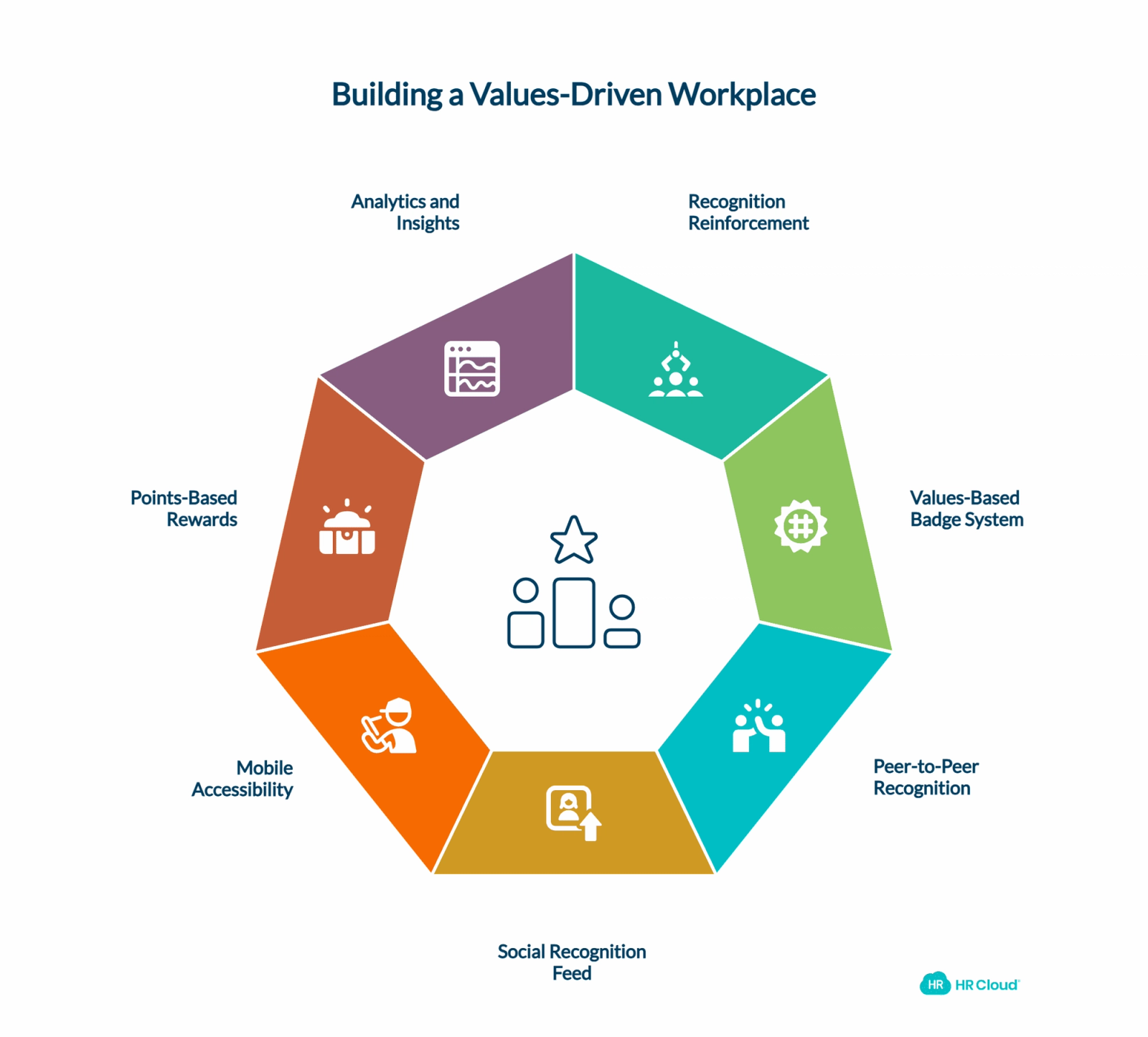
Well-defined values are necessary but insufficient - they become real only when recognized in action. Employee recognition transforms abstract principles into concrete behaviors by celebrating the moments when people demonstrate your values. Here's why recognition and values reinforce each other so powerfully.
Why Recognition Reinforces Values
Recognition creates a visible feedback loop that makes values tangible and actionable. Here's the psychology: behaviors that get recognized get repeated. When someone receives acknowledgment for demonstrating a core value - whether that's innovating to solve a problem, supporting a struggling teammate, or speaking up about an ethical concern - several things happen simultaneously:
The recognized individual feels valued. Public acknowledgment validates their effort and affirms that the organization notices and appreciates value-aligned behavior. This recognition strengthens their connection to the company and increases the likelihood they'll demonstrate that value again.
Observers understand what the value looks like in practice. A value like "courage" might feel abstract, but recognizing Sarah for respectfully challenging an approach that wasn't working shows everyone what courage looks like in your specific context. These concrete examples make values actionable.
The organization's priorities become clear. What gets recognized reveals what truly matters. If you say you value innovation but only recognize people for flawless execution, employees receive a confusing message. When recognition aligns with stated values, people trust that values are real.
Cultural norms shift toward desired behaviors. As more people get recognized for value-aligned actions, those behaviors become normalized. Innovation stops being risky and starts being expected. Collaboration becomes standard practice rather than optional extra effort.
According to research from organizations using values-based recognition, companies that tie recognition explicitly to core values see substantially higher engagement scores and lower turnover than those with generic recognition programs. The specificity matters - recognition becomes a cultural teaching tool.
How Workmates Turns Values Into Daily Behaviors
HR Cloud's Workmates platform makes values-based recognition seamless, frequent, and visible across your entire organization. Unlike annual awards or sporadic manager-driven recognition, Workmates enables continuous celebration of value-aligned behaviors through several key capabilities:
Values-Based Badge System
Create custom badges tied directly to each core value. When someone demonstrates integrity, they receive an integrity badge. When they collaborate across teams, they get a collaboration badge. This visual system makes abstract values concrete and trackable. Employees can see which values they've demonstrated and which might need more attention. Managers can identify which values are being lived most frequently and which need reinforcement.
Peer-to-Peer Recognition
Values become most powerful when peers recognize each other, not just when managers acknowledge good work. Workmates enables anyone to recognize anyone, creating a culture where appreciation flows in all directions. This democratized recognition means frontline employees can celebrate managers for demonstrating values, team members can acknowledge each other's efforts, and cross-functional collaborators can recognize contributions that might otherwise go unnoticed.
Social Recognition Feed
Recognition visibility matters. When Jamaal receives acknowledgment for demonstrating customer focus by staying late to resolve an issue, that recognition doesn't just matter to Jamaal - it teaches everyone what customer focus looks like in action. Workmates' social feed makes recognition public (with appropriate privacy controls), creating a constant stream of values-in-action examples that reinforce cultural norms.
Mobile Accessibility for Frontline Workers
If your workforce includes manufacturing employees, healthcare workers, retail teams, construction crews, or other frontline roles, recognition needs to be mobile-accessible. Workmates' mobile app ensures distributed, deskless workers can both give and receive recognition without needing computer access. This inclusion prevents recognition (and therefore values reinforcement) from becoming an office-worker privilege.
Points-Based Rewards System
Recognition feels more meaningful when it connects to tangible rewards. Workmates allows you to attach points to recognition, with employees accumulating points they can redeem for rewards from an extensive gift card catalog. This system doesn't make recognition transactional - it makes it more impactful by adding a tangible dimension to social acknowledgment.
Analytics and Insights
Which values are being demonstrated most frequently? Which teams recognize each other most often? Which values need more reinforcement? Workmates provides visibility into recognition patterns, helping HR leaders understand cultural health and identify opportunities to strengthen specific values or teams.
Values-Based Recognition in Action
Consider how values-driven recognition transforms workplace behavior:
Scenario: Integrity Value
Your company values integrity, defined as "doing what's right even when it's inconvenient." During a project deadline crunch, Marcus discovers a data error that, if corrected, will delay the launch by two days. Instead of quietly hoping no one notices, he surfaces the issue immediately. His manager recognizes him publicly in Workmates with an integrity badge, explaining how Marcus prioritized accuracy over convenience despite pressure. The recognition:
- Validates Marcus's difficult decision to slow down the launch
- Shows the entire team that integrity matters more than hitting arbitrary deadlines
- Teaches other employees that they should surface problems rather than hide them
- Reinforces that short-term inconvenience for long-term correctness aligns with company values
Now multiply this by hundreds of recognition moments across the organization. Each one teaches, reinforces, and spreads values-aligned behavior.
Scenario: Collaboration Value
Your organization values collaboration, particularly across departmental boundaries. The marketing team typically works independently from operations, creating occasional friction. When Emma from marketing proactively reaches out to operations before launching a new campaign to understand warehouse capacity and timing constraints, this collaboration prevents problems and strengthens relationships. Her cross-functional teammate Javier recognizes Emma in Workmates for demonstrating collaboration. This recognition:
- Acknowledges effort that might otherwise go unnoticed (since it prevented rather than solved a problem)
- Encourages other marketers to involve operations early
- Shows operations team that marketing values their input
- Creates positive visibility for cross-functional partnership
The collaboration value transforms from an abstract principle to a practiced behavior because the recognition made it visible and celebrated.
How HR Cloud Workmates Strengthens Values-Driven Culture
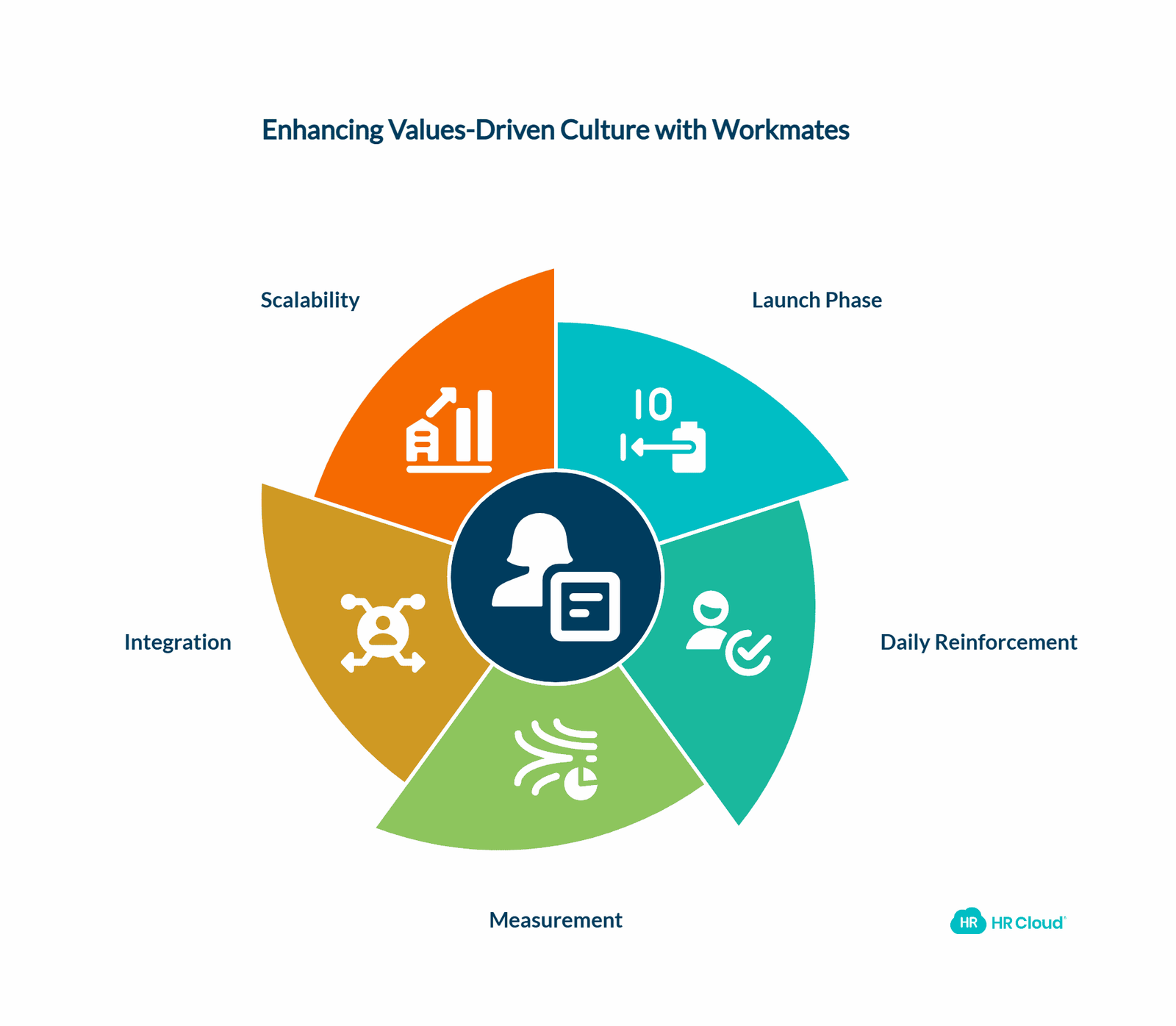
Building a values-driven culture requires more than good intentions and inspiring wall art. It requires systems that make values visible, tools that enable recognition, and integration that reduces friction. Here's how Workmates supports every stage of your values journey.
Launch Phase: Introducing Values to Your Organization
When you're rolling out new or refined values, Workmates helps with adoption. Create announcement posts explaining each value with examples. Encourage leadership to demonstrate recognition by celebrating early examples of value-aligned behavior. Use channels to discuss values within specific departments or locations. The social feed becomes a teaching tool where values come to life through real stories.
Daily Reinforcement: Making Values Stick
Values stick when they're part of daily experience, not quarterly initiatives. Workmates enables anyone to recognize anyone at any time from any device. This accessibility means recognition happens in the moment - when Sarah demonstrates innovation by suggesting a process improvement, her colleague can acknowledge it immediately rather than waiting for a performance review. Frequent, timely recognition reinforces values far more effectively than annual awards.
Measurement: Understanding Values Health
You can't manage what you can't measure. Workmates analytics show which values are being recognized most frequently, which teams demonstrate strong values alignment, and where gaps might exist. If your accountability value rarely appears in recognition while collaboration gets celebrated constantly, that data suggests either accountability isn't actually important to your culture (in which case, remove it from your values) or it needs more explicit reinforcement from leadership.
Integration: Connecting Values Across Systems
Workmates integrates with major HRIS platforms including ADP Workforce Now and others. This integration means:
- Recognition data flows into performance management conversations
- New hires see values reinforced from day one through onboarding
- Milestone celebrations (anniversaries, promotions) tie to values demonstrations
- Single sign-on reduces friction - employees access Workmates through existing credentials
The seamless integration ensures values aren't siloed in a separate recognition platform but woven throughout the employee experience.
Scalability: Growing Without Losing Culture
As organizations scale, maintaining cultural cohesion becomes challenging. Workmates helps by creating visibility across locations and levels. A manufacturing employee in Michigan can see recognition happening in retail operations in California. Remote workers see how office-based teams demonstrate values. This transparency creates cultural connective tissue that prevents fragmentation as you grow.
Ready to turn your core values into daily behaviors? Schedule a demo to see how Workmates makes values-based recognition seamless across your entire organization.
Ready to Build a Culture Where Values Drive Results?
Core values shape your culture, but recognition brings them to life. When people see values celebrated consistently - when innovation gets acknowledged, when integrity is visibly rewarded, when collaboration receives recognition - those principles stop being abstract and start being behavioral norms.
HR Cloud's Workmates makes values-based recognition seamless. From values-specific badges to peer-to-peer acknowledgment, from mobile accessibility for frontline workers to analytics that show which values are thriving, Workmates gives you the tools to transform your core values from wall art into daily practice.
What gets recognized gets repeated. And what gets repeated becomes your culture.
Ready to see how Workmates strengthens values-driven culture? Schedule a demo to explore how recognition transforms principles into practice across your entire organization.

Experience how Workmates can transform communication and strengthen culture—all in one powerful platform
Book Your Free DemoFrequently Asked Questions About Company Core Values
What are company core values?
Company core values are the fundamental beliefs and principles that guide how your organization operates, makes decisions, and treats people. They shape workplace culture by defining what behaviors get rewarded and what standards everyone is expected to uphold. When values are clearly defined and reinforced through recognition, they help employees connect their daily work to the company's larger purpose.
How many core values should a company have?
Most companies establish between 4-7 core values. The sweet spot is usually 5-6 values that are specific enough to guide decisions but memorable enough for everyone to internalize. Focus on quality over quantity - each value should be authentic to your organization and actionable in daily operations. If you can't remember your values without looking them up, you have too many.
How do you make core values stick in your organization?
Core values stick when they're recognized in action. Use an employee recognition platform like Workmates to celebrate when people demonstrate your values. This reinforces the behaviors you want to see and shows everyone what living your values looks like in practice. Regular recognition, clear communication from leadership, and integration into hiring and performance management all help values become part of your culture's DNA.
What's the difference between company culture and core values?
Company culture is the lived experience of working at your organization - the atmosphere, behaviors, and unwritten rules. Core values are the explicit principles that should guide that culture. Think of values as the compass and culture as the terrain you create by following that compass consistently. Good values shape culture by making expectations clear and providing standards for behavior.
How does employee recognition support core values?
Recognition platforms like Workmates allow you to tie recognition directly to specific core values. When employees are recognized for demonstrating integrity, innovation, or any other value, it reinforces those behaviors and makes values tangible. Recognition creates a visible feedback loop that shows everyone what living your values looks like in practice, making them more than words on a wall. Studies show organizations with values-based recognition see substantially higher engagement than those with generic recognition programs.
Can company core values change over time?
Yes, core values can evolve as your organization grows and market conditions shift. However, changes should be deliberate and well-communicated. Review your values annually to ensure they still reflect who you are and where you're headed. Any updates should involve input from employees at all levels to maintain authenticity and buy-in. That said, frequent changes to core values signal instability - values should be relatively enduring, even as your business strategy evolves.
What are the most common company core values?
The most common workplace values include integrity (doing what's right consistently), innovation (embracing change and new ideas), accountability (owning outcomes), collaboration (achieving more together), and respect (treating everyone with dignity). While these appear frequently, the key is making them specific to your organization. Generic "integrity" doesn't guide behavior as effectively as "doing what's right for customers even when it's inconvenient for us."
How do you communicate core values to remote teams?
Remote teams need digital tools that make values visible in daily work. Recognition platforms create shared moments where distributed employees see values in action. Mobile-accessible solutions like Workmates ensure frontline and remote workers can participate equally in values-driven culture building. Regular video communication from leadership demonstrating values, explicit values discussion in team meetings, and celebration of remote workers living values all help maintain cultural alignment across distance.
Why are company core values important?
Core values provide three essential functions: they guide decisions in ambiguous situations (giving teams a decision-making framework), they attract and retain people who fit your culture (employees aligned with values stay substantially longer), and they set accountability standards (making performance expectations clear). Without explicit values, organizational culture develops by accident rather than intention, leading to inconsistency and confusion.
How do you identify your company's core values?
Start with honest observation: What behaviors get rewarded at your company? What causes someone to get promoted or recognized? Gather input from employees at all levels through conversations, not just surveys. Look for themes that appear consistently in how people describe what makes them proud to work there. The values already exist in your culture - your job is to articulate them clearly and ensure they're reinforced consistently.
About the author

Keep Reading


Like What You Hear?
We’d love to chat with you more about how HR Cloud® can support your business’s HR needs.
Book Your Free Demo