How to Onboard Nurses and Clinical Staff Without Burning Out Your HR Team

This blog explains how to streamline onboarding for nurses and clinical staff to prevent HR burnout and speed up staff readiness. It shows that traditional onboarding racks up enormous admin burden — dozens of tasks per hire, constant follow-ups, and long delays. The core solution: a mobile self-service portal and automated workflows so new hires complete documents, credentials and training on their own time (on their phones), letting HR focus on meaningful tasks like mentor matching and culture-building. As a result, organizations can onboard far faster, reduce HR workload, and improve retention and readiness, making onboarding a strategic advantage rather than a bottleneck.
Healthcare HR teams spend up to 57% of their time on administrative tasks, and onboarding clinical staff is one of the biggest culprits. With each new hire requiring an average of 41 administrative tasks, HR coordinators managing 50+ new hires per month face over 2,000 follow-ups monthly. This article shows how mobile self-service portals can shift document collection from HR to the new hire, reducing burnout while accelerating time-to-start.
Key insights covered:
- The admin burden quantified: HR staff spend 57% of time on administrative work; healthcare workers spend 34 hours weekly on admin (Google Cloud/Harris Poll)
- The "chase" problem: Only 36% of HR leaders describe recruiting-to-onboarding handoffs as seamless
- The self-service solution: Organizations with effective self-service save up to 50% on support costs and see 70% faster process adoption
- Automation impact: Companies have reduced onboarding time by 80% through self-service automation
- What HR gains: Time for mentor matching, check-ins, and culture-building—work that actually reduces turnover
This guide is for Nurse Managers, HRBPs, and HR Coordinators managing high-volume clinical onboarding in healthcare organizations.
Self-service isn't just convenient; it's survival.
We talk a lot about nurse burnout. But what about HR burnout?
Chasing down immunization records, license numbers, and tax forms for 50 field staff a month is a recipe for exhaustion. You're sending the same "friendly reminder" email for the third time. You're manually entering data from a blurry photo of a nursing license someone texted you. You're fielding calls at 7 p.m. from a new hire who can't find the benefits enrollment link.
Here's what I want you to consider: If your HR team is spending more time on document collection than on actually welcoming new clinical staff, something is fundamentally broken. And it's not your team's fault. It's a systems problem.
The good news? There's a fix. And it doesn't require hiring more HR staff or working more hours. It requires shifting the burden from HR data entry to candidate self-service.
Self-service is self-care. Let me show you what I mean.
The Admin Burden: Where Your Hours Actually Go
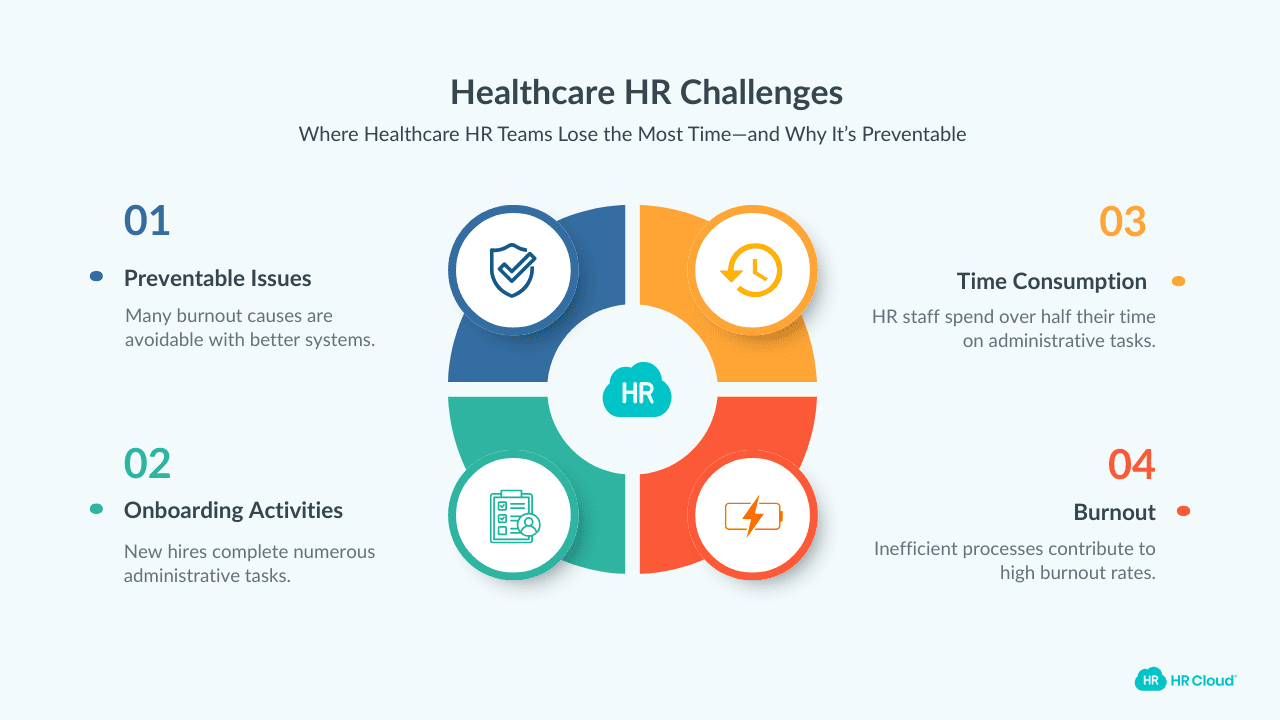
Let's quantify the problem, because I think most healthcare organizations dramatically underestimate how much time goes into onboarding administration.
According to research from SHRM, HR staff spend as much as 57% of their time on administrative tasks.
Not strategic work. Not culture-building. Not retention initiatives. But administrative tasks. More than half of every workday.
And healthcare HR has it worse than most industries.
A Google Cloud and Harris Poll survey found that medical office staff spend an average of 34 hours per week on administrative work. That's nearly an entire full-time position devoted to paperwork.
Now layer in what onboarding actually requires. Research has found that new employees must complete an average of 54 activities for onboarding purposes, including 41 administrative tasks and 3 documents. For each new hire. Every single time.
If you're onboarding 50 travel nurses a month—not unusual for a mid-sized health system—that's 2,050 administrative tasks your team is tracking. Per month.
Here's where it gets worse: Grant Thornton's State of Work survey found that 38% of healthcare workers say inefficient processes and systems have contributed to their burnout. The same survey found that 60% of healthcare workers experienced burnout in the past year—10 percentage points higher than workers in any other industry.
Your HR team isn't just busy. They're burning out. And the tragedy is that much of what's burning them out is preventable.
The Real Cost of "Chasing"
A new nurse accepts your offer on Monday. By Wednesday, you've sent the onboarding packet—23 pages of forms, instructions to print, sign, scan, and email back, plus separate links for license upload, direct deposit, and benefits.
By Friday, you've received nothing. So you send a reminder. Then another. By Tuesday, you're calling her cell. She apologizes—she's been on shift, doesn't have a scanner, couldn't figure out the benefits portal.
You walk her through it. She promises Thursday. Thursday comes. You get 4 of 23 pages. The license photo is blurry. The direct deposit form has the wrong routing number.
You start over.
This isn't an exaggeration. Enboarder's 2025 research found only 36% of HR leaders describe handoffs between recruiting, HR, and hiring managers as "seamless." Meanwhile, Digitate found 40% of new hires report HR responds to inquiries very late.
While you're drowning in follow-ups, new hires feel ignored. Everyone loses.
The Mobile Solution: Meet Nurses Where They Actually Are
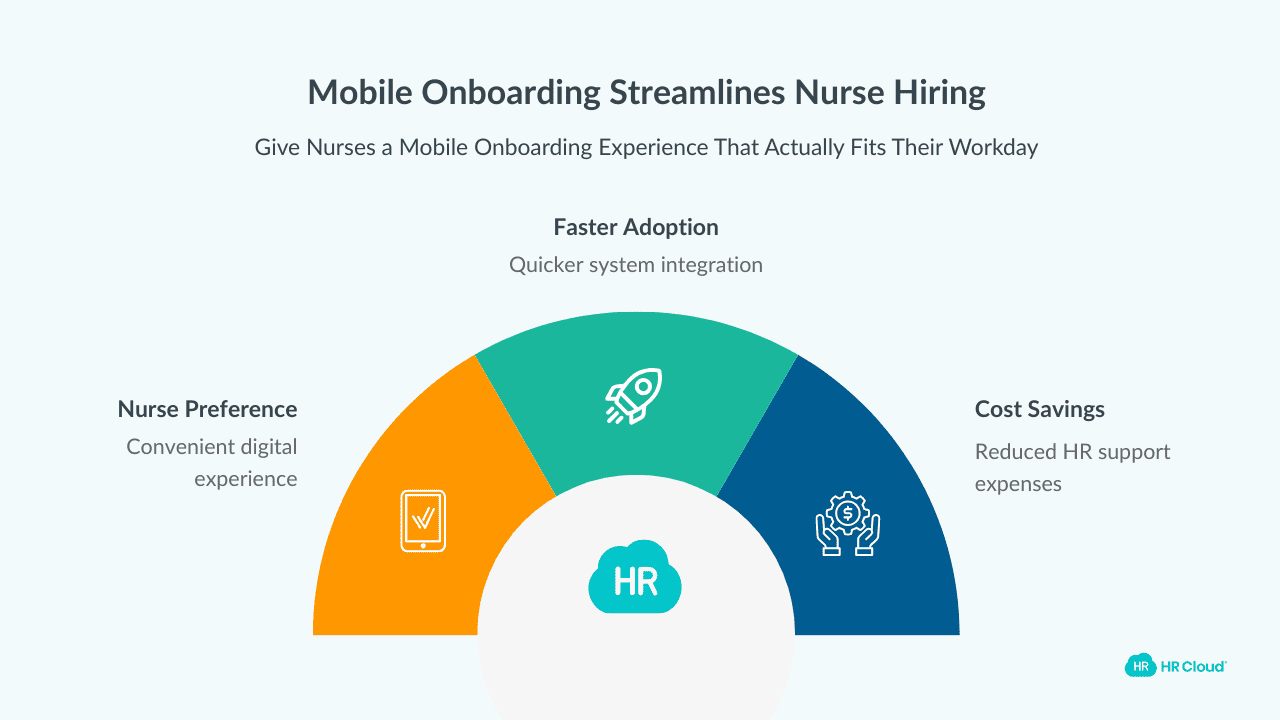
You need to remember when setting up process is that clinical staff don't sit at desks. They don't have time for hour-long paperwork sessions. They're completing your onboarding requirements between shifts, on their phones, often at 10 p.m.
So why are we designing onboarding systems that assume they're sitting at a desktop with a scanner?
Mobile self-service portals flip the entire model.
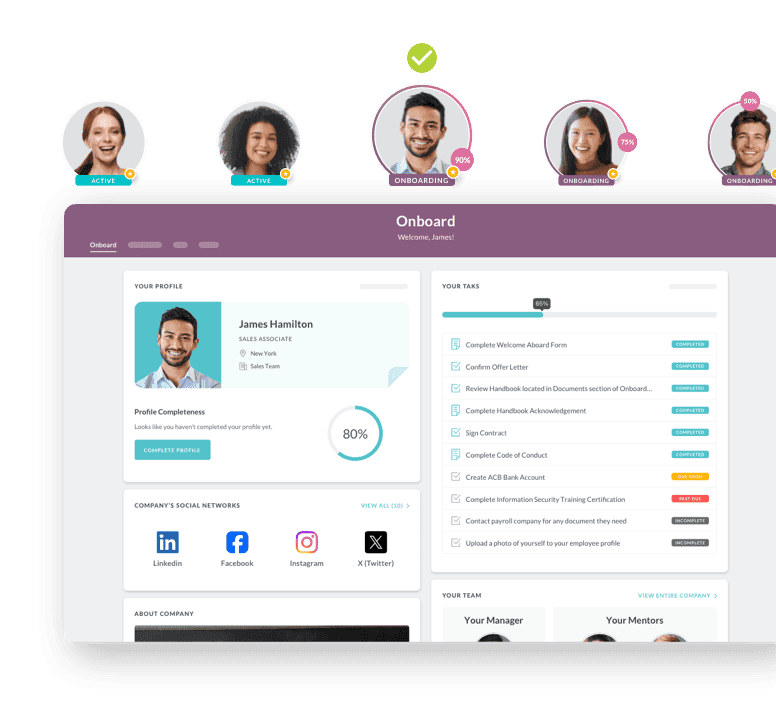
Instead of HR chasing documents, new hires upload them directly—from their phones, on their schedule, without HR involvement.
License verification? The nurse takes a photo of her license with her phone and uploads it directly to the portal. The system reads the data, validates the license number, and flags anything that needs attention.
**I-9 completion?** She completes Section 1 on her phone before Day 1, uploads photos of her ID documents, and signs electronically. No scanning. No faxing. No "I don't have a printer" excuses.
I-9 Audit Checklist for Healthcare Teams
Stay compliant and audit-ready with an easy-to-follow checklist that streamlines onboarding and safeguards patient care.
Download Now
Tax forms? Digital. Direct deposit? Digital. Benefits enrollment? Digital.
And this approach works.
Gartner found that organizations with effective self-service options save up to 50% on support costs. The same research showed that companies with self-service onboarding see a 70% faster adoption rate of new systems and processes.
And honestly? Nurses prefer it. They're used to managing their lives on their phones. The last thing they want is to print and scan documents like it's 2005.
The workflow is straightforward:
1. New hires receive a single link to a mobile-friendly portal.
2. They upload photos of licenses and IDs directly from their phones.
3. Digital forms auto-populate where possible.
4. E-signatures replace printing and scanning.
Both the new hire and HR can see real-time status. No more "did you get my email?" back-and-forth.
Platforms like HR Cloud's Onboard are built specifically for this—mobile-first, designed for clinical staff who need to complete onboarding from anywhere.
Automated Nudges: Let the System Nag, Not You
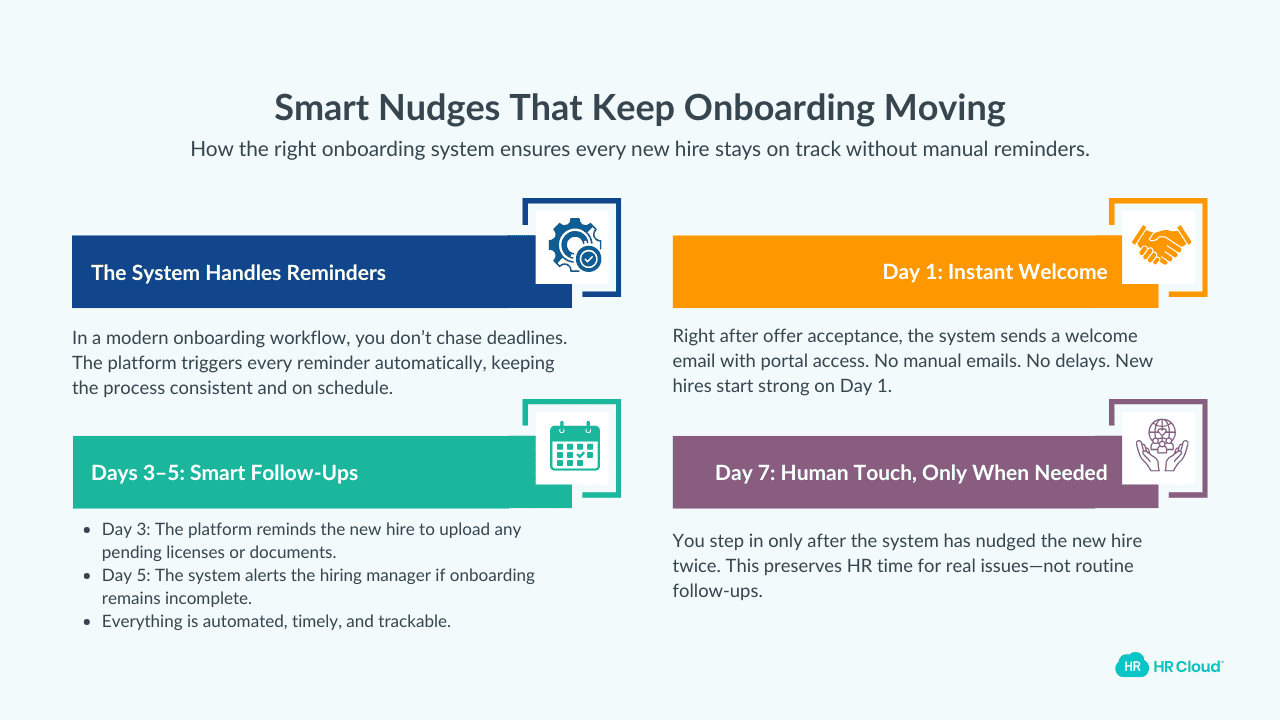
Here's where self-service gets really powerful: automated reminders.
Remember that nurse who hadn't completed her paperwork by Friday? In a traditional system, you're the one sending reminders. You're tracking deadlines in a spreadsheet. You're making phone calls.
In an automated system, the platform handles it.
Day 1 after offer acceptance: Welcome email with portal access—sent automatically.
Day 3: Reminder that license upload is still pending—sent automatically.
Day 5: Escalation alert to the hiring manager that onboarding is incomplete—sent automatically.
Day 7: Personal outreach (now you step in)—but only after the system has already nudged twice.
This isn't about removing the human element. It's about reserving the human element for when it actually matters.
Your time is better spent calling the new hire who's having a genuine problem than chasing the one who just forgot to click "submit."
Let the system handle the reminders so you can handle the relationships.
The U.S. Surgeon General's Advisory on Health Worker Burnout specifically calls out administrative burden as a key factor contributing to healthcare worker burnout and recommends that organizations "reduce administrative and documentation burdens" to help workers "make time for what matters."
Automated nudges do exactly that. They reduce the administrative burden of follow-up so your team can focus on what matters—welcoming new staff, building culture, and supporting retention.
“The flexibility of the HR Cloud system is invaluable in ensuring compliance. It helped us stay a step ahead of changing document collection requirements.”

— Jesse Rose, Provider recruitment, onboarding, and compliance manager

What HR Gets to Do Instead
When you shift document collection to self-service and reminders to automation, something remarkable happens: HR gets time back.
That 57% time spent on admin starts to shrink. And in that space, your team can focus on work that actually moves the needle: mentor matching (which reduces turnover by 2-15%), check-in conversations with new hires, manager enablement, and culture building.
This is the work HR should be doing—the work that reduces turnover and builds engagement. Document chasing doesn't do any of that. It just burns out your team.
What New Hires Get: A Faster Start
Self-service doesn't just help HR. It helps the new hire.
If they receive a confusing packet of PDFs and multiple login links, they start to wonder: Is this how the whole organization operates?
But if they receive a single link to a clean, mobile-friendly portal where everything is in one place—that sends a different message: We've got our act together. We respect your time.
Research has found that 77% of employees who went through a formal onboarding process met their first performance goals.
Structure and efficiency matter. And when your HR team isn't drowning in admin, they can provide the personal touch new hires actually want.
The Honest Reality Check
Self-service portals aren't magic. They require upfront investment—the right platform, configured workflows, trained staff. Some things will still require human intervention, such as complex credential issues, international hires, the rare new hire without a smartphone.
But organizations that implement self-service see real results. Deel's research documented cases where companies reduced onboarding time by 80% through automation. That's not incremental. That's transformation.
In an industry where 60% of workers experience burnout, transformation isn't optional.
Where to Start This Week
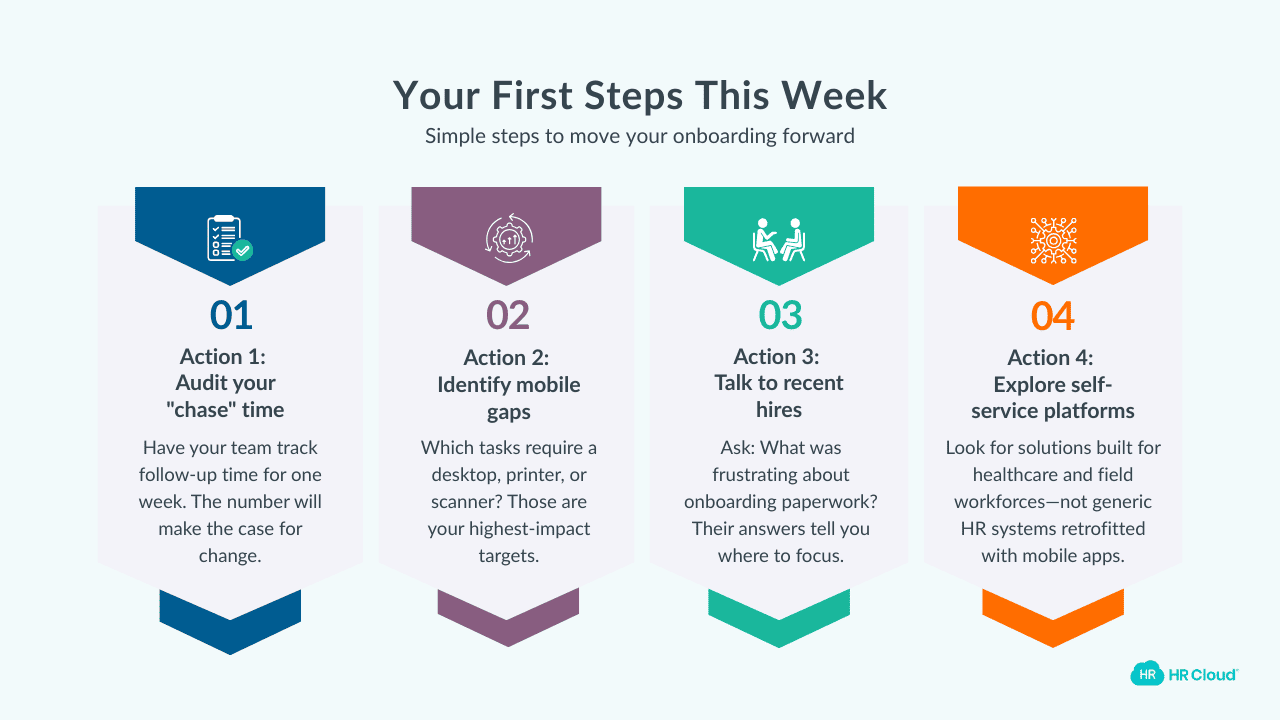
Action 1: Audit your "chase" time. Have your team track follow-up time for one week. The number will make the case for change.
Action 2: Identify mobile gaps. Which tasks require a desktop, printer, or scanner? Those are your highest-impact targets.
Action 3: Talk to recent hires. Ask: What was frustrating about onboarding paperwork? Their answers tell you where to focus.
Action 4: Explore self-service platforms. Look for solutions built for healthcare and field workforces—not generic HR systems retrofitted with mobile apps.
The Bigger Picture
Your HR team chose this work because they care about people. But they didn't sign up to spend 57% of their day chasing documents.
Your new clinical hires accepted your offer because they want to care for patients. They didn't sign up to spend hours filling out forms.
Self-service onboarding gives your HR team back the time to do work that matters. It gives new hires an experience that makes them feel valued from the start.
That's not just better onboarding. That's better healthcare.
Looking for a mobile-first onboarding solution built for clinical staff? Explore HR Cloud's Onboard platform to see how self-service can transform your process.

Discover how our HR solutions streamline onboarding, boost employee engagement, and simplify HR management
Book Your Free DemoFAQs
How much time does HR spend on onboarding paperwork?
Research shows HR staff spend up to 57% of their time on administrative tasks, with healthcare organizations hit hardest. Each new hire requires an average of 41 administrative tasks to complete. For teams onboarding 50 clinical staff monthly, that's over 2,000 tasks to track—most involving document collection, follow-ups, and manual data entry.
What is self-service onboarding?
Self-service onboarding allows new hires to complete paperwork, upload documents, and sign forms independently through a digital portal—typically from their mobile phones. Instead of HR chasing documents via email, new hires access one link, upload license photos, complete tax forms, and e-sign policies on their own schedule. HR monitors progress without manual data entry.
How does self-service onboarding reduce HR burnout?
Self-service shifts document collection from HR staff to new hires and automates reminder emails. Instead of sending follow-ups manually, the system nudges new hires automatically. This frees HR to focus on high-value work like mentor matching, check-in conversations, and culture-building—activities that actually improve retention and job satisfaction.
Can nurses really complete onboarding on their phones?
Yes. Mobile-first onboarding portals let nurses photograph licenses and certifications, complete digital forms, and e-sign documents directly from smartphones. This matters because clinical staff rarely sit at desks—they're completing paperwork between shifts or at 10 p.m. If onboarding requires a desktop and scanner, compliance delays are inevitable.
What are automated onboarding reminders?
Automated reminders are system-generated nudges sent to new hires when tasks remain incomplete. For example: Day 1 sends a welcome email, Day 3 reminds about pending license uploads, Day 5 escalates to the hiring manager. This removes follow-up burden from HR while ensuring nothing falls through the cracks.
How much time can self-service onboarding save?
Research from Gartner shows organizations with effective self-service options save up to 50% on support costs. Some companies have reduced total onboarding time by 80% through automation. For healthcare HR teams managing high-volume hiring, this translates to hours saved weekly on document chasing and manual data entry alone.
What should a healthcare onboarding portal include?
An effective healthcare onboarding portal should include: mobile-optimized document upload (for licenses, certifications, IDs), digital I-9 and tax form completion, e-signature capability, automated task reminders, real-time status tracking for HR and new hires, and integration with credentialing and payroll systems. Mobile-first design is essential for clinical staff.
How do I make the business case for self-service onboarding?
Track your team's current "chase time"—hours spent following up on incomplete documents. Calculate the cost by multiplying hours by hourly rate. Compare against self-service platform costs. Add soft costs: delayed starts, compliance risk from missing documents, and HR burnout leading to turnover. Most organizations see ROI within months.
About the author

Keep Reading


Like What You Hear?
We’d love to chat with you more about how HR Cloud® can support your business’s HR needs.
Book Your Free Demo