Onboarding Adjunct Faculty and Part-Time Instructors at Scale

Adjunct faculty teach the majority of credit hours at many institutions. They're also the first to leave.
Part-time faculty turnover is highest and still increasing among all higher education employee categories, according to CUPA-HR data. They teach one semester, decide it's not worth the hassle, and don't return—leaving departments scrambling to cover sections with even newer adjuncts who get even worse onboarding.
This is the adjunct paradox: they're simultaneously your most flexible and most fragile workforce.
Flexible because you can hire them quickly, assign courses as enrollment dictates, and adjust commitments semester to semester.
Fragile because institutions treat them as disposable—and then act surprised when they behave accordingly.
The problem isn't that adjuncts are inherently uncommitted. It's that onboarding them as an afterthought creates a self-fulfilling prophecy.
What if you onboarded adjunct faculty as if they mattered?
Not with the same extensive onboarding process as tenure-track hires, but with intentional, efficient onboarding that creates connection from Day 1?
That's what this article is about: building adjunct onboarding that scales, acknowledges their different circumstances, and actually drives retention.
Why Traditional Faculty Onboarding Fails Adjuncts
New tenure-track faculty typically experience weeks of orientation and onboarding: department introductions, campus tours, benefit explanations, research support overview, teaching mentorship, and gradual integration into academic community.
Adjuncts get a course assignment email.
Maybe they're invited to a general orientation session scheduled when they're teaching at their other institution.
Maybe they receive a link to the learning management system with no training on how to use it.
Maybe they meet their department chair—or maybe communication happens entirely through an administrative assistant.
Only 12% of employees believe their organization does onboarding well. For adjuncts, that percentage is almost certainly lower.
Here are a few things that typically go wrong in adjunct onboarding:
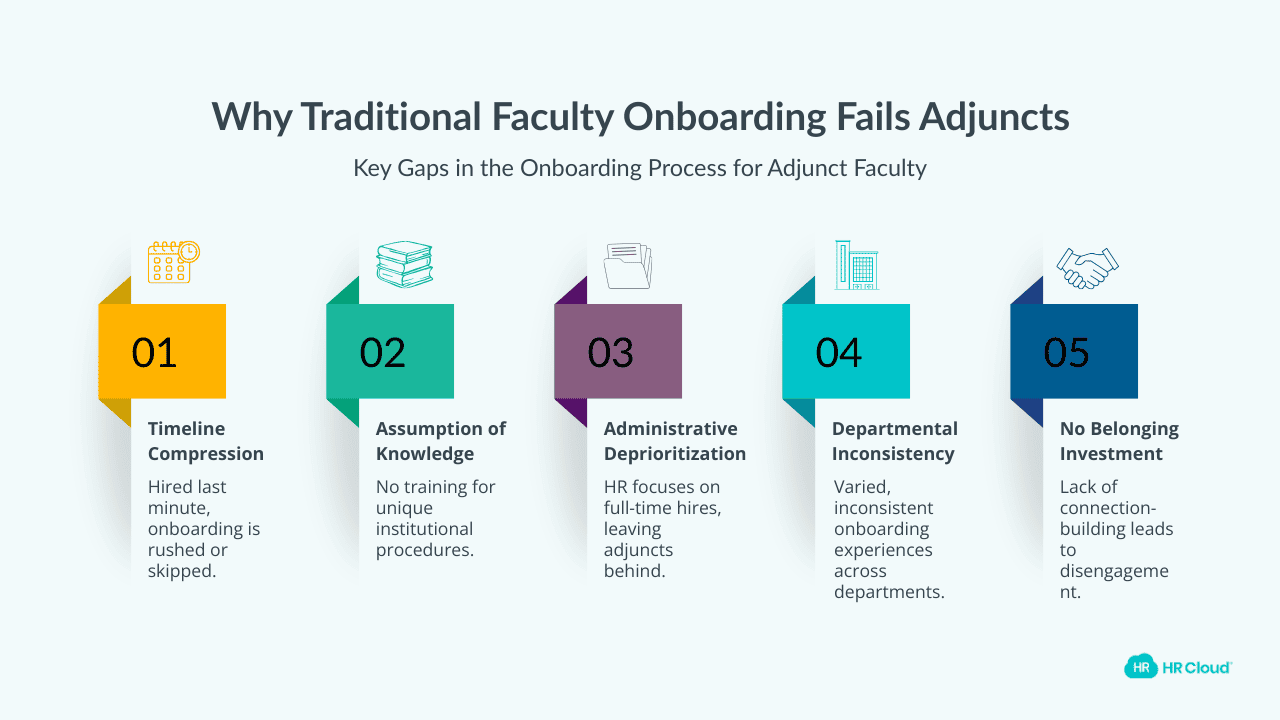
- Timeline compression: Adjuncts are often hired days before classes begin—sometimes after. Traditional onboarding sequences simply don't fit.
- Assumption of knowledge: "You've taught before, you know how this works" ignores that every institution is different. Your LMS, grading policies, student support resources, and academic integrity procedures aren't universal.
- Administrative deprioritization: HR focuses on full-time hires. Adjunct paperwork becomes a "get it done eventually" task rather than a structured process.
- Departmental inconsistency: Each department handles adjunct integration differently. Some are welcoming; others are indifferent.
- No belonging investment: Without deliberate connection-building, adjuncts remain perpetual outsiders—and leave the first time something better comes along.
The Adjunct Onboarding Framework
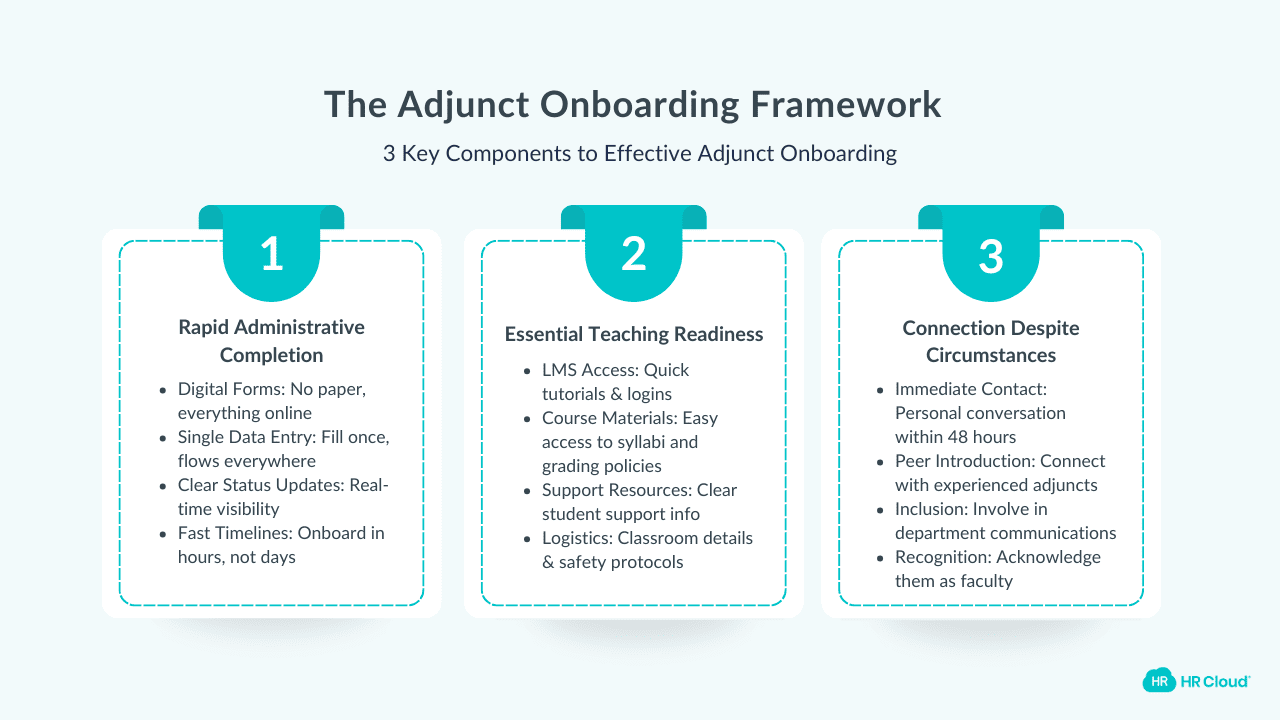
Effective adjunct onboarding requires you to acknowledge their dichotomy: you can't treat them like full-time faculty, but you can't treat them like replaceable labor either.
The framework has three components.
Component 1: Rapid Administrative Completion
Get paperwork done fast and frictionlessly. Adjuncts often juggle multiple jobs; they don't have time for complicated HR processes.
What "rapid" looks like:
- Digital everything: No paper forms requiring physical delivery. Everything completes online, from any device.
- Single data entry: Information entered once flows to all systems (HR, payroll, LMS, ID card, parking). No redundant forms.
- Pre-populated fields: If they've taught before, don't ask for information you already have.
- Clear status visibility: "Your account is set up" vs. "Your account is pending IT processing" vs. "We need your tax form before we can proceed."
- Accelerated timelines: I-9 completion still requires legal compliance, but everything else should take hours, not days.
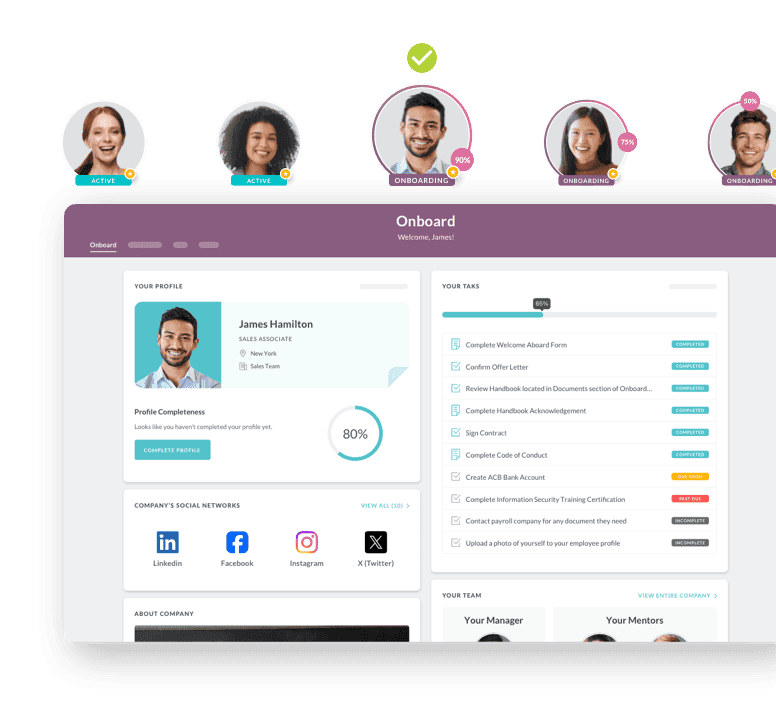
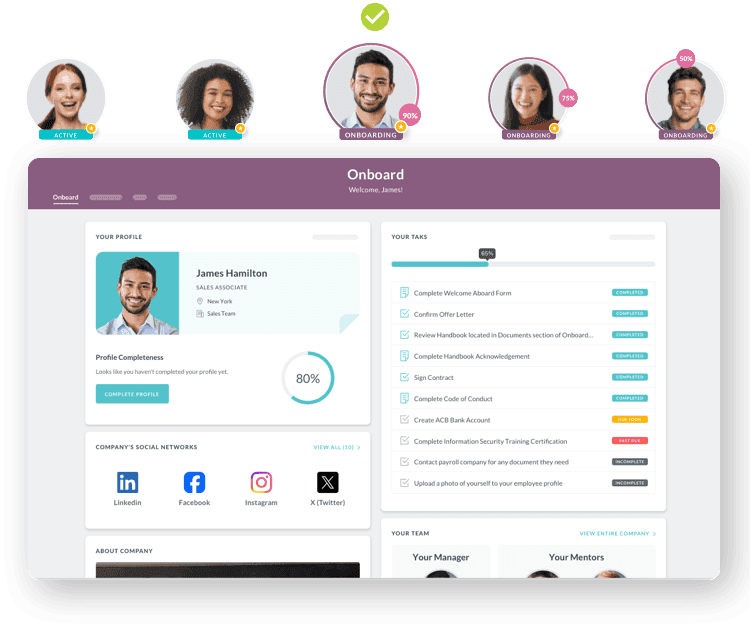
HR Cloud's mobile-native platform lets adjuncts complete onboarding from their phones between classes at their other job—exactly how the process needs to work for people who are always somewhere else.
Component 2: Essential Teaching Readiness
Adjuncts need to teach effectively from Day 1. That requires focused preparation, not comprehensive orientation.
Teaching readiness essentials your adjuncts need:
- LMS access and basic training: They should log in, access their course shell, see their roster, and communicate with students before class begins. Quick tutorial videos (under 5 minutes each) beat synchronous training sessions.
- Course materials and expectations: Syllabi templates, required elements, grading policy constraints, academic integrity procedures, and departmental standards—clearly documented, easily accessible.
- Student support resource overview: How do students get writing help, tutoring, counseling, disability accommodations? Adjuncts need to know what to refer, even if they can't directly provide it.
- Operational logistics: Classroom location, building access, parking, office/desk availability, printing, technology in the classroom—the practical stuff that makes or breaks the first day.
- Emergency and safety protocols: What do they do if a student has a crisis? Who's their point of contact for classroom problems?
Component 3: Connection Despite Circumstances
This is where most institutions fail.
Administrative completion and teaching readiness are transactional. Connection is relational, and that is what creates retention.
Connection-building strategies that work for adjuncts:
- Department contact within 48 hours of hire: Not an email. A conversation with the department chair, program director, or designated faculty liaison. "We're glad you're teaching with us. Here's who to call if you need anything."
- Peer introduction: Connect new adjuncts with experienced adjuncts teaching similar courses. "Dr. Rodriguez has taught this course for three years and is happy to share materials and answer questions."
- Inclusion in department communications: Add them to email lists, invite them to meetings (even if they can't attend), share department updates. Exclusion signals disposability.
- Recognition as faculty: Address them appropriately, include them in faculty directories, acknowledge their contributions. The language matters.
- Professional development access: Even limited access to workshops, teaching resources, or professional support signals investment in their growth.
- Feedback and check-in: Someone should ask, mid-semester: "How's it going? What do you need?" The question itself demonstrates care.
According to 2024 JobSeeker Nation Report, 24% of workers have left a job within the first 90 days of starting a new role. For semester-based adjuncts, that decision window is even shorter. If they feel like outsiders by week four, they're not coming back in spring.
Scaling Adjunct Onboarding
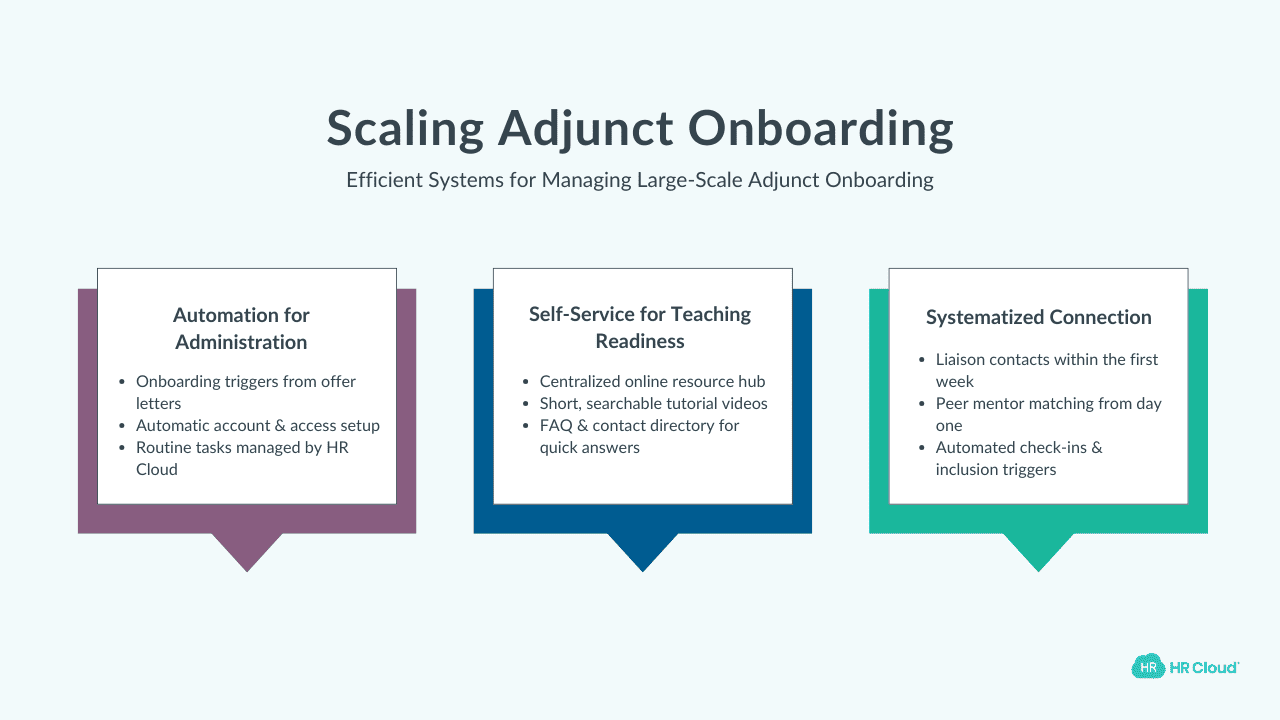
If your institution hires hundreds of adjuncts you can't provide high-touch individual attention to everyone. But you can definitely build systems that scale. Here is how.
Automation for Administration
Everything that doesn't require human judgment should happen automatically:
- Offer letter triggers onboarding workflow
- Account creation requests fire to IT
- LMS course access configured based on teaching assignment
- Parking and building access provisioned automatically
- Payroll and benefits enrollment enabled
HR Cloud's automation handles these triggers so HR staff focus on exceptions rather than routine processing.
Self-Service for Teaching Readiness
Build resources adjuncts can access on their own schedule. If the self-service portal is well-designed, adjuncts can get answers as soon as they get stuck rather than waiting for email responses.
- Online resource hub: Central location for syllabi, policies, LMS tutorials, department procedures
- Video library: Short, searchable videos on common tasks and questions
- FAQ database: Answers to questions new adjuncts always ask
- Contact directory: Who to reach for what, with actual response expectations
Systematized Connection
Building and maintaining connection with the adjuncts is necessary to ensure retention. Here is how you can make relationship-building a workflow:
- Assign liaison responsibility explicitly: The dean or the registrar or whoever is the right person in your organization should contact all new adjuncts in our department within their first week.
- Peer mentor matching: This should be part of the onboarding process, not an afterthought.
- Automated check-in prompts: System should automate and execute the check-ins. Say, remind the liaisons to reach out at week 3 and then again mid-semester.
- Inclusion triggers: New adjuncts should be automatically added to communication channels immediately.
HR Cloud's Workmates engagement platform enables recognition and communication that reaches adjuncts who never attend department meetings—essential for building connection with people who are rarely physically present.
“We highly recommend Workmates as it gives us the ability to communicate and connect our workforce.”

— Andrea Bermudez, Organizational & Talent Development Manager

Timing Considerations
Adjunct onboarding must accommodate compressed timelines. Build workflows for each scenario; pretending that emergency hiring won't happen does not work. Here are a few scenarios.
Ideal scenario (3+ weeks before semester):
- Full onboarding sequence completed
- LMS training attended
- Department meeting attended
- Mentor relationship established
Common scenario (1 week before semester):
- Essential paperwork completed
- LMS access confirmed
- Teaching readiness resources provided
- Quick phone call with department contact
- Mentor introduction via email
Emergency scenario (days before or after the semester begins):
- Compliance essentials only on Day 1
- Teaching access prioritized
- Full onboarding continues parallel to teaching
- Intensive support provided during first week
Metrics That Matter
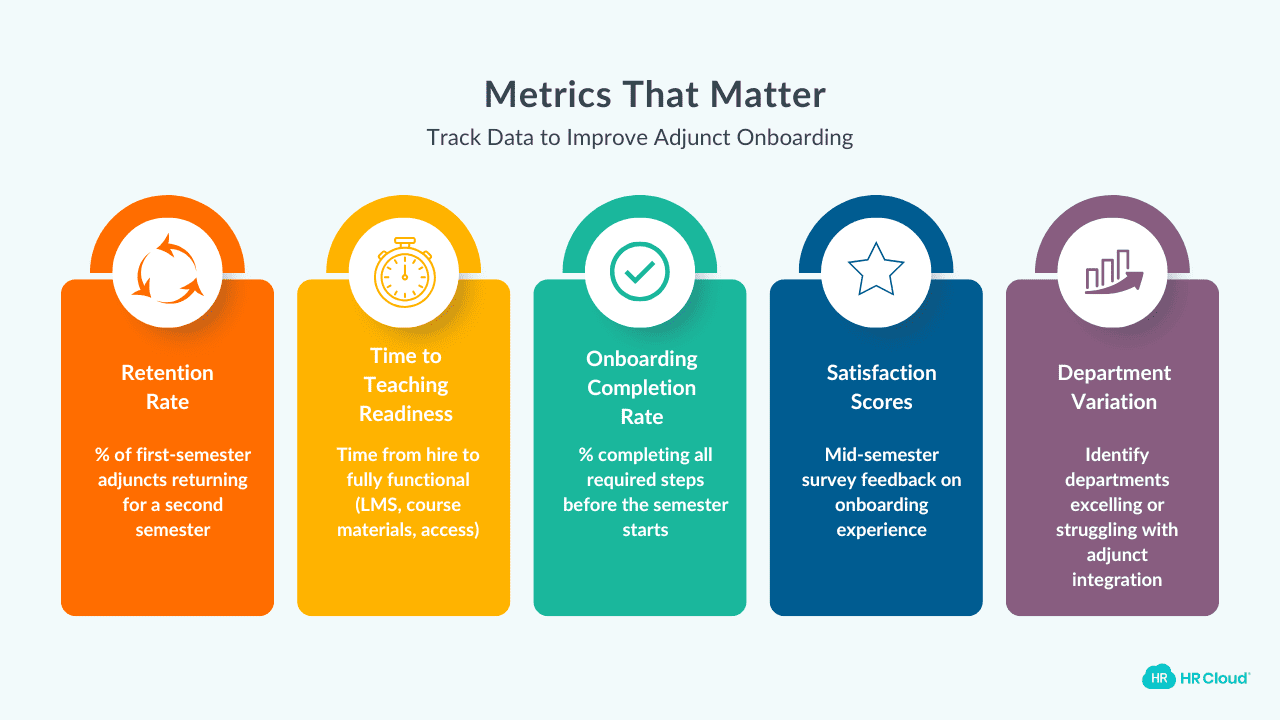
Implementing is not enough. You need to track data to understand whether adjunct onboarding is working. By collecting data you know which areas need improvement and which successful areas you need to double down on.
- Retention rate: What percentage of first-semester adjuncts return for a second semester? Year over year?
- Time to teaching readiness: How long from hire to fully functional (LMS access, course materials, building access)?
- Onboarding completion rate: What percentage complete all required steps before semester start?
- Satisfaction scores: Mid-semester survey asking adjuncts about their onboarding experience and support
- Department variation: Are some departments dramatically better or worse at adjunct integration? Address outliers.
How to Start Changing Your Adjunct Onboarding
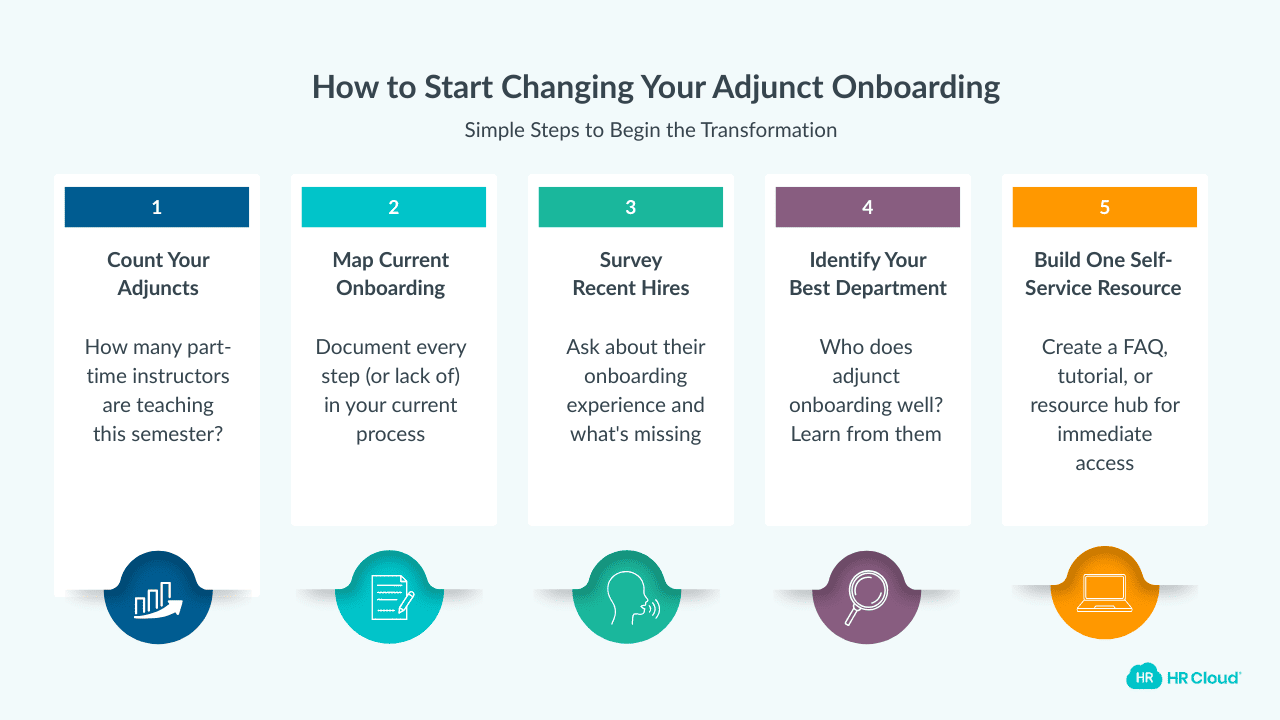
Start small. Baby steps.
1. Count your adjuncts: How many part-time instructors are teaching this semester? That number represents your scale challenge.
2. Map current adjunct onboarding: What actually happens when an adjunct is hired? Document every step—or lack thereof.
3. Survey recent adjunct hires: What was their onboarding experience? What was missing?
4. Identify your best department: Who does adjunct onboarding well? Learn from them.
5. Build one self-service resource: A FAQ, a video tutorial, a resource hub—something adjuncts can access immediately.
The Bottom Line
Adjunct faculty are not temporary labor. They're the instructors teaching your students, often for years, semester after semester. When institutions treat adjuncts as disposable, adjuncts treat the institution as disposable—and everyone loses.
Effective adjunct onboarding doesn't require the same investment as tenure-track onboarding. It requires intentionality: rapid administrative completion, essential teaching readiness, and deliberate connection-building.
The institutions that get this right will retain their experienced adjuncts while competitors perpetually train new ones. In higher education's current environment, that's an advantage worth building.
Ready to streamline your adjunct onboarding process? See how HR Cloud's employee onboarding software can help.
For more examples of onboarding automation success, explore our HR Cloud onboarding case studies.

Discover how our HR solutions streamline onboarding, boost employee engagement, and simplify HR management
Book Your Free DemoFAQs
How is adjunct onboarding different from regular faculty onboarding?
Adjunct onboarding must be faster (days, not weeks), more focused (teaching essentials only), and mobile-accessible (they're often working other jobs). Connection-building requires extra intentionality since adjuncts are rarely on campus.
What's the minimum an adjunct needs before they can teach?
LMS access with course shell, classroom location and building access, student roster access, basic policy documentation, and emergency contact information.
How do we build connections with adjuncts who are rarely on campus?
Explicit liaison assignment, peer mentor matching, inclusion in department communications, virtual check-ins, and recognition through engagement platforms that don't require physical presence.
What metrics should we track for adjunct onboarding?
Semester-over-semester retention rate, time to teaching readiness, onboarding completion rate, satisfaction scores, and department-by-department variation.
How do we handle emergency adjunct hiring days before semester?
Build specific fast-track workflows: compliance essentials Day 1, teaching access immediate priority, full onboarding continues parallel to teaching, intensive first-week support.
About the author

Keep Reading


Like What You Hear?
We’d love to chat with you more about how HR Cloud® can support your business’s HR needs.
Book Your Free Demo