7 Signs Your Employee Onboarding Process Is Costing You New Hires

Why do new hires who seemed like a great fit leave within 60 to 90 days?
In most cases, it isn't the role, the pay, or the person — it's the employee onboarding process. When new hires don't get clear expectations, structured support, or even basic tool access on time, they stop betting on the company before they've had a chance to contribute.
So what does a broken onboarding process actually look like?
It rarely looks dramatic. It looks like a manager who was in meetings all of day one. A laptop that arrived on day three. A 30-60-90 day plan that existed in someone's head but never got documented. These aren't rare edge cases — according to Gallup, 88% of employees say their company doesn't do onboarding well.
Is there a way to know if your onboarding process has these problems before a resignation letter tells you?
Yes — and most of the data you need is already sitting in your HRIS. The seven warning signs below each come with a specific detection method, a diagnostic framework, and a fix you can implement this week.
Key Takeaways
- Early turnover is a symptom, not the root problem. The root problem is almost always in the 90 days before the resignation letter.
- Most onboarding failures are process failures, not people failures. Fix the system first.
- The seven signs in this post can be diagnosed using data your HR team already has: turnover rate by tenure, IT ticket volume, manager calendar audits, and new hire survey scores.
- Each sign has a measurable cost. Use HR Cloud's free employee turnover cost calculator to put a dollar figure on your current early attrition rate before your next leadership meeting.
- See the diagnostic table in Sign 1 to map your onboarding gaps to the correct fix category.
- Organizations with structured onboarding programs achieve 82% higher retention rates and 70% faster time-to-productivity, according to the Brandon Hall Group — but only 12% of employees say their company actually does it well.
Sign 1: Your 90-Day Turnover Rate Is Above 20%
One in three new hires leaves within 90 days, according to Jobvite's Job Seeker Nation Report. If your organization's 90-day turnover rate is above 20%, your onboarding process is almost certainly a contributing factor — even if exit interviews point to compensation or culture.
The reason that departure window matters so much is what it signals: new hires rarely leave because the job turned out to be impossible. They leave because the job turned out to be different from what they were told, or because nobody helped them understand how to succeed in it. Both of those are onboarding failures, not hiring failures.
How to detect this sign in your own data: Pull your HRIS reports and segment turnover by tenure. Identify what percentage of total annual separations occurred before the 90-day mark. If you don't have that data readily available, that absence is itself a warning sign.
The Diagnostic Framework
| 90-Day Turnover Rate | Risk Level | Most Likely Cause | Priority Fix |
|---|---|---|---|
| Under 10% | Low | Isolated cases | Monitor quarterly |
| 10–20% | Moderate | Expectation gaps or poor manager engagement | Structured 30/60/90 plan |
| 20–35% | High | Broken onboarding process | Full process audit |
| Above 35% | Critical | Systemic onboarding or hiring failure | Immediate escalation to leadership |
Why this matters for HR leaders: High early turnover triggers a compounding cost cycle. Every departure in the 90-day window means you've paid full recruiting costs, two to three weeks of HR staff time for onboarding administration, and IT provisioning costs — for zero net productivity gain. Use HR Cloud's free turnover cost calculator to quantify exactly what your current 90-day turnover rate is costing your organization.
Sign 2: New Hires Say Day One Felt Chaotic or Disorganized
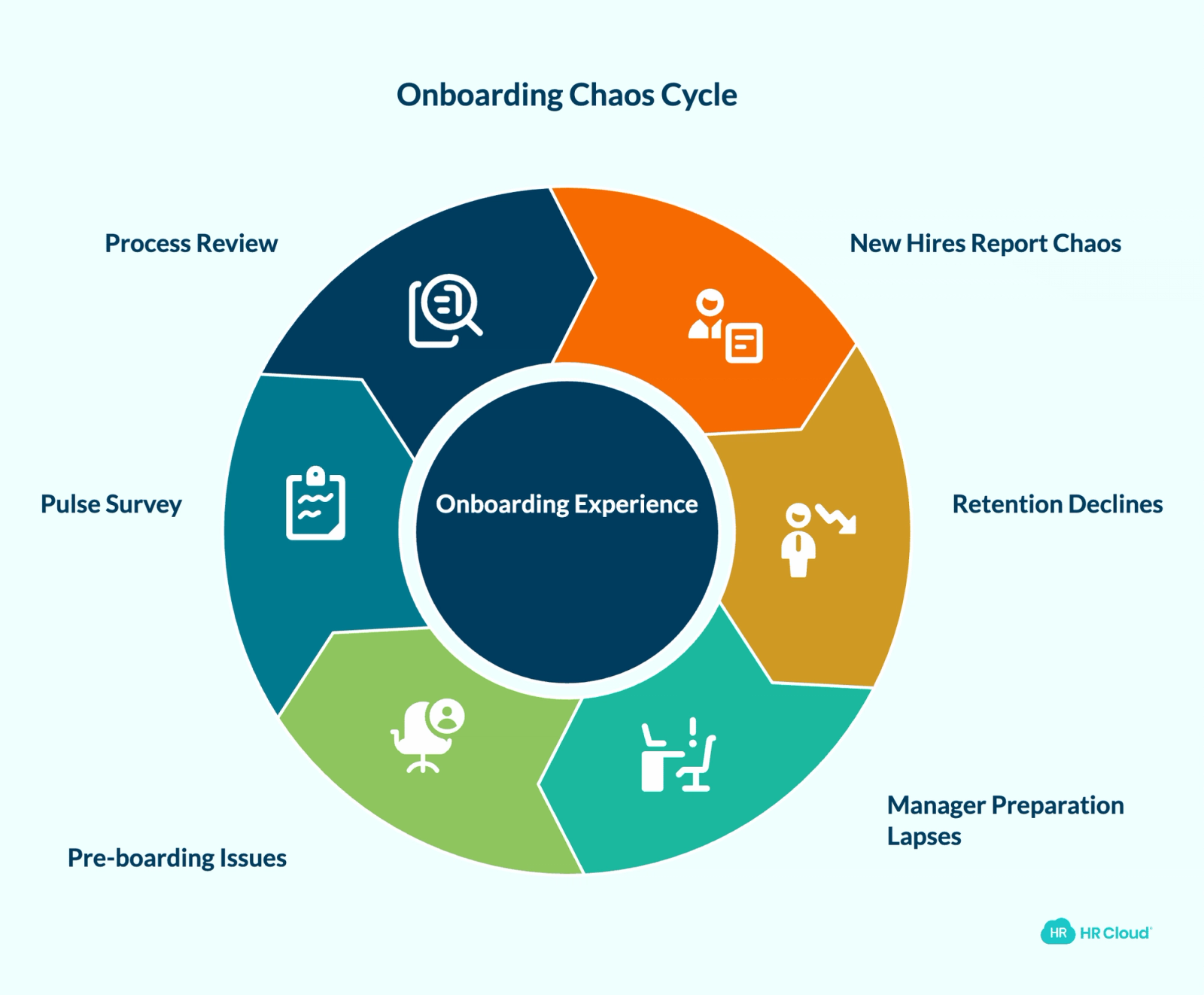
Ask your last five new hires what they remember about their first day. If any of them mention wandering around looking for their desk, waiting an hour for someone to come get them, or spending the afternoon watching compliance videos alone, your day-one experience is actively damaging retention.
First impressions in onboarding function the same way they do in any relationship: they form fast, they stick, and they take significant effort to undo. According to an HBR survey cited by HR Cloud's research team, 32% of new hires found their onboarding experience confusing and 22% found it disorganized. Those employees arrive with full enthusiasm — and a chaotic first day begins to erode it immediately.
Here is what a day-one failure looks like in practice. A mid-size manufacturing company onboarded three production-floor workers on the same day in the same plant. One manager had prepared a full first-day schedule. The other two managers hadn't blocked their calendars and were in back-to-back meetings. By end of day, one new hire texted a recruiter friend that the company "didn't seem to have it together." That person resigned at the 45-day mark. The new hire with the prepared manager stayed for two years. Same company, same plant, same pay grade — different manager preparation, different outcome.
How to detect this sign: Run a pulse survey with your last 10 new hires and ask specifically: "On a scale of 1–5, how organized did your first day feel?" Any average below 4 warrants a process review.
Pro tip: Day-one chaos is almost always a pre-boarding problem, not a day-one problem. If manager calendars aren't blocked, workstations aren't set up, and IT access isn't confirmed before 9 AM on the start date, the failure started a week earlier — not that morning.
Sign 3: IT Equipment and System Access Are Still Delayed After Day One
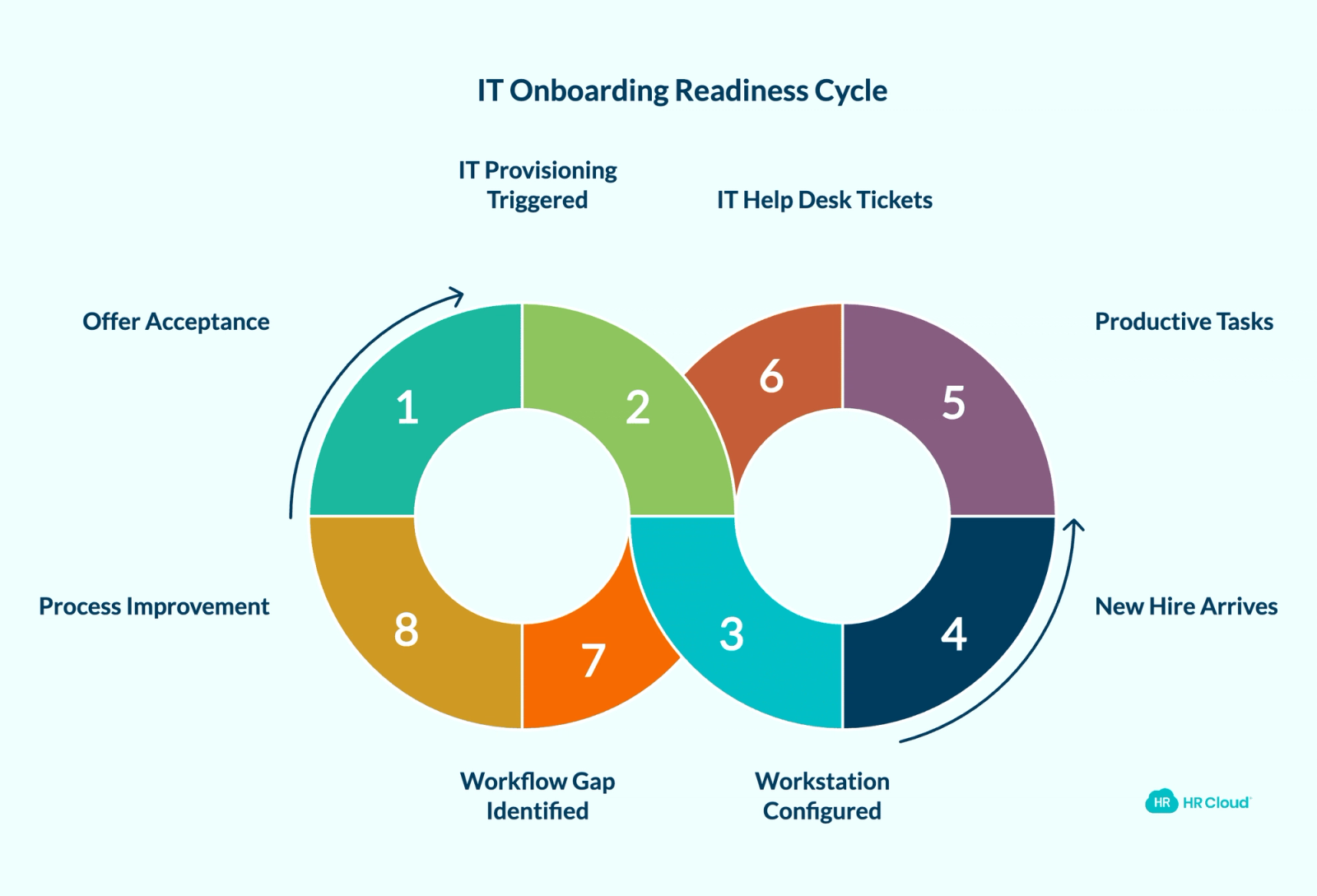
A new hire who can't log into their email, access their tools, or complete basic tasks on day one is not just frustrated. They are concluding that this organization is not operationally competent. That conclusion doesn't go away when the laptop finally arrives on day three.
IT delays are the most logistically fixable onboarding problem — and one of the most common. They happen for one consistent reason: IT provisioning isn't automated and isn't triggered at the right point in the hiring workflow. HR completes their paperwork, but IT doesn't receive the request until after the start date. The new hire pays the price.
How to detect this sign: Count the number of IT help desk tickets opened by employees in their first five business days. If that number is higher than zero per hire on average, your provisioning workflow has a gap.
What good looks like: When IT provisioning is triggered automatically at offer acceptance — not at the start date — new hires arrive to a fully configured workstation. HR Cloud's employee onboarding software routes IT task assignments automatically based on role, department, and location, so a production floor worker receives different provisioning requests than a remote marketing hire. No manual follow-up required, and no new hire waiting on day one.
IT Onboarding Readiness Checklist (Before Day One)
- Email account created and tested
- HRIS access provisioned with correct role and department
- Role-specific software installed and licensed
- Hardware shipped and received (for remote employees — at least 3 business days early)
- VPN access configured if applicable
- Building access card or credentials issued
- Slack, Teams, or communication platform added
- Manager has verified all access is working
Why IT delays matter more than HR teams realize: A new hire without tools for the first two days of a four-week ramp period loses 10% of their effective onboarding time before they've done a single productive task. In high-volume hiring environments — healthcare, manufacturing, construction — that delay multiplies across dozens of concurrent hires.
Sign 4: New Hires Still Complete Paper Forms in Their First Week
If your new hires spend any part of their first week filling out W-4s and I-9s by hand, sitting in a room signing documents they've never seen before, or waiting for someone to scan forms back to HR, your onboarding process is consuming time that should go toward role learning and team integration.
Paper-based onboarding workflows also create compliance risk. Paper forms get misfiled. Signatures get missed. I-9 verification deadlines get blown past. What feels like an administrative inconvenience to a new hire is an audit liability for your HR team.
The scale of this problem is larger than most HR leaders realize. According to SHRM's benchmarking data, the average cost of hiring a new full-time employee is $4,700 — before onboarding begins. Every hour of that new hire's time spent on paper administration during week one is an additional hidden cost on top of that baseline.
How to detect this sign: Time your own onboarding paperwork process. How long does it take a new hire to complete all required forms if they start from scratch on day one? If the answer is more than 30 minutes, digital pre-boarding can recover that time and move it before the start date.
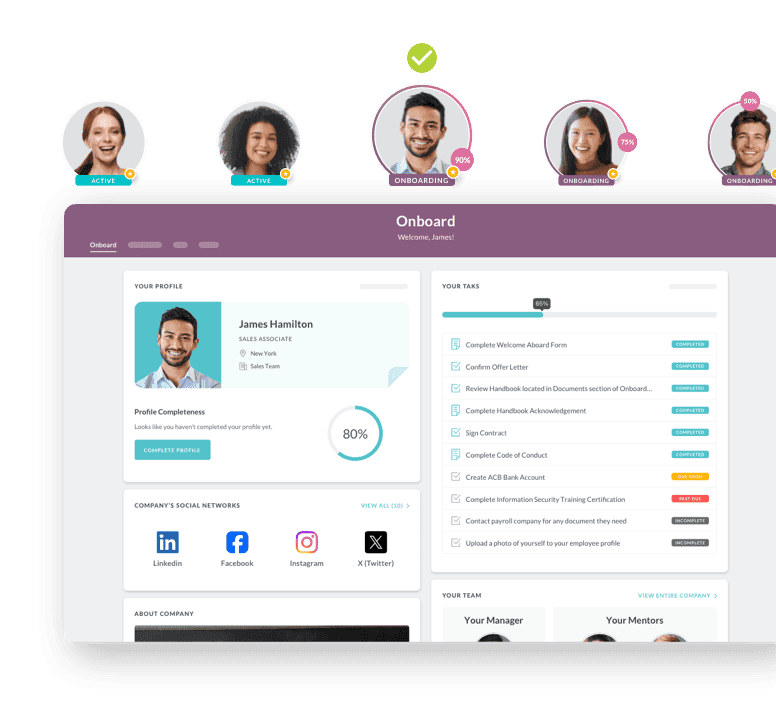
Structural fix: Pre-boarding automation sends required documents — I-9, W-4, state tax forms, NDA, direct deposit authorization — to new hires before their start date, with e-signature capability and completion tracking. When new hires arrive on day one, paperwork is already done. Day one becomes about people, role, and culture — not forms.
Why digital pre-boarding protects you beyond convenience: Compliance documentation completed before the start date means audit trails are cleaner, deadlines are met, and your HR team isn't chasing signatures during an already busy first week.
Sign 5: Managers Are Winging Their Part of Onboarding
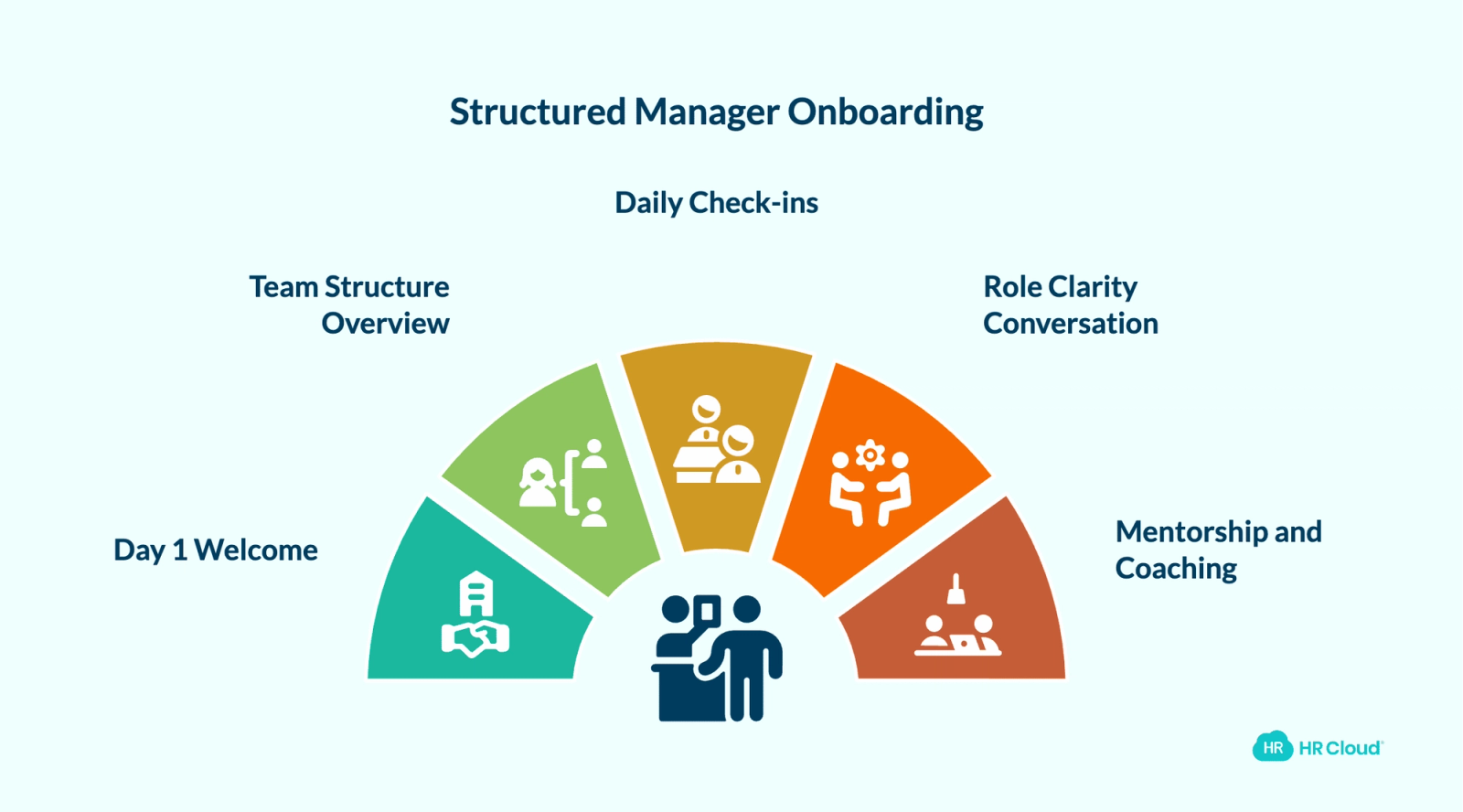
Your managers are skilled at their jobs. They are probably not skilled at onboarding — and most of them haven't been trained to do it well. When companies leave manager involvement to individual judgment, onboarding consistency collapses. Some managers do too much and overwhelm new hires with information. Others disappear into their existing workload and check in once a week, if that.
According to Gallup research, employees whose managers participate actively in onboarding are 3.4 times more likely to rate the experience as exceptional. The manager is the single highest-leverage variable in new hire success — and most organizations give managers zero structured guidance on what that role should look like in the first 30 days.
How to detect this sign: Look at your manager calendar data. Did your last five new hires have a dedicated 1:1 with their manager in week one? Did managers block the morning of the start date? If you can't answer those questions from existing data, the process isn't documented enough to be consistent.
What structured manager involvement looks like (Week 1):
- Day 1, first 30 minutes:Manager meets new hire at the entrance — not HR
- Day 1, hours 1–2: Manager walks through team structure, current priorities, and the new hire's first deliverable
- Day 1–5: Daily 15-minute check-in (not optional — scheduled in advance)
- End of week 1: Manager conducts a "role clarity" conversation: "Do you know what success looks like in your first 30 days?"
Manager-specific callout: The Aberdeen Group research found that high-performing organizations are nearly 2.5 times more likely than lower-performing employers to assign a mentor or coach during onboarding. Buddy systems and mentors work because they offload day-to-day questions from the manager — freeing the manager to focus on strategic onboarding conversations rather than answering "where is the printer?"
Download your free employee onboarding checklist
Using this checklist ensures that you are not scrambling to make the new employees feel welcomed, prepared, and set up for long-term success.
Download Now
Sign 6: You Have No 30-60-90 Day Milestone Data
Onboarding doesn't end on day five or even day thirty. Research consistently shows that effective onboarding extends through the first 90 days — with structured check-ins and role-specific milestones mapped to each phase. When organizations treat onboarding as a first-week event, new hires spend months 2 and 3 in a directionless middle ground where they're past orientation but not yet confident in their role.
According to SHRM Foundation research from Dr. Talya Bauer, employees get roughly 90 days to prove themselves in a new job. Organizations that structure those 90 days with explicit milestones see measurably better outcomes than those that leave the ramp to chance. Yet only 15% of companies continue any formal onboarding activity after the six-month mark, according to SHRM reporting.
How to detect this sign: Check whether your organization has role-specific 30-60-90 day plans in writing. If those plans don't exist for each major role category, or if they exist but managers aren't using them, the structure is missing.
A working 30-60-90 day framework:
| Phase | Focus | Milestone | Success Indicator |
|---|---|---|---|
| Days 1–30 | Learn | Complete role training and tools access | Can describe job priorities independently |
| Days 31–60 | Apply | First independent deliverable | Completed without manager review |
| Days 61–90 | Contribute | Participates in team projects | Has peer relationships outside direct manager |
| Day 90 | Evaluate | Formal check-in with HR and manager | Retention score from survey above 4/5 |
Why milestone structure matters for HR teams specifically: Without milestone data, you have no early warning system for retention risk. A new hire who is disengaging at day 45 will give you signals — lower survey scores, fewer questions, reduced initiative — if you're looking for them. Without scheduled check-ins, you don't see those signals until the resignation comes.
For a fully built onboarding checklist mapped to this timeline, HR Cloud's new hire onboarding checklist resource includes phase-by-phase tasks with ownership assigned to HR, managers, IT, and new hires.
Sign 7: Your HR Team Scrambles Every Time a New Hire Starts
When preparing for a new hire feels urgent and reactive — instead of routine and systematic — your onboarding process isn't a process. It's a checklist someone completes under pressure, hoping they don't forget anything important.
Reactive onboarding creates two specific problems beyond the obvious stress for your HR team. First, it means the quality of the onboarding experience varies based on how much time HR had to prepare, which manager was most available, and whether IT happened to respond to requests quickly that week. Second, it signals to the broader organization — and to the new hire — that welcoming people isn't a priority. It's an afterthought managed in between more urgent things.
How to detect this sign: Ask your HR team this directly: "When you find out someone is starting in three weeks, what's the first thing you do?" If the answer is "start building their setup list," the process isn't automated. If the answer is "check that the automated workflow triggered correctly," you're in good shape.
What systematic onboarding looks like: When a new hire is added to an HR system, automated workflows should immediately trigger: a welcome email from the hiring manager, a pre-boarding document packet, an IT provisioning request, a benefits enrollment prompt, and manager calendar blocks. None of that should require an HR team member to remember to do it manually. HR Cloud's employee onboarding software handles this trigger-and-track architecture — so your team spends time on the human parts of onboarding, not the administrative coordination.
Why this is a leadership conversation, not just an HR process problem: If your HRIS and onboarding system don't communicate, or if IT provisioning still requires a manual email to the IT department, the fix involves systems and budget — not just HR effort. Bringing data on how much early turnover costs your organization (use the turnover cost calculator) builds the business case for investing in the right infrastructure.
How to Turn These Onboarding Warning Signs Into Action
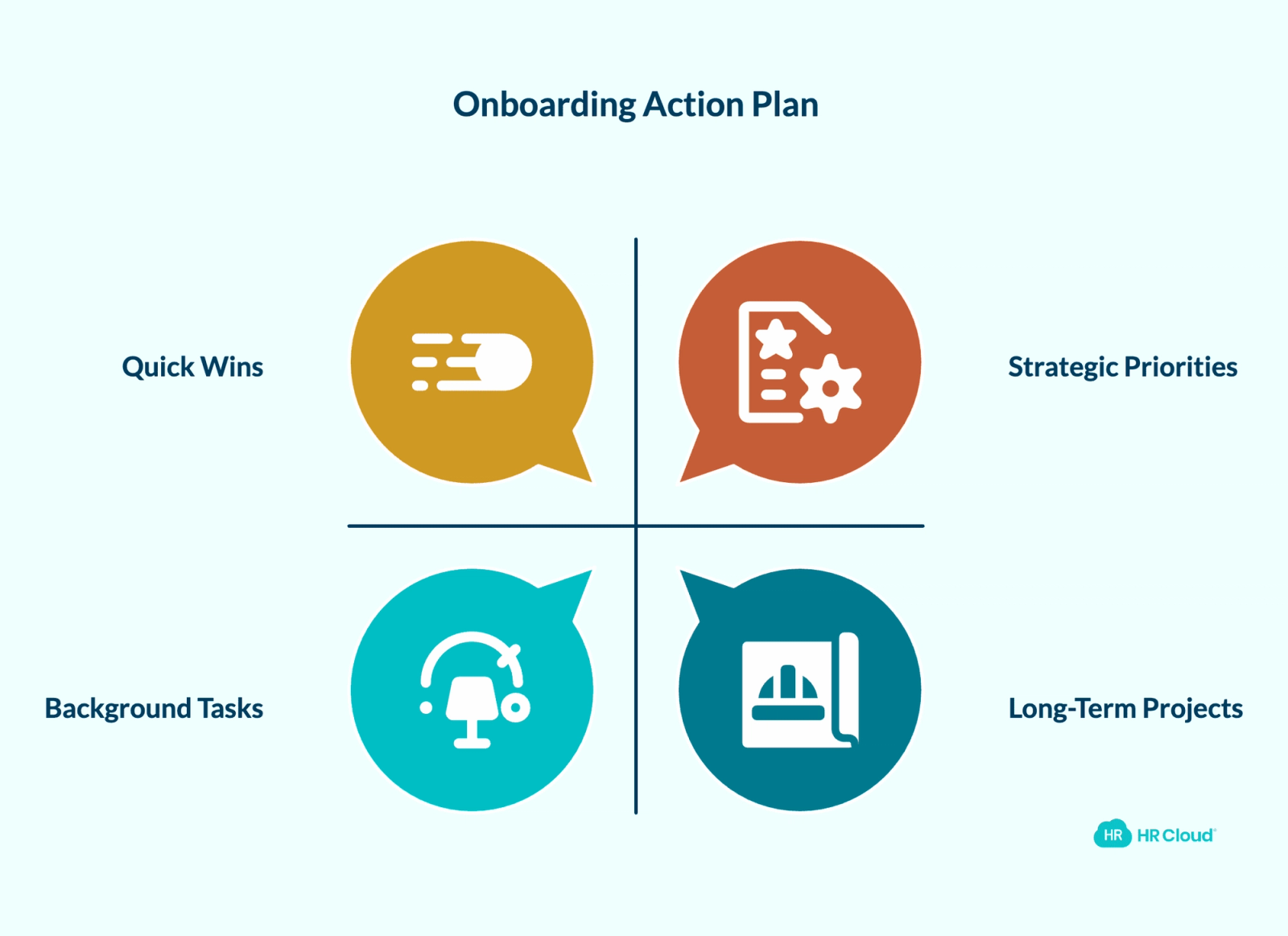
Step 1: Run your diagnostic this week. Pull 90-day turnover by department. Check the last new hire cohort's IT ticket volume in week one. Survey your last 10 new hires with three questions: Was your first day organized? Did your manager have a 30-day plan for you? Did you have all your tools by day one? Those three data points tell you which of the seven signs above are live problems in your organization right now.
Step 2: Fix one sign completely before starting the next. Onboarding improvements fail when organizations try to address everything simultaneously and end up improving nothing. Pick the sign that correlates most directly with your turnover data and build a documented, systematic fix for it. Then measure the impact before moving to the next.
Step 3: Make the business case with numbers. Every sign in this post has a measurable cost. Early turnover costs 50–200% of salary per departure (SHRM). IT delays cost productive hours per hire. Paper forms cost HR staff time that compounds across your annual hire volume. Quantify your specific exposure and present it to leadership with a remediation plan and a projected retention improvement. That is how onboarding gets budget and organizational attention.
For teams ready to build a systematic employee onboarding process from the ground up, the 12 common problems with onboarding new employees guide from HR Cloud covers the full landscape of structural gaps that teams encounter at scale.
Fix Your Onboarding Process Before Your Next New Hire Starts
Poor onboarding doesn't just frustrate new employees. It erases the investment your recruiting team made to find them, signals to your broader workforce that your organization doesn't operate with care, and compounds into a retention problem that gets harder and more expensive to reverse with each quarter you wait.
The seven signs in this post are diagnosable. The fixes are systematic. And the business case for acting now is already in your turnover data.
Managing onboarding at scale — across multiple locations, managers, and hire types — takes more than good intentions. It takes process infrastructure that runs consistently whether HR has bandwidth that week or not. See how HR Cloud's employee onboarding software helps healthcare, manufacturing, and multi-location teams cut onboarding time by 50% and reduce admin overhead by 60%. Book a Free Demo →

Discover how our HR solutions streamline onboarding, boost employee engagement, and simplify HR management
Book Your Free DemoFrequently Asked Questions
What is an employee onboarding process?
An employee onboarding process is the structured sequence of activities that integrates a new hire into an organization from the moment they accept an offer through their first 90 days and beyond. Effective onboarding covers paperwork completion, systems access, role training, cultural integration, manager engagement, and milestone-based check-ins — not just a first-day orientation.
What is the biggest mistake companies make during onboarding?
The most common onboarding mistake is treating it as a one-time event rather than a structured process. Organizations that focus only on day one or week one — and then leave new hires to figure out the rest independently — see significantly higher 90-day turnover than those with milestone-based programs through the first quarter.
How long should an employee onboarding process last?
Research from SHRM and the Brandon Hall Group consistently shows that effective onboarding extends through at least 90 days, with the most impactful programs running through the first year. The Brandon Hall Group found that organizations with strong onboarding programs improve new hire retention by 82% and productivity by over 70% — outcomes that require time and structure well beyond a first-week orientation to achieve.
How do you measure whether your onboarding process is working?
Track four metrics: 90-day retention rate, time to first independent deliverable, onboarding satisfaction score from a 30-day pulse survey, and IT access completion before day one. A strong 90-day retention benchmark is 85% or higher. If your onboarding satisfaction average falls below 4 out of 5, audit manager engagement and day-one logistics first.
What causes new hires to quit in the first 90 days?
Early departures most commonly trace to three causes: unmet expectations set during recruiting, inadequate role clarity in the first 30 days, and insufficient manager engagement. All three are onboarding process failures, not hiring failures — meaning the fix lives in how you structure the post-offer experience, not in how you screen candidates.
What role should managers play in the employee onboarding process?
Managers are responsible for role clarity, relationship building, and milestone feedback during onboarding. They should not be responsible for administrative tasks like paperwork collection or IT coordination. According to Gallup research, new hires whose managers actively participate in onboarding are 3.4 times more likely to rate the experience as exceptional. Manager toolkits, blocked calendars, and structured check-in cadences are the practical infrastructure that makes this happen consistently.
About the author

Keep Reading


Like What You Hear?
We’d love to chat with you more about how HR Cloud® can support your business’s HR needs.
Book Your Free Demo