
10 Proven Strategies to Build and Strengthen Employee Connection in 2026

People want more from work than a paycheck—they want to feel genuinely connected to their team, their purpose, and their organization. Yet building authentic employee connection has become increasingly complex. Hybrid work models, dispersed teams, and digital-first communication have fundamentally reshaped workplace relationships, creating new challenges for HR leaders focused on engagement and retention.
The stakes are higher than ever. Research from Gallup reveals that 27% of fully remote workers and 23% of hybrid employees report feeling lonely at work. When connection fades, collaboration suffers, engagement drops, and turnover accelerates. What starts as a culture challenge quickly becomes a business problem affecting your bottom line.
The encouraging news? While you can't force connection, you can create the conditions where it flourishes naturally. Strategic employee recognition programs, intentional communication practices, and the right technology infrastructure work together to build workplace cultures where people feel valued, heard, and genuinely connected to something larger than themselves.
Let's explore what employee connection really means for modern workforces and examine ten evidence-based strategies to strengthen it across your organization—whether your teams work remotely, on-site, or somewhere in between.
Understanding Employee Connection in Modern Workplaces
Employee connection represents the relationships, sense of belonging, and emotional bonds that turn coworkers into cohesive teams. It's the difference between employees who simply complete tasks and those who genuinely care about their work, their colleagues, and organizational success.
Strong connection manifests through trust between team members, psychological safety to share ideas, alignment with company values and mission, recognition of individual contributions, and meaningful relationships that extend beyond transactional work interactions. These elements combine to create workplace environments where people feel they truly belong.
For distributed and frontline workforces, connection requires deliberate effort and the right technology infrastructure. Employee engagement platforms designed specifically for mobile-first environments help bridge the physical distance that makes connection challenging in modern work arrangements.
10 Strategies for Building Lasting Employee Connection
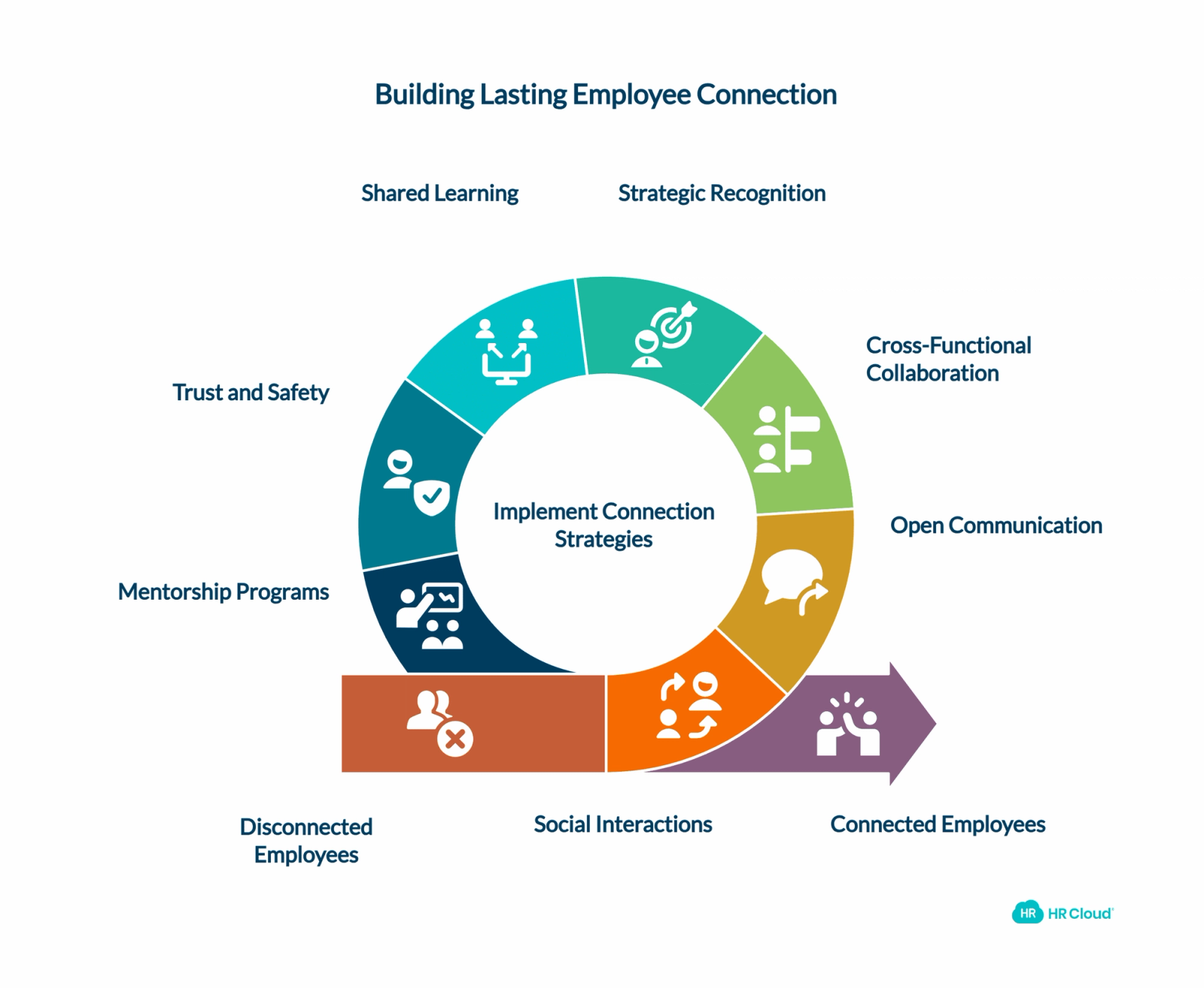
1. Create Meaningful Social Interactions Beyond Formal Meetings
Not every workplace interaction needs an agenda. Some of the most valuable connections form during unstructured moments—the spontaneous conversations, casual check-ins, and shared experiences that happen when people simply connect as humans rather than job titles.
For distributed teams, this requires intentional design. Virtual coffee chats, digital watercooler channels, team trivia competitions, and informal video hangouts create space for authentic relationship-building. The goal isn't forced team-building exercises but rather providing consistent opportunities for people to discover common interests, share experiences, and build genuine rapport.
Platforms like Workmates create dedicated communication channels where teams can share updates, celebrate wins, and engage in conversations that strengthen social bonds across locations and departments. These digital spaces become virtual gathering points that replicate the organic social interactions that happen naturally in physical offices.
2. Encourage Open and Frequent Communication
Connection requires context. Employees want to understand what's happening in the organization, why it matters, and how their work contributes to larger objectives. Transparent, consistent communication builds the foundation for trust and belonging.
Effective communication strategies include regular one-on-ones between managers and team members, transparent all-hands meetings that share both challenges and successes, accessible feedback channels where employees can voice concerns and ideas, and department-specific updates that keep teams aligned on goals and progress.
For organizations with frontline workers or distributed teams, mobile-first communication tools ensure important information reaches every employee regardless of their location or work environment. Push notifications, SMS capabilities, and mobile-responsive platforms make company-wide updates accessible to manufacturing staff, healthcare workers, retail teams, and field service employees who rarely sit at desks.
“We highly recommend Workmates as it gives us the ability to communicate and connect our workforce.”

— Andrea Bermudez, Organizational & Talent Development Manager, Endeavor Schools

3. Promote Cross-Functional Collaboration
Organizational silos kill connection. When employees only interact with their immediate team, they miss opportunities to build relationships, share knowledge, and understand how different functions contribute to organizational success.
Strategic collaboration breaks down these barriers. Cross-functional project teams, knowledge-sharing initiatives, mentorship programs that pair people from different departments, and rotational assignments that expose employees to various roles all expand professional networks while building empathy and understanding across the organization.
Digital collaboration tools amplify these efforts by making it easy for distributed teams to work together regardless of physical location. Features like shared channels, project workspaces, and integrated communication create virtual environments where collaboration happens as naturally as it would in a shared office space.
4. Make Recognition a Strategic Cultural Practice
Recognition might be the single most powerful connection-building tool available to organizations. When done thoughtfully, appreciation doesn't just make people feel good—it creates meaningful bonds between colleagues while reinforcing the behaviors and values that define your culture.
Generic "great job" messages lack impact. Effective recognition is timely (delivered as close to the achievement as possible), specific (acknowledging exactly what the person did well), values-aligned (connecting the action to company principles), public when appropriate (amplifying positive examples for others to see), and frequent (woven into daily operations rather than reserved for annual events).
Data consistently demonstrates recognition's connection-building impact. Organizations using strategic employee recognition platforms report that employees receiving monthly recognition are 84% more likely to feel strong connections with colleagues. That's not coincidental—recognition creates visibility, appreciation, and shared understanding of what excellence looks like in your organization.
Workmates recognition features enable both peer-to-peer kudos and manager recognition through customizable badges tied to company values. The social recognition feed makes appreciation visible across the organization, creating positive reinforcement loops while modeling desired behaviors. Employees can accumulate points through recognition and redeem them from a catalog of 100+ reward options including gift cards, experiences, and custom perks.

5. Invest in Shared Learning and Development
Learning creates connection. When employees grow together through cohort-based training programs, coaching circles, skills workshops, or collaborative problem-solving sessions, they build shared experiences and mutual support networks that strengthen workplace relationships.
Beyond the knowledge gained, these learning experiences create common ground. Employees facing similar challenges, developing similar skills, or working toward similar goals naturally form connections. They become resources for each other, extending the learning impact far beyond the formal training sessions.
For organizations serious about development, integrating learning opportunities with recognition programs reinforces growth mindsets. Acknowledging when team members complete certifications, master new skills, or mentor colleagues communicates that professional development matters to the organization and to individual career progression.
6. Build a Foundation of Trust and Psychological Safety
Connection cannot exist in cultures dominated by fear, judgment, or anxiety. Employees need psychological safety—the confidence that they can ask questions, admit mistakes, offer dissenting opinions, and take calculated risks without facing punishment, embarrassment, or career damage.
Leaders build this safety through consistent actions, listening actively without defensiveness, responding constructively to mistakes and failures, welcoming difficult questions and honest feedback, acknowledging their own uncertainties and limitations, and following through on commitments and promises.
When employees feel psychologically safe, they engage more authentically. They share ideas that could improve operations, they ask for help when they need it, and they build the genuine relationships that create strong, resilient teams. This foundation of trust makes every other connection strategy more effective.
7. Implement Structured Mentorship Programs
Mentorship relationships create some of the most meaningful workplace connections. Unlike formal reporting relationships, mentorship allows employees to build connections across levels, departments, and experience ranges while gaining guidance, perspective, and support for their career development.
Effective mentorship programs don't have to be complex. They require thoughtful matching based on development goals and expertise, clear expectations for both mentors and mentees, regular check-in structures to maintain momentum, and organizational support that values mentorship as important work rather than extra burden.
For distributed organizations, digital platforms make mentorship accessible regardless of physical location. Video conferencing, messaging capabilities, and shared resources enable meaningful mentorship relationships even when participants work in different offices, time zones, or continents.
8. Prioritize Holistic Employee Wellness
Exhausted, overwhelmed employees struggle to build connections. When people operate in constant crisis mode—juggling excessive workloads, managing burnout, or sacrificing personal needs for work demands—they lack the energy and emotional capacity for meaningful relationship-building.
Comprehensive wellness support includes flexible work arrangements that respect personal needs, mental health resources and employee assistance programs, realistic workload management and appropriate staffing levels, encouragement to disconnect and recharge outside work hours, and physical wellness initiatives from fitness programs to ergonomic support.
Organizations that prioritize wellness signal that they value employees as whole people rather than simply productive resources. This foundational respect creates the conditions where authentic connection becomes possible.
9. Champion Diversity, Equity, Inclusion, and Belonging
You cannot build genuine connection without belonging. When employees feel excluded, undervalued, or invisible because of their identity, they cannot fully engage or form authentic relationships at work. Diversity, equity, inclusion, and belonging (DEIB) initiatives aren't separate from connection—they're absolutely essential to it.
Effective DEIB practices include diverse hiring and advancement practices, inclusive leadership training and accountability, employee resource groups that provide community and support, equitable policies and practices across all HR functions, and regular assessment of inclusion through employee feedback.
Connection thrives when people feel safe and valued for their authentic selves. Organizations that make DEIB part of everyday operations rather than quarterly presentations create cultures where everyone can contribute fully and build meaningful relationships.
10. Celebrate Milestones and Moments That Matter
Recognition shouldn't be limited to job performance. Employees connect more deeply when their whole selves are seen and celebrated—work anniversaries that acknowledge tenure and commitment, promotions and career advancement that recognize growth, personal achievements and life milestones shared with the team, and team successes that create shared victory moments.
Technology makes celebration systematic rather than sporadic. Automated milestone recognition ensures work anniversaries, birthdays, and other important dates never get overlooked. Digital celebration cards, team acknowledgments, and public recognition posts turn individual moments into shared experiences that strengthen organizational bonds.
These celebrations communicate something powerful: your organization notices and values people beyond their immediate productivity. That message builds loyalty, engagement, and the kind of emotional connection that drives long-term retention.
The Business Impact of Strong Employee Connection
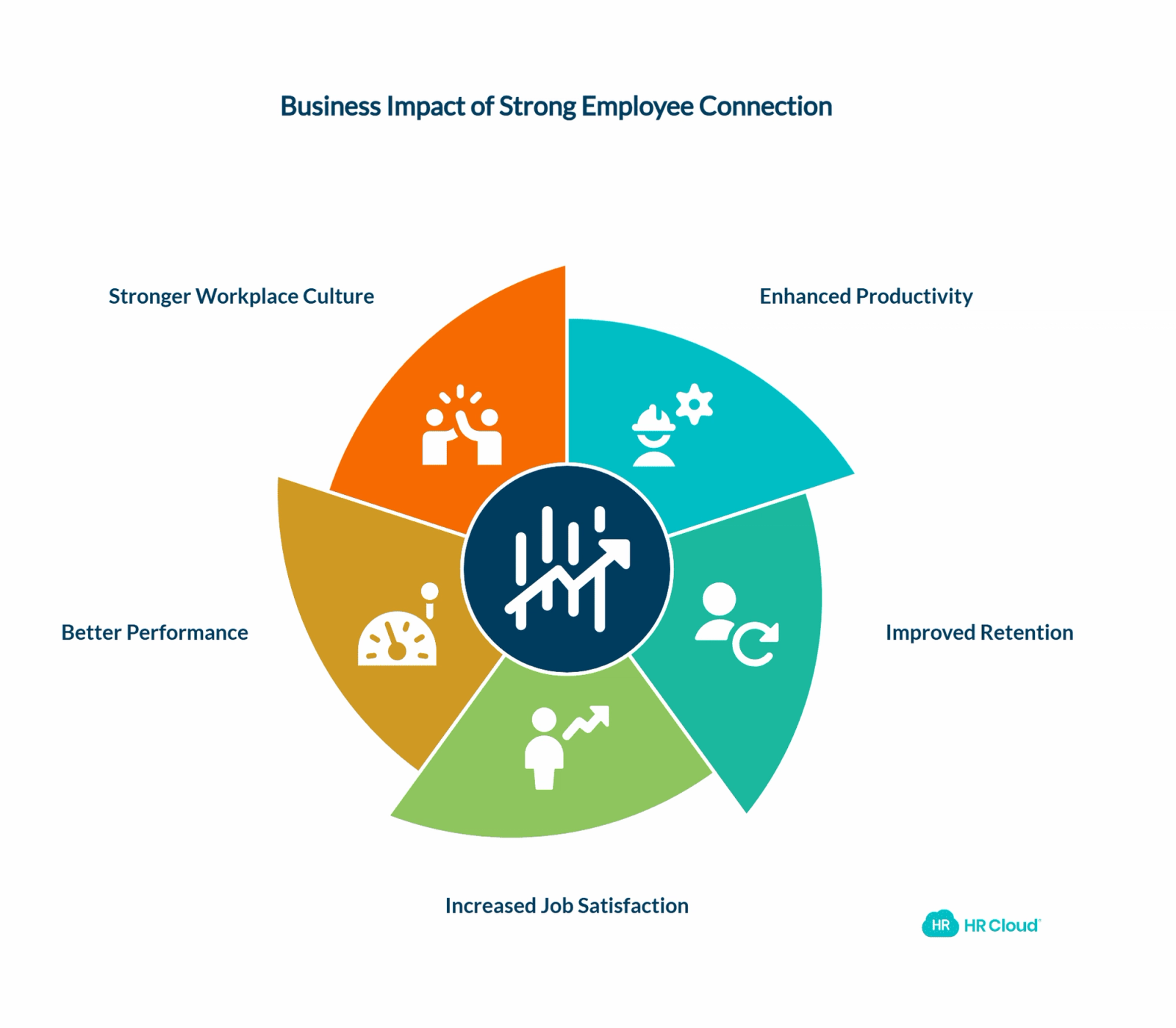
Employee connection might sound like a "soft" HR metric, but its business impact is anything but soft. When employees feel genuinely connected to their peers, leaders, and organization, measurable results appear across every important business metric.
Enhanced Productivity: Connected teams communicate more effectively, eliminate duplicated effort, and collaborate more efficiently. They solve problems faster because they trust each other enough to ask for help and share resources. The result is higher output with fewer roadblocks.
Improved Retention: Connection is a powerful retention driver. Research from the Achievers Workforce Institute found that 63% of employees who receive meaningful recognition at least monthly report they rarely think about leaving their jobs. That sense of belonging and appreciation gives people compelling reasons to stay even when external opportunities arise.
Increased Job Satisfaction: When people feel known, valued, and included, satisfaction naturally rises. Data shows that employees receiving recognition at least monthly are 87% more likely to feel known as individuals at their company. That personal recognition creates fulfillment that transcends compensation or perks.
Better Performance: Trust fuels accountability. Connected employees take ownership of their work, support teammates proactively, and follow through on shared commitments. This collective responsibility drives not just individual achievement but team and organizational performance.
Stronger Workplace Culture: Connection serves as the adhesive holding culture together, especially critical for hybrid and distributed teams. It reinforces shared values, creates belonging, and makes it easier for people to bring their authentic selves to work. Organizations with strong connection build cultures that become competitive advantages in talent attraction and retention.
Why Recognition Powers Employee Connection
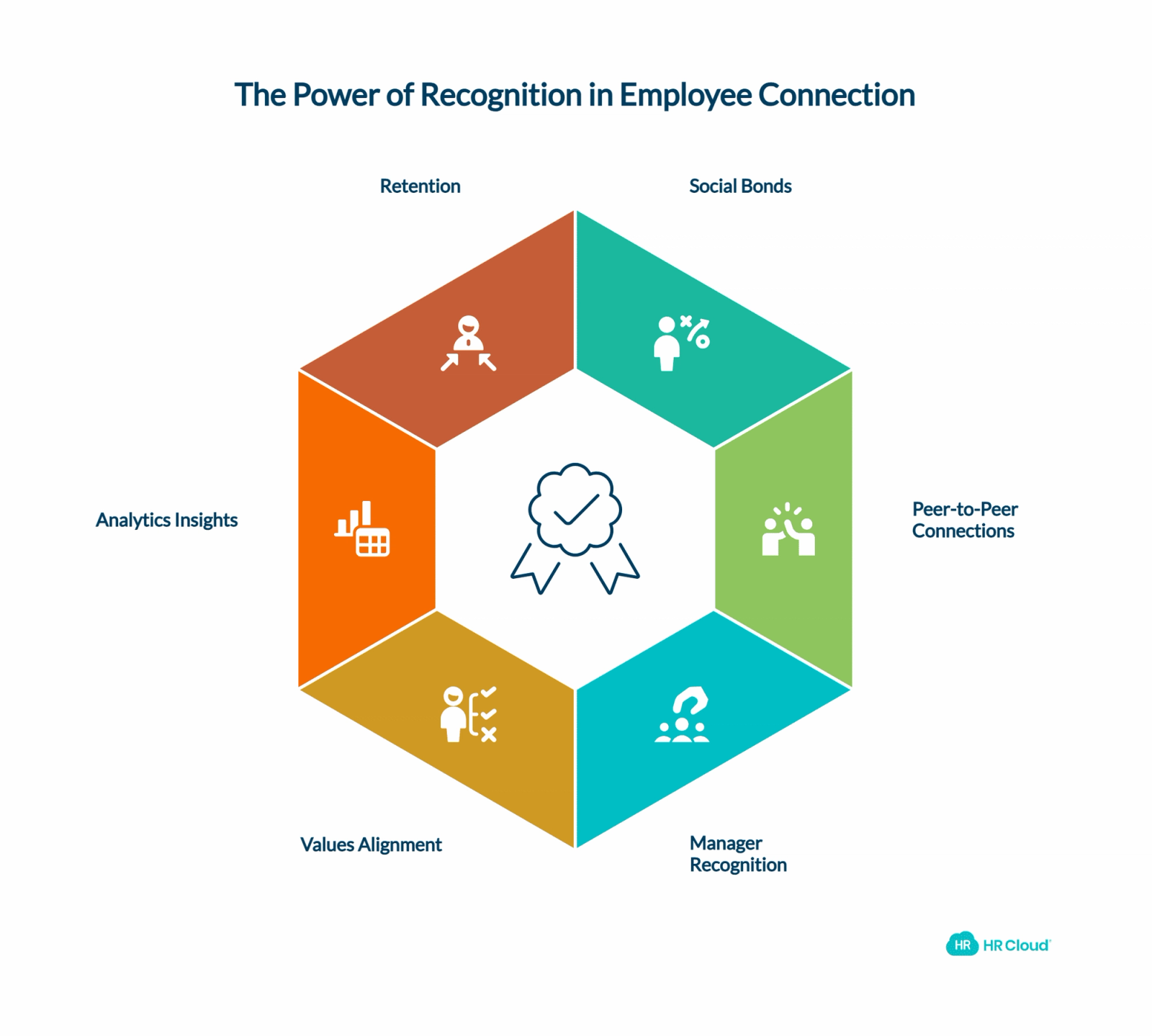
Among all connection-building strategies, recognition stands out as uniquely powerful. Strategic appreciation strengthens workplace relationships from multiple angles simultaneously.
Recognition creates social bonds by transforming routine work into shared moments. A thoughtful acknowledgment reminds employees they're part of something meaningful beyond their individual task list. It makes work feel personal rather than transactional.
Peer-to-peer recognition builds horizontal connections across teams. When colleagues appreciate each other publicly, it creates trust, boosts morale, and makes teamwork feel genuinely collaborative. These lateral relationships often become the strongest workplace connections.
Manager recognition builds vertical trust and belonging. When leaders acknowledge contributions, it signals visibility, support, and genuine care. This psychological safety encourages employees to take initiative, share ideas, and bring their full capabilities to work. According to Achievers Workforce Institute research, 79% of employees who receive monthly recognition report a strong sense of belonging at their organization.
Values-aligned recognition reinforces purpose and cultural alignment. When appreciation explicitly connects actions to company principles, it creates shared understanding of organizational priorities. Employees see clearly what "good" looks like, making it easier to align their efforts with strategic objectives.
Recognition analytics surface connection gaps that might otherwise remain invisible. Tracking who receives recognition and who doesn't provides clear insights into inclusion patterns, team health, and potential disconnects across the organization. This data enables proactive interventions before small issues become major culture problems.
Finally, consistent recognition strengthens retention over time. People stay where they feel valued. Recognition makes that feeling tangible, creating emotional bonds that survive competitive recruitment efforts. Organizations using employee recognition software report significantly lower turnover rates among regularly recognized employees.
Building Employee Connection with the Right Technology
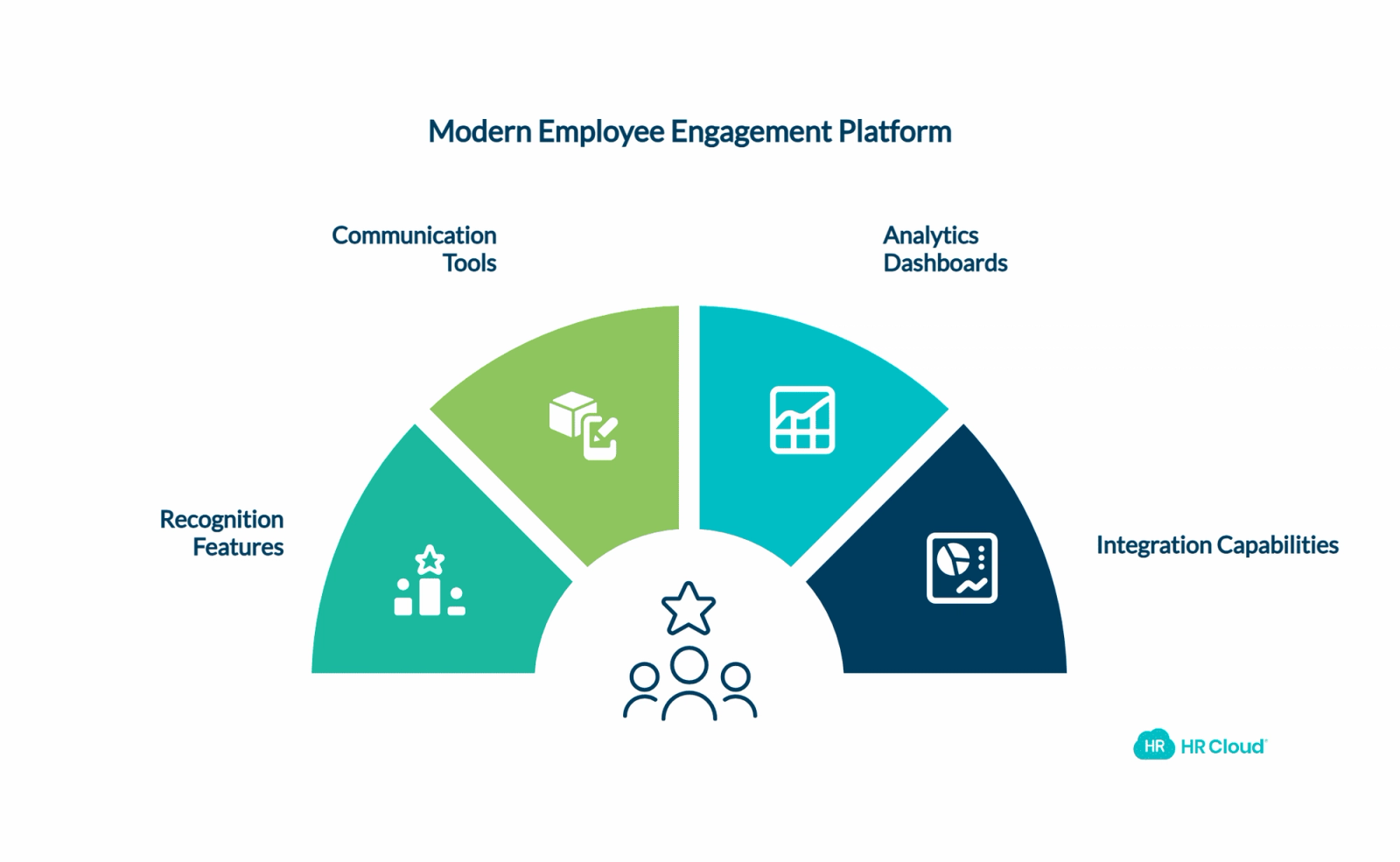
While strategy matters, execution depends on having the right tools. Modern employee engagement platforms combine recognition, communication, and analytics capabilities that make connection-building scalable across organizations of any size.
Workmates by HR Cloud delivers recognition features specifically designed for distributed and frontline workforces. The mobile-first platform ensures manufacturing employees, healthcare workers, retail staff, field service technicians, and other non-desk workers can participate fully in recognition culture through the devices they actually use.
Key capabilities include customizable kudos that allow peer-to-peer and manager recognition tied to company values, a points-based rewards system with 100+ redemption options from gift cards to custom perks, social recognition feeds that make appreciation visible across the organization, automated milestone celebrations for birthdays, anniversaries, and achievements, and comprehensive analytics dashboards tracking recognition patterns, engagement trends, and cultural health metrics.
Integration capabilities ensure recognition lives within existing workflows. Native connections to Slack, Microsoft Teams, and major HRIS platforms mean employees can give and receive recognition without switching applications. This seamless experience drives adoption rates significantly higher than standalone systems requiring separate logins.
For organizations with ADP Workforce Now, bidirectional integration synchronizes employee data automatically, eliminating manual updates while ensuring recognition reaches every team member regardless of location or role.
Implementing Your Employee Connection Strategy
Building authentic workplace connection requires intentional, sustained effort. Organizations that excel at connection treat it as strategic priority rather than an occasional initiative.
Start by assessing your current state. Survey employees about their sense of connection, belonging, and psychological safety. Analyze recognition patterns to identify teams or locations where connection may be weak. Examine turnover data for connection-related themes in exit interviews.
Define clear connection objectives aligned with business goals. Are you addressing retention challenges in specific departments? Improving collaboration across silos? Strengthening culture during rapid growth or organizational change? Clarity on objectives shapes your strategy and enables measurement.
Select the right technology infrastructure to support your goals. Platforms designed specifically for employee recognition and engagement provide the foundation for sustainable connection-building at scale. Ensure your chosen solution works for your entire workforce, including frontline and distributed employees often overlooked by desk-centric tools.
Train managers and leaders on connection-building practices. Recognition skills, psychological safety creation, and inclusive communication don't always come naturally. Structured training with accountability mechanisms ensures leaders actively build connection rather than leaving it to chance.
Launch with clear communication explaining the "why" behind new initiatives. Employees engage more readily when they understand organizational commitment to connection and how new programs serve their interests.
Monitor, measure, and iterate based on data. Track recognition frequency, participation rates, engagement scores, and business metrics like retention and productivity. Use these insights to refine your approach continuously, celebrating wins while addressing gaps.

Experience how Workmates can transform communication and strengthen culture—all in one powerful platform
Book Your Free DemoFrequently Asked Questions About Employee Connection
What is employee connection in the workplace?
Employee connection encompasses the relationships, sense of belonging, and emotional bonds that make work feel personally meaningful rather than purely transactional. It includes trust between team members, alignment with company values and mission, recognition of individual contributions, meaningful relationships extending beyond task completion, and psychological safety to express ideas and concerns. Strong connection makes employees feel they're part of something larger than themselves, driving engagement, collaboration, and commitment.
Why is building employee connection important for organizations?
Employee connection directly impacts business performance through multiple channels. Connected employees demonstrate higher engagement levels, leading to better productivity and quality of work. They collaborate more effectively because trust enables open communication and mutual support. Connection drives retention by giving employees compelling emotional reasons to stay beyond compensation. It strengthens culture, making organizations more attractive to top talent. Research consistently shows that companies prioritizing connection outperform competitors on engagement, retention, and financial metrics.
How does employee connection differ from employee engagement?
Employee connection represents the "who"—the relationships, belonging, and emotional bonds employees feel toward colleagues and the organization. Employee engagement represents the "how"—the motivation, enthusiasm, and commitment employees bring to their actual work. Connection is about human relationships; engagement is about task involvement. Both are essential, and they reinforce each other. Connected employees tend to be more engaged, and highly engaged employees often build stronger connections. However, it's possible to have engagement without deep connection (transactional relationships) or connection without high engagement (social bonds without work motivation). The most successful organizations cultivate both simultaneously.
What role does recognition play in building employee connection?
Recognition serves as a powerful connection catalyst. When done effectively, recognition makes people feel seen, valued, and appreciated—fundamental human needs that strengthen workplace bonds. Peer-to-peer recognition builds horizontal connections across teams by creating mutual appreciation and trust. Manager recognition builds vertical connection by signaling that leaders notice and value contributions. Public recognition creates shared cultural moments where the entire organization witnesses excellence being celebrated. Values-aligned recognition reinforces what the organization stands for, connecting individual actions to larger purpose. Frequent recognition—at least monthly—drives measurably stronger connection and belonging.
How can distributed and remote teams build authentic connection?
Remote connection requires intentional design and the right technology infrastructure. Successful strategies include scheduled informal interactions like virtual coffee chats or team social hours, over-communication of company updates to combat isolation, video-first meetings to enable face-to-face interaction, digital recognition platforms that make appreciation visible across locations, team-building activities adapted for virtual environments, and employee engagement software designed specifically for distributed workforces. Mobile-first platforms ensure frontline workers without desk access can participate fully. The key is recreating the organic social interactions that happen naturally in physical offices through structured digital experiences.
What are the key components of an effective employee connection strategy?
Comprehensive connection strategies address multiple dimensions: structured recognition programs that make appreciation frequent and visible, open communication channels enabling transparent information sharing, cross-functional collaboration opportunities that break down silos, learning and development initiatives that create shared growth experiences, psychological safety practices that build trust and reduce fear, diversity and inclusion efforts ensuring everyone feels they belong, wellness support that respects employees as whole people, and technology infrastructure that makes connection accessible regardless of work location or role. Organizations often fail by focusing on just one dimension. True connection requires integrated approaches addressing relationship-building from multiple angles.
How do you measure employee connection?
Employee connection can be measured through both qualitative and quantitative methods. Surveys assessing sense of belonging, relationship quality, trust levels, and cultural alignment provide direct feedback. Recognition platform analytics reveal appreciation frequency, participation rates, and patterns of connection across teams. Pulse surveys measuring engagement often include connection-related questions. Retention data—particularly voluntary turnover rates and reasons cited in exit interviews—indicate connection strength. Participation in optional activities like employee resource groups, social events, or learning opportunities suggests connection levels. The most sophisticated approaches combine multiple data sources, tracking trends over time rather than relying on single snapshots.
What is the connection between employee recognition and retention?
Recognition directly influences retention by satisfying fundamental human needs for appreciation and belonging. Employees who feel genuinely valued have emotional reasons to stay that transcend compensation or titles. Research shows employees receiving meaningful recognition monthly are 63% more likely to report they rarely consider leaving. Recognition creates connection to colleagues and the organization, making departures feel like loss rather than simply job changes. It reinforces that the organization notices and appreciates contributions, validating the employee's worth. Organizations with strong recognition cultures report significantly lower turnover, with some studies showing up to 31% reduction in voluntary departures. The retention impact compounds over time as recognition becomes woven into daily culture.
How can HR Cloud's Workmates platform strengthen employee connection?
Workmates provides comprehensive connection-building tools in a unified platform. The recognition features enable peer-to-peer kudos, values-aligned badges, and points-based rewards that make appreciation frequent and visible. Communication channels create virtual gathering spaces for announcements, updates, and casual conversations. The social feed makes organizational activity visible, helping distributed teams feel connected to the larger company. Automated milestone celebrations ensure birthdays, anniversaries, and achievements never get overlooked. Mobile-first design ensures frontline workers without desk access can participate fully. Analytics dashboards help leaders identify connection gaps and measure program effectiveness. Integration with existing HR systems and communication tools like Slack and Microsoft Teams embeds connection-building into daily workflows rather than requiring separate applications.
What industries benefit most from prioritizing employee connection?
While connection benefits all organizations, certain industries face unique challenges making it especially critical. Healthcare organizations with shift-based clinical staff struggle to create cohesion across teams that rarely overlap. Manufacturing and construction companies with predominantly frontline workforces need mobile-accessible tools to reach workers without desk access. Retail operations with high turnover and distributed locations require scalable connection strategies. Professional services firms building culture across client sites benefit from digital connection tools. Hospitality organizations managing seasonal workforces need rapid onboarding and engagement approaches. Technology companies maintaining culture during hypergrowth require intentional connection-building. Public sector organizations navigating bureaucratic structures benefit from informal connection channels. Any organization with distributed, hybrid, or frontline workers faces connection challenges best addressed through strategic recognition, communication, and engagement initiatives.
About the author

Keep Reading


Like What You Hear?
We’d love to chat with you more about how HR Cloud® can support your business’s HR needs.
Book Your Free Demo