
7 Types of Employee Recognition Every HR Leader Needs in 2026 (With Implementation Guide)

Employee recognition isn't just about handing out plaques at year-end celebrations anymore. In today's distributed workforce—where 51% of employees are actively watching for new opportunities—recognition has evolved from a nice-to-have perk into a strategic retention tool that directly impacts your bottom line.
The data tells a compelling story: employees who receive regular recognition are 45% less likely to leave within two years, and organizations with strong recognition cultures see 31% lower voluntary turnover rates. Research shows most employees receive recognition only a few times per year, despite the proven benefits of frequent appreciation.
The gap between what employees need and what organizations deliver isn't about budget or good intentions. It's about understanding the full spectrum of recognition types available and implementing them through modern platforms that make appreciation effortless, measurable, and meaningful.
This guide breaks down seven essential recognition types—from informal kudos to structured milestone celebrations—and shows you exactly how to implement each one using employee recognition software that actually gets used. Whether you're managing 50 employees or 5,000 across multiple locations, these frameworks will help you build a culture where people feel genuinely valued.
Type 1: Informal Recognition (The Everyday Appreciation)
Informal recognition captures those spontaneous moments when someone goes above and beyond—the thank-you note, the shout-out in a team meeting, the "you crushed it" message in chat. These micro-moments of appreciation cost nothing but create the foundation of a recognition-rich culture.
Why It Matters
Studies show employees who receive regular weekly recognition are significantly more productive. But here's the challenge: without the right tools, informal recognition becomes inconsistent, invisible to the broader organization, and impossible to track.
How to Implement with Modern Recognition Software
Modern platforms like HR Cloud's Workmates solve the informal recognition challenge by making appreciation as easy as sending a text:
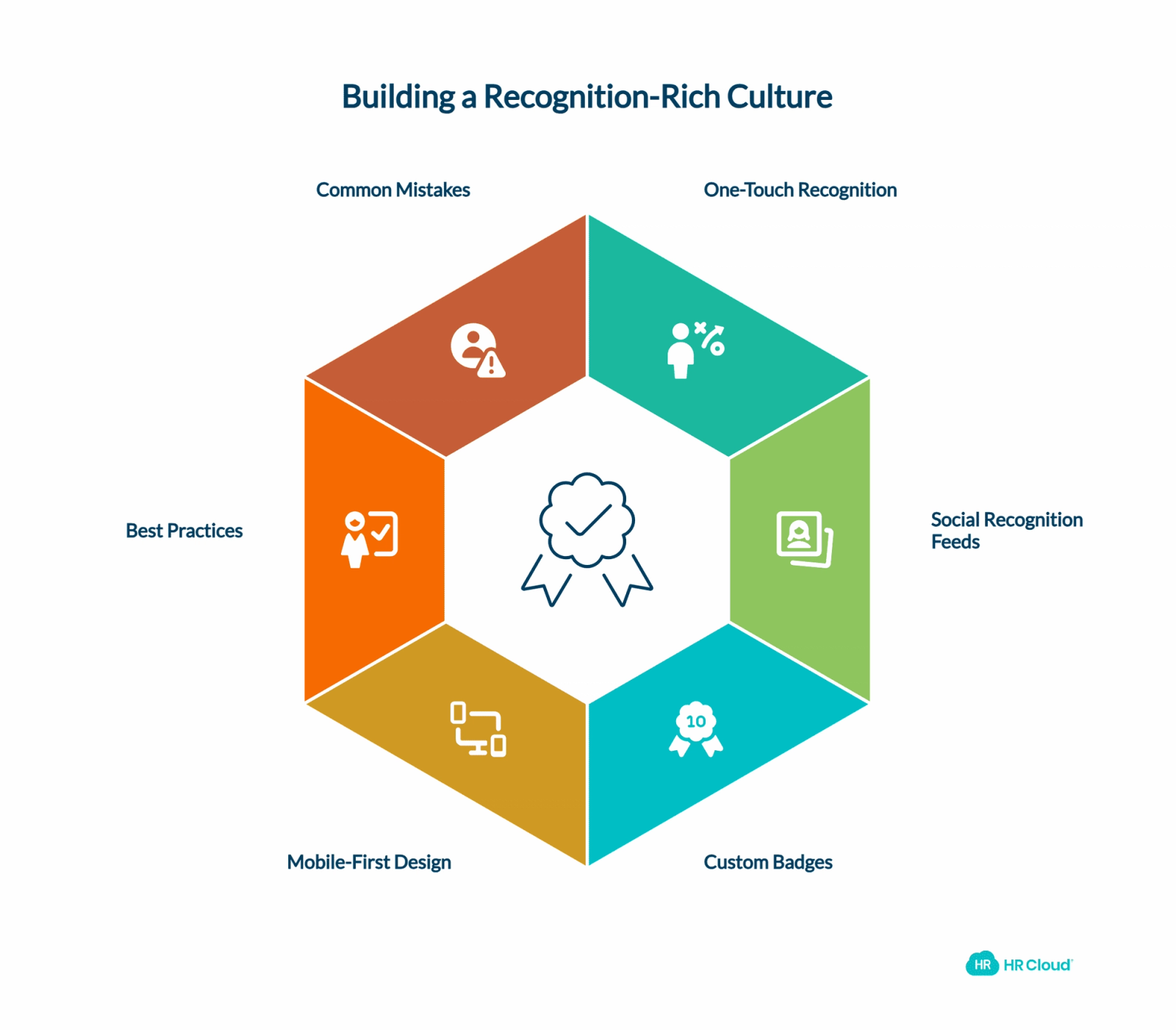
- One-Touch Recognition: Employees can give kudos instantly from desktop or mobile apps, ensuring recognition happens in the moment—not days later when impact fades
- Social Recognition Feeds: Turn private thank-yous into visible appreciation that inspires others and reinforces company values
- Custom Badges: Create recognition badges tied to your specific values (like "Customer Champion" or "Innovation Driver") so informal recognition reinforces the behaviors you want more of
- Mobile-First Design: Ensure frontline workers, field teams, and remote employees can participate equally, with growing numbers of distributed and frontline workers.
Best Practices for Informal Recognition
Make it specific. Instead of "great job," say "your analysis of the customer feedback data helped us identify the root cause 3 days faster."
Recognize effort and outcomes. Appreciate both the journey and the destination.
Enable everyone to give recognition. When peer-to-peer recognition flows in all directions, it creates cultural momentum managers alone can't generate.
Track informal recognition patterns. Analytics enable you to track recognition patterns and identify engagement gaps
Common Mistakes to Avoid
Relying solely on manager-to-employee recognition. Peer appreciation is 3x more frequent when tools enable it.
Waiting too long to recognize. Recognition has the greatest impact when delivered immediately, with effectiveness declining significantly over time.
Making recognition so formal that it becomes a barrier to frequency. The easier you make it, the more it happens.
Type 2: Formal Recognition (The Structured Celebrations)
Formal recognition encompasses the planned, official acknowledgments your organization commits to: anniversary celebrations, performance reviews, bonuses, promotions, and structured awards programs. This is recognition with process, budget allocation, and organizational commitment behind it.
Why It Still Matters
While informal recognition has gained prominence, formal recognition remains the foundation. It signals organizational priorities, creates clear performance expectations, and provides the bigger rewards that employees anticipate and value. Organizations that eliminate formal recognition entirely often see engagement decline—employees interpret the absence as the company not taking appreciation seriously.
How Modern Recognition Platforms Enhance Formal Programs
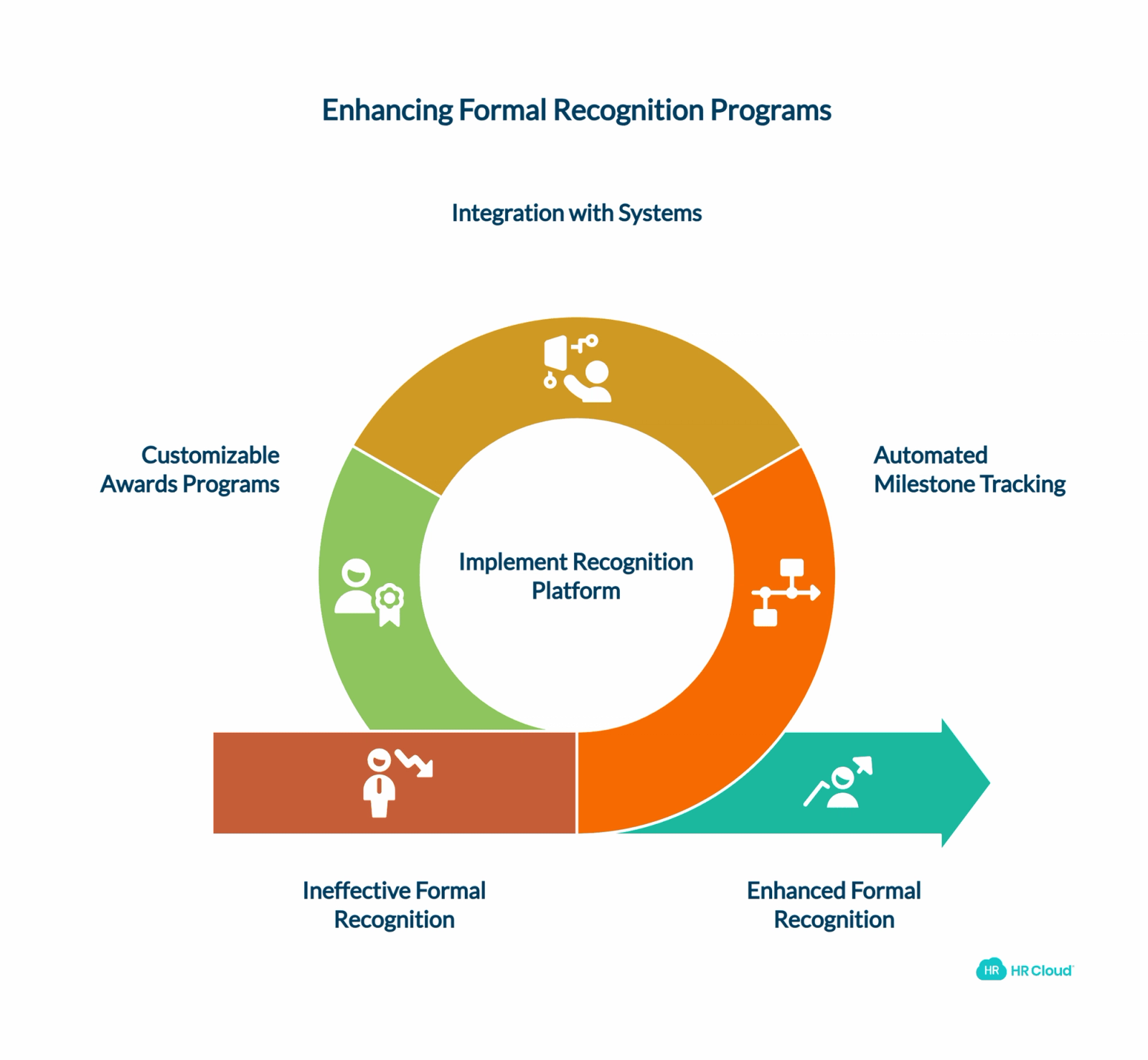
Traditional formal recognition (engraved plaques, annual ceremonies) suffers from timing delays, limited visibility, and administrative burden. Recognition software transforms formal recognition into an always-on system:
- Automated Milestone Tracking: The platform automatically triggers work anniversary celebrations, project completion acknowledgments, and goal achievement recognition—no HR administrator chasing dates manually
- Structured Nomination Workflows: Create award nomination processes (Employee of the Quarter, Innovation Award) with clear criteria, voting mechanisms, and transparent timelines
- Integration with Performance Systems: Connect recognition to HRIS platforms like ADP, Workday, and UKG so performance milestones automatically trigger recognition opportunities
- Customizable Awards Programs: Design formal recognition that reflects your culture—from traditional service awards to creative programs like "Most Helpful Teammate" or "Customer Champion"

Implementation Framework
1. Define Your Formal Recognition Calendar
Map out quarterly/annual awards, service milestones, and performance-linked recognition events. Create a 12-month calendar showing exactly when nominations open, evaluation happens, and winners are announced.
2. Set Clear Criteria
Employees should know exactly what behaviors/outcomes earn formal recognition. This reduces perceptions of favoritism and increases participation. Document specific, measurable criteria for each award.
3. Budget Appropriately
Allocate rewards that feel meaningful. Research shows recognition loses impact when rewards feel token or cheap. A $25 gift card for an innovation that saves the company $100,000 sends the wrong message.
4. Create Visibility
Use your recognition platform's announcement features to make formal recognition visible company-wide. Recognition celebrated privately has minimal cultural impact.
5. Measure Impact
Track participation rates, time-to-recognition, and correlation with retention/engagement metrics. Adjust programs based on what the data reveals.
Red Flags in Formal Recognition
Recognition goes to the same people repeatedly. This signals bias or unclear criteria—not a healthy recognition program.
Long delays between achievement and recognition. If someone hits a major goal in January but doesn't get recognized until July, you've lost the motivational impact.
Generic, impersonal recognition. Automated emails without context or personalization feel hollow, even if accompanied by rewards.
Type 3: Social Recognition (The Amplified Appreciation)
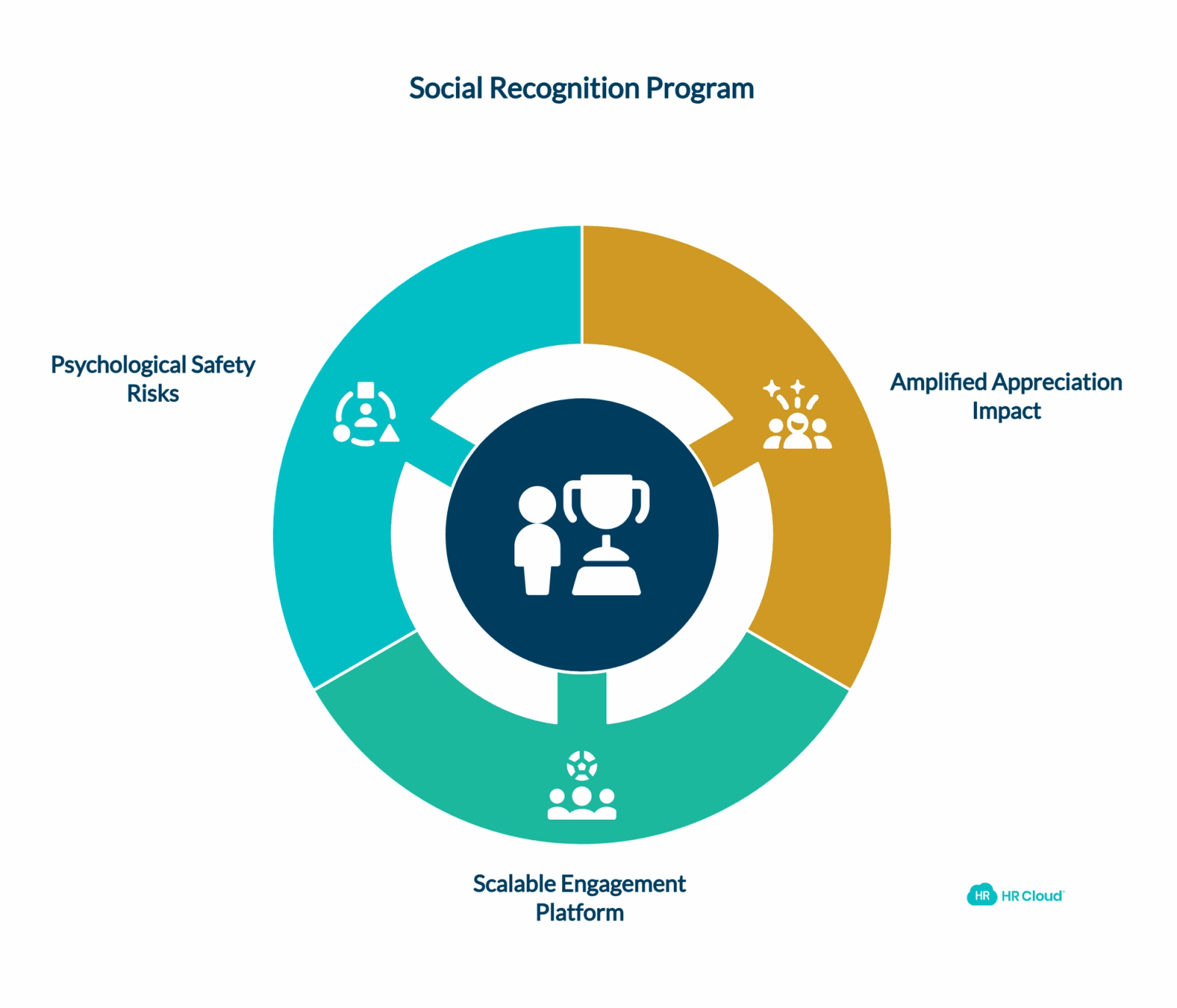
Social recognition transforms individual moments of appreciation into shared cultural experiences. When recognition becomes visible, likeable, commentable, and shareable, it amplifies impact far beyond the original recipient. This is recognition designed for visibility—in the best possible way.
The Psychological Power
Humans are social creatures. Public acknowledgment activates different neural pathways than private praise. Social recognition provides:
- Status: Being recognized publicly enhances the recipient's standing within their community
- Modeling: Others observe which behaviors earn recognition and adjust their own actions
- Ripple Effects: One recognition moment inspires 5-7 additional recognition actions (cascade effect)
How to Enable Social Recognition at Scale
The challenge with social recognition isn't desire—it's infrastructure. Organizations that rely on email or all-hands meetings for recognition find participation drops off quickly. Employee engagement platforms like Workmates solve this through:
- Recognition Newsfeeds: A dedicated social stream where every recognition post creates visibility, enables reactions (likes, comments, emojis), and encourages others to join
- Recognition Wall Displays: For manufacturing plants, retail locations, or healthcare facilities, push recognition to TV displays in break rooms so even non-tech workers see appreciation
- Notification Systems: When someone receives recognition, notify their manager and team so the celebration spreads
- Engagement Analytics: Track who's participating, which types of recognition generate the most engagement, and where recognition gaps exist
Social Recognition Best Practices
Lead from the top. When executives actively give recognition on the social platform, it signals priority and encourages participation. Model the behavior you want to see.
Make it interactive. Enable emoji reactions, comments, and ability to "boost" recognition with additional points. The more people engage, the more the culture shifts.
Encourage storytelling. Recognition that includes context and specifics generates 4x more engagement than generic "great job" posts. Ask employees to share the story behind the recognition.
Protect psychological safety. Create guidelines preventing sarcastic or embarrassing "recognition" that undermines trust. Not every workplace joke belongs in a recognition program.
Measuring Social Recognition Success
Track these key metrics monthly:
- Recognition posts per employee per month (target: 1-2 minimum)
- Percentage of employees who have given/received recognition in past 30 days (target: 60%+)
- Manager participation rate (target: 90%+)
- Cross-departmental recognition (indicator of organizational silos breaking down)
Warning Signs
Only managers give recognition. This indicates employees don't feel empowered to appreciate peers.
Recognition concentrated in certain departments. This suggests cultural or access barriers preventing equitable participation.
Generic, template-like recognition. This signals checkbox behavior rather than genuine appreciation—and employees can tell the difference.
Type 4: Monetary Recognition (The Tangible Rewards)
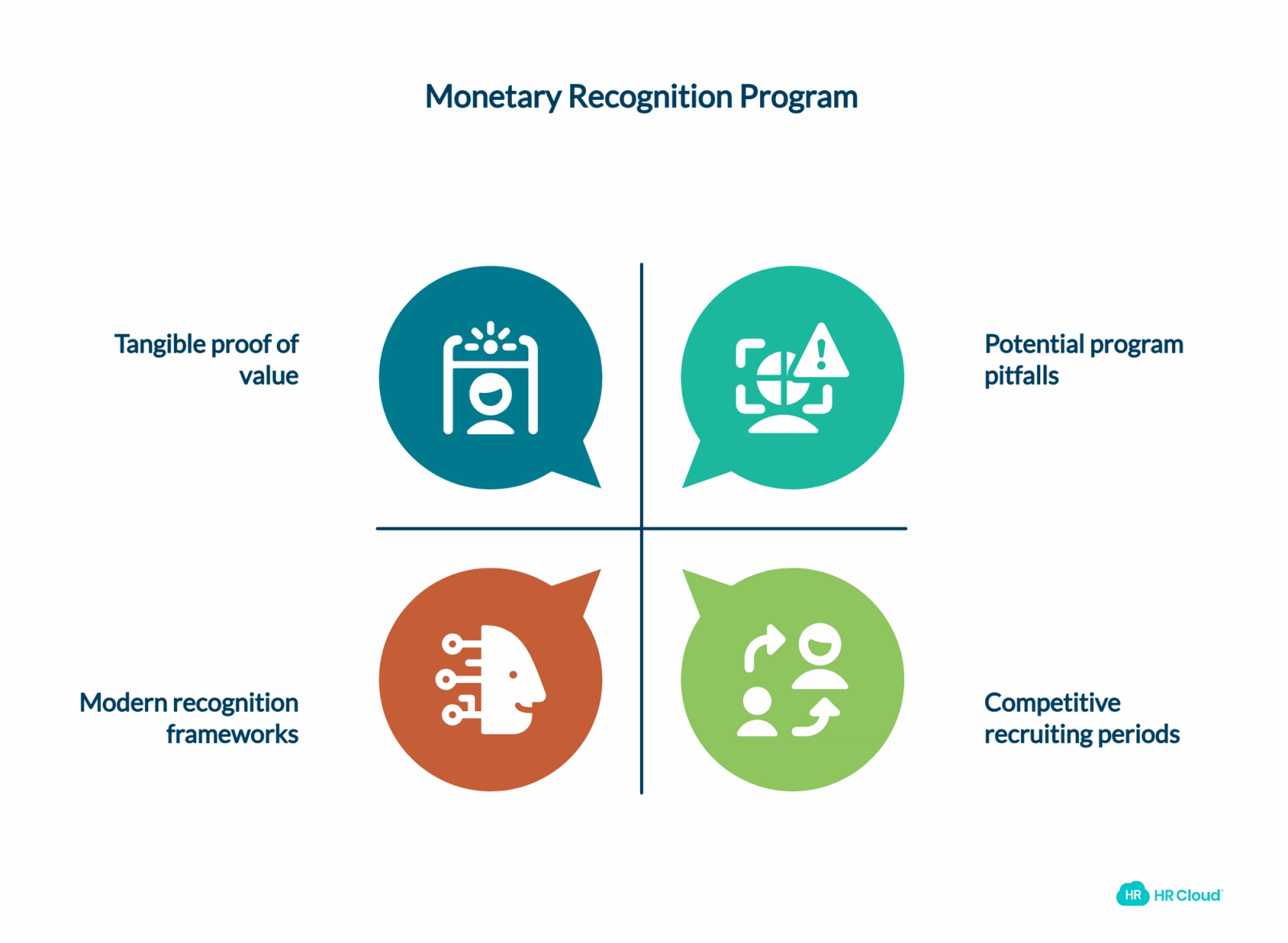
Let's be direct: appreciation feels good, but rewards feel great. Monetary recognition—bonuses, gift cards, additional PTO, points-based systems, or cash awards—provides tangible proof that contributions matter beyond words. This recognition type acknowledges that employees have bills to pay, goals to reach, and practical needs that genuine rewards address.
The Business Case
While non-monetary recognition drives day-to-day engagement, monetary recognition strengthens retention during competitive recruiting periods. Data shows 75% of employees say lack of rewards-based appreciation would influence their decision to leave. When competitors offer sign-on bonuses and higher salaries, your existing monetary recognition program becomes a retention defense.
Modern Monetary Recognition Frameworks
The days of one-size-fits-all rewards are over. Today's recognition and rewards platforms offer unprecedented flexibility through points-based systems.
Points-Based Systems
Employees accumulate points through various recognition mechanisms and redeem them for rewards they actually want:
- Gift Card Marketplace: 100+ retailers from Amazon to local restaurants—employees choose what matters to them
- Experiences: Concert tickets, spa days, adventure activities
- Company Swag: Branded items that employees actually want (not generic water bottles)
- Charitable Donations: Redeem points to support causes employees care about
- Time Off: Exchange points for half-days or full days of additional PTO
- Professional Development: Training courses, conference attendance, certifications
Get started on your own employee recognition program using this Recognition Program Starter Kit.
Download Now
Why Points Systems Win
They combine the emotional impact of frequent recognition with the accumulated value of meaningful rewards. An employee might receive 20 small recognitions worth 50 points each, building toward a $500 experience they've been wanting—the best of both worlds.
Implementation with Recognition Software
Platforms like Workmates by HR Cloud streamline monetary recognition through:
- Flexible Budget Allocation: Set monthly/quarterly budgets for managers, with automatic resets and tracking
- Real-Time Redemption: Employees see reward catalogs and redeem instantly—no waiting weeks for approvals
- Compliance Tracking: Built-in reporting for taxable reward value (critical for audit purposes)
- Custom Reward Programs: Add company-specific rewards (parking spot for a month, lunch with CEO, early Friday release)
Monetary Recognition Best Practices
Set clear earning criteria. Employees should understand exactly what behaviors/outcomes earn rewards. Transparency prevents perceptions of favoritism.
Balance frequency and value. Better to give 10 small rewards frequently than 1 large reward annually. Frequency drives more behavior change.
Avoid reward deflation. A $5 gift card sends the wrong message. Ensure monetary recognition feels genuinely appreciative.
Track redemption rates. Low redemption suggests rewards don't align with employee preferences. Adjust your catalog accordingly.
Consider regional differences. What feels generous in one geography may not translate globally. Localize reward options when operating across regions.
Common Pitfalls
Managers hoarding recognition budgets. This leads to end-of-quarter recognition spikes that feel inauthentic.
Limited reward options. Forcing vegetarians to choose between steak restaurant gift cards, for example, undermines the gesture.
Complicated redemption processes. If claiming a reward takes 15 steps, participation plummets. Make it simple.
Type 5: Milestone-Based Recognition (The Meaningful Moments)
Work anniversaries, project completions, certification achievements, goal accomplishments, personal life events—these milestone moments create natural opportunities for memorable recognition. The challenge: most organizations either forget these moments entirely or handle them so generically that the recognition feels hollow.
Why Milestones Matter
These moments represent significant investment—whether time served, effort expended, or growth achieved. When organizations acknowledge milestones thoughtfully, they send a clear message: "We notice your commitment, and it matters to us." When milestones pass unrecognized, employees notice the silence even more acutely.
The Data Behind Milestone Recognition
According to research from leading HR analysts:
- Employees who receive service milestone recognition are 5x more likely to reach the next milestone
- Organizations that celebrate project completions see 34% higher project team satisfaction
- 78% of employees say milestone recognition impacts their decision to stay
How Modern Platforms Automate Milestone Recognition
The reason many organizations fail at milestone recognition isn't lack of intent—it's that manually tracking hundreds or thousands of employee milestones becomes unsustainable. Employee recognition software solves this through automation:
- Service Anniversary Tracking: Automatically celebrates 1-year, 5-year, 10-year anniversaries with personalized messages, reward points, and social announcements
- Birthday Recognition: Sends birthday wishes and small rewards without HR administrators manually tracking dates
- Project Completion Celebrations: Integrates with project management tools to trigger recognition when milestones hit
- Certification/Training Achievements: Connects with learning management systems to recognize skill development
- Custom Milestone Creation: Define company-specific milestones (first customer win, safety record achievements, innovation submissions)
Best Practices for Milestone Recognition
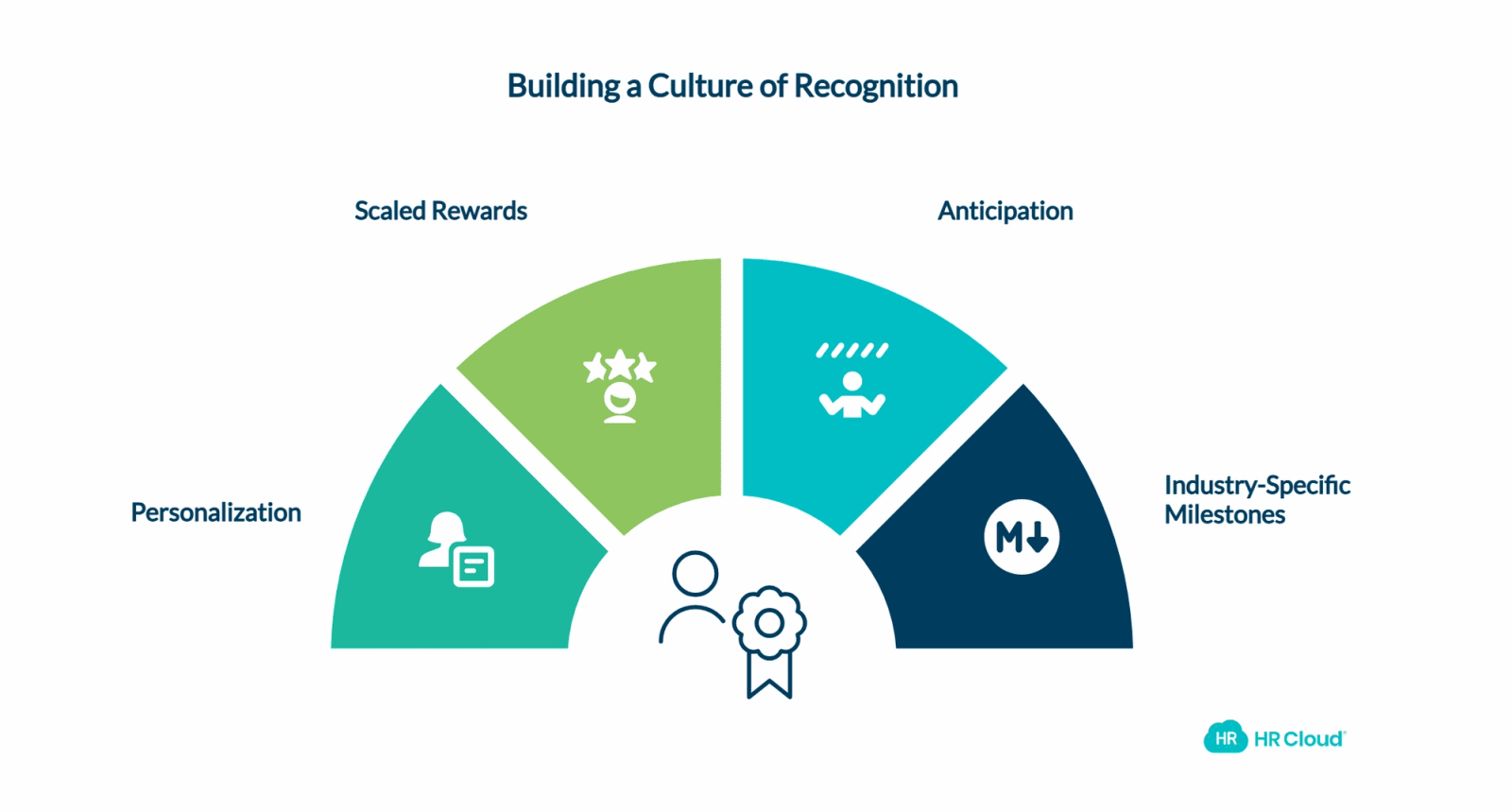
Make it Personal
Generic "Congratulations on 10 years!" messages feel transactional. Instead:
- Include specific memories or contributions from that employee's tenure
- Have the CEO or executive leadership record personalized video messages for significant milestones
- Ask colleagues to share stories about how this person impacted them
- Create custom milestone certificates that reference actual achievements
Scale the Reward
Not all milestones deserve equal recognition:
- 1-3 years: $50-100 gift card, public social recognition
- 5 years: $250-500 reward, leadership video message, team celebration
- 10 years: $1000+ reward, company-wide announcement, lunch with executives
- 15+ years: Sabbatical options, significant experiences, lifetime achievement recognition
Create Anticipation
Don't let milestones surprise employees (or catch you off-guard):
- Send 30-day advance notices of upcoming anniversaries
- Allow employees to choose how publicly they want to be recognized
- Create "milestone maps" showing employees when they'll hit next recognition levels
Industry-Specific Milestones
Healthcare: Patient safety milestones, licensure renewals, continuing education completion
Manufacturing: Safety record milestones, production efficiency achievements, quality certifications
Technology: Product launches, patent filings, technical certifications
Retail: Sales milestones, customer satisfaction achievements, seasonal completion bonuses
Type 6: Structured Recognition (The Strategic Program)
Structured recognition programs create consistent, fair, and strategic frameworks for appreciation. Unlike informal recognition that happens spontaneously, structured programs define clear criteria, nomination processes, evaluation standards, and recognition timelines. This ensures recognition aligns with business objectives and company values while reducing perceptions of favoritism or bias.
Why Structure Matters
Without structure, recognition becomes subjective, inconsistent, and dependent on individual manager behavior. Some teams receive abundant recognition while others feel invisible—not because they perform worse, but because their manager doesn't prioritize appreciation. Structured programs ensure recognition equity across the organization.
Components of Effective Structured Recognition
1. Values-Based Recognition Programs
Connect recognition explicitly to company values. If "Customer Obsession" is a core value, create a "Customer Champion" award with clear criteria:
- 5+ customer satisfaction scores of 9/10 or higher in a quarter
- Documented case of going above and beyond for customer resolution
- Peer nominations from colleagues who witnessed customer advocacy
- Manager endorsement with specific examples
2. Performance-Tied Recognition
Link recognition to measurable business outcomes:
- Sales teams: Revenue targets, deal velocity, customer acquisition
- Operations: Efficiency gains, cost reductions, process improvements
- Customer success: Retention rates, expansion revenue, satisfaction scores
- Engineering: Feature velocity, bug reduction, system uptime improvements
3. Nomination-Based Awards
Create quarterly or annual awards where employees nominate peers:
- Innovation Award: For creative problem-solving or process improvement
- Collaboration Excellence: For breaking down silos and cross-functional work
- Leadership Impact: For mentoring, coaching, or developing others
- Rising Star: For newer employees making exceptional early impact
How Recognition Platforms Enable Structured Programs
Manual structured recognition programs collapse under administrative burden. Recognition software makes structure scalable:
- Automated Nomination Workflows: Set up nomination windows, route approvals to managers/committees, track voting if applicable
Criteria Validation: Build forms that require nominators to provide specific examples mapped to program criteria
- Calendar Management: Automatically open nomination periods, send reminders, and trigger winner announcements
- Analytics Dashboards: Track participation rates, identify departments with low engagement, measure correlation between recognition and retention
Implementation Framework
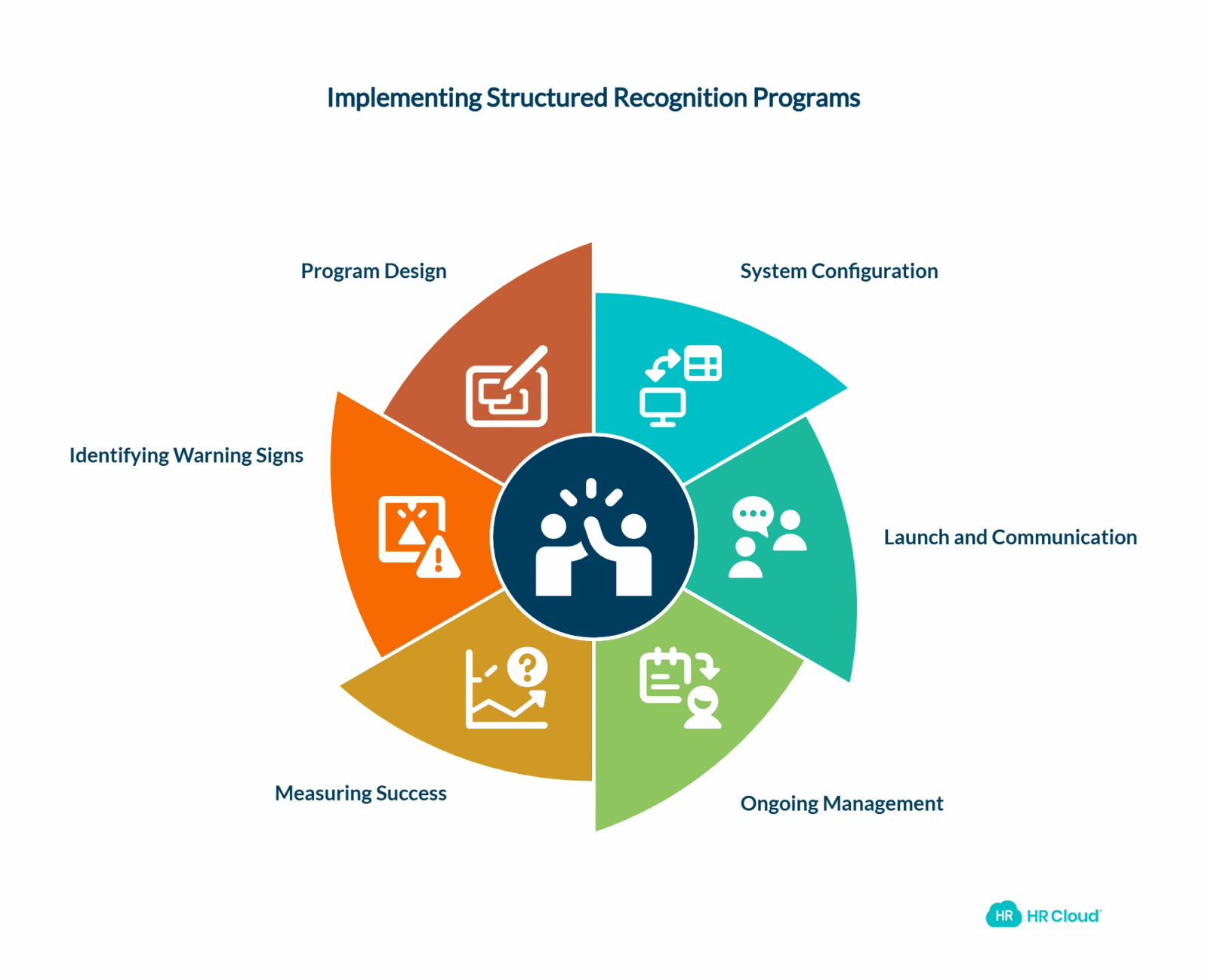
Phase 1: Program Design (Weeks 1-2)
- Define 3-5 structured recognition programs tied to company values and strategic objectives
- Establish clear, measurable criteria for each program (avoid vague "demonstrates excellence" descriptions)
- Determine award frequency (monthly, quarterly, annual) and reward levels
- Create nomination and evaluation processes
Phase 2: System Configuration (Weeks 3-4)
- Configure recognition platform with program structures
- Build nomination forms with required fields tied to evaluation criteria
- Set up automated notifications and calendar triggers
- Train managers and committee members on evaluation standards
Phase 3: Launch and Communication (Week 5)
- Announce programs through multiple channels (email, intranet, team meetings)
- Explain nomination process and eligibility requirements
- Showcase example recognition stories to set expectations
- Assign executive sponsors to each program for visibility
Phase 4: Ongoing Management
- Review nominations within 2-3 days (avoid letting evaluations drag on for weeks)
- Announce winners publicly with specific recognition stories
- Track participation and adjust program elements based on feedback
- Quarterly reviews to ensure programs remain relevant
Measuring Structured Program Success
Track these metrics to ensure your structured programs are working:
- Nomination participation rate (target: 40%+ of employees nominating someone annually)
- Winner distribution across departments (should roughly match employee distribution)
- Time from nomination to recognition (target: <14 days)
- Retention rate of recognition recipients vs. non-recipients (should see 15-25% better retention)
Warning Signs Your Structured Programs Need Revision
Same people win repeatedly. This suggests criteria aren't truly measurable or selection is biased.
Certain departments never receive recognition. This indicates structural barriers to participation.
Low nomination rates. This suggests employees don't understand criteria or don't believe recognition matters.
Winners don't feel recognized. Poorly executed announcements or insufficient rewards undermine program impact.
Type 7: Team Recognition (The Collective Celebration)
While individual recognition celebrates personal achievement, team recognition acknowledges that most significant business outcomes result from collaborative effort. Product launches, major deals, crisis responses, operational transformations—these successes involve many contributors, and failing to recognize teams collectively creates competitive dynamics that undermine collaboration.
The Collaboration Problem
Organizations that only recognize individuals inadvertently create internal competition. Employees learn that individual visibility matters more than team success, leading to information hoarding, credit-claiming, and reluctance to help colleagues. Team recognition reinforces the reality that when one team wins, the whole company moves forward.
When to Use Team Recognition
- Project Milestones: Product launches, implementation completions, system migrations
- Departmental Achievements: Quarterly targets exceeded, operational efficiency gains, customer satisfaction improvements
- Cross-Functional Collaboration: Successful partnerships between historically siloed departments
- Crisis Response: Teams that handle emergencies, outages, or urgent customer situations
- Culture Building: Teams that exemplify company values through collective behavior
How to Implement Team Recognition Effectively
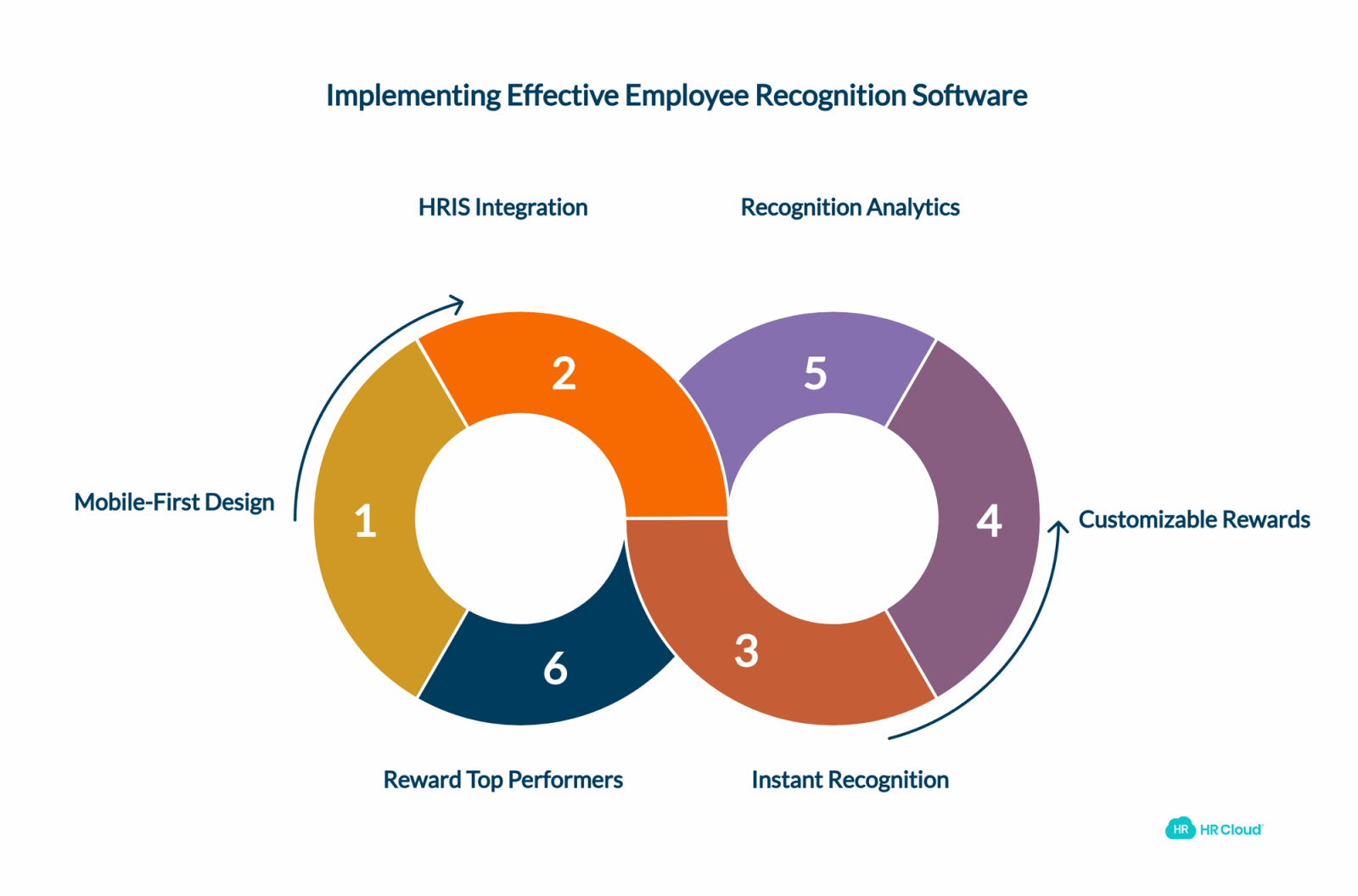
Individual Allocation Within Team Recognition
The challenge with team recognition: if 20 people contributed to a major project win, but the "team award" is a generic announcement and group lunch, individual team members don't feel personally valued. Modern recognition platforms solve this through allocation:
- Recognize the team publicly with social announcement and team reward budget
- Allow team lead to allocate individual recognition points to team members based on contribution level
- Enable team members to recognize each other within the team structure (peer-to-peer within project groups)
- Track both team-level and individual-level recognition metrics
Best Practices for Team Recognition
Define the Team Clearly
Avoid "the entire company" recognition that feels empty. Instead:
- Name specific individuals who contributed (even if it's 30 people)
- Clarify roles and specific contributions where possible
- Acknowledge support roles, not just the "heroes" who fixed problems
Scale Recognition to Team Size and Impact
- Small team (3-5 people) achieving modest milestone: Social recognition + $100-200 per person
- Medium team (10-20 people) achieving significant milestone: Social recognition + team event budget + individual points allocation
- Large team (50+ people) achieving major milestone: Executive recognition + substantial reward budget + individual allocation + team outing
Create Lasting Artifacts
Team recognition should be more than a fleeting moment:
- Physical or digital plaques highlighting team achievement
- Case study documentation of how the team succeeded
- Presentation opportunity for team to share learnings with broader organization
- Addition to company success story library
“One of the biggest benefits from using Workmates platform is that our associates are more connected to both the company and each other. Associates can comment, react, and provide feedback directly through the platform from their smartphone or desktop devices.”

— Daniella Nickerson, Human resources, Toyota

Team Recognition with Remote/Distributed Teams
Traditional team celebrations (pizza parties, happy hours) exclude remote workers or create second-class participation. Modern recognition platforms enable equitable team recognition:
- Virtual Team Celebrations: Video celebrations with interactive elements (games, trivia, recognition stories)
- Allocated Gift Cards: Instead of one team lunch, give each member $50 gift card to enjoy individually
- Asynchronous Recognition Threads: Create recognition feeds where team members share appreciation and memories over several days
- Celebration Boxes: Send team members celebration packages they can enjoy at home
Measuring Team Recognition Impact
Track these indicators of successful team recognition:
- Cross-functional collaboration metrics: Are departments working together more effectively?
- Project satisfaction scores: Do team members report positive experiences working together?
- Voluntary collaboration: Are employees choosing to help other teams even when not required?
- Retention of high-performing teams: Are intact successful teams staying together?
Common Team Recognition Mistakes
Only recognizing the team lead. This credits the manager while team members feel invisible.
Generic group recognition. "Great job, everyone!" without specifics feels hollow and forgettable.
Delayed team recognition. Celebrating project completion 6 months later kills momentum.
Unequal participation acknowledgment. Recognizing someone who contributed 2 hours the same as someone who worked 200 hours creates resentment.
Recognition Implementation Guide: From Theory to Practice
Choosing the Right Employee Recognition Software
Not all recognition platforms are created equal. The difference between a program that drives 90%+ participation and one that gets abandoned within months often comes down to platform capabilities. When evaluating employee recognition software, prioritize these essential features:
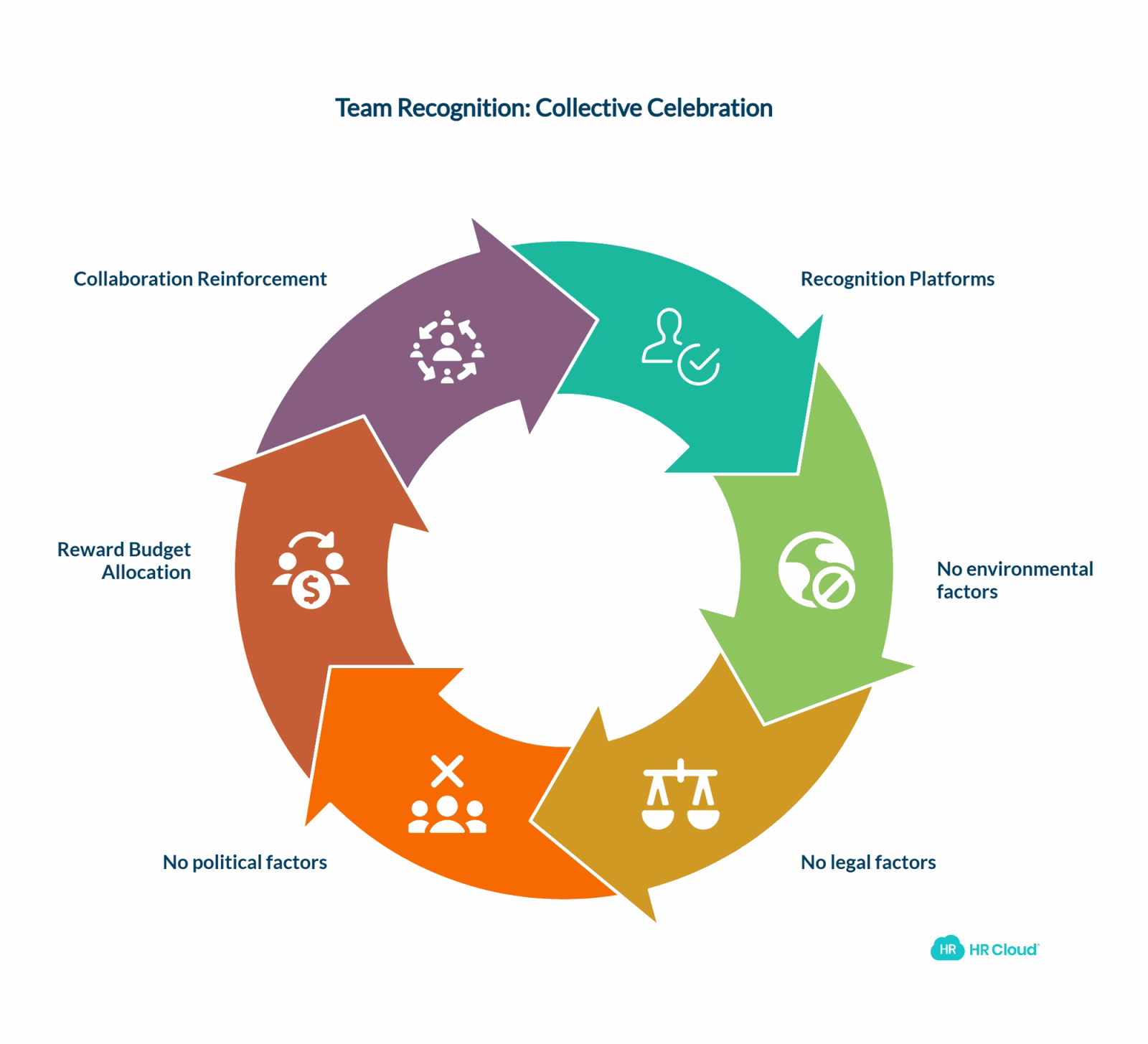
Core Platform Requirements
Mobile-First Design: 67% of your workforce needs mobile access—frontline workers, field teams, and remote employees won't use desktop-only tools
HRIS Integration: Automatic employee data synchronization with ADP, Workday, UKG eliminates manual data entry and ensures recognition reaches the right people
Instant Peer-to-Peer Recognition: Employees should give kudos within 30 seconds—any longer and participation drops dramatically
Customizable Rewards Catalog: 100+ gift card options plus company-specific rewards let employees choose meaningful rewards
Recognition Analytics: Track participation rates, identify recognition gaps, and measure impact on retention and engagement
Social Recognition Feeds: Amplify individual appreciation into team motivation through visible, interactive recognition streams
Automated Milestone Tracking: Service anniversaries, birthdays, and achievement recognition without manual administrative burden
Integration with Communication Tools: Slack, Microsoft Teams, and email integration so recognition fits workflow
Multilingual Support: Global workforces need recognition platforms that work in employees' preferred languages
Offline Capability: Frontline workers in manufacturing, healthcare, or field service need offline recognition that syncs when connected
Recognition Platform Comparison: Key Differentiators
HR Cloud Workmates vs. Point-Solution Recognition Tools
Most organizations choose between specialized recognition point-solutions or comprehensive employee experience platforms like Workmates by HR Cloud. Here's how they compare:
| Feature Category | Point-Solution Tools | HR Cloud Workmates |
|---|---|---|
| Recognition Types | Peer-to-peer primary focus | All 7 recognition types integrated |
| Mobile Experience | Basic mobile web apps | Native iOS/Android apps with offline capability |
| HRIS Integration | Limited pre-built connectors | Integration with ADP, Workday, UKG |
| Communication Platform | Recognition only | Recognition + internal comms + engagement surveys |
| Analytics | Basic recognition reporting | Comprehensive engagement analytics with insights |
| Implementation | Self-service setup | Dedicated customer success + implementation support |
| Frontline Worker Support | Desktop-centric | Purpose-built for deskless workforce |
| Reward Flexibility | Gift cards primarily | Gift cards + experiences + custom rewards + PTO exchanges |
| Total Cost of Ownership | Recognition licensing only | Replaces multiple point solutions |
When to Choose HR Cloud Workmates
- You need recognition + communication + engagement in unified platform
- You have significant frontline/deskless workforce
- Your HRIS is ADP, Workday, or UKG and you want native integration
- You want one vendor relationship instead of managing multiple point solutions
- You need healthcare, manufacturing, or construction-specific capabilities
Implementation Timeline & Roadmap
Most recognition program failures occur due to poor implementation—rushing the technical setup without cultural preparation or launching with inadequate training. Here's the proven implementation framework:
PHASE 1: PLANNING & DESIGN (WEEKS 1-3)
Week 1: Program Strategy
- Define recognition program objectives tied to business outcomes (reduce turnover by X%, increase engagement scores by Y%)
- Identify which recognition types you'll implement first (recommend starting with informal, formal, and milestone recognition)
- Establish recognition budget and reward allocation structure
- Appoint program owner(s) within HR team
Week 2: Platform Configuration
- Configure Workmates with company branding, colors, and logos
- Set up custom recognition badges tied to company values
- Configure rewards catalog and budgets
- Build automated milestone tracking workflows
- Integrate with HRIS for employee data synchronization
Week 3: Pilot Group Selection
- Identify 1-2 departments (50-200 employees) for pilot launch
- Select departments with engaged managers likely to champion program
- Schedule pilot kickoff meetings
- Prepare training materials and communication templates
PHASE 2: PILOT LAUNCH (WEEKS 4-8)
Week 4: Pilot Group Training
- Conduct 30-minute training sessions for pilot department managers
- Run 15-minute team awareness sessions for all pilot employees
- Send follow-up written guides and video tutorials
- Launch platform access for pilot group
Weeks 5-6: Active Pilot Management
- Daily monitoring of recognition activity
- Personal outreach to non-participants to identify barriers
- Gather feedback from active users on experience
- Recognize top recognition givers/receivers within pilot
Weeks 7-8: Pilot Assessment
- Review participation metrics (target: 60%+ of pilot employees giving/receiving recognition in first month)
- Analyze feedback and identify improvement opportunities
- Document success stories and recognition examples
- Refine program based on pilot learnings
PHASE 3: COMPANY-WIDE ROLLOUT (WEEKS 9-12)
Week 9: Rollout Preparation
- Create multi-channel launch campaign (email, intranet, team meetings, posters for frontline areas)
- Update training materials based on pilot feedback
- Schedule department-by-department training sessions
- Prepare executive messaging and video testimonials
Weeks 10-11: Staged Rollout
- Launch recognition platform in waves (by department, location, or division)
- Conduct training sessions for each group before platform access
- Assign recognition champions in each department to drive adoption
- Host daily office hours for questions and technical support
Week 12: Measurement & Optimization
- Review company-wide participation metrics
- Identify departments/locations with low adoption
- Implement targeted interventions for low-engagement areas
- Celebrate early wins and share success stories
PHASE 4: SUSTAINED ENGAGEMENT (ONGOING)
Monthly Activities:
- Publish recognition leaderboards and participation metrics
- Feature "Recognition Star of the Month" showcasing employees who exemplify recognition culture
- Analyze recognition patterns and address gaps
- Refresh the rewards catalog based on redemption data
Quarterly Activities:
- Executive business review of recognition program impact
- Correlation analysis between recognition and retention/engagement
- Program adjustments based on data and feedback
- Launch themed recognition campaigns tied to company initiatives.
Measuring Recognition Program ROI
Recognition programs require investment—platform licensing, reward budgets, administrative time—and leadership rightfully asks, "What's the return?" Here's how to measure and demonstrate ROI:
Leading Indicators (Track Monthly)
- Recognition participation rate (% of employees giving and receiving recognition)
- Average recognitions per employee per month
- Manager participation rate in recognition
- Reward redemption rate
- Time from achievement to recognition
Lagging Indicators (Track Quarterly/Annually)
- Voluntary turnover rate (compare recognized vs. non-recognized employees)
- Employee engagement survey scores (recognition-related questions)
- eNPS (Employee Net Promoter Score)
- Time-to-fill for open positions (strong recognition culture improves recruiting)
- Internal promotion rate (recognition correlates with career development)
Financial Impact Calculations
Turnover Cost Avoidance:
- Average cost to replace employee: $15,000 (conservative estimate for mid-level roles, per SHRM)
- Organization size: 500 employees
- Annual turnover without recognition: 25% (125 employees)
- Annual turnover with recognition: 18% (90 employees)
- Turnover reduction: 35 employees retained
- Annual savings: 35 × $15,000 = $525,000
Productivity Gains:
- Employees receiving weekly recognition show productivity improvements (per Gallup research)
- Average employee salary: $60,000
- Productivity gain from recognition: 15% (conservative)
- Organization size: 500 employees
- Annual productivity value: 500 × $60,000 × 0.15 = $4,500,000
Even capturing 10% of this productivity gain represents $450,000 in value—dwarfing typical recognition program costs of $50,000-100,000 annually.
Recognition Program Cost Breakdown
- Platform licensing: $3-8 per employee per month (depends on features and organization size)
- Reward budget: $50-150 per employee per year (highly variable based on program design)
- Administrative overhead: 0.25-0.5 FTE for management
- Training and implementation: One-time investment of $10,000-30,000
Ready to Transform Your Recognition Program?
Building a comprehensive employee recognition program doesn't have to be complicated. Workmates by HR Cloud provides everything you need to implement all seven recognition types in one integrated platform—from informal peer-to-peer kudos to structured awards programs to automated milestone celebrations.
See Workmates in Action
Schedule a personalized demo to see how organizations like yours improve engagement and reduce turnover through comprehensive recognition.
Implementation Support Included
Unlike point-solution tools that leave you to figure it out alone, HR Cloud provides dedicated customer success managers, implementation guidance, and best practice consultation to ensure your program succeeds.
Already Using ADP, Workday, or UKG?
Workmates integrates natively with your existing HRIS, eliminating data silos and providing unified reporting that connects recognition to broader HR outcomes.
Contact HR Cloud today to discover why over 2,000 companies trust Workmates for employee recognition, communication, and engagement.
Related Resources
- The Complete Guide to Employee Recognition Platforms in 2025
- Best Peer-to-Peer Recognition Software Comparison
- How to Implement Employee Recognition the Right Way
- Employee Recognition Impact on Engagement and Retention
- Employee Engagement Intranet Tools Guide

Experience how Workmates can transform communication and strengthen culture—all in one powerful platform
Book Your Free DemoFrequently Asked Questions About Employee Recognition
What are the 7 types of employee recognition?
The seven essential types of employee recognition are: informal recognition (spontaneous thank-yous and kudos), formal recognition (structured awards and ceremonies), social recognition (public acknowledgment via social feeds), monetary recognition (tangible rewards and gift cards), milestone-based recognition (service anniversaries and achievements), structured recognition (strategic programs tied to company values), and team recognition (collective celebration of collaborative achievements).
What is the best employee recognition software?
HR Cloud's Workmates is considered among the best employee recognition software for organizations needing comprehensive recognition capabilities. Unlike point-solution tools, Workmates provides all seven recognition types in one integrated platform with mobile-first design, native HRIS integration with ADP/Workday/UKG, customizable rewards catalogs, advanced analytics, and specific support for frontline workers in healthcare, manufacturing, and retail environments.
How do you implement an employee recognition program?
Implement employee recognition programs in four phases: Planning & Design (define objectives, configure platform, select pilot group), Pilot Launch (train managers, monitor activity, gather feedback), Company-Wide Rollout (staged deployment by department with training), and Sustained Engagement (monthly analytics, quarterly optimization). Most successful implementations take 8-12 weeks and include dedicated customer success support.
What is the ROI of employee recognition programs?
Employee recognition programs deliver measurable ROI through turnover reduction and productivity gains. Organizations implementing recognition see lower voluntary turnover and improved productivity. Recognition programs typically cost $50,000-100,000 annually for mid-sized organizations, delivering strong returns through retention improvements and engagement gains within the first year.
How often should employees be recognized?
Employees should receive recognition weekly for optimal engagement impact. Research shows employees receiving weekly recognition are significantly more productive. However, only 19% of employees currently receive weekly recognition. Effective recognition combines frequent informal recognition (weekly) with structured formal recognition (quarterly/annually) and automated milestone recognition.
Does employee recognition work for remote teams?
Yes, employee recognition is even more critical for remote teams who lack in-person acknowledgment opportunities. Modern recognition platforms like Workmates provide mobile apps with instant peer recognition, social recognition feeds visible to distributed teams, virtual team celebration options, and asynchronous recognition threads. Organizations using recognition software see higher participation from remote workers compared to desktop-only tools.
What should employee recognition rewards include?
Employee recognition rewards should include flexible options: 100+ gift card choices (Amazon, restaurants, retailers), experience rewards (concerts, travel, spa days), charitable donation options, additional PTO, professional development opportunities, and company-specific custom rewards. Points-based systems work best, allowing employees to accumulate recognition points and redeem for rewards they personally value rather than one-size-fits-all options.
How do you measure employee recognition program success?
Measure recognition program success through leading indicators (monthly participation rate, recognitions per employee, manager engagement, reward redemption rate) and lagging indicators (voluntary turnover comparison between recognized vs. non-recognized employees, engagement survey scores, eNPS, time-to-fill positions, internal promotion rates). Target 60%+ monthly participation and improved retention for recognized employees.
References
- Gallup. (2024). Employee Engagement Research
- Society for Human Resource Management (SHRM). Employee Recognition Programs
- Workhuman. (2021). Recognition Impact Studies
- Gartner. HR Technology Trends
- McKinsey & Company. Organizational Culture Research
About the author

Keep Reading


Like What You Hear?
We’d love to chat with you more about how HR Cloud® can support your business’s HR needs.
Book Your Free Demo