Net or Gross Income
Understanding the difference between net or gross income is foundational to compensation management, benefits administration, payroll processing, and financial literacy in the workplace. Yet this distinction — while simple in concept — creates confusion for employees, managers, and HR professionals alike when it surfaces in conversations about pay stubs, benefits deductions, loan applications, or offer letter negotiations.
Gross income is the total compensation earned before any deductions are applied. Net income is what remains after all required and voluntary deductions have been subtracted. For an employee, the difference between gross and net pay can be significant — often 20–35% of gross wages, depending on tax filing status, benefit elections, and retirement contributions.
For HR professionals, the gross vs. net distinction matters in payroll accuracy, compensation benchmarking, benefits communication, and financial wellness support. SHRM's compensation and payroll resources note that a meaningful share of employee dissatisfaction with pay originates not from the compensation level itself, but from poor understanding of what is being deducted and why.
Key Points
Both gross income and net income are meaningful figures, but they serve different purposes in different contexts. Knowing which figure applies in a given situation prevents errors and miscommunication.
- Gross income is the number used in job offers, salary benchmarks, W-2 reporting, and compensation planning
- Net income is what an employee receives in their bank account after taxes, insurance premiums, retirement contributions, and other deductions
- The difference between gross and net is typically 20–35% for a full-time employee, depending on tax withholding, benefit elections, and retirement contributions
- For self-employed individuals and businesses, gross income is total revenue before expenses; net income is profit after all operating expenses and taxes
- Benefits that are pre-tax (traditional 401k contributions, FSA, HSA, employer-sponsored health insurance premiums) reduce the gross income that is subject to income tax withholding
- Gross income is the figure typically required when applying for a mortgage, car loan, apartment rental, or income-based government program
Gross vs. Net Income: A Complete Breakdown
| Pay Component | Affects Gross? | Deducted From Gross? | Notes |
|---|---|---|---|
| Base salary / wages | Yes — this IS gross | — | Starting point |
| Overtime pay | Yes — adds to gross | — | Included in gross |
| Bonuses / commissions | Yes — adds to gross | — | Taxable income |
| Federal income tax | No | Yes | Based on W-4 withholding |
| State income tax | No | Yes | Varies by state |
| FICA (SS + Medicare) | No | Yes | 7.65% employee share |
| 401k / 403b contribution | No | Yes (pre-tax) | Reduces taxable income |
| Health insurance premium | No | Yes (typically pre-tax) | Employer-sponsored |
| FSA / HSA contribution | No | Yes (pre-tax) | Reduces taxable income |
| Garnishments | No | Yes | After-tax deduction |
| Net Pay | — | — | What hits the bank account |
Best Practices
Clear, consistent communication about gross vs. net income improves employee financial understanding, reduces payroll inquiries, and supports the kind of financial wellness that correlates with engagement and productivity.
Present compensation offers in gross figures and explain net clearly. When extending a job offer, quote the annual salary or hourly rate in gross terms — this is the standard for compensation benchmarking and market comparison. Follow up with clear context about what deductions typically look like, especially for benefits-heavy packages. HR Cloud's onboarding platform supports compensation explanation as part of the new hire experience.
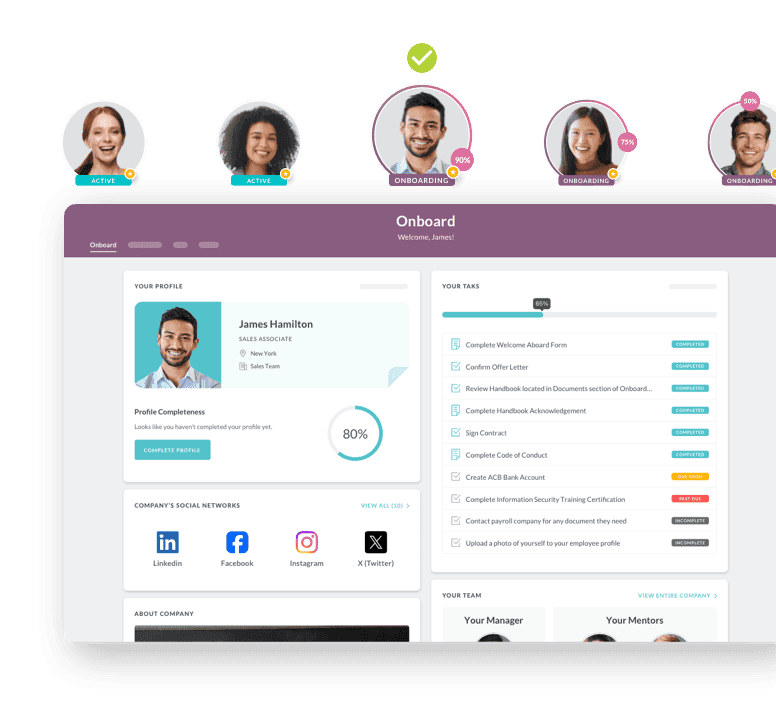
Train your HR team to explain pay stubs accurately. Employees who do not understand their pay stub are prone to believing errors exist when none do. A brief pay stub walkthrough during onboarding — covering gross pay, pre-tax deductions, tax withholding, and net pay — prevents a significant volume of payroll inquiry calls. HR Cloud's Onboard workflows can include this as a standard new hire education step.
Use gross income when benchmarking compensation. All salary surveys, compensation data sources, and market benchmarks report in gross terms. Using net income in benchmarking conversations creates apples-to-oranges comparisons, since employees have different deduction profiles. HR Cloud's performance management tools support documentation of compensation decisions grounded in gross market data.
Communicate the financial value of pre-tax benefits. Pre-tax health insurance premiums, 401k contributions, and FSA elections reduce taxable gross income — which reduces federal income tax withholding and potentially state taxes. Helping employees understand this benefit creates perceived value in your benefits package beyond the face dollar amount. Forbes has explored the direct tax savings associated with pre-tax benefits enrollment.
Address garnishments sensitively and accurately. Wage garnishments — for child support, student loans, tax levies — are post-tax deductions that reduce net pay but do not affect gross income or taxable wages (except tax levies, which have special rules). HR and payroll teams should handle garnishments confidentially and ensure they are processed in compliance with federal and state garnishment limits. HR Cloud's compliance tools support garnishment documentation and tracking.
Support employees in understanding the net impact of benefit elections. Open enrollment is a moment when many employees make financial decisions they do not fully understand. Providing a net pay calculator that shows the impact of different benefit election scenarios — at actual gross income levels — dramatically improves enrollment quality. Gallup research on financial wellness connects financial clarity to employee engagement and productivity.
Pitfalls to Avoid
Miscommunication about gross and net income creates employee relations issues that are time-consuming to resolve and entirely preventable with clear upfront communication.
- Quoting net pay in offer letters or job postings. Net pay varies significantly by employee based on their tax situation, benefit elections, and retirement contribution rate. Advertising net pay creates liability and confusion. Always quote gross compensation.
- Failing to update payroll when benefit deductions change. Mid-year benefit changes — adding a dependent to health insurance, changing a 401k contribution rate — affect the employee's net pay immediately. If payroll systems are not updated in sync with benefit system changes, employees receive incorrect paychecks. HR Cloud's HRIS integration helps keep benefit elections and payroll data in sync.
- Confusing gross income with taxable income. Gross income and taxable income are not the same thing. Pre-tax deductions reduce the amount of gross income that is subject to income tax withholding. An employee with $60,000 gross income who contributes $6,000 pre-tax to a 401k and pays $5,000 in pre-tax health insurance premiums has taxable income of $49,000 for withholding purposes.
- Ignoring the gross vs. net distinction in severance calculations. Severance agreements often state a gross payment amount. Employees who hear "$20,000 severance" and expect to receive $20,000 in their bank account will be disappointed and potentially litigious when they receive significantly less. State clearly in severance documentation that the amount quoted is gross and subject to applicable tax withholding.
- Using net income for FLSA and minimum wage compliance checks. Minimum wage requirements apply to gross wages, not net pay. An employee whose gross wages meet minimum wage requirements but whose net pay, after deductions, falls below minimum wage is not in violation — the compliance threshold is measured at gross. Confirm this with legal counsel if questions arise.
Industry Applications
Healthcare: Healthcare organizations administer complex benefit packages — health, dental, vision, life insurance, FSA, HSA, retirement plans, and voluntary benefits. The difference between gross and net pay for a healthcare worker with comprehensive benefits enrollment can be substantial. Clear benefits communication and pay stub education are especially important in this sector, where nursing and clinical staff often have limited time to engage with HR resources during the workday. HR Cloud's Workmates engagement platform supports ongoing employee communication that keeps benefits awareness high.
Manufacturing and Construction: Hourly workers in these industries often have variable gross income week-to-week depending on hours worked and overtime. The volatility between gross and net pay — particularly in weeks with significant overtime — can be confusing. Regular pay transparency communication and clear pay stub documentation help workers understand their total compensation and build financial planning discipline.
Technology and Professional Services: Employees in these industries frequently receive compensation through multiple channels — base salary, annual bonus, stock-based compensation, and benefits. Understanding what is gross income, what is taxable, and what will appear as net pay across these different compensation types requires proactive financial education. HBR's research on total compensation transparency consistently shows that employees who understand their full compensation are more satisfied and more likely to stay.
Implementation Plan
Audit your offer letter and job posting language for gross/net accuracy. Confirm that all compensation communication uses gross figures consistently and that language does not create unrealistic net pay expectations.
Build a pay stub walkthrough into your onboarding program. Create a short digital module or checklist item in HR Cloud's Onboard platform that walks new hires through their first pay stub — explaining each line, what it means, and why it matters.
Create a benefits enrollment net pay impact calculator. Develop a simple tool that allows employees to model different benefit elections and see the estimated net pay impact of each combination. This dramatically improves enrollment quality and financial understanding.
Train HR and payroll staff to explain gross vs. net accurately. Anyone who fields employee compensation questions — HR generalists, payroll specialists, benefits administrators — should be able to explain the gross-to-net reconciliation clearly, patiently, and without condescension.
Ensure payroll system integrations maintain gross/net data integrity. Verify that benefit election changes, garnishment entries, and tax withholding updates flow accurately between your benefits system, HRIS, and payroll processor. HR Cloud's HRIS platform supports these integrations with data integrity controls.
Include a gross vs. net explanation in your financial wellness program. If your organization offers financial wellness resources, ensure the fundamental distinction between gross and net income — and how employees can influence their net pay through pre-tax benefit elections — is covered in accessible, jargon-free terms.
Future Outlook and Trends
Pay transparency legislation increasingly requires employers to post salary ranges — always in gross terms. As these laws expand, the public-facing gross income figures for roles will become more visible and comparable. Employees who understand the relationship between gross pay and their take-home amount will be better equipped to evaluate offers and advocate for competitive compensation.
At the same time, the growing complexity of total compensation packages — base salary, variable pay, equity, and increasingly diverse benefits — makes the gross-to-net calculation more nuanced for many employees. According to SHRM's financial wellness research, employees who struggle to understand their own compensation are less engaged and less likely to appreciate the full value of their total rewards package.
HR Cloud's connected platform — spanning HRIS, onboarding, compliance, and employee engagement — supports the communication and data integrity that makes gross vs. net income clarity achievable at scale. Ready to improve how your employees understand and engage with their compensation? Explore HR Cloud today.

Discover how our HR solutions streamline onboarding, boost employee engagement, and simplify HR management
Book Your Free DemoKeep Reading


Ready to streamline your onboarding process?
Book a demo today and see how HR Cloud can help you create an exceptional experience for your new employees.
Book Your Free Demo