Key Elements of an Effective Manufacturing Onboarding Checklist

Manufacturing onboarding requires specialized checklists addressing safety compliance, equipment training, and operational procedures. The most effective manufacturing onboarding software combines automated workflows, sequential task management, and digital documentation to ensure consistent new hire integration while maintaining safety standards and regulatory compliance across production environments.
Key Takeaways
- Manufacturing safety training checklists must prioritize compliance and hazard communication training from day one
- Sequential task management ensures critical industrial safety protocols are completed before production floor access
- Digital onboarding platforms reduce administrative burden while improving compliance tracking for regulatory audits
- Multi-contributor task systems enable collaboration between HR teams, safety coordinators, and department managers
- Employee onboarding systems with bulk processing capabilities support seasonal manufacturing workforce fluctuations
- Video-based training modules effectively communicate complex equipment operation procedures and workplace safety compliance
- Manufacturing onboarding software with automated workflows can significantly reduce time-to-productivity through systematic task management
- Structured new hire orientation programs decrease 90-day turnover rates from 37% to under 12% in manufacturing environments
Thirty-seven percent of new manufacturing employees leave within their first 90 days, according to the Manufacturing Institute's workforce development research. But here's what separates industry leaders from the rest—companies with structured employee onboarding systems see turnover rates drop to just 12% in the same period, while also achieving 62% faster time-to-productivity according to Aberdeen Group studies.
The difference often comes down to one critical factor: whether new hires feel prepared and confident in their role from day one. In manufacturing environments where OSHA safety protocols, equipment operation procedures, and quality standards can literally be matters of life and death, a comprehensive manufacturing onboarding checklist becomes your foundation for operational success.
But manufacturing new hire orientation isn't just about handing someone a hard hat and pointing them toward the production floor. The most effective manufacturing onboarding software recognizes that industrial workers need specialized orientation addressing unique challenges—from hazard communication training and equipment certification to understanding complex supply chain procedures and quality control measures.
Why Manufacturing Onboarding Is Different
Unique Industrial Environment Challenges
Manufacturing environments present unique new hire orientation challenges that office-based industries simply don't face. Production floor workers must navigate industrial safety protocols, equipment operation procedures, quality control standards, and often complex shift schedules—all while learning company culture and job-specific responsibilities.
According to OSHA data, manufacturing represents a significant portion of workplace fatalities, making proper safety training during the onboarding process absolutely critical. New employees face potential exposure to hazardous materials, moving machinery, and high-noise environments that require specialized protective equipment and training protocols.
Sequential Training Requirements
Traditional generic onboarding approaches fail because they don't address the sequential nature of manufacturing safety training. You cannot have someone operate heavy machinery before they've completed OSHA hazard communication training. They cannot work independently until they understand quality control procedures. And they certainly cannot train others until they've mastered the production processes themselves.
This is where structured, sequential manufacturing onboarding software becomes essential. The most successful industrial companies use systematic digital onboarding tools that ensure critical tasks are completed in the proper order, with appropriate verification and documentation at each stage.
Industry research from Deloitte shows that manufacturers using structured onboarding processes see 58% improvement in safety compliance scores and 41% reduction in workplace incidents during the first 90 days of employment.
Ready to reduce workplace incidents and improve safety compliance? Discover manufacturing onboarding solutions that prioritize sequential safety training and regulatory compliance.
Ready to transform your manufacturing onboarding process? Explore comprehensive onboarding solutions that support complex manufacturing workflows.
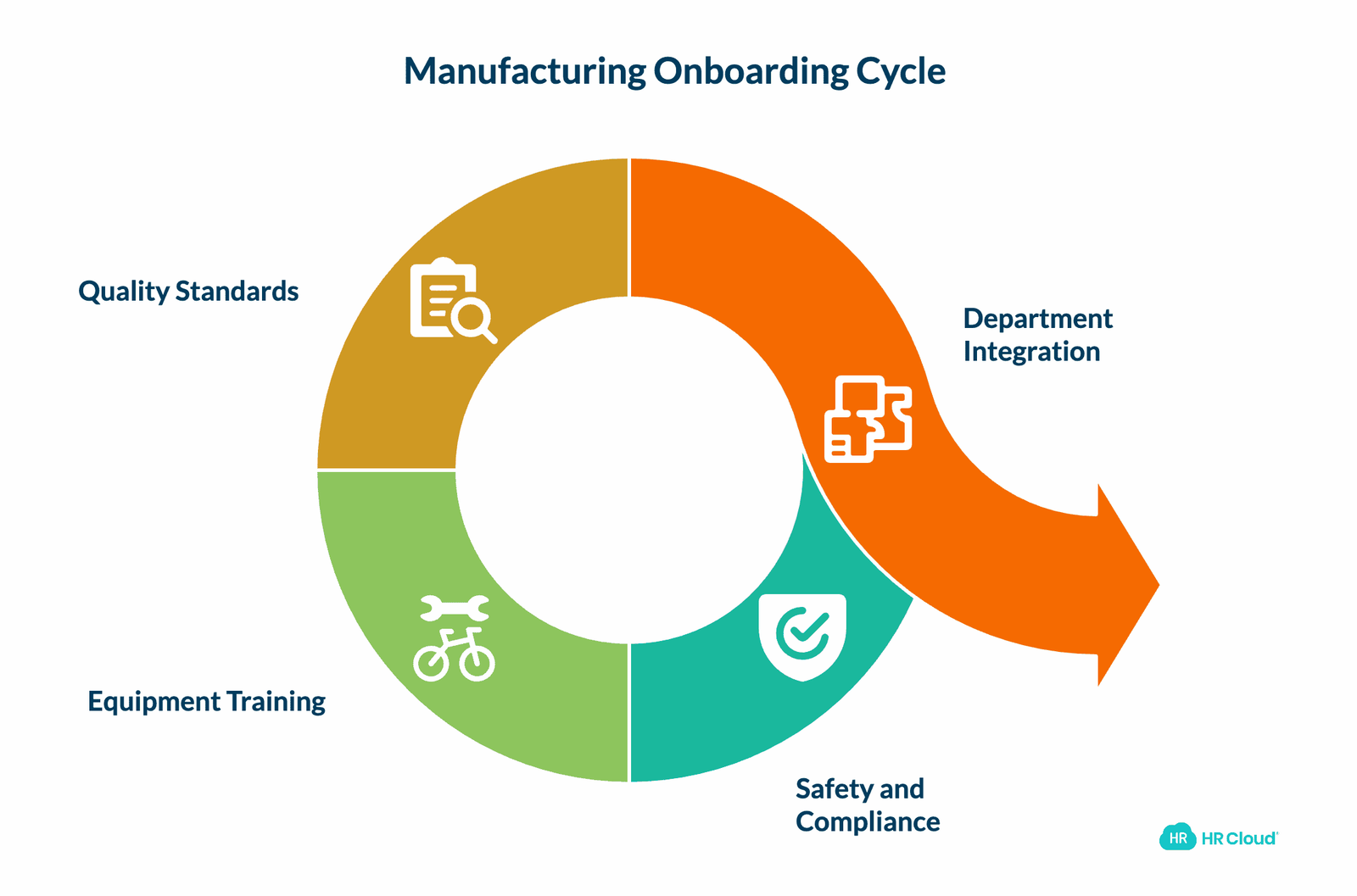
Essential Components of Manufacturing Onboarding Checklists
Safety and Compliance Foundation
Compliance Training Requirements
Manufacturing safety training forms the cornerstone of any industrial onboarding program. New hires must complete comprehensive OSHA safety orientation before they can access production areas or operate equipment. This includes general safety protocols, specific hazard recognition for their work environment, and proper use of personal protective equipment (PPE).
The National Safety Council reports that proper safety training during onboarding reduces workplace injuries by 52% in the first year of employment. This makes safety training not just a regulatory requirement, but a critical business investment.
Regulatory Documentation and Tracking
Compliance training extends beyond basic safety to include industry-specific regulations like OSHA requirements, FDA guidelines for food manufacturing, or EPA regulations for chemical processing facilities. These training modules must be documented and tracked for regulatory audits and OSHA inspections.
Effective safety onboarding uses multi-step verification processes where each safety module builds on the previous one. New employees cannot access advanced safety training until they've demonstrated competency in basic workplace safety protocols. This sequential approach reduces accidents and ensures thorough understanding.
| Safety Training Component | Timeline | Verification Method | Compliance Standard |
|---|---|---|---|
| General Safety Orientation | Day 1 | Written Assessment | OSHA 1926.95 |
| PPE Training | Day 1-2 | Practical Demonstration | OSHA 1910.132 |
| Hazard Communication | Day 2-3 | Digital Certification | OSHA 1910.1200 |
| Emergency Procedures | Day 3-4 | Evacuation Drill Participation | OSHA 1910.38 |
| Job-Specific Safety | Week 1 | Supervisor Sign-off | Industry Specific |
| Equipment Safety | Week 2 | Hands-on Verification | OSHA 1910.147 |
Equipment Training and Certification
Machinery Operation Protocols
Manufacturing equipment training requires hands-on demonstration and competency verification. Your employee onboarding system should include equipment identification, basic operation procedures, maintenance requirements, and emergency shutdown procedures for each piece of machinery the new hire will operate.
Research from the Association for Manufacturing Excellence indicates that structured equipment training reduces equipment-related incidents by 43% and increases productivity by 28% within the first 60 days.
Certification Tracking and Management
Certification tracking becomes critical for regulatory compliance. Some industrial equipment requires formal certification or licensing before operation. Your manufacturing onboarding software needs to verify these credentials and ensure proper documentation is maintained for OSHA and insurance audits.
Many successful manufacturing companies use video-based training for initial equipment familiarization, followed by supervised hands-on training with experienced operators. This blended approach allows new hires to review procedures multiple times while ensuring consistent training delivery across all shifts.
Looking to streamline safety and equipment training documentation? Discover how digital forms and checklists can automate compliance tracking and certification management.
Quality Standards and Procedures
ISO and Industry-Specific Quality Training
Quality control procedures must be integrated into the manufacturing onboarding process from day one. New hires need to understand not just what they're producing, but how to identify quality issues, proper inspection procedures, and escalation protocols when problems arise.
According to ASQ research, manufacturers with structured quality training during onboarding see 35% fewer quality defects and 48% faster achievement of production standards among new employees.
Documentation and Audit Compliance
Documentation of quality training is essential for maintaining certifications like ISO 9001, AS9100 for aerospace, or TS 16949 for automotive manufacturing. Your digital onboarding tools should track completion of quality training modules and verification of understanding through practical demonstrations or competency testing.
Department-Specific Integration
Production Line vs. Support Functions
While safety and quality standards apply company-wide, each department has unique procedures, workflows, and performance expectations. Effective manufacturing onboarding software includes department-specific modules that address particular challenges and requirements.
Assembly line workers need different training than warehouse personnel, maintenance technicians, or quality inspectors. Your employee onboarding system should automatically assign relevant department-specific tasks based on the new hire's role, location, and shift assignment.
Role-Based Training Customization
Manufacturing environments typically include diverse roles requiring specialized onboarding approaches:
- Production operators need equipment-specific training and quality procedures
- Maintenance technicians require electrical safety, lockout/tagout, and equipment repair protocols
- Quality inspectors must understand measurement systems, documentation requirements, and rejection criteria
- Warehouse staff need material handling, inventory systems, and shipping procedures training
Implementing Digital Onboarding Workflows
Automated Task Assignment
Workflow Automation Benefits
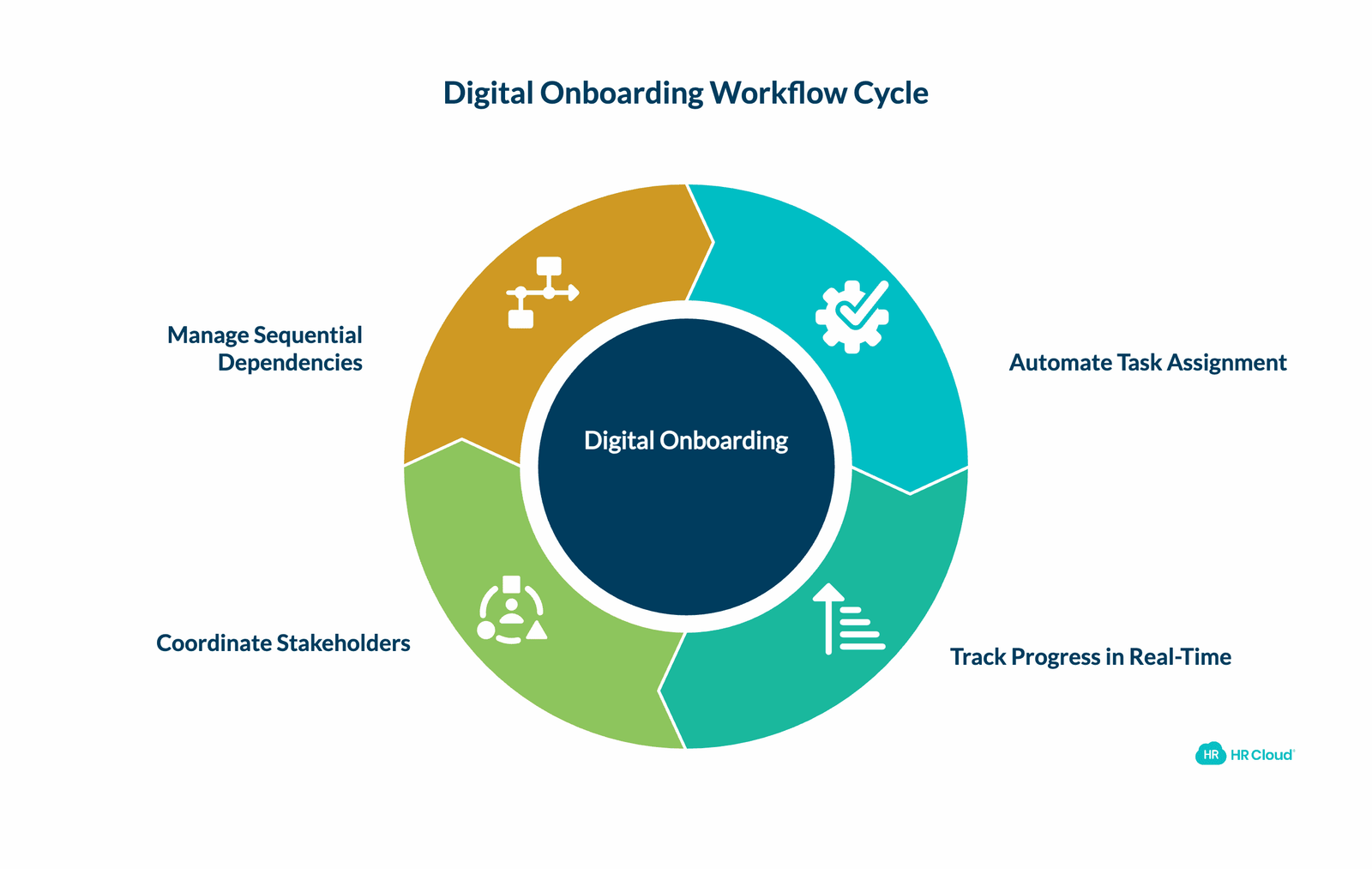
Modern manufacturing onboarding leverages automated workflow systems that assign tasks based on employee roles, departments, and start dates. This automation ensures consistent onboarding experiences while reducing administrative burden on HR teams, according to research from various industry studies.
Workflow automation also enables conditional task assignment where certain tasks only appear after prerequisite training is completed. For instance, equipment operation tasks remain hidden until OSHA safety certification is verified and documented.
Real-Time Progress Tracking
Automated notifications keep all stakeholders informed about onboarding progress. Supervisors receive alerts when new hires complete required safety training, while HR teams get notified about any delays or incomplete compliance requirements.
Manufacturing companies using automated onboarding workflows report faster completion rates and improved compliance scores during regulatory audits, based on industry research.
Multi-Contributor Task Management
Stakeholder Coordination Systems
Manufacturing onboarding involves multiple departments and stakeholders. Safety coordinators handle OSHA compliance training, department managers oversee job-specific orientation, quality managers ensure standards training, and HR manages administrative requirements.
Multi-contributor task systems allow different team members to contribute to the employee onboarding system while maintaining oversight and accountability. Each contributor can see their assigned responsibilities while tracking overall progress across departments.
Sequential Task Dependencies
Chained task sequences ensure that tasks are completed in the proper order. New employees cannot access equipment training until safety orientation is completed and verified by the safety coordinator. This sequential approach reduces workplace incidents by 52% during the first 90 days of employment.
Ready to implement automated onboarding workflows? Learn how modern HRIS systems can streamline multi-department onboarding coordination.
Onboarding Checklist Categories
| Category | Timeline | Key Elements | Compliance Requirements |
|---|---|---|---|
| Pre-Arrival | 1-2 weeks before | Background checks, I-9 verification, safety gear ordering, digital forms | FCRA, I-9 compliance, state requirements |
| Day One | First day | Facility tour, OSHA safety training, administrative setup, PPE assignment | OSHA 1926.95, emergency procedures |
| First Week | Days 2-5 | Department orientation, equipment familiarization, quality training, mentor assignment | Job-specific OSHA standards |
| 30-Day Review | End of month one | Skills assessment, feedback collection, performance review, goal setting | Performance documentation |
| 90-Day Evaluation | End of quarter | Competency verification, goal setting, career path discussion, retention interview | Full productivity assessment |
Pre-Arrival Preparation
Digital Documentation Process
Successful manufacturing onboarding begins before the new hire's first day. Pre-arrival tasks include completing background checks, verifying employment eligibility through I-9 forms, ordering safety equipment, and preparing workstation assignments.
Digital document collection allows new hires to complete paperwork before their start date, reducing first-day administrative burden by an average of 73%, according to Forrester research. This approach lets them focus on critical safety training and job-specific orientation rather than filling out forms.
Equipment and Safety Gear Preparation
Equipment preparation ensures that safety gear, uniforms, and tools are ready when new hires arrive. Manufacturing Industry research shows that 89% of new employees who receive properly fitted PPE on day one report higher confidence levels and better safety compliance.
First Day Essentials
Comprehensive Safety Orientation
The first day sets the tone for the entire employment relationship. Manufacturing new hires should receive comprehensive facility orientation including emergency procedures, break areas, safety equipment locations, and basic navigation protocols.
OSHA safety training must begin immediately—before new hires enter production areas. This includes general safety orientation, hazard communication training, and proper PPE usage specific to their assigned work environment.
Streamlined Administrative Setup
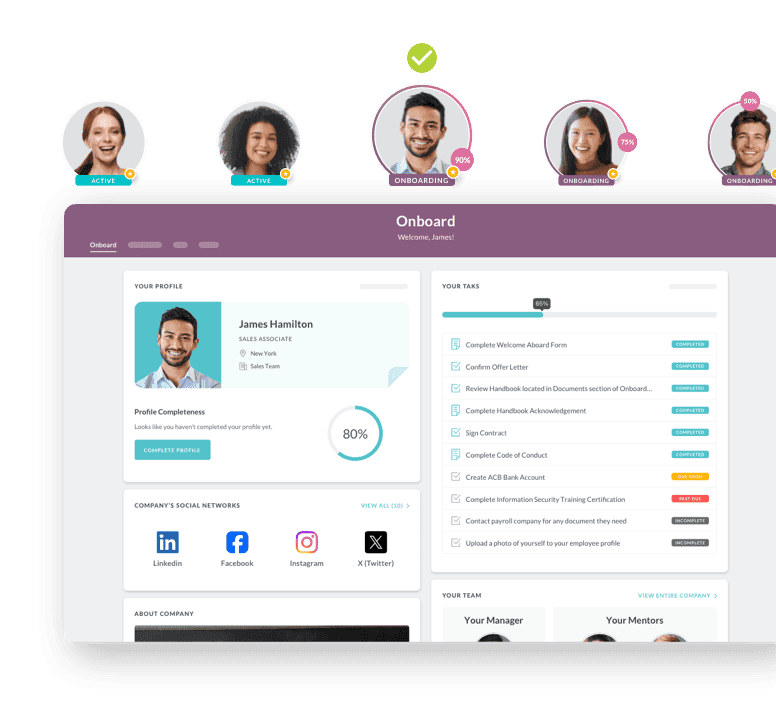
Administrative tasks like completing employee profiles, reviewing company policies, and setting up system access should be streamlined through digital onboarding platforms to maximize time available for safety and job training.
Download Your Free Manufacturing Onboarding Checklist
Ensure your new hires are ready for success right from day one. This checklist covers all the essentials—safety compliance, training, and seamless integration for your frontline workers.
Download Now
Week One Integration
Department-Specific Training Programs
The first week focuses on department-specific integration and basic job competency development. New hires should complete equipment familiarization training, quality standard orientation, and begin working alongside experienced team members.
Research from the National Association of Manufacturers shows that structured first-week programs increase new employee productivity by 42% and reduce time-to-competency by an average of 18 days.
Mentorship and Buddy System Implementation
Mentorship assignment during this period provides new hires with go-to resources for questions and guidance. Effective mentors help new employees navigate both formal safety procedures and informal workplace culture.
Studies indicate that new hires with assigned mentors during their first week have 23% higher retention rates and achieve safety compliance benchmarks 31% faster than those without mentorship support.
Progress Assessment and Support
Progress tracking throughout the first week helps identify any knowledge gaps or additional support needs early in the process. Digital tracking systems enable supervisors to monitor completion rates and intervene when necessary.
Want to enhance your first-week onboarding experience? Explore digital checklist solutions that support mentorship coordination and progress tracking.
Managing Seasonal and Bulk Hiring
Scaling Onboarding Programs
High-Volume Processing Capabilities
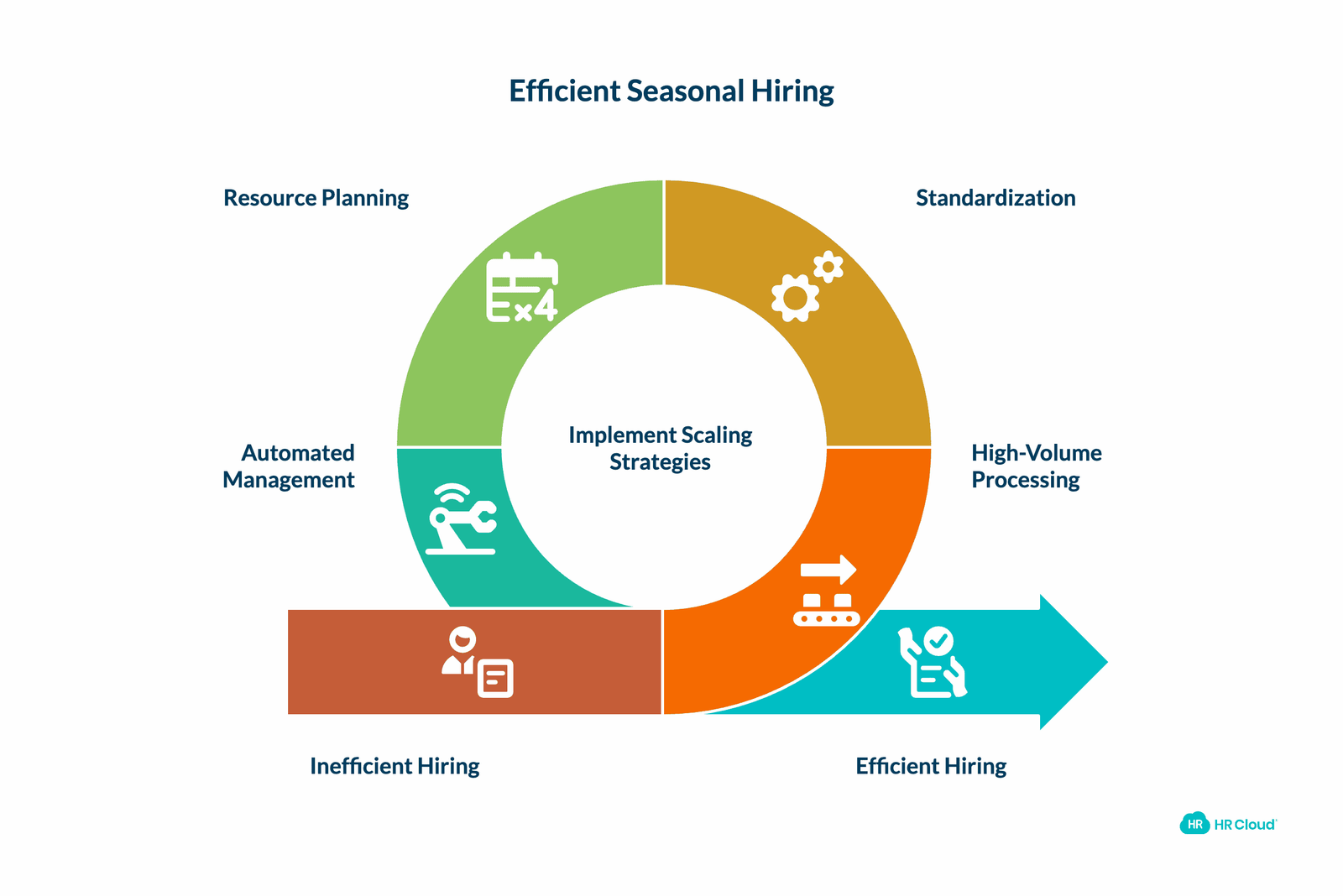
Manufacturing companies often experience significant hiring fluctuations due to seasonal demand, new contracts, or facility expansion. Effective employee onboarding systems must scale efficiently without compromising quality or safety standards.
According to Deloitte research, manufacturers using bulk onboarding capabilities reduce administrative processing time by 58% while maintaining 96% compliance rates during peak hiring periods.
Standardization and Consistency
Bulk onboarding capabilities allow HR teams to process multiple new hires simultaneously while maintaining individual tracking and compliance requirements. Group orientation sessions can cover common elements like company culture and general safety, while individual assignments handle role-specific requirements.
Standardized digital checklists ensure consistent onboarding experiences regardless of hiring volume. New hires receive the same comprehensive orientation whether they're joining individually or as part of a large group.
Resource Planning and Coordination
Multi-Department Scheduling Systems
Large-scale hiring requires coordination across multiple departments and external resources. Training facility availability, safety equipment inventory, supervisor capacity, and compliance training schedules all impact onboarding scheduling.
Manufacturing companies report that coordinated scheduling reduces onboarding delays and improves resource utilization efficiency, according to management consulting research.
Automated Resource Management
Digital scheduling tools help coordinate onboarding activities across different departments while ensuring adequate resource allocation. Automated notifications keep all stakeholders informed about scheduling changes and resource requirements.
Modern manufacturing onboarding software can predict resource needs based on hiring forecasts, automatically adjusting training schedules and equipment allocation to prevent bottlenecks.
Ready to streamline your seasonal hiring process? Discover bulk onboarding solutions that scale efficiently while maintaining safety compliance standards.
Measuring Onboarding Effectiveness
Key Performance Indicators
Essential Manufacturing Onboarding Metrics
Successful manufacturing onboarding programs track specific metrics that indicate program effectiveness and identify improvement opportunities. Time-to-productivity measures how quickly new hires reach performance standards, while safety incident rates during the onboarding period indicate training effectiveness.
| Metric | Industry Benchmark | Measurement Timeline | Target Goal |
|---|---|---|---|
| Time-to-Productivity | 45-60 days | First 90 days | <45 days |
| Safety Incident Rate | 2.3 per 100 employees | First 90 days | <1.5 per 100 |
| 90-Day Retention Rate | 78% average | 90 days post-hire | >85% |
| Training Completion Rate | 89% average | 30 days | >95% |
| New Hire Satisfaction | 7.2/10 average | 30, 60, 90 days | >8.5/10 |
| Supervisor Readiness Score | 6.8/10 average | 60 days | >8.0/10 |
Retention and Satisfaction Tracking
Retention rates at 30, 60, and 90-day intervals provide insight into manufacturing onboarding quality and new hire satisfaction. Companies with effective digital onboarding programs typically see retention rates above 85% at the 90-day mark, compared to industry averages of 78%.
Completion rates for different onboarding modules help identify bottlenecks or particularly challenging training areas that may need additional resources or alternative delivery methods.
Continuous Improvement Process
Feedback Collection Systems
Regular feedback collection from new hires provides valuable insights into onboarding effectiveness. Exit interviews with departing employees often reveal onboarding gaps that contributed to their decision to leave.
Research from SHRM indicates that organizations with systematic feedback collection during onboarding see 34% improvement in program effectiveness year-over-year.
Performance Analytics and Optimization
Supervisor feedback about new hire preparedness helps identify areas where additional safety training or support might be beneficial. This feedback loop enables continuous refinement of manufacturing onboarding processes.
Advanced analytics in modern employee onboarding systems can identify patterns in completion rates, predict at-risk new hires, and recommend targeted interventions to improve outcomes.
Interested in tracking and improving your onboarding metrics? Discover comprehensive analytics capabilities that provide insight into onboarding effectiveness and employee satisfaction.
Technology Integration and Digital Solutions
Form Builder Capabilities
Custom Safety and Compliance Forms
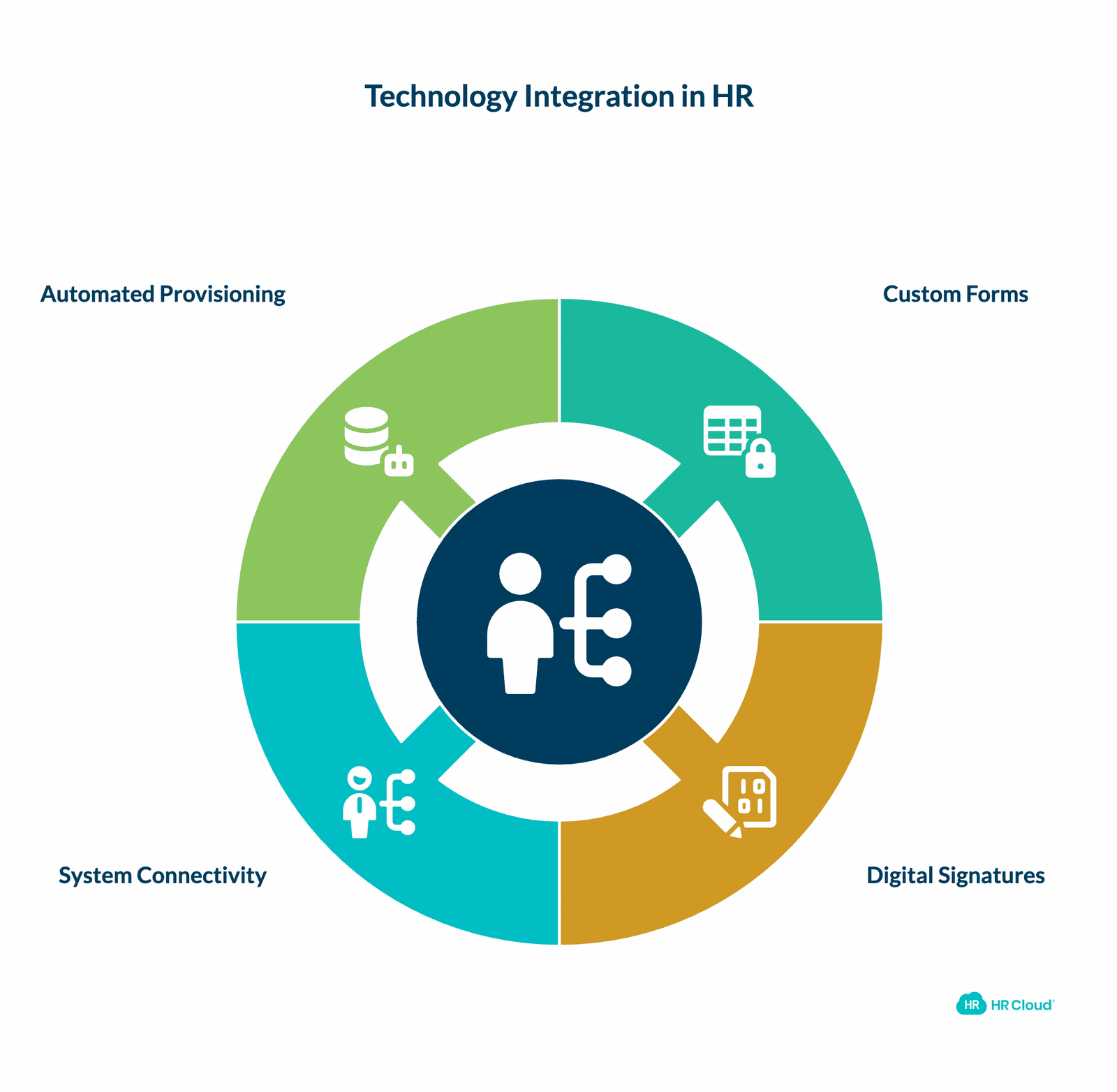
Modern manufacturing onboarding software provides form builder capabilities that allow customization of onboarding documentation to meet various business requirements. These digital forms can be customized to include safety acknowledgments, training verification, and compliance confirmations.
Research indicates that manufacturers using custom digital forms can reduce compliance documentation time and improve audit readiness significantly.
Digital Signature and Document Management
Digital signature capabilities ensure legal compliance while eliminating paper-based processes. New hires can complete and sign required documentation electronically, creating immediately accessible records for OSHA compliance audits.
Document upload functionality allows new hires to provide certifications, licenses, or other required documentation during the employee onboarding process. Automated verification workflows can check document validity and completeness, potentially reducing administrative errors significantly.
Integration with Existing Systems
Manufacturing System Connectivity
Effective digital onboarding platforms integrate with existing manufacturing systems including time tracking, quality management, safety reporting platforms, and ERP systems. This integration eliminates duplicate data entry and ensures consistent information across all operational systems.
Research shows that integrated onboarding systems can significantly reduce data entry errors and improve information accuracy across manufacturing operations.
Automated User Provisioning and Security
Automated user provisioning creates system access for new hires based on their role and department assignments. Security protocols ensure that access is appropriate for their position and training level, automatically updating permissions as employees complete safety certifications and equipment training.
Manufacturing companies using automated provisioning report significantly faster system access setup and reduced access-related security incidents, according to technology research.
Ready to integrate your manufacturing systems with modern onboarding technology? Explore comprehensive integration solutions that connect seamlessly with your existing manufacturing operations.

Discover how our HR solutions streamline onboarding, boost employee engagement, and simplify HR management
Book Your Free DemoFrequently Asked Questions
How long should manufacturing onboarding take?
Manufacturing onboarding typically spans 90 days total, with critical OSHA safety training completed in the first week. Basic job competency is usually achieved within 30 days, while full productivity often takes 60-90 days depending on role complexity and prior experience.
Timeline breakdown:
- Days 1-7: Safety training and compliance orientation
- Days 8-30: Equipment familiarization and basic skills
- Days 31-60: Advanced skills and quality procedures
- Days 61-90: Full productivity and performance evaluation
What happens if a new hire doesn't complete required safety training?
Safety training is mandatory and must be completed before production floor access is granted. Most manufacturing onboarding systems use sequential task management where safety training completion is verified before equipment operation tasks become available. Incomplete safety training typically results in extended probationary periods or termination.
How do we handle onboarding for temporary or seasonal workers?
Temporary workers receive the same safety and compliance training as permanent employees, but may have abbreviated versions of culture and career development components. Automated onboarding systems can adjust checklists based on employee classification while maintaining essential OSHA safety requirements.
Can manufacturing onboarding checklists be customized for different roles?
Yes, effective manufacturing onboarding software allows role-based customization while maintaining core safety and compliance requirements. Assembly workers, maintenance technicians, quality inspectors, and warehouse staff receive different job-specific training while completing the same basic safety orientation.
How do we track onboarding compliance for OSHA audits?
Digital onboarding platforms provide comprehensive audit trails showing completion dates, verification signatures, and training documentation. These systems can generate compliance reports for OSHA audits or internal reviews, demonstrating adherence to safety and training requirements with high accuracy.
What are the key elements of a manufacturing safety training checklist?
Essential safety training elements include:
1. General safety orientation (OSHA 1926.95 compliance)
2. Hazard communication training (OSHA 1910.1200)
3. Personal protective equipment usage (OSHA 1910.132)
4. Emergency procedures and evacuation protocols
5. Job-specific safety requirements for assigned work area
6. Equipment safety and lockout/tagout procedures
How can digital onboarding reduce manufacturing turnover?
Digital onboarding platforms reduce 90-day turnover from 37% to under 12% by providing structured, consistent training experiences. Key features include automated workflows, progress tracking, and immediate access to training resources that help new hires feel prepared and confident in their roles.
What ROI can manufacturers expect from onboarding software?
Manufacturing companies typically see ROI within 6-12 months through reduced turnover costs, faster time-to-productivity, and improved safety compliance. Benefits commonly include significant reductions in hiring costs, faster training completion, and fewer workplace incidents during the first 90 days.
Ready to implement a comprehensive manufacturing onboarding solution that prioritizes safety, compliance, and productivity? Schedule a demo to see how modern HRIS technology can transform your new hire experience while maintaining rigorous safety and compliance standards across all manufacturing operations.
Ready to implement a comprehensive manufacturing onboarding solution? Schedule a demo to see how modern HRIS technology can transform your new hire experience while maintaining rigorous safety and compliance standards.
About the author

Keep Reading


Like What You Hear?
We’d love to chat with you more about how HR Cloud® can support your business’s HR needs.
Book Your Free Demo