Key Elements of an Effective Manufacturing Onboarding Checklist: Complete Guide for HR Leaders

This blog breaks down the key elements of an effective manufacturing onboarding checklist so HR leaders can ensure every new hire starts confidently, safely, and productively. It highlights must-have items like pre-boarding tasks, safety training, role-specific skills, compliance steps, equipment assignments, and early check-ins to eliminate ambiguity and reduce turnover. The post also shows how to sequence tasks logically and use digital tools to automate reminders and tracking. The biggest value: a practical, ready-to-apply framework that helps manufacturing teams standardize onboarding, accelerate readiness, and improve employee retention.
"Safety first isn't just a slogan—it's a survival strategy."
That phrase echoes through every well-run manufacturing facility for good reason. When Maria stepped onto the factory floor for her first day at Precision Manufacturing, she wasn't just starting a new job. She was entering an environment where one missed safety protocol could mean the difference between going home to her family or ending up in the emergency room.
Manufacturing onboarding programs differ fundamentally from standard employee orientation processes. Unlike office environments, industrial workplaces demand specialized staff training protocols, comprehensive safety education, and structured skill development programs that address the unique challenges of production environments.
TL;DR: Manufacturing employee onboarding requires specialized checklist templates covering safety protocols, equipment training certification, regulatory compliance documentation, and cultural integration processes. Effective worker orientation programs reduce workplace incidents by 50% and improve new hire retention rates significantly. Essential components include pre-arrival preparation systems, safety-focused employee orientation, hands-on equipment training modules, mentor assignment programs, and structured progress tracking systems.
Why Manufacturing Employee Onboarding Demands Specialized Solutions
Manufacturing environments create unique onboarding challenges that standard office protocols simply can't address. Unlike desk jobs where mistakes mean revised spreadsheets, manufacturing errors can result in serious injuries, equipment damage, or product recalls.
The numbers tell the story: Bureau of Labor Statistics data shows private industry reported 2.5 million workplace injuries and illnesses in 2024, with manufacturing environments presenting unique safety challenges. Yet companies with structured manufacturing onboarding programs reduce workplace incidents by up to 50% while cutting turnover costs that average $15,000 per departed employee.
According to the National Safety Council, workplace injuries across all industries cost $176.5 billion annually in 2023. However, organizations implementing comprehensive new employee training programs see dramatic improvements in safety metrics, productivity benchmarks, and employee retention rates.
The difference lies in understanding that manufacturing onboarding software and employee orientation systems aren't about faster productivity—they're about building competent, safety-conscious employees who understand both the technical requirements and cultural expectations of industrial work environments.
Smart manufacturers invest in digital onboarding platforms, automated training management systems, and compliance tracking software to ensure consistent delivery of critical training components while maintaining detailed documentation for regulatory audits.
Manufacturing vs. Office Onboarding: Critical Differences
| Component | Manufacturing Onboarding | Office Onboarding | Impact Level |
|---|---|---|---|
| Safety Training | Mandatory, comprehensive, hands-on practice with PPE and emergency procedures | Basic workplace safety, ergonomics overview | Critical - Prevents injuries and regulatory violations |
| Equipment Training | Extensive certification process with supervised practice and competency testing | Software tutorials and system access setup | High - Equipment misuse causes costly damage and safety risks |
| Regulatory Compliance | Industry safety standards, regulatory requirements, documented training completion | General HR policies and IT security training | High - Inadequate documentation creates regulatory risk |
| Mentor Assignment | Experienced operator providing hands-on guidance and safety oversight | Buddy system for cultural integration and process questions | Medium - Critical for skill transfer and safety culture |
| Documentation Requirements | Detailed training records, certification tracking, regulatory audit trails | Basic HR forms and system access logs | High - Required for compliance and liability protection |
| Physical Environment | Facility tours focusing on hazards, emergency exits, and safety equipment locations | Office layout and amenities orientation | Critical - Environmental awareness prevents accidents |
This comparison reveals why standard onboarding programs fail in manufacturing environments. The higher stakes, regulatory requirements, and safety implications demand specialized approaches that address the unique risks and skill requirements of industrial work.
Pre-Arrival Foundation Setting for New Manufacturing Hires
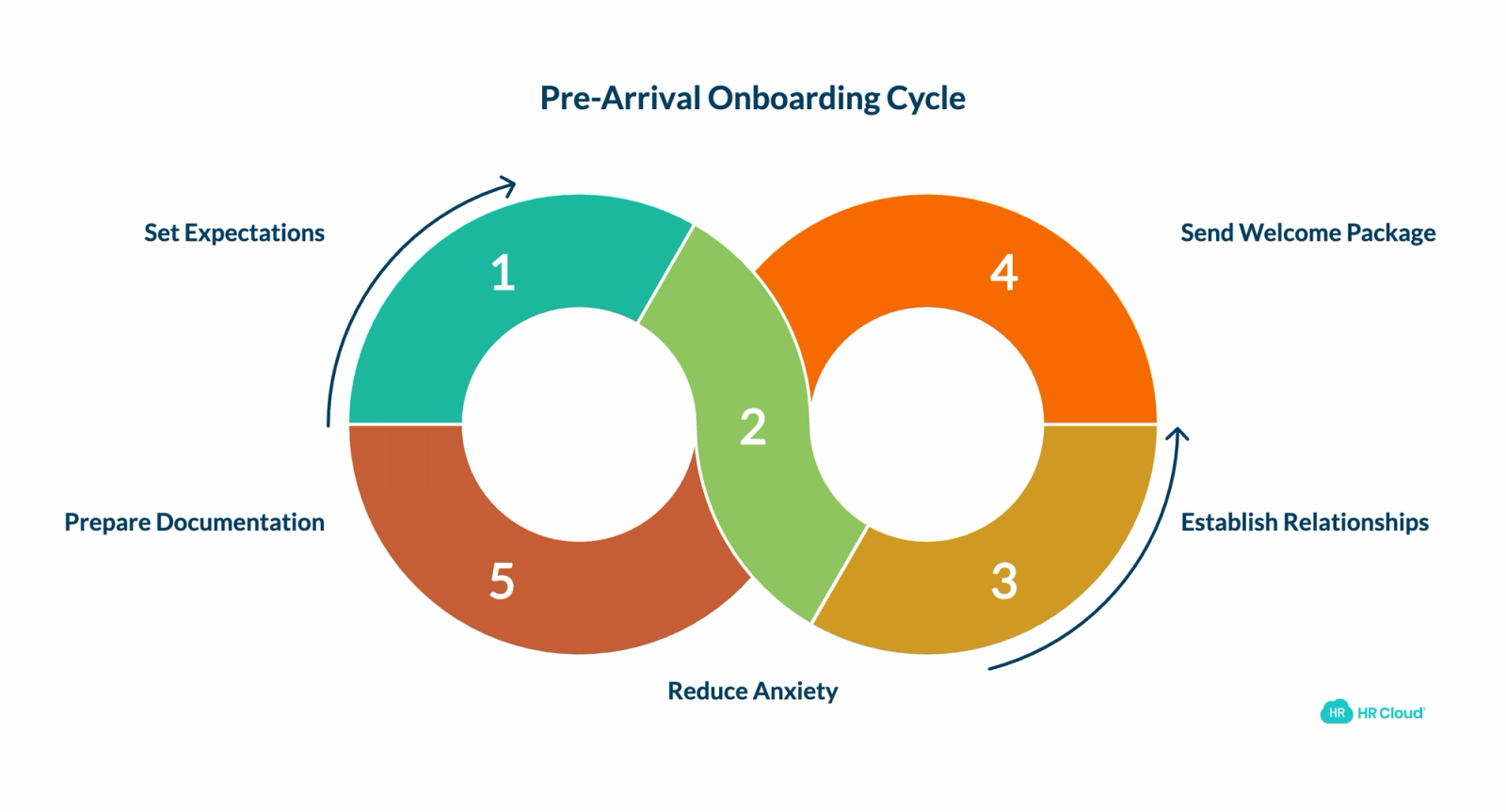
Before new employees ever step foot on the manufacturing floor, successful companies begin the employee onboarding journey through strategic pre-boarding processes. This pre-arrival phase sets expectations and reduces first-day anxiety while establishing professional relationships.
Digital Pre-Boarding Best Practices
Smart manufacturers send comprehensive welcome packages containing facility layouts, basic safety guidelines, and introductory videos showcasing the work environment. These materials help new employees visualize their upcoming experience and arrive better prepared mentally for the industrial work setting.
Modern employee onboarding software platforms make this process seamless through automated communication workflows. Digital onboarding systems allow companies to trigger automatic pre-arrival communications, ensuring every new hire receives consistent information regardless of their start date or department assignment.
Documentation Preparation Systems
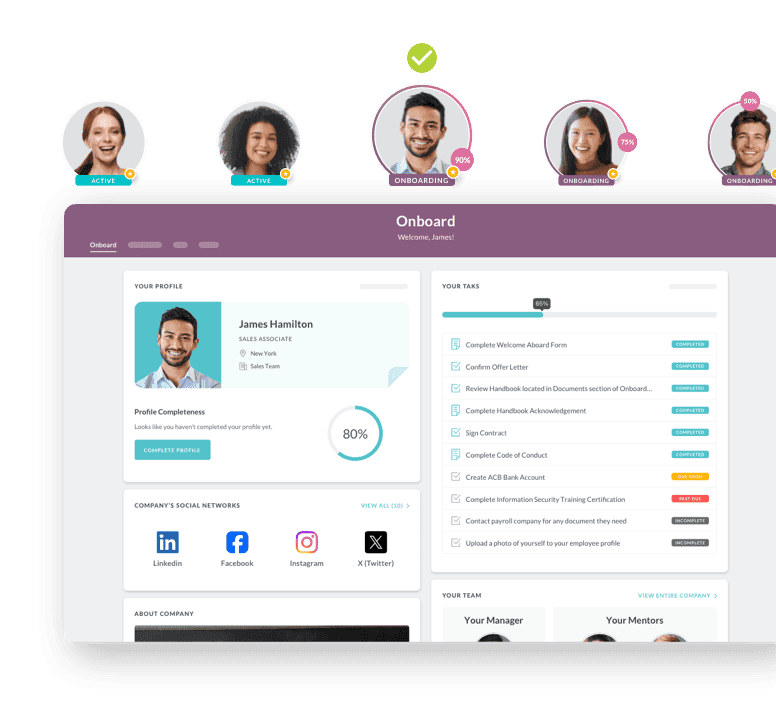
Administrative preparation also begins before arrival through electronic document management systems. I-9 verification forms, tax documents, emergency contact information, and other required paperwork can be completed through secure online portals, allowing Day One to focus on meaningful orientation activities rather than administrative tasks.
Companies investing in robust pre-arrival communication systems see new hires report higher confidence levels and better initial performance metrics. This preparation approach mirrors studying the playbook before joining the team—systematic preparation breeds measurable success.
Looking to streamline your manufacturing onboarding process? Request a demo to see how automated pre-boarding systems reduce administrative overhead while improving new hire experiences.
The Manufacturing Onboarding Framework: Four Critical Phases for Success
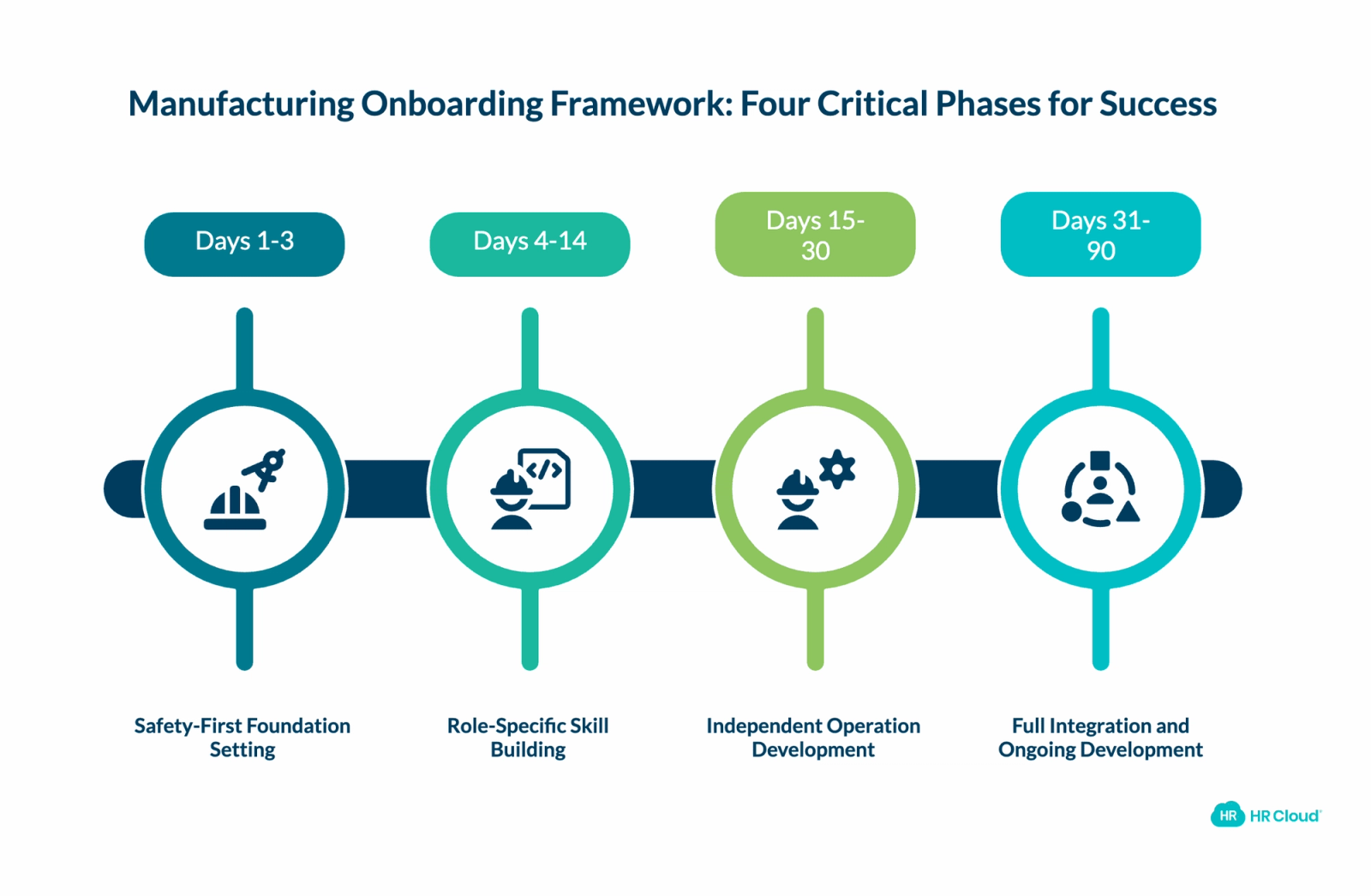
Effective manufacturing employee orientation follows a structured four-phase approach that addresses the industry's unique requirements while building employee confidence systematically. This proven framework helps organizations implement consistent training programs that reduce workplace accidents and improve productivity metrics.
Phase 1: Safety-First Foundation Setting (Days 1-3)
Safety Mindset Development begins before technical training through comprehensive safety orientation programs. New hires learn that manufacturing safety affects everyone—themselves, colleagues, families, and company operations. This psychological foundation creates genuine buy-in rather than compliance-driven behavior.
Facility Orientation Programs introduce new employees to their physical environment through guided tours that highlight potential hazards, emergency equipment locations, and safe movement patterns. Progressive companies use interactive training elements rather than passive presentations to ensure knowledge retention.
Basic Protocol Training covers fundamental procedures that apply across all manufacturing roles: personal protective equipment requirements, lockout/tagout basics, emergency response procedures, and incident reporting processes.
Phase 2: Role-Specific Skill Building (Days 4-14)
Equipment Training Programs move from theory to hands-on practice under expert supervision. Your organization can create training modules for each piece of machinery covering operation procedures, maintenance requirements, troubleshooting basics, and safety protocols.
Quality Standards Training teaches new hires their role in maintaining product quality and customer satisfaction. This includes inspection techniques, documentation requirements, and continuous improvement participation.
Mentor Assignment Programs pair new employees with experienced operators who provide practical guidance, share troubleshooting tips, and offer ongoing support during skill development.
Phase 3: Independent Operation Development (Days 15-30)
Supervised Practice Sessions allow new hires to operate equipment independently while maintaining oversight and immediate feedback. Gradually reduced supervision builds confidence while maintaining workplace safety standards.
Problem-Solving Skills Development teaches new employees how to identify issues, escalate problems appropriately, and contribute to continuous improvement efforts.
Team Integration Activities help new hires understand their role within broader production processes and build working relationships with colleagues across departments.
Phase 4: Full Integration and Ongoing Development (Days 31-90)
Performance Optimization Programs focus on efficiency improvements, quality enhancement, and advanced technique development based on individual strengths and interests.
Leadership Preparation Training introduces high-potential employees to cross-training opportunities, mentoring responsibilities, and career advancement pathways.
Continuous Learning Culture integration ensures new hires understand ongoing training expectations, improvement participation, and professional development opportunities.
Manufacturing Onboarding Framework Overview
| Phase | Timeline | Key Focus Areas | Critical Deliverables | Success Indicators |
|---|---|---|---|---|
| Foundation Setting | Days 1-3 | Safety mindset, facility orientation, basic protocols | PPE certification, emergency procedure knowledge, incident reporting training | 100% safety quiz completion, signed safety acknowledgments |
| Role-Specific Building | Days 4-14 | Equipment training, quality standards, mentor pairing | Equipment operation certification, quality inspection skills, mentor relationship establishment | Supervised operation competency, quality standard understanding |
| Independent Development | Days 15-30 | Supervised practice, problem-solving, team integration | Independent operation approval, troubleshooting skills, team collaboration | 80% productivity achievement, minimal supervision requirements |
| Full Integration | Days 31-90 | Performance optimization, leadership prep, continuous learning | Advanced technique mastery, improvement contributions, career planning | Full productivity, peer mentoring capability, retention commitment |
This structured approach ensures systematic progression while maintaining the flexibility to adapt timelines based on role complexity and individual learning speeds. The clear deliverables and success indicators provide objective benchmarks that supervisors can use to evaluate readiness for advancement to the next phase.
Essential Manufacturing Onboarding Checklist Components
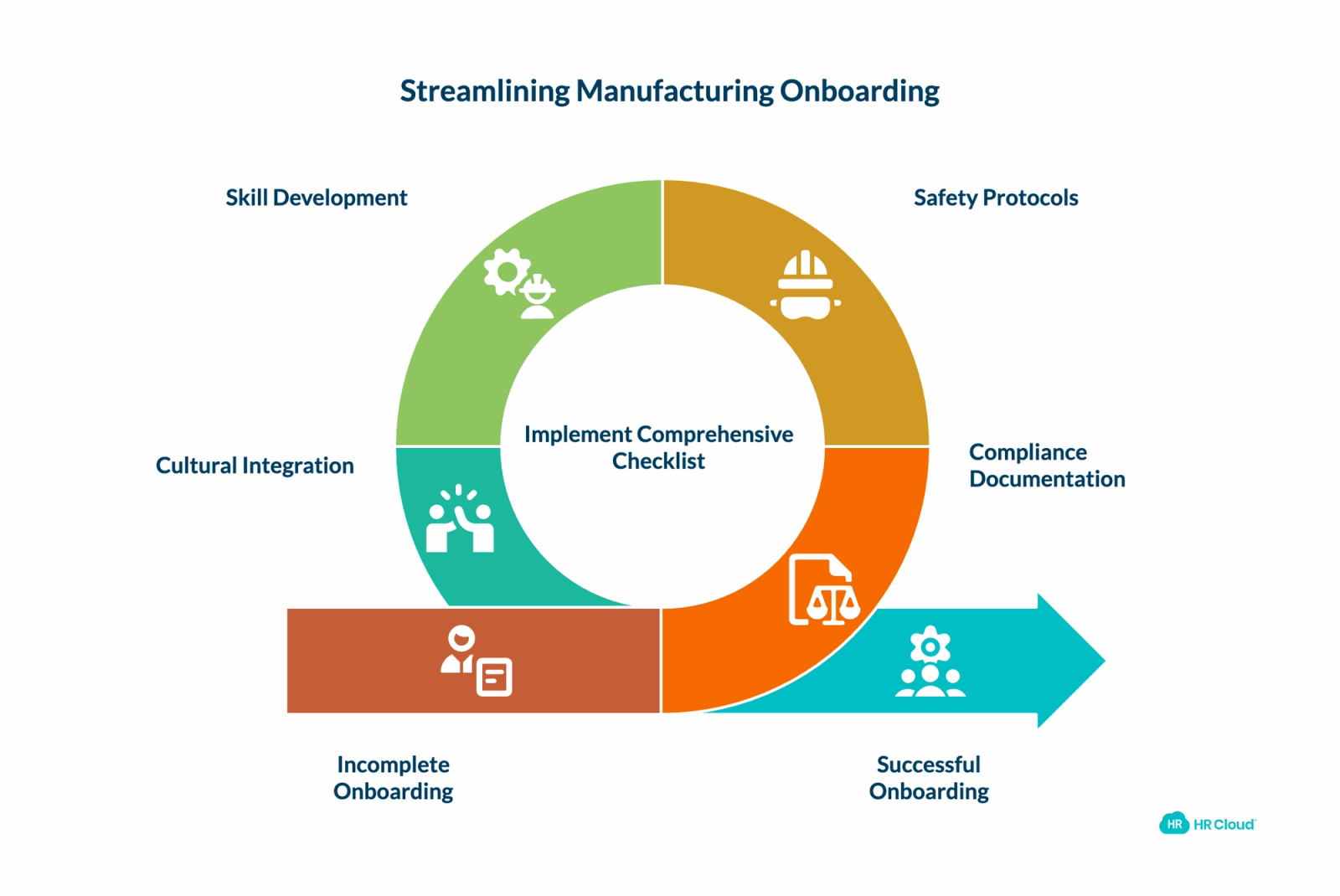
Successful manufacturing employee orientation programs require comprehensive checklists that address regulatory requirements, safety protocols, and skill development milestones. These components ensure consistent training delivery while maintaining compliance with industry standards.
Compliance Documentation and Training Requirements
Manufacturing onboarding checklists must address regulatory requirements that don't apply to office environments. Industry-specific regulations and quality management systems create complex compliance needs that require systematic tracking.
Mandatory Training Documentation includes hazard communication protocols, machine guarding procedures, electrical safety requirements, and industry-specific training modules. Each training session requires documented completion with digital signatures, timestamps, and competency verification to satisfy regulatory audits.
Quality Management System Integration covers ISO standards, continuous improvement processes, and quality control procedures. New hires learn their role in maintaining product standards and customer satisfaction through structured training modules.
Environmental Compliance Training addresses waste management procedures, emission controls, and environmental protection requirements relevant to the specific manufacturing environment and regulatory jurisdiction.
Cultural Integration and Team Development
Manufacturing success depends heavily on teamwork, communication protocols, and cultural alignment. Effective checklists include structured activities that help new hires understand company values and build meaningful working relationships.
Company Culture Integration uses real examples and success stories to demonstrate how organizational values translate into daily operations and decision-making processes throughout the manufacturing environment.
Communication Protocol Training addresses reporting structures, problem escalation procedures, and resource access methods when employees need assistance or encounter issues during production operations.
Continuous Improvement Participation teaches new hires about suggestion systems, improvement initiatives, and their role in operational enhancement and efficiency optimization.
Implementing these essential components requires systematic coordination and tracking. Request a demo to see how automated checklist management simplifies compliance while ensuring consistent training delivery.
Implementing Your Manufacturing Onboarding Framework
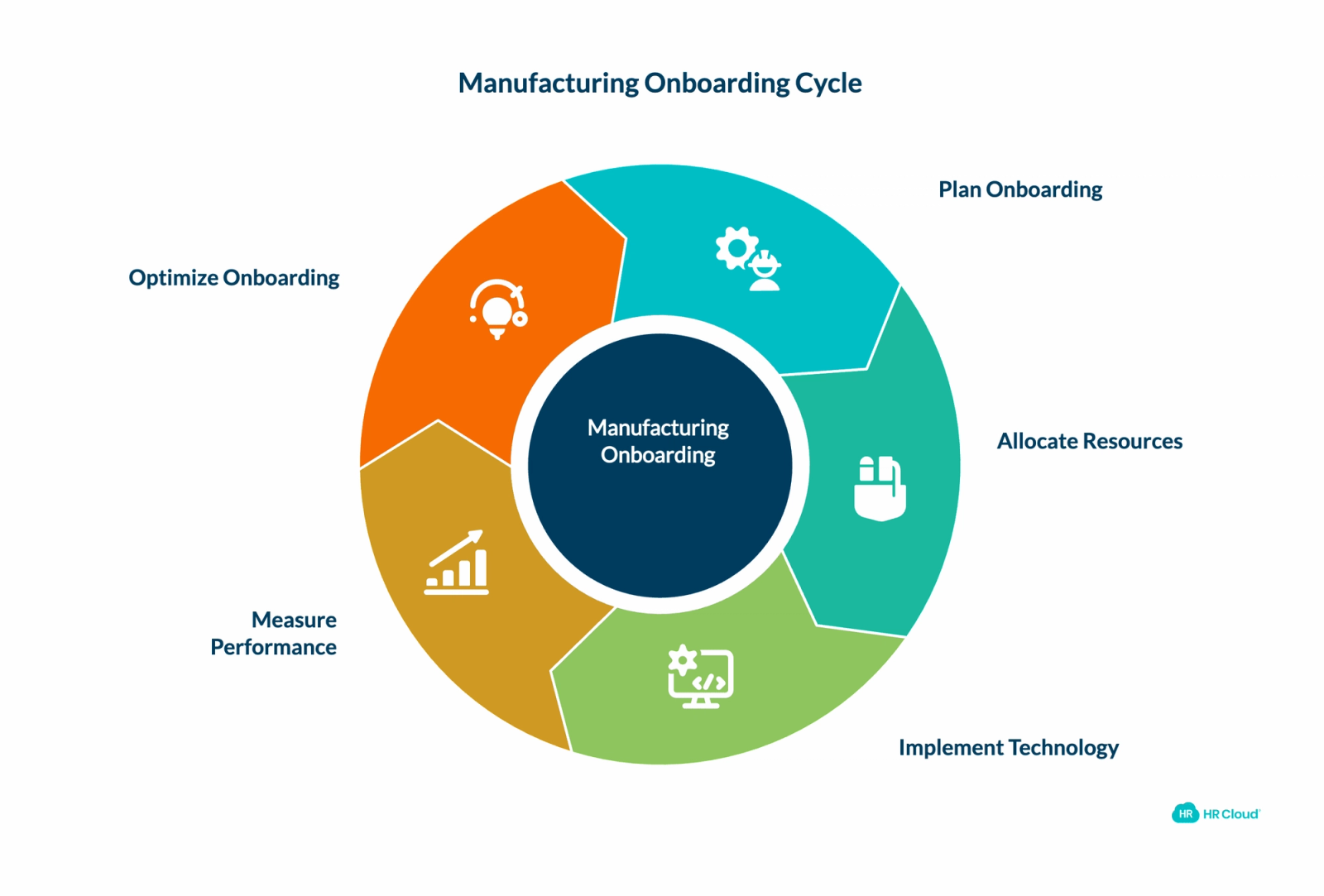
Creating an effective manufacturing onboarding program requires systematic implementation that addresses the unique challenges of industrial environments. Success depends on proper planning, resource allocation, and technology support.
Building Your Checklist System
Standardization Across Roles ensures consistent training quality while allowing for role-specific customization. Base checklists cover universal requirements like safety protocols and company culture, while specialized modules address department-specific needs.
Sequential Task Management prevents new hires from advancing to complex procedures before mastering prerequisites. Safety training must be completed before equipment access, while basic operation skills are required before advanced technique training.
Progress Tracking and Documentation provides real-time visibility into each new hire's development. Supervisors can identify struggling employees quickly while maintaining compliance records for regulatory requirements.
Technology Solutions for Manufacturing Onboarding
Modern manufacturing companies leverage digital platforms to automate routine tasks, ensure consistency, and provide real-time progress tracking.HR system integration, digital communication platforms, and automated checklist systems have become essential for effective onboarding management.
Successful technology implementation includes data collection tools that prepare employees to contribute to performance metrics and continuous improvement efforts. Understanding how to input data accurately and interpret basic reports empowers employees to contribute meaningfully to operational excellence.
Looking to implement advanced onboarding technology? Request a demo to see how integrated systems streamline training management while ensuring regulatory compliance.
Measuring and Optimizing Performance
Milestone-based progression provides clear benchmarks for both new hires and supervisors. Effective programs define specific competencies required at weekly intervals, with skills assessment checkpoints that verify competency before progression to advanced responsibilities.
Feedback collection from multiple sources provides comprehensive evaluation perspectives. Supervisors, mentors, and peers all contribute insights about new hire progress, helping identify strengths to leverage and weaknesses requiring additional attention.
How HR Cloud Enables Manufacturing Onboarding Success
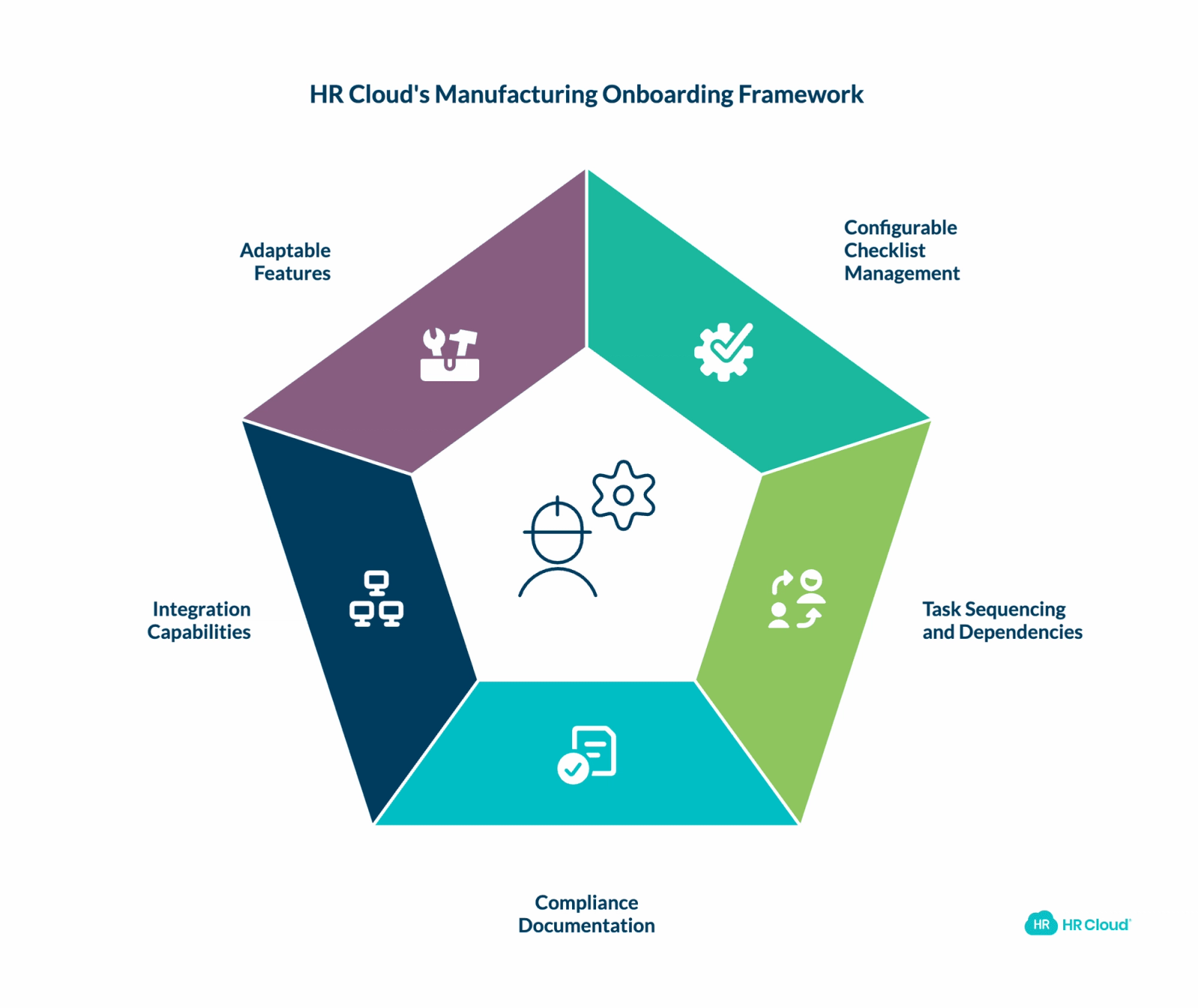
HR Cloud's flexible onboarding platform can be customized to address manufacturing requirements, enabling companies to implement the structured framework outlined above.
Configurable Checklist Management allows organizations to design training sequences based on employee roles, departments, and start dates.
Task Sequencing and Dependencies prevent new hires from advancing to advanced procedures before mastering prerequisites. Chained tasks ensure safety training completion before advancing to equipment training modules, while mandatory checklists block system access until critical requirements are satisfied.
Compliance Documentation automatically captures training completion, competency verification, and regulatory requirements. Digital signatures, timestamps, and detailed records support regulatory documentation requirements while eliminating manual paperwork burdens.
Integration Capabilities connect onboarding activities with broader HR processes including I-9 verification and employee data management through HR Cloud's People platform, eliminating redundant data entry while ensuring comprehensive new hire processing.
The platform's adaptable features support companies across all industrial sectors, from small machine shops to large assembly operations, with customizable checklists and scalable automation.
HR Cloud Manufacturing Onboarding Capabilities
| Manufacturing Challenge | Traditional Approach Limitations | HR Cloud Solution | Business Impact |
|---|---|---|---|
| Complex Safety Training Sequences | Manual tracking, paper forms, inconsistent delivery | Mandatory checklists that block system access until completion | 100% compliance with safety requirements |
| Training Milestone Management | Spreadsheets, paper certificates, manual verification | Chained tasks with completion tracking and digital documentation | Compliance documentation and audit trail management |
| Role-Specific Training Paths | One-size-fits-all programs, manual customization | Role-based checklist configuration for department-specific requirements | Relevant training for every position with streamlined administration |
| Regulatory Documentation | Manual record-keeping, filing cabinets, audit scrambles | Automated documentation with digital signatures and timestamps | Comprehensive audit documentation and compliance record-keeping |
| Progress Tracking Across Shifts | Handwritten logs, supervisor meetings, communication gaps | Real-time visibility dashboard accessible to all stakeholders | Immediate identification of training gaps and support needs |
| Mentor Coordination | Informal assignments, unclear expectations | Structured mentor assignment with notification and tracking | Consistent mentoring experience and accountability |
| Multi-Location Standardization | Inconsistent programs, local variations, compliance risks | Centralized checklist management with location-specific customization | Standardized excellence across all facilities |
Outcomes based on comprehensive onboarding programs implementing industry best practices. Results vary by implementation, organizational culture, and training quality. HR Cloud provides the infrastructure for tracking and documentation; customers are responsible for training content and program execution.
This comprehensive platform approach addresses the interconnected nature of manufacturing onboarding challenges. Rather than solving individual problems in isolation, HR Cloud provides an integrated system that ensures all components work together seamlessly while maintaining the flexibility needed for diverse manufacturing environments.
Ready to implement a structured manufacturing onboarding program? Request a demo to see how HR Cloud's platform supports manufacturing industry requirements.
Common Manufacturing Onboarding Mistakes to Avoid
Even well-intentioned programs fail when companies make these critical errors:
Rushing Safety Training: Pressure to get new employees productive quickly sometimes leads to abbreviated safety instruction. This approach creates serious risks for injuries, regulatory violations, and costly incidents.
Information Overload: Cramming too much information into short timeframes creates confusion rather than competency. Effective programs spread learning over appropriate timeframes.
Inadequate Mentor Support: Throwing new employees onto the floor with minimal support creates frustration and increases turnover risk. Successful mentoring requires proper training for mentors and sufficient time allocation.
Poor Documentation: Inconsistent record-keeping undermines regulatory compliance while making it challenging to evaluate program effectiveness or individual progress.
Manufacturing Onboarding: Common Mistakes vs. Best Practices
| Challenge Area | Common Mistake | Negative Consequences | Best Practice Approach | Expected Outcome |
|---|---|---|---|---|
| Safety Training | Rush through safety to get productivity faster | Increased injury rates, regulatory violations, liability exposure | Comprehensive safety-first approach with hands-on practice | 50% reduction in new hire incidents |
| Information Delivery | Cram everything into first few days | Information overload, poor retention, confusion | Phased learning with practice time between concepts | 95%+ training completion rates |
| Mentor Support | Assign mentors without training or time allocation | Inconsistent guidance, frustrated new hires, early turnover | Trained mentors with dedicated time and clear expectations | >90% new hire satisfaction scores |
| Documentation | Informal tracking or paper-based records | Compliance gaps, inability to identify patterns, audit failures | Digital tracking with real-time visibility and audit trails | 100% regulatory compliance |
| Skill Assessment | Assume competency without verification | Unsafe practices, quality issues, equipment damage | Structured competency testing before independent work | Measurable skill progression |
| Follow-up Support | End support after initial orientation | Emerging questions go unanswered, bad habits develop | Scheduled check-ins through 90-day period | Sustained performance improvement |
The stark contrast between common mistakes and best practices explains why some manufacturing companies achieve outstanding onboarding results while others struggle with high turnover and safety issues. The best practices column provides a roadmap for transformation, while the expected outcomes offer concrete targets for improvement efforts.
Industry-Specific Onboarding Considerations
Automotive Manufacturing demands extensive quality control training and lean manufacturing principles. Statistical process control and continuous improvement techniques become essential skills.
Food Processing requires HACCP training, sanitation procedures, and allergen management protocols. Temperature monitoring and contamination prevention require specialized attention.
Chemical Manufacturing emphasizes process safety management, hazardous material handling, and emergency response procedures. Understanding chemical interactions and proper storage techniques requires careful training.
Electronics Assembly focuses on electrostatic discharge prevention, precision handling techniques, and clean room protocols. Component sensitivity and microscopic inspection skills need careful development.
Each sector benefits from industry-specific checklist templates that address unique requirements while maintaining core safety and compliance elements.
Manufacturing Sector-Specific Onboarding Requirements
| Industry Sector | Primary Safety Focus | Key Compliance Areas | Specialized Training Requirements | Typical Timeline |
|---|---|---|---|---|
| Automotive | Ergonomics, machinery safety, chemical exposure | ISO/TS 16949, OSHA general industry | Statistical process control, lean manufacturing, quality systems | 60-90 days |
| Food Processing | Sanitation, allergen control, temperature management | FDA, HACCP, USDA regulations | Food safety protocols, contamination prevention, traceability | 45-60 days |
| Chemical | Hazardous materials, process safety, emergency response | EPA, OSHA PSM, DOT regulations | Chemical handling, emergency procedures, environmental compliance | 90-120 days |
| Electronics | ESD protection, clean room protocols, precision handling | IPC standards, RoHS compliance | Microscopic inspection, component sensitivity, quality control | 30-45 days |
| Aerospace | Quality control, security protocols, documentation | AS9100, ITAR, FAA regulations | Material traceability, configuration management, security clearance | 120+ days |
| Pharmaceuticals | GMP compliance, contamination control, validation | FDA cGMP, 21 CFR Part 11 | Batch records, validation protocols, change control | 90-120 days |
The timeline variations reflect the complexity of regulatory requirements and the critical nature of quality control in each sector. Aerospace and pharmaceutical manufacturing require the longest onboarding periods due to stringent regulatory oversight and the catastrophic consequences of errors. Electronics manufacturing can often achieve faster onboarding due to more standardized processes and clearer pass/fail quality metrics.
Measuring Manufacturing Onboarding Success
Key metrics help identify successful elements while highlighting areas needing enhancement:
Time-to-Productivity measures how quickly new hires achieve expected performance levels. Successful onboarding programs typically see new employees reach 80% productivity within 30-45 days.
Safety Incident Rates during probationary periods provide critical feedback about training effectiveness. Companies with robust onboarding programs see new hire incident rates match experienced employee performance, according to Bureau of Labor Statistics data.
Retention Rates within the first 90 days indicate program effectiveness. Strong employee onboarding programs achieve retention rates exceeding 90% during initial employment periods.
Training Completion Rates track how effectively new hires progress through required components. Well-designed programs achieve completion rates above 95%.
Manufacturing Onboarding Success Metrics Framework
| Metric Category | Key Performance Indicator | Target Benchmark | Measurement Frequency | Action Triggers |
|---|---|---|---|---|
| Safety Performance | Incident rate for new hires vs. experienced workers | Equal or better than veteran rate | Weekly during first 90 days | Any incident triggers immediate review |
| Productivity Ramp | Time to 80% productivity | 30-45 days for most roles | Daily tracking, weekly assessment | >60 days triggers intervention |
| Training Compliance | Completion rate for mandatory training | 100% within timeline | Real-time tracking | 95% completion triggers escalation |
| Knowledge Retention | Skills assessment scores | 85% or higher on all assessments | At phase completion milestones | <80% triggers additional training |
| Employee Retention | 90-day retention rate | >90% for probationary period | Monthly cohort tracking | <85% triggers program review |
| Mentor Effectiveness | New hire satisfaction with mentor support | 4.5/5.0 average rating | Post-phase surveys | <4.0 triggers mentor coaching |
| Program ROI | Cost per successful onboard vs. turnover costs | Positive ROI within 6 months | Quarterly analysis | Negative ROI triggers cost optimization |
This metrics framework provides both leading indicators (training completion, assessment scores) and lagging indicators (retention rates, productivity achievement) that help identify issues before they become costly problems. The real-time tracking capabilities of modern HR platforms make it possible to monitor these metrics continuously rather than waiting for quarterly reviews.
Key Takeaways for Manufacturing Onboarding Success
• Manufacturing employee onboarding requires specialized focus on safety training, regulatory compliance, and hands-on skill development that office environments don't demand
• Four-phase implementation frameworks provide structured progression from safety foundations through full workforce integration and productivity achievement
• Pre-arrival communication systems and systematic skill building programs significantly improve new hire confidence levels and initial performance metrics
• Digital onboarding platforms streamline administrative tasks while providing real-time visibility into employee progress and regulatory compliance status
• Industry-specific training considerations address unique regulatory and operational requirements across automotive, food processing, chemical, electronics, and aerospace manufacturing sectors
• Comprehensive measurement systems and continuous improvement processes maintain program effectiveness while adapting to changing business needs and regulatory requirements
• Automated checklist management and task sequencing prevent safety violations while ensuring consistent training delivery across all departments and locations
• Mentor assignment programs and structured feedback collection improve employee retention rates and accelerate time-to-productivity for new manufacturing workers
Ready to implement a comprehensive manufacturing onboarding program? Request a demo to discover how specialized onboarding software transforms new hire experiences while reducing compliance risks.

Discover how our HR solutions streamline onboarding, boost employee engagement, and simplify HR management
Book Your Free DemoFrequently Asked Questions About Manufacturing Onboarding
How long should manufacturing employee onboarding programs last?
Most effective manufacturing employee onboarding programs extend 60-90 days, with intensive safety training during the first 30 days and ongoing support through the probationary period. Complex manufacturing environments may require longer onboarding timelines depending on equipment complexity and regulatory requirements.
What safety topics must be covered during manufacturing onboarding?
Essential safety topics include hazard recognition training, personal protective equipment protocols, emergency response procedures, lockout/tagout procedures, machine guarding protocols, and facility-specific safety requirements. Industry-specific regulations and safety standards determine additional mandatory training requirements.
How can companies measure manufacturing onboarding effectiveness?
Key performance metrics include time-to-productivity measurements, safety incident rates during probationary periods, employee retention rates, training completion percentages, feedback scores, and regulatory compliance assessments. Regular evaluation identifies program strengths and improvement opportunities.
What technology tools support manufacturing onboarding processes?
Digital checklist platforms, learning management systems, mobile communication applications, and integrated HR systems streamline onboarding while providing progress tracking and compliance documentation capabilities. Modern onboarding software automates routine tasks and ensures consistent training delivery.
How should companies handle onboarding for temporary or seasonal manufacturing workers?
Temporary workers require the same comprehensive safety training as permanent employees but may receive abbreviated role-specific training. Streamlined programs focus on essential safety and compliance requirements while maintaining thorough preparation standards.
What role do mentors play in manufacturing onboarding success?
Mentors provide hands-on guidance, share practical experience, and offer ongoing support during new hire development. Effective mentoring programs require proper training for mentors, clear expectations, and sufficient time allocation for meaningful interaction and skill transfer.
How much does poor manufacturing onboarding cost companies?
Poor onboarding programs cost companies through increased turnover (averaging $15,000 per departed employee), workplace injuries, regulatory violations, and reduced productivity. Comprehensive onboarding programs typically generate positive ROI within six months through reduced costs and improved performance.
What makes manufacturing onboarding different from office onboarding?
Manufacturing onboarding requires extensive safety training, hands-on equipment certification, regulatory compliance documentation, and mentor-guided skill development that office environments don't demand. The consequences of inadequate training include serious injuries, equipment damage, and regulatory violations.
Manufacturing onboarding success depends on systematic approaches that prioritize safety while building competency gradually. Companies investing in comprehensive employee orientation programs create safer workplaces, more productive teams, and stronger organizational cultures that attract and retain top manufacturing talent.
Ready to transform your manufacturing onboarding program? Request a demo to see how specialized onboarding software addresses manufacturing industry requirements.
About the author

Keep Reading


Like What You Hear?
We’d love to chat with you more about how HR Cloud® can support your business’s HR needs.
Book Your Free Demo