Caregiver Retention and Onboarding: The Missing Link Between Day One and Long-Term Loyalty

This blog explains how caregiver retention and onboarding are deeply connected, and why strong early experiences set the foundation for long-term loyalty in home-care teams. It shows that traditional onboarding often ends too soon, missing opportunities to reinforce support, clarify expectations, and build connection. Key takeaways include extending onboarding with continuous training, structured feedback, recognition, and meaningful check-ins throughout the first 90 days. The biggest value: a clear framework that helps HR leaders turn day-one onboarding into lasting engagement, reduce turnover, and strengthen caregiver commitment over time.
Caregiver turnover in home-based care sits at 75% — and over half of those departures happen within the first 90 days. Most agencies treat onboarding as paperwork. The ones treating it as a relationship-building investment are the ones holding onto their staff. This guide breaks down why that gap exists, what the research says, and what agencies can do about it starting today.
Key Takeaways
- Caregiver turnover dropped to 75% in 2024, the lowest since 2021 — but still the highest rate of any major U.S. industry
- 57% of caregiver turnover happens within the first 90 days of employment
- Replacing one caregiver costs an estimated $2,600 — and for a 100-person agency, annual replacement costs routinely exceed $130,000
- Agencies offering 8+ hours of orientation training had $370,000 higher median revenue than those offering three hours or fewer
- Structured onboarding, peer mentorship, recognition, and clear career pathways are the four interventions with the strongest documented retention impact
- Over 70% of home care workers are deskless — mobile-first HR infrastructure is no longer optional
The Turnover Crisis No One Wants to Own
Picture this: a home care director spends three weeks recruiting, screening, and onboarding a home health aide. Orientation goes fine. The aide meets their first client. By week seven — they're gone.
It happens constantly. According to the 2025 Activated Insights Benchmarking Report, the median caregiver turnover rate in home-based care was 75% in 2024. That's actually the lowest it's been since 2021. But context matters: 75% annual turnover is roughly four times the national average across all U.S. industries. This isn't a retention challenge — it's a structural workforce crisis that compounds every quarter.
Industry research is equally pointed about timing: 57% of that turnover happens within the first 90 days. That's not tenure burnout. That's onboarding failure.
The financial math is brutal. Replacing one caregiver costs approximately $2,600 — factoring in posting, screening, background checks, and training time. For an agency with 100 caregivers at the industry-average turnover rate, that's over $130,000 in quiet annual losses, absorbed into general operating expenses. And that figure doesn't capture lost client relationships, continuity-of-care disruptions, or the cascade effect on remaining staff morale.
Most agency leaders assume wages are the primary lever. Wages matter — research from the same benchmarking study found that providers paying above the 75th percentile saw 35.5% lower turnover. But that still leaves nearly two-thirds of the problem on the table. Something else is pushing people out the door in month one. HR Cloud's caregiver turnover research consistently identifies the same culprit: the gap between the hire date and when a caregiver actually feels like they belong somewhere.
Why Onboarding Is Actually a Retention Strategy
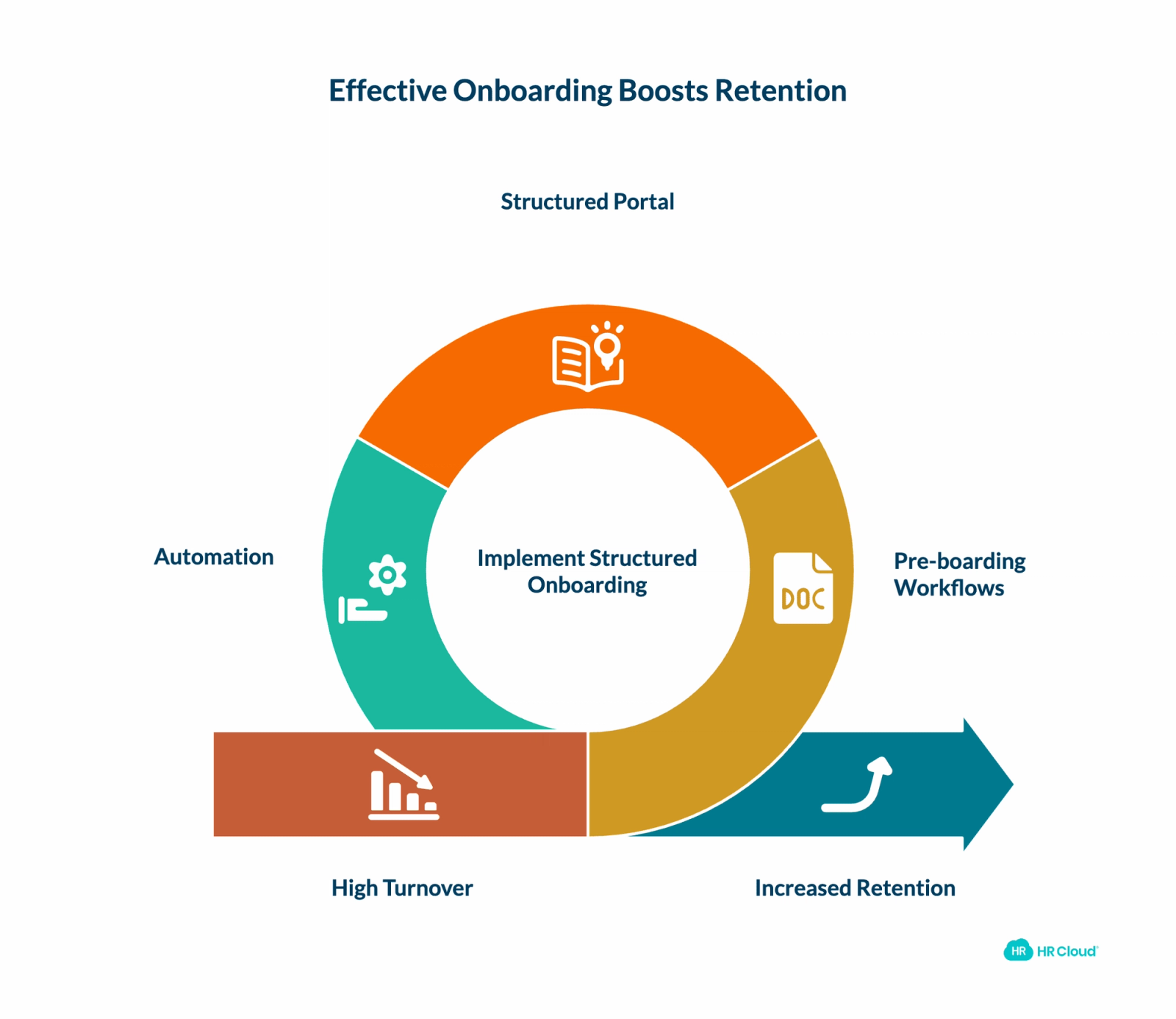
There are two versions of onboarding. The first is paperwork processing — W-4s, I-9s, direct deposit forms, a brief hallway tour. The second is a deliberate signal: we thought about your first week before you arrived. You matter here.
Most agencies live in the first version. The ones with lower turnover have figured out the second.
SHRM data, cited widely across industry sources, shows that employees who experience effective onboarding are 69% more likely to stay with an organization for at least three years. The Brandon Hall Group research puts it more starkly: structured onboarding programs produce 82% higher retention rates. Research into caregiver experience in home care consistently finds that the perceived quality of onboarding affects how a caregiver views the entire employer-employee relationship — not just the first week, but throughout their tenure.
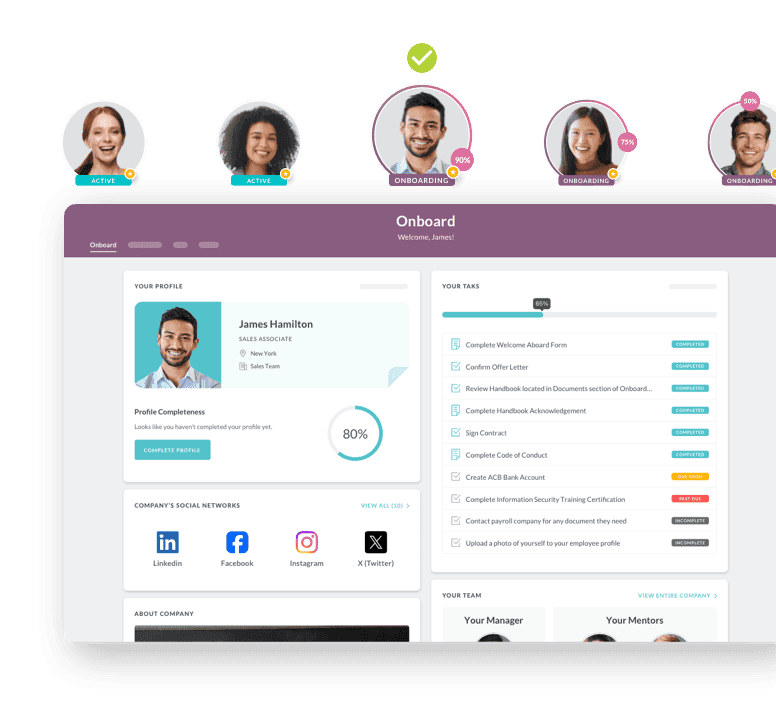
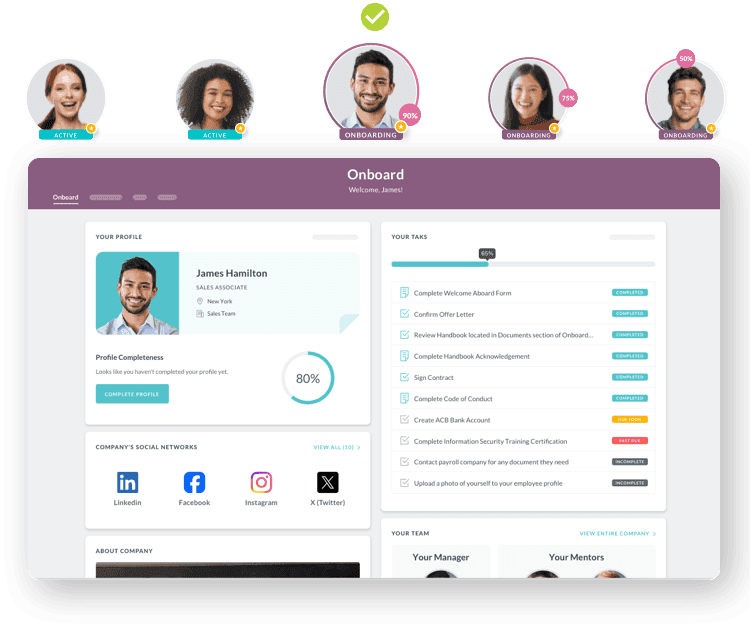
There's also a speed problem. Many caregivers in this sector are economically fragile. If the agency that hired them is slow to get them scheduled and paid, they take the job that moves faster. This is why HR Cloud's Onboard platform supports pre-boarding workflows starting the moment an offer is accepted — digital document collection, I-9 completion, welcome kits — all before day one. New hires arrive prepared rather than anxious, and first shifts happen faster.
The onboarding experience also sets behavioral precedent. A caregiver who sees a disorganized, paperwork-heavy first week files a mental note: this is how this agency runs. A caregiver who receives a structured portal, clear task list, and a welcome message from their manager files a different one: these people know what they're doing. Both impressions last far longer than the first week.
For agencies worried about compliance — background checks, I-9 verification, state-mandated training records — HR Cloud's I-9 and E-Verify automation keeps every new hire legally compliant without making compliance the caregiver's burden. The E-Verify process runs automatically within the platform, reducing processing time and eliminating the ICE audit risks that can come from manual tracking.
Training Hours and Revenue: The Business Case Most Agencies Miss
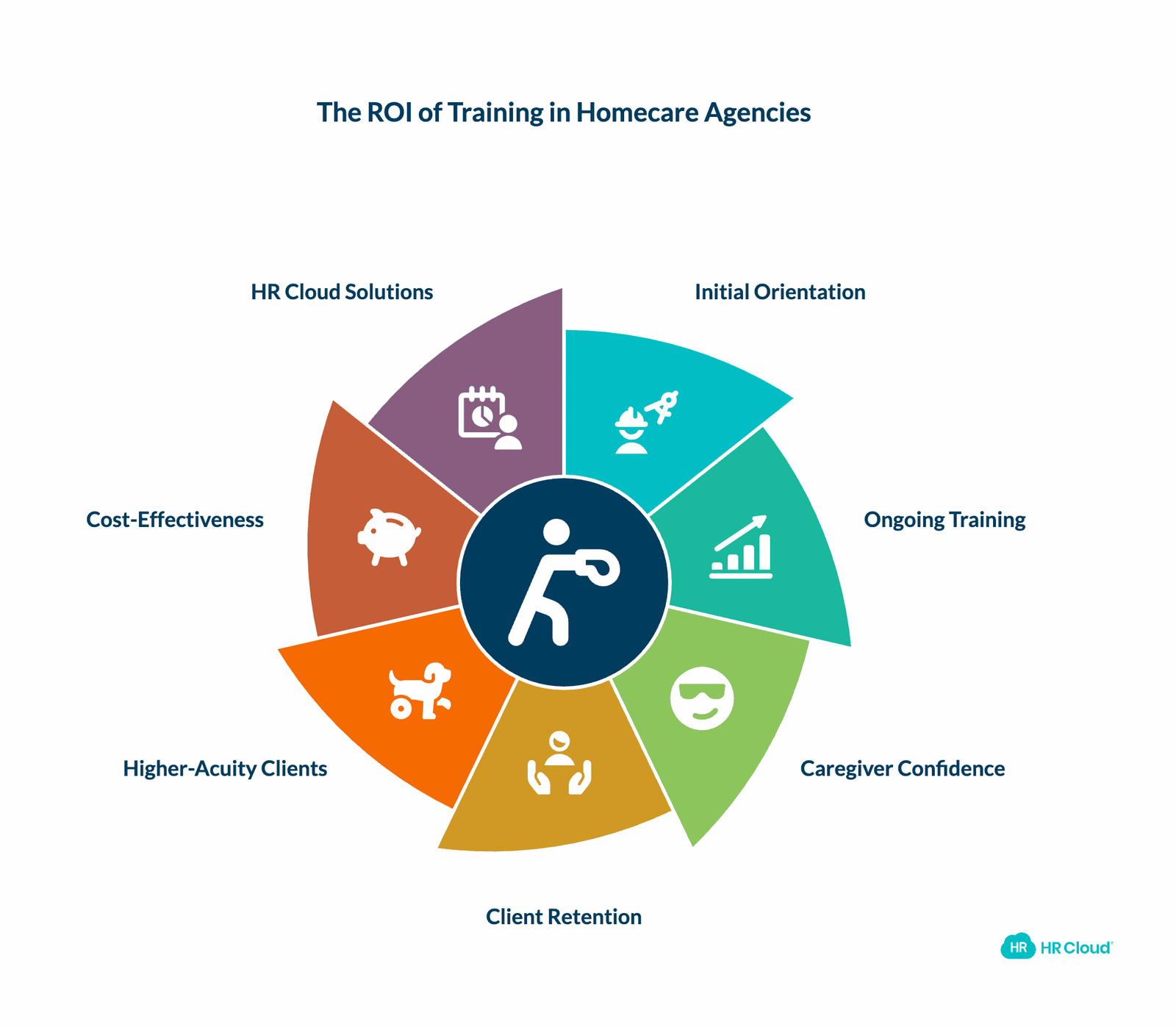
Here's a data point that should change how agencies budget for onboarding: according to the 2025 Activated Insights Benchmarking Report, homecare agencies that offered 8 or more hours of orientation training had a median revenue of $2.4 million, compared to $2.03 million for those offering three hours or fewer. That's a $370,000 revenue gap, directly tied to how much time agencies invest in training new hires.
The pattern holds for ongoing training too. Agencies with 12 or more hours of continuing training reported median revenue $55,000 higher than those offering four hours or less.
This isn't coincidence. Agencies that invest in training produce caregivers who are more confident, make fewer early errors, and retain clients more effectively. They also attract higher-acuity clients — and in a sector increasingly billing based on caregiver skill level, that translates to higher per-visit revenue.
The reflexive argument against more training is cost. But the right question is: does the training cost more than the turnover it prevents? At $2,600 per replacement, it rarely does. The math almost always favors investment in the front end.
HR Cloud's automated onboarding workflows assign training modules based on the caregiver's role, client type, and location automatically — meaning a home health aide assigned to a memory care client receives relevant Alzheimer's training as part of their onboarding sequence without a coordinator manually configuring it each time. The Checkr background check integration further accelerates the full pre-hire compliance process, reducing delays that push motivated new hires toward faster-moving competitors.
Want to see how automated training workflows reduce caregiver turnover? Book a live demo and see the platform in action.
The First 90 Days: A Journey Map, Not a Single Orientation
New caregivers arrive with three unspoken questions:
- Can I actually do this job? (Competence)
- Do the people here care about me? (Connection)
- Is this worth sticking around for? (Commitment)
Most onboarding programs answer the first question adequately. Questions two and three often go unanswered until someone's already updating their resume. Here's what a structured 90-day caregiver journey looks like when agencies treat those three questions as design requirements:
| Milestone | What to do | HR Cloud Feature |
|---|---|---|
| Pre-hire (offer → Day 1) | Digital welcome kit, W-4/I-9 completion, first week schedule confirmed | Pre-boarding workflows, I-9 & E-Verify automation |
| Day 1 | Branded portal walk-through, manager introduction, zero new paperwork | Customizable onboarding portals |
| Week 1 | Role-specific training, client care plan review, mentor pairing initiated | Chained task sequences, task completion tracking |
| Day 14 check-in | Supervisor call or survey: "What's unclear? What do you need?" | Workmates pulse surveys |
| Day 30 | First Kudos recognition, training progress reviewed, confirm ongoing hours | Kudos peer recognition |
| Day 60 | Mentor check-in, address scheduling concerns, career path conversation | Workmates channels, engagement platform |
| Day 90 | Formal review, transition milestone, recognition moment | Kudos with Rewards, performance tools |
The agencies that build this into a repeatable system — rather than trusting individual managers to remember every touchpoint — consistently outperform their peers on 90-day retention. HR Cloud's bulk onboarding initiation triggers this journey automatically across multiple new hires simultaneously, which matters for agencies hiring in high-volume batches. For a 12-hour shift cycle where an HR coordinator is managing 20 new hires at once, automation isn't a convenience — it's what makes consistent onboarding physically possible.
Red Flags: Is Your Current Process Driving Caregivers Away?
Before building a better system, it helps to diagnose the current one. These are the five most common warning signs that caregiver onboarding is quietly driving early turnover:
1. Paperwork on day one. If new hires are still filling out W-4s and I-9s on their first morning, that's time that should have been completed pre-hire. It also signals disorganization before they've met their first client. Digital pre-boarding eliminates this entirely.
2. No schedule confirmed before the start date. Caregivers who don't know their first week's assignments until day one are already questioning whether the agency is dependable. That uncertainty is a documented early-exit trigger.
3. No contact between week one and the 30-day mark. A caregiver working alone in a client's home with no office contact for three weeks is effectively invisible. That's when doubts solidify into job searches.
4. Generic onboarding regardless of client or care type. A caregiver working with pediatric clients and one supporting hospice patients have meaningfully different first-week needs. One-size-fits-all onboarding underserves both. Position-specific portals address this at the template level.
5. No mobile access to onboarding materials. Over 70% of home care workers are deskless. If completing onboarding tasks requires a desktop computer, a significant portion of the workforce simply can't do it efficiently. Mobile-first infrastructure is table stakes in this industry.
The HR Cloud healthcare industry page covers how agencies use automated workflows and mobile portals to close these gaps. The senior care workforce guide is also worth reading for organizations in long-term or residential care settings.
Mentorship: The Underused Retention Multiplier
In a sector where caregivers often work alone — never in the same room as their colleagues — a structured mentorship program is one of the most practical retention investments an agency can make.
The outcomes are direct. A 2025 study published in Worldviews on Evidence-Based Nursing, referenced in HR Cloud's healthcare onboarding research, documented a mentorship program that cost approximately $4,000 to implement. When all participants remained employed for at least three months beyond the program, agencies avoided an estimated $480,000 in turnover costs. That's a 120x return on a modest investment.
Separately, agencies implementing "success coach" programs — pairing new hires with experienced caregivers specifically tasked with addressing early barriers like scheduling confusion, transportation concerns, and client communication questions — reported 97% retention among caregivers who actively engaged with their coach. In an industry where 75% overall turnover is considered an improvement, that number is worth sitting with.
The mechanics of an effective program are simpler than most agencies assume:
- Pair intentionally. Match new hires with mentors based on geography, client type, or specialty, not just seniority.
- Make the mentor role official. A formal designation with recognition points signals that the role carries value — which affects how both mentor and new hire approach it.
- Structure the touchpoints. Week one, day 14, and day 30 are the three highest-leverage windows. These shouldn't be left to chance or memory.
- Recognize mentors publicly. HR Cloud's Kudos recognition campaigns let agencies run structured recognition programs, including peer-nominated mentor awards, that create visible culture around supporting new colleagues.
Workmates' channel tools give mentors and new hires a direct communication line through the platform — not just a phone number. In home care, where text threads get lost and calls during client visits aren't always possible, an in-platform channel provides a more reliable connection point.
Ready to build a mentorship-supported onboarding program? Request a demo to see how HR Cloud helps agencies design this from scratch.
Recognition: The Highest-ROI Retention Tool Most Agencies Underuse
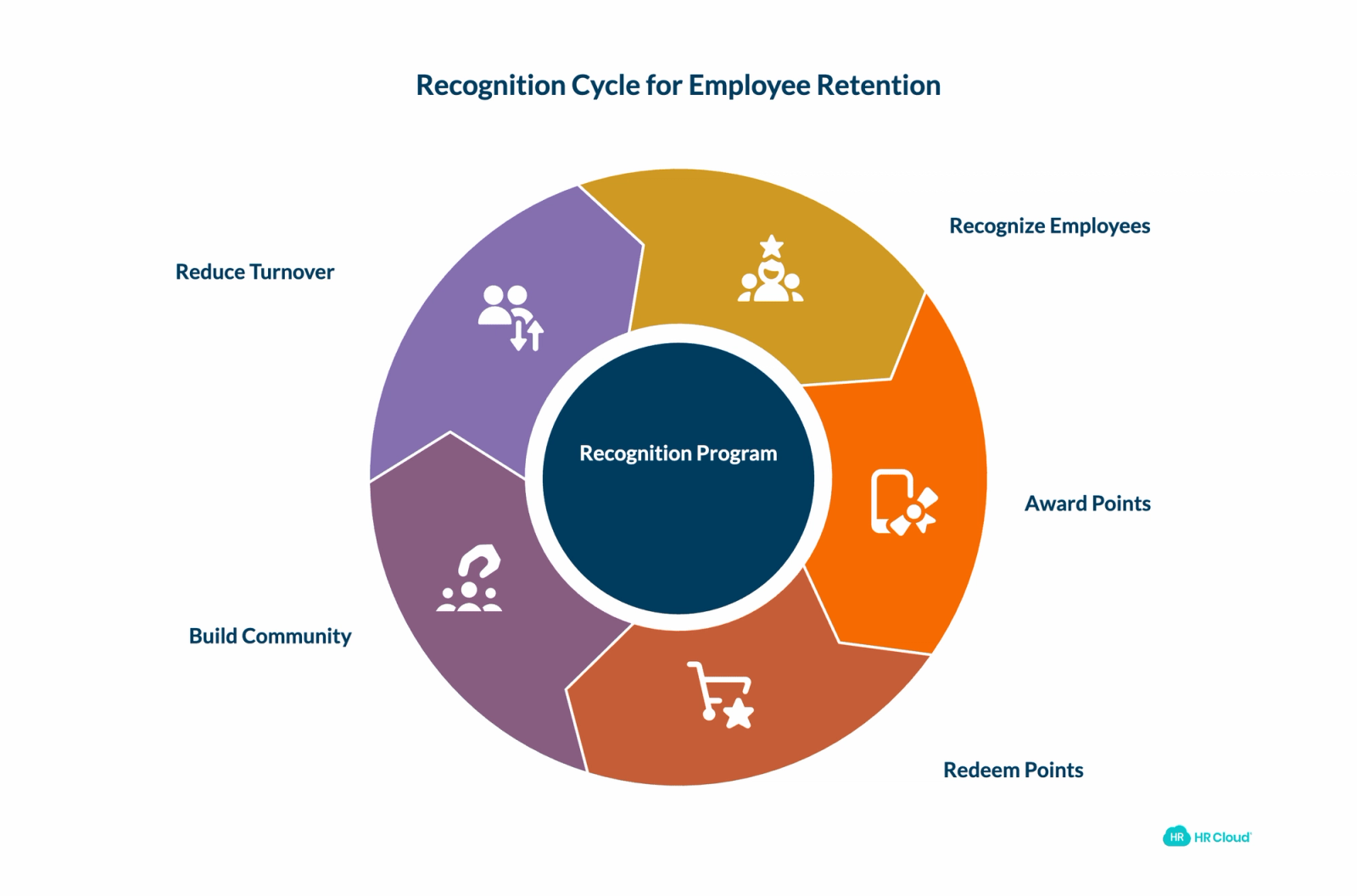
Research cited in HR Cloud's healthcare engagement resources shows that 36% of employees value consistent, frequent recognition more than a 10% pay raise. In home care — where competitive wages are constrained by Medicaid reimbursement structures — that finding isn't a footnote. It's a real strategic opening.
Home care caregivers do intimate, demanding, sometimes heartbreaking work. Often invisibly. A client's family may express gratitude. Their agency frequently doesn't. A consistent recognition culture changes that at low cost and without budget approval processes.
HR Cloud's Workmates platform includes peer-to-peer Kudos that let anyone in the organization publicly recognize a colleague — with a custom badge, a note about the specific achievement, and optional reward points — in under two minutes. Custom badges can be built for caregiver-specific situations: handling a difficult family conversation with patience, covering a last-minute shift, or completing a specialty training module. Recognition posts can be targeted to specific departments, locations, or the full company newsfeed.
The Kudos with Rewards feature lets agencies attach redeemable points to any Kudos given — so a caregiver who handles a difficult family situation can be recognized with a badge plus real value they can use. Within the same system, HR admins can configure Auto Rewards to automatically award points on birthdays and work anniversaries, so no one falls through the cracks when a coordinator is managing 150+ people across multiple service territories. Points can be redeemed for gift cards or custom rewards of the agency's choosing.
Kudos recognition campaigns add a campaign layer — structured recognition programs with published timelines and public winner announcements that create shared community moments for a workforce that rarely gathers in the same room. These campaigns, when used consistently, build a sense of organizational identity that's difficult to replicate any other way.
Gallup and Workhuman research, cited in HR Cloud's employee recognition analysis, found that well-recognized employees are 45% less likely to turn over after two years and 65% less likely to be actively looking for new opportunities. In a sector running 75% annual turnover, those aren't marginal improvements. They're the difference between a sustainable workforce and a revolving door.
For employee retention strategy in healthcare, recognition programs are among the lowest-cost, fastest-to-implement interventions available. The employee rewards platform within Workmates supports everything from custom gift card catalogs to point-based redemption for caregivers who want flexibility in how their recognition is expressed.


Career Pathways: What Keeps People Thinking About the Future
One reason caregivers leave is visible immediately: bad first week, poor scheduling, feeling unsupported. But a second reason is slower and quieter: they can't picture a future here.
Home care caregiving can feel like a job with no clear next step. The work is emotionally demanding, and without a visible path toward a CNA certification, a supervisory role, or a specialty credential, the equation of staying begins to feel lopsided. Apploi research found that caregivers are seven times more likely than the average U.S. worker to be in the lowest income bracket. Career advancement for this population isn't aspirational — it's urgent.
The agencies with strong retention build career pathways that are visible and reachable. Practical approaches:
- Tuition assistance for CNA or LPN certification. The agency gets a more credentialed workforce. The caregiver gets a real path forward.
- Specialty training tracks. Alzheimer's and dementia care, pediatric care, hospice support — specialty designations that carry both personal meaning and higher billing potential.
- Tiered mentor roles. Moving from "new hire" to "peer mentor" to "lead mentor" creates a progression ladder that doesn't require leaving field work.
- Coordinator and supervisor pipelines. Many strong caregivers would consider stepping into scheduling or care coordination roles if those paths were communicated clearly and early.
HR Cloud's employee engagement platform supports these career conversations through goal-tracking and manager feedback tools. The distinction matters: an oral conversation about advancement is easy to forget. A documented goal with a timeline in an HR system is a commitment both sides can reference. The Workmates rewards platform also enables career-milestone recognition — custom Kudos badges for skill completions, certification achievements, and training milestones — publicly marking the professional growth the agency helped make possible.
The broader employee retention factors article on HR Cloud's blog provides a useful framework for how career development integrates with recognition, communication, and onboarding across the full retention strategy.
Communication: The Underrated Driver
The 2025 Activated Insights Benchmarking Report identified communication as the primary driver of improved client retention in 2024. The same pattern holds for caregiver retention. Industry surveys have found that more than 34% of agency leaders would prioritize tools improving real-time caregiver communication over any other operational investment.
The structural situation of home care work is worth acknowledging: a caregiver might interact with agency office staff twice a month. Their primary daily contact is the client and their family. If they have a concern — a scheduling conflict, a difficult client situation, a documentation question — the path to resolution is unclear, and it's easy to assume nothing will change. That assumption is a quiet retention killer.
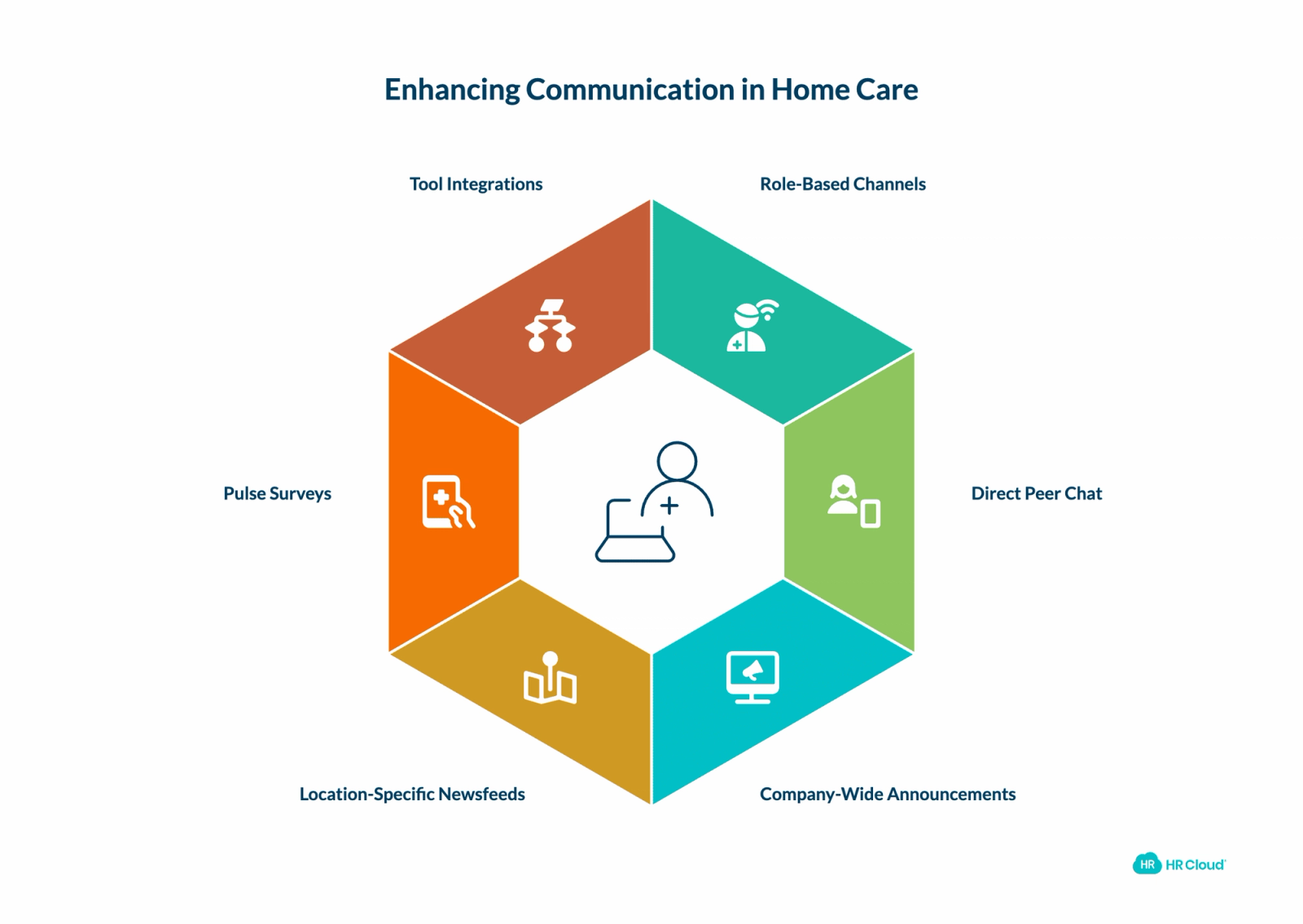
Workmates addresses this through role-based channels, direct peer chat, company-wide announcements, and a newsfeed that surfaces relevant content to the right caregivers based on their location and position. A caregiver in a specific region sees updates relevant to their assignments and local policies — not noise from other service areas.
Workmates pulse surveys close the feedback loop systematically. Do caregivers feel their schedule provides adequate notice? Do they feel supported when client situations become challenging? Are they aware of career development opportunities? These questions shouldn't wait until an exit interview. Asked at 30, 60, and 90 days, they surface retention risks while there's still time to act.
For agencies integrating multiple tools, HR Cloud's integrations page covers how Workmates connects with ADP, Slack, and other platforms your teams may already use. The HR Cloud platform overview shows how onboarding, engagement, recognition, and HRIS all connect in a single system — avoiding the data silos that create communication breakdowns in the first place.
Building communication infrastructure that actually reaches field caregivers? Schedule a demo to see how Workmates handles distributed healthcare teams.
What Good Looks Like: A Full Comparison
| Stage | Low-Retention Agency | High-Retention Agency |
|---|---|---|
| Pre-hire | Generic job post, slow process | Branded posting, fast offer, employer brand communication |
| Pre-boarding | Forms sent day one | Digital docs + welcome kit completed before start date |
| Day 1 | Paperwork, basic orientation | Branded portal, zero form-filling, manager welcome message |
| Week 1 | Generic orientation | Role-specific training, mentor assigned, client prep training |
| Day 14 | No contact | Supervisor check-in survey + follow-through |
| Day 30 | Radio silence | First recognition milestone, progress acknowledged publicly |
| Day 60 | "Hope things are going well" | Mentor check-in, career conversation, scheduling review |
| Day 90 | Annual review eventually | Formal review, recognition moment, full team member transition |
| Ongoing | Annual survey | Pulse surveys, peer Kudos, anniversary auto-rewards, nominations |
The ROI Argument, Made Concrete
The mentorship study cited above cost $4,000 and avoided $480,000 in turnover costs. That's an exceptional case, but the underlying math is consistent with what structured programs regularly produce.
An agency replacing 50 caregivers per year at $2,600 each spends $130,000 on turnover costs. Reducing that rate by 25% — achievable with structured onboarding and engagement programs according to multiple industry benchmarks — saves $32,500 annually. The cost of an HR platform that enables consistent onboarding, recognition, and communication is a fraction of that.
Understanding your agency's current turnover rate benchmarks is the first step. The next is building the onboarding infrastructure that makes closing the gap actually possible — not something dependent on one coordinator's memory or one manager's bandwidth.
The PHI National direct care workforce report projects 9.7 million total direct care jobs to fill between 2024 and 2034. The agencies building retention systems now aren't just solving a current problem. They're preparing for a decade where competition for caregivers will be significantly more intense than it is today.
For further reading, HR Cloud's hospital workforce management guide, healthcare HR software comparison, and recruitment challenges guide all cover related aspects of the broader workforce problem in healthcare.
See how agencies are using HR Cloud to reduce caregiver turnover starting in the first 90 days. Request a personalized demo — no commitment required.

Discover how our HR solutions streamline onboarding, boost employee engagement, and simplify HR management
Book Your Free DemoFrequently Asked Questions
What is the current caregiver turnover rate in home care?
According to the 2025 Activated Insights Benchmarking Report, the median caregiver turnover rate in home-based care dropped to 75% in 2024 — the lowest since 2021, but still roughly four times the national average across all U.S. industries.
When is caregiver turnover most likely to happen?
Research from Activated Insights shows 57% of caregiver turnover occurs within the first 90 days of employment. This makes the initial onboarding period the highest-risk window for retention and the most impactful point for structured intervention.
How much does it cost to replace a caregiver?
The average cost to replace one caregiver is approximately $2,600, based on Activated Insights data. For a 100-person agency at the industry-average turnover rate, annual replacement costs can exceed $130,000.
How does training investment affect agency revenue?
Data from the 2025 Activated Insights Benchmarking Report shows agencies offering 8+ hours of orientation training had $370,000 higher median revenue than those offering 3 or fewer hours. Agencies with 12+ hours of ongoing training similarly outperformed those with minimal continuing education. Training is not a cost center — for caregiving agencies, it's a revenue driver.
What role does mentorship play in caregiver retention?
Structured mentorship is one of the highest-ROI retention interventions available. One documented program cost $4,000 and avoided approximately $480,000 in turnover costs. Agencies using "success coach" models have reported 97% retention among caregivers who engaged with their assigned coach during the first 90 days.
What does a good caregiver career pathway look like?
Effective pathways combine visible next steps — specialty certifications, tiered mentor roles, coordinator pipelines — with institutional support like tuition assistance and formal milestone recognition. The key is making advancement feel reachable and documenting those goals in an HR system, not just conveying them verbally.
What communication tools work best for home care teams?
Distributed workforces benefit most from mobile-first platforms with role-based channels, peer recognition, and pulse survey tools. HR Cloud's Workmates provides all three — supporting company-wide announcements, direct peer chat, and periodic check-in surveys — keeping geographically isolated caregivers connected to their organization between in-person contact.
How can HR technology support caregiver onboarding at scale?
HR Cloud's Onboard automates the full workflow — from pre-boarding document collection through training completion tracking. Key capabilities include customizable onboarding portals by role and location, chained task sequences, bulk onboarding initiation for high-volume hiring, automatic reminders, and background check integration with providers like Checkr. These tools ensure compliance and consistency across every new hire without requiring manual coordination at each step.
How does HR Cloud support the 90-day caregiver retention window specifically?
HR Cloud enables structured touchpoints throughout the 90-day window through automated task reminders, pulse surveys triggered at specific intervals, peer recognition tools, and role-based communication channels. Workmates keeps caregivers connected to the broader organization even when they're working independently, and Kudos with Rewards automates recognition milestones so no one is overlooked regardless of agency size or coordinator bandwidth.
About the author

Keep Reading


Like What You Hear?
We’d love to chat with you more about how HR Cloud® can support your business’s HR needs.
Book Your Free Demo